
Mold Remediation in Warren, NJ
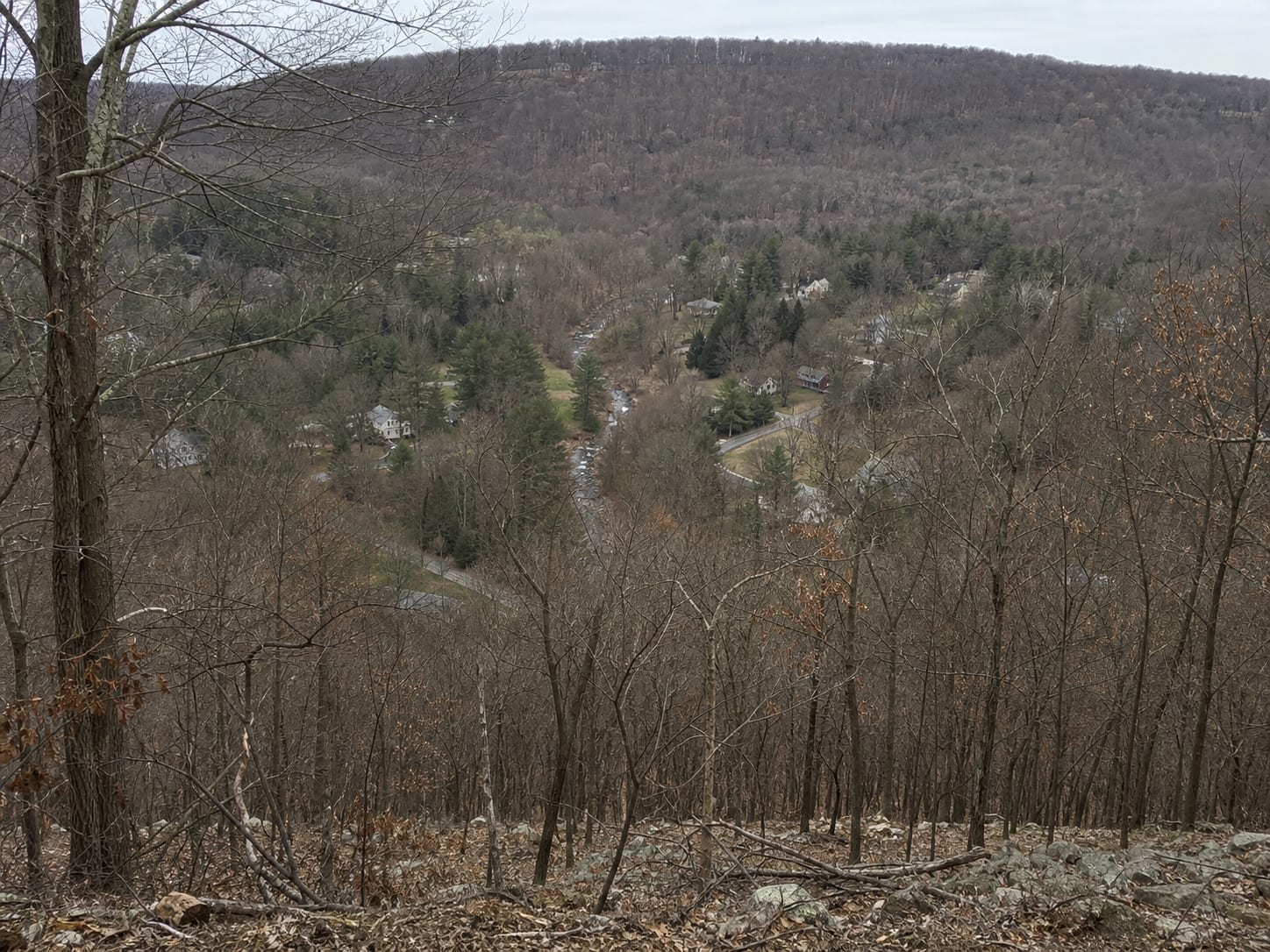
Warren Township runs from the First Watchung Mountain across Washington Valley to the Second Watchung Mountain, and the Township's own Environmental Resource Inventory records roughly 370 feet of relief across that span, from just under 200 feet where the Passaic River and Middle Brook leave the Township to about 570 feet near the Second Watchung radio tower. On a map that is scenery. On a property it is the single fact that decides where water goes, and it is why two houses a few streets apart in Warren can have completely different moisture problems.
Mold Remediation Between the Two Watchung Mountains
Growth follows water that stayed too long, so the work begins by naming the water. In Warren the realistic candidates are surface water and runoff arriving downhill against a foundation, a seasonal water table rising close to a slab or footing, envelope failures at the roof, gutters or windows, a plumbing or appliance failure inside the building, and condensation where humid air meets a cold surface in a closed lower level.
Those produce similar looking damage on the same drywall and need entirely different repairs. A finished lower level that is damp because water is arriving from outside and one that is damp because a supply line is sweating behind the wall will grow the same thing on the same paper facing. Telling them apart is done with moisture readings, with elevations, and with a look at what actually happens on the lot during heavy rain. Getting it wrong means paying twice.
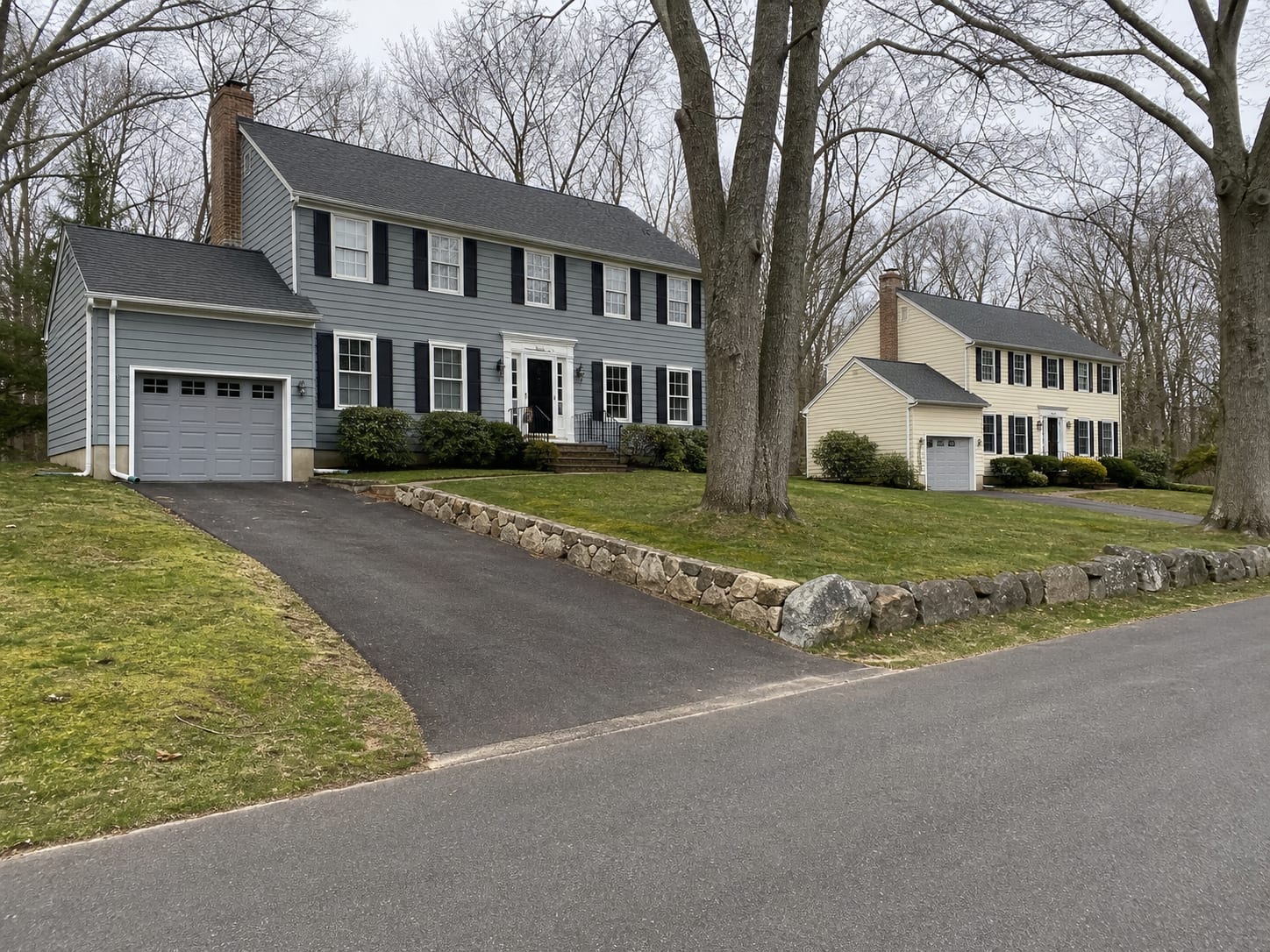
Downhill Runoff, Shallow Water Tables and Four Eras of Building in Warren
Runoff Off the Watchung Slopes
Warren's topography sends water downhill fast, and the Township's planning record pairs that with soils it describes as low percolation and high runoff. On a sloping lot the question is rarely whether the ground is wet somewhere. It is whether your foundation sits in the path, and whether grading, downspout discharge and driveway pitch send water toward the house or away from it.
A Seasonal Water Table That Sits Close to the Surface
The Township's soil table gives depth to seasonal high water table by soil association, and the spread is wide: zero to one foot for Bowmansville, Watchung and Whippany soils, one to four feet for Amwell and Mount Lucas, one to three feet for Rowland, and more than five feet for some Neshaminy and Penn soils. A basement in the first group and a basement in the last group are different buildings for our purposes, even at the same elevation. Where the table sits within a foot of the surface, the honest goal is management rather than elimination.
The Middle Brook and Passaic Floodplain Edges
Township material identifies riverine and palustrine wetlands along the Middle Brook and Passaic floodplains. At Glenhurst Meadows on Mountain Avenue the Township records floodplain meadows, riparian zones, wetlands, five ponds and Passaic River access, and states that the red and green trails there are no longer maintained because of frequent flooding. Its acquisition preserved more than 100 acres of Passaic floodplain and uplands. Properties near those low edges carry a different water risk from properties on the ridges.
Four Generations of Building Stock
Warren's housing did not arrive at once. The Township's own history records a 45 percent increase in homes between 1946 and 1948, a second boom in the 1960s, the completion of Interstate 78 in 1986, and approval of nearly 1,000 new homes in 1992, while its housing report states that a majority of Warren's housing was built after 1980. Add the older village cottages around Smalleytown and Washington Valley and you have four eras of flashing, wall assembly and drainage detailing in one township. Water finds the seams between them.
Shared Buildings and Managed Properties
Alongside the detached stock, the Township's current affordable housing list includes completed rental apartments at Woods at Warren and Heritage at Warren and completed townhomes at Villages at Warren, with further projects under construction or pending. In a shared building the moisture source is often outside the unit that has the problem, and the question of who authorizes the repair is answered by the declaration and the association rather than by the owner who found the stain.
Closed Lower Levels in the Cooling Season
A lower level that is comfortable in February can run humid in July, particularly where it is finished, seldom used, and served by a system that does not move much air through it. That is a condensation problem rather than an intrusion problem, and the correction is dehumidification and air movement rather than excavation.
The Mold Remediation Process, Starting Outside With the Slope and Downspouts
Reading the Site Before Reading the Wall
The first visit spends time outside as well as in the room with the staining: where the ground falls, where downspouts discharge, how the driveway pitches, and what the roof and gutters are doing. Inside, moisture meters establish what is actually wet rather than what looks wet. New Jersey's Department of Health advises an inspection where the water source is not readily traceable, and on a Warren lot that is often the case.
Isolating the Work Area
Containment is set to match the work rather than applied uniformly. EPA guidance organizes remediation by affected surface area, using under 10 square feet, 10 to 100 square feet, and more than 100 square feet as management categories, with fuller containment, including polyethylene layers and a decontamination chamber, where the area is larger or occupied space could be affected. Those are guidance for running the work safely and are not medical thresholds.
Taking Out What Is Lost and Drying What Is Not
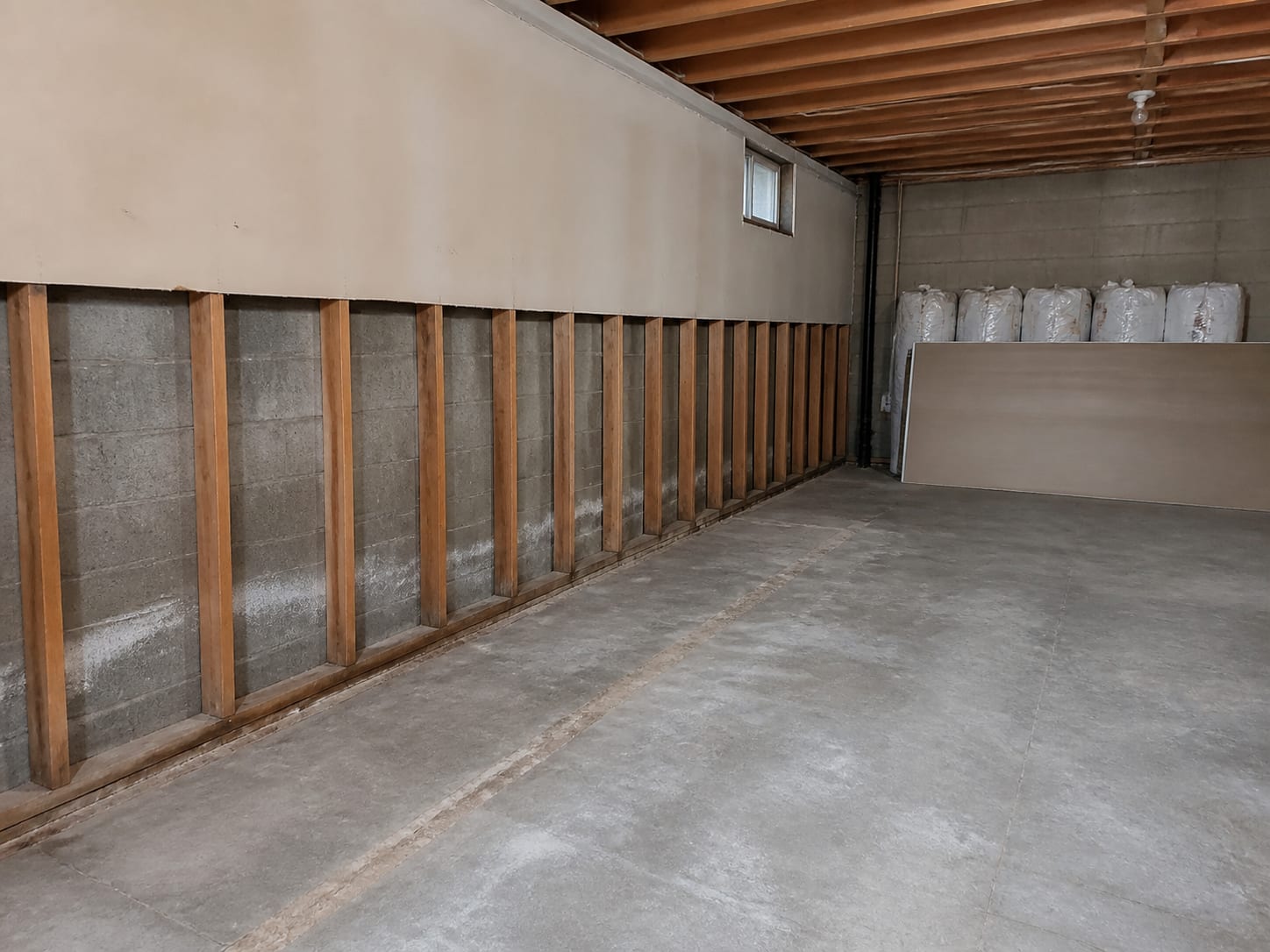
Porous materials that have been wet, such as wallboard and carpet backing, are generally removed rather than surface cleaned. What can be cleaned is cleaned, then HEPA vacuumed and damp wiped inside the containment. Drying is confirmed with meters, not by how a wall looks. In an older Warren basement that often means opening back to parged block and bare framing before drying begins.
Fixing the Cause and Confirming the Result
The repair that stops the water is the part that decides whether this is permanent. On a sloping Warren lot that is frequently a grading, downspout or drainage correction rather than anything inside the house. The finished work is documented: the source found, the scope removed, the drying record, and any permit or inspection outcome.
Crawl Space, Lower Level Flooding and Rebuilding Help for Township Owners
Mold Inspection
Mold inspection establishes where moisture is and how far the affected area extends, including what is behind finishes.
Mold Testing
Mold testing is a separate purchase from removal, and it earns its place when somebody with authority over the property has asked for a record or the extent is genuinely unclear.
Air Quality Testing
Air quality testing reads an indoor sample against outdoor air from the same day, which is what makes a result interpretable.
Black Mold Removal
Dark growth found suddenly is the most common way this starts. What it means and what happens next is covered for this township in black mold removal in Warren.
Crawl Space and Underfloor Work
Encapsulation and remediation are different purchases, and encapsulating over an uncorrected source achieves very little. Both are scoped from the moisture pathway first.
Water Damage Restoration
Water damage restoration covers the extraction, structural drying and verification that follow a leak, a burst line or an appliance failure.
Basement and Lower Level Flooding
Where a finished lower level has taken water, ruined flooring comes out to the slab and drywall is flood cut at the base before drying begins. Air movers on an intact finished floor do not dry the assembly underneath it.
Buying, Selling and Inspections
With a median owner occupied home value of $930,800 in the 2020 to 2024 American Community Survey period, a documented remediation record is worth having when a property changes hands.
Rebuilding After the Water
Post-remediation rebuild puts the space back once it is verified clean and dry, which is a gate rather than a formality.
When Repairs Bring in the Township: Permits, Inspections and Floodplain Review
Cleanup itself does not carry a standalone municipal mold permit here. What brings the Township in is the repair that stops the water, once it becomes construction.
Warren Township requires permits for most construction activity, and asks that inspections be requested at least 24 hours before the requested day. The Township does not perform same day inspections. On a job where a source repair is on the critical path, that is the difference between a schedule that holds and one that slips, and it is worth building in at the start.
Where a property sits in a flood hazard area, the Township's Chapter 15 coordinates floodplain review with the Uniform Construction Code. The Floodplain Administrator reviews permit applications for location in a flood hazard area and retains records including permits, determinations of substantial improvement or substantial damage, and as built elevation certificates where required.
On historic status, the Township maintains a preservation policy and a historic inventory, and its plan discusses possible future locally designated districts. Confirm a specific property's status with the Township rather than assuming review either applies or does not.
This is not theoretical for the Township itself. A third floor fire sprinkler pipe burst at Warren Town Hall on February 8, 2026. The Township recorded that immediate remediation was required to prevent further damage, mold and environmental contamination, and its resolution of April 16, 2026 approved $383,416.63 for the remediation after its insurance program and the carrier reviewed the completed work. A single institutional loss is not a measure of the residential market, but it is a plain local illustration of how quickly a clean water line becomes a remediation project.
Frequently Asked Questions About Ridge Homes, Shared Communities and Timelines in Warren
Warren is a township in Somerset County, governed by a five member Township Committee, and its primary ZIP code is 07059. Permits, inspections and any floodplain review go through Warren Township.
Areas We Serve in Warren, From Mount Horeb to Dock Watch Hollow
ExecPro Restoration & Cleaning works across Warren's named sections, including Mount Horeb, Mount Bethel, Union Village, Smalleytown, Warrenville, Springdale, Washington Valley and Dock Watch Hollow. Access is straightforward regionally and particular locally: Interstate 78 runs along the northern edge with interchanges at Liberty Corner Road and King George Road, while the roads that actually get a truck to a driveway are Mountain Boulevard, Washington Valley Road, Martinsville Road, Stirling Road, Hillcrest Road and Mount Horeb Road.
The Township's Master Plan identifies six bordering municipalities: Bernards Township, Long Hill Township, Berkeley Heights, Watchung, Green Brook Township and Bridgewater Township. We also serve neighboring Basking Ridge in Bernards Township and Bridgewater, and the wider service area across central and northern New Jersey.
Contact ExecPro Restoration & Cleaning Before a Crew Is Scheduled
Before a crew is scheduled we confirm driveway and equipment access, which level of the building is affected, where the utilities shut off, whether the lot sits near a floodplain edge or on one of the shallow water table soils, and whether any exterior repair will need review before it can start. We are licensed and insured, we work to your insurer's documentation requirements, and you get the extent in writing before anything comes out of a wall.
About Warren, NJ
Warren is a township in Somerset County, in inland Central New Jersey, governed by a five-member Township Committee. The U.S. Census Bureau counted 15,923 residents in the 2020 Census, a decennial count rather than a current estimate. What shapes restoration work here is the building pattern rather than any average: the Township's own 2024 background study records single-family residential as by far the predominant land use, with the R-65 district permitting one home per 1.5 acres across roughly two-thirds of the Township's land area as of January 1 2024. Lots commonly run from 7,500 square feet to an acre and a half or more. The age mix matters as much as the density, because the Township reports a majority of its housing built after 1980, layered over postwar neighborhoods from a 45 percent jump in homes between 1946 and 1948, a second boom in the 1960s, and nearly 1,000 new homes approved in 1992. Completed rental apartments at Woods at Warren and Heritage at Warren and townhomes at Villages at Warren have diversified the edges of that pattern without displacing the single-family majority.
The moisture story in Warren is ridge-and-valley, not coastal. The Township runs from the First Watchung Mountain across Washington Valley to the Second Watchung Mountain, with Middle Brook in the valley between the ridges and the Dead and Passaic rivers at the lower edges. The Environmental Resource Inventory records roughly 370 feet of relief, from just under 200 feet where the Passaic and Middle Brook leave the Township to about 570 feet near the Second Watchung radio tower. Exposure is location-specific rather than townwide: riverine and palustrine wetlands follow the Middle Brook and Passaic floodplains, and at Glenhurst Meadows the Township reports floodplain meadows, riparian zones, five ponds and trails no longer maintained because of frequent flooding. The soils are the practical constraint. The Township's background study names stoniness, steep slopes and a seasonal high water table, and gives depths to seasonal high water table of 0 to 1 foot for Bowmansville, Watchung and Whippany soils, 1 to 4 feet for Amwell and Mount Lucas, 1 to 3 feet for Rowland, and greater than 5 feet for some Neshaminy and Penn soils, with low percolation and high runoff Township-wide. That is a constraint on the ground, not a verdict on any particular basement. Warren houses sit too differently for a townwide answer to be worth much, so the questions that decide your job are about your own lot: where it sits between the ridge and the floodplain, how deep the seasonal water table runs in that soil, where the roof and site drainage discharge, and what the foundation actually is.
Neighborhoods We Serve in Warren
Around Warren
- Wagner Farm Arboretum
- Glenhurst Meadows
- Warrenbrook Golf Course
- Codington Farmstead and Woods
- Dealaman Nature Trail and Pond
- Hofheimer Woods Trail
- Greenwood Meadows Park
- Warren Township Library
- Kirch-Ford-Terrill House
- Bernards Township
- Long Hill Township
- Berkeley Heights
- Watchung
- Green Brook Township
- Bridgewater Township
Do not see your neighborhood? We serve all of Warren and the surrounding area. Reach out and we will confirm coverage.
Guides for Warren
Water Damage Restoration in Warren, NJ: The First 72 Hours
After the water stops in a Warren, NJ home the clock starts. Extraction, drying, what gets removed, what the Township needs, and how the days actually run.
Structural Mold Repair in Warren, NJ: Where the Line Sits
Surface growth on a joist and loss of section are different jobs. Where that line sits in a Warren, NJ home, who decides it, and what the repair involves.
Mold Remediation in Warren, NJ: What the Work Involves
Mold remediation cost is driven by area, material and the source repair. How the work runs in a Warren, NJ home, and what makes one job bigger than another.
Rebuilding After Mold Remediation in Warren, NJ: When the Wall Closes
The remediation is done and the wall is open. What must be verified before it closes, who does the rebuild, and where it becomes permitted work in Warren.
Mold Testing in Warren, NJ: When a Test Is Worth Running
Do you need a mold test? When a result changes a decision in a Warren, NJ property, what the outdoor control is for, and why there is no number to pass.
Flood Damage Cleanup in Warren, NJ: When the Water Came From Outside
Water that arrives from outside is not the same job as a burst pipe. What that changes about a Warren, NJ cleanup, what has to go, and what can be saved.
Crawl Space Mold Remediation in Warren, NJ: Cleanup or Encapsulation?
Encapsulation and remediation are two purchases, not one. What each does in a Warren, NJ crawl space, in what order, and how long the work really runs.
Mold Inspection in Warren, NJ: Finding What You Cannot See
An inspection and a test are different purchases. What a Warren, NJ mold inspection establishes, when it is worth booking, and what a free one usually is.
Commercial Mold Remediation in Warren, NJ: Keeping the Building Open
Warren has a corporate office corridor and a Mountain Boulevard retail strip. What commercial mold remediation involves with tenants and staff in the building.
Insurance Restoration in Warren, NJ: Document It Before You Touch It
Photograph the damage before anything moves. What to document for a Warren, NJ claim, what usually turns on the cause of loss, and where a restorer fits in.
Black Mold Removal in Warren, NJ: What Happens Next
Found dark mold in your Warren, NJ home? What black mold removal actually involves, what has to come out, what drives the cost, and how the water gets stopped.
Emergency Water Extraction in Warren, NJ: What to Do First
Standing water in your Warren, NJ property? Shut off the power, stay out of it, and call. What extraction involves, what gets saved, and what happens next.
Basement Mold Remediation in Warren, NJ: Where the Water Starts
In Warren the seasonal water table sits within a foot of the surface in some soils. What that does to a basement, what comes out, and what stops it returning.
Attic Mold Remediation in Warren, NJ: It Starts at the Vents
Dark staining on Warren, NJ roof sheathing is usually a ventilation problem. Can it be removed, what causes it, what the work involves, and what stops it.
Air Quality Testing in Warren, NJ: Is It Worth Running?
Is indoor air quality testing worth it? When a sample answers a real question in a Warren, NJ home, what it is read against, and what to do with the result.