Commercial Mold Remediation in Warren, NJ: Keeping the Building Open
Cal HewittPublished
- commercial mold remediation
- containment
- facility management
- warren nj
The difference between a commercial job and a residential one is not the square footage. It is that other people are in the building, and their exposure, their disruption and their questions are your responsibility. A homeowner decides for their own household. A property manager, an employer or a landlord is making a decision on behalf of tenants and staff who did not choose it and will ask about it. That changes the sequence, the containment, the working hours and the paperwork, and most advice written for houses is close to useless once you are in that position.
Key Takeaways
Occupants change the job
containment, scheduling and notification are shaped by who is in the building, not by the affected area alone.
Full containment applies where occupied space could be contaminated
, per EPA guidance, in addition to the area based bands.
Isolate before you disturb
the route from the work area out of the building matters as much as the work area itself.
Off hours working is often the answer
, and it changes the cost and the timeline in ways worth planning for.
Warren is office and retail, not industrial
the corporate corridor and the Mountain Boulevard retail strip are the two building types here.
The documentation is heavier
, because you may need to answer to tenants, an insurer, and possibly a regulator.
Keeping the Building Open While the Work Happens
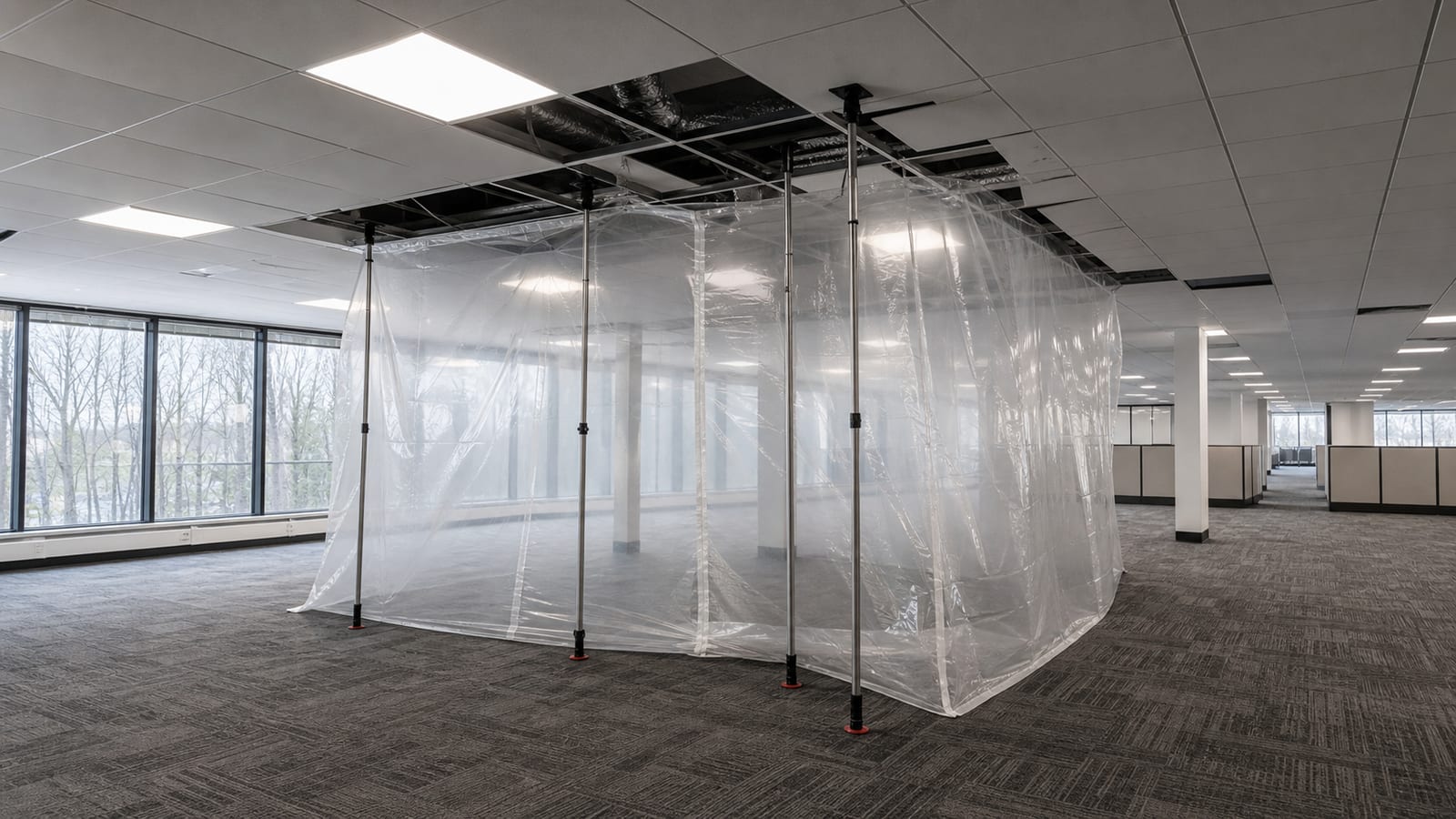
Most commercial jobs do not empty a building. They partition it, and the partitioning is the skilled part.
Containment sized to the situation, not just the area. The EPA's guidance uses affected surface area bands, with limited containment generally between 10 and 100 square feet and full containment generally above 100 square feet. It also calls for fuller containment where occupied space could be contaminated, regardless of how the area alone would classify. In an occupied commercial building that second clause frequently governs.
The route out is part of the containment. Material leaving the work area travels through corridors, lifts and loading areas that people use. Protecting that path, and scheduling movements, is what keeps the disruption contained rather than merely the dust.
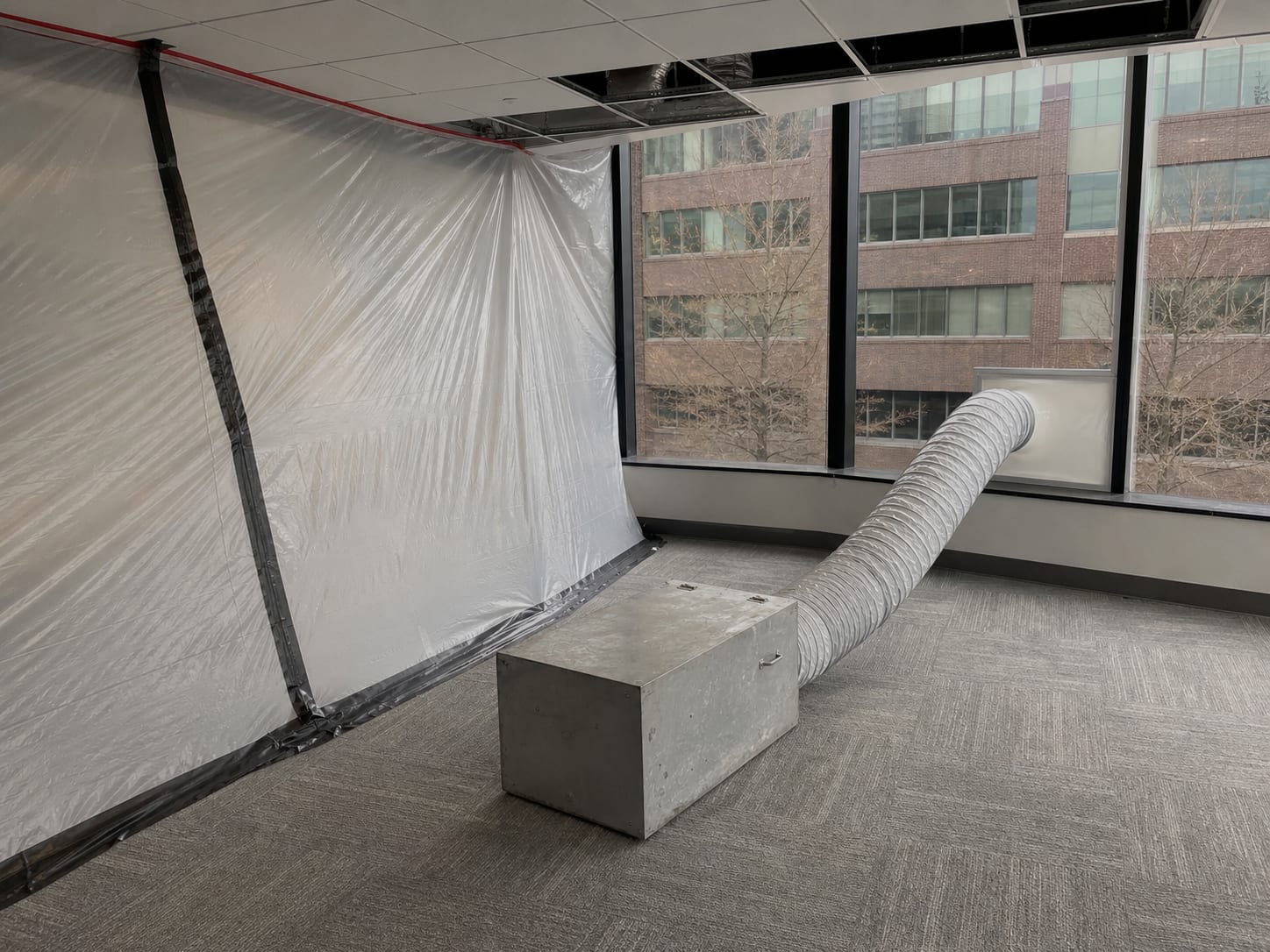
Pressure and air handling. Work areas are typically held under negative pressure with filtered exhaust so that air moves into the containment rather than out of it, and the building's own systems serving that zone are isolated so nothing is distributed through shared ductwork.
Hours. Where the work sits in an occupied floor, doing it outside operating hours is often the only realistic answer. It costs more per hour and it can cost less overall, because it removes the stopping and starting.
What You Have to Tell People
This is the part that most scopes skip and most managers actually need.
Occupants notice containment, equipment and unfamiliar people. They will ask, and an unanswered question fills itself in badly. A short, factual notice covering what was found, what is being done, which areas are affected, what the schedule is and who to ask, generally prevents more trouble than it causes.
Where employees are involved, there may be obligations to them that differ from obligations to tenants, and those follow from your own employment and lease arrangements rather than from a remediation standard. Where a tenancy is involved, the lease usually decides who authorises and who pays, and that is worth establishing on day one rather than mid job.
On the habitability question, which comes up quickly in a commercial context: there is no single mold threshold that makes a space unusable, and it is not a determination a remediation contractor makes. What a contractor can give you is a documented condition, a scope, and a verification at the end, which is the material that any such conversation should be based on.
The Buildings Warren Actually Has
This matters because a generic commercial page assumes a warehouse, and that is not the local stock.
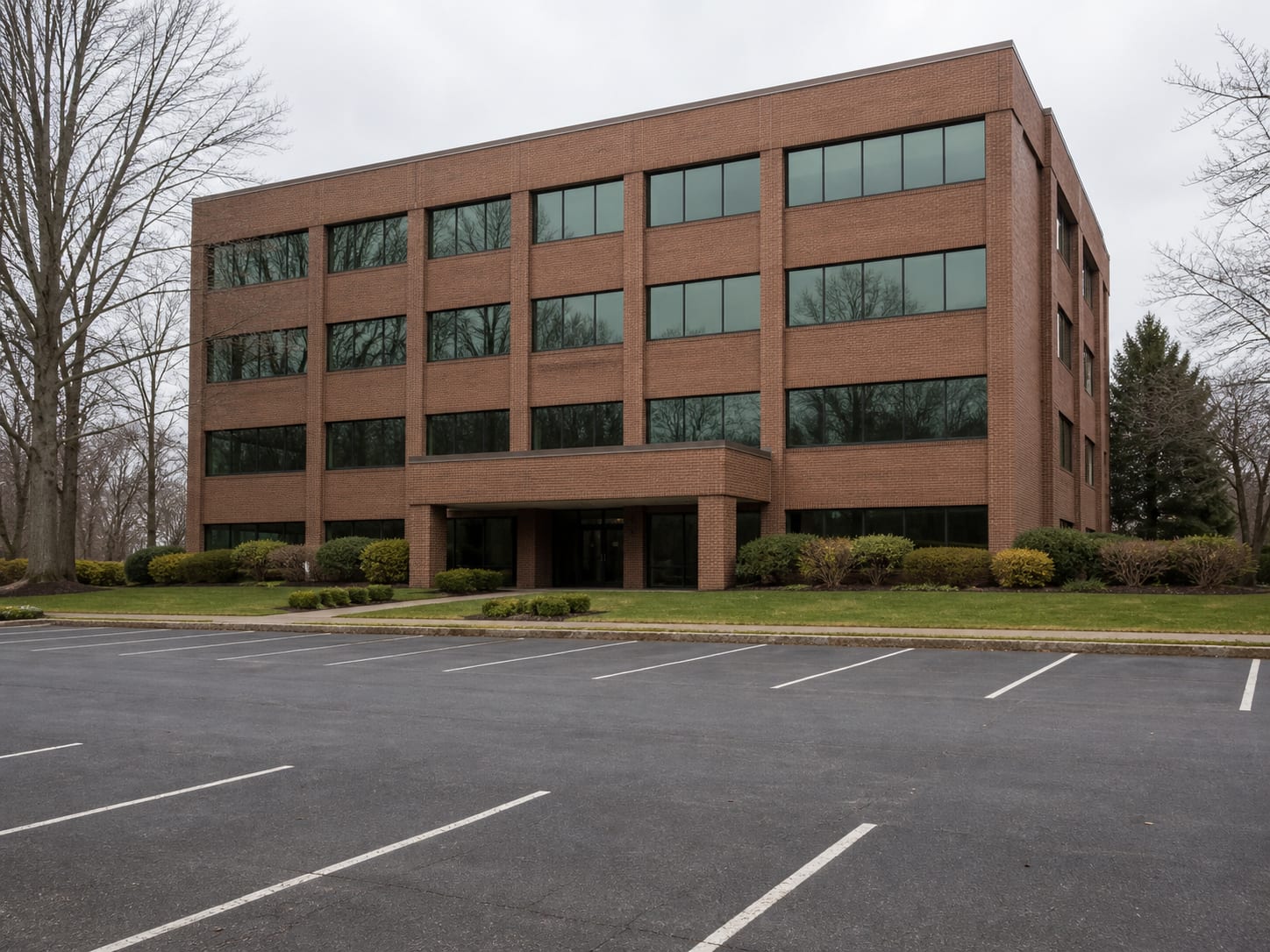
Warren has a genuine corporate office presence. The Warren Corporate Center is a multi building campus of brick and glass office buildings on wooded, landscaped grounds, and it changes hands at institutional scale. Work in that setting means shared ductwork, ceiling grids, raised floors in places, multiple tenants on a floor plate, building management and a lease structure between you and the space.
The other commercial fabric is the Mountain Boulevard corridor: single storey retail with a continuous canopy and a large parking apron, a village style two storey retail and office building with dormers and a cupola, and low brick two storey buildings on King George Road. These are smaller, often owner occupied or single tenant, and the constraints are trading hours and customer access rather than building management protocols.
What both have in common is that the moisture usually arrives the same way it does in the houses around them. Warren's soils are described by the Township as low percolation with high runoff, with a seasonal high water table within a foot of the surface in several soil associations, and the landform drops roughly 370 feet from the Second Watchung to where the Passaic and Middle Brook leave the Township. Slab edges, below grade plant rooms, and roof drainage on a large flat roof are where that shows up commercially.
The Sequence on an Occupied Building
Working an Occupied Commercial Building
- 1
Assess without disturbing
Moisture mapping and extent, done so nothing is released into occupied space.
- 2
Plan containment, route and hours first
This is where a commercial job is won or lost.
- 3
Notify in writing
What was found, what is being done, which areas, the schedule, and who to ask.
- 4
Isolate the air handling
So the building's own systems do not distribute anything through shared ductwork.
- 5
Contain, remove, clean
Affected porous material out, hard surfaces cleaned, the exit route protected.
- 6
Dry and verify
With meters on the materials.
- 7
Correct the source, then reinstate
Often the envelope, the roof or the plant rather than the occupied space.
Assess without disturbing. Moisture mapping, extent, and the source, done in a way that does not release anything into occupied space.
Plan the containment, the route and the hours before anything is opened. This is where a commercial job is won or lost.
Notify. In writing, factually, before the equipment arrives.
Isolate the affected air handling so the building's own systems do not distribute anything.
Contain, remove, clean. Porous material that is affected comes out. Hard surfaces are cleaned.
Dry and verify with meters on the materials.
Correct the source, which in a commercial building often involves the envelope, the roof, or the plant rather than anything in the occupied space.
Verify and document, including a clearance step where the tenancy or the insurer expects one.
Reinstate. Ceiling tiles, partitions, floor coverings and finishes, generally as a separate stage.
Where the Township Comes In
Remediation itself is not permitted work. The repair that stops the water often is.
Warren Township administers the New Jersey Uniform Construction Code, requires permits for most construction activity, and asks that inspections be requested at least 24 hours before the requested day, with no same day inspections. On a commercial project where reinstatement is on a schedule with tenants waiting, that 24 hour floor is worth building into the programme at the start.
Where the property sits in a regulated flood hazard area, the Township's Floodplain Administrator reviews development applications for flood hazard location and coordinates with the Construction Official.
What Drives the Cost
Occupancy, which is the biggest commercial specific factor: containment complexity, out of hours labour, and phasing.
Affected area and material, as anywhere.
Shared systems, because isolating and later verifying ductwork adds scope that a standalone building does not have.
Access and floor level, particularly where material has to travel through common parts.
The source correction, which in a commercial envelope can be a significant project of its own.
Documentation and clearance requirements, where a lease or an insurer specifies them.
Phasing the Work Around a Working Building
The technical work in a commercial building is not very different from a house. The scheduling is a different discipline entirely, and it is where a project succeeds or becomes a dispute.
Establish who instructs before anything else. Owner, managing agent, or tenant. The lease usually decides it and it usually turns on where the water came from and what the repairing obligations are. Work that starts before this is settled tends to stop halfway through it.
Survey out of hours if you can. The assessment is the least disruptive stage and the most informative, and doing it when the floor is empty removes the awkwardness of people watching equipment arrive before they have been told anything.
Notify before the equipment, not after. A short factual notice covering what was found, what is being done, which areas are affected, the schedule and who to contact. Occupants notice containment immediately and an unanswered question fills itself in badly.
Phase by zone, not by trade. Completing one bay entirely, reinstating it, and moving on gives occupants visible progress and returns space to use. Running every stage across the whole floor maximises the period during which nothing is usable.
Protect the route, not just the work area. Material leaving the containment travels through corridors, lifts and loading areas that people use. That path is part of the containment.
Isolate the air handling for the zone. On a shared system this is the difference between a contained problem and a distributed one, and it is the step most likely to be skipped under time pressure.
Build the inspection lead time in. Where reinstatement involves regulated work, Warren requires inspection requests at least 24 hours ahead and does not offer same day inspections. On a phased programme with tenants waiting, that floor compounds across every phase, and it is far better planned than discovered.
Keep a running record. For a commercial job the documentation is heavier because more parties will read it: the tenant, the insurer, possibly a regulator, and the next occupier's surveyor. Readings, equipment logs, an itemised scope and a clearance record where the lease requires one.
Frequently Asked Questions About commercial mold remediation Warren NJ
How do you test for mold in a commercial building?
The same principle as anywhere: find the moisture first, establish the extent, and sample only where a sample answers a question somebody has. In a commercial setting the question is usually documentary, for a tenant, an insurer or a lease, so the right first step is establishing what record will be accepted.
Do we have to close while the work happens?
Usually not. Most commercial work is done under containment with the affected air handling isolated, often outside operating hours. Full closure is the exception rather than the rule and depends on the extent and where it sits.
Is mold considered uninhabitable?
There is no single threshold that makes a space unusable, and it is not a determination a remediation contractor makes. What we provide is a documented condition, a scope and a verification, which is the material a habitability discussion should rest on.
Who pays, the landlord or the tenant?
The lease decides it, and it usually turns on where the water came from and what the repairing obligations are. Worth establishing before the work rather than after, because it also determines who instructs.
What do we tell tenants and staff?
What was found, what is being done, which areas are affected, the schedule, and who to contact. Factual and early. The alternative is that people fill the gap themselves.
Does this need a permit?
Not the remediation. The repair that stops the water frequently does, and Warren requires inspection requests at least 24 hours ahead with no same day inspections, which affects reinstatement scheduling.
Final Thoughts
If you manage or own a building in Warren with a moisture problem and people still in it, the first conversation is about containment, hours and what your tenants are told. ExecPro Restoration & Cleaning works on occupied commercial property, will phase the work around your operating hours, and will give you the documentation your lease and your insurer are going to ask for. Call ExecPro Restoration & Cleaning at (888) 300-3772 or get in touch. Emergency mold and water damage services are available 24/7, Monday through Sunday. Related: commercial services and water damage restoration.
Commercial Terms
Tap a term to see what it means.
Negative pressure. Air drawn out of the containment and filtered, so nothing escapes into occupied space.
Serving Warren
ExecPro Restoration & Cleaning provides mold remediation services in Warren, NJ, from inspection and testing through removal, drying, and post-remediation verification. Call (888) 300-3772 for 24/7 emergency response.
Related Articles
Staying Open: Commercial Mold Remediation in Plainsboro, NJ
Commercial mold remediation in Plainsboro, NJ for buildings that cannot close: containment, out of hours sequencing, tenant access, cost drivers and records.
How Commercial Mold Remediation Works While a New Jersey Building Stays Open
Commercial mold remediation in New Jersey while tenants and staff stay: containment, after-hours phasing, notice, and the closeout documents to ask for.
Mold Remediation in Warren, NJ: What the Work Involves
Mold remediation cost is driven by area, material and the source repair. How the work runs in a Warren, NJ home, and what makes one job bigger than another.