Commercial Air Quality Testing in New Jersey
When employees, tenants, or customers raise concerns about the air inside your building, you need documented answers. ExecPro Restoration & Cleaning provides professional commercial air quality testing across central and northern New Jersey, with lab-backed results and a clear path forward.
What Is Commercial Air Quality Testing?
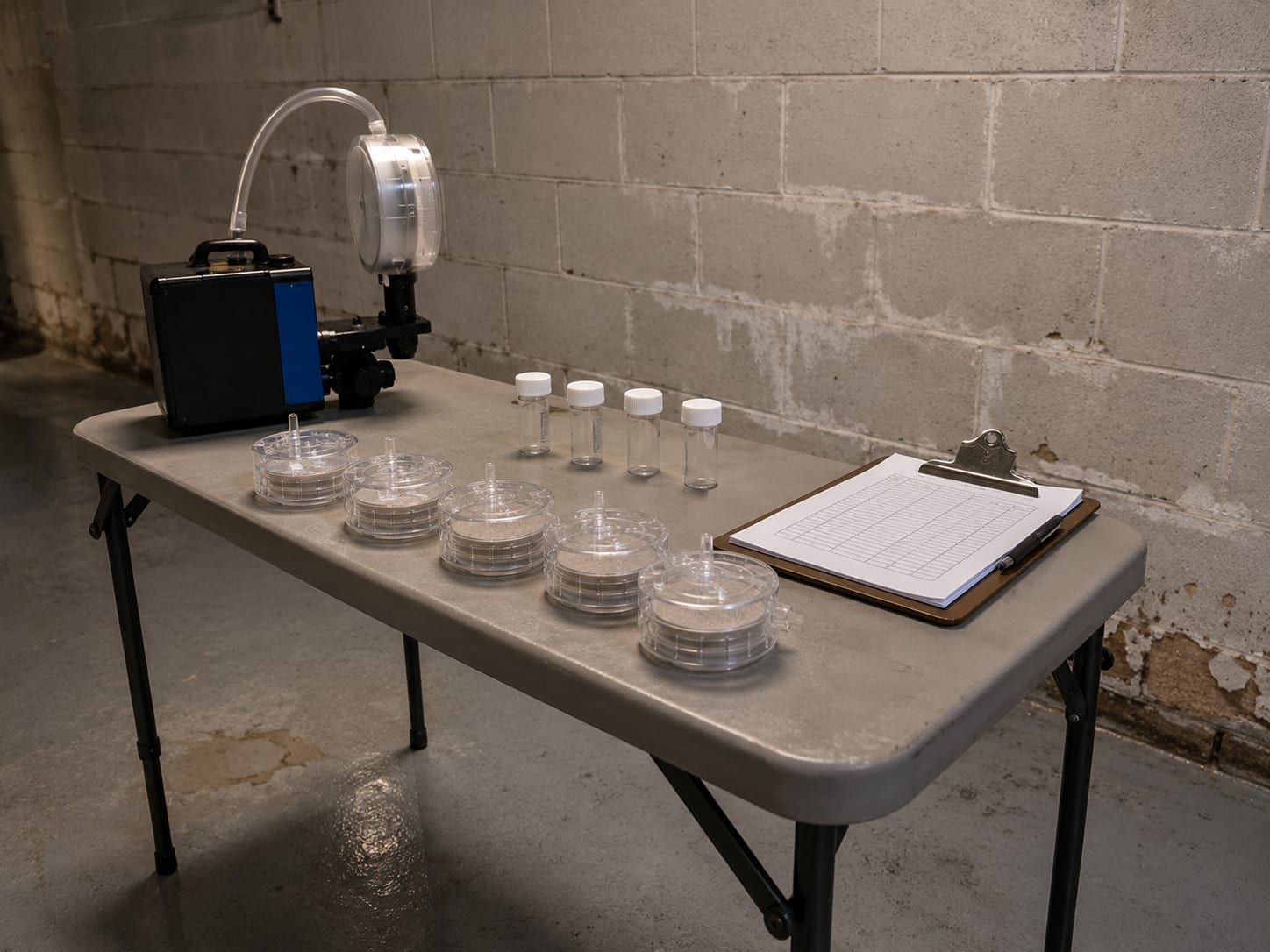
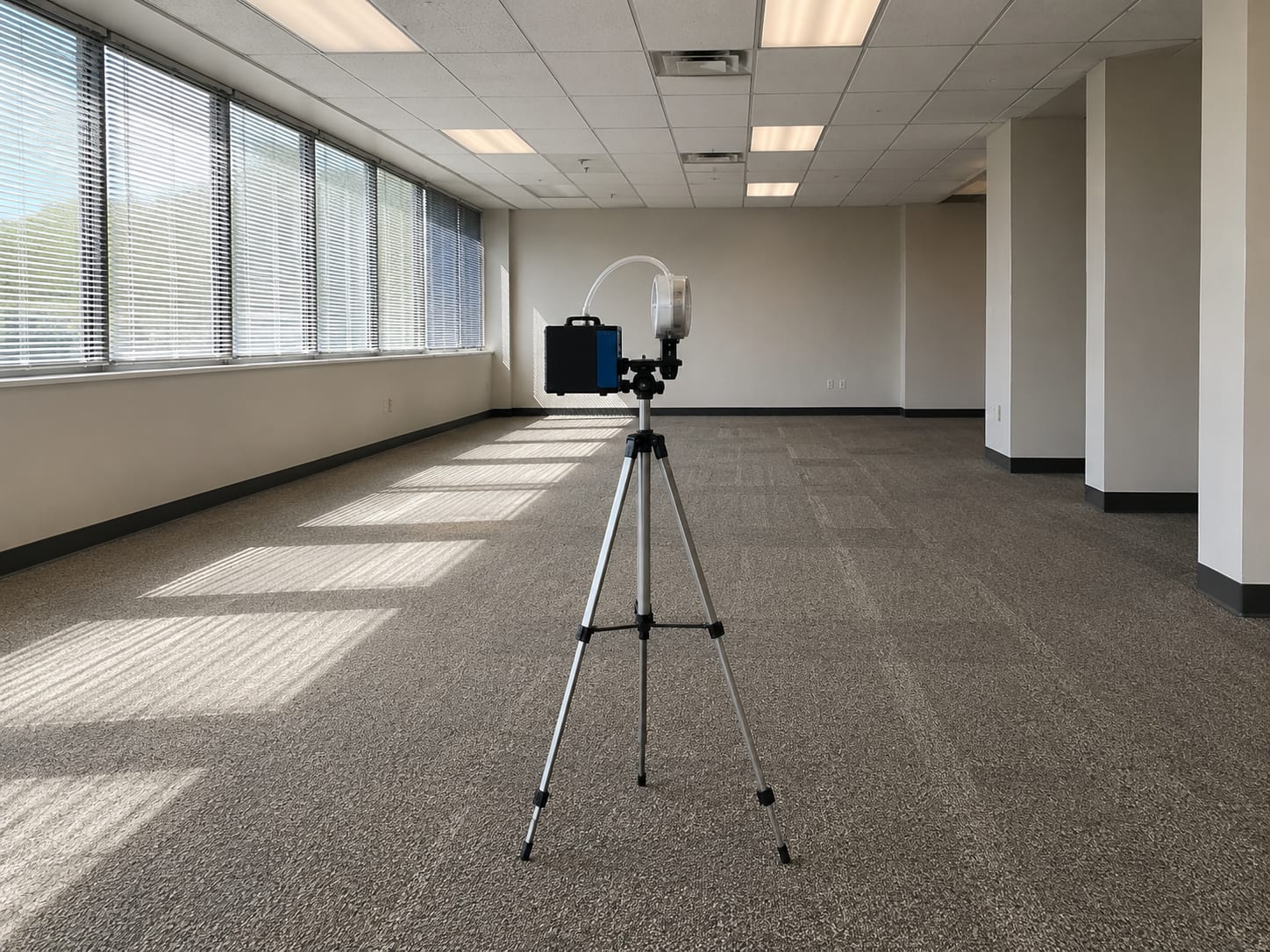
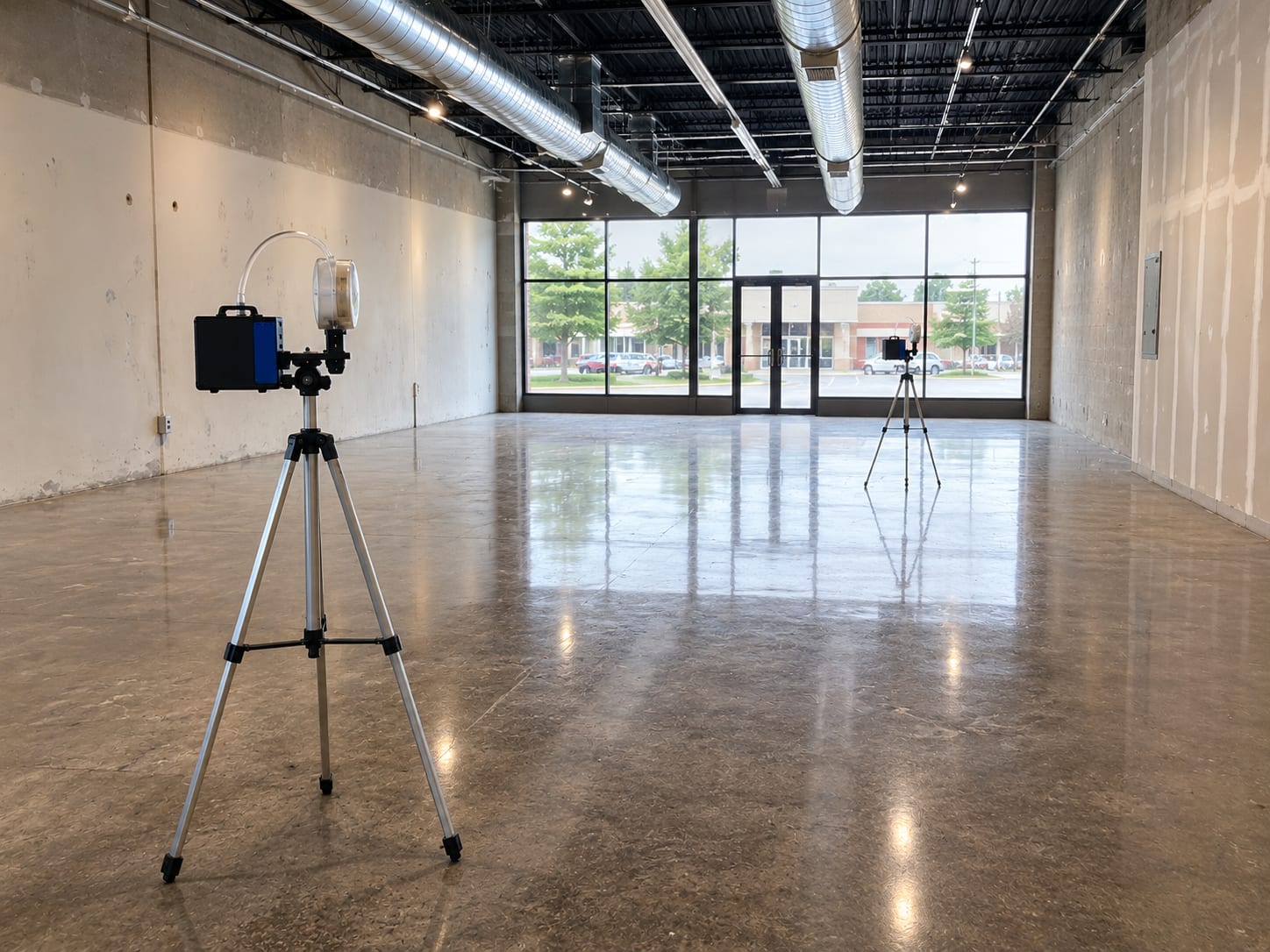
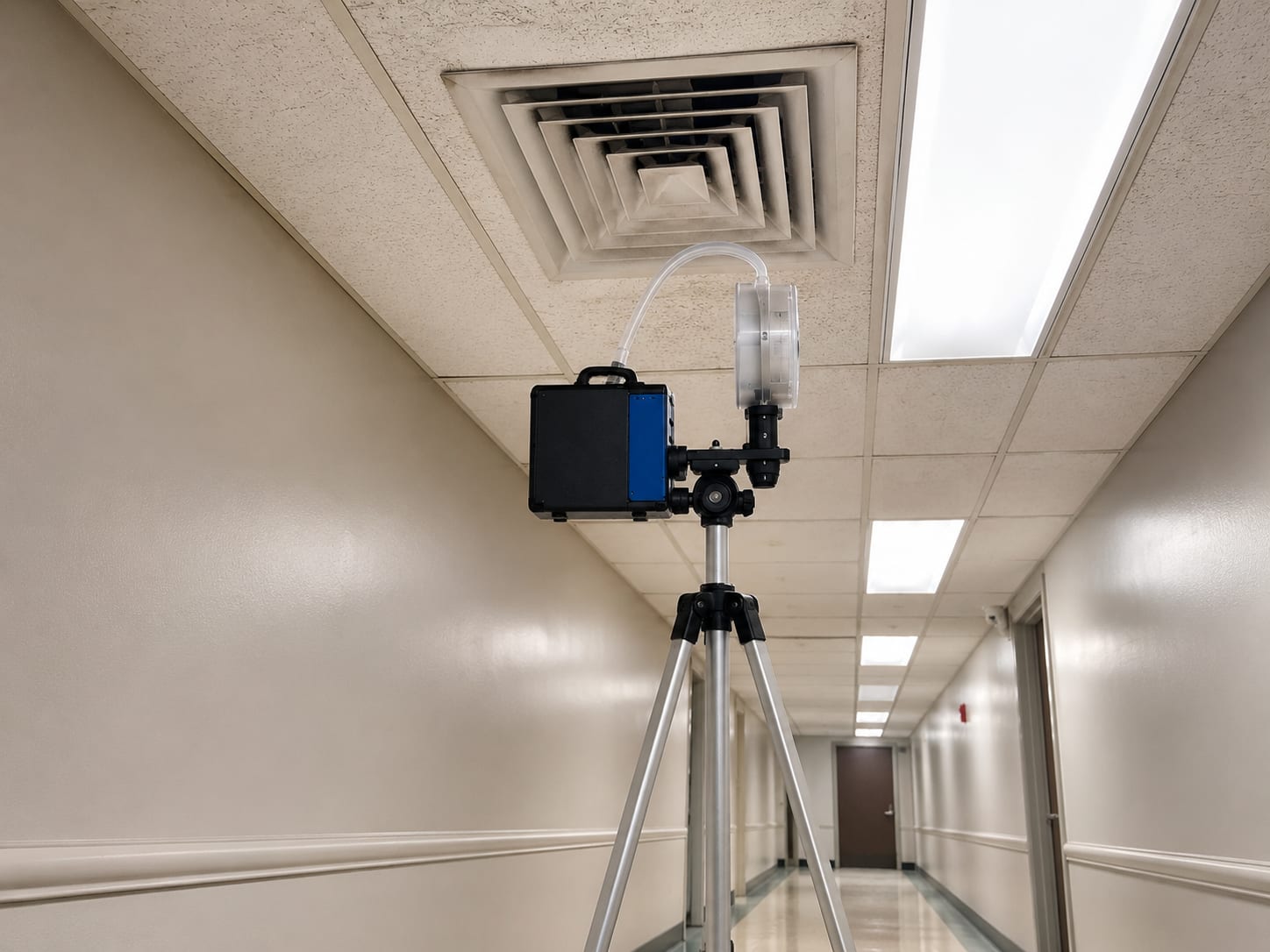
Commercial air quality testing is a systematic assessment of the contaminants, conditions, and environmental factors affecting the air inside a commercial building. A trained technician evaluates the space for mold, volatile organic compounds (VOCs), particulate matter, carbon dioxide, carbon monoxide, humidity, and ventilation performance, then delivers a written report documenting findings, identifying likely sources, and outlining recommended next steps. The process typically combines on-site measurements with targeted lab sampling, depending on the nature of the complaint.
This is not a pass/fail inspection. A thorough commercial IAQ assessment connects readings to real building conditions, whether that is a leaking HVAC unit, poor outdoor air intake, a recent renovation, or water intrusion behind a wall. You get context, not just numbers.
ExecPro Restoration & Cleaning serves commercial property owners, facility managers, property management companies, and employers throughout New Jersey. If occupants are reporting musty odors, headaches, chemical smells, or persistent respiratory irritation, a professional air quality assessment is the right starting point. Call (888) 300-3772 to discuss your situation.
When Should a Commercial Building Get Air Quality Testing?
The most common trigger is occupant complaints. When employees, tenants, students, or customers report symptoms, headaches, eye irritation, musty smells, or reactions that worsen inside the building and improve when they leave, that pattern is worth investigating. Air quality issues are often invisible until the complaints accumulate.
Testing also makes sense after specific building events. Water damage, a roof leak, a burst pipe, or flooding can introduce moisture that feeds mold growth inside walls, ceilings, and HVAC systems long after the visible water is gone. Recent renovations, new flooring, fresh paint, or HVAC changes can introduce VOCs and particles that linger at elevated levels for weeks.
Commercial buildings with high occupant density, limited fresh air intake, or older HVAC infrastructure often have chronic IAQ challenges that do not stem from a single event. Consistently high carbon dioxide levels typically signal inadequate fresh air exchange for the occupancy load. Uncontrolled humidity raises mold risk across the entire building. Testing moves you from anecdotal complaints to documented conditions you can act on.
Property managers handling multi-tenant spaces, apartment complexes, or office buildings often schedule air quality testing as part of due diligence after tenant turnover, following a remediation project, or in response to a formal complaint. A professional report on file protects the property owner and demonstrates a credible response to the concern.
What Does Commercial Air Quality Testing Actually Measure?
Commercial air quality testing is not one single test. The scope depends on the complaint, the building type, and what conditions are observed during the initial walkthrough. The main categories ExecPro Restoration & Cleaning evaluates in commercial settings are outlined below.
Mold and Biological Contaminants
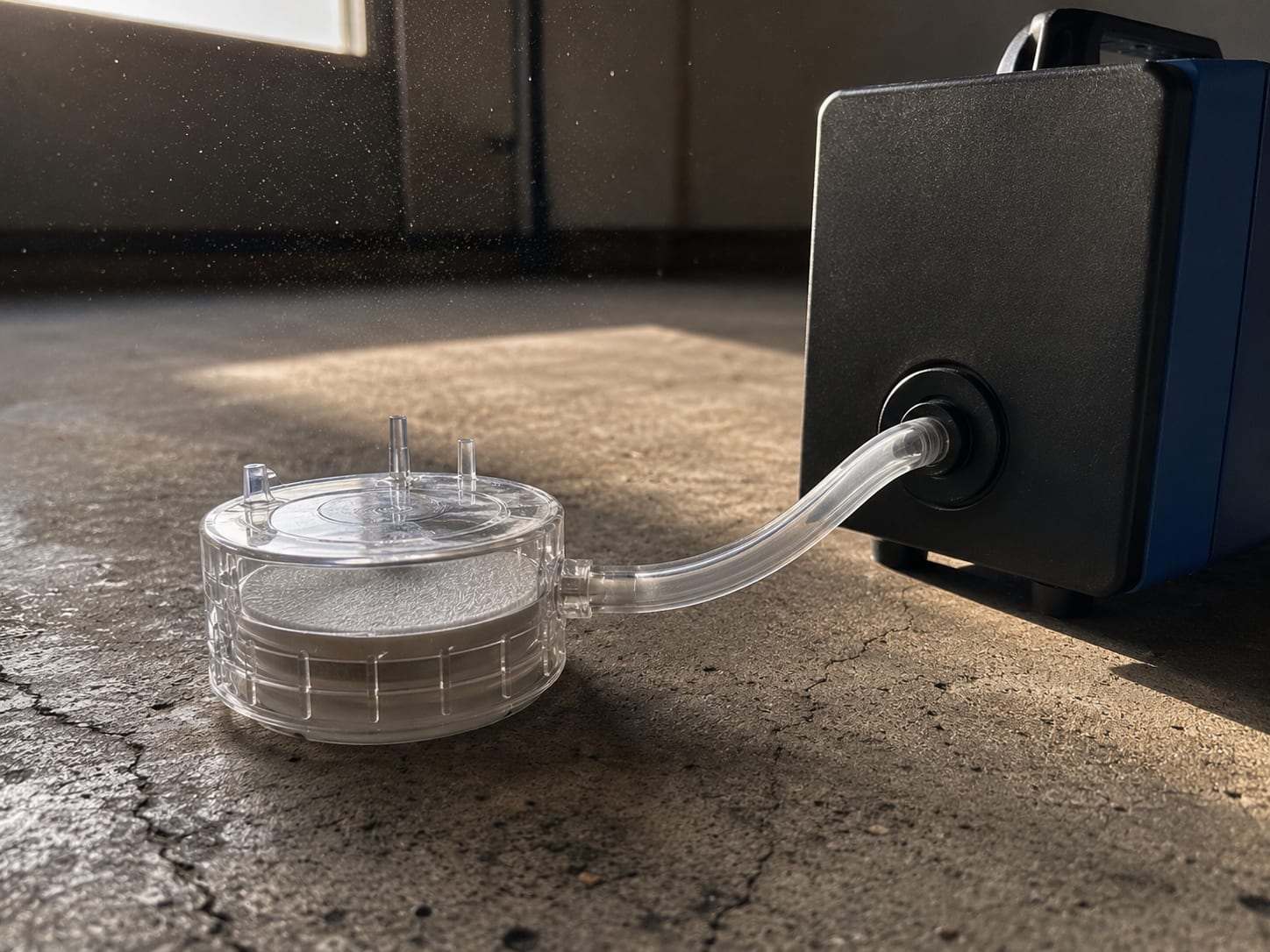
Air sampling and surface sampling identify mold spore types and concentrations. Results are compared to outdoor baseline samples and evaluated in the context of building conditions, moisture readings, and visible indicators. Our commercial mold testing service is available as a standalone scope when mold is the primary concern.
Volatile Organic Compounds (VOCs)
VOCs are gases released by building materials, cleaning products, adhesives, paints, and furniture. Elevated VOC levels can cause headaches and irritation. VOC testing identifies what compounds are present so sources can be targeted.
Particulate Matter
Fine and coarse particles come from dust, construction debris, HVAC issues, and outdoor infiltration. Portable meters measure particle concentrations across size ranges. Elevated readings may point to filtration problems, duct contamination, or an active particulate source.
Carbon Dioxide and Carbon Monoxide
Carbon dioxide is a ventilation indicator. High CO2 levels in occupied spaces typically signal inadequate fresh air exchange for the number of occupants. Carbon monoxide is a safety concern tied to combustion equipment. Both are measured as part of a thorough commercial assessment.
Temperature and Relative Humidity
Humidity control is central to IAQ. Consistently high relative humidity creates conditions where mold and dust mites thrive. Temperature and humidity readings across zones help identify HVAC performance issues and areas of moisture concern.
Allergens
Dust mites, pet dander, pollen, and other biological allergens can accumulate in commercial spaces, especially in carpeted areas or older duct systems. Allergen testing is worth including when occupant complaints suggest allergic responses.
How Does the Commercial Air Quality Testing Process Work?
Every commercial building is different, so the process starts with understanding your specific situation before any equipment comes out. ExecPro Restoration & Cleaning approaches a commercial IAQ assessment from start to finish as follows.
Scroll the steps sideways to follow the full process.
Who Needs Commercial Air Quality Testing in New Jersey?
Any commercial property where occupants spend significant time and where air quality complaints, events, or conditions have created uncertainty may need testing. That covers a wide range of building types and ownership situations.
Office building owners and managers deal with IAQ complaints regularly, especially in buildings with older HVAC systems, high occupant density, or recent nearby construction. A documented assessment gives facility management something concrete to act on and a professional report to share with tenants.
Property management companies handling multi-tenant commercial properties or apartment complexes often need air quality testing after water damage events, following mold remediation, or in response to a formal tenant complaint. Our property management mold services are designed for multi-unit and portfolio situations, and commercial IAQ testing is a natural complement to that work.
Commercial real estate buyers and sellers face IAQ questions during transactions. An air quality assessment prior to closing can surface conditions that affect value, inform remediation negotiations, or document a clean bill of health for the buyer. ExecPro Restoration & Cleaning also provides commercial buyer and seller protection services for transactions involving commercial property.
Employers in NJ with workplace air quality concerns may have obligations under OSHA guidelines or NJ PEOSH rules, particularly in public-sector workplaces. A professional assessment on file demonstrates that the employer investigated through qualified channels. The assessment documents environmental conditions, though it does not constitute medical diagnosis or occupational health determinations, which belong with qualified healthcare professionals.
Post-remediation testing is another frequent use case. After commercial mold removal or any remediation project, post-remediation verification confirms that the work achieved the intended result before occupants return to the space.
What Makes a Commercial Air Quality Report Actually Useful?
Many commercial property owners have received IAQ reports that read like a stack of lab printouts with a cover sheet. Numbers without context do not help you make decisions or communicate findings to tenants, insurers, or contractors.
A useful report connects the results to the building. It explains why a mold spore count at a particular location is or is not concerning, given the outdoor baseline and the HVAC conditions in that zone. It identifies which VOCs were found, at what concentrations, and what building materials or products are likely sources. It flags humidity zones where conditions are favorable for mold growth even if visible mold has not appeared yet.
The practical recommendations section matters most to the people who have to act on the findings. Facility managers need to know what to fix, in what priority order, and whether they need a remediation contractor, an HVAC technician, a building contractor, or all three. Property owners dealing with tenant complaints need documentation that stands up to scrutiny. Insurers and legal teams reviewing claims need photos, sample locations, methods, and limitations clearly stated.
ExecPro Restoration & Cleaning prepares reports designed to support real decisions. When findings require remediation, the team can take that step directly rather than handing you a report and leaving you to find another contractor.
Why Choose ExecPro Restoration & Cleaning for Commercial IAQ Testing?
Commercial air quality testing is only as useful as the process and people behind it. Here is what sets ExecPro Restoration & Cleaning apart from generic testing services.
Source-Focused Approach
Numbers alone do not solve problems. The team connects results to real building conditions so you understand what is driving the concern and what needs to change, not just what the meter read at a point in time.
Full-Service Capability
If testing reveals mold, water damage, or remediation needs, ExecPro Restoration & Cleaning can handle the remediation, build-back, and verification under one roof. You are not starting over with a new contractor after every phase.
Accredited Lab Analysis
Samples requiring laboratory analysis are sent to accredited labs. Methodology, sample locations, and chain of custody are documented in the report, supporting use by insurers, property managers, legal teams, and contractors.
Licensed and Insured
ExecPro Restoration & Cleaning is licensed and insured, providing the credentials a commercial property owner needs before authorizing a professional assessment of their building.
Multi-Zone and Multi-Site Capability
Larger commercial clients, including office complexes, apartment communities, and multi-building portfolios, can have testing coordinated across multiple suites, floors, HVAC zones, or properties with consistent reporting.
Integrated Post-Remediation Testing
When remediation has been completed, the same team that tested the building can verify the outcome. Indoor air quality testing after remediation confirms clearance before occupants return, with documentation supporting re-occupancy decisions.
Frequently Asked Questions About Commercial Air Quality Testing
The on-site portion typically takes two to four hours for a mid-size commercial space, depending on building size, the number of zones to be tested, and the complexity of the complaint. Larger buildings with multiple floors or HVAC systems take longer. Lab results for mold or VOC samples generally take a few business days, after which the written report is prepared.
Serving Commercial Properties Across New Jersey
ExecPro Restoration & Cleaning provides commercial air quality testing throughout central and northern New Jersey. The service area covers Mercer, Middlesex, Somerset, Hunterdon, Morris, Monmouth, Ocean, and Burlington counties, including Princeton Junction, West Windsor, Princeton, Plainsboro, Cranbury, Trenton, Hamilton, New Brunswick, Bridgewater, Flemington, Freehold, and Lakewood.
Coverage also extends to Shore communities such as Red Bank, Middletown, and Long Branch, as well as inland communities including Bedminster, Basking Ridge, Bernardsville, and Warren. Properties throughout the Raritan Valley corridor from Hillsborough and Manville through Somerset and Franklin are well within the service area, along with South Brunswick, Dayton, Monmouth Junction, East Brunswick, and North Brunswick.
If you are not certain whether your location is covered, calling (888) 300-3772 is the fastest way to confirm.