Basement Flood Cleanup in New Jersey
When your basement floods, fast and thorough cleanup is the difference between a quick recovery and months of hidden moisture problems. ExecPro Restoration & Cleaning handles water extraction, structural drying, and full documentation so your basement is genuinely dry before any rebuilding begins.
What Is Basement Flood Cleanup, and What Do You Actually Get?
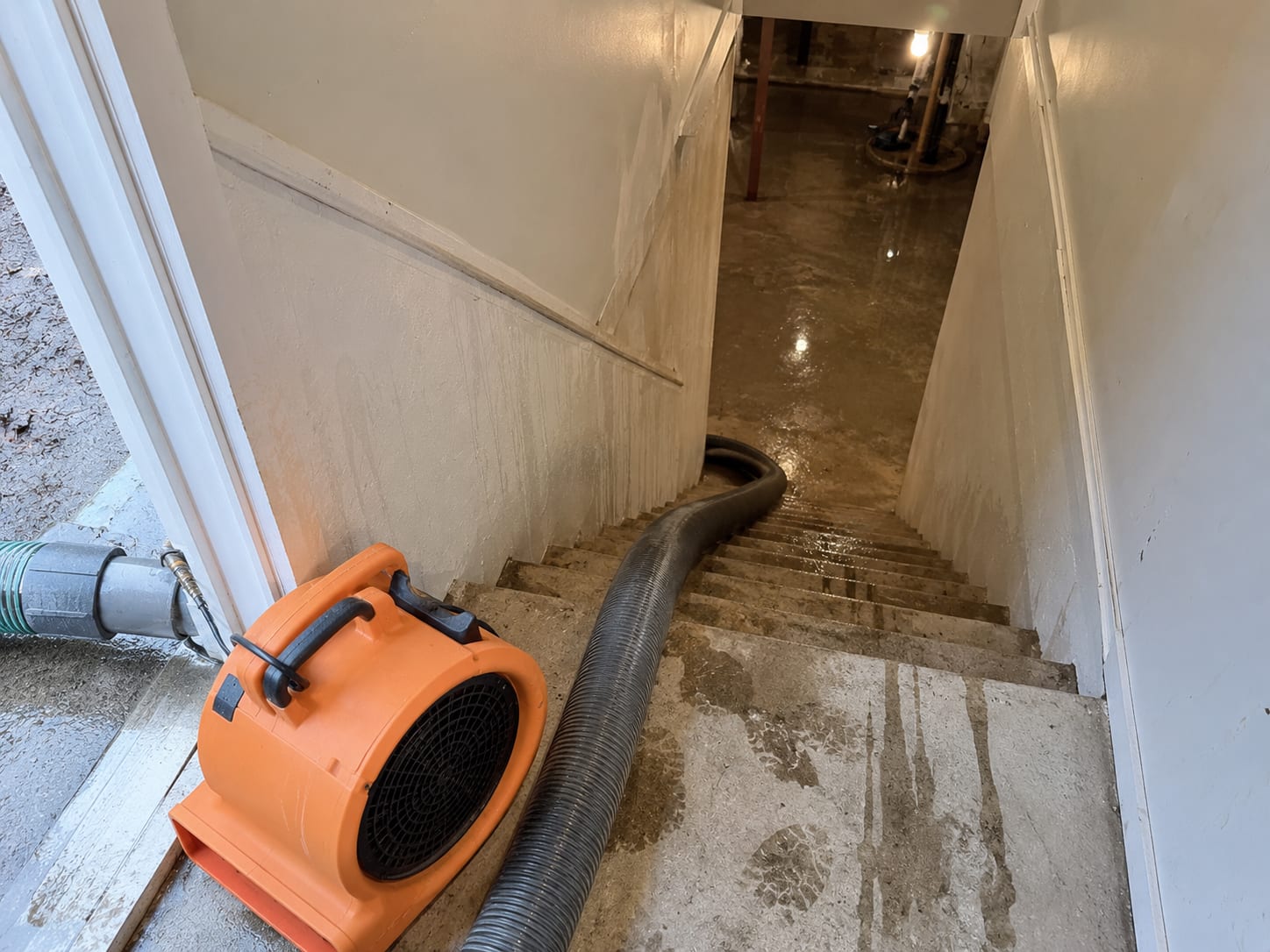
Basement flood cleanup is the full process of removing standing water, extracting moisture from building materials, drying the structural assembly to an acceptable standard, and documenting every step from start to finish. When ExecPro Restoration & Cleaning responds to a flooded basement, you get water extraction, moisture mapping with thermal imaging and calibrated meters, industrial dehumidification and air movement, material removal where needed, and a written closeout report you can hand directly to your insurance adjuster or contractor. The goal is a basement that is verifiably dry, not just one that looks dry on the surface.
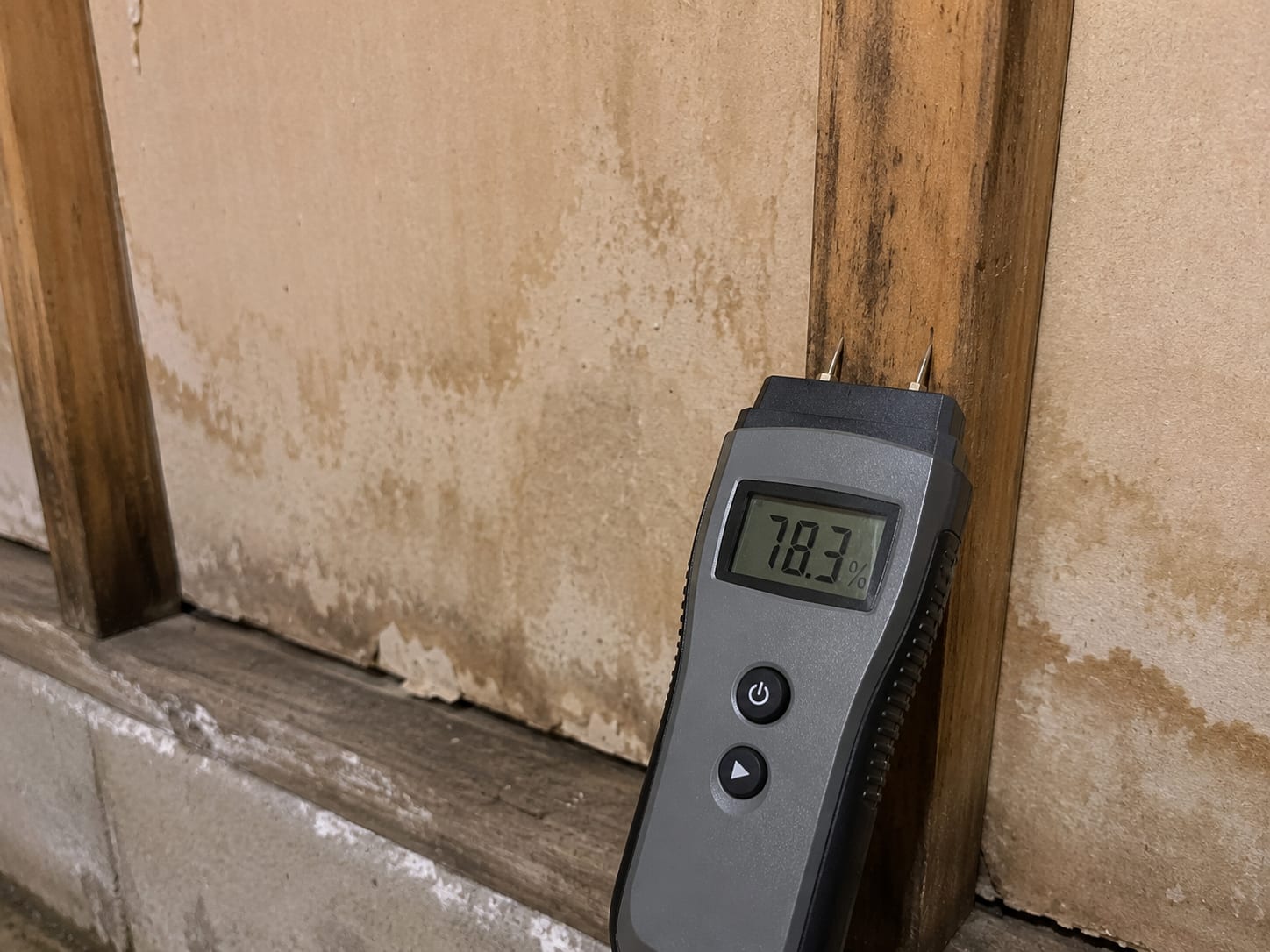
That distinction matters more than most homeowners realize. Basements in New Jersey hold moisture in wall bases, under flooring, inside framing cavities, and behind finished drywall long after the visible water is gone. A cleanup that stops at extraction without tracking moisture in those assemblies leaves the door open for mold growth within days. ExecPro's process accounts for hidden moisture from the start, which is why the work includes daily moisture readings tracked until materials reach an acceptable dry standard.
Why Do New Jersey Basements Flood So Often?
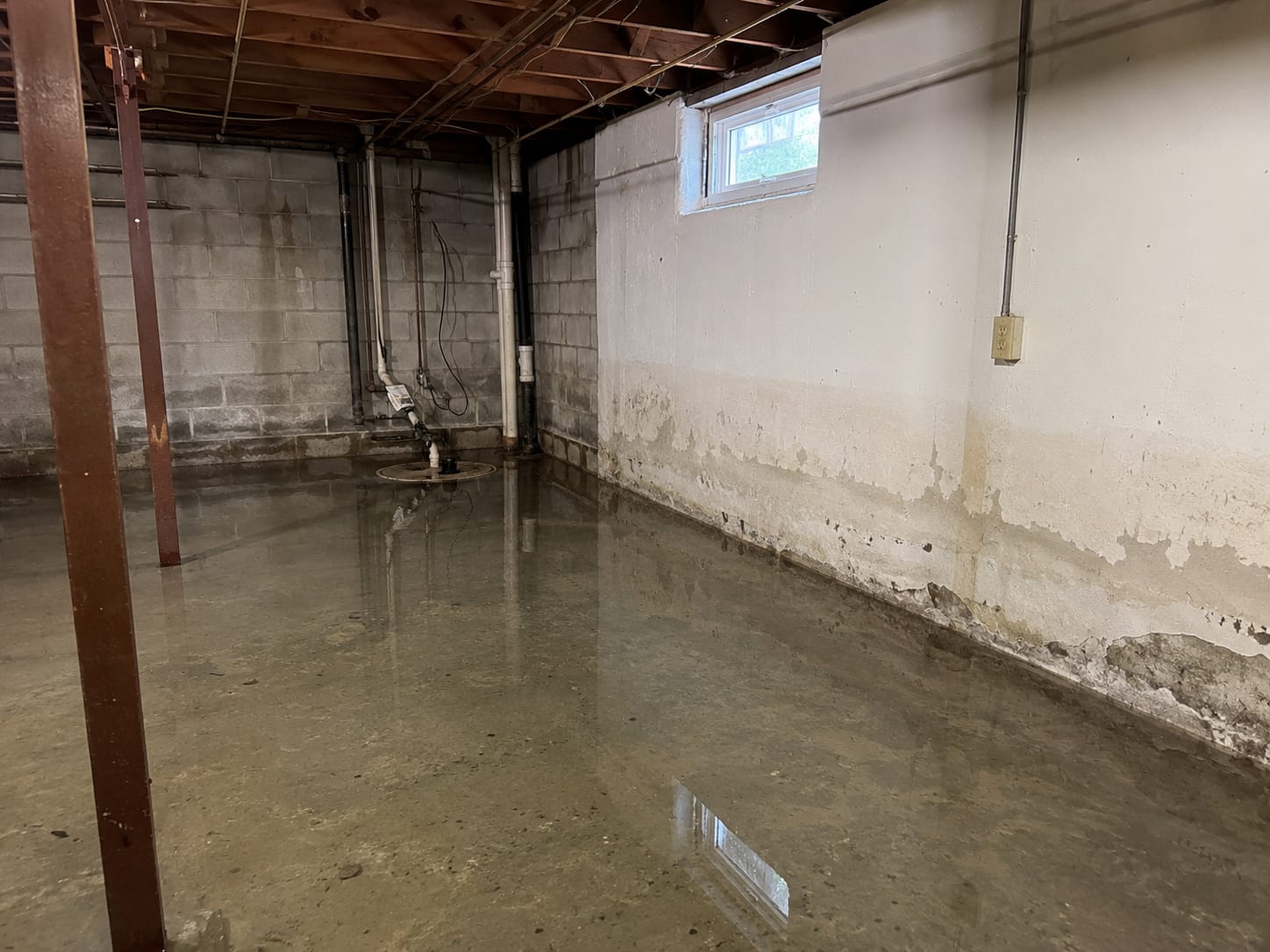
New Jersey's combination of older housing stock, high seasonal rainfall, and significant flood-prone geography makes basement flooding a routine problem across the state. Heavy rain events overwhelm municipal stormwater systems, backing water up through floor drains and window wells. Sump pumps fail during the storms that need them most, especially when the power goes out. Foundation cracks that seem minor during dry weather become entry points the moment the water table rises. Finished basements, which are common across the communities ExecPro serves from Princeton Junction to Bridgewater to Cherry Hill, add finished materials like drywall, carpet, and insulation that absorb moisture quickly and release it slowly.
The source of the flooding also determines how the cleanup must be handled. Clean water from a broken supply line or heavy rain seepage is treated differently from sewage backup or surface floodwater, which carries contamination that affects what materials can be salvaged, how technicians protect themselves, and what disposal steps apply. Before anything else, ExecPro identifies the water category so the cleanup proceeds correctly and safely.
How Does the Basement Flood Cleanup Process Work?
ExecPro Restoration & Cleaning follows a documented, step-by-step process built on IICRC S500 water damage restoration standards. Here is what happens from the moment the team arrives to the day the job is closed out.
Scroll the steps sideways to follow the full process.
What Happens If You Don't Act Quickly Enough?
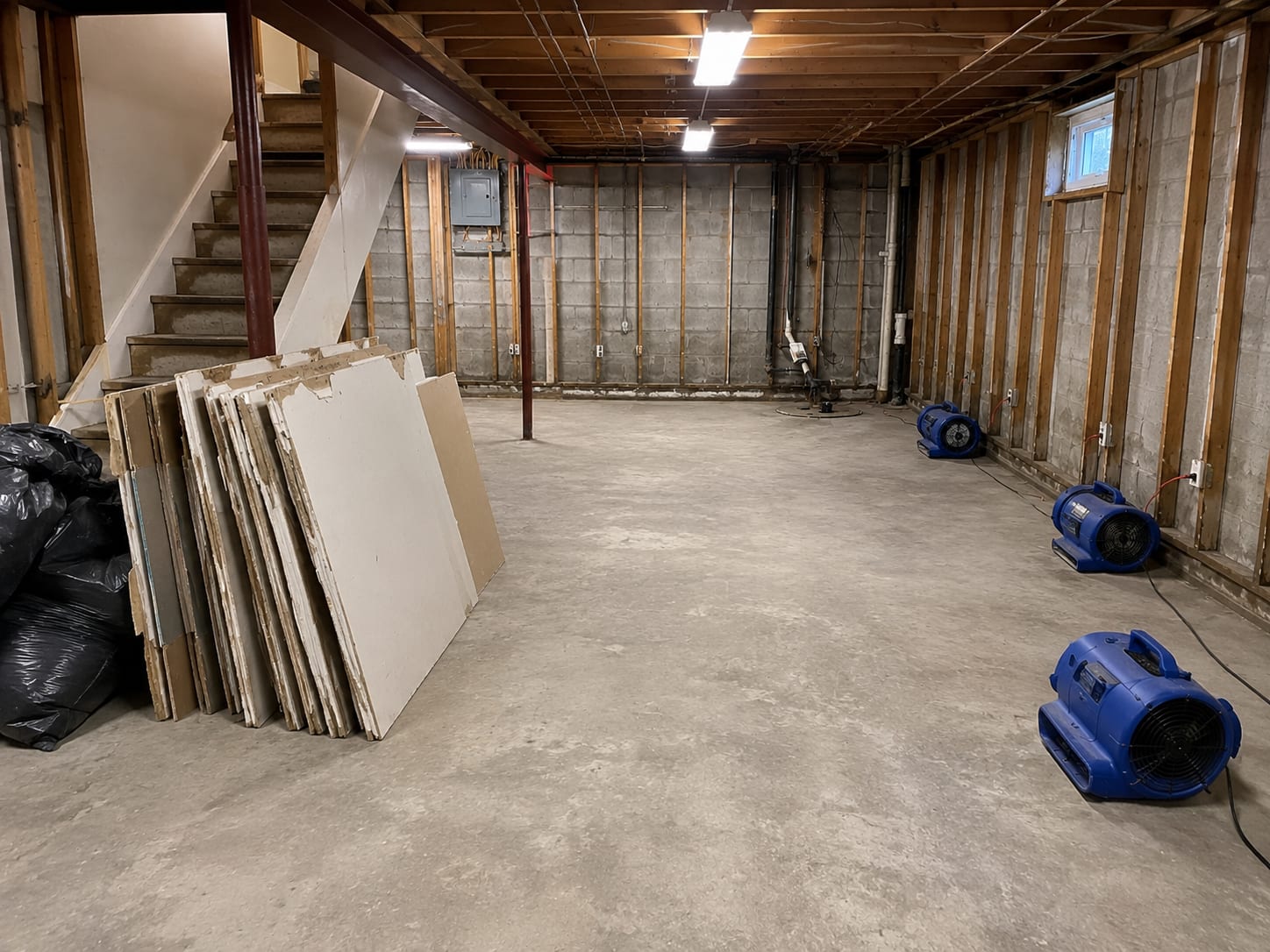
The first 24 to 48 hours after a basement floods are the most critical window you have. Mold can begin developing on wet materials within that timeframe when conditions are right, and the structural drying process takes significantly longer the more saturated building materials become. Carpet padding acts like a sponge against a concrete slab, holding moisture against the floor and against the bases of any finished walls. The longer it sits, the greater the moisture load that transfers into the surrounding structure.
Finished basements present a particular challenge because the visible damage rarely tells the whole story. You might extract the standing water, pull up the wet carpet, and think the hard part is done, only to find weeks later that the drywall behind the baseboards is still holding moisture at levels that support mold growth. That is exactly the scenario that basement mold remediation is designed to address, but it is a much larger undertaking than cleanup handled correctly from the start. Calling ExecPro Restoration & Cleaning early keeps the scope manageable.
If there is any concern about mold that may have developed before or during the flooding event, air quality testing can provide a clear picture of what is present and where, so remediation and cleanup decisions are based on actual data rather than guesswork.
What Makes ExecPro Restoration & Cleaning the Right Choice for This Work?
ExecPro Restoration & Cleaning is a licensed and insured restoration company serving homeowners and property managers across central and northern New Jersey.
Documented Process, Not Just Equipment
Anyone can rent extraction equipment. What protects you is a documented process with daily moisture readings, photo records, and a written closeout report. ExecPro tracks every measurable detail so you have the documentation you need for insurance and for the contractor who will handle the rebuild.
Moisture Detection Beyond the Obvious
Thermal imaging and calibrated moisture meters find wet areas that visual inspection misses entirely. This matters especially in finished basements where wall bases, flooring assemblies, and framing hold moisture long after the surface feels dry to the touch.
Equipment Matched to the Job
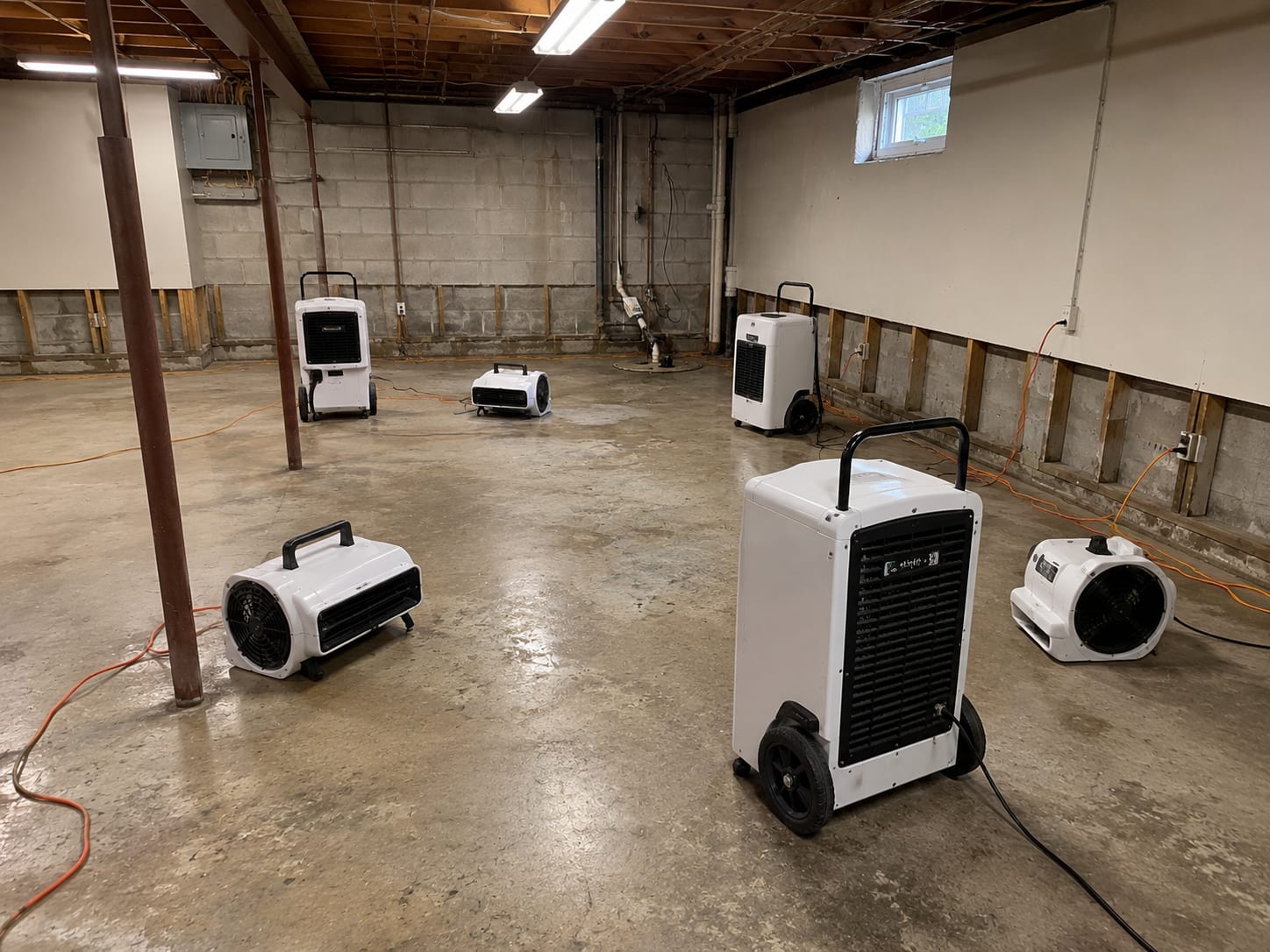
High-capacity dehumidifiers, low-profile air movers designed for tight basement spaces, and air scrubbers are configured to the specific dimensions and damage class of your basement. The equipment setup is not one-size-fits-all.
Mold Prevention Built Into Every Cleanup
Preventing mold is part of the cleanup, not a separate add-on. Removing unsalvageable materials, drying to a verified standard, and treating surfaces appropriately all reduce the conditions that allow mold to take hold after the water is gone.
Connected to Full Rebuild Capability
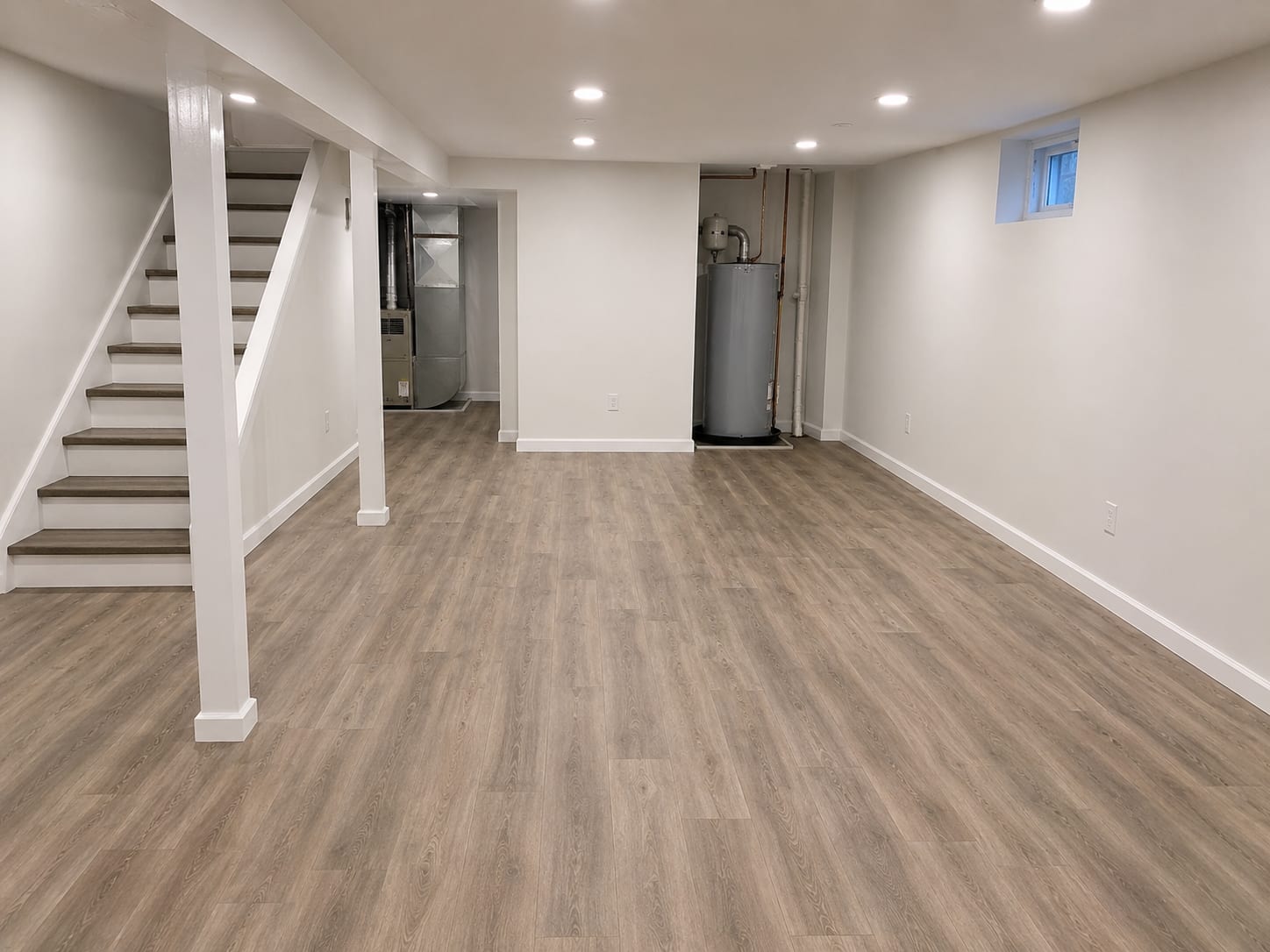
Once drying is complete and verified, ExecPro Restoration & Cleaning can also handle the rebuild through post-water damage reconstruction, including drywall, flooring, and structural repairs. You don't have to coordinate a separate contractor for what comes next.
Wide Service Area Across New Jersey
ExecPro serves communities from Princeton and the surrounding Mercer County area through Somerset, Hunterdon, Monmouth, Burlington, and beyond. Whether you're in Flemington, Red Bank, Mount Laurel, or New Brunswick, the same documented process applies.
What About Mold After a Basement Flood?
Mold is the natural follow-on concern after any basement flooding event, and it deserves a straightforward answer. If the cleanup is handled quickly and the drying process reaches verified targets throughout the structural assembly, the conditions for mold growth are significantly reduced. The problem is that many cleanups, especially those done without proper moisture mapping, leave wet pockets in wall bases, under flooring, and inside framing cavities that never fully dry. Those areas become active mold sites within days or weeks.
If you find or suspect mold during or after the cleanup process, that is a separate scope of work from water damage mitigation. Mold remediation follows its own set of standards, including containment, removal of affected materials, treatment, and post-remediation verification. ExecPro Restoration & Cleaning handles both sides of that equation, which simplifies the process considerably when water damage and mold are present at the same time.
For properties where moisture has been an ongoing problem rather than a single event, indoor air quality testing can identify what is actually circulating in the air before and after any remediation work. That kind of objective baseline protects you and creates a clear record for insurance or real estate purposes.
Basement Flood Cleanup and Your Insurance Claim
Insurance coverage for basement flooding depends heavily on how and where the water entered your home, and on the specific terms of your policy. Standard homeowners insurance and flood insurance are entirely separate products. Water that enters through a backed-up sewer line, water that comes in because of surface flooding, and water from a failed sump pump may each be treated differently depending on your coverage. ExecPro Restoration & Cleaning does not make coverage determinations, but the documentation the team produces is built to support your claim and give your adjuster the organized, thorough record they need.
That documentation includes photos from each phase of the job, daily moisture readings with equipment logs, scope notes describing what was found and what was done, and a final closeout report confirming drying completion. It is worth contacting your insurance professional early in the process so coverage questions are resolved before rebuild work begins.
Basement Flood Cleanup Across New Jersey
ExecPro Restoration & Cleaning responds to basement flooding events across a wide stretch of central and northern New Jersey, including Mercer, Somerset, Hunterdon, Middlesex, Monmouth, Burlington, and Morris counties. The communities served range from Trenton and Hamilton in the south to Bernardsville and Far Hills in the north, and from Freehold and Middletown on the coast to Flemington and Clinton in Hunterdon County.
Whether you're dealing with a sump pump failure in Basking Ridge, stormwater seepage in South Brunswick, or a backed-up drain in Cherry Hill, the process is the same: identify the source, extract the water, map the moisture, dry the structure to a verified standard, and document every step. That consistency is what makes the difference between a cleanup that truly resolves the problem and one that leaves you dealing with consequences months later.
Property managers, landlords, and real estate professionals can also count on ExecPro for multi-unit and commercial properties. If you're managing a portfolio that includes finished basement units or garden-level apartments, having a restoration company that documents the work properly protects you and your tenants.
Frequently Asked Questions About Basement Flood Cleanup
The extraction phase usually happens within the first visit, but structural drying takes several days in most residential basements. The IICRC S500 standard targets drying materials to pre-loss moisture levels, which typically requires three to five days of active drying with daily moisture readings confirming progress. Finished basements with multiple material layers often take longer than unfinished ones.