Commercial Mold Testing for NJ Properties
When your building needs documented answers about mold, ExecPro Restoration & Cleaning provides professional air sampling, surface testing, and written reports built for facility managers, property owners, insurers, and legal teams across central and northern New Jersey.
What Is Commercial Mold Testing?
Commercial mold testing is the process of collecting air samples, surface samples, or both from a commercial building to document whether mold is present, where it is concentrated, and at what levels relative to normal outdoor or unaffected indoor conditions. ExecPro Restoration & Cleaning delivers written reports that include sample locations, lab results with chain-of-custody documentation, photos, moisture observations, and practical interpretation of findings. You walk away with a document you can share with facility managers, tenants, insurers, attorneys, or contractors, not just a number on a page.
Testing is not always the first step, and a reputable provider will tell you that. The EPA is clear that when visible mold is present, sampling is usually unnecessary. The smarter workflow starts with a visual inspection, moisture readings, and a review of building history before any samples are pulled. ExecPro builds its commercial mold testing around that inspection-first approach, so every sample collected is answering a specific question rather than generating data for its own sake.
The situations that most often call for documented commercial testing include occupant or tenant complaints about musty odors or visible staining, post-remediation verification to confirm a work area is clear for re-occupancy, insurance or legal documentation needs, and pre-transaction due diligence on commercial properties. Knowing which situation applies to your building shapes the entire sampling strategy before a single air pump is turned on.
Why Do Commercial Buildings Need Mold Testing?
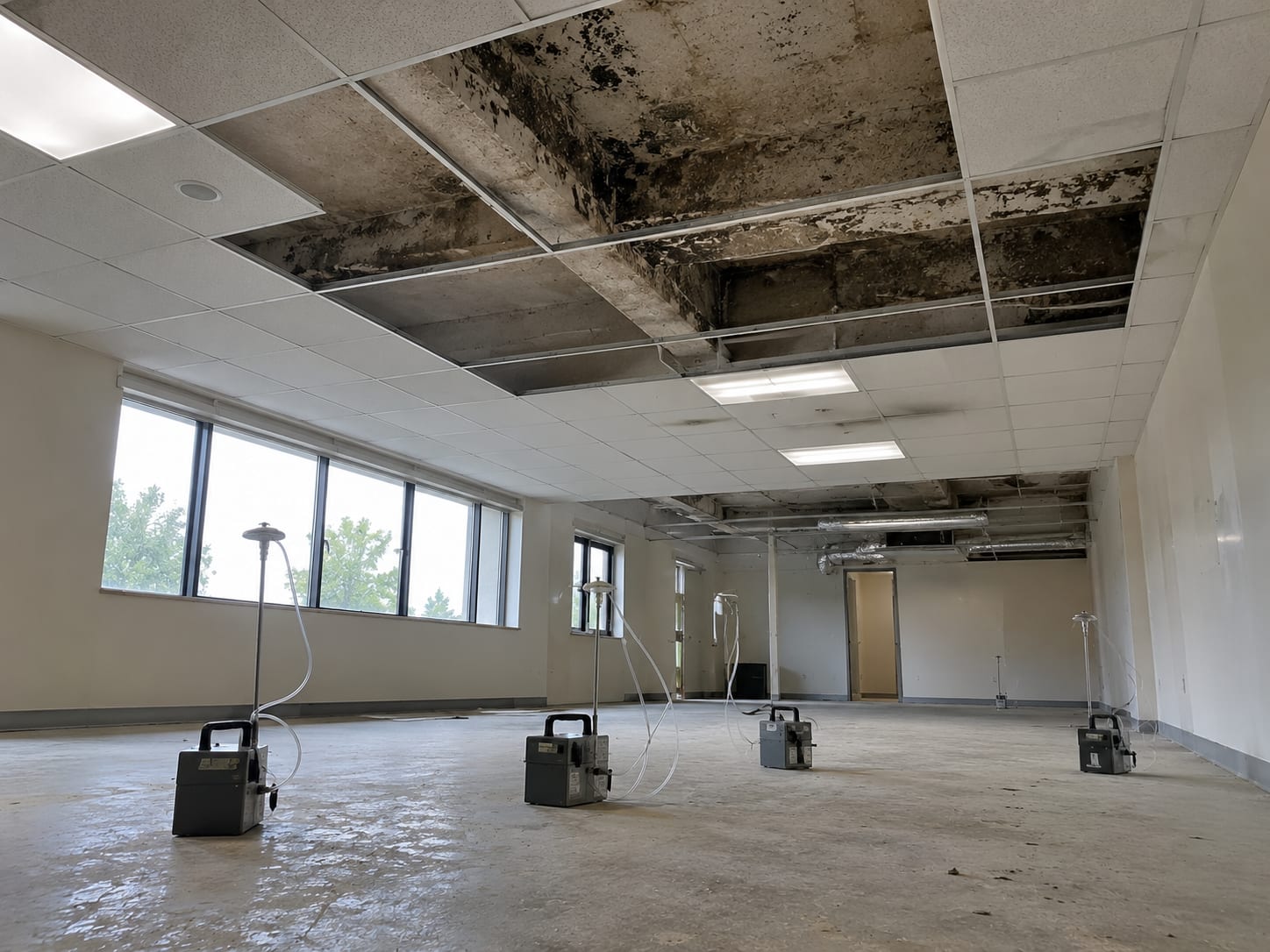
A commercial building is not just a larger version of a house. It is a layered environment with mechanical systems, multiple tenant spaces, common areas, storage rooms, and occupants who spend more waking hours inside than most homeowners do. When something goes wrong with moisture, whether from a slow HVAC drain pan, a roof leak that went unreported, or years of humidity imbalance in a basement, the exposure footprint can be much wider than what a visual walkthrough reveals.
Tenant and employee complaints are one of the most common triggers for commercial mold testing. Someone reports a musty smell in a specific suite. Others mention allergy-like symptoms that seem to improve on weekends. A property manager notices a pattern of complaints after a particular wing was recarpeted or after a plumbing repair two years ago. These observations do not confirm a mold problem, but they are exactly the kind of context that shapes a smart sampling plan. ExecPro takes complaint history seriously because the locations people flag are often the best place to start.
Documentation is the other major driver. Insurers want evidence before and after a remediation. Attorneys handling tenant disputes need environmental data, not opinions. Buyers of commercial real estate need to know what they are acquiring. In each of those cases, a professional written report with accredited lab results and proper chain-of-custody handling carries weight that a phone conversation or a quick visual check simply cannot provide. ExecPro Restoration & Cleaning produces reports written for multiple audiences, because the same document often travels from a property owner to a facility manager to an adjuster to legal counsel.
How Does Commercial Mold Testing Work?
ExecPro Restoration & Cleaning follows a structured testing workflow designed for commercial properties of any size, from single-tenant office suites to multi-floor buildings with complex HVAC systems.
Scroll the steps sideways to follow the full process.
What Types of Samples Are Used in Commercial Mold Testing?
Different sample types answer different questions. ExecPro selects sample methods based on the specific concern, building conditions, and what the final report needs to support.
Air Samples
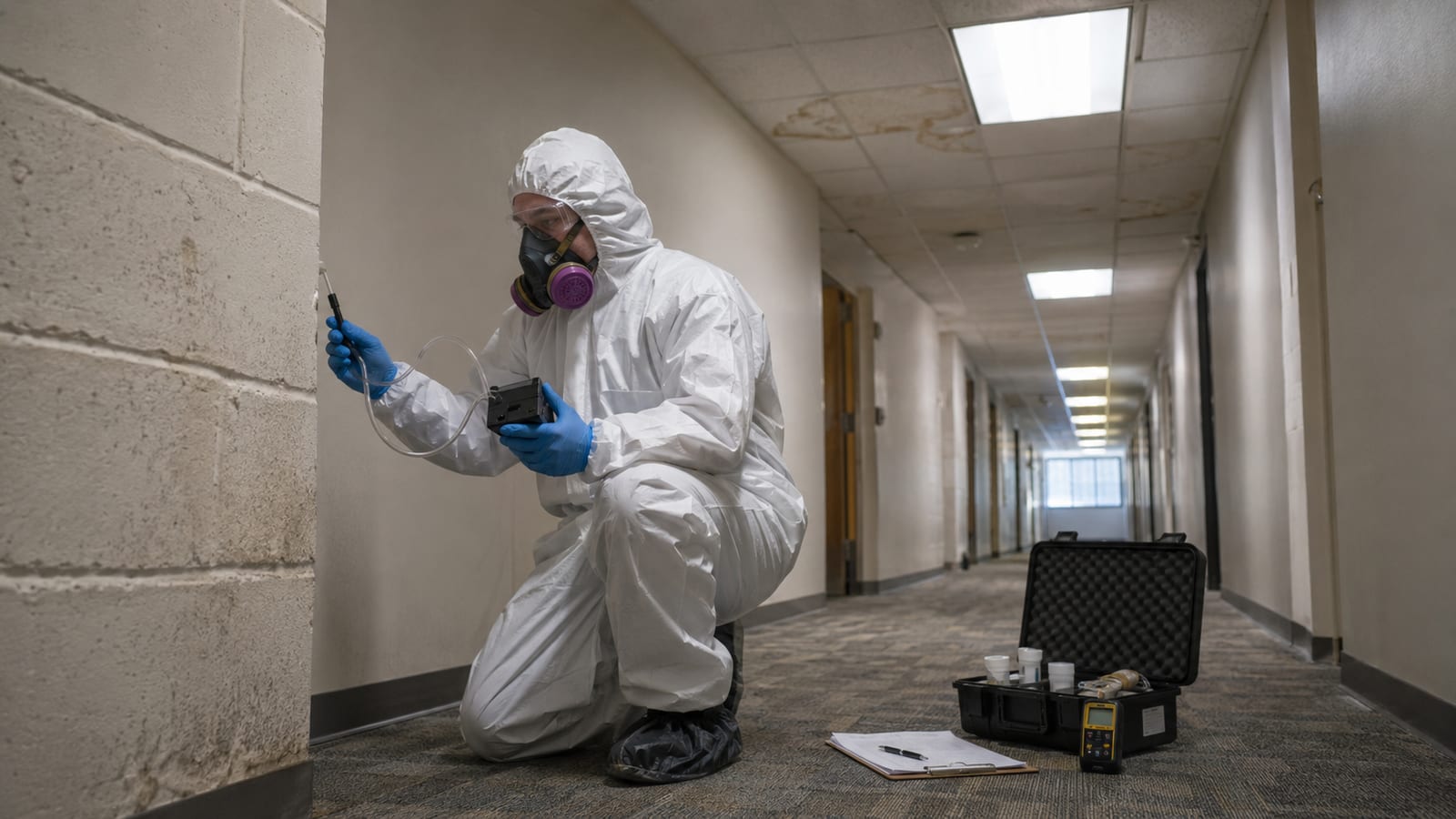
Air sampling uses a pump and cassette to capture airborne mold spores over a measured volume of air. Results show spore concentrations by species and are compared to outdoor baseline samples collected at the same time. Air samples are most useful for occupant complaint investigations and post-remediation verification.
Surface Samples and Tape Lifts
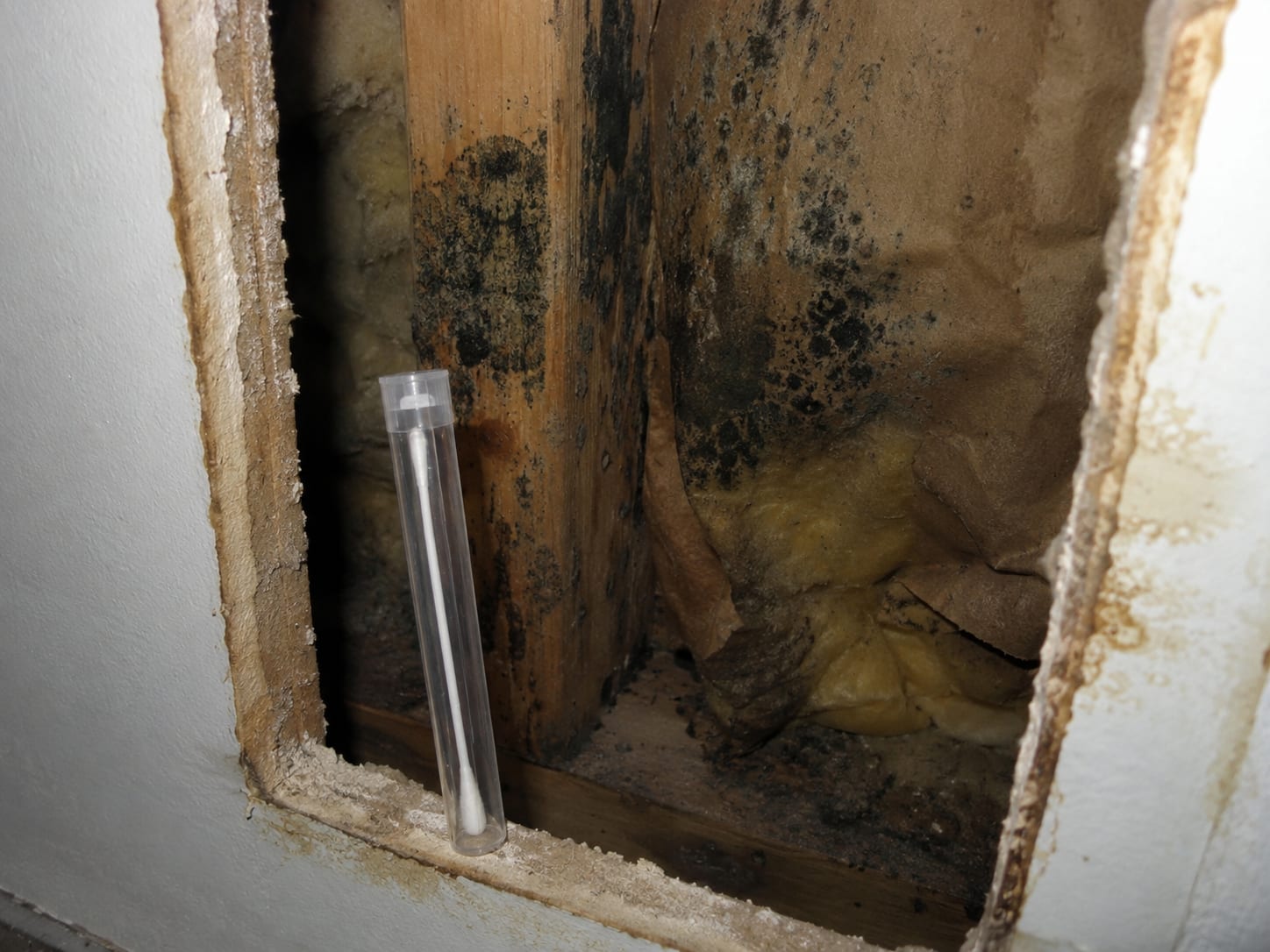
Surface samples collect mold directly from a material or stained area. Tape lifts transfer surface mold to a slide for microscopic analysis. These methods confirm what is growing on a specific surface, identify species, and help determine whether growth is active or dormant.
Bulk Samples
Bulk sampling involves collecting a small piece of building material, such as drywall or ceiling tile, and sending it to the lab for direct analysis. Bulk samples are useful when surface contamination needs to be confirmed on materials that may be replaced or when hidden growth is suspected inside a wall assembly.
Outdoor Comparison Samples
Every indoor air test should include at least one outdoor sample collected at the same time. This baseline is what makes indoor results meaningful. Without it, there is no way to know whether elevated indoor spore counts reflect an actual building problem or simply reflect high ambient outdoor mold levels that day.
Dust Samples
Settled dust samples can reveal the accumulated mold history of a space, particularly in areas with consistent airflow patterns. Dust sampling is sometimes used when a long-standing, low-level contamination issue is suspected and air samples alone may not capture the full picture.
Post-Remediation Verification Samples
After commercial mold remediation, sampling may be used to help confirm that work areas are visually clean, dry, and within acceptable parameters before reconstruction or re-occupancy. PRV sampling focuses on the remediated zone and compares it to areas outside the work boundary and to outdoor baseline conditions.
Who Orders Commercial Mold Testing and Why?
Commercial mold testing is not one-size-fits-all, and the people requesting it come from very different positions within the same building problem. A property owner may need documentation for an insurance claim after a roof leak. A facility manager may need baseline data to respond to tenant complaints before they become legal disputes. A property management company overseeing a multifamily portfolio may need consistent testing protocols across multiple buildings after a water intrusion event. Each of these clients needs different things from the same type of service.
Property managers handling apartment complexes and mixed-use buildings are a large part of who ExecPro Restoration & Cleaning works with on the commercial side. For property management teams, mold testing often serves a dual purpose: it documents current conditions and it creates a paper trail that demonstrates due diligence when tenant complaints arise. ExecPro's property management mold services are built around that need for consistent, documented responses across portfolios of any size.
Commercial real estate transactions also generate significant demand for mold testing. Buyers may include a mold inspection and testing contingency in the purchase agreement, particularly for older industrial buildings, warehouses with known moisture history, or any property that has had water damage. Sellers sometimes order testing proactively to identify and address problems before listing. Attorneys and title professionals refer clients to ExecPro because the reports are written in plain language that holds up when shared with multiple parties at the closing table.
Insurance adjusters and claims professionals represent another important audience. When a commercial property files a mold-related claim, the insurer needs documented environmental evidence, not just a contractor's word that mold was present. ExecPro's written reports include chain-of-custody lab documentation, photographic evidence, and moisture data, which is the kind of structured record that supports claims processing on both sides of the table.
Multi-Area and Occupied-Space Testing for Commercial Properties
One of the real differences between residential and commercial mold testing is scale and logistics. A commercial building may have a dozen separate tenant suites, multiple mechanical rooms, shared HVAC systems serving different zones, and common areas that belong to nobody and everybody at the same time. Testing a building like that requires a sample plan that maps to the physical layout, not a generic protocol designed for a single-family home.
ExecPro Restoration & Cleaning approaches large-scale commercial testing with location-specific documentation. Each sample is tied to a specific room, floor, or zone, and the report is organized so that a facility manager can look at the data for any individual area of the building without having to wade through results from the whole property. This matters when the concern is isolated to one tenant space or when post-remediation verification needs to focus on a specific work area while the rest of the building remains occupied.
Business continuity is a real concern in commercial mold testing. Many commercial clients need testing to happen after hours, during low-occupancy periods, or in phases that minimize disruption to tenants and daily operations. ExecPro works with building owners and managers to schedule testing in a way that fits the operational reality of the property, because the goal is to get accurate data without creating additional disruption in a situation that is already stressful.
For buildings with complex HVAC systems, testing strategy often needs to account for how air is distributed across the building. An HVAC system pulling from a contaminated area can spread spores well beyond the source zone, which is why HVAC-adjacent spaces are often included in a thorough commercial sample plan. If testing reveals contamination in the air distribution system itself, HVAC mold remediation becomes part of the conversation about next steps.
What Makes ExecPro Restoration & Cleaning the Right Choice for Commercial Mold Testing?
ExecPro Restoration & Cleaning has been serving commercial and residential clients across central and northern New Jersey since 2015. Here is what separates a professional commercial mold testing engagement from a commodity transaction.
Inspection-First Methodology
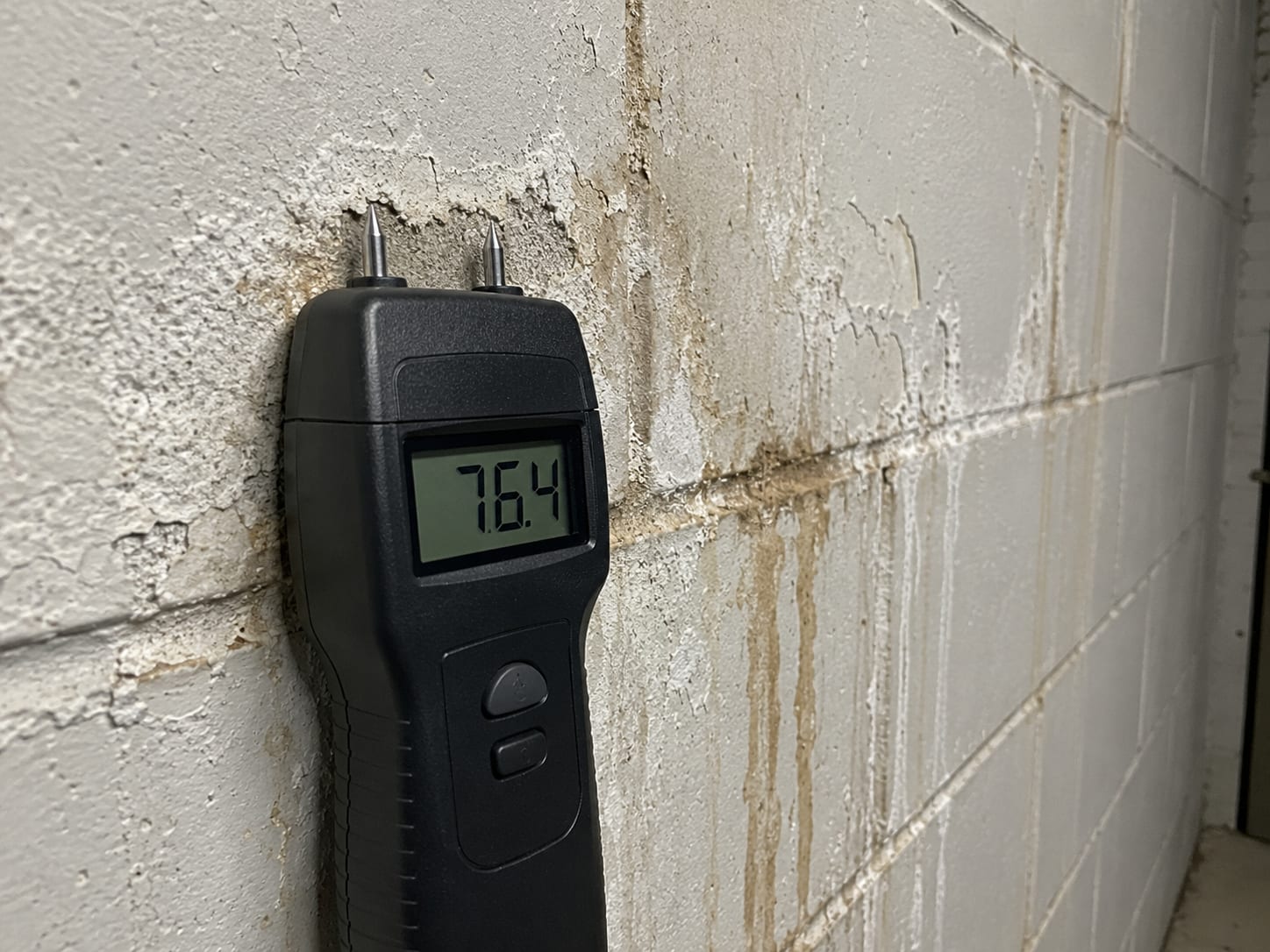
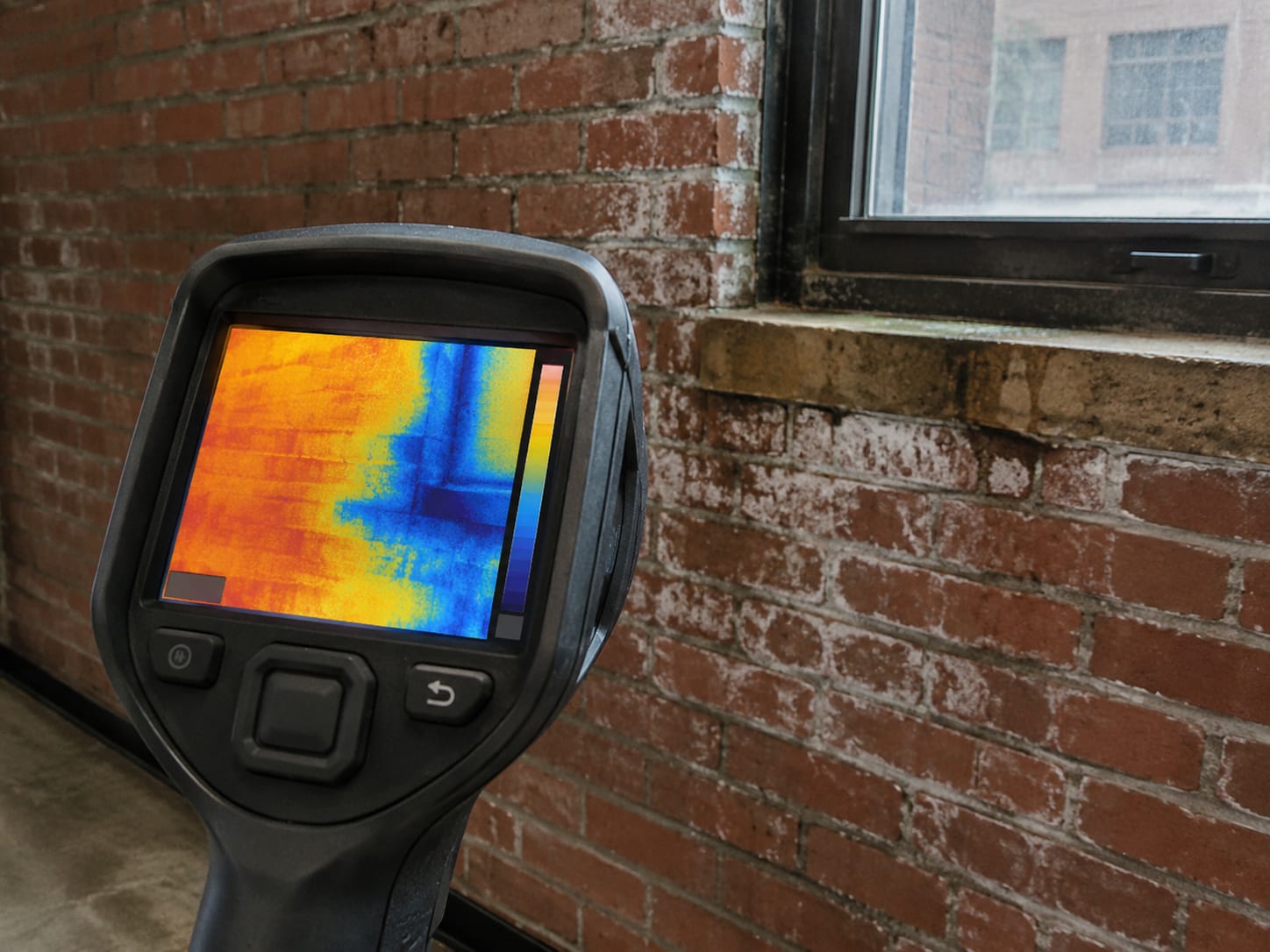
Testing without inspection produces data without context. ExecPro starts every commercial engagement with a visual walkthrough, moisture and humidity measurements, and a review of complaint history and building conditions. The sample plan follows from what the inspection reveals, not the other way around.
Reports Built for Multiple Stakeholders
A commercial mold test report does not stay in one set of hands. ExecPro produces written reports that are readable and useful for property owners, facility managers, tenants, insurers, attorneys, and contractors. Sample locations, lab results, photos, moisture readings, and interpretation are all included in a single organized document.
Accredited Lab Results with Chain-of-Custody Documentation
Samples go to an accredited lab with documented chain of custody. This matters when results need to support an insurance claim, a legal dispute, a remediation scope, or a real estate transaction. Credibility requires documentation, and ExecPro does not cut corners on either.
Honest Guidance on When Testing Is and Isn't Needed
Some providers will test anything because testing generates fees. ExecPro will tell you when visible mold should simply be remediated rather than tested, when inspection alone is sufficient, and when testing is the right tool for your specific situation. That honesty saves time and money and builds a working relationship you can rely on for future needs.
Full-Service Capability for What Comes Next
If testing reveals a remediation need, ExecPro can handle the full scope, from commercial mold inspection through removal, post-remediation verification, and post-mold remediation rebuild if structural repairs are required. You do not need to manage a separate contractor for every phase of the project.
Licensed and Insured
ExecPro Restoration & Cleaning is licensed and insured, providing commercial clients with the baseline professional accountability that any responsible facility manager or property owner should require before allowing environmental testing in an occupied building.
Frequently Asked Questions About Commercial Mold Testing
These are the questions commercial clients most commonly ask before scheduling a mold testing engagement with ExecPro Restoration & Cleaning.
New Jersey does not require mold testing before remediation in most commercial situations, and the EPA states that when visible mold is present, sampling is usually unnecessary. Testing becomes most useful when the source is not visible, when documentation is needed for insurance or legal purposes, or when post-remediation verification is required to confirm the work area is ready for re-occupancy. If you are unsure whether testing is warranted for your specific situation, ExecPro can walk through the facts with you before any commitment is made.
Serving Commercial Properties Across New Jersey
ExecPro Restoration & Cleaning serves commercial clients across a wide stretch of New Jersey, from the central corridor communities of Princeton Junction, West Windsor, and Plainsboro through the Somerset County markets of Bridgewater, Basking Ridge, and Bernardsville, and extending to the Shore communities of Red Bank, Holmdel, and Freehold.
The service area also covers Burlington County properties in Moorestown, Mount Laurel, Cherry Hill, and Marlton, giving commercial property owners and managers across southern New Jersey access to the same inspection-first testing protocols and multi-stakeholder reporting that ExecPro delivers throughout the rest of its coverage area. Whether you are managing a single office building or a portfolio of multifamily properties, the team responds with the same structured approach regardless of location.
Commercial buildings in New Jersey face humidity and moisture conditions that vary by season, building age, and construction type. Older masonry buildings in cities like Trenton and New Brunswick behave very differently from newer Class-A office space in Somerset or Bridgewater. ExecPro's technicians understand these regional and building-type differences and factor them into sample planning, interpretation, and reporting for every commercial engagement.
Schedule Your Commercial Mold Testing Consultation
If your commercial property has occupant complaints, a water damage history, an upcoming transaction, or an insurance or legal matter that requires documented environmental data, ExecPro Restoration & Cleaning is ready to help you get the answers you need.