HVAC Mold Remediation in New Jersey
Mold growing inside your HVAC system doesn't stay there. ExecPro Restoration & Cleaning cleans coils, decontaminates ductwork, treats drain pans, and addresses the moisture problems that let mold take hold in the first place.
What Is HVAC Mold Remediation?
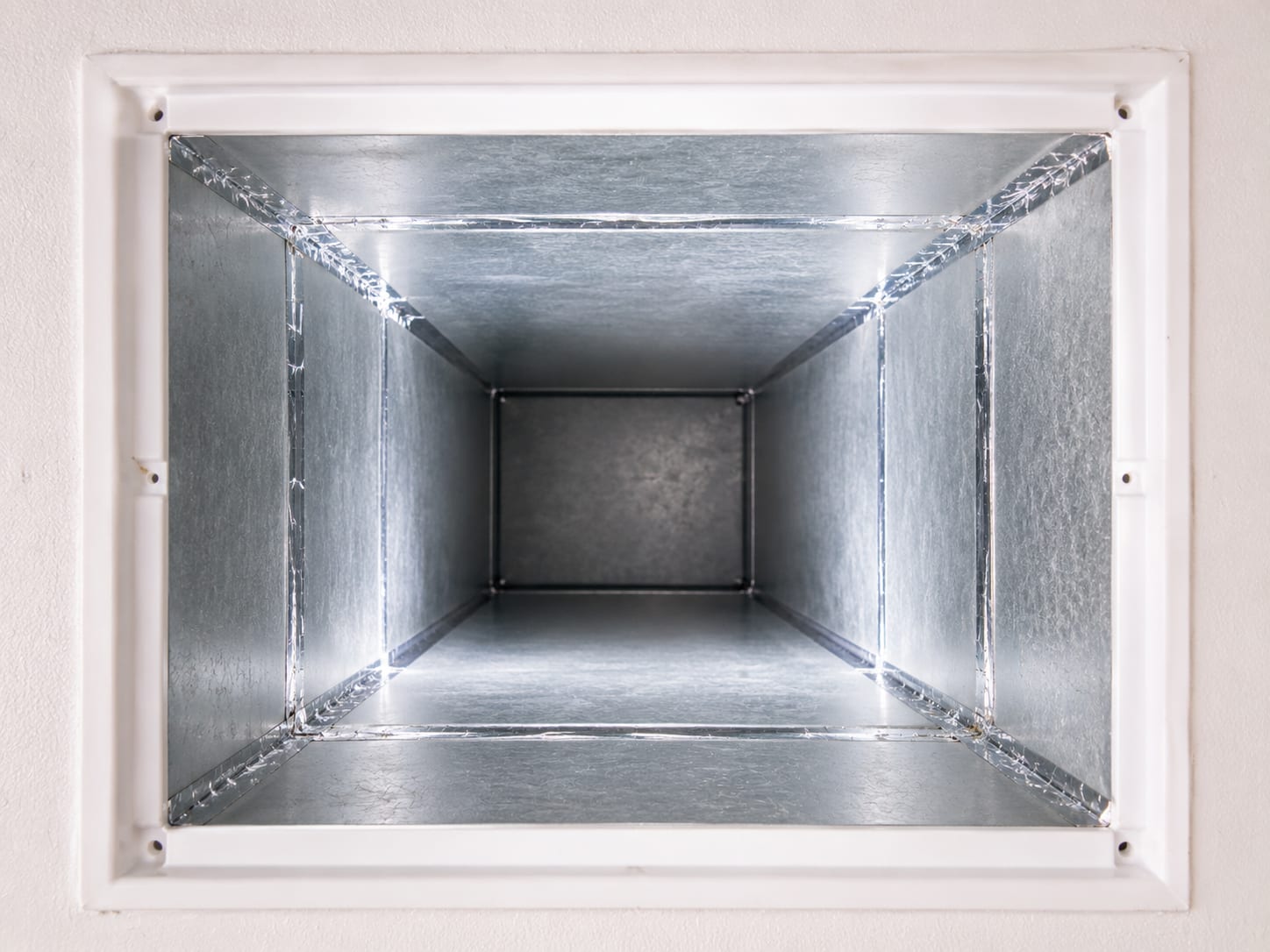
HVAC mold remediation is the professional process of identifying, containing, and physically removing mold contamination from your heating and cooling system, including evaporator coils, condensate drain pans, blower compartments, air handlers, supply and return ducts, plenums, and registers. ExecPro Restoration & Cleaning follows ANSI/IICRC S520 standards throughout every project, pairing mold remediation protocol with HVAC-specific cleaning methods guided by NADCA's Assessment, Cleaning, and Restoration (ACR) standard.
A completed project leaves you with a system that has been inspected, stripped of contaminated materials or those materials replaced, cleaned using source-removal methods, and protected against recurrence by correcting the underlying moisture problem. If your system needs air duct cleaning as a follow-up maintenance step after remediation is complete, that can be coordinated as part of the same project scope.
What HVAC mold remediation is not: a chemical fogging treatment, a biocide spray applied over contaminated surfaces, or a routine duct cleaning marketed as mold prevention. The EPA is clear that if the conditions causing mold growth are not corrected, growth will recur. Every ExecPro Restoration & Cleaning project starts with understanding why mold appeared before anything gets cleaned.
Why Is Mold Growing in My HVAC System?
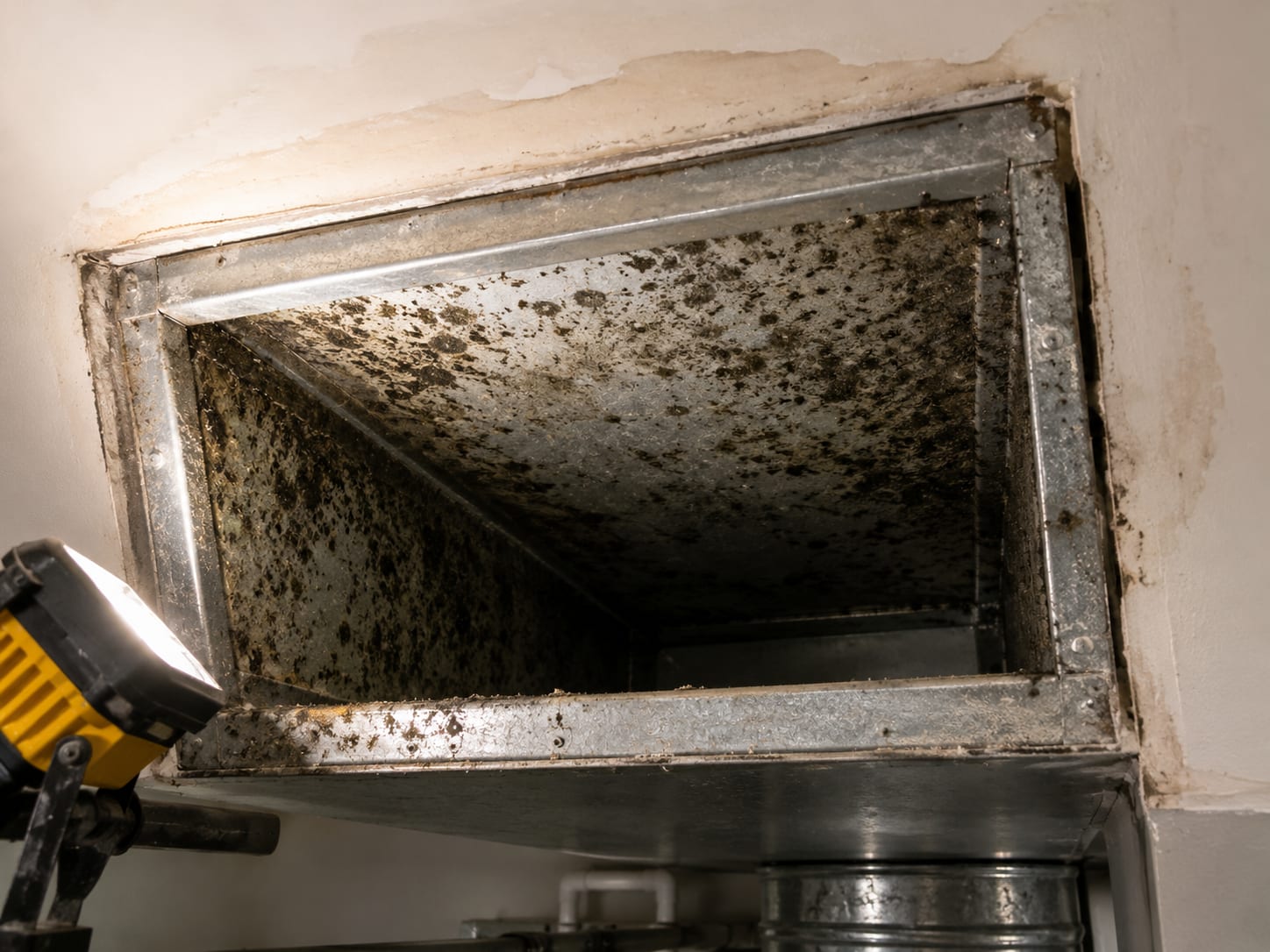
Mold doesn't appear in an HVAC system by accident. It needs two things: organic material to feed on and a moisture source. Ductwork and air handlers naturally accumulate dust, skin cells, and other organic debris over time. Add moisture and you have the conditions mold needs to establish itself.
The moisture source is almost always a system or building condition that needs to be fixed. Clogged condensate drain lines allow water to back up into the drain pan and eventually into the air handler itself. Dirty evaporator coils sweat more than they should and don't dry properly. Oversized or undersized equipment that short-cycles never runs long enough to dehumidify adequately. Poorly insulated ducts running through humid basements or crawl spaces sweat on the outside, then moisture migrates in. Return-side leaks pull humid basement or crawl space air directly into the system.
In New Jersey, humidity plays a significant role. Central and coastal NJ properties deal with high summer humidity, and many older homes have mechanical systems in basements, crawl spaces, or unconditioned attics where moisture levels are harder to control. That combination of humidity-prone locations and aging equipment makes HVAC mold a fairly common finding during residential mold inspections across the region.
When you call ExecPro Restoration & Cleaning, the first priority is finding the source. Moisture meters, infrared cameras, hygrometers, and direct inspection of coils, drain pans, and duct connections help technicians build a clear picture of what's happening before any cleaning begins.
How Do I Know If My HVAC System Has Mold?
Several signs point toward mold contamination in an HVAC system. None of these are definitive on their own, but any combination warrants a professional inspection.
Musty Odor When the System Runs
A musty or earthy smell that appears when your heat or AC turns on is one of the most reliable indicators. The system is circulating air through contaminated surfaces and distributing the odor through every room it serves.
Visible Growth Near Registers or Grilles
Dark spotting or visible growth on or around supply registers, return grilles, or the ductwork near the air handler suggests contamination that extends further into the system than what's visible from the outside.
Persistent Allergy or Respiratory Symptoms
When household members experience worsening allergy symptoms, unexplained respiratory irritation, or symptoms that improve noticeably when they leave the home, airborne mold spores from the HVAC system are worth investigating. Indoor air quality testing can confirm whether elevated spore counts are present.
Water Staining or Standing Water at the Air Handler
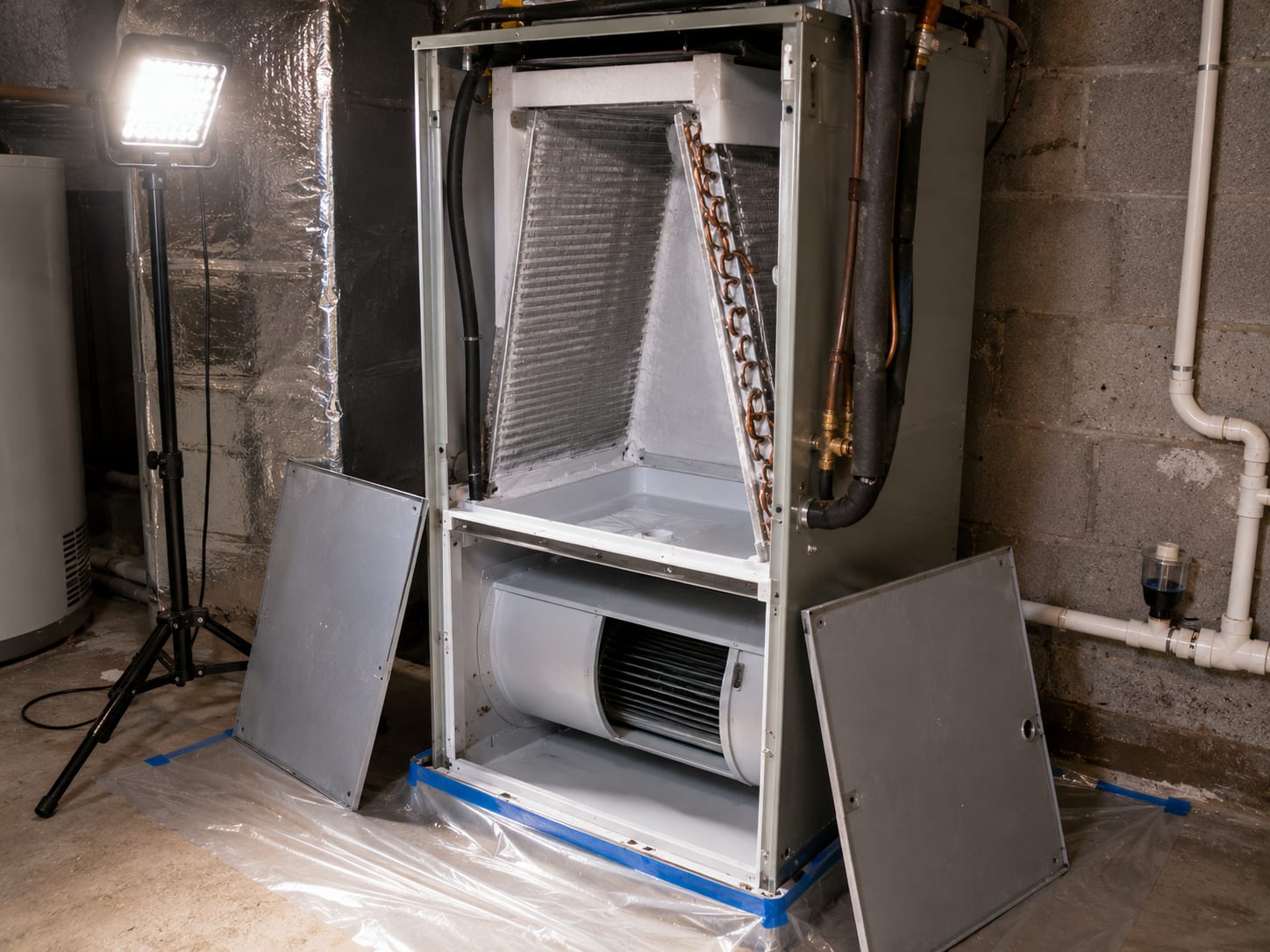
Rust staining, water marks, or standing water in or around the air handler cabinet are signs that the condensate system isn't draining correctly. This is one of the most common moisture conditions that leads to coil and drain pan mold.
Recently Discovered Mold Elsewhere in the Home
If basement or attic mold remediation work has revealed significant moisture problems, the HVAC system serving those spaces should be inspected. Systems installed in or drawing air from those areas are often affected by the same moisture conditions.
Prior Water Intrusion or Flooding
Any time floodwater, a burst pipe, or significant water intrusion has occurred near HVAC equipment, the system should be assessed. Water damage inside duct systems or air handlers creates ideal conditions for mold growth, especially when systems return to normal operation before adequate drying is complete.
What Does the HVAC Mold Remediation Process Look Like?
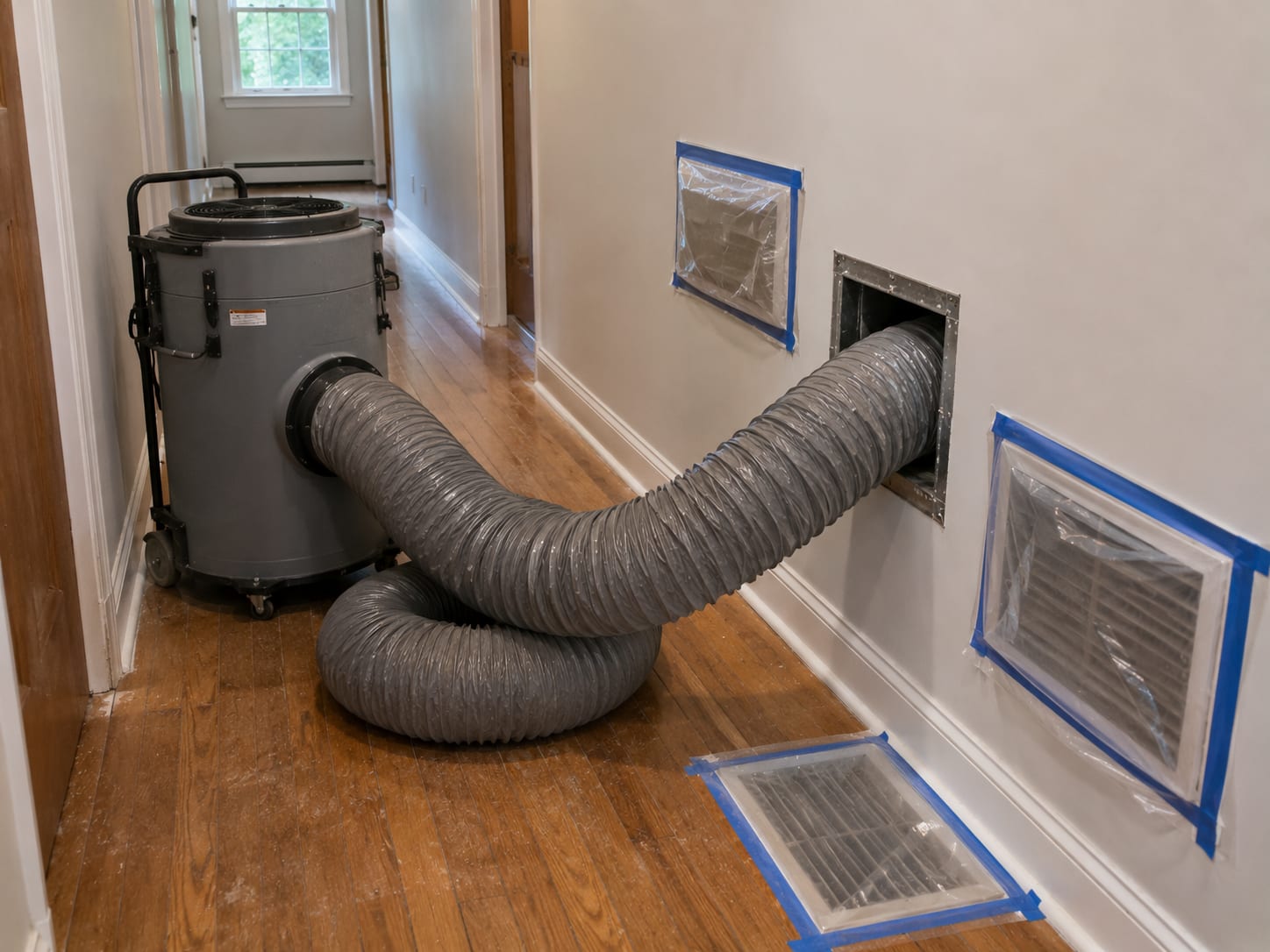
ExecPro Restoration & Cleaning follows a structured process built around source removal, not chemical shortcuts. A typical HVAC mold remediation project moves through these steps from start to finish.
Scroll the steps sideways to follow the full process.
What Happens to HVAC Materials That Can't Be Cleaned?
Not everything in an HVAC system can be remediated in place. Fiberglass duct board, fiberglass-lined ductwork, and any insulation that has been wet or mold-contaminated falls into this category. The EPA is direct about this: these materials cannot be effectively cleaned and should be removed and replaced. Attempting to treat them with antimicrobials or encapsulants isn't an acceptable substitute for replacement.
When removal is necessary, ExecPro Restoration & Cleaning coordinates the process as part of the remediation scope. Removed materials are properly bagged and disposed of, and replacement work can be scoped through the build-back side of the business. This is especially relevant in older NJ homes where duct insulation may have been exposed to moisture repeatedly over many years.
If structural repairs or broader post-mold remediation rebuild work is needed after remediation is complete, that can be handled in-house rather than requiring a separate contractor. Having one company responsible for the full scope eliminates coordination gaps and keeps documentation consistent from remediation through restoration.
What Makes ExecPro Restoration & Cleaning the Right Call for HVAC Mold?
HVAC mold sits at the intersection of two different bodies of knowledge: IICRC S520 mold remediation standards and NADCA ACR HVAC cleaning standards. Most contractors work within one or the other. ExecPro Restoration & Cleaning works within both, which matters because neither framework alone is enough to do the job correctly.
That difference shows up in how a project is scoped. A duct cleaning company may miss mold in coils, drain pans, or blower compartments because their inspection focuses on accessible duct interiors. A general mold remediator may miss the HVAC-specific moisture sources that keep the problem coming back. ExecPro Restoration & Cleaning treats the system as a whole, identifies the moisture conditions specific to your equipment and building, and documents the work so you have a clear record of what was done.
ExecPro Restoration & Cleaning is licensed and insured, serving homeowners and property managers across central and northern New Jersey. The same process and standards apply whether the property is in Princeton Junction, Somerset, Flemington, Holmdel, or Burlington.
For property managers and commercial clients, ExecPro Restoration & Cleaning also provides property management mold services and commercial mold remediation with the documentation and scope management that multi-unit and commercial properties require.
Serving Homeowners and Properties Across Central and Northern New Jersey
ExecPro Restoration & Cleaning provides HVAC mold remediation across a broad service area that covers communities from Trenton and Hamilton north through Somerset and Bridgewater, east to Monmouth County and the Shore, and south through Burlington County. Whether your property is in Cranbury, Flemington, Basking Ridge, Red Bank, Freehold, Cherry Hill, or dozens of communities in between, the same inspection-first, source-removal process applies.
Residential homeowners, property management companies, commercial building owners, and real estate professionals all work with ExecPro Restoration & Cleaning for HVAC mold assessments, full remediation projects, and post-remediation verification. If your situation also involves water damage restoration or broader structural concerns connected to the same moisture event that affected your HVAC system, those services can be coordinated through the same team.
Frequently Asked Questions About HVAC Mold Remediation
Answers to the questions homeowners and property managers ask most often about mold in HVAC systems.
No, and the difference matters. The EPA does not recommend routine duct cleaning as a standard maintenance practice. HVAC mold remediation is a problem-specific process triggered by confirmed or suspected mold growth, and it follows mold remediation and HVAC cleaning standards that go well beyond a standard duct cleaning service. Routine duct cleaning does not include moisture diagnostics, containment, source correction, or post-remediation verification.