Mold Testing in Central New Jersey
Air and surface samples collected on-site, sent to accredited third-party labs, and returned to you as a plain-English report that tells you exactly what's in your air, where it came from, and what to do next.
What Is Mold Testing and What Do You Actually Get?
Mold testing is a structured sampling process where a trained technician collects air samples, surface samples, or both from specific locations in your property. Those samples go to an accredited third-party laboratory for species identification and spore count analysis. What you get back is a documented lab report paired with a plain-English interpretation that explains the results, identifies likely sources, and outlines recommended next steps.
A raw lab report on its own can be genuinely confusing. Spore counts and species names mean different things depending on where the sample was taken, what the outdoor baseline looks like, and what moisture conditions exist in the building. ExecPro Restoration & Cleaning pairs every lab result with on-site moisture readings and a visual inspection so the report tells a complete story rather than leaving you with a number you can't act on.
Mold testing is useful in specific situations: when you smell something musty but can't find visible growth, when you're buying or selling a property and need documentation, when a remediation project has been completed and you want post-remediation verification, or when occupants are experiencing unexplained air quality symptoms. It is not always the right first step. When visible mold is already present, the EPA notes that sampling is often unnecessary because the problem and the course of action are already clear. ExecPro's technicians will tell you honestly whether testing makes sense for your situation before any samples are collected.
Who Needs Mold Testing and When Does It Make Sense?
The most common reason people call ExecPro Restoration & Cleaning for mold testing is a real estate transaction. Buyers want documentation before closing, especially when there's a musty basement, attic staining, or a history of leaks. Sellers and their agents need defensible paperwork to move a deal forward or satisfy an attorney's requirements. Real estate professionals across central New Jersey rely on ExecPro for home buyer and seller protection assessments that provide that documentation clearly and on a timeline that works for closing dates.
Outside of real estate, testing comes up most often after water damage events. If a pipe burst, a basement flooded, or a roof leak went undetected for a season, you may not see visible mold even when the conditions for growth are already in place. Air sampling in those situations can confirm whether spore levels are elevated before you invest in remediation or before you move back into a space after drying is complete.
Property managers and landlords have a separate set of concerns. Tenant complaints, lease renewals, and liability questions all create situations where documented testing provides a factual baseline. ExecPro offers property management mold services designed specifically for multifamily and commercial portfolios where turnaround time and consistent documentation matter.
Homeowners who've recently had mold remediation work done often request testing as a final confirmation step. This is called post-remediation verification, and it's one of the most practical uses of air sampling because it gives you objective evidence that the remediation was effective before walls go back up or a property goes back on the market.
How ExecPro's Mold Testing Process Works
Every mold test ExecPro Restoration & Cleaning performs follows a consistent process built around the question you're actually trying to answer. Here's what that looks like from first call to final report.
Initial Assessment and Reason for Testing
Before any samples are collected, the technician reviews the reason for testing with you: a real estate deadline, a water damage concern, an odor complaint, a post-remediation clearance, or something else. This shapes which sample types and locations will give you the most useful results. Collecting the right samples in the right places matters far more than simply collecting a lot of samples.
On-Site Moisture and Visual Inspection
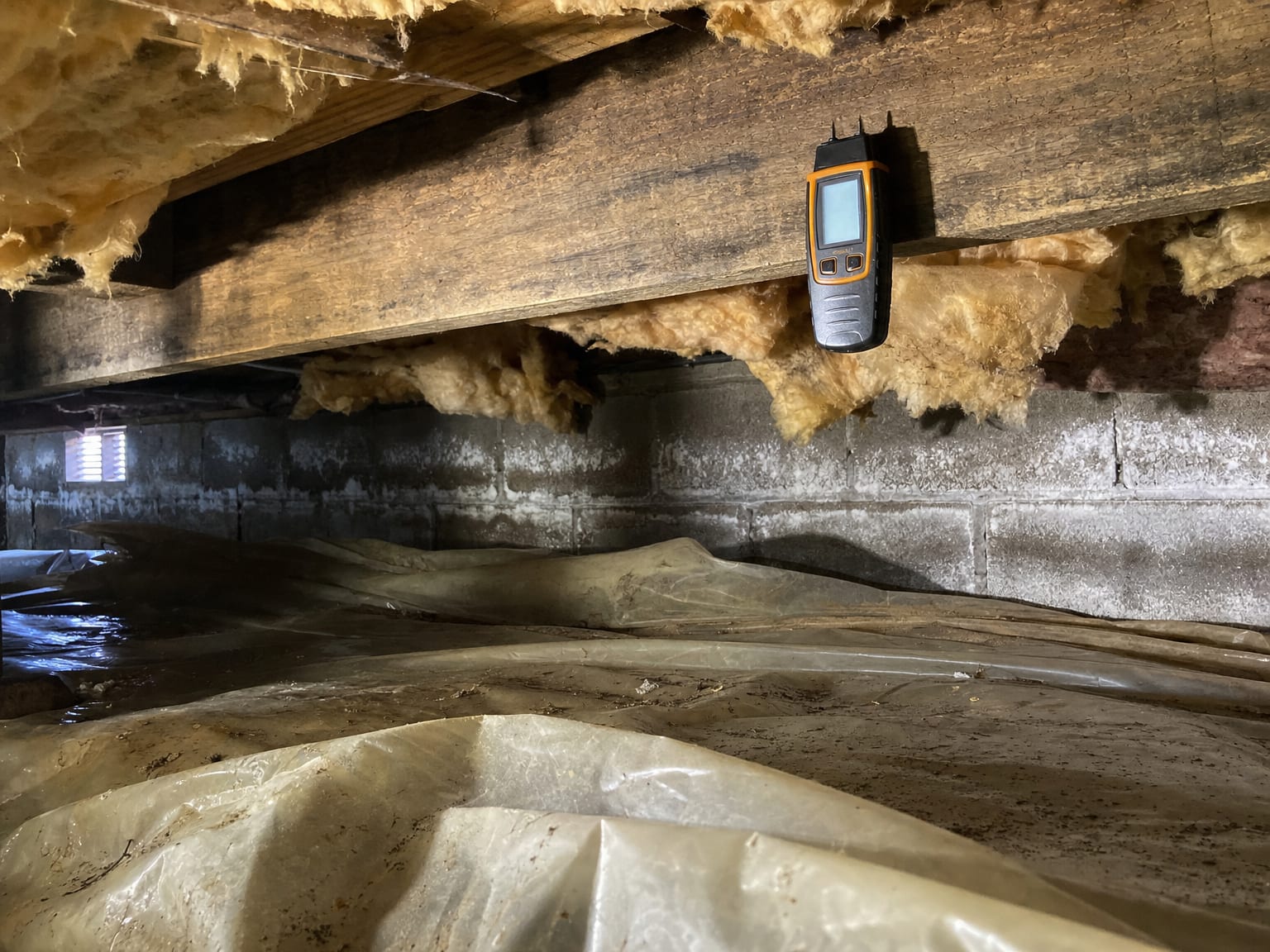
Mold test results without building context can mislead rather than inform. Before sampling begins, the technician uses moisture meters and visual inspection to identify active moisture sources, past water intrusion signs, condensation patterns, and any areas of visible concern. This context is what allows the lab data to be interpreted accurately rather than in isolation.
Air and Surface Sample Collection
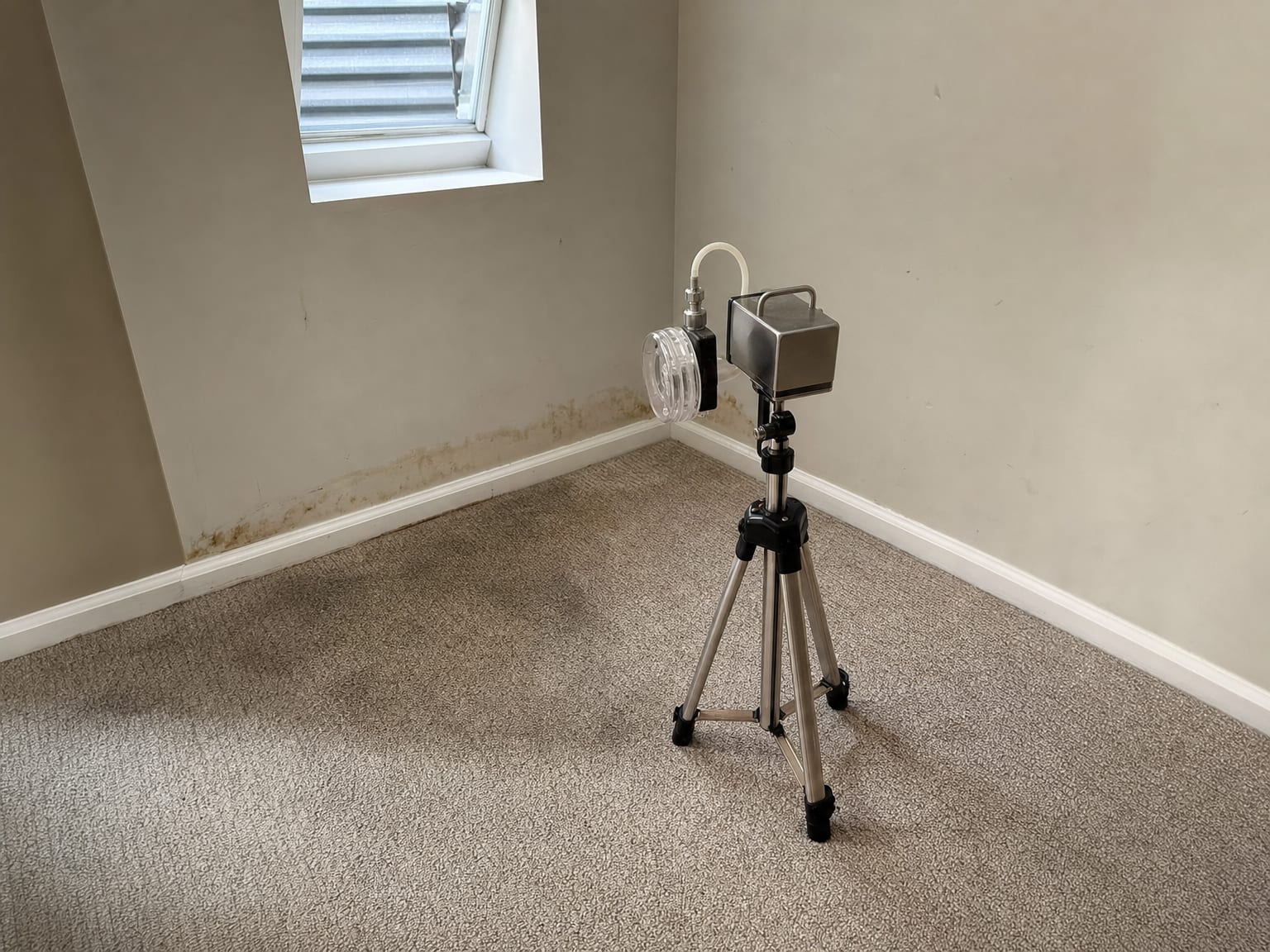
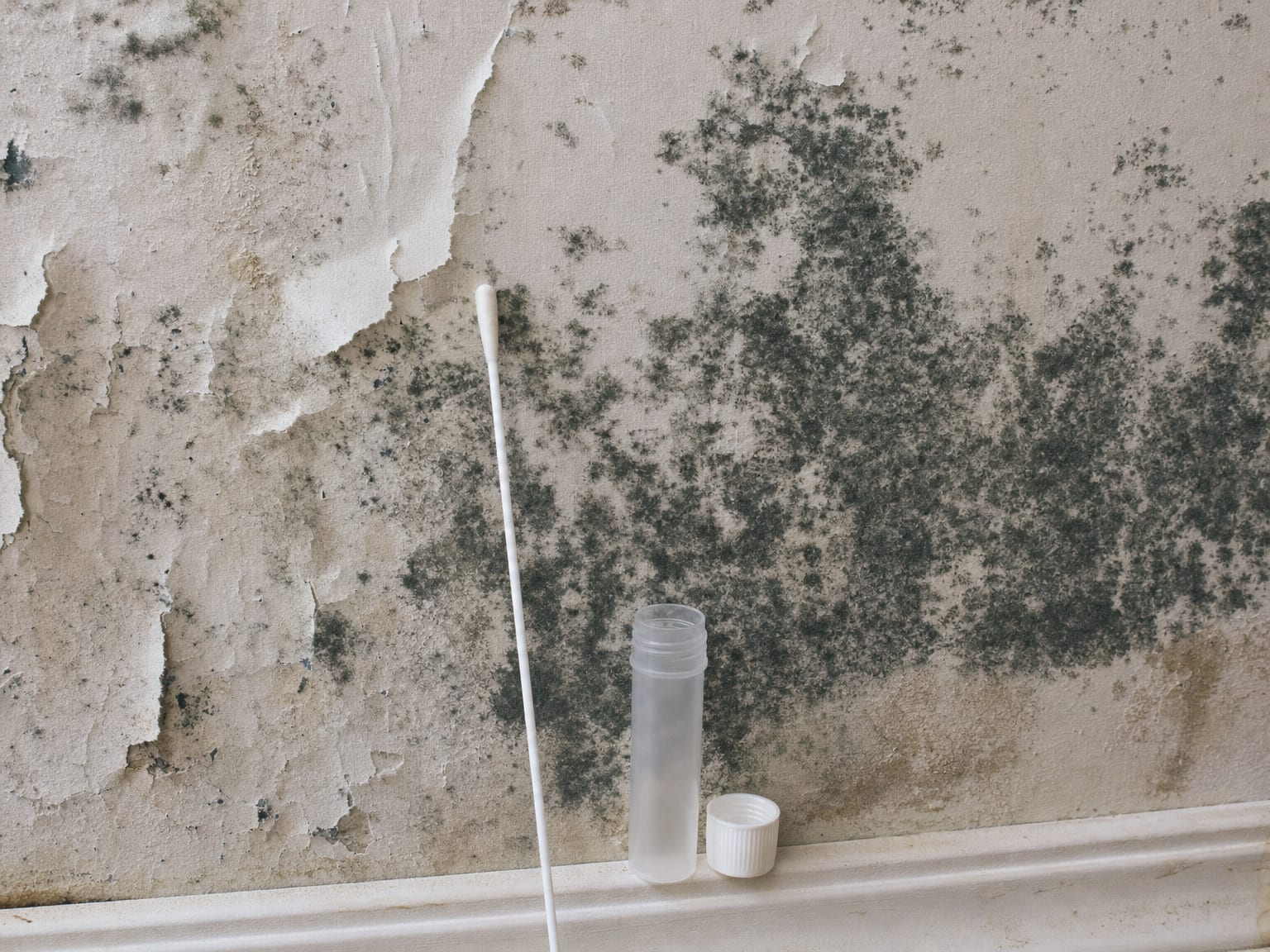
Air sampling uses calibrated spore trap cassettes that capture a measured volume of air from specific indoor locations, typically including a living area, the area of concern, and an outdoor baseline for comparison. Surface sampling, using tape lifts or swabs, is used when visible growth needs to be identified by species. Each sample is labeled, documented by location, and handled under chain-of-custody procedures before shipping to the accredited lab.
Accredited Laboratory Analysis
Samples are sent to an accredited third-party laboratory for analysis. Lab technicians identify mold species and provide spore counts for each sample. Using an independent laboratory rather than an in-house analysis is important because it produces an objective, documented result that carries weight with buyers, sellers, insurers, and attorneys.
Plain-English Report and Interpretation
When lab results come back, ExecPro provides a report that includes sample locations with a site map, the lab results with species identified, outdoor comparison data where applicable, moisture findings, a clear interpretation of what the results mean in context, and recommended next steps. This report is designed to be useful to you, not just to specialists who already understand the terminology.
What Types of Mold Samples Are Collected?
The type of sample collected depends on the question being asked. Air sampling is the most common choice for hidden odor concerns, comparative testing between rooms or floors, and post-remediation verification because it captures what's actually circulating in the breathing space. Spore trap cassettes collect a measured air volume, and the lab counts and identifies the spores captured on each cassette. Comparing indoor results to outdoor baseline samples is standard practice because outdoor spore levels influence indoor counts, and results need that context to be meaningful.
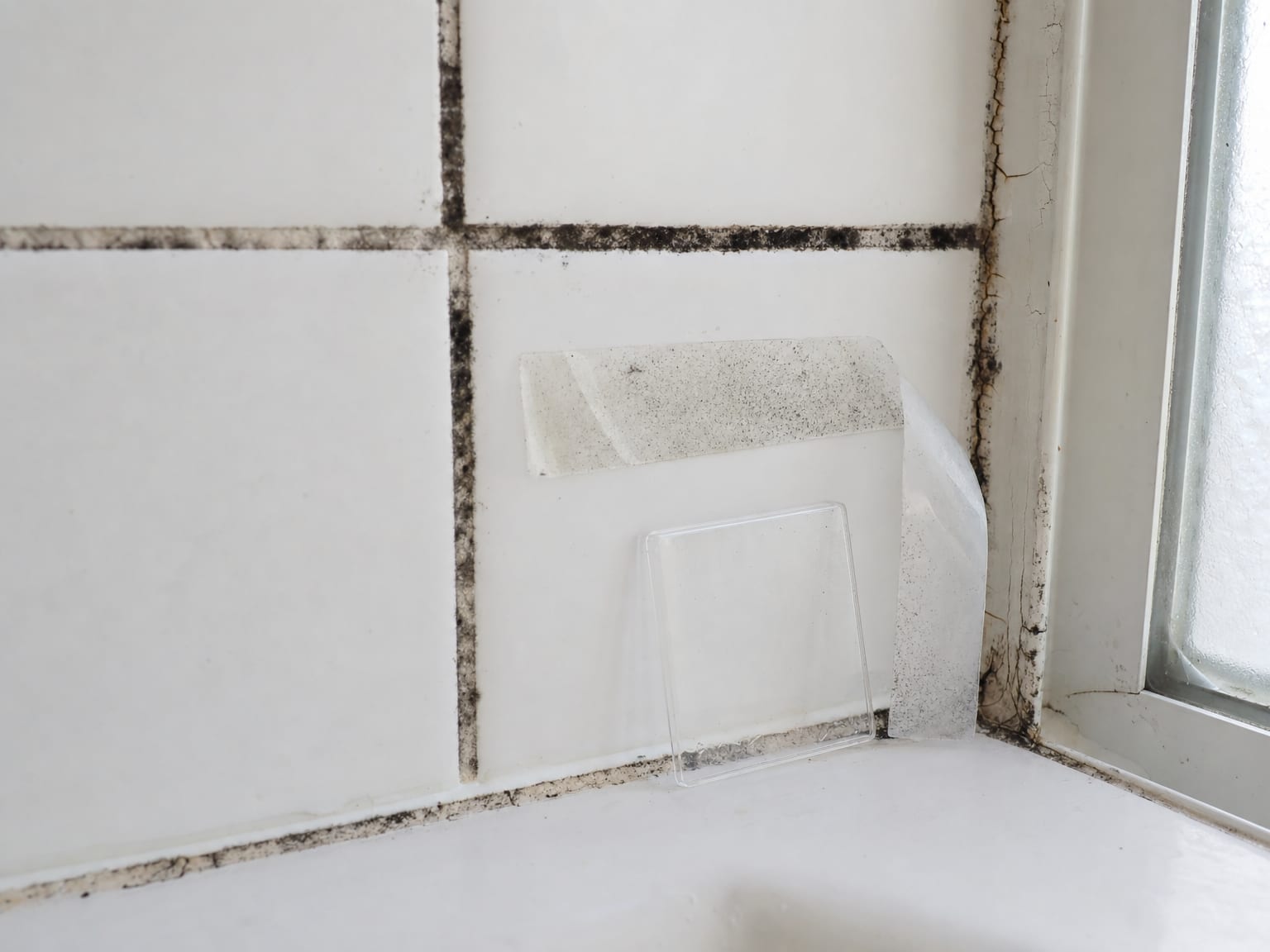
Surface sampling is the right choice when there is visible discoloration or suspected growth and you need to know the species before deciding on a remediation approach. Tape lifts are the most common surface method: a clear adhesive tape is pressed against the surface, capturing spores or fungal fragments for microscopic analysis. Swab samples are used for irregular or porous surfaces where tape lifts are impractical.
Bulk samples, where a small piece of material is sent directly to the lab, are less commonly needed for standard residential testing but come up in commercial investigations or situations where multiple layers of a building component need to be analyzed. Dust samples are occasionally used for settled-dust investigations, particularly in HVAC-related concerns or when trying to understand what has accumulated over time in a space.
ExecPro's technicians select the sample strategy based on your specific situation. There's no single right answer for every property or every concern, and collecting samples that don't match the question wastes time and money without producing actionable results. If a home test kit has told you mold is present but you don't know the species, scope, or source, professional sampling paired with a site inspection provides the answers those kits can't give you.
Why Mold Testing Alone Isn't Always Enough
A lab result showing elevated spore counts tells you that mold spores are present in elevated concentrations. It does not tell you where the moisture source is, how extensive the growth is, whether it's in the wall cavity, or what it will take to fix it. That's why ExecPro Restoration & Cleaning integrates inspection findings with every testing engagement rather than treating sampling as a standalone product.
The EPA is clear that there are no federal exposure limits for mold or mold spores. This means no test result can definitively declare a building safe or unsafe based on a single sample. Responsible reporting acknowledges this. A report that simply stamps a building as 'passed' or 'failed' based on a spore count isn't giving you accurate information. What matters is the relationship between indoor and outdoor levels, the species identified, the moisture conditions present, and the building history.
DIY home test kits have made this confusion more common. Those kits can confirm that mold spores exist, but spores exist in virtually every indoor and outdoor environment. The question isn't whether spores are present; it's whether the type and concentration suggest an active growth problem requiring remediation. Professional testing paired with a trained technician's site assessment gives you that answer in a way that a kit settled on a shelf for 48 hours simply cannot.
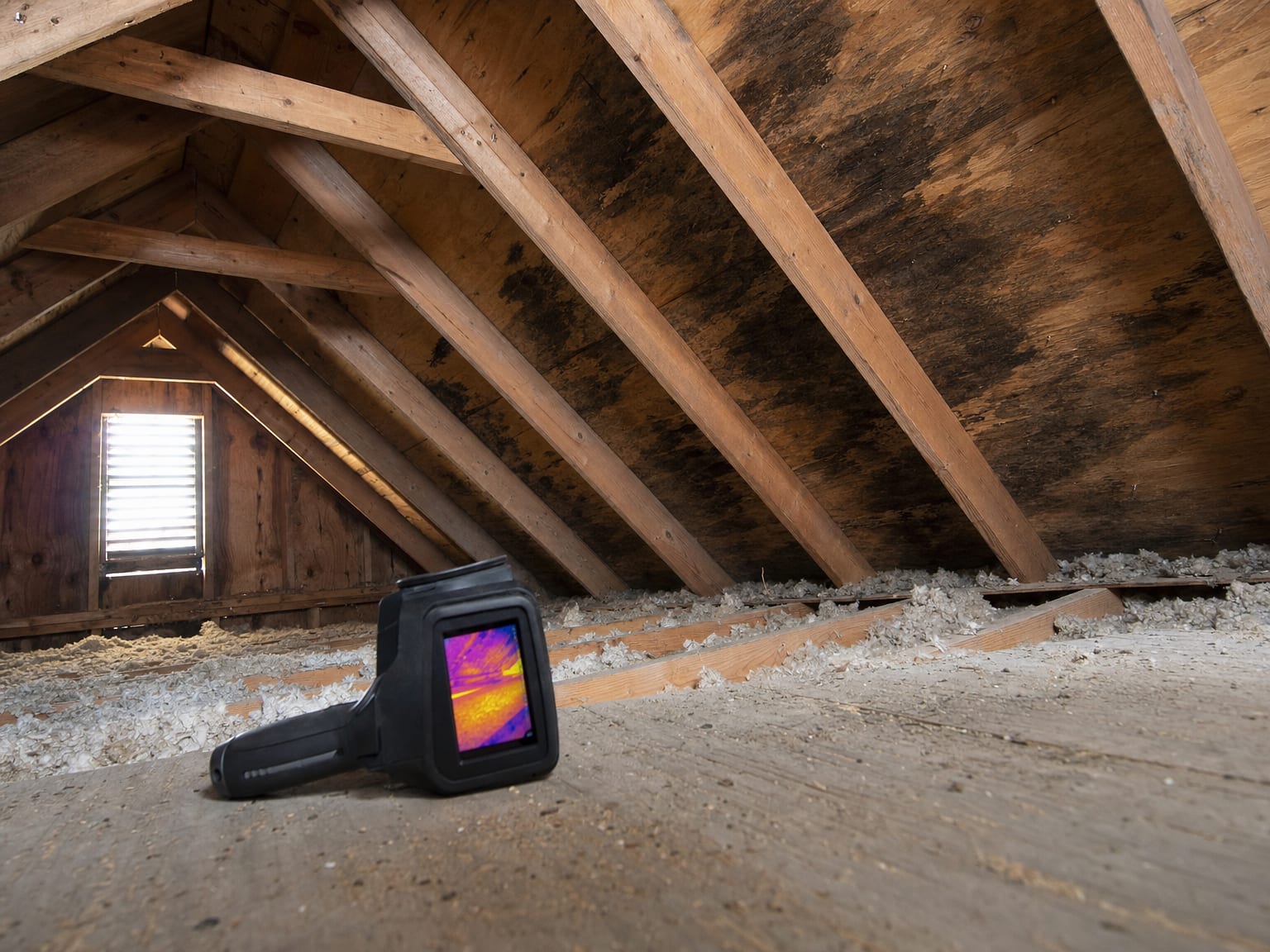
For situations involving basement mold remediation or attic mold remediation, ExecPro often recommends a combined inspection and targeted testing approach so that the scope of work is defined accurately from the start rather than estimated and revised after the walls come down.
Mold Testing for Real Estate Transactions in New Jersey
Real estate is one of the busiest drivers of mold testing requests across central New Jersey, and the stakes are high on both sides of a transaction. A buyer who skips testing on a home with a damp basement may be taking on a significant remediation cost they weren't planning for. A seller who can't produce documentation in response to an inspection finding may lose a deal or face renegotiation at the worst possible moment.
ExecPro Restoration & Cleaning works with buyers, sellers, real estate agents, and attorneys throughout the region. For buyers, the pre-purchase mold inspection combined with targeted air or surface sampling provides the documentation needed to satisfy a contingency, inform a negotiation, or simply give a buyer confidence before closing. For sellers, proactive testing before listing can identify and resolve any issues before they become deal-killers during a buyer's inspection period.
Attorneys handling disclosure disputes or contract contingencies frequently need a formal lab report with chain-of-custody documentation. The reports ExecPro produces are formatted to meet that standard, not just to satisfy a homeowner's curiosity. If you're an agent dealing with a transaction where mold came up during inspection, ExecPro can typically work within your timeline to produce results that move the deal forward.
Post-remediation testing is equally important in real estate contexts. If a seller has had mold remediation completed prior to listing, a post-remediation air quality clearance provides the buyer with objective confirmation that the work was effective. ExecPro's post-remediation verification service produces that clearance documentation in a format that holds up to scrutiny.
What Sets ExecPro Apart for Mold Testing in Central NJ
ExecPro Restoration & Cleaning is licensed and insured, and every mold testing engagement is handled by trained technicians who understand both the sampling process and the building science behind what the results mean. Here's what that looks like in practice.
Third-Party Lab Verification
ExecPro uses accredited independent laboratories for all sample analysis. Results come from an objective process with no built-in interest in the outcome. The chain-of-custody documentation and lab accreditation are what make results credible to insurers, attorneys, buyers, and property managers.
Inspection Before Sampling
Technicians conduct a moisture and visual inspection before a single sample is collected. This confirms that the sample strategy matches your actual situation and allows lab results to be interpreted accurately rather than as a raw number without context.
Reports You Can Actually Use
ExecPro's mold testing reports include sample locations, outdoor comparison data, species identification, moisture findings, and a plain-English explanation of what it all means. Whether you're a homeowner trying to understand your air quality or an attorney working a disclosure case, the report is built to give you what you need.
Honest Scope Guidance
ExecPro won't recommend testing when it won't change the outcome. If visible mold is already present and the course of action is clear, the technician will tell you that directly and walk you through the remediation process instead. Testing is a decision tool, and ExecPro uses it that way.
Full-Service Capability
Because ExecPro also performs mold remediation and mold inspection services, the path from test results to a resolution plan is a single conversation. You're not managing multiple vendors or trying to get two separate companies to agree on scope.
Service Across Central New Jersey
ExecPro serves properties from Princeton Junction and West Windsor to Flemington, Freehold, Cherry Hill, and dozens of communities in between. Whether you're a homeowner in Bridgewater, an agent in Red Bank, or a property manager in New Brunswick, the same standards apply at every job.
Frequently Asked Questions About Mold Testing
These are the questions ExecPro Restoration & Cleaning hears most often. The answers are meant to give you real information, not just a reason to call.
Not always. The EPA states that when visible mold is present, sampling is usually unnecessary because the problem is already confirmed and the remediation scope can be determined by visual inspection and moisture assessment. Testing adds the most value when the concern is hidden, when you need documentation for a real estate or insurance purpose, or when you want post-remediation verification after work is complete.
Schedule Your Mold Test with ExecPro Restoration & Cleaning
Professional mold testing with accredited lab analysis and plain-English reports. Call (888) 300-3772 or contact us online.