Basement Drying Services in Central & Northern NJ
When water gets into your basement, fast and thorough drying is the only thing standing between a manageable cleanup and a mold problem that takes over. ExecPro Restoration & Cleaning uses commercial-grade extraction, dehumidification, and moisture monitoring to dry your basement properly, document the results, and help you move forward with confidence.
What Is Basement Drying and What Do You Actually Get?
Basement drying is the structured process of removing water from a flooded or water-damaged basement, then drying the air, surfaces, framing, and building materials to a safe moisture level before any repairs begin. When ExecPro Restoration & Cleaning responds to a wet basement, the work includes water source identification, standing water extraction, strategic placement of air movers and commercial dehumidifiers, ongoing moisture monitoring, and a written drying log you can hand to your insurance company. The goal isn't just a basement that feels dry. It's a basement where the moisture readings confirm that walls, framing, and subfloors are dry enough to close up and rebuild.
A lot of homeowners are surprised to learn that running a box fan after a flood is not the same as drying a basement. Water moves into wall cavities, saturates insulation, soaks into concrete block, and hides behind finished surfaces. Without moisture meters and proper equipment, you can have a basement that looks fine and smells fine for a few weeks and then develop a serious mold problem you never saw coming. That's the situation ExecPro's basement drying service is designed to prevent.
Why Do NJ Basements Flood So Often?
New Jersey's geography, soil conditions, and weather patterns put basements at constant risk. Heavy rain events, tropical storm remnants, and flash flooding push groundwater levels up quickly, and older foundation walls weren't built to handle that kind of sustained pressure. Sump pump failures are one of the most common causes of basement flooding in the region, especially during prolonged storms that knock out power and overwhelm backup systems at the same time.
Beyond storms, NJ basements deal with foundation seepage through block walls and floor-wall joints, plumbing leaks from aging supply lines and water heaters, improper exterior grading that sends roof runoff straight toward the foundation, and clogged or disconnected downspouts that concentrate water in exactly the wrong place. Sewer backups are another serious source, particularly in areas with older municipal infrastructure. Each of these causes a different type of water intrusion, and the right response depends on knowing which one you're dealing with before the drying work begins.
Communities across the region, from Princeton Junction through Trenton, Hamilton, New Brunswick, and Bridgewater, see basement water events every season. The problem doesn't respect zip codes or home age. What matters is how quickly the water gets out and how thoroughly the space dries afterward.
How Does the Basement Drying Process Work?
ExecPro Restoration & Cleaning follows a structured process based on IICRC S500 water damage restoration standards. Each step builds on the last, and nothing gets skipped because shortcuts here create problems later.
Scroll the steps sideways to follow the full process.
What Equipment Does Professional Basement Drying Use?
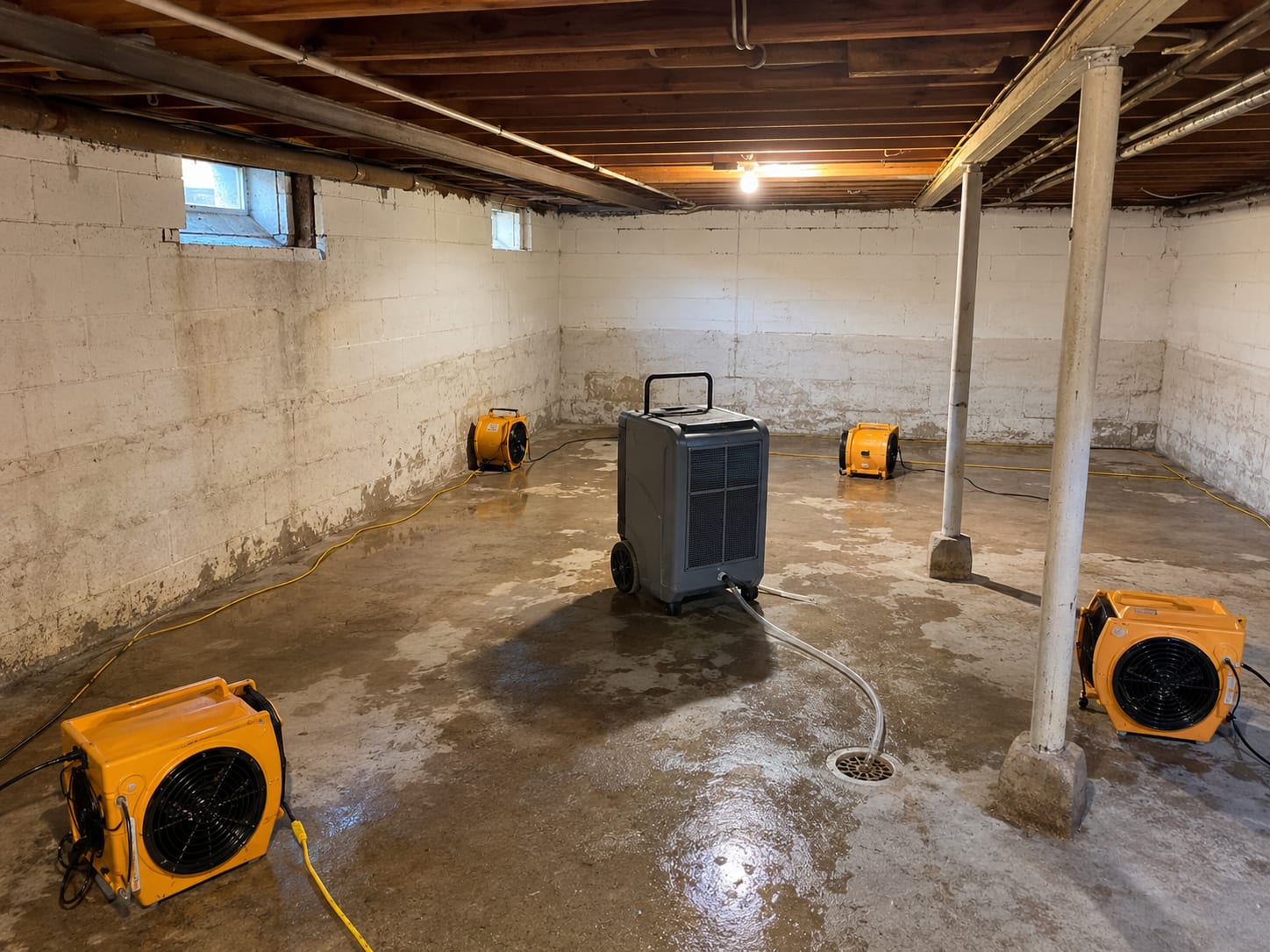
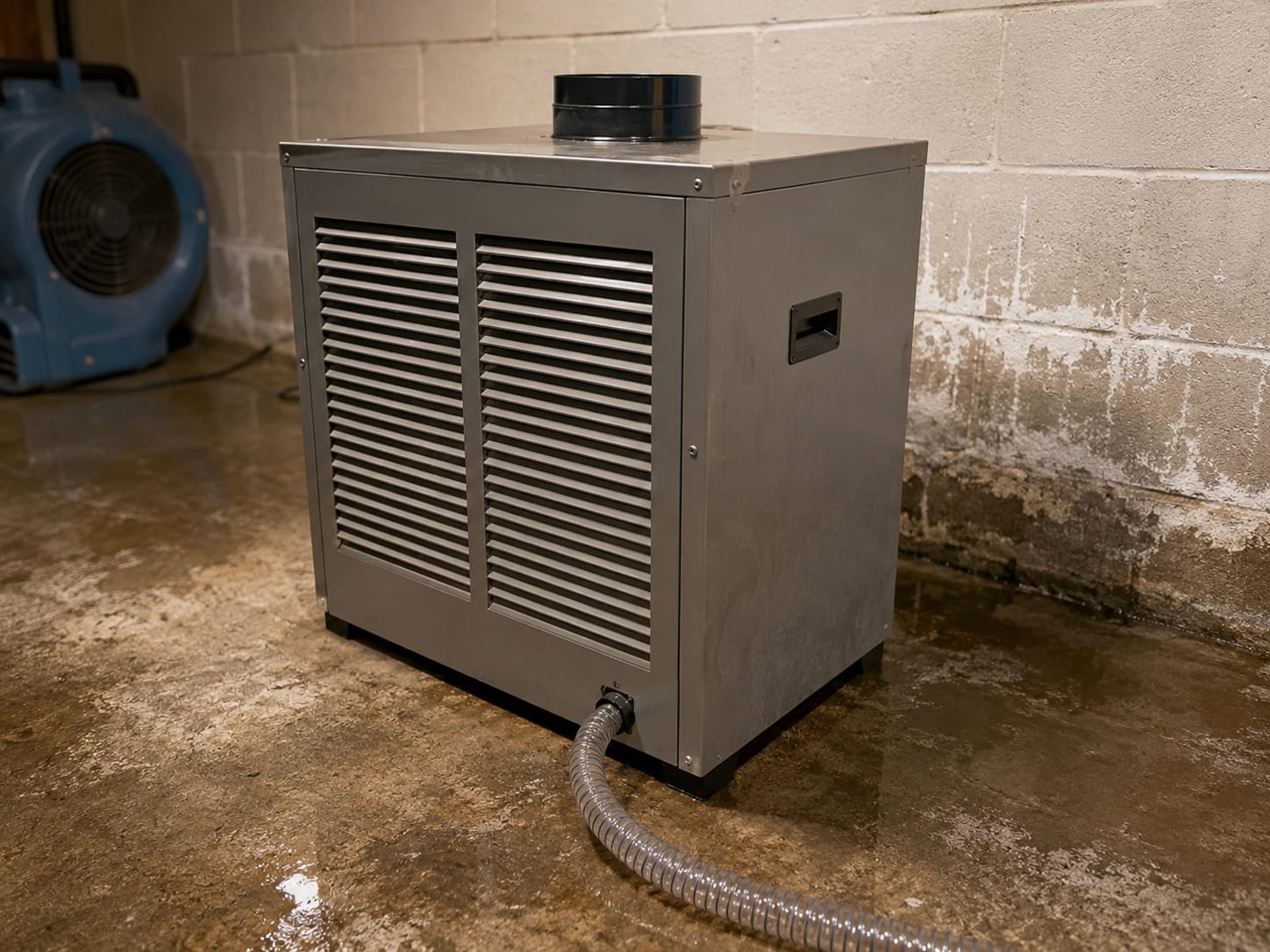
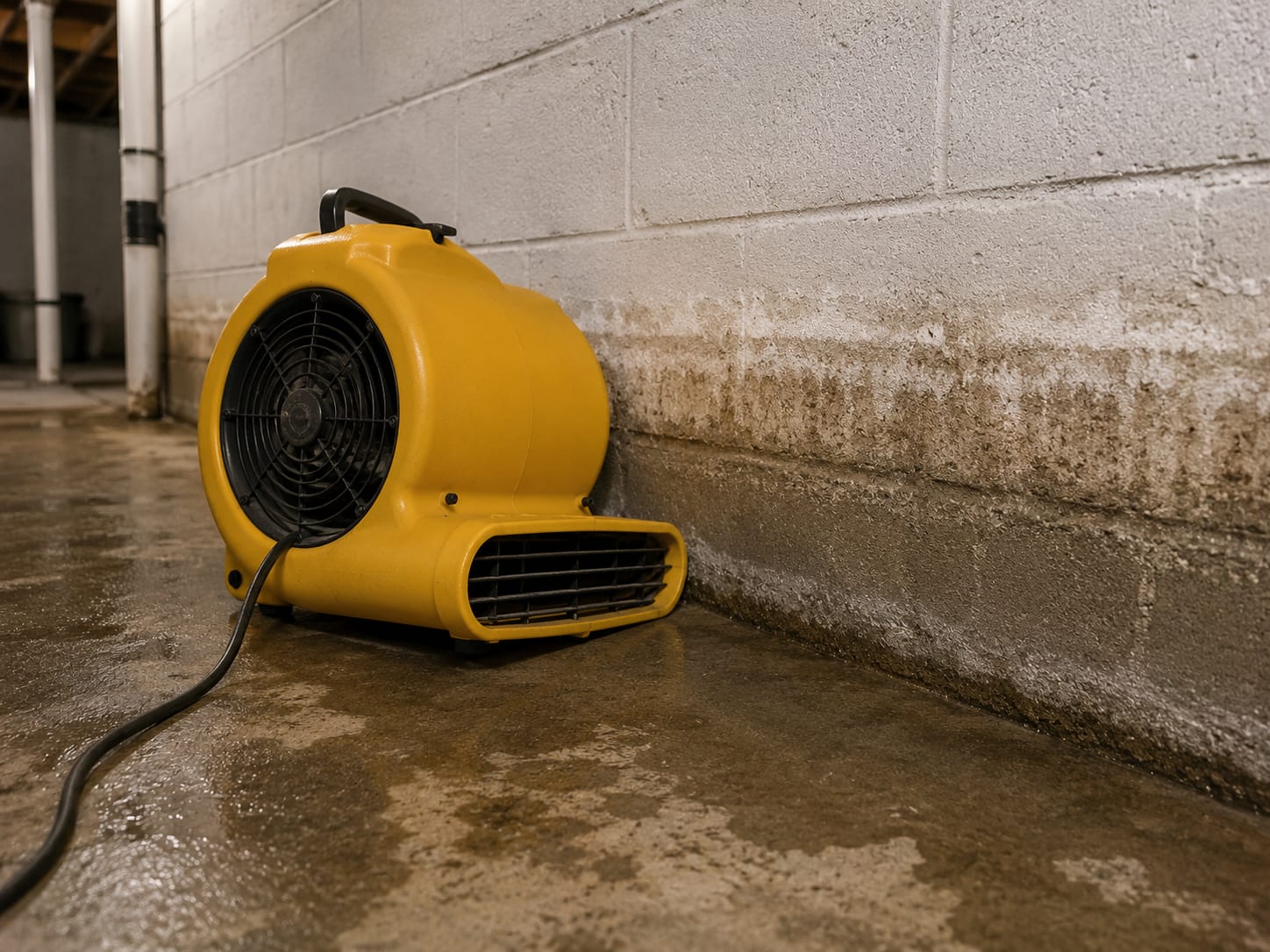
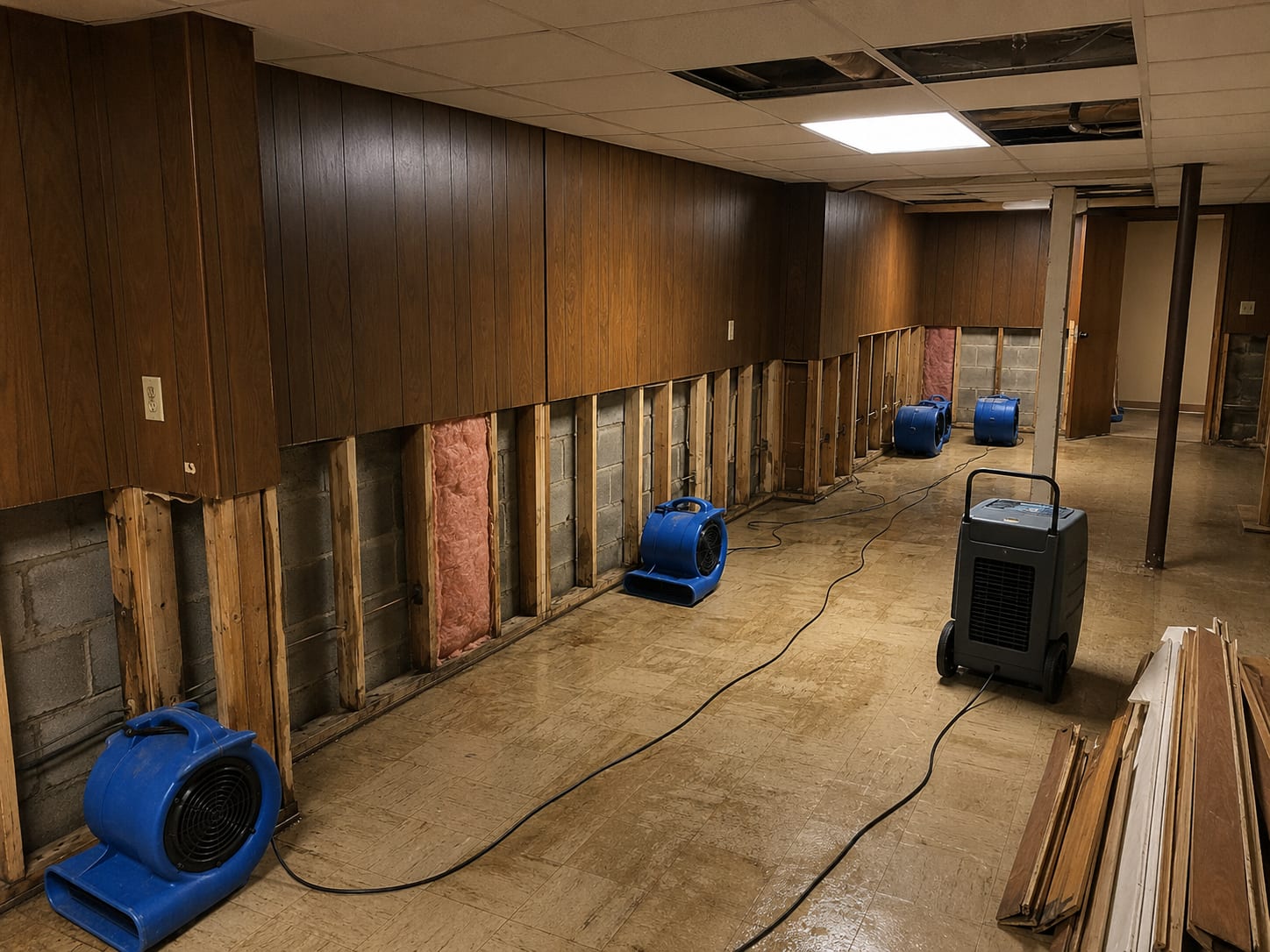
The equipment difference between a professional basement drying response and a DIY setup is significant. Commercial-grade dehumidifiers used in structural drying work can remove many times the moisture per day that a hardware store unit can handle. They're built to run continuously under load, to handle humid environments without cycling off, and to process the volume of moisture that comes out of wet concrete, block, framing, and insulation.
Air movers used in professional drying aren't household fans. They're designed to create high-velocity airflow close to wet surfaces, which accelerates evaporation from the material rather than just circulating room air. Placement matters as much as the equipment itself, and technicians trained in applied structural drying understand how to position air movers to work with the room geometry rather than against it.
Moisture detection also gets considerably more precise at the professional level. Pin meters and pinless meters read moisture content in specific materials, not just surface humidity. Thermal imaging can support the identification of wet areas hidden behind finished surfaces. Hygrometers track relative humidity over time so the technician can confirm the air is drying, not just that the floor surface is no longer wet. These readings drive every decision about when the job is done.
What Happens If the Basement Doesn't Dry Out in Time?
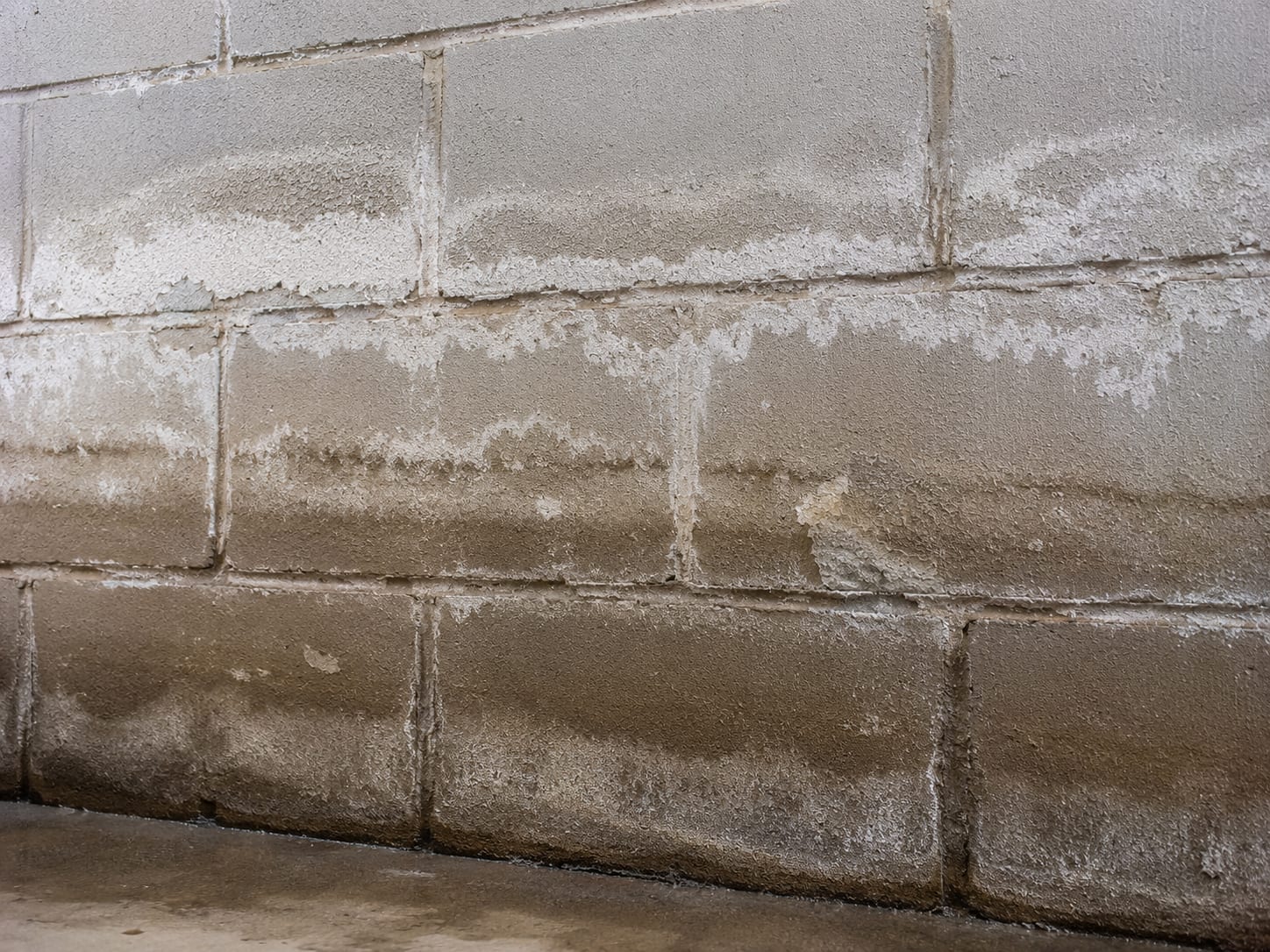
Mold can begin to develop on wet organic materials in as little as 24 to 48 hours under the right conditions. Basements are particularly vulnerable because they tend to have limited airflow, cooler temperatures that trap condensation, organic building materials like wood framing and drywall paper, and stored contents that hold moisture. Once mold gets established in a wet basement, drying alone doesn't solve the problem. The mold needs to be addressed separately through proper remediation.
This is why the timing of the drying response matters so much. A basement that gets properly extracted and dried within the first day or two after a water event is almost always a simpler, less expensive situation than one that sat wet for a week before any equipment was brought in. ExecPro's water damage restoration response is built around getting equipment in quickly, because the first 48 hours genuinely make a difference in outcomes.
If a drying response reveals active mold growth or if basement mold remediation becomes necessary, ExecPro Restoration & Cleaning handles both services. That means you're not coordinating between two separate companies trying to figure out where the drying job ends and the remediation job begins. It's one team with full visibility into both situations.
What About Insurance? Does Basement Drying Get Covered?
Whether insurance covers basement drying depends on your policy, the cause of the water damage, and how the claim is documented. Standard homeowners insurance typically covers sudden and accidental water damage, like a burst pipe or an appliance failure, but may exclude gradual leaks, flooding from outside the home, or sewer backup unless you have a specific endorsement. Flood damage from rising groundwater or storm surge generally requires a separate flood insurance policy.
What ExecPro Restoration & Cleaning provides on every job is the documentation that makes a claim easier to support. Photos, moisture readings, drying logs, equipment records, cause-of-loss details, and itemized notes give your insurance adjuster something concrete to work from rather than asking them to take your word for what the basement looked like on day one. This documentation also matters if there's any question about timing or scope during the claims process.
If your basement drying event leads to rebuild work, ExecPro offers post-water damage reconstruction as part of its build-back services, so the transition from drying and remediation into actual repair work stays with a single contractor who already knows the property. That continuity tends to make the insurance and rebuild process run more smoothly than handing the project off partway through.
Why Property Owners in Central NJ Choose ExecPro Restoration & Cleaning
ExecPro Restoration & Cleaning serves homeowners, landlords, and property managers across a wide service territory in central and northern NJ. The reasons clients call back and refer their neighbors come down to a few consistent things.
Measured Results, Not Just Dry-Looking
The job isn't done when the basement looks dry. It's done when moisture readings confirm the structure has reached target levels. ExecPro provides documentation showing those numbers, not just a verbal sign-off.
Source Investigation Included
Drying a basement without understanding why it got wet is treating a symptom without addressing the cause. Every ExecPro basement drying job includes an assessment of the water source so you understand what happened and what, if anything, needs to be addressed to prevent a repeat.
Mold Assessment as Part of the Process
Because ExecPro Restoration & Cleaning handles both water damage and mold remediation, technicians are looking for mold risk throughout the drying process, not separately and after the fact. If a concern surfaces, you hear about it before new materials go back in.
Insurance Documentation Ready
Drying logs, moisture readings, photos, and cause-of-loss details are prepared as a matter of course on every job. You don't have to ask for documentation. It's part of how ExecPro works.
Licensed and Insured
ExecPro Restoration & Cleaning is fully licensed and insured, which matters when restoration work is happening in your home and when your insurance company is reviewing how the job was performed.
End-to-End Service Capability
From initial water extraction through structural drying, mold assessment, and build-back services including drywall replacement, flooring, and reconstruction, ExecPro can take a basement from flooded to finished without requiring you to manage multiple contractors.
Frequently Asked Questions About Basement Drying
These questions come up regularly from homeowners dealing with wet basements across NJ.
Most residential basement drying jobs take between three and five days when drying equipment is placed promptly after water extraction. The actual timeline depends on how much water was present, how long the basement was wet before drying began, what materials got saturated, and how well the space allows for airflow. Concrete basements with minimal finished materials dry faster than fully finished basements with insulation, drywall, and carpet. Daily moisture readings tell you exactly how drying is progressing, so there's no guesswork about when the job is actually done.
Service Areas: Basement Drying Across Central and Northern NJ
ExecPro Restoration & Cleaning serves a broad territory across central and northern New Jersey, including communities in Mercer, Middlesex, Somerset, Morris, Hunterdon, Union, Monmouth, Ocean, Burlington, and Camden counties. Whether you're in Princeton or Flemington, Somerset or Red Bank, Moorestown or Lakewood, the response process and service standard are the same.
Some of the communities where ExecPro regularly responds to basement water events include Princeton Junction, West Windsor, Plainsboro, Cranbury, Lawrenceville, Pennington, Hopewell, Hightstown, East Windsor, Robbinsville, Hamilton, Trenton, Ewing, Monroe, South Brunswick, Dayton, Monmouth Junction, New Brunswick, North Brunswick, East Brunswick, Hillsborough, Manville, Somerset, Franklin, Bridgewater, Watchung, Warren, Bedminster, Basking Ridge, Bernardsville, Clinton, Flemington, Lambertville, Summit, Westfield, Chatham, Madison, Florham Park, Holmdel, Colts Neck, Middletown, Red Bank, Freehold, Manalapan, Marlboro, Lakewood, Jackson, Bordentown, Moorestown, Mount Laurel, Cherry Hill, Marlton, Medford, Burlington, and many surrounding areas.
If you're not sure whether ExecPro serves your specific town, the fastest way to find out is to call or send a message. Most areas across central NJ fall within the service territory, and the team will let you know immediately whether a response is available.