Commercial Mold Removal in Central NJ
ExecPro Restoration & Cleaning handles mold removal for offices, retail spaces, multifamily buildings, warehouses, and managed properties across central and northern New Jersey. We work around your schedule, protect occupied areas, and deliver full documentation from start to closeout.
What Is Commercial Mold Removal?
Commercial mold removal is the process of identifying, containing, and physically eliminating mold growth from a commercial property. It covers the initial assessment of affected materials and moisture sources through final cleanup and closeout documentation your facility team, insurer, or tenants may require. When ExecPro Restoration & Cleaning handles a commercial project, the work doesn't stop at wiping visible growth off a surface. It means finding where the moisture came from, removing or cleaning the affected materials correctly, drying the area, and providing a documented record of what was done.
The terms 'mold removal' and 'mold remediation' are often used interchangeably, and for most practical conversations that's fine. What matters is this: visible mold is only part of the problem. Lasting results come from treating the source, not just the surface. That means correcting the leak, condensation issue, or humidity problem that allowed mold to grow in the first place, then removing affected materials, cleaning, drying, and confirming the area is ready for re-occupancy or rebuild.
For commercial properties in New Jersey, the stakes are higher than a typical residential job. You have tenants, employees, customers, or residents sharing the space. Disruption costs money. Documentation protects your liability position. And a mold problem left partially addressed tends to come back, sometimes in a harder-to-reach area.
What Types of Commercial Properties Does This Cover?
Mold doesn't pick a property type. Any commercial space with a moisture problem is a candidate, and the removal process adapts to the building, the occupancy situation, and the scope of the damage. ExecPro Restoration & Cleaning works across a wide range of commercial property types throughout central and northern NJ.
Office Buildings
Mold in offices often traces back to HVAC condensation, roof leaks, or water intrusion around windows and exterior walls. Because employees occupy these spaces daily, containment and air quality during the work are top priorities. After-hours scheduling is available when access and disruption are concerns.
Retail Spaces
Retail environments face mold risks from back-of-house areas, loading docks, plumbing-adjacent storage, and HVAC systems running in high-humidity conditions. Work is scoped to minimize customer-facing disruption while resolving the actual source.
Multifamily and Apartment Buildings
Multifamily properties present unique coordination challenges. Individual units, shared mechanical spaces, and common areas may all be involved. ExecPro Restoration & Cleaning works with property managers and their teams to phase the work, communicate with tenants, and maintain proper documentation for each affected area. Our property management mold services are built for exactly this kind of multi-unit complexity.
Warehouses and Industrial Spaces
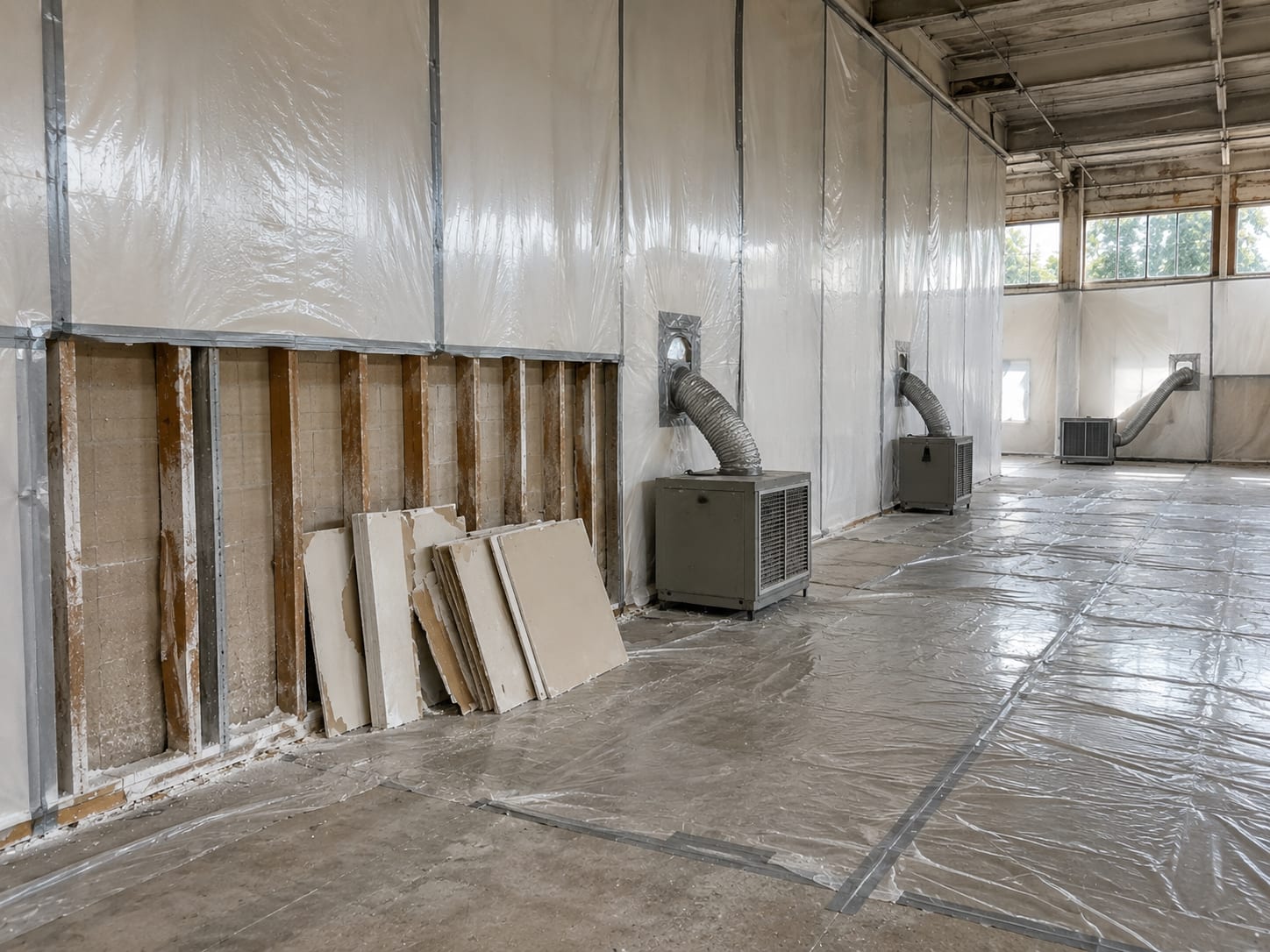
Large open footprints, concrete foundations, and loading areas exposed to outdoor humidity create conditions where mold can spread across significant surface areas. Scope definition and moisture mapping are necessary before removal work begins in these environments.
Medical and Professional Offices
Regulated environments and sensitive populations make mold removal in medical offices a higher-stakes project. Documentation requirements are more rigorous, and post-remediation verification is nearly always appropriate before re-occupancy.
Schools and Institutional Buildings
NJ public employee workplaces, including schools, may fall under PEOSH indoor air quality rules. Mold removal in these environments needs to account for regulatory context, occupant communication, and the specific scheduling demands of an active academic calendar.
How Does the Commercial Mold Removal Process Work?
Every commercial mold removal project at ExecPro Restoration & Cleaning follows a structured process grounded in IICRC S520 standards. The specific steps scale to the size and complexity of your property, but the core sequence stays consistent because skipping steps is how mold comes back.
Scroll the steps sideways to follow the full process.
Why Does Documentation Matter So Much on Commercial Projects?
Commercial mold removal involves more stakeholders than a typical residential project. Property owners, facility managers, tenants, insurers, and sometimes regulatory contacts all have an interest in knowing what happened, what was done, and what the current condition of the building is. A verbal walkthrough doesn't satisfy that need. A well-organized closeout package does.
At ExecPro Restoration & Cleaning, documentation is treated as part of the service, not an afterthought. Work-area photos capture conditions before, during, and after the project. Moisture readings establish a baseline and confirm dryness before the area is released. Scope notes and disposal records provide a clear chain of accountability. If your insurer needs remediation records, or your tenants want confirmation that their space is safe, that documentation is already prepared.
For commercial properties in regulated environments, including schools, public buildings, and medical facilities, this level of documentation isn't optional. Even for standard office or retail properties, it's the difference between a clean closeout and a lingering liability question. Commercial mold inspection services can be incorporated when a formal assessment record is needed before removal work begins.
What About Business Continuity During Mold Removal?
This is usually the first practical question commercial clients ask, and it's a fair one. Mold removal in an active building requires more planning than a vacant property project. The goal is to get the mold out without shutting down your operation longer than necessary.
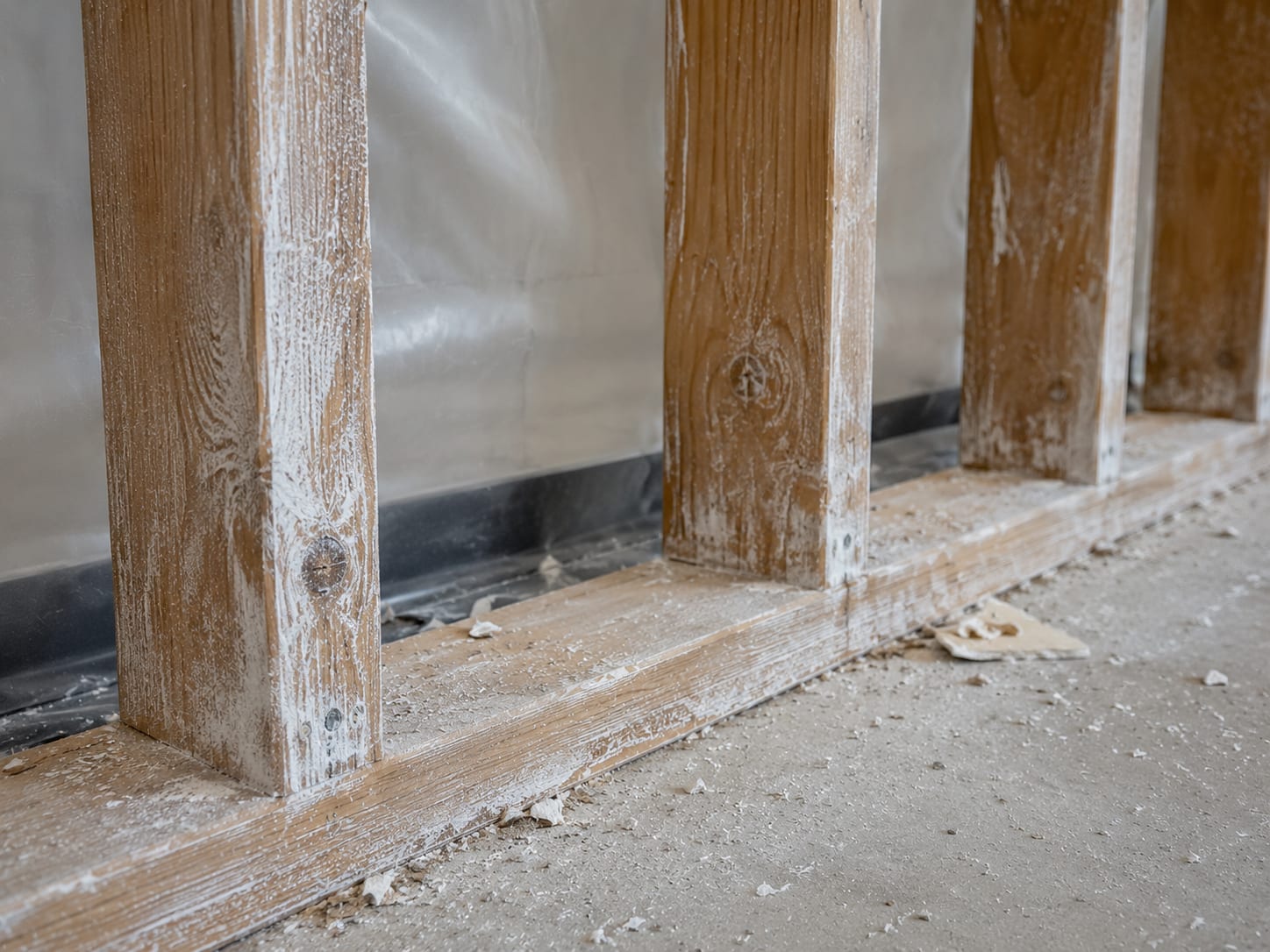
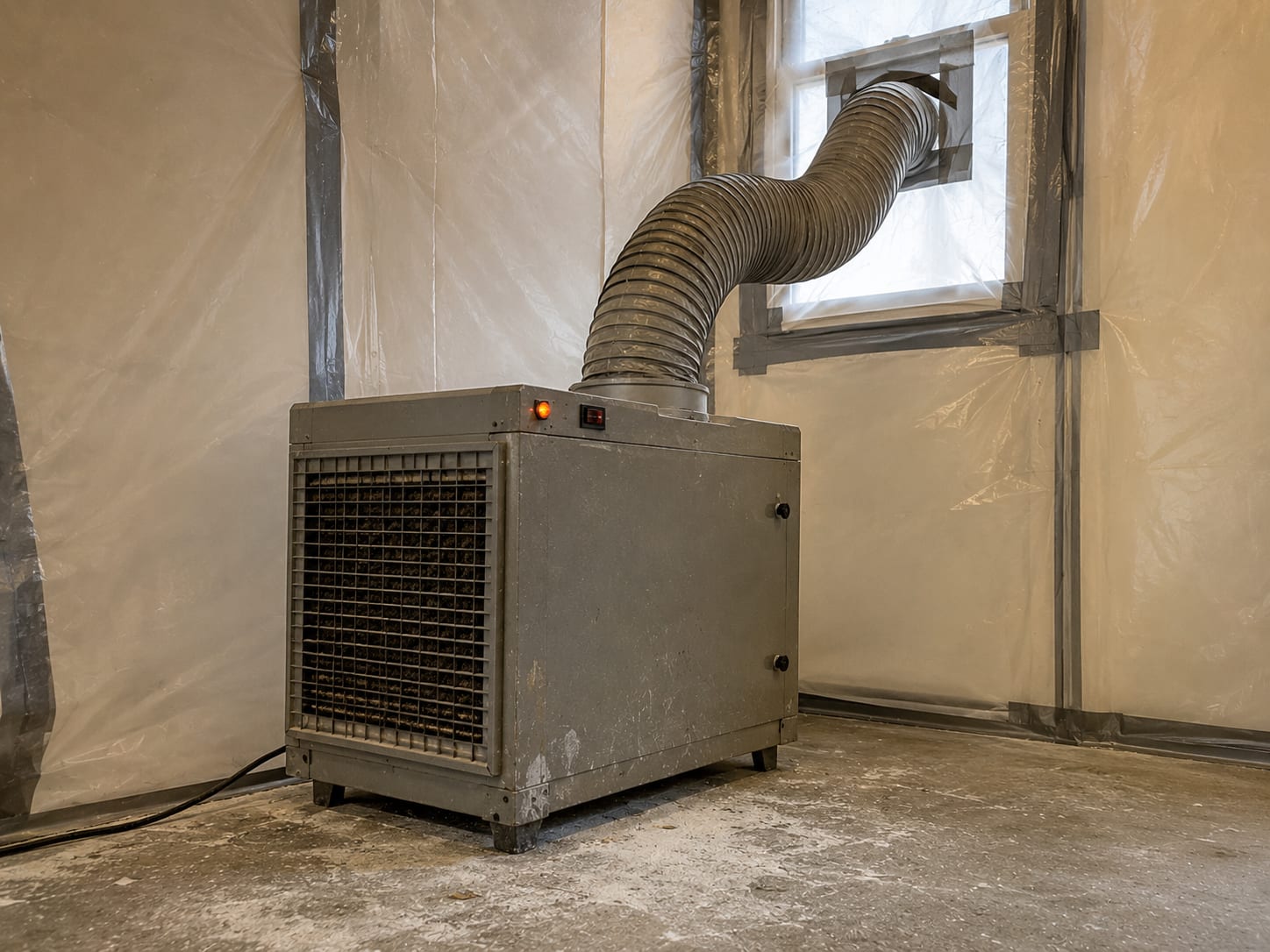
ExecPro Restoration & Cleaning approaches business continuity with phased containment when the full project can't happen in a single off-hours window. Priority areas, the spaces with the most contamination or the most critical occupancy needs, are addressed first. Containment barriers separate the work area from the rest of the building so adjacent offices, retail floors, or tenant units stay accessible. Negative air pressure inside the containment zone keeps spores from drifting into clean spaces during demolition and removal.
After-hours and weekend scheduling is available for projects where any daytime disruption is unacceptable. For multifamily and apartment properties, coordination with tenants on access timing and work notices is part of how ExecPro Restoration & Cleaning manages these projects. Clear communication between your facility team and ours reduces surprises and keeps the project on track.
The timeline depends on the scope. A single affected room in a commercial building might be resolved over a weekend. A larger project spanning multiple floors or building systems takes longer and requires more coordination. What doesn't change is the commitment to giving you a realistic picture of the schedule upfront so you can plan around it.
What Causes Mold in Commercial Buildings?
Commercial mold problems almost always trace back to a moisture issue that went unaddressed long enough for mold to colonize the affected material. Understanding the common causes helps property managers and owners act faster when early signs appear.
Roof Leaks
A slow roof leak can saturate insulation and ceiling materials for months before visible mold appears on interior surfaces. By the time the stain shows up on the ceiling tile, the growth above it is often more extensive than expected.
HVAC Condensation and Duct Issues
Commercial HVAC systems move air through the entire building. When condensation builds up inside ductwork or on coils, or when humidity control fails, mold can establish itself inside the system and distribute spores throughout the space. HVAC mold remediation addresses both the ductwork contamination and the conditions that caused it.
Plumbing Leaks and Pipe Failures
A slow leak behind a wall or under a floor can go undetected in a commercial building for weeks. By the time the damage is discovered, the material behind the visible surface may already be heavily contaminated.
Basement and Foundation Moisture
Basements and ground-floor spaces in commercial buildings are particularly vulnerable to seepage, rising humidity, and poor drainage around the foundation. These conditions are especially common in older NJ commercial stock. Basement mold remediation handles the specific challenges of below-grade contamination.
High Indoor Humidity
Commercial spaces with high occupant traffic, inadequate ventilation, or humidity control problems can accumulate enough moisture in the air to support mold growth on walls, ceilings, and stored materials without any visible leak. This is especially common in storage rooms, server rooms, and poorly ventilated back-of-house areas.
Delayed Water Damage Cleanup
When a flood, storm, or burst pipe isn't fully dried within 24 to 48 hours, mold growth becomes likely on any affected porous material. Many commercial mold removal projects are the downstream consequence of a water damage event that was cleaned up on the surface but not fully dried. Water damage restoration handled promptly is the most effective mold prevention tool available.
What Happens After Mold Removal Is Complete?
Once the removal work is finished and the area is dry, two things typically happen: verification and repair. Post-remediation verification, or PRV, is the process of confirming that mold levels in the treated area have returned to acceptable conditions. For commercial projects, especially those involving tenant re-occupancy, insurance documentation, or regulated environments, PRV provides an independent layer of confirmation that the remediation was effective. ExecPro Restoration & Cleaning coordinates post-remediation verification as part of a complete commercial project when appropriate.
After verification, the affected area is ready for rebuild. Depending on what was removed during the remediation, this might include drywall replacement, insulation, ceiling tile, flooring, or paint. ExecPro Restoration & Cleaning offers build-back services so the repair work can follow immediately from the remediation without the delay and coordination hassle of bringing in a separate contractor. For commercial clients who need to get space back online quickly, having remediation and rebuild handled by one team matters.
The final step is confirming that the moisture source has been addressed. No amount of removal and rebuild prevents recurrence if the underlying cause is still active. Whether that means a repaired roof, a fixed plumbing line, an HVAC system brought back to proper function, or improved ventilation, correcting the source is what makes the investment in mold removal durable.
Why Commercial Property Managers and Owners Choose ExecPro Restoration & Cleaning
Commercial mold removal requires a provider who understands that your building isn't empty, your schedule isn't flexible, and your documentation needs are real. ExecPro Restoration & Cleaning is licensed and insured, works to IICRC S520 standards, and serves commercial properties across central and northern NJ from Princeton Junction and Trenton out through Somerset County, Monmouth County, and Burlington County.
Process Built for Commercial Complexity
Residential remediation and commercial remediation are not the same job. Commercial projects involve multiple stakeholders, tenant coordination, phased access, regulatory considerations, and documentation requirements that a residential-only provider isn't equipped to handle. ExecPro Restoration & Cleaning structures every commercial engagement around the operational realities of your property.
Containment That Protects Your Operations
Negative air pressure, HEPA filtration, and properly installed containment barriers are standard on every commercial project. The goal is always to isolate the work area completely so the rest of your building stays clean and accessible while remediation is underway.
Documented Closeouts as Standard Practice
Work-area photos, moisture readings, disposal records, and scope notes are prepared for every commercial project. If your insurer, property owner, or tenants need documentation, it's ready. This isn't an add-on; it's how ExecPro Restoration & Cleaning closes out every commercial job.
Remediation Through Rebuild Under One Roof
From initial commercial mold remediation through drywall replacement and final cleaning, ExecPro Restoration & Cleaning manages the full scope. You don't have to coordinate a separate general contractor for the rebuild, and the timeline doesn't stall between trades.
Air Quality Monitoring and Testing
When occupant health concerns or regulatory requirements make air quality documentation part of the project, commercial air quality testing is available. This supports re-occupancy decisions, tenant communication, and any reporting obligations the property may have.
Flexible Scheduling for Occupied Properties
After-hours and weekend availability means your operation doesn't have to stop for mold removal to happen. ExecPro Restoration & Cleaning works around your tenants, your employees, and your business hours to get the project done without unnecessary downtime.
Frequently Asked Questions About Commercial Mold Removal
The distinction comes down to the material and the extent of the growth. Surface mold on a nonporous material like tile or sealed concrete can sometimes be cleaned without removal. Mold that has penetrated porous materials like drywall, insulation, ceiling tile, or wood framing generally requires removal of the affected material. A proper assessment by a qualified technician, not a visual guess, should drive that decision. Attempting to clean material that needs to come out typically results in recurrence within weeks or months.