Basement Mold Remediation in New Jersey
Moisture source correction, structural drying, and full mold removal for basements across central and northern New Jersey. ExecPro Restoration & Cleaning handles the problem from the ground up.
What Is Basement Mold Remediation?
Basement mold remediation is the controlled process of identifying the moisture source driving mold growth, removing affected materials, cleaning salvageable surfaces, drying the space to measurable standards, and documenting the work from start to finish. ExecPro Restoration & Cleaning follows IICRC S520 standards for mold remediation and IICRC S500 standards for water damage, because you rarely get one without the other in a below-grade space. Most basement projects involve moisture mapping, containment, controlled demolition of porous materials, HEPA vacuuming, structural drying, and a clear closeout report you can actually use.
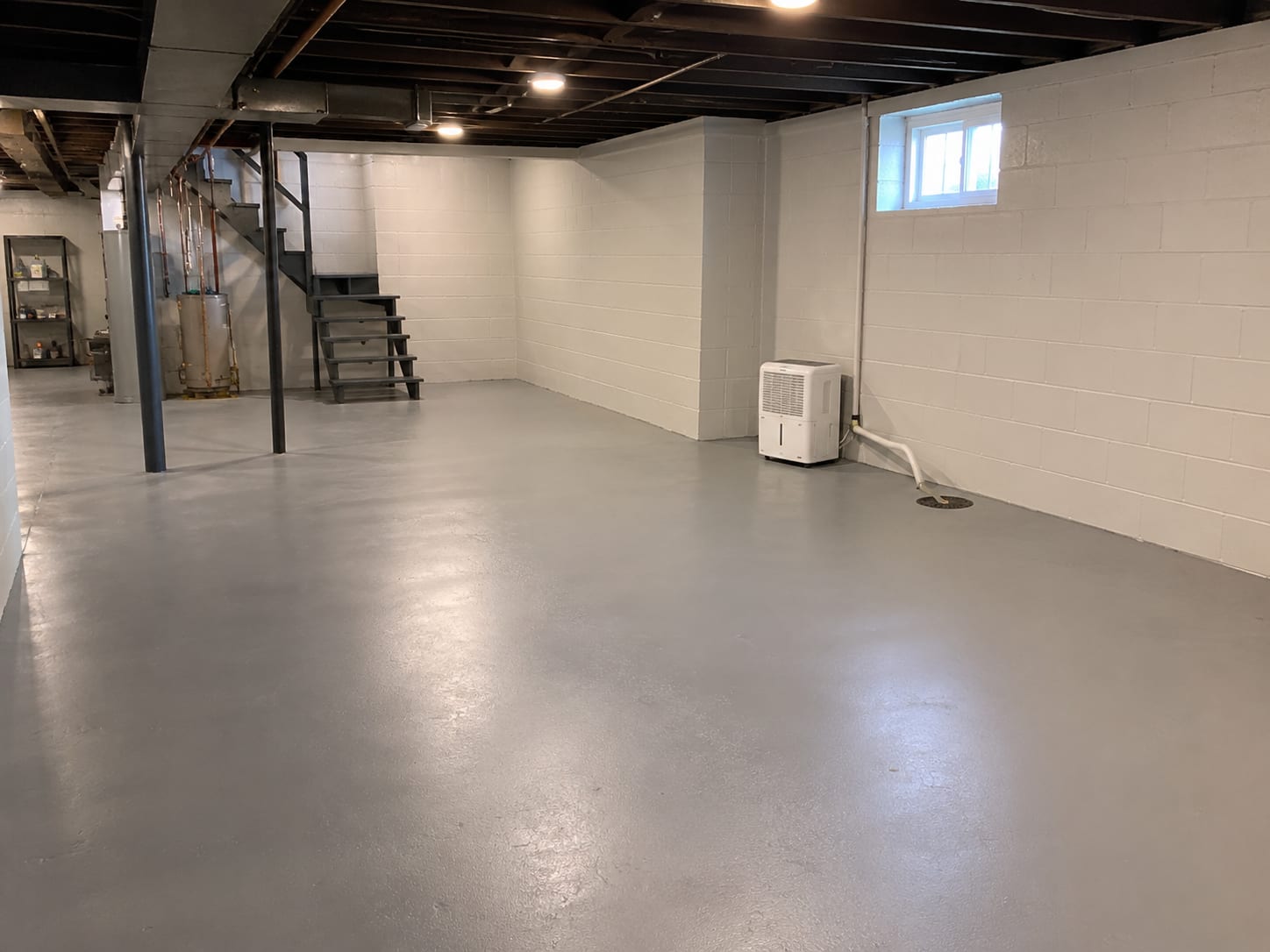
What you get at the end is a dry, treated basement with documentation covering what was found, what was removed, what was cleaned, and what moisture readings confirmed before the work closed. That matters whether you're a homeowner dealing with a recurring damp problem, a buyer doing due diligence, a seller preparing for listing, or a landlord managing a multi-unit property.
Why Do New Jersey Basements Have a Mold Problem?
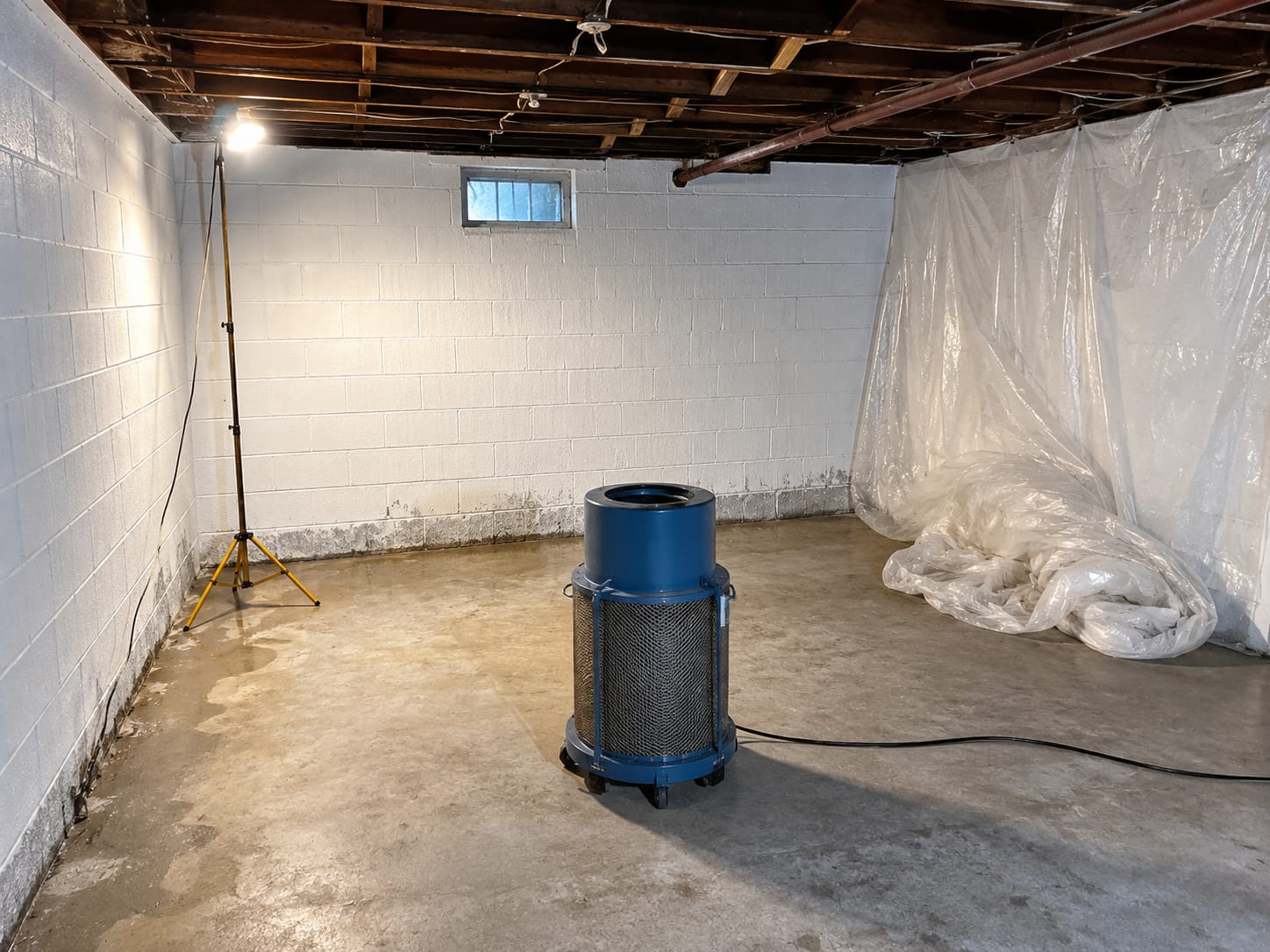
New Jersey's geography puts basements under constant moisture pressure. Groundwater, stormwater runoff, and a climate that cycles between humid summers and freeze-thaw winters create near-constant stress on foundation walls, floor slabs, window wells, and drainage systems. A slow foundation seep during a wet season can saturate insulation and drywall for weeks before anyone notices, and by then mold has already taken hold behind the wall.
Sump pump failures during heavy rain events are one of the most common triggers ExecPro sees across its service area. One failed float switch during a nor'easter can put two inches of water on a finished basement floor. Condensation from warm humid air hitting cold concrete walls in summer, plumbing slow-leaks behind utility shelving, and inadequate exterior drainage sending water toward the foundation all compound the problem. Together, these are why basements are the single most common mold location in residential properties across central NJ.
The point most homeowners miss is that surface mold is a symptom, not the problem. If the moisture source stays active, mold comes back regardless of what gets cleaned. A real basement mold remediation starts with diagnosing what's wet and why, not just what's visibly growing.
What Does Basement Mold Remediation Actually Include?
The process ExecPro Restoration & Cleaning follows is structured around the actual cause of the problem, not just the visible mold. A typical basement remediation moves from inspection to closeout in these stages.
Moisture Source Identification
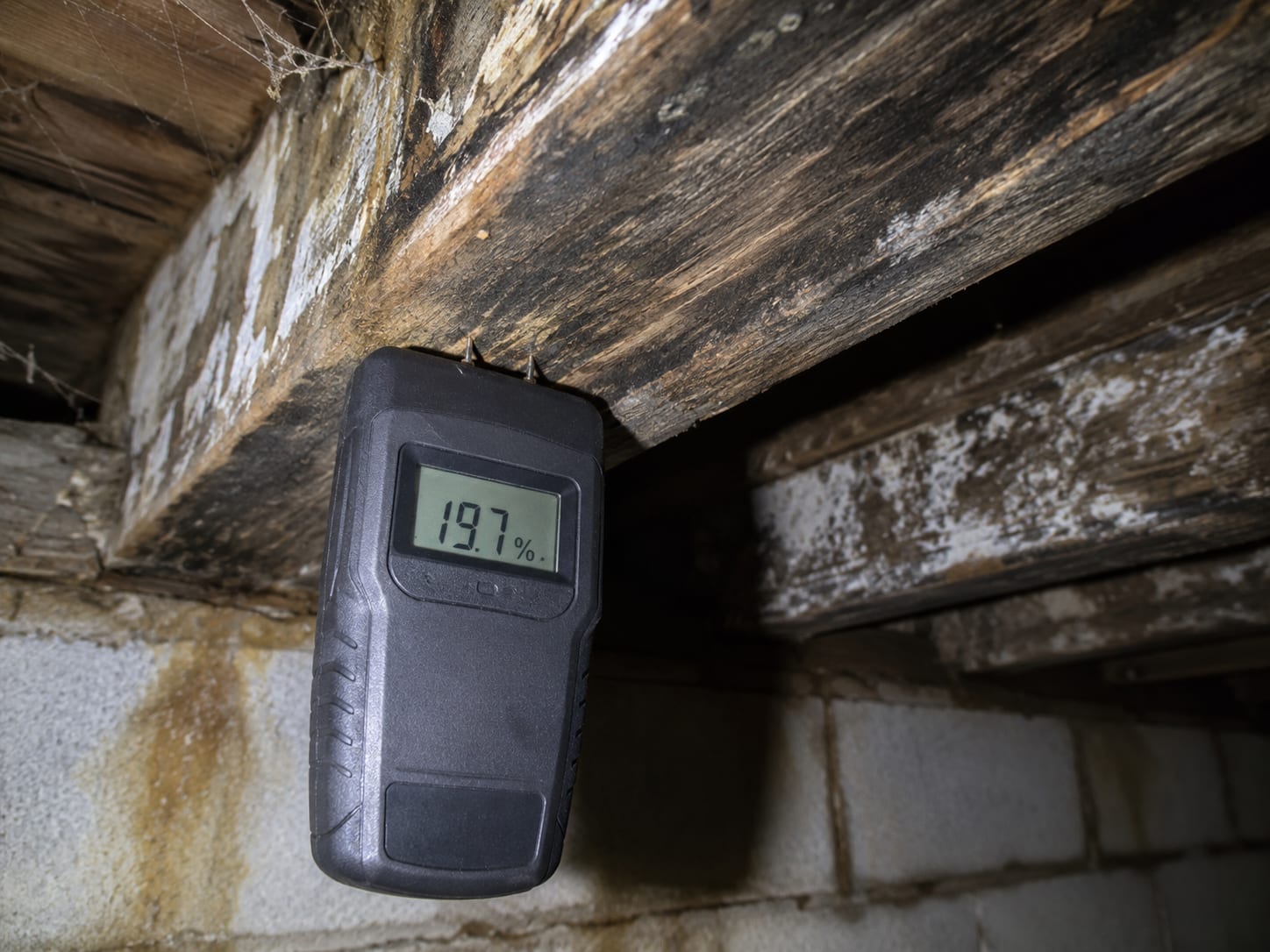
Before anything gets removed or treated, the technician identifies where the moisture is actually coming from. That means moisture meter readings on walls, floors, and framing; hygrometer readings for ambient humidity; and a visual inspection of the foundation, plumbing penetrations, window wells, sump system, downspout discharge locations, and HVAC condensate drainage. Thermal imaging can support this assessment when hidden moisture is suspected behind finished surfaces. You can't build a solid remediation plan without knowing the source.
Scope Assessment and Affected Area Definition
The technician walks the full basement, including storage areas, utility rooms, crawl spaces if connected, and any HVAC-adjacent zones. Visible mold, musty odor zones, staining, and material condition are documented. The scope defines what needs to come out, what can be cleaned and treated, and where containment will be set up. This step produces the work plan.
Containment and HEPA Controls
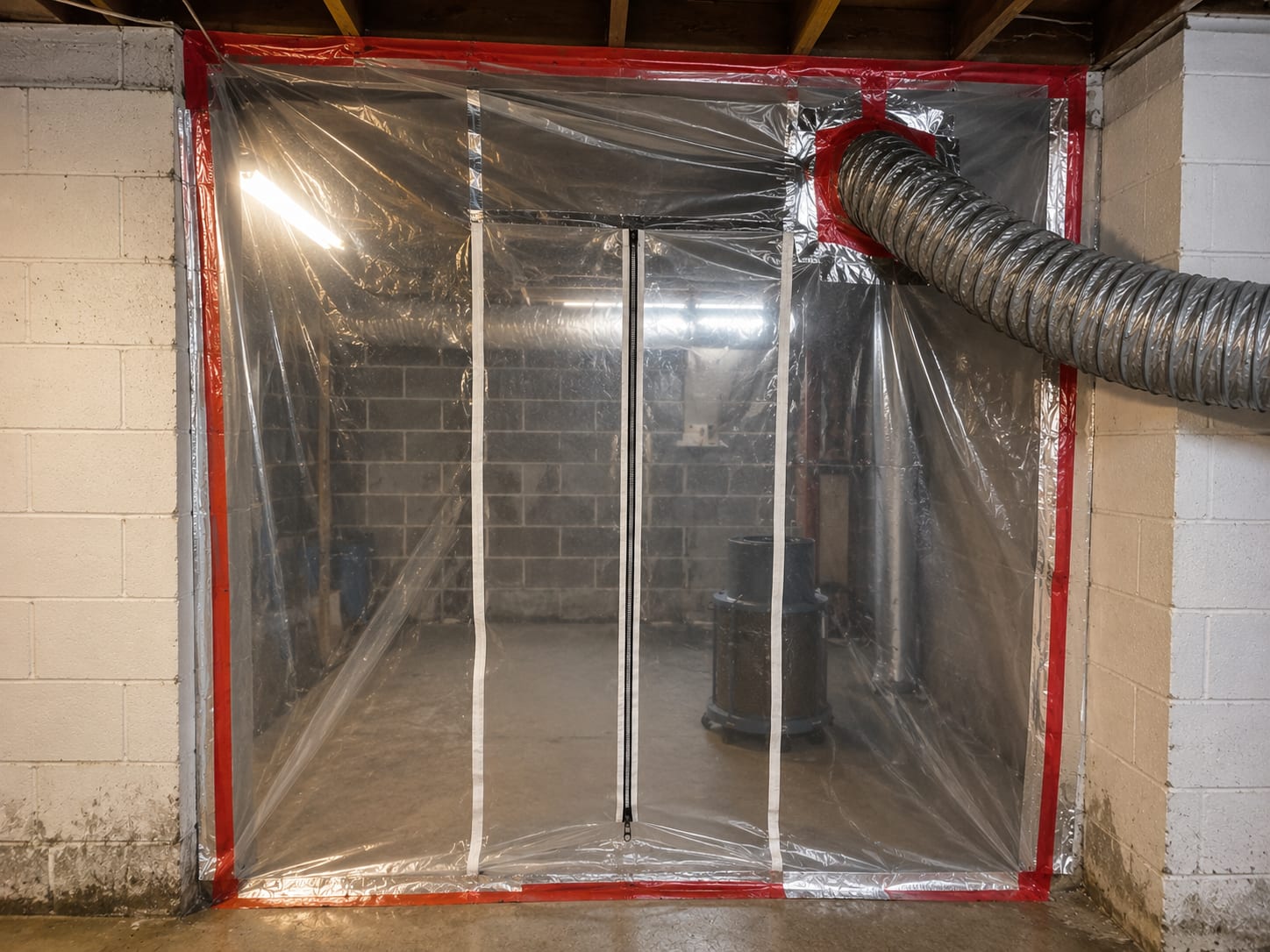
When the remediation area warrants it, containment barriers are established to limit mold spore migration into the living area above. Negative air pressure and HEPA air filtration manage air quality during demolition and cleaning. Technicians use appropriate PPE throughout. These controls keep the remediation from spreading the problem while it's being corrected.
Removal of Unsalvageable Materials
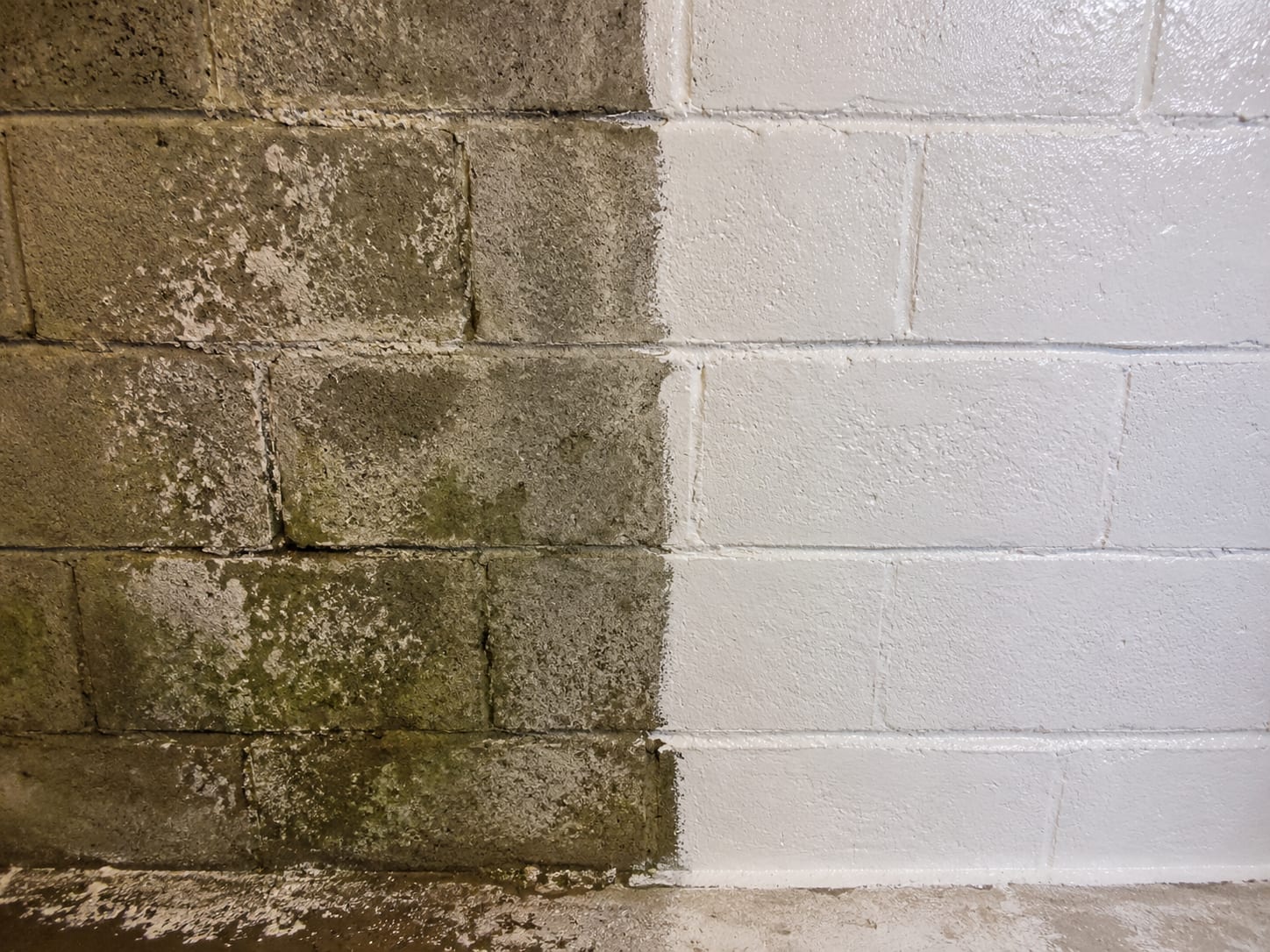
Porous materials that have absorbed mold or water to the point where cleaning is not reliable get removed. That typically means drywall, fiberglass batt insulation, carpet, carpet pad, and damaged contents. Materials are bagged and disposed of properly. Semi-porous materials like concrete block or wood framing are evaluated based on condition, contamination depth, and structural status.
Surface Cleaning and Treatment
Salvageable surfaces, including concrete walls, wood framing, and subfloor assemblies, are cleaned using HEPA vacuuming and appropriate antimicrobial treatment as part of the remediation protocol. The goal is to remove mold from surfaces that will remain in place, bringing them to a remediable condition consistent with IICRC S520 guidance.
Structural Drying
Commercial dehumidifiers and air movers are deployed to bring the basement environment down to acceptable moisture levels. Technicians take and log moisture readings throughout the drying period so there's a documented record of when materials reached dry standard. Rebuilding over wet framing or a wet slab without this step is one of the most common reasons mold comes back.
Documentation and Closeout Guidance
Work is documented with photos, moisture readings, scope notes, removal records, drying logs, and a written summary. Recommendations covering humidity control, drainage corrections, sump pump maintenance, ventilation improvements, and repair priorities are included at closeout. Where post-remediation verification testing is appropriate, ExecPro Restoration & Cleaning can discuss post-remediation verification as a next step.
What Happens After the Mold Is Gone?
Remediation gets the basement to a clean, dry, treatable condition. What comes next depends on how much material was removed and what the space needs to be functional again. ExecPro Restoration & Cleaning offers build-back services for basement spaces that need drywall replacement, insulation reinstallation, flooring, painting, or framing repairs after mold work is complete. Handling remediation and rebuild through the same company keeps the project on a consistent timeline and avoids the coordination gaps that come with handing off to a separate contractor mid-project.
For homeowners who want to finish or improve the basement after a remediation, basement finishing can be planned as part of the same scope. That approach also means the space gets built back with appropriate vapor management, rather than simply reconstructing the conditions that led to the moisture problem in the first place.
If structural drying is needed due to significant water intrusion, that work runs concurrently with or immediately following the mold remediation phase. The drying log from that process becomes part of the project documentation, which matters if you're working with an insurance carrier or need to demonstrate scope to a buyer or property manager.
How Do You Know the Remediation Actually Worked?
Post-remediation verification, sometimes called a clearance test, is an air and surface sampling process conducted after remediation is complete. Samples are sent to an accredited laboratory and the results indicate whether spore counts are within normal parameters compared to outdoor baseline levels. When the test passes, you have third-party documentation that the remediation met its objective.
Not every project requires a formal clearance test, and ExecPro Restoration & Cleaning will be upfront about when one adds real value versus when the scope and documentation are sufficient on their own. For real estate transactions, insurance claims, rental properties, or situations involving health-sensitive occupants, a clearance test tends to be worth the investment. It gives buyers, sellers, agents, and adjusters something concrete to work with.
Residential air quality testing can provide a broader picture of what's in the air inside the home, including allergens and VOCs, if there are ongoing indoor air quality concerns after the remediation is complete.
Who Calls ExecPro for Basement Mold Remediation?
Basement mold remediation isn't a single-audience service. Different situations bring different clients to ExecPro Restoration & Cleaning, and the documentation and communication needs vary significantly by client type.
Homeowners with a Recurring Problem
A musty smell that returns every spring, visible growth along the base of drywall, or a finished basement that never quite dries out after a heavy rain. Homeowners in this situation need a remediation that addresses the actual moisture source, not just a surface clean that masks the problem for another season.
Buyers and Sellers in Real Estate Transactions
Mold found during a home inspection can stall or kill a transaction. ExecPro Restoration & Cleaning works with buyers needing scope assessments and sellers needing documented remediation before closing. The home buyer and seller protection process gives both parties clear, written documentation they can bring to the table.
Landlords and Property Managers
Rental properties with basement mold carry liability risk and tenant health concerns. Property management companies across the region rely on ExecPro Restoration & Cleaning for documented remediation work that holds up when occupants, inspectors, or local housing officials ask questions.
Insurance Claimants
When basement flooding or a burst pipe has triggered a mold problem, the insurance claim process requires documentation. Scope notes, photos, moisture readings, removal records, and drying logs all feed into what the adjuster needs to process the claim. ExecPro Restoration & Cleaning can also work within insurance restoration services for properties that need both remediation and rebuild.
Why Work With ExecPro Restoration & Cleaning?
ExecPro Restoration & Cleaning is licensed and insured, and the work follows IICRC S520 and S500 standards. That matters in a field where the barrier to entry is low and quality variance between providers is wide. The remediation process is built around documentation, moisture verification, and a clear scope, not a quick spray-and-pray clean that leaves the moisture source untouched.
The service area covers a large portion of central and northern New Jersey, from Princeton Junction and Plainsboro to Flemington, Freehold, Red Bank, and Cherry Hill. When mold follows a storm event and dozens of properties need attention at the same time, a local provider who knows the region and can respond without a long scheduling queue makes a real difference.
ExecPro Restoration & Cleaning also handles mold inspection, mold testing, structural drying, basement drying, air quality testing, and complete build-back. You don't have to coordinate three separate contractors to get from a wet, moldy basement to a clean, finished space.
Frequently Asked Questions About Basement Mold Remediation
Most basement mold remediation projects take one to three days for the active remediation work itself, depending on the size of the affected area, how much material needs to come out, and whether containment and HEPA controls are required. Structural drying adds additional time because materials need to reach verified dry readings before the project closes. A finished basement with significant wall and floor removal will take longer than an unfinished utility space with mold on exposed concrete block. ExecPro Restoration & Cleaning will give you a project-specific estimate after the initial assessment.
Basement Mold Remediation Across New Jersey
ExecPro Restoration & Cleaning provides basement mold remediation across central and northern New Jersey. That includes communities in Mercer County such as Princeton Junction, West Windsor, Lawrenceville, Pennington, and Hopewell; Middlesex County communities including New Brunswick, East Brunswick, South Brunswick, and Monmouth Junction; Somerset County locations including Bridgewater, Hillsborough, Basking Ridge, and Bernardsville; and Monmouth County communities from Freehold and Marlboro to Red Bank, Rumson, and Manasquan.
The service area also extends into Burlington County, including Bordentown, Mount Laurel, Moorestown, and Cherry Hill. If you're unsure whether your property falls within the service area, calling (888) 300-3772 is the quickest way to find out. ExecPro Restoration & Cleaning also handles emergency mold removal for situations where conditions require a faster response than a standard scheduling window allows.
For properties in Princeton Junction specifically, the mold remediation page for Princeton Junction, NJ covers the full range of basement and whole-home mold concerns for that community.