Water Leak Detection in Central & Southern NJ
Hidden moisture causes more damage the longer it goes unnoticed. ExecPro Restoration & Cleaning uses thermal imaging, moisture mapping, and hands-on inspection to find where water is getting in, document the extent of the problem, and give you a clear path to repair before mold takes hold.
What Is Water Leak Detection and What Do You Get?
Water leak detection is a structured inspection process that identifies hidden moisture sources, maps the spread of water inside your home or building, and documents findings so you know exactly what needs to be repaired. When ExecPro Restoration & Cleaning performs a leak detection inspection, you receive a technician-reviewed assessment covering suspected source areas, material moisture readings, thermal imaging observations where applicable, and a clear scope of next steps, whether that means structural drying, plumbing coordination, or mold inspection.
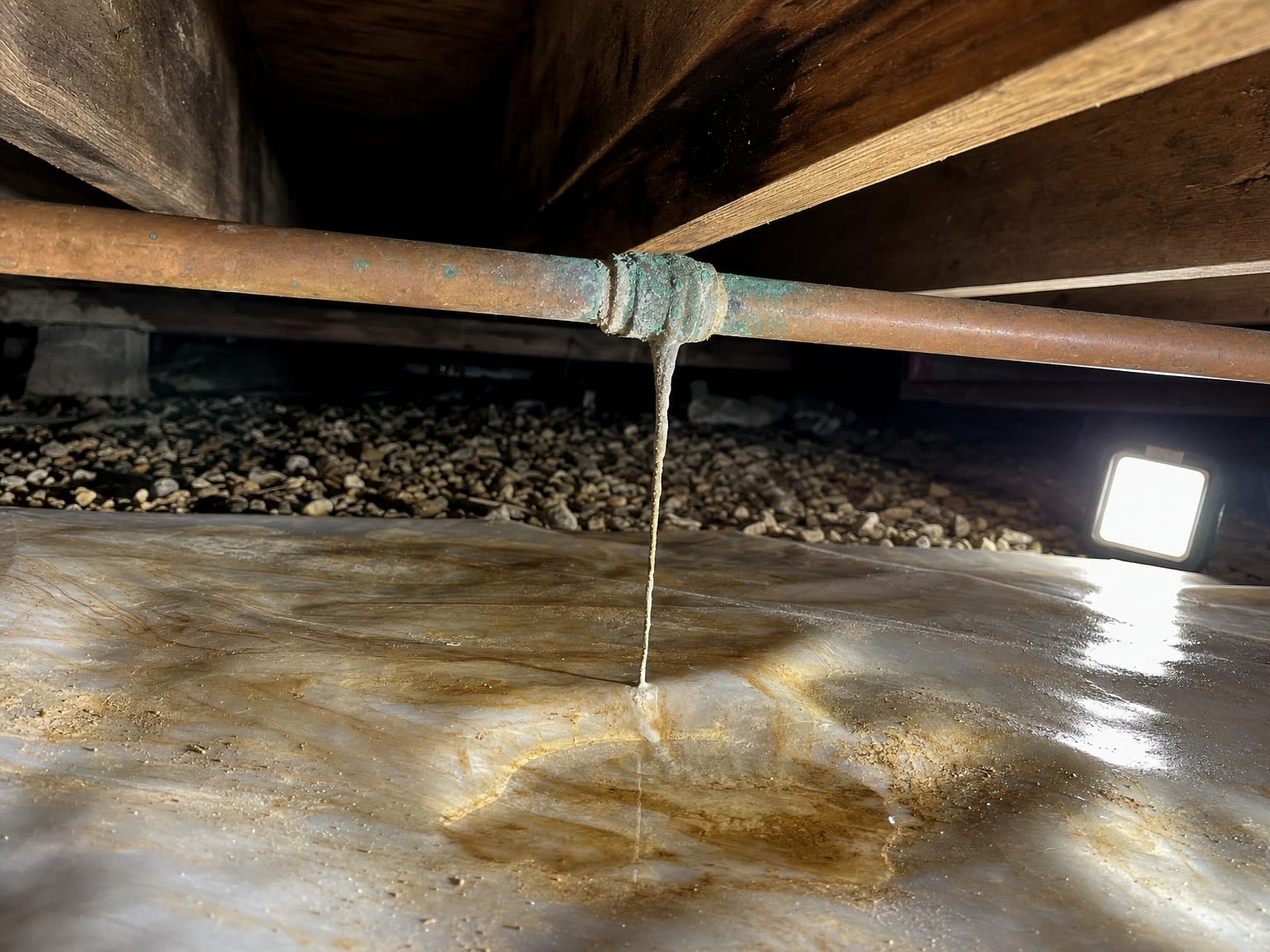
Most leak damage stays hidden long enough to become a real problem. A slow drip behind a wall, a failed pan under a water heater, a hairline crack in a foundation, or a bathroom that seeps into the subfloor below can all produce moisture conditions that support mold growth within 24 to 48 hours. By the time a stain appears on your ceiling or a musty smell settles into a room, the damage has usually been building for a while.
Finding the leak early means smaller repairs, less material removal, and a much better chance of avoiding full mold remediation later. That is the entire point of the service.
Why Does Water Leak Detection Matter for NJ Homeowners?
New Jersey homes face a specific set of moisture challenges. Older housing stock, finished basements, attached garages, slab foundations, aging plumbing systems, and the region's seasonal freeze-thaw cycles all create conditions where slow leaks develop quietly. Properties in Princeton NJ, Hamilton NJ, Freehold NJ, and similar markets often carry decades of renovation layers, which means a leak in a first-floor ceiling might trace back to a second-floor bathroom with multiple prior repair attempts.
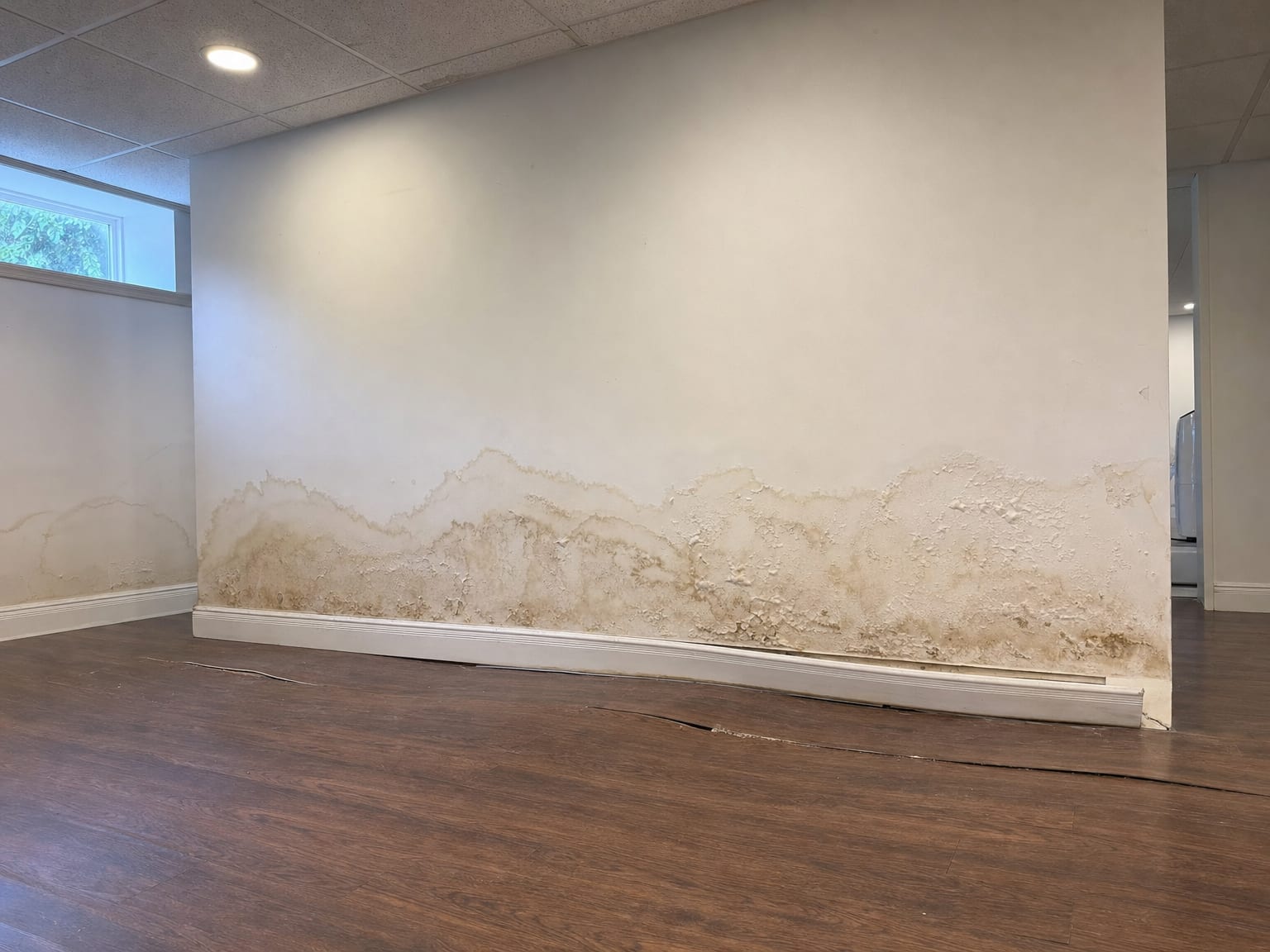
Finished basements are a particularly common problem area. Homeowners invest significantly in turning a basement into living space, and that investment is at risk every time groundwater finds a path through the foundation or a supply line develops a slow leak behind drywall. By the time the flooring shows bubbling or a corner smells damp, there is often elevated moisture in several materials that look completely normal to the eye.
There is also the insurance dimension to consider. When a water event occurs, property owners frequently need documentation to support a claim conversation. Photos, moisture meter readings, and a technician's written assessment of the affected area and likely cause can help you communicate with an adjuster far more clearly than a visual description alone. ExecPro Restoration & Cleaning does not interpret coverage on your behalf, but thorough documentation gives you a solid foundation to work from.
For real estate transactions across markets like Bridgewater NJ, Chatham NJ, Rumson NJ, and Marlboro NJ, discovering a hidden moisture issue before a contract is signed is far better than discovering it during a final walkthrough. Agents and buyers who work with pre-purchase mold inspection services know that water is almost always the story behind mold findings, and catching both together changes the entire repair conversation.
How Does Water Leak Detection Work?
Every inspection follows a consistent process so nothing gets missed and the findings are accurate enough to act on.
Scroll the steps sideways to follow the full process.
What Tools Are Used to Find Hidden Leaks?
Non-invasive methods are the standard approach because nobody wants walls opened before there is a good reason. The tools used in a professional leak detection inspection each serve a specific purpose in building a complete picture of where moisture is and how far it has traveled.
Thermal Imaging Cameras
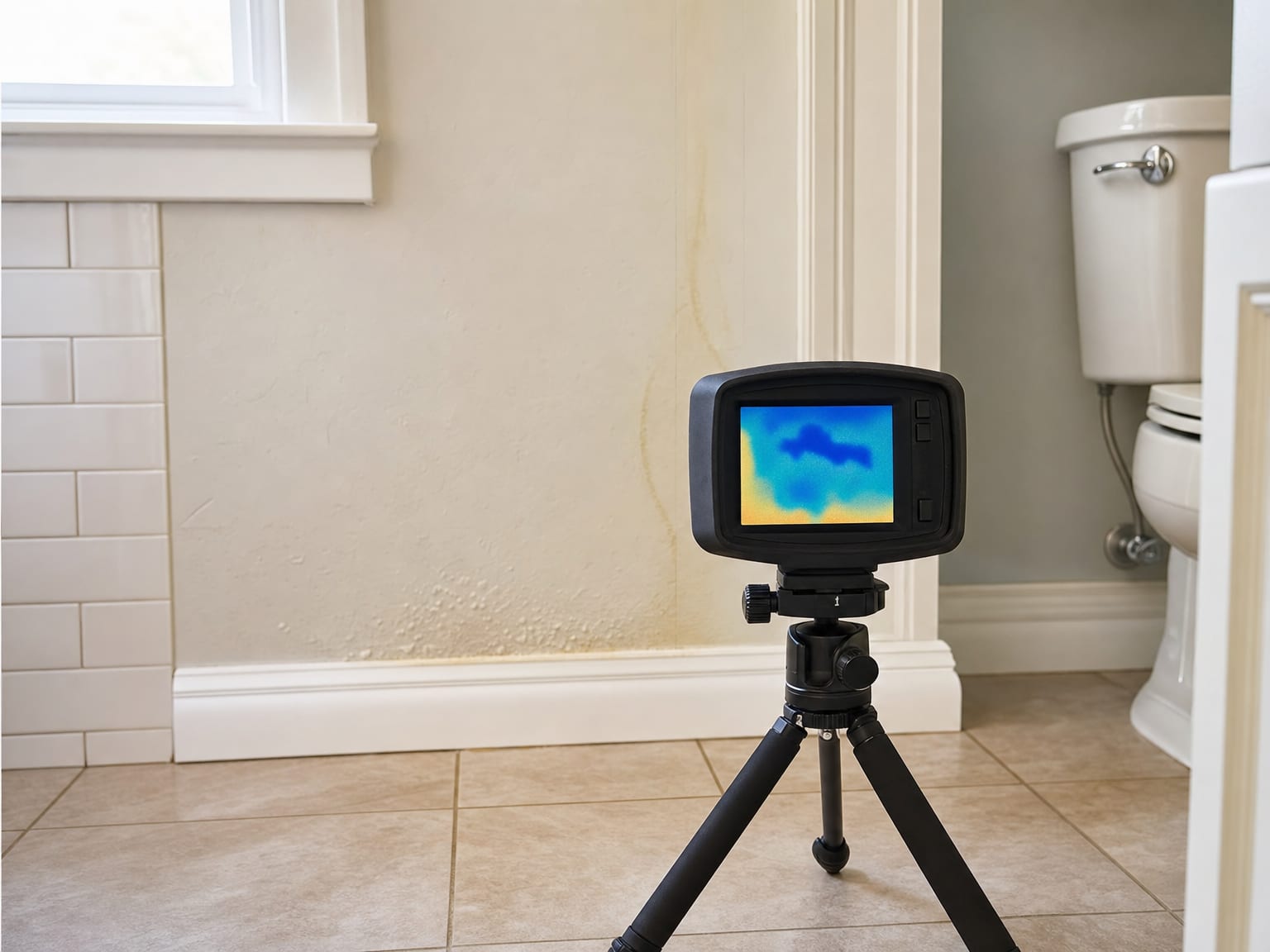
Infrared cameras capture surface temperature variations that the eye cannot see. Moisture held inside wall cavities, floor assemblies, or ceiling structures changes the thermal pattern of the surface above it. These temperature anomalies give the technician a map of where to investigate further without opening materials unnecessarily.
Penetrating and Non-Penetrating Moisture Meters
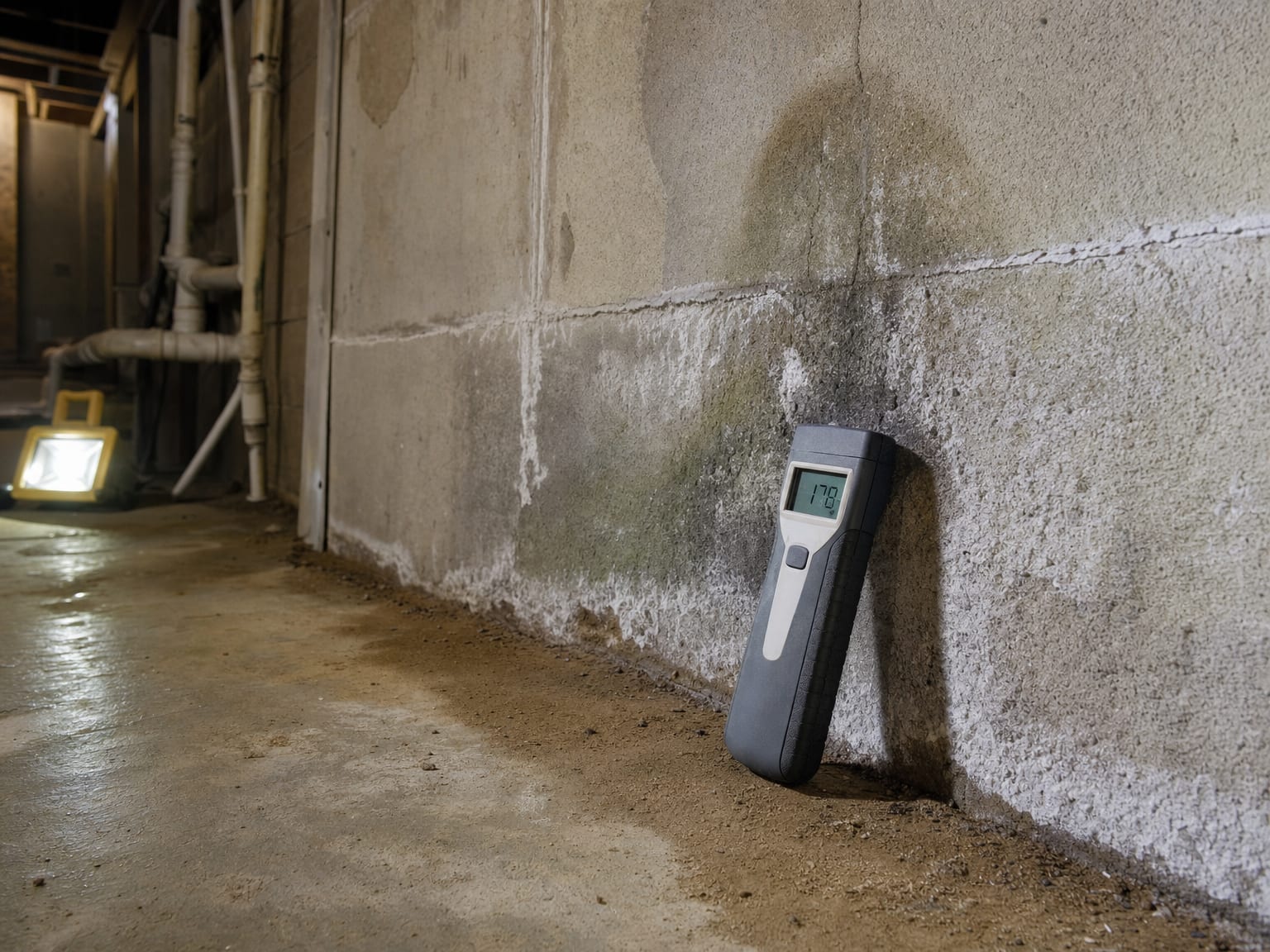
Penetrating meters use small probes to measure moisture directly inside a material. Non-penetrating meters use radio frequency signals to detect moisture without breaking the surface. Both types are used depending on the material and how invasive the reading needs to be, and readings are recorded as part of the formal documentation.
Hygrometers and Relative Humidity Measurement
Ambient humidity in a space tells a story about what is happening inside the materials. A crawl space, basement, or utility room with persistently elevated relative humidity is retaining moisture from somewhere, even if no single drip point is obvious. Hygrometer readings help define drying targets and identify spaces where moisture has been accumulating over time.
Acoustic Detection Tools
For pressurized plumbing leaks inside walls, slabs, or floors, acoustic tools can detect the sound signature of water moving under pressure. This is particularly useful in slab-on-grade construction common across parts of Middlesex and Burlington County, where a supply line leak may show no obvious surface signs until significant water volume has accumulated below.
Visual Documentation
Every finding is photographed and recorded. Photos of staining patterns, moisture meter readings, thermal images, and affected material locations are compiled into a clear record that property owners, contractors, and insurance professionals can reference. Documentation is not a formality; it is what makes the inspection actionable.
When Should You Call for a Leak Detection Inspection?
Some situations make the need obvious. A burst pipe, an overflowing appliance, or visible flooding after a storm are all clear triggers. But many of the calls ExecPro Restoration & Cleaning receives are for situations that are less obvious, and those are often the ones where earlier action would have made a real difference.
A musty smell in a basement, bedroom, or hallway with no visible source is one of the most common warning signs. Musty odors in enclosed spaces frequently indicate moisture is trapped somewhere in the structure, even when walls and floors look dry. The same applies to unexplained increases in a water bill, soft spots in flooring, paint that bubbles or peels without obvious cause, and walls that feel cold or damp in isolated sections.
Homes with previous water damage history are also strong candidates for periodic moisture inspection, even when there is no active complaint. Prior repairs can leave materials that were never fully dried, and those areas tend to become problem spots again when conditions are right. If you had a burst pipe cleanup handled by a general contractor rather than a restoration professional, it is worth having moisture levels verified before closing off those areas.
Real estate professionals serving markets across Flemington NJ, Westfield NJ, Colts Neck NJ, and Medford NJ know that water history is one of the most common issues to surface during due diligence. Real estate inspection services that include moisture assessment can help sellers identify problems before listing and give buyers the documentation they need to make an informed decision.
What Happens After a Leak Is Found?
Finding the leak is the beginning of the repair sequence, not the end. What comes next depends on how long the moisture has been present, how much material has been affected, and whether the source has already been stopped or still needs to be addressed.
If materials are wet but the damage is caught early, structural drying using commercial air movers and dehumidifiers can often save drywall, flooring, and framing that would otherwise need to be replaced. The key is acting within the first 24 to 48 hours, because that is the window before most common building materials reach the moisture thresholds that support mold colonization.
When moisture has been present long enough for mold to develop, the scope expands. Basement mold remediation, ceiling mold removal, or crawl space mold remediation may be needed depending on where the leak was located and how far contamination has spread. In these cases, the leak detection documentation helps define the treatment area accurately so the remediation scope is neither over-estimated nor understated.
Once remediation is complete, post-remediation verification confirms that affected areas have been cleared to acceptable levels before reconstruction begins. If materials need to be replaced, drywall replacement after mold and related build-back services restore the space to its pre-damage condition. The ability to carry a project from initial leak detection through final reconstruction is one of the reasons property owners in Somerset NJ, Moorestown NJ, Cherry Hill NJ, and Long Branch NJ turn to ExecPro Restoration & Cleaning rather than coordinating multiple unrelated contractors.
Why Choose ExecPro Restoration & Cleaning for Leak Detection?
The difference between a useful leak detection inspection and a wasted service call comes down to two things: the quality of the tools and the judgment behind them. A moisture meter reading or a thermal image is only as useful as the technician's ability to interpret what it means in the context of your specific property, its construction type, its history, and the season.
ExecPro Restoration & Cleaning is a licensed and insured restoration company serving central and southern New Jersey, with crews experienced across residential, commercial, and property management situations. The same team that performs your leak detection can execute the drying, remediation, or reconstruction that follows. No handoffs, no conflicting scopes, no gaps in accountability.
For property managers and multifamily operators working across South Brunswick NJ, North Brunswick NJ, Monroe NJ, and Lakewood NJ, that continuity matters. A leak in one unit can affect adjacent units, building systems, and common areas simultaneously. Being able to assess, document, and act on all of those areas under a single coordinated response reduces the risk of incomplete treatment and recurring complaints.
For homeowners, it means you are not juggling a leak detection company, a plumber, a remediation contractor, and a reconstruction contractor separately. ExecPro Restoration & Cleaning handles the assessment, coordinates with trade partners where licensed plumbing or electrical work is required, and takes the project through to finished space. One point of contact, one version of the scope.
Water Leak Detection: Frequently Asked Questions
In many cases, yes. Thermal imaging and non-penetrating moisture meters can identify temperature anomalies and elevated moisture readings through finished surfaces without cutting into drywall or flooring. That said, if a suspected area shows strong indicators of moisture, confirmation testing may require accessing the material directly. Non-invasive methods are the starting point in every inspection, and the goal is always to minimize unnecessary demolition.