Attic Mold Remediation in New Jersey
Attic mold spreads. ExecPro Restoration & Cleaning finds the moisture source, corrects the ventilation problem, and removes every trace of mold growth so your attic is clean, dry, and stays that way.
What Is Attic Mold Remediation, and What Do You Get?
Attic mold remediation is the full process of identifying why mold is growing in your attic, removing all contaminated material, treating affected surfaces, and correcting the underlying conditions that allowed mold to take hold in the first place. A proper remediation doesn't just scrub visible growth off the sheathing and call it done. It addresses roof leaks, blocked or undersized ventilation, failed soffit and ridge vents, and condensation buildup that create the warm, damp environment mold needs to thrive.
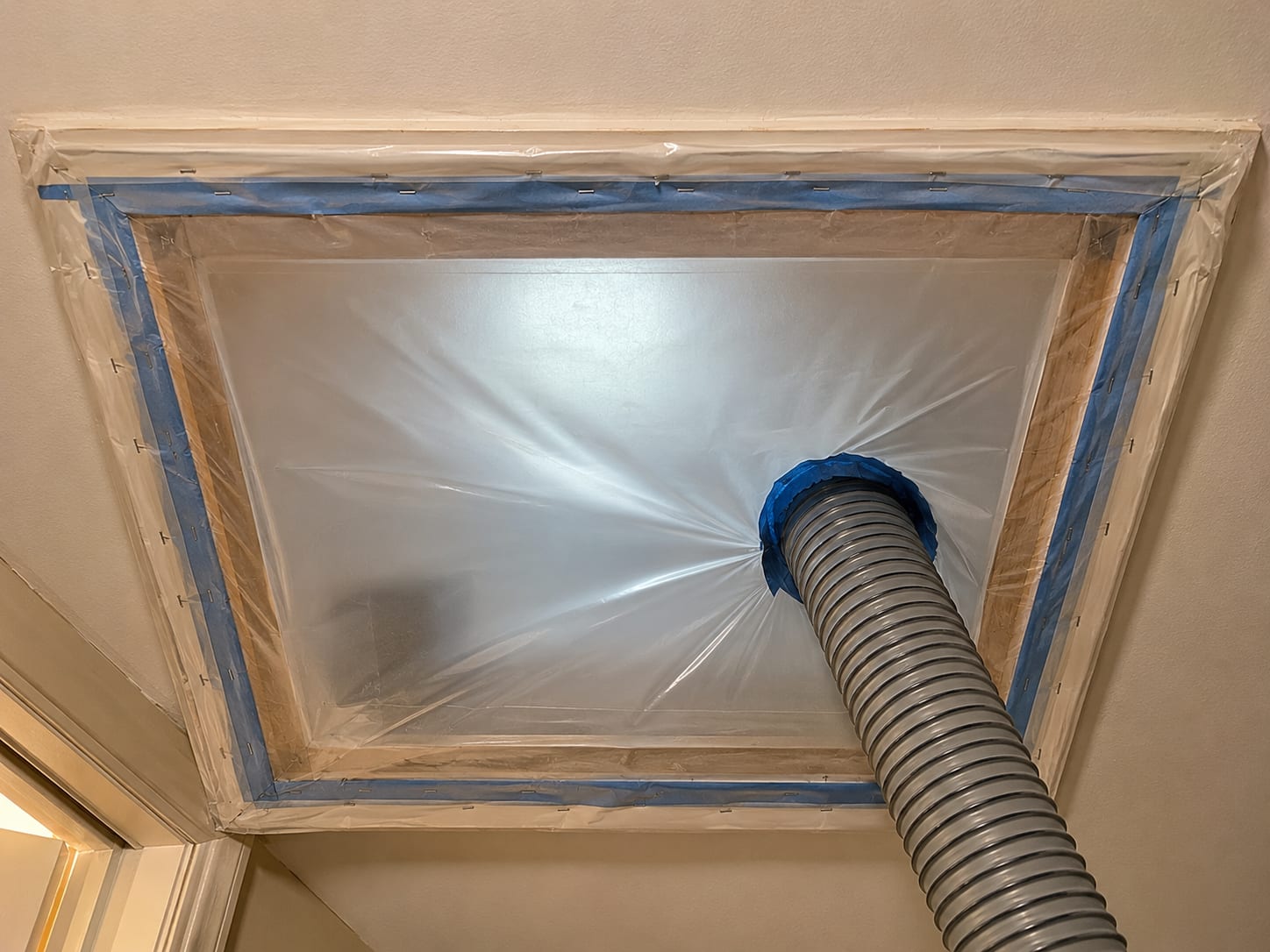
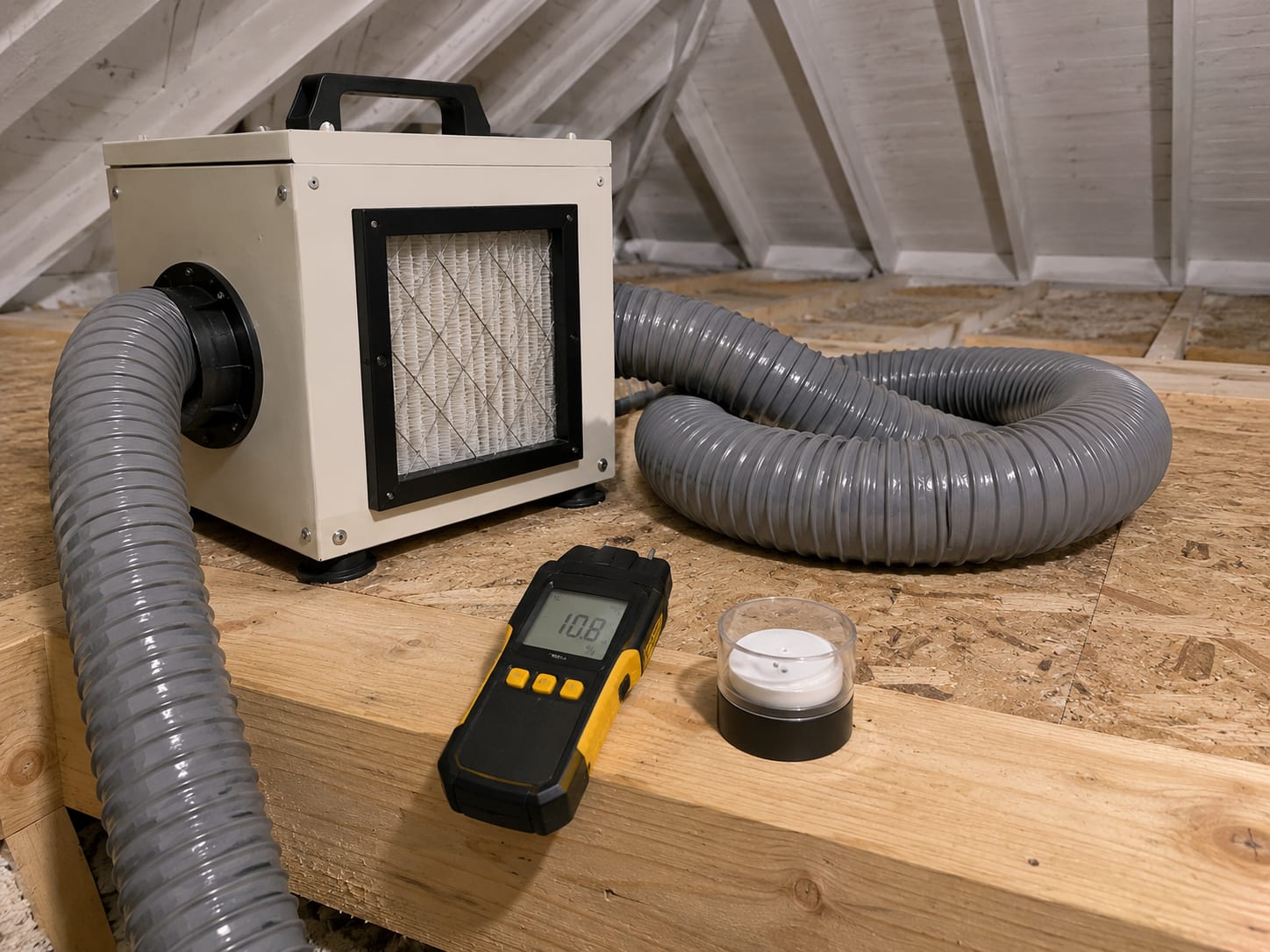
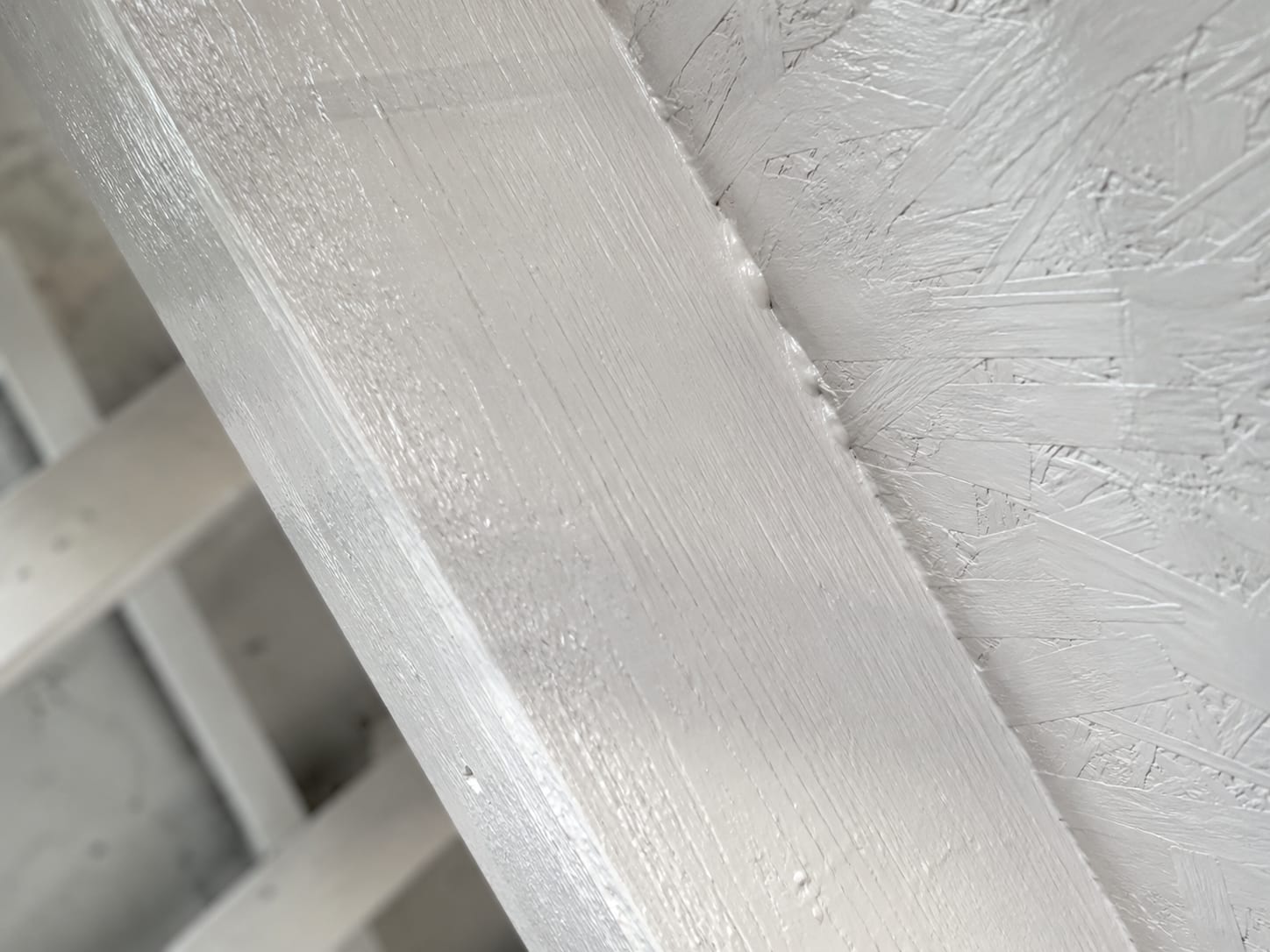
When ExecPro Restoration & Cleaning handles your attic mold problem, you get a full assessment of the moisture source, a contained and controlled removal process following IICRC S520 standards, EPA-registered antifungal treatment of structural surfaces, and post-remediation verification to confirm the space is clear before we close up. Most residential attic projects are completed within one to two days, depending on the extent of growth and whether structural sheathing needs to be replaced.
What you're really getting is confidence. Confidence that the mold is gone, that someone identified why it grew there, and that the conditions driving it have been corrected so it doesn't come back six months from now.
Why Does Attic Mold Happen So Often in New Jersey Homes?
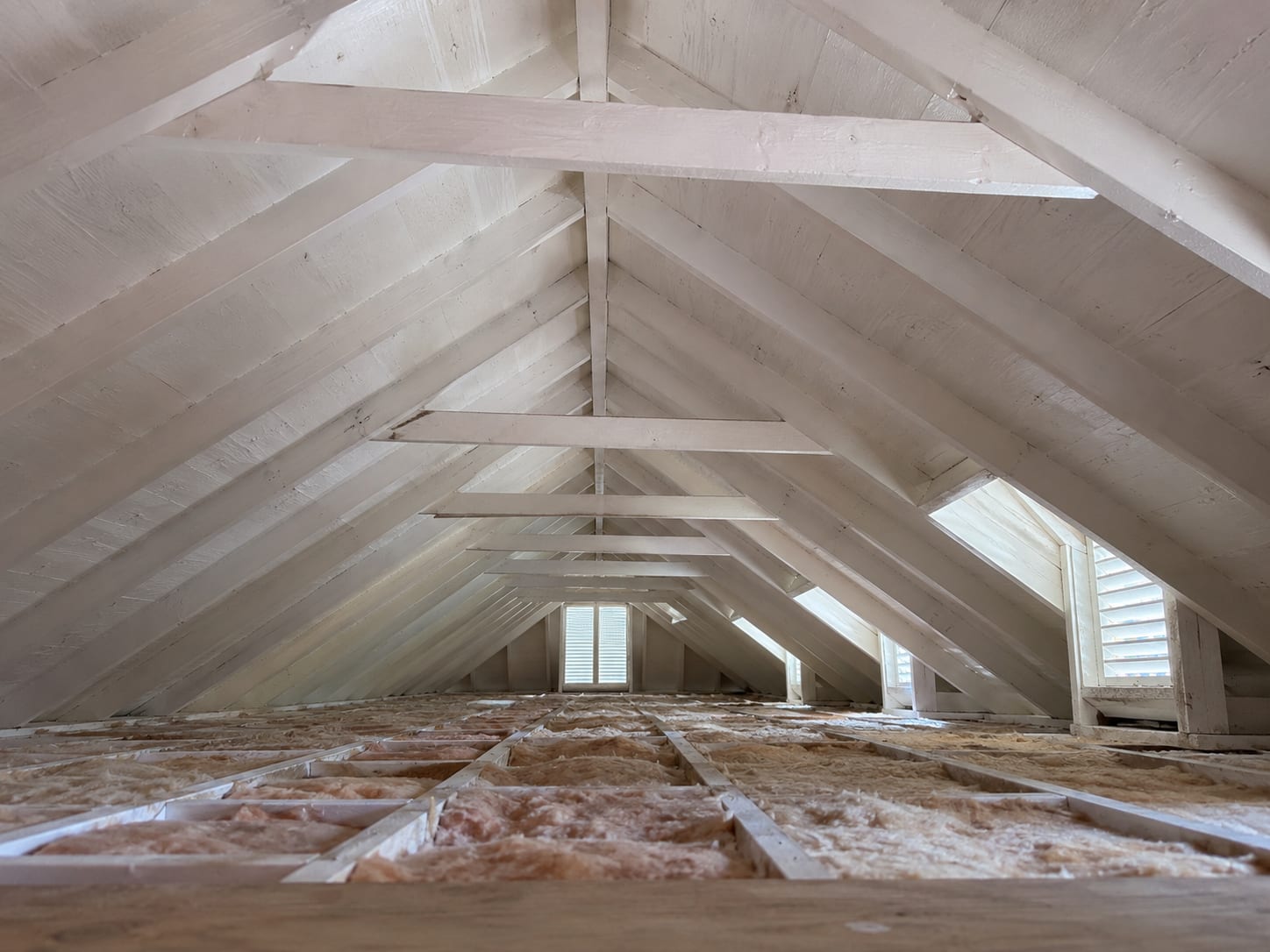
New Jersey's climate sets up the right conditions for attic mold year after year. Cold winters mean warm, humid air from inside the house rises and condenses against cold roof sheathing, especially in attics that are under-ventilated or improperly insulated. Spring brings significant rainfall, and any small roof leak or flashing failure introduces moisture directly onto wood framing and sheathing. Summer heat and humidity keep things from drying out the way you'd expect.
Homes throughout central and northern New Jersey also tend to be older, and older construction often has ventilation systems that simply weren't designed for the way people live today. Bathroom exhaust fans vented into the attic instead of through the roof, blocked soffit vents packed with insulation, and ridge vents that have deteriorated over the years are all extremely common findings in the region. Each one creates a moisture trap.
Attic mold is also easy to miss. Most homeowners don't go up there regularly, so a slow roof leak or a gradually failing vapor barrier can feed mold growth for months before anyone notices. By the time it's visible during a home inspection or discovered before a sale, the colony can be well-established across a significant portion of the roof sheathing.
Signs You May Have an Attic Mold Problem
Attic mold doesn't always announce itself with a smell or visible staining in your living space. These are the signs that warrant a closer look.
Dark Staining on Roof Sheathing
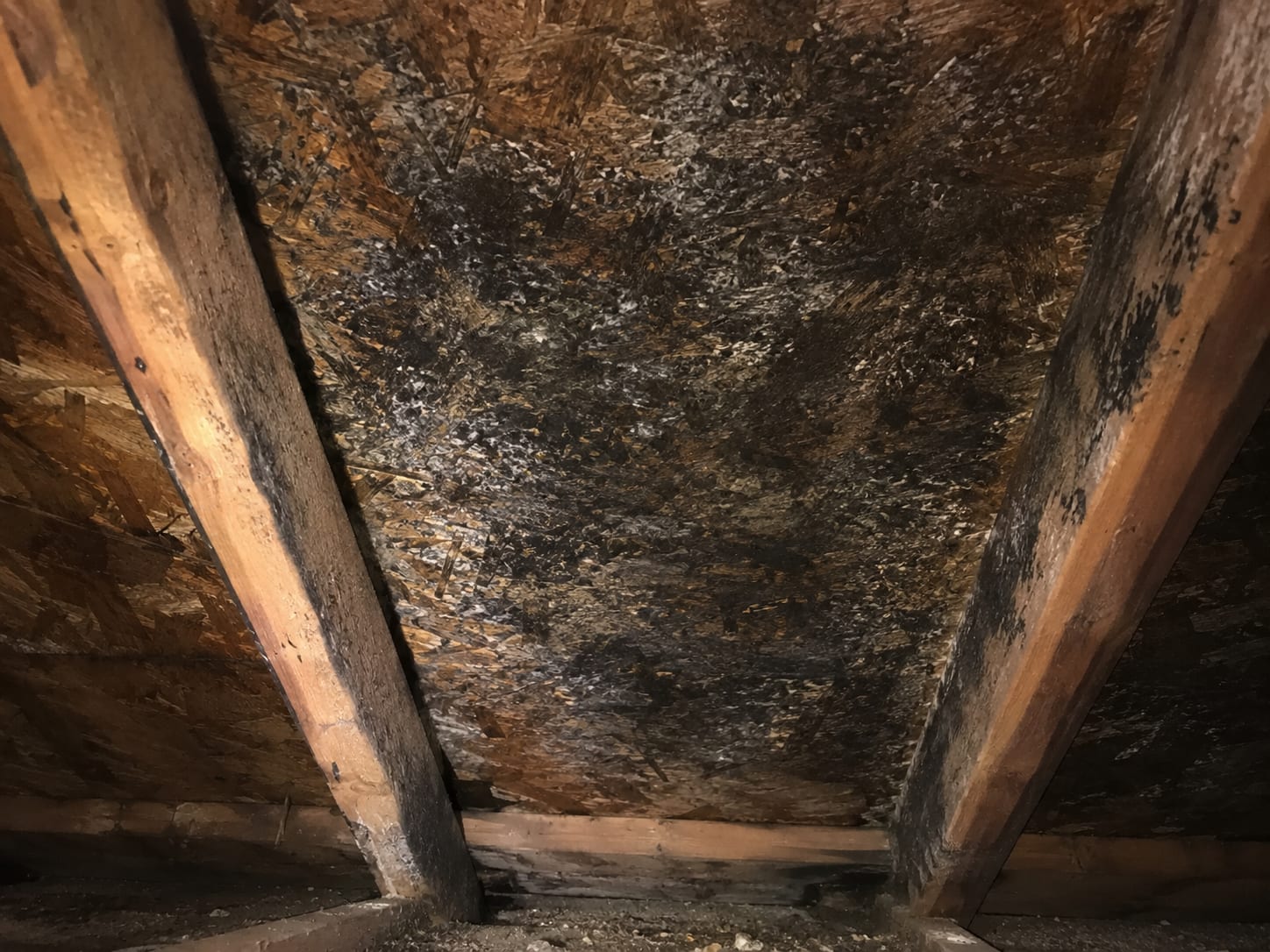
Black, green, or gray discoloration on the wood panels directly under your roof is one of the most common visual indicators. It often appears in patches near the ridge or along exterior walls where condensation is highest.
A Musty Odor in Upper Floors or Closets
Mold spores and the gases mold produces can travel downward through gaps in the attic floor. If you notice a musty smell in upper-floor rooms or hallway closets, the attic is worth investigating.
A Recent or Past Roof Leak
Any time water gets in through flashing, shingles, or a skylight, it lands on attic wood before it reaches your ceiling. Even a leak that appears to have dried out can leave behind enough moisture to start a mold colony.
Ice Dams in Winter
Ice dams form when heat escapes into the attic and melts snow on the roof unevenly. They signal poor insulation and ventilation, the same conditions that drive mold. If your home gets ice dams, your attic is worth inspecting.
A Mold Finding on Your Home Inspection Report
Home inspectors flag attic mold frequently. If your report notes suspected mold growth, staining, or elevated moisture readings in the attic, those findings need professional evaluation before you can move forward with a sale or purchase.
Bathroom Fans Vented into the Attic
If your home has bathroom exhaust fans that vent into the attic space rather than directly outside, they're pumping warm, moist air onto your roof sheathing every time someone showers. That's a direct and ongoing moisture source.
How Does the Attic Mold Remediation Process Work?
Every attic mold project at ExecPro Restoration & Cleaning follows a structured, methodical process. There are no shortcuts, and every step is there for a reason.
Scroll the steps sideways to follow the full process.
What Happens If You Ignore Attic Mold?
Attic mold doesn't stay contained to the attic. Left untreated, it continues to spread across roof sheathing and framing, progressively breaking down the structural wood it colonizes. Over time, this weakens the integrity of your roof deck and can create conditions that accelerate shingle failure and rot in the framing below the decking.
There's also an air quality dimension that affects your whole home. Mold spores are buoyant and mobile. They move through gaps in the attic floor, through recessed lighting penetrations, through HVAC return pathways, and into the living areas below. Families dealing with unexplained respiratory irritation, persistent allergy symptoms, or worsening asthma should consider attic mold as a possible contributing factor. Indoor air quality testing can provide real data on what's circulating through your home.
From a financial standpoint, small attic mold problems become expensive ones when they're left alone. A contained area of surface mold on sheathing treated early is a manageable remediation project. Widespread mold with compromised sheathing and saturated insulation is a significantly larger undertaking. Catching it early, or addressing it promptly after discovery, is nearly always the more cost-effective path.
And if a sale is involved, the stakes are even higher. Attic mold findings on inspection reports routinely kill deals, delay closings, or trigger significant price renegotiations. Addressing the issue with professional documentation in hand is a far stronger position than trying to negotiate around a known and unresolved problem.
Attic Mold Remediation and Real Estate Transactions
Attic mold is one of the most common inspection findings that stalls or derails residential real estate transactions across New Jersey. It shows up on reports for homes across all price points and ages, and how you respond to it matters enormously to buyers, sellers, and agents on both sides of the deal.
For sellers, discovering attic mold before listing gives you the chance to remediate it on your terms, at your timeline, and with full documentation ready to present. That written clearance report turns a liability into a resolved item. It demonstrates that the problem was taken seriously, handled professionally, and verified by a third party. Buyers find that far more reassuring than a credit and an open question.
For buyers, an attic mold finding during the inspection period shouldn't automatically be a deal-breaker, but it does need to be properly addressed. Agents regularly work with ExecPro Restoration & Cleaning for real estate inspection services to get accurate scope and cost information within the contingency window. Having that professional assessment in hand lets buyers negotiate on solid footing rather than guessing.
Property managers and landlords face their own set of considerations, particularly in multi-unit properties where attic spaces may serve entire buildings and where tenant disclosure obligations add another layer of urgency. Getting ahead of attic mold issues with professional remediation and documentation is the cleanest way to manage both the health and liability dimensions of the situation.
Why Homeowners in Central NJ Choose ExecPro Restoration & Cleaning
There's a real difference between a company that removes visible mold and one that actually solves the mold problem. The distinction comes down to whether they're investigating the moisture source as seriously as they're treating the growth. A surface-level cleanup with no attention to ventilation or roof intrusion points is a job that will need to be redone. ExecPro Restoration & Cleaning works to fix the problem, not just the symptoms.
Licensed and insured, ExecPro Restoration & Cleaning follows IICRC S520 protocols on every attic project, which means the process is structured, documented, and verifiable. You're not relying on someone's word that the work was done correctly. You're receiving a written scope, a documented process, and post-remediation verification results you can hold onto.
The team also understands that most homeowners aren't mold specialists, and that a situation involving your home and your family's health deserves a clear explanation of what's happening and what's being done about it. From the initial inspection through final clearance, you'll know what was found, what the plan is, and what the results show.
ExecPro Restoration & Cleaning serves homeowners and property owners across a wide stretch of New Jersey, from communities like Princeton Junction and Bridgewater to Freehold, Flemington, Cherry Hill, and everywhere in between. If you're dealing with attic mold anywhere in the coverage area, the team is available to help.
Frequently Asked Questions About Attic Mold Remediation
These are the questions homeowners and property owners most often ask before starting an attic mold remediation project.
No. Painting over mold seals the surface temporarily but does nothing to address the living mold colony beneath, and most consumer antimicrobial sprays don't penetrate wood deeply enough to achieve lasting results. More importantly, neither approach addresses the moisture source, which means the mold will return. Professional remediation removes and treats the mold properly and identifies the condition driving it.
Related Services Worth Knowing About
Attic mold often connects to broader conditions in your home. These related services address the full picture.
Mold Inspection
If you suspect mold but haven't confirmed it yet, a professional residential mold inspection gives you an accurate assessment of what's present, where it is, and what's driving it before you commit to any remediation work.
Mold Testing
Air and surface sampling through residential mold testing identifies the species and concentration of mold in your home. Testing provides the baseline data that guides a proper remediation plan and delivers third-party documentation of conditions.
Water Damage Restoration
Roof leaks that feed attic mold often leave water damage in their path. Water damage restoration addresses the structural and material damage moisture leaves behind, including saturation in framing, insulation, and ceiling materials below the attic.
Structural Mold Repair
When attic mold has compromised roof sheathing or framing to the point where structural repair is needed, structural mold repair addresses the rebuild alongside or following remediation, restoring structural integrity after contaminated material is removed.
Air Quality Testing
If you're concerned about what mold spores may have already spread into your living areas, air quality testing measures the actual particulate levels in your home's air and identifies any contaminants that may be affecting your indoor environment.
Crawl Space Mold Remediation
Homes with moisture problems in the attic sometimes have parallel issues below the living space. Crawl space mold remediation addresses mold growth in the lower structure using the same disciplined process applied to attic spaces.