Commercial Mold Inspection in New Jersey
ExecPro Restoration & Cleaning provides thorough mold inspections for offices, multifamily buildings, retail spaces, and commercial properties across central and northern New Jersey. You get a detailed written report, moisture readings, photo documentation, and clear next steps so you can make informed decisions without guessing.
What Is a Commercial Mold Inspection and What Do You Get?
A commercial mold inspection is a trained technician's systematic assessment of your building to locate mold growth, identify moisture sources, and document conditions that need attention. At ExecPro Restoration & Cleaning, that means you receive a written report with photos, moisture readings, affected-area locations, and prioritized recommendations you can share with property owners, tenants, risk managers, insurers, or contractors.
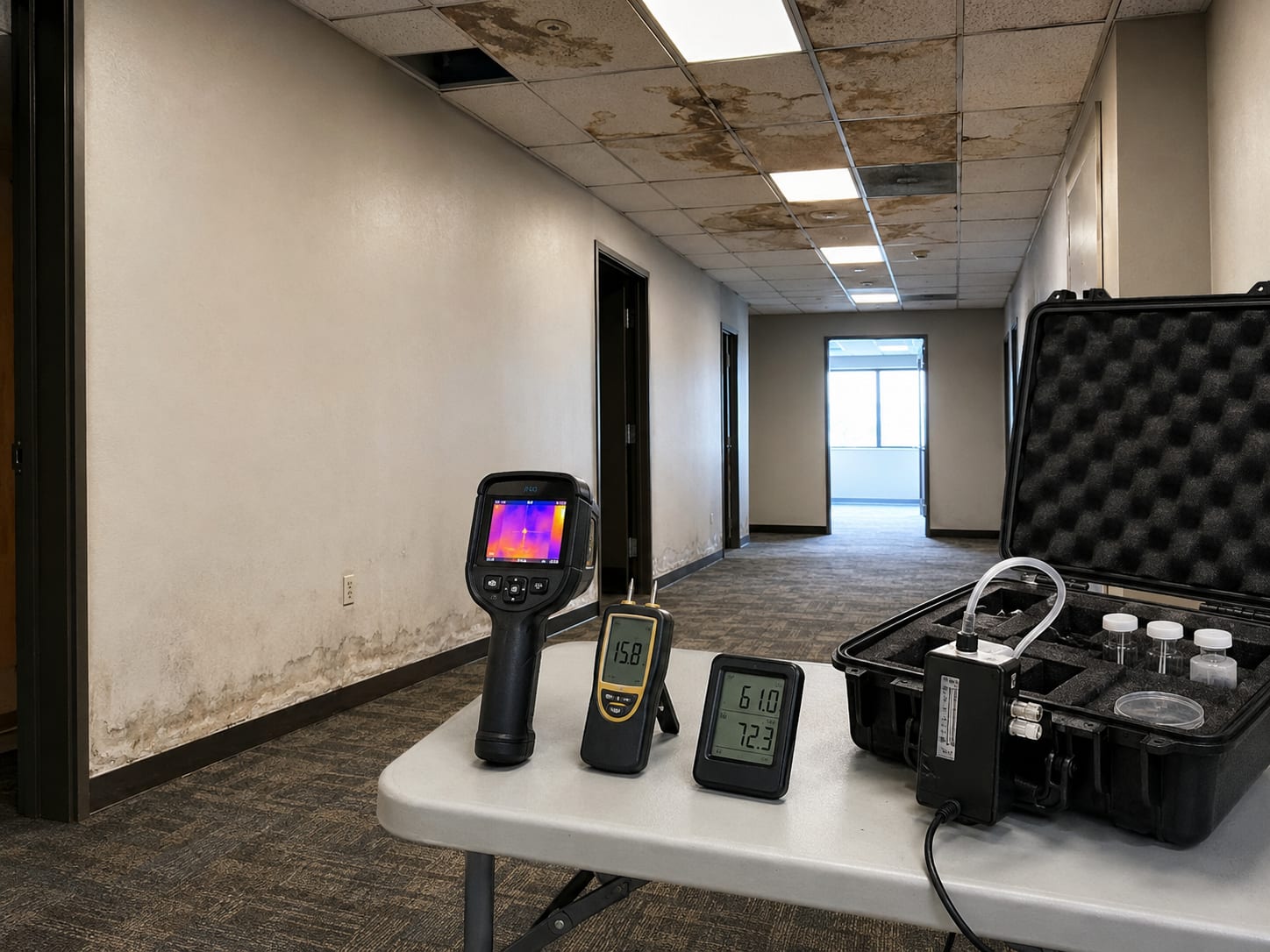
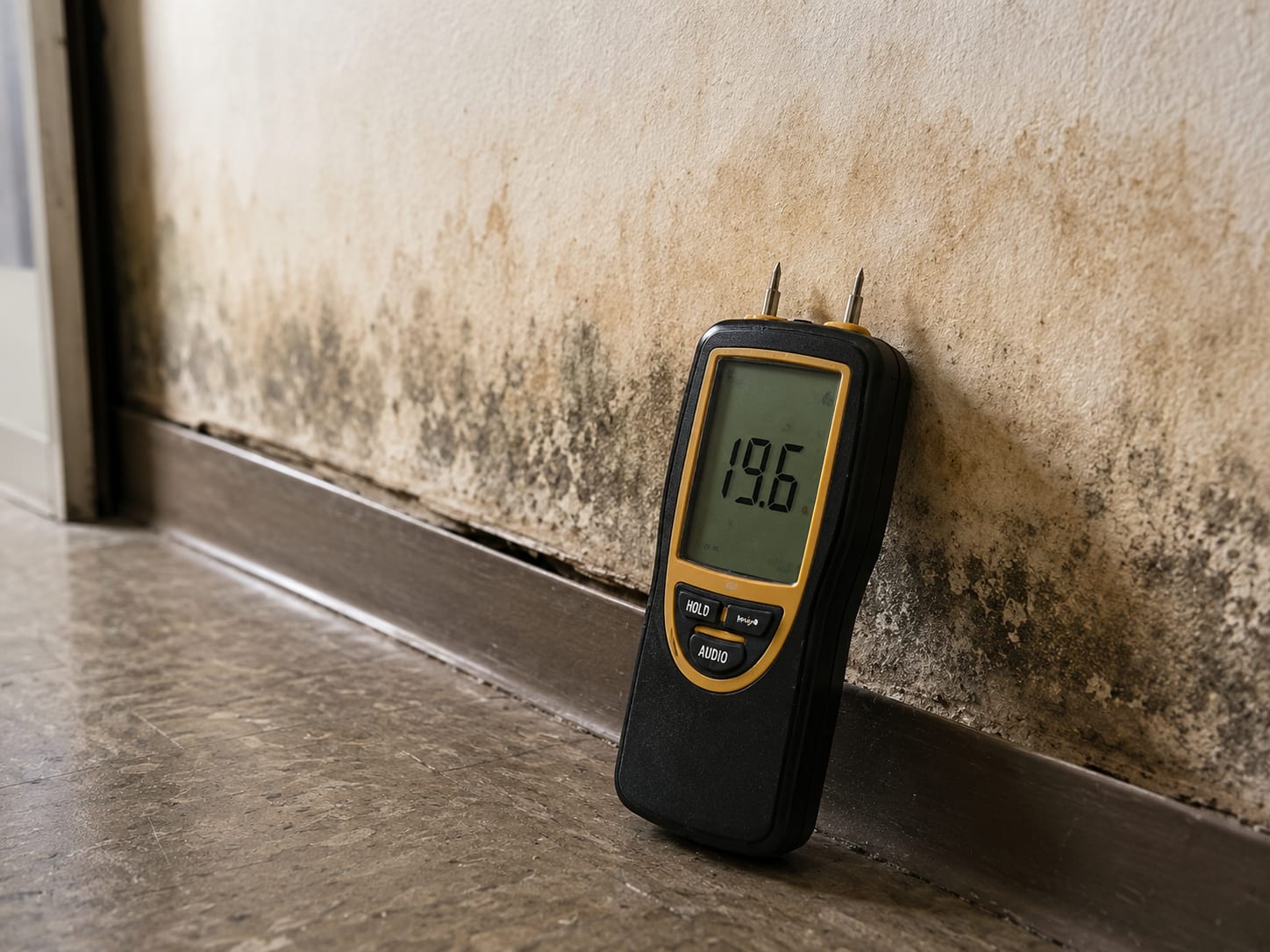
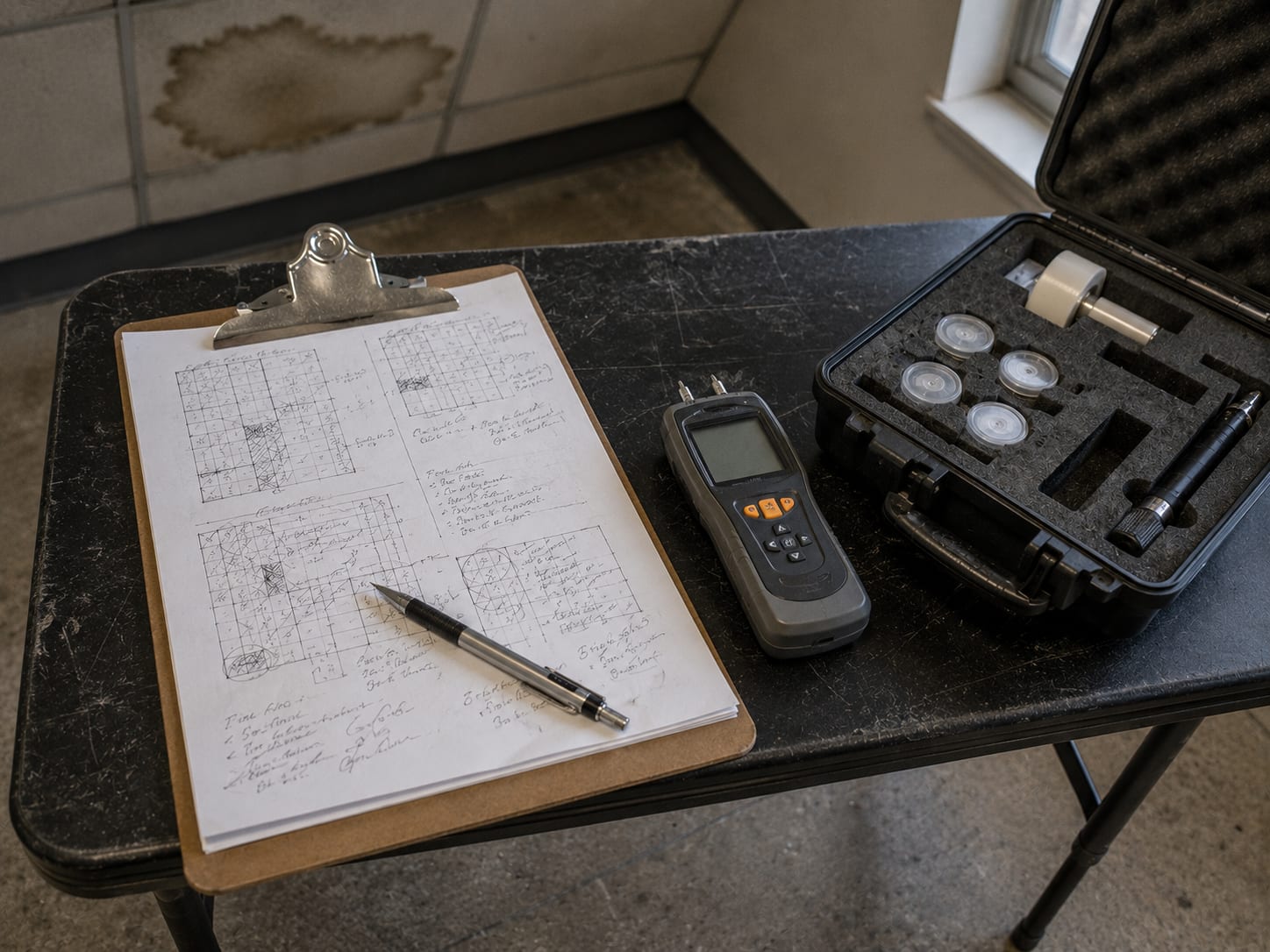
The inspection covers the areas most likely to harbor mold in commercial settings: ceiling tile systems, HVAC mechanical rooms, restrooms, basement and below-grade spaces, exterior wall cavities, roof leak zones, janitor closets, and any area with a documented history of water intrusion or occupant complaints. Technicians use moisture meters, hygrometers, and sometimes thermal imaging to map conditions that are not visible to the naked eye.
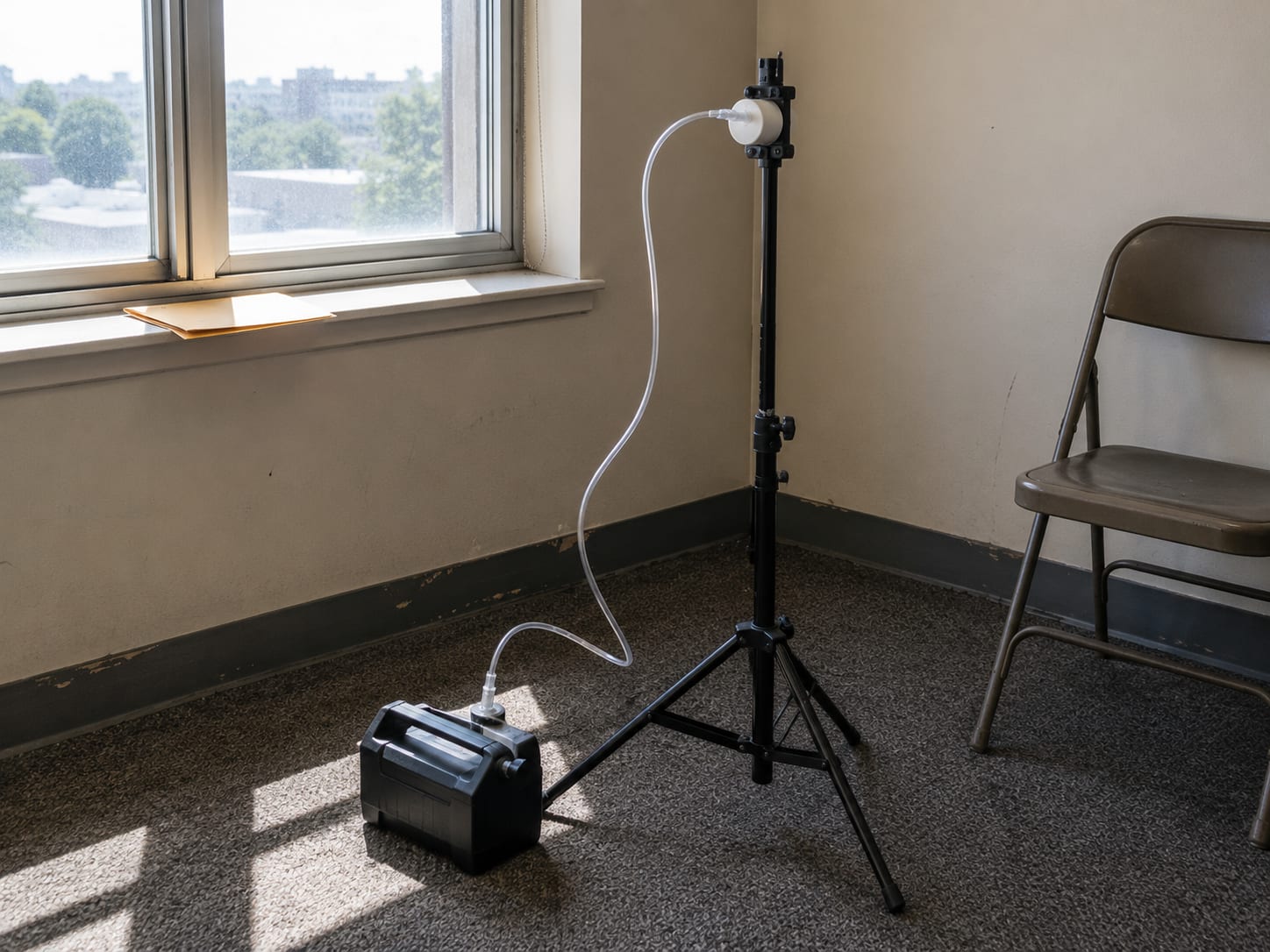
If sampling is needed, air or surface samples can be collected and sent to an accredited laboratory. The EPA notes that sampling is often unnecessary when visible mold is already present, but targeted testing adds real value when mold is suspected behind walls, when occupant complaints are disputed, or when post-remediation verification documentation is required. Every recommendation is grounded in what will actually help you resolve the problem and protect your occupants.
Why Do Commercial Buildings Get Mold Inspections?
Most commercial mold inspections are triggered by something specific: an occupant complaint about musty odors, visible staining on ceiling tiles or walls, a recent roof leak or plumbing failure, recurring HVAC issues, or a pattern of indoor air quality concerns that keeps returning. In multifamily buildings, a single tenant complaint can signal a building-wide moisture problem affecting multiple units.
The stakes in a commercial setting differ from a single-family home. You have tenants, employees, customers, or students occupying the space, along with lease obligations, insurance policies, and sometimes OSHA or PEOSH indoor air quality rules depending on your building type and use. Without documentation, you are exposed when something goes wrong with air quality. With a thorough inspection report on file, you have a clear record of what was found, when it was found, and what steps were recommended.
Property managers and building owners in Trenton, Hamilton, New Brunswick, Bridgewater, and throughout central New Jersey also rely on commercial mold inspection as a proactive tool, scheduling periodic assessments after seasonal moisture events or before lease renewals. Catching a moisture problem early is almost always less disruptive and less expensive than discovering it after mold has spread through a wall cavity or duct system.
How Does the Commercial Mold Inspection Process Work?
ExecPro Restoration & Cleaning follows a structured inspection process designed for commercial properties of all sizes. Here is what happens from the first call to the final report.
Scroll the steps sideways to follow the full process.
What Does a Commercial Mold Inspection Report Include?
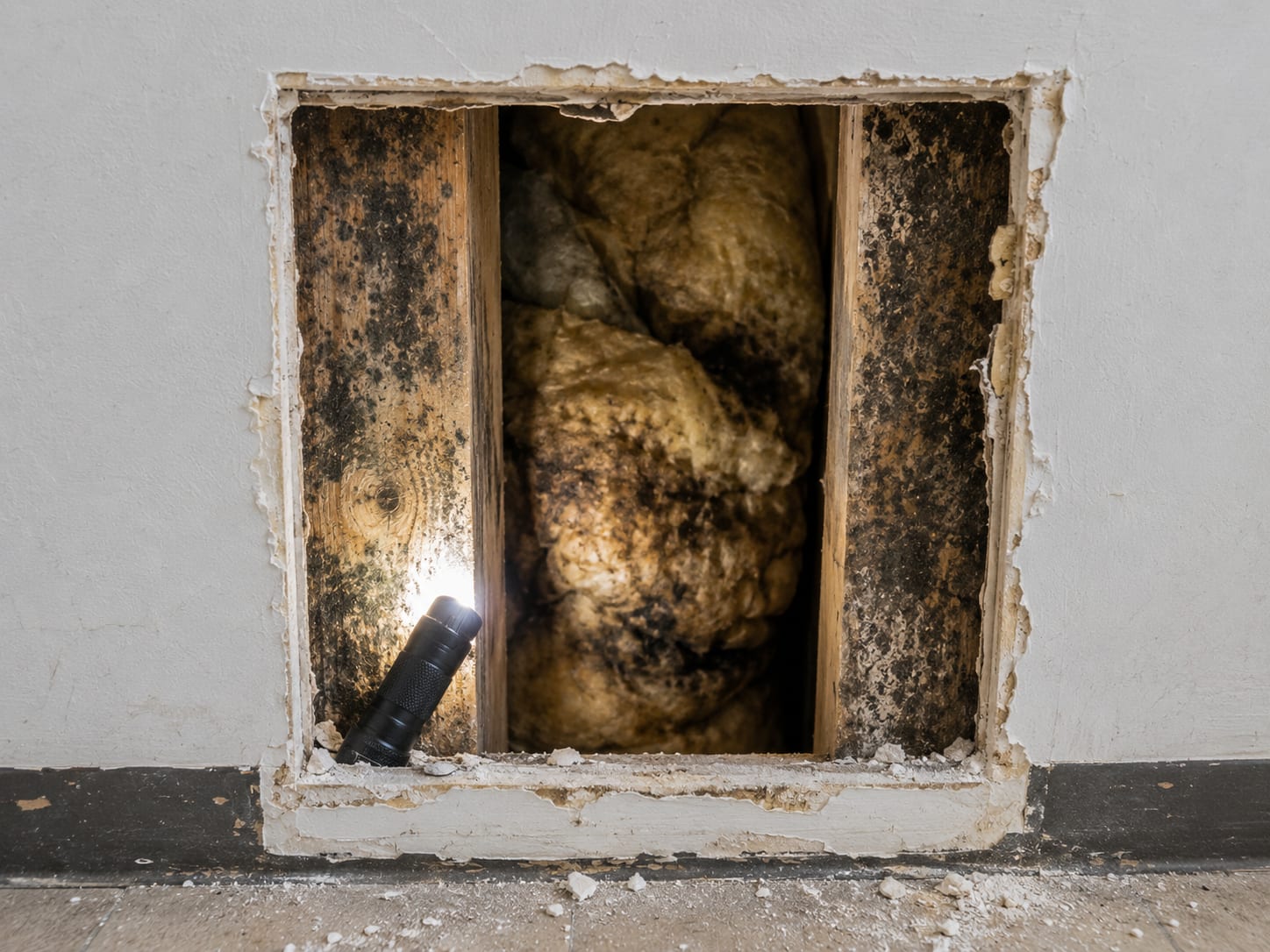
The inspection report is the deliverable that makes everything else possible. A good commercial mold inspection report is not just a list of findings; it is a working document your team can act on. ExecPro Restoration & Cleaning's reports include the locations and extent of observed mold growth, photographic documentation of each affected area, moisture meter readings and where elevated readings were recorded, a description of likely moisture sources for each finding, and notation of any areas that could not be accessed or visually assessed.
When air or surface sampling is included, the report identifies each sample location, collection conditions, and the accredited laboratory results alongside the inspector's interpretation. Rather than presenting raw spore counts without context, the report explains what those numbers mean for your building and whether they change the remediation recommendation.
The final section of every report addresses what most property managers say they need most: prioritized recommendations with urgency levels and suggested next steps. Some findings need immediate attention, while others represent conditions to monitor or address during routine maintenance. Knowing the difference matters when you are managing a property budget and trying to keep a building operational.
Which Commercial Properties Need Mold Inspection Most?
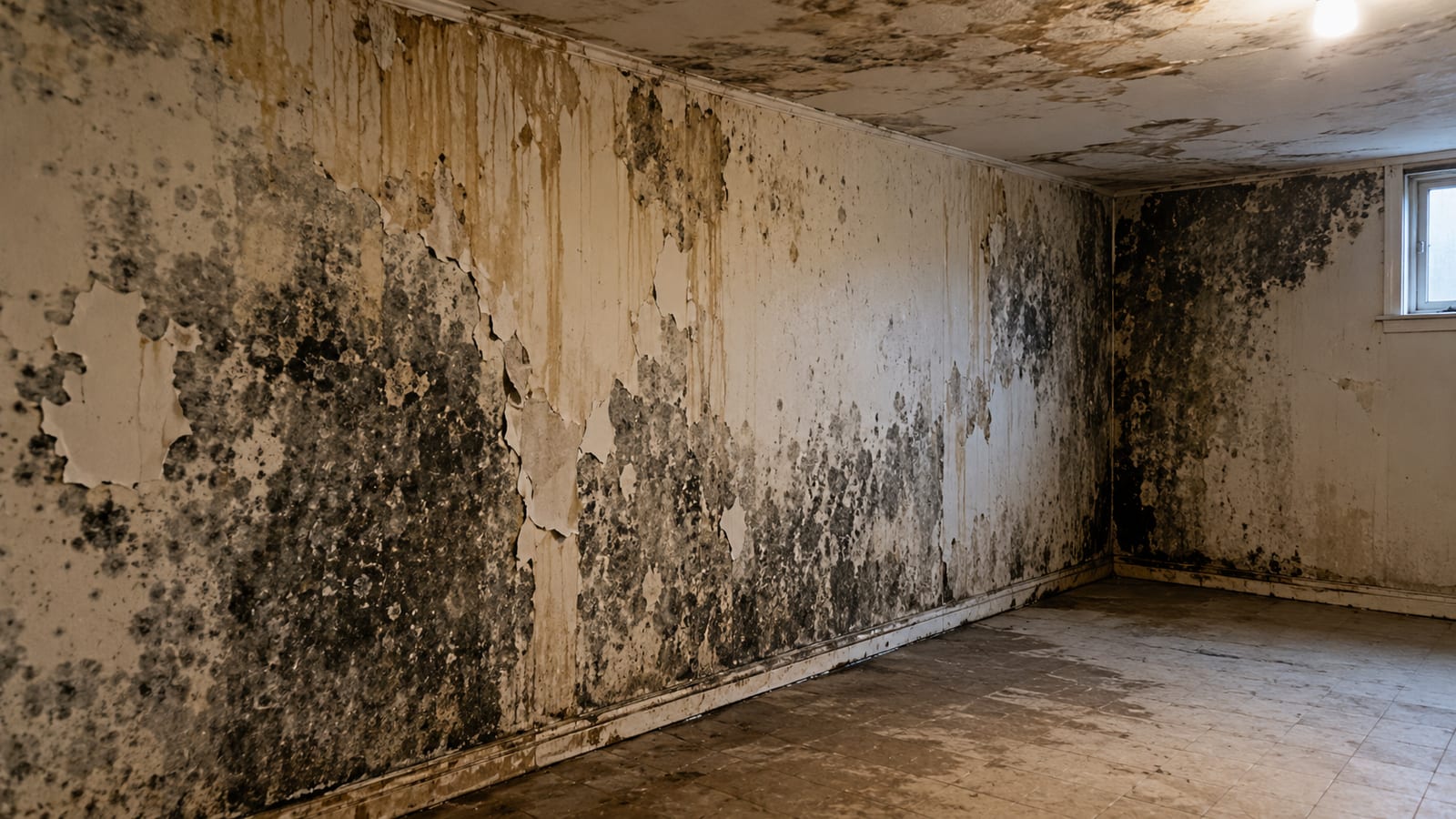
Mold can establish itself in almost any building given the right moisture conditions, but certain commercial property types face elevated risk because of their construction, occupancy patterns, or building systems.
Multifamily and Apartment Buildings
High occupancy, shared HVAC systems, multiple plumbing connections, and tenant behavior patterns all create conditions where moisture goes undetected. A single unit leak can affect multiple floors before it is reported. Property management mold services are designed specifically for this type of ongoing portfolio need.
Office Buildings
Suspended ceiling systems, rooftop HVAC units, and perimeter wall construction create hidden moisture pathways. Occupants notice odors or experience symptoms before visible mold is found. IAQ complaints in offices are one of the most common triggers for commercial inspection requests.
Retail Spaces and Restaurants
Back-of-house areas, receiving docks, walk-in refrigeration, floor drains, and grease traps create persistent moisture sources. Retail spaces in older strip centers often have unaddressed roof drainage or exterior wall issues that accumulate over years.
Warehouses and Industrial Facilities
Large footprints with minimal climate control lead to condensation on concrete floors and metal walls. Roof leaks in warehouse spaces can affect significant square footage before they are caught, and the volume of stored goods can mask mold growth for months.
Medical Offices and Healthcare Facilities
Patient-facing environments have zero tolerance for mold-related IAQ issues. Commercial air quality testing paired with inspection is often required to document clearance after any remediation in a healthcare setting.
Schools and Educational Buildings
NJ PEOSH indoor air quality rules may apply in public school settings, and parent and staff complaints about mold or odors require documented responses. Schools with older construction, flat roofs, or basement-level classrooms are especially vulnerable to moisture intrusion.
What's the Difference Between a Mold Inspection and Mold Testing?
Inspection and testing serve different purposes. An inspection is the physical, visual, and instrument-based assessment of your building: the work of a trained technician walking your property to find mold, document it, identify its moisture source, and recommend a course of action. Testing, or sampling, is a laboratory analysis of air or surface samples collected at specific locations to determine what mold species are present and at what concentrations.
The EPA is clear that when visible mold is present, testing is generally unnecessary because the answer is already obvious: the mold needs to be removed and the moisture source needs to be fixed. Commercial mold testing adds the most value when mold is suspected but not visible, when occupant health complaints need documentation, when you need baseline and post-remediation comparison data, or when your insurer or legal counsel requires laboratory evidence.
At ExecPro Restoration & Cleaning, the inspection always comes first. Sampling decisions are made based on what the inspection actually reveals, not applied as a default. You will not be pushed toward testing you do not need, and when testing is the right call, the results are interpreted in the context of the full inspection rather than presented as isolated numbers.
Why Choose ExecPro Restoration & Cleaning for Commercial Mold Inspection?
Commercial property managers and building owners across New Jersey choose ExecPro Restoration & Cleaning because the reports hold up. When you are coordinating with a property owner, an insurance adjuster, a remediation contractor, or a tenant's attorney, you need documentation that is thorough, clearly written, and based on recognized standards. ExecPro's inspections follow IICRC S520 guidelines and incorporate building science principles, so the findings connect moisture sources to mold conditions rather than treating symptoms in isolation.
ExecPro is licensed and insured, which matters for commercial properties where certificate of insurance requirements are standard before any vendor enters the building. The team has direct experience with office buildings, multifamily properties, warehouses, retail centers, and medical facilities across central and northern New Jersey, from Somerset and Bridgewater through Princeton Junction and Trenton, and east toward Freehold and Red Bank.
If an inspection identifies conditions that require remediation, ExecPro can move directly into commercial mold removal without bringing in a separate vendor who needs to start from scratch. The technicians who found the problem understand the building, the access constraints, the tenant sensitivities, and the timeline requirements. That continuity reduces delays, reduces miscommunication, and gets the building back to normal faster.
Frequently Asked Questions About Commercial Mold Inspection
Duration depends on building size, complexity, and the number of areas requiring assessment. A single-floor office suite may take two to three hours, while a large multifamily complex or warehouse with multiple zones can require a full day or a phased inspection across multiple visits. ExecPro will give you a realistic time estimate before scheduling so you can plan around building operations and tenant activity.
Serving Commercial Properties Across New Jersey
ExecPro Restoration & Cleaning serves commercial properties throughout central, northern, and coastal New Jersey. The service area includes Princeton Junction, West Windsor, Princeton, Plainsboro, Cranbury, Lawrenceville, Pennington, Hopewell, Hamilton, Trenton, and Ewing in the central corridor. Coverage extends north through Somerset, Bridgewater, Basking Ridge, Bernardsville, Watchung, Warren, and Bedminster, and east through Freehold, Marlboro, Manalapan, Red Bank, Rumson, Middletown, Colts Neck, Holmdel, Long Branch, and the Jersey Shore communities. South and southwest coverage includes Moorestown, Mount Laurel, Cherry Hill, Marlton, Medford, Burlington, Bordentown, Florence, and Willingboro.
Scheduling is straightforward. Call (888) 300-3772 or send an email to hello@execprorc.com to describe your property, explain what you are observing or what complaints have been raised, and get a clear picture of what the inspection process will involve. ExecPro will tell you what to expect before any work begins.
Schedule Your Commercial Mold Inspection
Contact ExecPro Restoration & Cleaning today to schedule a commercial mold inspection at your New Jersey property.