Mold Remediation in Warren, NJ: What the Work Involves
Cal HewittPublished
- mold remediation
- containment
- scope and cost
- warren nj
Two quotes for what sounds like the same job can differ by a factor of several, and from the outside it looks arbitrary. It usually is not. Mold remediation is priced from a small number of variables, and once you know what they are you can look at a quote and see what is driving it, ask the right question about the difference, and tell a scope from a sales pitch. This is what the work actually involves in a Warren property, in the order it happens, and what makes one job bigger than another.
Key Takeaways
Four variables drive nearly all of it
affected area, material type, access, and what correcting the water requires.
The water correction is the widest one
, and it is often the largest single item, from a downspout extension to a drainage scheme.
Containment scales with area
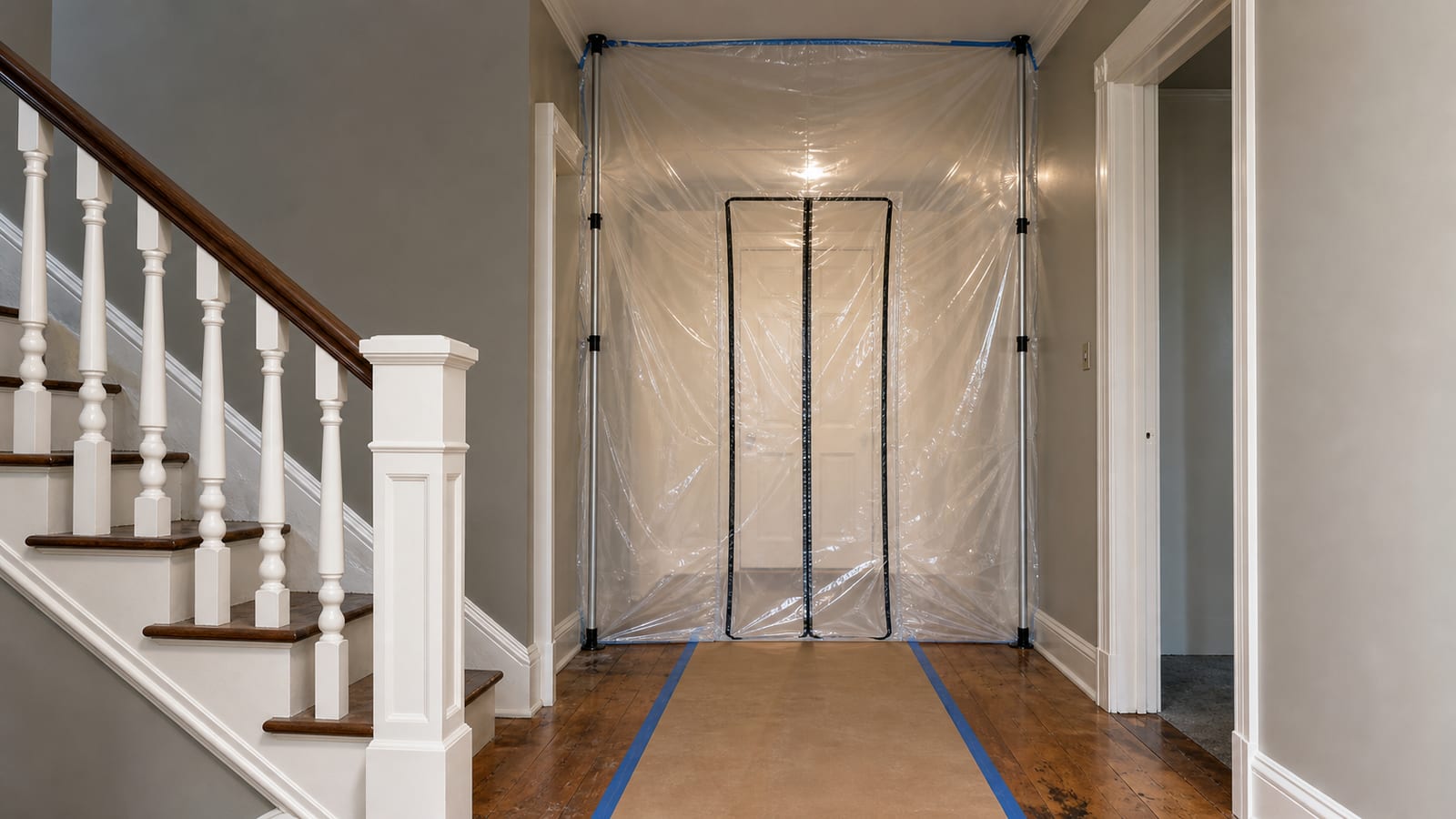
the EPA works in bands of under 10 square feet, 10 to 100, and over 100, with more containment as area and spread risk increase.
Porous material is removed, non-porous is cleaned
, and that split does more to set the price than anything visible.
In Warren most of this happens on individually drained properties
roughly two thirds of the Township is zoned at one house per acre and a half, so the fix is usually within the owner's control.
Testing is not the automatic first step
where growth is already visible.
What the Work Involves, Start to Finish
What You Are Actually Buying
- 1
Find the water
The Department of Health advises inspection where the source cannot readily be traced to a leak.
- 2
Establish the extent
Behind finishes, under flooring, in crawl spaces and around HVAC. The visible patch is a boundary for nothing.
- 3
Set the scope by area and material
Under roughly 10 square feet is generally occupant manageable; above that it changes.
- 4
Contain to match
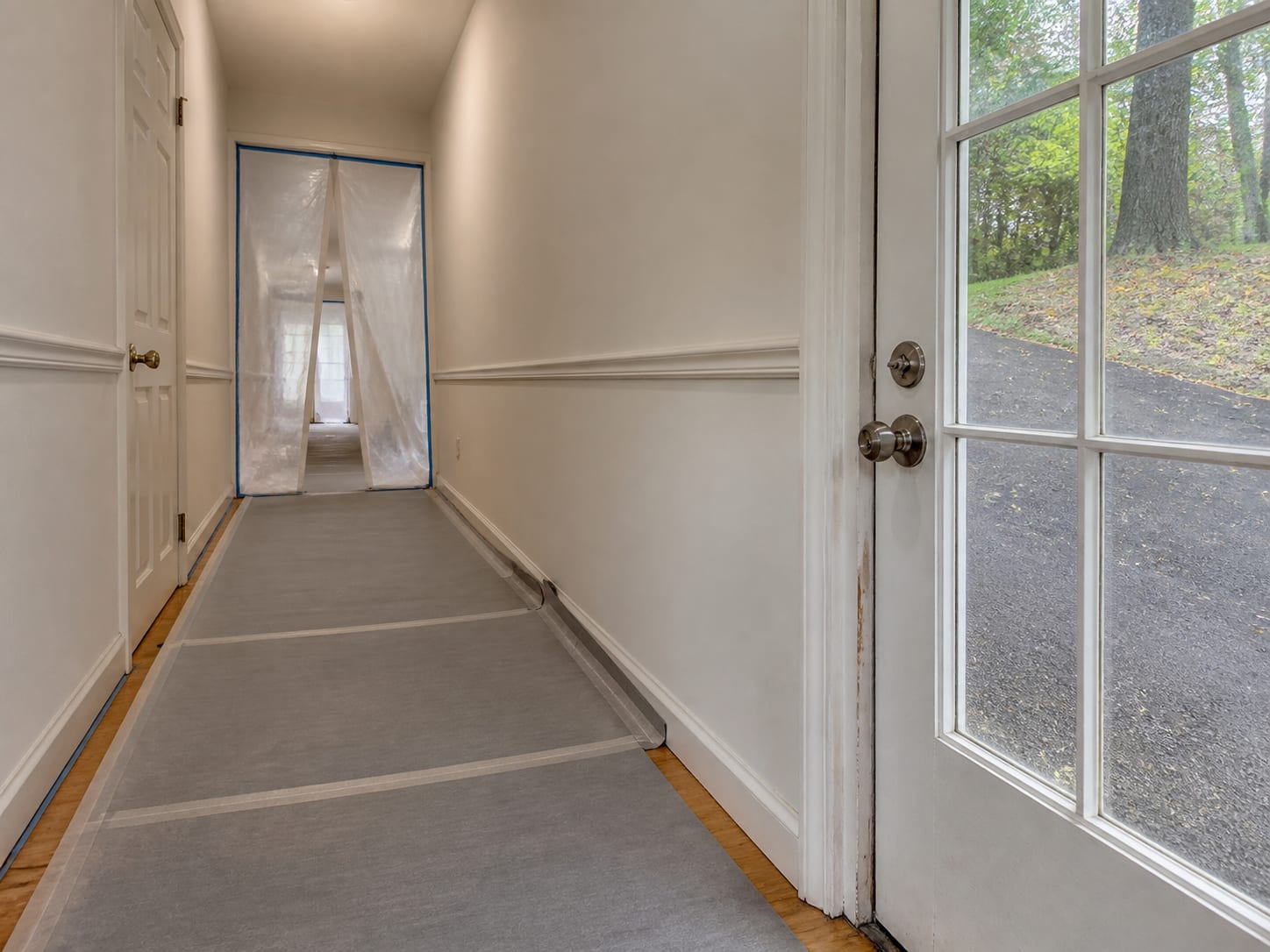
Limited containment in the middle band, full containment above roughly 100 square feet or where occupied space could be affected.
- 5
Remove and clean
Porous material out, hard and non-porous surfaces cleaned in place. This split sets most of the price.
- 6
Dry and verify
On the material, with a meter, not by how the room feels.
- 7
Correct the source and document
Then rebuild, as a separate stage.
Find the water. The New Jersey Department of Health advises an inspection where an excess water source cannot readily be traced to a leak. Everything downstream assumes this has been answered, and skipping it is why some jobs get done twice.
Establish the extent. The visible patch is a starting point. Growth sits behind finishes, under flooring, in crawl spaces and around HVAC, so establishing the boundary means opening enough to see it.
Set the scope by area and material. The EPA treats a visible area under roughly 10 square feet as generally manageable by an occupant, and calls for a different level of assessment above that or where there is substantial water damage, contaminated water, suspected HVAC involvement or health concerns. It also notes that dense growth in a small area can be a greater concern than sparse growth over a larger one, so the bands are guidance rather than arithmetic.
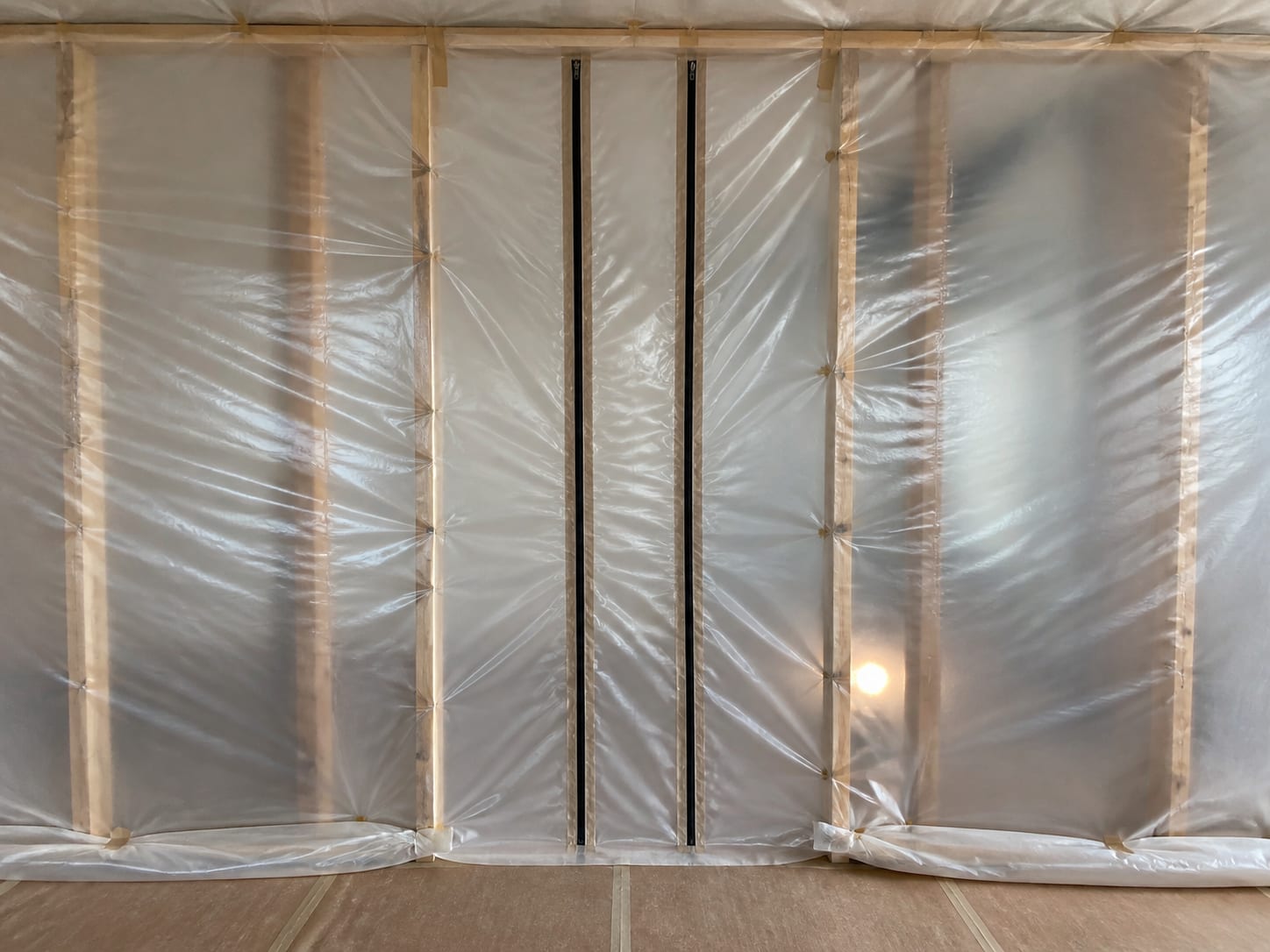
Contain to match. Limited containment generally in the 10 to 100 square foot band, full containment including polyethylene layers and a decontamination chamber above roughly 100 square feet or where occupied space could be affected.
Remove and clean. Porous materials that have been wet and are affected come out: wallboard, carpet and pad, insulation, ceiling tile. Hard and non-porous surfaces are cleaned in place. This split is where most of the scope lives.
Dry and verify. Air movers and dehumidification on the opened assembly, confirmed with a moisture meter on the material rather than judged by the room.
Correct the source and document. Then, and only then, rebuild.
The Four Things That Set the Price
Affected area. More area means more containment, more protective equipment, more labour hours and more disposal. This is the variable people expect.
Material. Whether what is affected can be cleaned or has to be removed changes the job completely. A masonry wall and a finished stud wall with insulation behind it, at the same square footage, are not the same work.
Access. A crawl space that takes only hand carried equipment, a finished room where finishes come off before anything can be assessed, or an occupied building where work happens around people, all add hours without adding area.
What stopping the water requires. This has the widest range of anything on the list, and it is frequently the largest number. Extending a downspout is one afternoon. Regrading a slope, correcting drainage, or repairing a roof or a failed line is a different order of work, and it may involve trades other than the remediator.
When two quotes differ a lot, it is usually the fourth one. One of them has scoped the water correction and the other has quoted the cleanup. That is the question to ask.
What Warren Adds
The Township's 2024 background study records single family residential as by far the predominant land use, with the R-65 district permitting one home per acre and a half across roughly two thirds of the Township's land area.
That is unusually good news for a homeowner here, and nobody says it. It means most Warren properties are individually drained, on their own land, with the grading, the downspouts and the site drainage under the owner's control rather than an association's. Where the fix is outside the building, which it often is, you can actually authorise it.
The ground is the other half. Warren runs from the First Watchung across Washington Valley to the Second Watchung with roughly 370 feet of relief, and the Township describes soils with low percolation and high runoff and a seasonal high water table that in several soil associations sits within a foot of the surface. That combination is what puts water against foundations here, and it is why the diagnosis spends time outside.
When Testing Belongs, and When It Does Not
Where growth is already visible, the EPA's position is that routine sampling is generally unnecessary, and there are no federal mold or mold-spore limits to test against. The money is usually better spent on the removal.
Testing earns its place when somebody with authority over the property has asked for a record, when the extent is genuinely unclear, or as verification after the work. Those are real reasons and they are different from wanting confirmation that what you can see is what you think it is.
What to Ask a Contractor
What do you think the water source is, and how will you confirm it?
What is coming out, and what is being cleaned?
What containment are you using and why?
How will you verify it is dry?
Is the source correction inside this price, or separate?
What documentation do I get at the end?
Six questions. A scope answers all of them. A quote that answers none is a number.
After the Work
Reconstruction is a separate stage that begins after verification. Where it touches structure, or where the property is in a flood hazard area, Warren's requirements apply: permits for most construction activity, inspection requests at least 24 hours ahead with no same day inspections, and floodplain review by the Township's Floodplain Administrator alongside the Construction Official where relevant.
Keep the closeout file. Source, scope, removals, drying records, and any permit outcome. It is the document that answers a buyer's inspector years later, and it cannot be recreated.
Reading a Quote, Line by Line
Two quotes for the same property can differ by a large multiple and both be honest. Here is how to tell what you are looking at.
Look for the source first. A quote that names what it believes the water source is, and what it proposes to do about it, is a scope. A quote that describes only the growth is a cleaning price. The second is not dishonest, but it is answering a smaller question, and the difference between the two is usually most of the difference in the number.
Look for what is being removed versus cleaned. This should be itemised by material and location. "Remediate affected areas" is not a scope. "Remove wallboard to two feet on the north and east walls, remove insulation in the affected bays, clean and treat framing" is.
Look for the containment. What level, and why. If the affected area is large or the space is occupied, containment is a real cost and its absence from a quote means either it is not being done or it is buried.
Look for the verification. How will they establish it is dry, and will you receive the readings. A job without a stated verification method has no defined end.
Look for what is excluded. Reconstruction usually is, and it should say so plainly rather than leaving you to discover it. Source repair by another trade often is too.
Look for contingency language. Every honest remediation quote has some, because the extent behind a wall is not fully knowable until it is opened. What matters is that it is stated as a mechanism, with a rate or a process for agreeing additional work, rather than left open.
What should make you ask more questions. A price per square foot given before a visit. A firm completion date before anyone has seen the property. A quote that leads with testing. A quote that includes a waterproofing product before anyone has established where the water is coming from.
A note on the Warren context. Because roughly two thirds of the Township is zoned at one house per acre and a half, most properties here are individually drained and the source correction is on land you control. That is genuinely useful: it means a quote that identifies an exterior cause is describing work you can authorise, rather than a negotiation with an association.
Frequently Asked Questions About mold remediation Warren NJ
What is the average cost of mold remediation in New Jersey?
There is no meaningful average, because the four variables that set the price are all specific to the property: affected area, material, access, and what correcting the water requires. A per square foot figure quoted before a visit is a marketing number rather than an estimate.
Can black mold be fully remediated?
Yes, and the approach does not change with appearance. Affected porous material is removed, cleanable surfaces are cleaned, and the water is corrected. It is finished when the space is verified dry.
Do I need testing first?
Usually not where growth is visible. The EPA's guidance is that routine sampling is generally unnecessary in that case. Testing is for producing a record somebody has asked for, for establishing extent that is genuinely unclear, or for verification afterwards.
Will insurance pay for it?
That turns on the policy and the cause of loss, and it is not something a remediation company can answer. What helps in any case is documenting the damage and the source before anything moves, and keeping an itemised scope.
How long does it take?
Removal and drying is measured in days and depends on what is concealed. Reconstruction is separate and comes after verification. Anyone offering a completion date before seeing the property is guessing.
Can I sell a house with mold in NJ?
Property condition disclosure is a matter for your attorney or agent rather than for us. What we can say is that a documented remediation with the source corrected is a much stronger position than an untouched problem, because the question a buyer actually has is whether it returns.
Final Thoughts
If you are comparing quotes for a Warren property and cannot tell what accounts for the difference, ExecPro Restoration & Cleaning will scope it properly: the source, what comes out, what gets cleaned, how dryness is verified, and what the correction involves, itemised. Call ExecPro Restoration & Cleaning at (888) 300-3772 or get in touch. Emergency mold and water damage services are available 24/7, Monday through Sunday. Related: mold remediation for the service in general, mold inspection for establishing extent, and black mold removal in Warren if you have just found something dark.
Remediation Terms
Tap a term to see what it means.
Affected area. The measured extent of growth, which drives containment and much of the cost.
Serving Warren
ExecPro Restoration & Cleaning provides mold remediation services in Warren, NJ, from inspection and testing through removal, drying, and post-remediation verification. Call (888) 300-3772 for 24/7 emergency response.
Related Articles
How a Mold Remediation Estimate Is Built, Line by Line
Holding a mold remediation estimate in NJ? See what each line covers, what moves the price, and how to compare two bids on equal terms before you sign.
Commercial Mold Remediation in Warren, NJ: Keeping the Building Open
Warren has a corporate office corridor and a Mountain Boulevard retail strip. What commercial mold remediation involves with tenants and staff in the building.
How Commercial Mold Remediation Works While a New Jersey Building Stays Open
Commercial mold remediation in New Jersey while tenants and staff stay: containment, after-hours phasing, notice, and the closeout documents to ask for.