How a Mold Remediation Estimate Is Built, Line by Line
Cal HewittPublished
- mold remediation
- containment
- insurance restoration
- new jersey
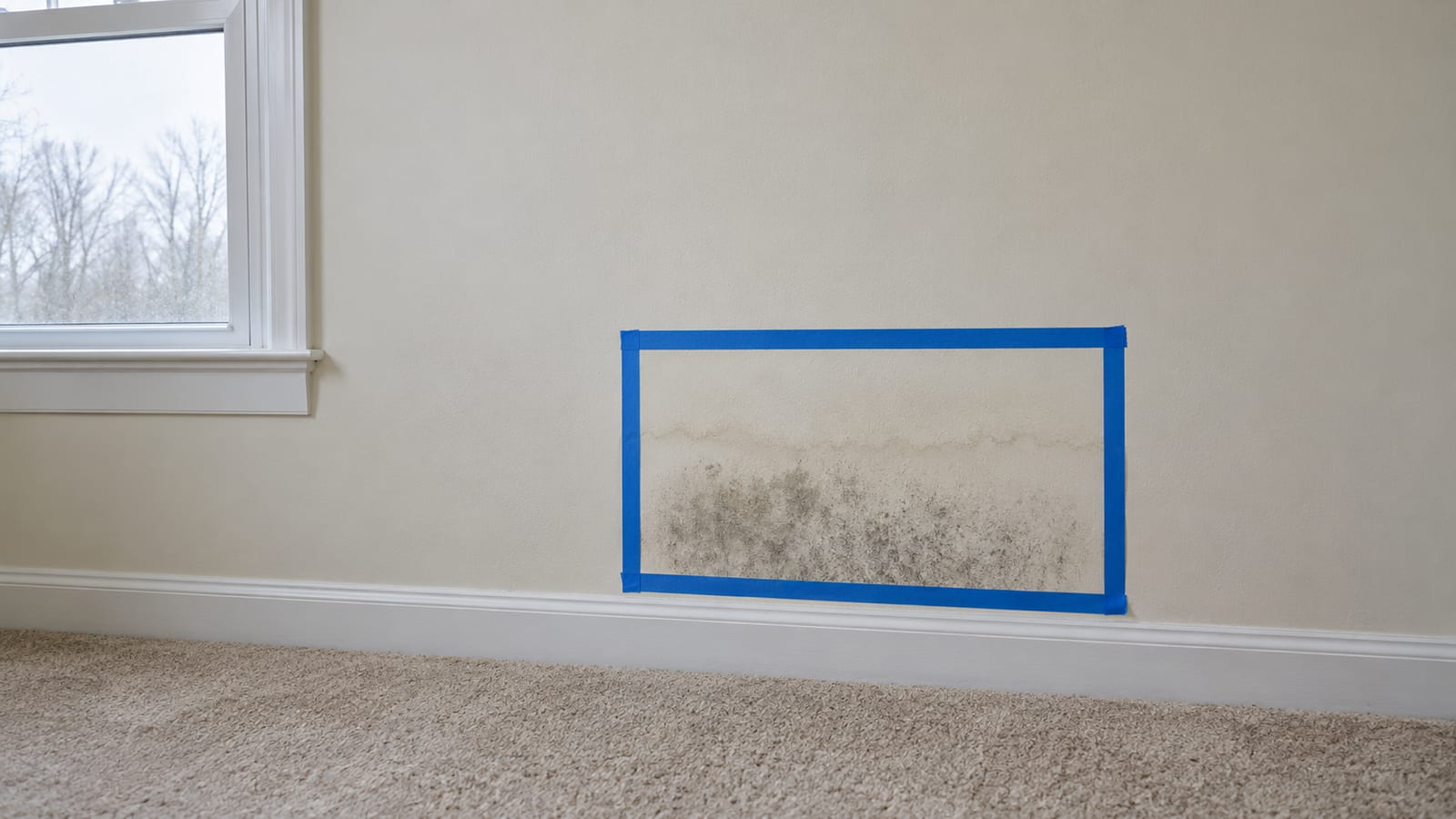
Two contractors looked at the same wall, and the two mold remediation estimates came back with very different totals. That gap can leave a New Jersey owner or manager unsure what to sign. A single total hides what it covers, so it is hard to tell whether the higher bid is padded or the lower bid is missing half the job. Often both bids are honest and simply describe different work. Your next step is to ask each contractor for a written, room-by-room scope with quantities, because you can compare scopes even when you cannot compare totals. Below, we go through the lines of a professional estimate, explain what moves each one, and show you how to set two bids side by side.
Key Takeaways
Compare scopes, not totals
Two bids can both be fair and still differ widely because one includes drying, verification and rebuild while the other prices only the mold work.
Containment size drives cost
EPA's containment guidance ties the level of containment to affected area, material, HVAC involvement and occupants, with limited containment generally tied to 10 to 100 square feet.
Get New Jersey paperwork in writing
A residential home-improvement contract over $500 must be written, and the contractor's registration number can be checked online.
Tell the insurer first
Photograph the damage, keep receipts and ask your insurer what it needs before permanent repairs begin.
What Is Actually Inside a Mold Remediation Estimate?
A professional estimate follows the order the work happens in. Each phase has its own quantity, and each quantity comes from something a person measured or observed in your building. When a quote says only "mold removal," you cannot see any of those quantities, so you cannot tell what you are buying. Our mold remediation work is organized around the same sequence, and the table below shows what each line covers and what pushes it up or down.
Hover or tap a row to highlight it.
| Estimate line | What it covers | What moves the quantity |
|---|---|---|
| Assessment and moisture investigation | Inspection of visible and suspected areas, moisture mapping, finding the water source, checking hidden areas | Number of rooms, wall and floor cavities, HVAC involvement, whether testing is needed |
| Remediation plan and documentation | Written methods, affected materials, safety controls, occupant communication, completion criteria | Number of affected zones, sensitive occupants, insurance requirements |
| Containment | Plastic barriers, sealed openings, protected pathways | Affected area, how much material is disturbed, occupied rooms nearby |
| Negative air and air filtration | HEPA-filtered equipment that keeps contaminated air from drifting into clean areas | Size of the contained space, number of zones, days of operation |
| Removal and disposal | Taking out drywall, insulation, carpet or ceiling tile that cannot be cleaned; sealing and hauling waste | Square or linear footage, demolition depth, layers, access |
| HEPA vacuuming and cleaning | Final HEPA vacuuming and damp wiping after removal and drying | Surface area, framing, mechanical surfaces, number of passes |
| Drying | Air movers, dehumidifiers, moisture readings, drying records | Water category, material type, moisture depth, weather, days of equipment |
| Antimicrobial or coating | A product used when the material, plan and product directions call for it | Material compatibility and the documented reason for use |
| HVAC and contents | Separate handling of air handlers, ducts and furnishings | Whether the system served the affected zone, volume of contents |
| Post-remediation verification | Visual inspection, moisture confirmation, and any sampling the protocol calls for | Number of containment areas, sampling plan, laboratory fees, retesting |
| Rebuild | Replacing drywall, insulation, flooring, trim and finishes | Demolition extent, material choices, permits, finish level |
The first row deserves the most attention. New Jersey Department of Health says most mold problems occur when excess water is present, and it recommends finding and fixing the moisture source before remediation. If an estimate never mentions the leak, the condensation or the humidity behind the growth, the mold work may be repeated later.
Why Do Containment, Removal, Cleaning and Drying Change the Price?
These four lines carry most of the labor and equipment in a typical estimate, and each one grows or shrinks with conditions you can ask about. Containment comes first. EPA bases the level of containment on the affected area, the material, the chance of airborne spores, HVAC involvement and how sensitive the occupants are. Limited containment is generally associated with 10 to 100 square feet, and full containment with more than 100 square feet or any situation where contamination could spread into occupied areas. A bigger enclosure means more plastic, more sealed openings and more filtered-air equipment running longer.
Removal comes next, and it is where hidden damage changes a quote. EPA says porous materials with mold growth, such as drywall, insulation and carpet, may need to be discarded because mold can grow into them, and materials that cannot be saved should be sealed before they leave the contained area. A wall can look sound from the front while the back of the drywall is dark, so ask what depth of demolition the estimate assumes and what happens if the opening shows more.
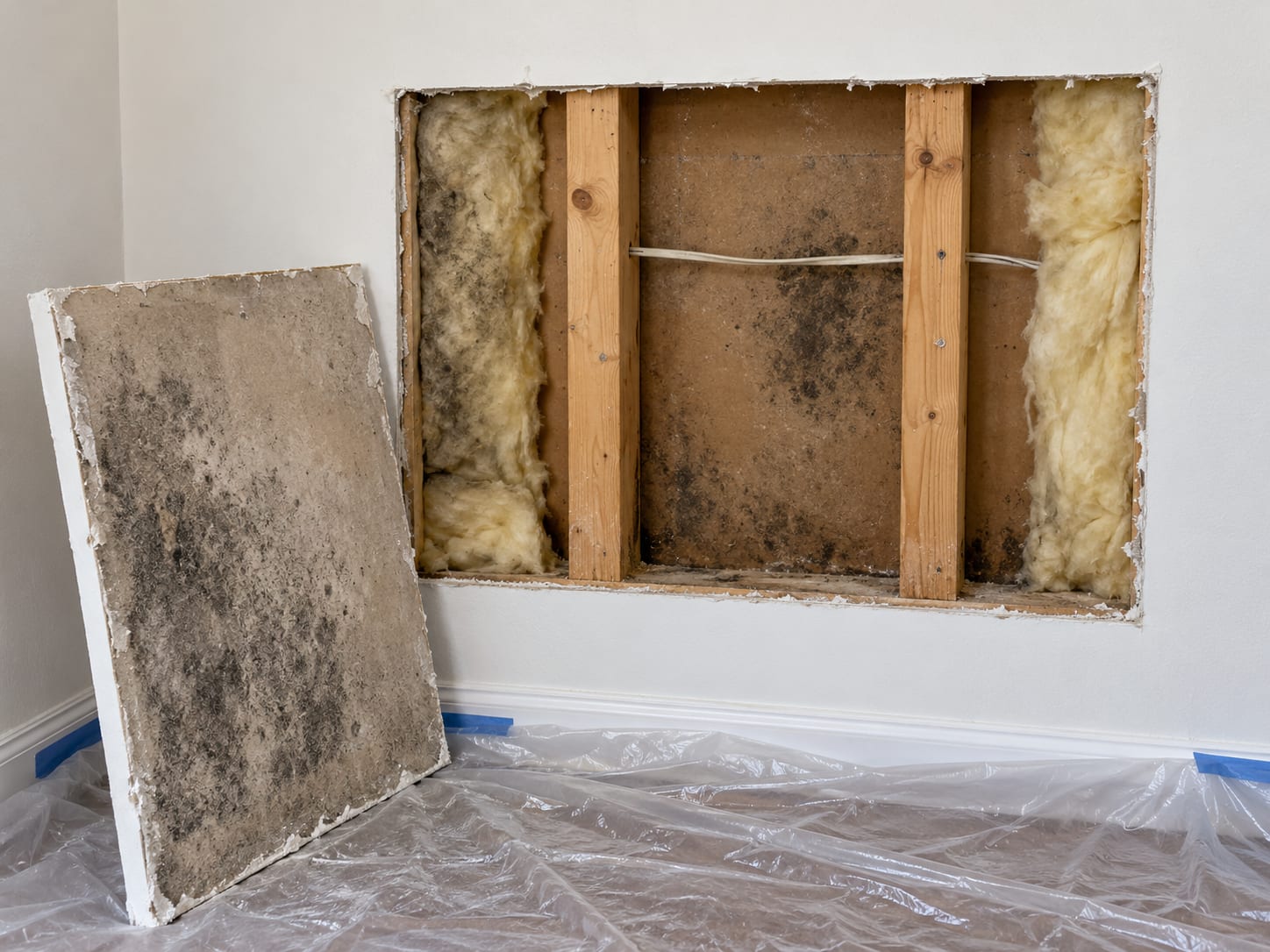
Cleaning follows removal. EPA describes HEPA vacuuming as the final cleanup after contaminated material is out and the area is thoroughly dry. The line item is priced by surface area and by the number of passes over framing and other surfaces. Cleanup is meant to remove contamination, and EPA notes that dead mold can still cause allergic reactions, so a spray applied over remaining growth leaves the job unfinished. If an estimate lists an antimicrobial or coating, ask for the product name, the reason it is used and the surface it goes on. It belongs after the removing and cleaning, as a documented step.
Drying is the line that is easiest to underestimate. EPA recommends drying wet materials within 24 to 48 hours to prevent growth, and the equipment cost depends on how much water got into which materials. Ask how drying will be recorded: how often someone takes moisture readings, and what reading ends the equipment days. If your project began with a leak, flood or burst pipe, our water damage restoration team handles the extraction and structural drying that sit ahead of the mold work, and a leak that is still running calls for emergency services first.
How Do You Compare Two Mold Remediation Estimates Line by Line?
Start by putting both bids on one page with the same headings. Two totals are only comparable when the problem, the controls, the removal, the cleaning, the drying, the verification and the rebuild are defined the same way. Take twenty minutes with a notepad and fill in each contractor's answer under each heading. The blanks are where the price difference usually lives.
Use these fields for every bid:
- Rooms and moisture source: Which rooms are included, who finds the water source, and who is responsible for fixing it.
- Quantities: Affected square footage, linear footage and demolition depth, and what is removed versus cleaned in place.
- Controls: Number and size of containment areas, plus negative air and HEPA filtration and how many days they run.
- HVAC and contents: Whether ducts and air handlers are inspected, cleaned or excluded, and who handles furniture and belongings.
- Waste and drying: How waste is bagged and hauled, what drying equipment is used and how often readings are taken.
- Verification: Whether post-remediation verification is independent, who pays for the laboratory and who pays for retesting.
- Exclusions: Permits, engineering, asbestos, lead and specialty trades.
- Rebuild and rates: Drywall, insulation, flooring, trim and paint, plus labor rates, equipment rates, unit prices, allowances and change-order terms.
- Schedule, paperwork and terms: Estimated duration and what could extend it, documents supplied to the insurer, warranty terms, payment schedule and cancellation rights.
Then ask each contractor the same questions. What evidence supports the affected area they quoted? What happens if contamination extends behind the wall? What is removed, what is cleaned, and why? How will contaminated air stay out of the rooms you still use? Which parts of the estimate are allowances, and which conditions trigger a written change order? A change order is a signed, priced addition to the contract, and asking for the unit price of extra demolition, equipment days and disposal now saves an argument later. Price tells you little until both bids describe the same job, and once they do, the difference between them usually explains itself.
Questions to Ask Every Contractor
Evidence for the affected area
Ask what supports the affected area each contractor quoted.
Damage behind the wall
Ask what happens if contamination extends behind the wall.
Removed versus cleaned
Ask what is removed, what is cleaned, and why.
Air kept out of occupied rooms
Ask how contaminated air will stay out of the rooms you still use.
Allowances and change orders
Ask which parts of the estimate are allowances and which conditions trigger a written change order.
What Should You Know About Contracts and Insurance in New Jersey?
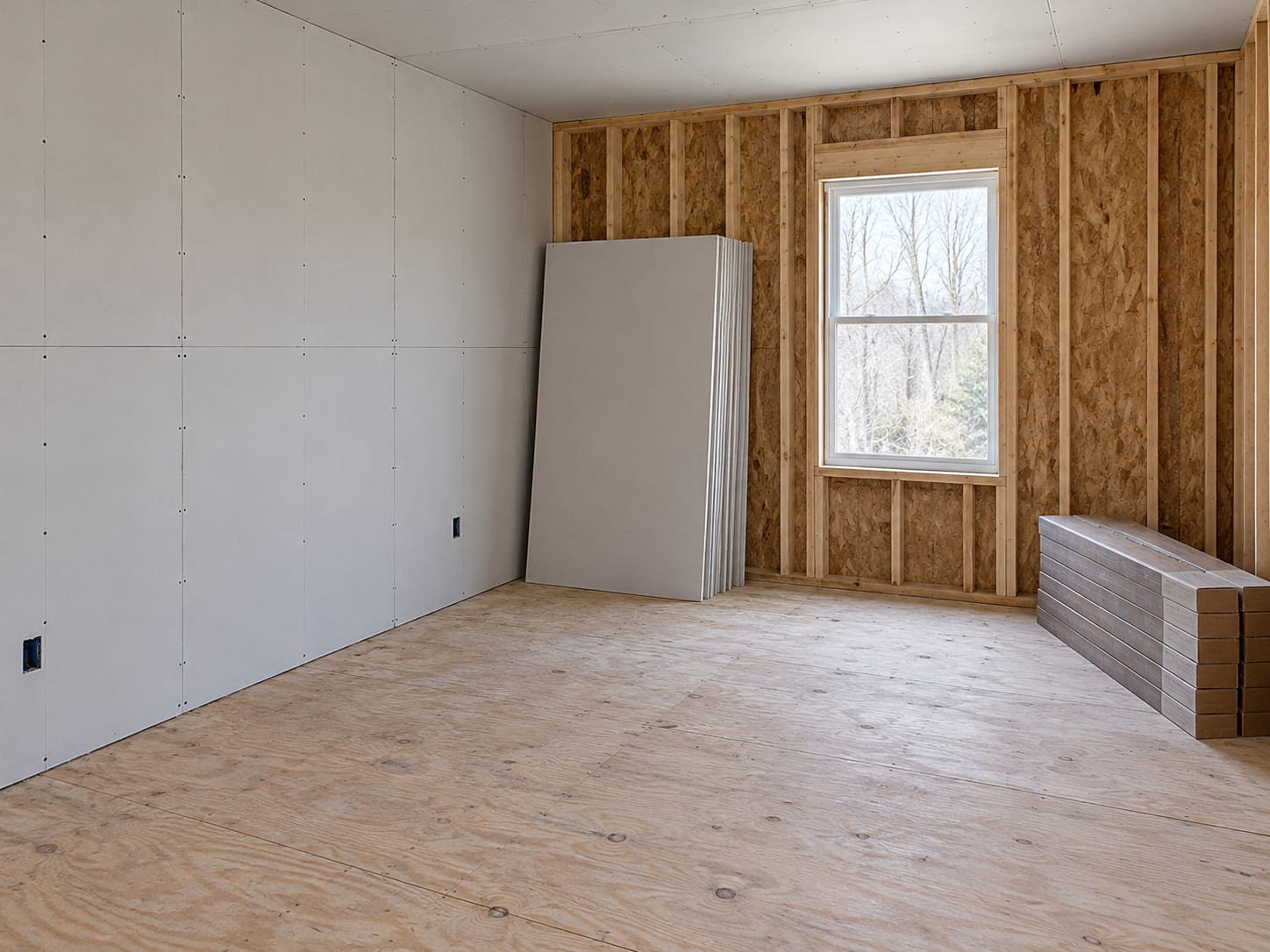
Start with who is doing the work. New Jersey's Division of Consumer Affairs requires businesses that sell or make home improvements on existing residential property to register, with statutory exemptions, and it says the law does not apply to properties used for commercial purposes. A home-improvement contract over $500 must be written. The Division lists what it contains: the contractor's legal name, address and registration number, insurance information, a description of the work, the principal materials, any warranty, the total price, signatures and cancellation language. The registration number belongs on contracts, correspondence and advertising, and the Division offers an online registration lookup so you can confirm it in a minute. Residential rebuild work, such as the drywall and flooring in our build-back services, falls under this rule, so check the number before you sign.
New Jersey also has no state certification program for companies that perform mold or general indoor-air services, according to the state health department, and the lists it publishes are informational. That makes the written scope and the contract your best evidence of what a company will do. IICRC's S520 standard is the current professional reference for mold remediation, covering assessment, safety, documentation, structural, HVAC and contents work, and post-remediation verification. Ask a contractor to show where their scope follows it, and treat the standard as the reference behind a scope that is written for your property.
Insurance depends on your policy. The state insurance department says standard homeowners policies exclude flood damage. Bulletin 03-24 directed insurers to offer a $10,000 aggregate mold and fungus coverage option, with optional $25,000 and $50,000 limits, when the mold loss results from a covered peril during the policy period. Your coverage turns on your policy language, the cause of loss, exclusions, your deductible and the limits you chose. Before you begin permanent repairs, photograph everything, keep receipts for emergency steps and ask your agent to explain how the policy handles mold, water, tear-out, testing and additional living expenses. NJDOBI's home insurance basics also advises policyholders not to throw out damaged property before the insurer has had a chance to inspect it.
Before Permanent Repairs Begin
- 1
Photograph everything
Document the damage before anything is repaired or thrown out.
- 2
Keep receipts
Save receipts for the emergency steps you take.
- 3
Ask your agent
Ask how the policy handles mold, water, tear-out, testing and additional living expenses.
- 4
Hold damaged property
Do not throw it out before the insurer has had a chance to inspect it.
When Do Health and Hidden Damage Make the Scope More Urgent?
Some conditions move the schedule ahead of the price comparison. If water is still arriving, stop it first if you can do so safely. Keep children and anyone with asthma, another lung condition or a weakened immune system out of areas with visible or suspected mold. CDC guidance says people with asthma or other lung conditions should stay out of buildings with indoor water leaks or visible or smelled mold, and that children should not take part in cleanup. Anyone with breathing symptoms or other health concerns should see a physician, because only a clinician can say what is causing a symptom.
Leave moldy drywall, insulation and carpet alone while you collect bids. OSHA notes that breaking moldy wallboard, opening wall cavities and running fans in contaminated areas can send spores into the air. Photographs and moisture readings give contractors what they need without disturbing anything.
Hidden damage is the other reason to move quickly. EPA says hidden mold may sit behind walls, carpet or cushions, and that the plan should be reevaluated when it turns up. Dry wet materials within one to two days, then let moisture readings and the leak history, not the look of the surface, set the scope. Basements are a common example, since below-grade moisture and foundation seepage can keep materials damp long after the visible water is gone.
What Can ExecPro Handle From Remediation Through Rebuild?
ExecPro Restoration & Cleaning handles mold inspection, testing, remediation, water damage restoration, air quality testing and post-remediation rebuilds across our services. Our remediation process includes moisture mapping, containment, physical removal, antimicrobial treatment, disposal and post-remediation verification, and it follows IICRC S520. Ask us for a written scope and we will walk you through each line of it. We also supply photographs, moisture records and completion documents your insurer or property manager may ask for.
Mold Estimate Terms
Tap a term to see what it means.
Containment. Plastic barriers, sealed openings and protected pathways that keep the work zone separate from the rest of the building.
Frequently Asked Questions About Mold Remediation Estimates
How much does mold remediation cost in New Jersey?
The number comes from your scope: affected area, material type, hidden contamination, containment level, removal and disposal, HEPA cleaning, drying, HVAC, contents, verification and rebuild. Ask for a written, itemized scope for your property, then compare it line by line with other bids.
Do mold remediation companies give free estimates?
Practices differ. A company may offer a free consultation, a paid assessment, a testing package or a written estimate after inspection. Ask whether the visit includes moisture mapping, testing and a written scope, and whether any of it carries a fee.
Will insurance pay for black mold removal?
Coverage follows your policy, not the color of the mold. It depends on the cause of loss, exclusions, deductible, limits and whether a covered peril caused the mold. Report the loss promptly, document the damage and ask your insurer to explain its mold, water, tear-out and testing provisions.
What is considered Stage 4 mold contamination?
"Stage 4" is a contractor's label. EPA and OSHA guide the work by affected area, material type, airborne-spore risk, containment needs and occupant exposure, and OSHA's guidance for extensive contamination describes isolation, HEPA-filtered exhaust, airlocks and higher respiratory protection. Ask any contractor who uses the term to translate it into square footage, materials, containment, protective equipment, removal, cleaning, drying and verification.
What if I cannot afford mold remediation right now?
Fix or stop the moisture source first. Then call your insurer or agent, ask for an itemized scope with optional phases, ask whether emergency stabilization can be separated from reconstruction, and get payment terms in writing. If anyone in the home has asthma, a serious respiratory condition or a weakened immune system, keep them out of the affected area and talk with a physician.
How long does mold take to spread inside a wall?
The time varies with the leak, the materials and the conditions. EPA advises drying wet materials within 24 to 48 hours, and the leak history and moisture readings tell a contractor how far to open the wall.
Do I need mold testing before removal?
Ask each contractor what decision the test would change. If the plan already calls for removal, testing may add cost without changing the work, while an independent assessor's testing at the end can confirm the result.
Test Your Mold Estimate Knowledge
1. What should you compare first when you hold two mold remediation estimates?
2. Limited containment is generally tied to roughly what affected area?
3. In New Jersey, a residential home-improvement contract over what amount must be written?
4. Within what window does EPA recommend drying wet materials?
5. What is a change order?
Pick an answer to begin.
Moving Forward
Compare scopes before totals. The estimate that names the moisture source, the quantities, the containment, the drying records and the verification is the one you can actually hold a contractor to, and the questions above will bring the gaps to the surface quickly.
A written, room-by-room scope also protects you later. It gives your insurer a clear record, gives a buyer or property manager a clear history, and gives you a way to settle a change order against a price you already agreed to.
If you want a scope you can compare, ExecPro Restoration & Cleaning serves property owners and managers across New Jersey with mold inspection, remediation, water damage restoration and rebuild work. Call us at (888) 300-3772 or contact us with photographs and a short description of the damage, and we will tell you what a written scope for your building would include.
Related Articles
Mold Remediation in Robbinsville, NJ: Hiring the Whole Job and Keeping the Paperwork
Once the water source is found, the written plan protects you. See what to get before you sign for mold remediation in Robbinsville, NJ, and what to keep.
Insurance Restoration Services in Deal, NJ: Building a Claim File That Holds Up
In Deal, NJ, a strong insurance claim starts with documentation. See what belongs in a coastal claim file and how a restoration contractor records a loss.
Insurance Restoration in Princeton Junction NJ: Building the Paper Trail Your Claim Depends On
When a basement loss starts while you commute, your Princeton Junction NJ insurance claim rests on documentation. Here is the paper trail that supports it.