Black Mold Removal in Warren, NJ: What Happens Next
Cal HewittPublished
- black mold removal
- moisture source
- extent mapping
- warren nj
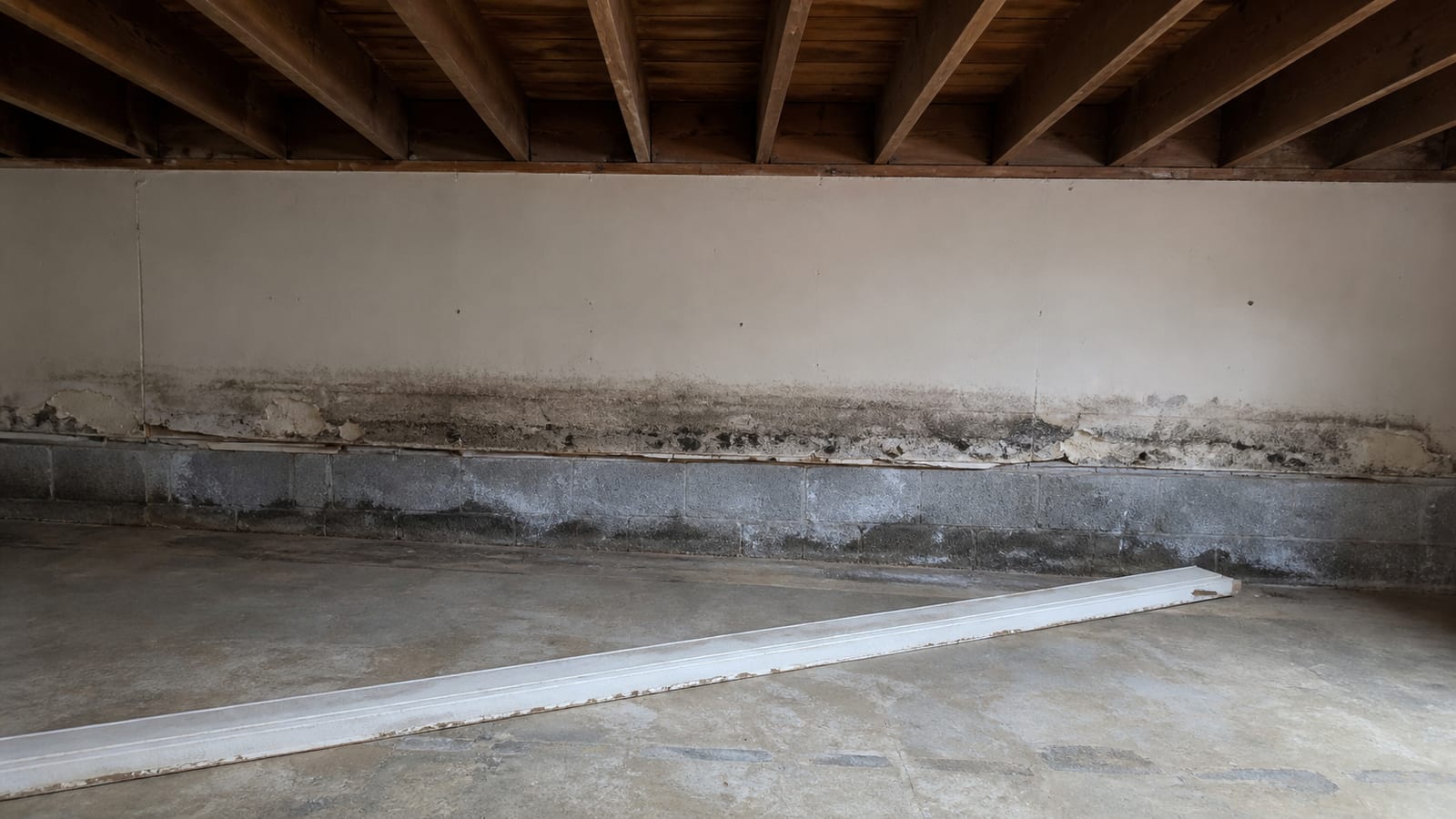
You pulled back a baseboard, opened a closet in the lower level, or went downstairs for something ordinary, and there is a dark patch on the wall that was not there before. If you live in Warren Township, in Somerset County, the practical answer is that this is fixable, that the growth you can see is usually the last thing to show up rather than the first thing that went wrong, and that the work has a shape you can plan around. What follows is that shape, in the order it actually happens: what the patch means, what comes out of the wall, how long a job like this runs, what moves the price, and what you can do tonight before anyone arrives.
Key Takeaways
The water matters more than the stain
growth follows moisture, so the job starts by finding where water is arriving and stopping it. Cleaning a surface without correcting the source buys weeks, not years.
Warren's ground is part of the problem
the Township's own planning record describes high runoff from its topography, soils with low percolation, and a seasonal high water table that sits within a foot of the surface in several soil types.
Scope is set by area and material, not by appearance
the EPA organizes remediation around how much surface area is affected and whether the material is porous, which is what decides containment and what gets removed.
Testing is not the automatic first step
the EPA states that when growth is already visible, routine sampling is generally unnecessary.
Nobody can quote you a real number over the phone
cost is driven by area, containment, how much material has to come out, and what the source repair involves.
The repair can outlast the cleanup
if stopping the water becomes construction, it goes through Warren Township's Construction Department, and inspections have to be requested at least 24 hours ahead.
Can Black Mold Be Fully Removed?
Yes. In an ordinary house, growth on and inside building materials is removed by taking out what cannot be cleaned, cleaning what can, and correcting the water that fed it. When those three things are done together, the problem is resolved rather than paused.
Here is the part worth knowing, and it is genuinely useful rather than a technicality: what you are looking at is identified by where it is growing and what it is growing on, not by its color. The CDC states plainly that color does not determine whether a mold is more or less dangerous, and EPA remediation guidance treats all indoor growth the same way for removal purposes. That is good news for you, because it means nobody needs to identify a species before the work can start, and it means the dark patch does not tell you that your situation is worse than your neighbor's. What decides your job is how much area is affected, what material it is on, and where the water came from.
The one thing that cannot be settled by looking, or by a photograph, or by a test result, is a health question. New Jersey's Department of Health notes that it is not known how much mold is needed to cause health problems, and that individual sensitivity, the extent of growth, and certain pre-existing conditions all play a part. If someone in the house is unwell, that conversation belongs with a clinician, not with a contractor.
Where the Water Is Getting In, and Why Warren Makes That Question Different
Warren is ridge and valley country. The Township runs from the First Watchung Mountain across Washington Valley to the Second Watchung Mountain, with Middle Brook in between and the Passaic River at the lower edges, and its Environmental Resource Inventory records roughly 370 feet of relief across the Township. That shape has consequences for individual houses.
The Township's background study describes stoniness, steep slopes, and a seasonal high water table as constraints on development, and gives depths to seasonal high water table by soil type: zero to one foot for Bowmansville, Watchung and Whippany soils, one to four feet for Amwell and Mount Lucas, one to three feet for Rowland, and more than five feet for some Neshaminy and Penn soils. It also reports that soils across the Township generally have low percolation and high runoff.
Read that as a homeowner rather than as a planner and it says something specific: two houses a few streets apart in Warren can have completely different water problems, and the difference is often the ground rather than the building. Water arriving downhill against a foundation, a seasonal table rising close to a slab, and a plumbing failure inside a wall all produce similar looking damage on the same drywall, and they need entirely different repairs. Telling them apart is done with moisture readings and by looking at what happens outside during rain, which is why a first visit spends time outdoors as well as in the room with the stain.
About 88 percent of Warren homes are owner occupied, and roughly two thirds of the Township is zoned at one house per acre and a half, so most of this work happens on individually drained properties where the drainage decisions are yours to make. That is an advantage. It means a fix is usually within your control rather than an association's.
What the Removal Actually Involves
The sequence below follows EPA remediation guidance and New Jersey Department of Health advice, and it is the order a competent job runs in.
Find and stop the water. The Department of Health advises an inspection where the water source is not readily traceable. Nothing else is worth doing until this is answered, because every later step assumes the material will stay dry once it is repaired.
Establish how far it goes. EPA guidance notes that hidden growth can sit behind wall finishes, in crawl spaces, and in locations associated with HVAC. The visible patch sets a starting point, not a boundary. This is where a small job sometimes turns out to be a larger one, and it is better to find that now than after the wall is closed.
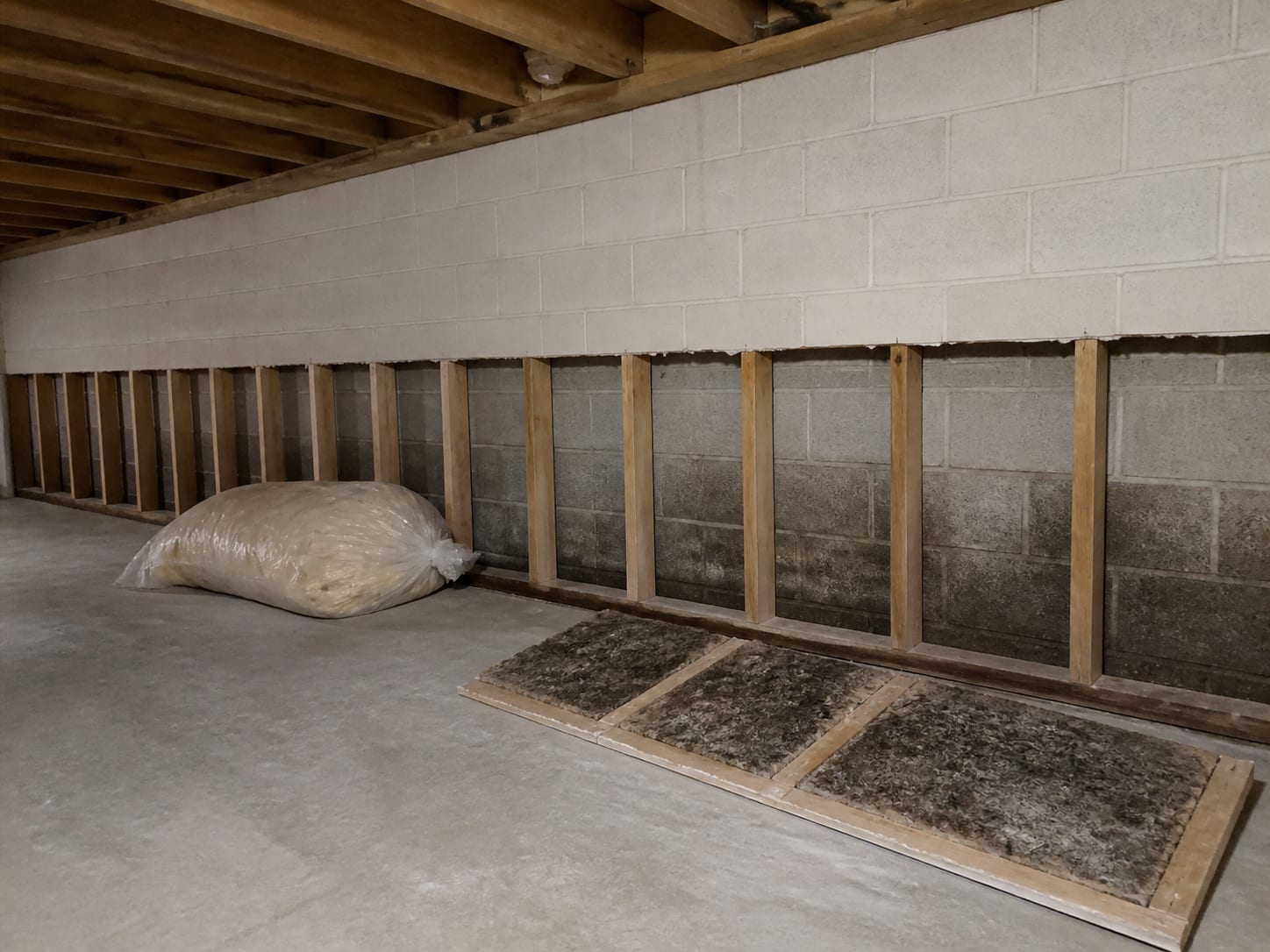
Decide what comes out and what gets cleaned. Porous materials that have been wet, such as wallboard, carpet backing, and some contents, are generally removed rather than surface cleaned. Non-porous and semi-porous materials can often be cleaned in place.
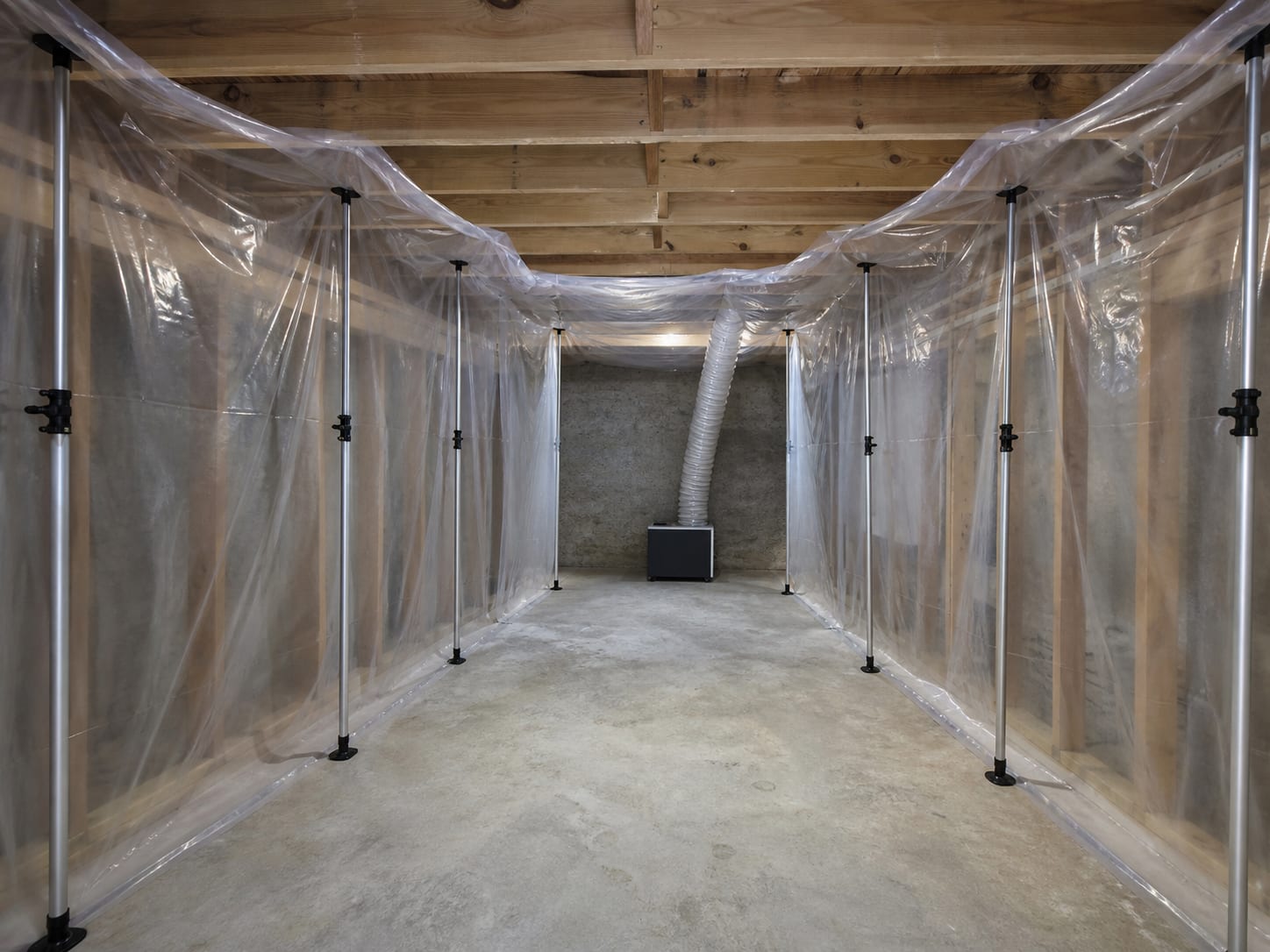
Set containment to match the work. EPA containment guidance organizes this by affected surface area, using under 10 square feet, 10 to 100 square feet, and more than 100 square feet as management categories. It generally recommends limited containment in the middle band, and full containment, including double polyethylene layers and a decontamination chamber, above roughly 100 square feet or where occupied space could be contaminated. Those figures are guidance for how to run the work safely. They are not medical thresholds and they do not tell you how sick anything will make you.
Clean, then verify dryness. Removal is followed by HEPA vacuuming and damp wiping inside the contained area, with protective equipment worn through that final stage. Drying is confirmed with meters rather than by how a wall looks or feels.
Document what was found and done. The source, the scope, what was removed, the drying record, and any permit or inspection outcome. This is the paperwork that lets you explain the job later to a buyer, an insurer, or a tenant.
On testing: the EPA states that when growth is visible, routine sampling is generally unnecessary, and that there are no federal mold or mold-spore limits to comply with. There are good reasons to sample, for example when somebody with authority over the property has asked for a record, or when the extent is genuinely unclear. Wanting proof that the dark patch is dark is not one of them. Where a record is the point, mold testing is a separate purchase from removal, and post-remediation verification is what confirms the finished work.
A Warren Black Mold Removal, Start to Finish
- 1
Find and stop the water
The New Jersey Department of Health advises an inspection where the source cannot readily be traced to a leak. Everything after this assumes it has been answered.
- 2
Establish the real extent
The visible patch is a starting point, not a boundary. Growth sits behind finishes, under flooring and around HVAC.
- 3
Decide what comes out
Porous material that has been wet is removed. Non-porous and semi-porous surfaces can often be cleaned in place.
- 4
Set containment to the work
EPA scales this by affected area, with fuller containment above roughly 100 square feet or where occupied space could be affected.
- 5
Clean, then verify dryness
HEPA vacuuming and damp wiping inside the containment, with drying confirmed by meter rather than by how a wall looks.
- 6
Correct the source
On a Warren lot this is frequently outside: grading, a downspout, a drainage path, a roof or a failed line.
- 7
Rebuild, as a separate stage
It begins only once the space is verified dry, and it is priced separately.
How Long a Warren Job Takes, and What Lengthens It
Nobody can give you a real number before seeing the property, and a company that offers one over the phone is guessing. What can be described honestly is the shape of the schedule and what stretches it.
Remediation and reconstruction are two different clocks. The removal, cleaning and drying is the first. Putting the room back is the second, and it cannot start until the space is verified dry. Treating them as one number is how expectations go wrong.
What lengthens the first clock: hidden extent found once a wall is opened, containment complexity in an occupied house, and drying that takes longer because the source is still active or the weather is against you. What lengthens the second: whether the source repair counts as construction, which brings in permits and inspections, and whether materials have to be ordered.
Access is a real Warren variable. Steep slopes, long driveways, and older small lot neighborhoods can affect how equipment reaches a lower level. That is a reason to check the property rather than an assumption that every Warren job is difficult.
What Drives the Cost
A per-square-foot figure quoted before anyone has seen your property is a marketing number rather than an estimate. What genuinely moves the price is knowable, though, and you can get a sense of your own situation from it:
- Affected area and the containment it requires. More area means more containment, more protective equipment, and more labor, which is the same progression the EPA guidance categories describe.
- How much material has to be removed rather than cleaned, which turns on whether it is porous and how wet it got.
- Where it is. A crawl space, an attic, or a wall cavity next to HVAC is slower to work in than an open basement wall.
- What stopping the water requires. This is the widest variable by far. Regrading, a drainage correction, a roof or flashing repair, and a failed supply line are very different jobs.
- Whether the space is occupied during the work, which affects containment and scheduling.
- The rebuild. Replacing what came out is priced separately from removing it.
If a water event is behind it, water damage restoration and the mold work are usually scoped together, and the rebuild afterward runs through post-mold remediation rebuild.
What You Can Do Before Anyone Arrives
Not much needs doing tonight, and some things are worth not doing.
Photograph what you can see, including the wider room, and note when you first noticed it and what the weather had been doing. If there is an active leak you can isolate safely, isolate it. Keep the area closed off from the rest of the house rather than opening windows and fans onto it, because moving air across growth spreads spores into rooms that were fine. If a supply line or appliance is clearly the source, shut off the water to it.
What not to do: do not scrub it, do not paint over it, and do not pull material off the wall to see how far it goes. Disturbing growth without containment is the one action that reliably makes a small job bigger, and it also destroys the evidence of extent that sets the scope.
If the affected area is small, contained, and you know exactly what wet it, a careful owner can sometimes handle it. If you cannot say where the water came from, if it keeps coming back, or if it is inside a wall assembly, that is the point to call somebody.
Permits, Inspections and the Warren Schedule
Cleanup itself does not carry a standalone municipal mold permit in Warren. What can bring the Township in is the repair that stops the water, once it becomes construction.
Warren Township requires permits for most construction activity and asks for inspection requests at least 24 hours before the requested day. The Township does not perform same-day inspections. That single fact is often the difference between a schedule that holds and one that slips, and it is worth building into your plan at the start rather than discovering at the end.
If the property sits in a flood hazard area, the Township's Chapter 15 coordinates floodplain review with the Uniform Construction Code, and the Floodplain Administrator reviews permit applications and keeps records including determinations of substantial improvement or substantial damage and, where required, as-built elevation certificates. This matters when source repair or rebuild involves regulated construction. It does not apply to a straightforward cleanup that triggers no regulated work.
On historic status: Warren has a preservation policy and a historic inventory, and its plan discusses possible future locally designated districts. Confirm your specific property's status with the Township before assuming either that review applies or that it does not.
One more piece of New Jersey housekeeping worth knowing as a consumer: home improvement contractors register with the New Jersey Division of Consumer Affairs, and asking to see registration and insurance before work begins is normal and reasonable.
Keeping It From Coming Back
Recurrence is almost always a water story rather than a cleaning story. The measures that hold in Warren are the ones aimed at the ground and the envelope: gutters and downspouts discharging well away from the foundation, grading that moves water away rather than holding it against the wall, and attention to how runoff from uphill crosses the property during heavy rain. Inside, keeping lower-level humidity down through the humid months matters more than any product applied to a surface.
Where a seasonal water table sits close to a slab, the realistic goal is management rather than elimination, and knowing which soil you are on is part of planning that honestly.
Frequently Asked Questions About black mold removal Warren NJ
Can black mold be fully remediated?
Yes. Affected porous material is removed, cleanable surfaces are cleaned, and the water source is corrected. The work is considered complete when the space is verified dry and documented, not when the stain is gone.
Do I need a test before removal starts?
Usually not. The EPA states that when growth is visible, routine sampling is generally unnecessary, and there are no federal limits to test against. Testing earns its place when a landlord, buyer, insurer or association has asked for a record, or when the extent is genuinely unclear.
Is dark mold more dangerous than other colors?
Color does not determine that, according to the CDC. Removal is handled the same way regardless of appearance, and any health question belongs with a healthcare professional rather than a contractor.
Do I need a permit for mold removal in Warren?
The cleanup itself does not carry a standalone municipal mold permit. If the repair that stops the water becomes construction, it goes through Warren Township's Construction Department, and inspections must be requested at least 24 hours ahead, with no same-day inspections available.
Why does this keep happening in my basement specifically?
Warren's soils have low percolation and high runoff, and in several soil types the seasonal high water table sits within a foot of the surface. A lower level is where those conditions meet the building first. The fix is usually outside the room the growth is in.
How long will I lose the room for?
It depends on the extent found once material is opened, how quickly the space dries, and whether the source repair needs permits and inspections. Remediation and rebuild are separate stages, and any firm figure offered before an inspection is a guess.
Final Thoughts
Dark growth in a Warren basement or wall cavity is a water problem wearing a disguise, and it is a solvable one. ExecPro Restoration & Cleaning works across Somerset County and the wider service area, and can look at the room, find where the water is arriving, and tell you what the scope actually is before anything comes out of a wall. We are licensed and insured, we work with your insurer's documentation requirements, and we will give you the extent in writing. Call ExecPro Restoration & Cleaning at (888) 300-3772 or get in touch to arrange a look. Emergency mold and water damage services are available 24/7, Monday through Sunday.
Terms You Will Hear on a Warren Job
Tap a term to see what it means.
Flood cut. Removing wall material to a clean line above the wet zone so the cavity behind it can be dried.
Serving Warren
ExecPro Restoration & Cleaning provides mold remediation services in Warren, NJ, from inspection and testing through removal, drying, and post-remediation verification. Call (888) 300-3772 for 24/7 emergency response.
Related Articles
Black Mold Removal in Trenton, NJ: Whether to Stay, What to Touch and What It Takes
Is it safe to stay in the house tonight? Get the size-based answer, what not to touch and what black mold removal in Trenton, NJ takes to do properly.
Black Mold Removal in West Windsor, NJ: How to Choose Who Does It
Found dark growth and about to hire someone? What to do first, why no state mold licence exists in New Jersey, and the checkable things that separate a real contractor.
Mold Inspection in Warren, NJ: Finding What You Cannot See
An inspection and a test are different purchases. What a Warren, NJ mold inspection establishes, when it is worth booking, and what a free one usually is.