Mold Inspection in Warren, NJ: Finding What You Cannot See
Cal HewittPublished
- mold inspection
- moisture mapping
- extent mapping
- warren nj
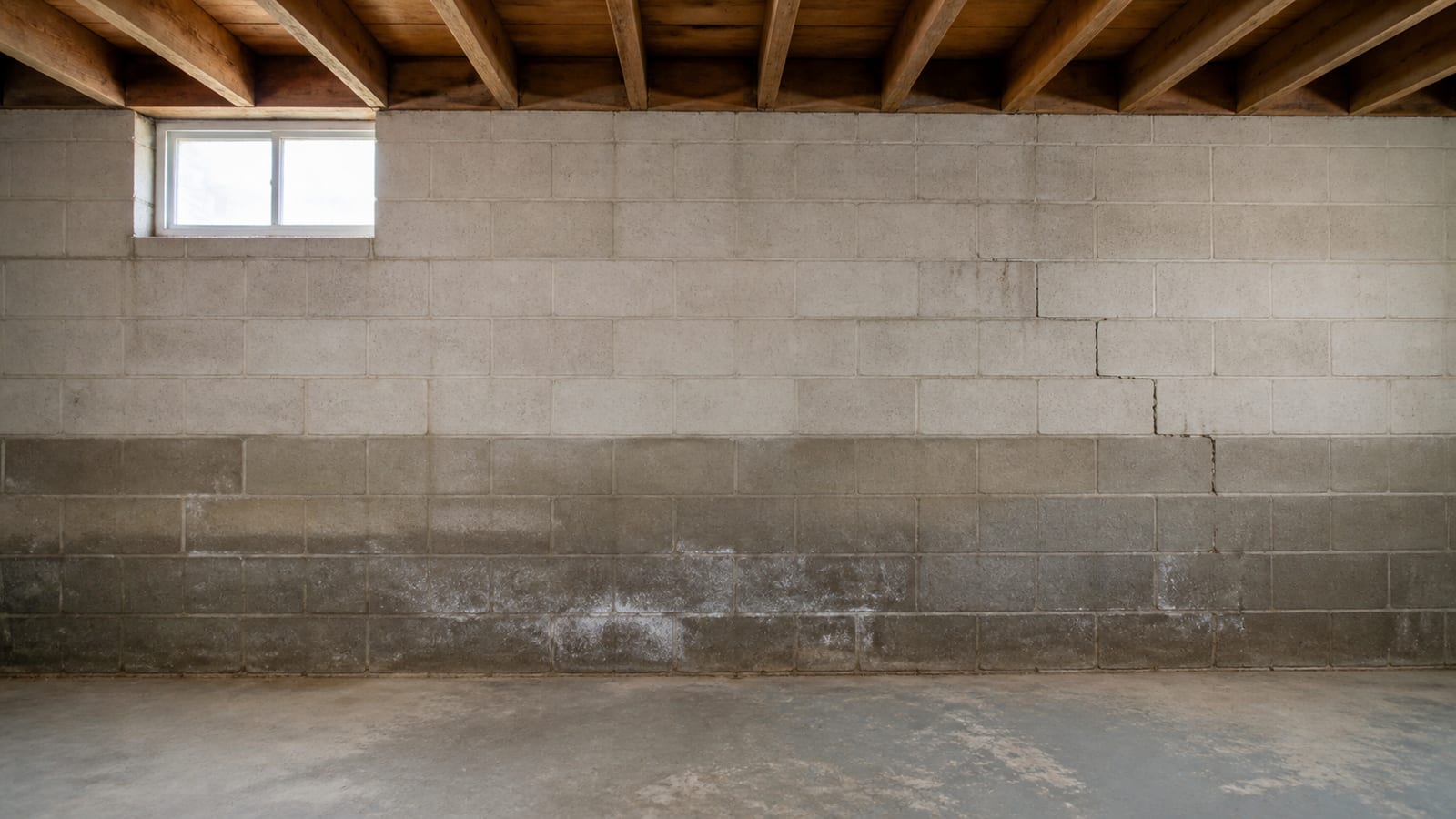
You can smell it and you cannot find it. Or a sale is moving and somebody has asked for an inspection. Either way you are being offered several things with similar names, at prices from nothing to several hundred dollars, and it is not obvious what any of them actually produce. The distinction that matters is simple once it is said plainly: an inspection finds things, and a test measures things. They answer different questions, they are sold interchangeably, and buying the wrong one is the most common way people spend money here without getting an answer.
Key Takeaways
An inspection finds, a test measures
one establishes where moisture and growth are, the other produces a number about a sample.
For a visible problem, the inspection is usually what you need
, and the money is better spent on removal than on confirming what you can see.
The output should be a map, not an opinion
moisture readings, affected areas, likely source, and what remains unknown.
A free inspection is usually a sales visit
, which is legitimate but is not the same thing as a paid diagnostic.
Warren's sections differ
Mount Horeb, Smalleytown, Washington Valley and the rest carry different building eras and different ground.
No federal standard exists to compare a result against
, which is a reason inspections lead and samples support.
What an Inspection Finds That You Cannot See
What an Inspection Actually Does
- 1
Read the moisture, not the stain
Meters read materials, so a clean looking wall can be shown wet and an alarming stain shown historic.
- 2
Establish a boundary
Behind finishes, under flooring, into the ceiling above. The visible patch is a starting point.
- 3
Look outside
Grading, downspout discharge, and what the lot does during rain, which is where the answer usually is.
- 4
Record what is NOT affected
Underrated, and often the most reassuring part of the report.
- 5
Decide whether sampling adds anything
Where growth is visible, the EPA says routine sampling is generally unnecessary.
- 6
Produce a document you own
Affected areas, readings, likely source, and honestly what remains unknown.
- 7
Hand over a scope, not just an opinion
So the next decision can actually be made.
Growth is a symptom of moisture, and moisture is traceable. That is what an inspection is for.
Where the water is now. Moisture meters read materials rather than air, so a wall that looks fine can be shown to be wet, and a stain that looks alarming can be shown to be historic and dry. That single distinction changes what needs doing.
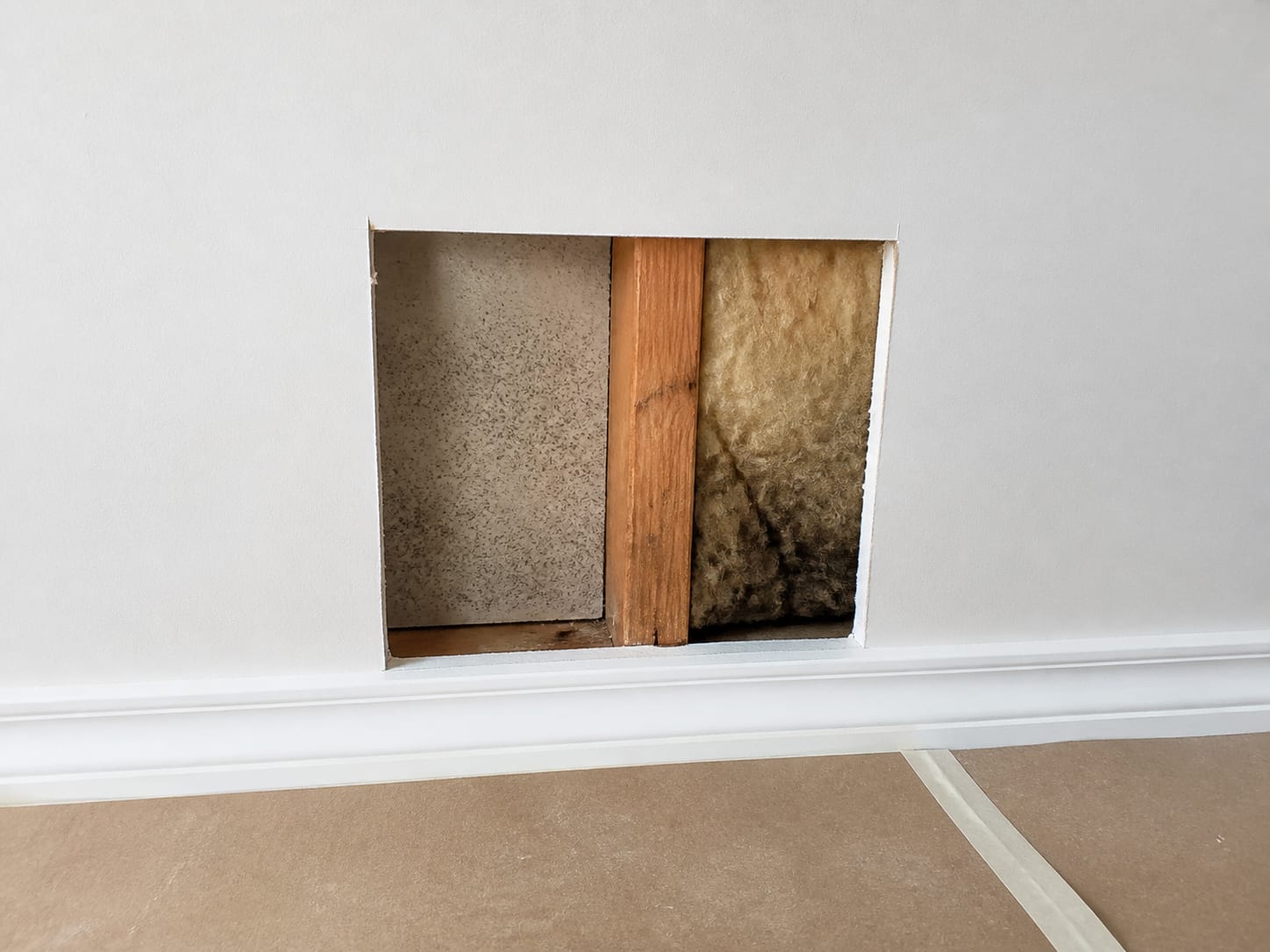
How far it extends. Behind finishes, under flooring, in the cavity, into the ceiling above. The visible patch is the starting point, and establishing a boundary is most of the value.
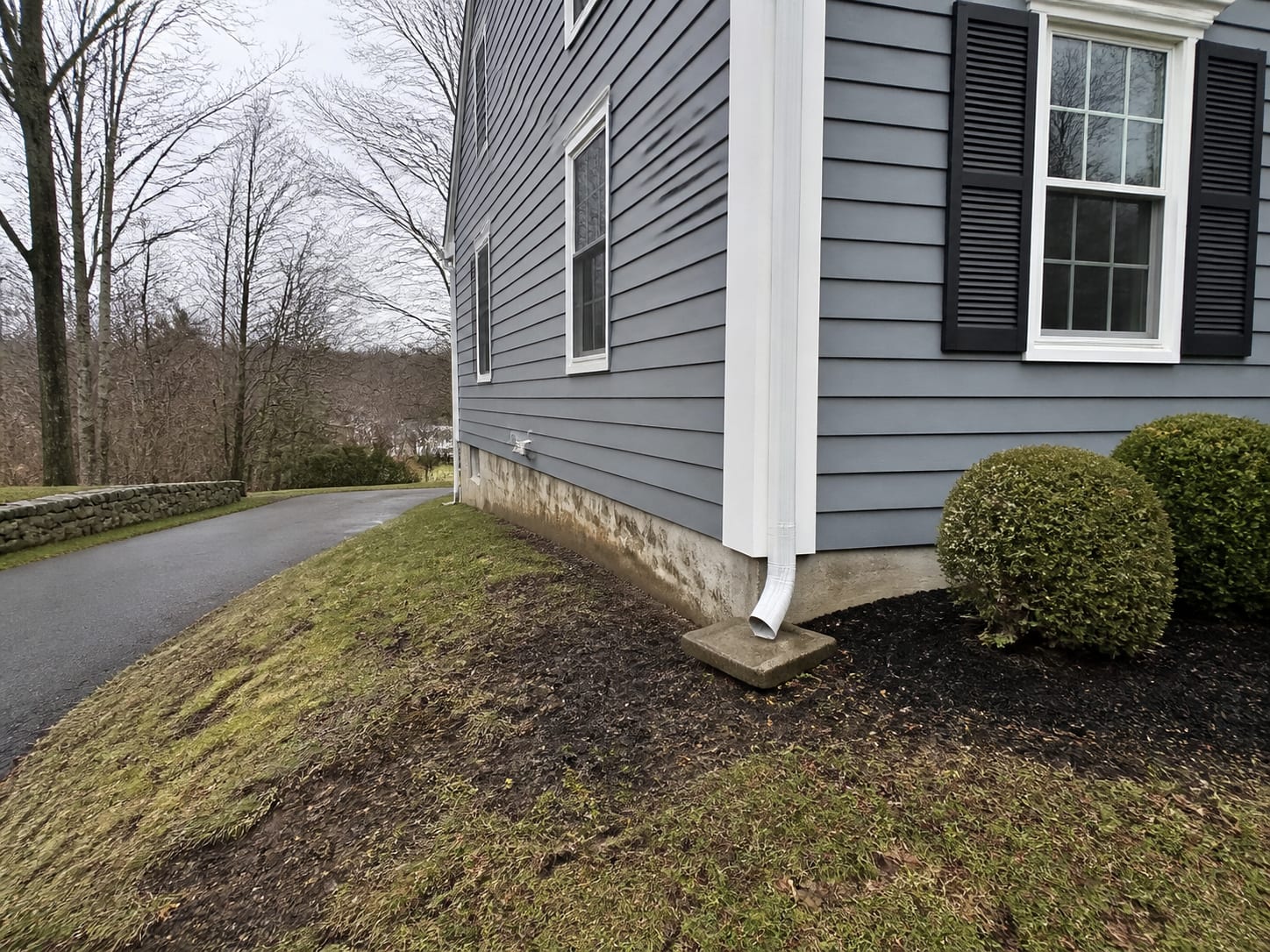
Where it is coming from. The New Jersey Department of Health advises inspection where an excess water source cannot readily be traced to a leak, which is precisely the situation most people are in. Outside as well as in: grading, downspouts, how the lot behaves during rain.
What is not affected. Underrated, and often the most reassuring part of the report.
The output should be a document you can act on: affected areas, readings, the likely source, what was opened, and honestly what remains unknown without further access.
Inspection, Testing, and Which You Need
You can see growth and know roughly where it came from. You probably need neither. Get it removed and get the water corrected.
You can smell something and cannot find it. Inspection. This is the case it exists for.
Somebody with authority has asked for a record. Testing, and specifically the kind of record that satisfies whoever asked. The right first question is what will be accepted, not what is available.
The work is finished and you want confirmation. Verification, which is a different exercise again, done after remediation against the conditions of the job.
Where growth is visible, the EPA's position is that routine sampling is generally unnecessary and there are no federal mold limits to compare a result against. That is not an argument against testing. It is an argument for buying it when it answers a question somebody actually has.
What a Free Inspection Usually Is
It comes up constantly, including in what people search for around Warren, so it is worth answering directly rather than sniffily.
A free inspection is typically a visit to look at the problem and produce a quote. That is a normal and useful commercial offer. Many are done by competent people and you may learn something.
What it is generally not is a paid diagnostic: a documented moisture survey with readings, an extent map, a source assessment, and a written report you own and can hand to somebody else. Those take longer and produce a different artifact.
The way to tell which you are getting is to ask what document you receive at the end and whether it is yours to share. If the answer is a quote, that is a quote. Neither is wrong. They just are not the same purchase, and the confusion between them is why people feel they got nothing.
Warren Is Not One Building Stock
The Township's own history describes a settlement pattern of scattered small villages, and names sections including Mount Horeb, Mount Bethel, Union Village, Smalleytown, Warrenville, Springdale, Washington Valley and Dock Watch Hollow.
That history is still visible in the buildings. There are small older clapboard houses around the village areas, postwar stock from the 45 percent jump in homes between 1946 and 1948, a 1960s layer, and a majority of the housing built after 1980, plus townhomes and apartments at Woods at Warren, Heritage at Warren and Villages at Warren.
An inspection has to meet the building it is in. A 1940s cottage over a masonry cellar, a 1990s colonial with a finished lower level, and a unit in a shared building have different assemblies, different likely sources, and in the last case a different answer about who authorises the repair.
The ground varies as much. The Township names a seasonal high water table within a foot of the surface in several soil associations and more than five feet in others, with low percolation and high runoff generally. Which section and which soil is a real input, not scene setting.
What to Ask Before Booking
What do I receive at the end, and is it mine to share?
Will you take moisture readings, and will they be in the report?
Will you look outside as well as inside?
If you cannot establish the extent without opening something, what do you recommend?
Do you carry out the remediation as well? Not disqualifying, worth knowing.
What It Does Not Cover
An inspection is not a health assessment. New Jersey's Department of Health notes it is not known how much mold is needed to cause health problems, and that individual sensitivity and pre-existing conditions matter. If somebody in the house is unwell, that is a conversation with a clinician, and no inspection report substitutes for it.
It is also not a guarantee about what is inside a closed assembly that nobody opened. A good report says so rather than implying otherwise.
What the Report Should Contain
An inspection is only worth what its document is worth, and the quality varies enormously. Here is what a useful one contains, so you can ask for it rather than hope.
The moisture readings, with locations. Not a summary. The actual values, where they were taken, and what a comparable dry reading in the same building looked like. A reading without a dry comparison is a number without a scale.
A stated extent. Where the affected area begins and ends, how that boundary was established, and honestly where it could not be established without opening something. A report that implies certainty about a closed cavity nobody opened is overstating itself.
The likely source, and the reasoning. Not just a conclusion. What was observed outside, what the readings suggested, what was ruled out and why.
Photographs that mean something. The evidence, not the building. A tide mark, an efflorescence bloom, a downspout discharging at a foundation, a stud bay through an inspection opening.
What is not affected. The parts of the building that were checked and found sound. This is the half most reports omit and the half most owners are relieved by.
What it did not cover. Areas not accessed, assemblies not opened, questions not answered. A limitation stated is useful. A limitation omitted is a problem waiting.
A recommended next step that is specific. Not "remediation recommended" but what, where, and in what order, including whether the source correction needs another trade.
On the Warren stock specifically: because the Township's building eras run from village era cottages around Smalleytown and Washington Valley through the postwar and 1960s waves to a majority built after 1980, a report that does not say which kind of building it was in has skipped a variable that changes the likely source. A 1940s cottage over a masonry cellar and a 1995 colonial with a finished lower level fail in different places, and an inspector who knows the difference will say so.
Frequently Asked Questions About mold inspection Warren NJ
How much does a mold inspection cost in NJ?
It varies with property size, how much has to be accessed, and whether sampling is included. The more useful question is what you receive: a documented moisture survey with an extent map is a different product from a free look and a quote, and they are priced accordingly.
Where can I get a free mold inspection in New Jersey?
Many companies offer one, and it is usually a visit to assess and quote. That is legitimate and can be useful. If you need a document you can hand to a buyer, a landlord or an insurer, ask specifically whether you receive a report and whether it is yours.
Do I need an inspection or a test?
An inspection finds where moisture and growth are. A test measures a sample. If you can already see the problem, neither may be needed before removal. If you cannot find it, inspection. If somebody has asked for paperwork, ask them what will satisfy them first.
Can you sell a house with mold in NJ?
Disclosure is a question for your attorney or agent. Practically, a documented inspection and remediation with the source corrected puts you in a stronger position than an unexamined problem, because the buyer's concern is recurrence.
The smell is only in one room. Is that enough to go on?
Often yes. A localised smell narrows the search considerably, and moisture readings will usually confirm or eliminate the obvious suspects quickly.
Will you find it if it is inside the wall?
Moisture meters and thermal patterns can identify wet cavities without opening them, which is usually enough to decide where to open. Certainty about what is inside a closed assembly generally requires opening it, and a report should say that plainly rather than imply otherwise.
Final Thoughts
If you can smell something in your Warren property and cannot find it, an inspection is the thing that turns that into a plan. ExecPro Restoration & Cleaning will survey the moisture, look at what the lot is doing outside, and give you the extent and the likely source in writing. Call ExecPro Restoration & Cleaning at (888) 300-3772 or get in touch. Emergency mold and water damage services are available 24/7, Monday through Sunday. Related: mold inspection for the service in general, and mold testing in Warren if somebody has asked you for a record.
Inspection Terms
Tap a term to see what it means.
Moisture meter. An instrument reading water content in a material rather than humidity in the air.
Serving Warren
ExecPro Restoration & Cleaning provides mold remediation services in Warren, NJ, from inspection and testing through removal, drying, and post-remediation verification. Call (888) 300-3772 for 24/7 emergency response.
Related Articles
Black Mold Removal in Warren, NJ: What Happens Next
Found dark mold in your Warren, NJ home? What black mold removal actually involves, what has to come out, what drives the cost, and how the water gets stopped.
A Musty Smell With No Visible Mold: How to Track Down the Source
Musty smell but no visible mold? Check these places tonight, learn what a moisture inspection covers, and know when to call. A New Jersey guide.
Mold Inspection in Trenton, NJ: Tracing the Water Before Anyone Opens a Wall
Before anyone opens a wall, a mold inspection in Trenton, NJ traces where the water came from. See what it covers, what it cannot see and what it costs.