Mold Risk in New Jersey by Season and What to Check
Cal HewittPublished
- mold inspection
- moisture control
- indoor air quality
- new jersey
You want to know when the worst time of year for mold in NJ arrives, so you can get ahead of it instead of finding out from a musty basement or a dark patch on a wall. The most useful answer is that indoor mold follows moisture, and in New Jersey moisture can settle into a house in any season.
Each season brings its own way for water to get in. Summer humidity collects in basements and cool rooms, fall rain and wet leaves keep the soil around the foundation soaked, winter condensation forms on cold surfaces, and spring thaw and storms test the roof, gutters and sump pump.
That makes the plan simple: one check per season, done before a small damp spot becomes a bigger job. The sections below give you each check, the numbers to aim for and the point where it is time to call someone.
Key Takeaways
Indoor mold follows moisture, not the calendar
EPA says controlling moisture controls mold growth, and the New Jersey Department of Health says mold spores need water to grow.
Outdoor spores peak in summer and fall
NIEHS says outdoor mold reaches its highest levels in those seasons, and local allergy counts, not a statewide figure, show what is in the air near you.
Humidity targets are specific
EPA recommends indoor relative humidity below 60 percent, ideally 30 to 50 percent, and ENERGY STAR recommends roughly 30 to 40 percent during the heating season to limit window condensation.
The first 24 hours matter
Stop active water if it is safe, photograph the area and the source, do not paint or seal wet materials, and dry wet materials within 24 to 48 hours.
When Does Mold Risk Peak in New Jersey Homes?
For mold inside the house, the worst period is whenever moisture stays available. EPA states that mold growth is controlled by controlling moisture, and the New Jersey Department of Health says mold spores need water to grow. A humid summer basement, a rainy fall with wet leaves, a winter of window condensation and a spring thaw can each create the conditions, so no single month owns the risk.
Outdoors, the pattern is different. NIEHS states that outdoor mold reaches its highest levels in summer and fall, and that in nature mold grows on damp materials and decaying organic matter. Warm, humid weather and fall leaf decay fit that pattern in New Jersey. Local counts vary with temperature, rainfall, humidity, vegetation, storms and the timing of the first frost, so if outdoor spores affect your allergies, use current local reports from the National Allergy Bureau or a regional aerobiology service instead of a single date.
That is why the seasonal checks below concentrate on water. The table gives the pressure point for each season at a glance, with the humidity guidance from EPA and ENERGY STAR.
Hover or tap a row to highlight it.
| Season | Where moisture builds | One check to do |
|---|---|---|
| Summer | Basements, crawl spaces and cool, poorly ventilated rooms | Measure humidity in the basement and other cool rooms |
| Fall | Foundation soil, gutters, downspouts and window wells | Clear leaves from gutters, downspouts, window wells and drainage areas |
| Winter | Cold windows, exterior-wall corners, pipes and attics | Look for condensation and keep humidity around 30 to 40 percent where practical |
| Spring | Foundation, roof, gutters and sump pump after snowmelt or storms | Check the basement, sump pump and floor drains after snowmelt or heavy rain |
Spot the Seasonal Signs That Point to a Moisture Problem
Mold gets attention only when it shows, but the water behind it usually announces itself first. A musty odor, water stains, damp spots, recurring condensation, peeling paint or a white, powdery crust on a basement wall are all practical warning signs. When you see one of them, you are looking at a moisture problem, and fixing the moisture is what stops the growth.
Look for water first and growth second. Condensation on a cold surface is one of the earliest signs that indoor air holds more moisture than the building can handle, and EPA treats it as a sign of a moisture problem. The two questions below are the ones homeowners ask most about this stage.
How Common Is Basement Mold?
Basements are recognized moisture-risk locations because of seepage, wet foundations, groundwater, condensation and high humidity, and EPA identifies damp basements and wet foundations as places where mold can grow. Treat dampness, seepage, condensation, musty odors and visible growth in your basement as reasons to inspect, whatever the season.
What Are the Signs of Poor Indoor Air Quality?
EPA lists stuffy air, condensation on cold surfaces, and mold or mildew growth as signs of inadequate ventilation or an indoor-air-quality concern. Symptoms such as cough, eye irritation, nasal congestion or breathing trouble belong with a medical professional, since a symptom does not identify a mold species or prove that mold caused it.
Keep Summer Basements and Cool Rooms Dry
Warm, humid outdoor air can raise indoor humidity, especially in basements, crawl spaces and poorly ventilated rooms. Air conditioning removes some moisture while it runs, but cooling a room does not guarantee that humidity is controlled. ENERGY STAR describes 50 to 75 percent relative humidity as a slightly to moderately damp condition and says humidity above 50 percent may promote mold growth. It also says an oversized air conditioner can leave a room cool but damp or clammy, because it cools quickly and then shuts off before it removes enough moisture.
The summer check is a measurement. Put a hygrometer, a small meter that reads relative humidity, in the basement and in other cool rooms, and read it over several days. EPA's target is below 60 percent and ideally 30 to 50 percent. When the number runs high, use air conditioning or a dehumidifier as needed.
Hover or tap a row to highlight it.
| Measure | Number | Source |
|---|---|---|
| Indoor relative humidity target | Below 60 percent, ideally 30 to 50 percent | EPA |
| Heating-season humidity in colder climates | Roughly 30 to 40 percent, to limit window condensation | ENERGY STAR |
| Slightly to moderately damp condition | 50 to 75 percent relative humidity | ENERGY STAR |
| Level that may promote mold growth | Above 50 percent relative humidity | ENERGY STAR |
| Drying time for wet materials | Within 24 to 48 hours | EPA |
Then look at the equipment. Keep condensate pans and drain lines clear, and inspect around HVAC equipment for condensation or drainage problems. Vent showers, cooking, dishwashing and clothes dryers outdoors so the moisture they make does not end up in the house. If humidity or condensation stays high after those steps, have an HVAC professional evaluate it, and do not turn off cooling or dehumidification in a damp basement while you wait.
Spring and fall can surprise you here. Outdoor temperatures may be too mild to run the air conditioner for long even when outdoor humidity is high, and supplemental dehumidification may be needed wherever the reading stays up.
Stay Ahead of Fall Leaves, Rain and Foundation Moisture
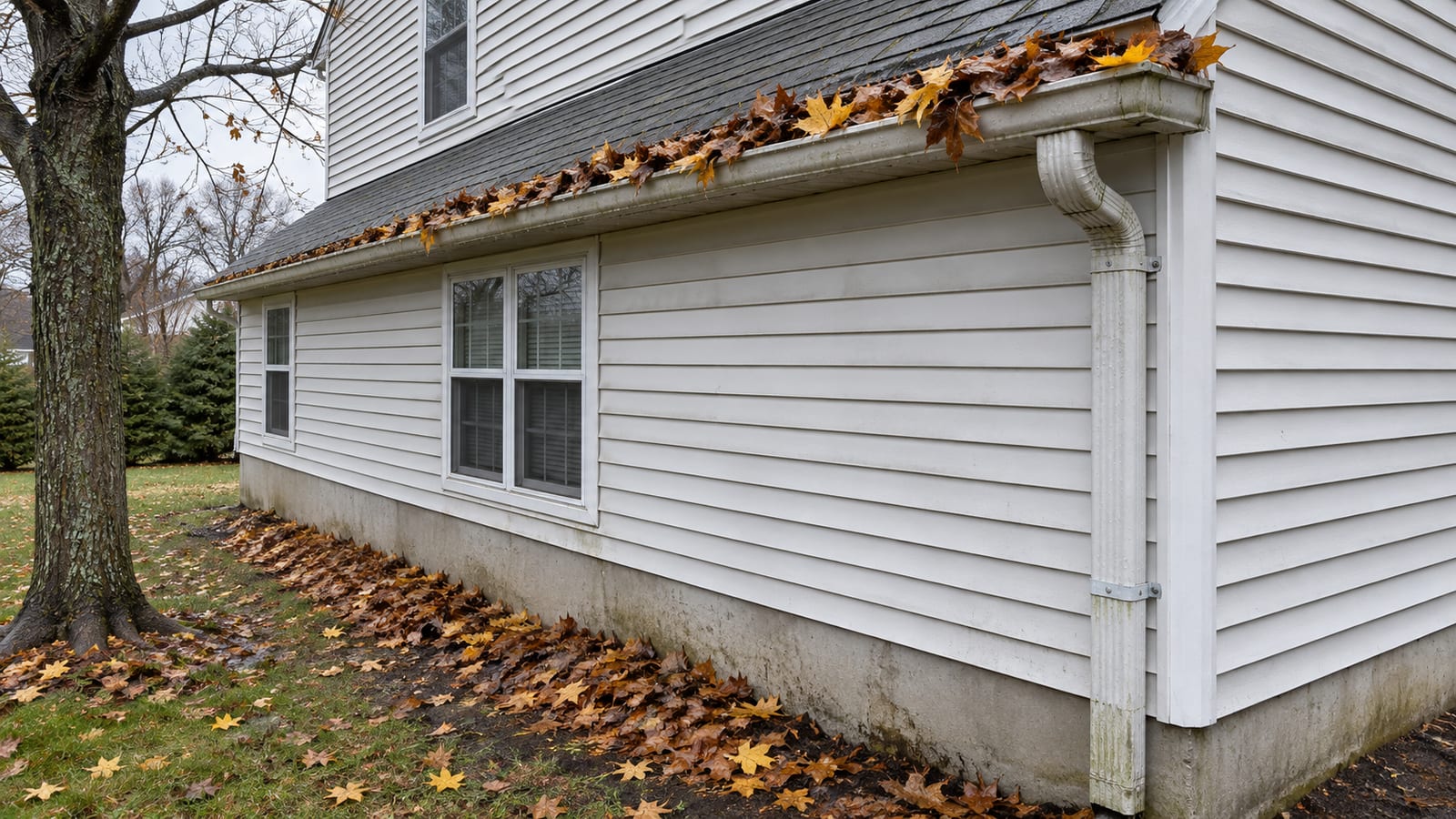
Rain, wet leaves, clogged gutters and blocked downspouts can keep foundation soil wet and increase basement seepage. Falling outdoor temperatures can also produce condensation where warm indoor air meets colder windows, pipes, walls or roof surfaces. This is the season when the outdoors and the indoors both turn damp at once.
Walk the outside of the house first. Remove leaves from gutters, downspouts, window wells and foundation drainage areas, and keep leaf litter off siding and foundation walls. Confirm that downspouts discharge away from the foundation. Inspect the roof before prolonged rain or cold weather arrives, since a small leak found in October is easier to deal with than a stained ceiling in January.
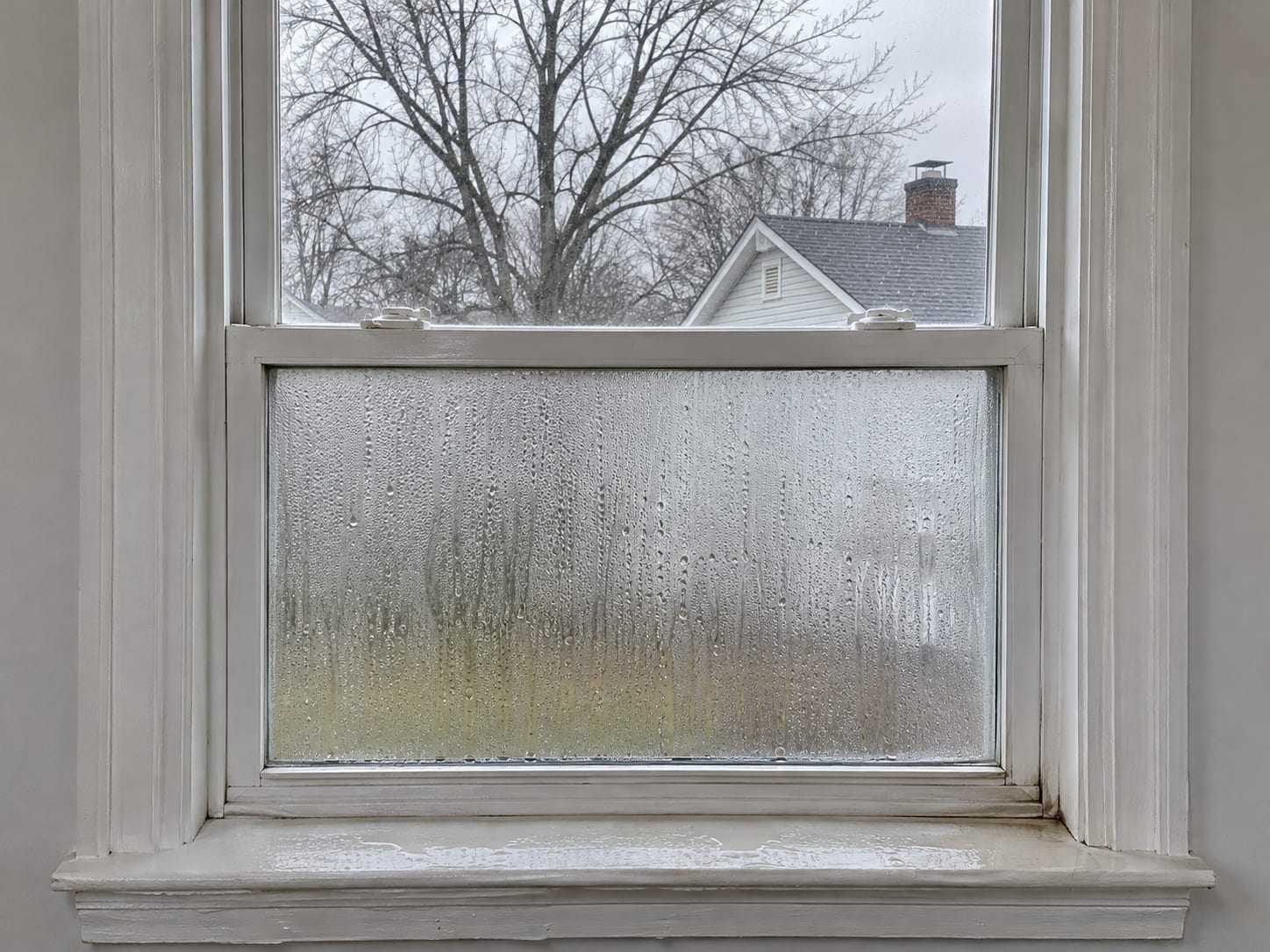
Then check inside. After storms, look at the basement and any crawl space for damp spots, seepage and odors. Watch windows and pipes for the combination of cooler outdoor air and indoor humidity that produces condensation. EPA says to act quickly when condensation appears.
Outdoor spore counts rise in fall as well, as NIEHS notes, and an outdoor count is a measure of the air outside. Indoor growth needs a damp surface or another moisture condition, so an outdoor count tells you about allergy conditions and does not point to an indoor problem by itself. Spores can come inside through doors, windows, ventilation, clothing and HVAC systems, which is one more reason to keep the indoor surfaces dry.
Catch Winter Condensation and Spring Thaw Damage Early
Winter air is often dry, yet showers, cooking, drying clothes and humidifiers add moisture that can condense on cold windows, exterior walls, pipes, attics and poorly insulated areas. During the heating season, ENERGY STAR recommends roughly 30 to 40 percent relative humidity in colder climates to help prevent window condensation. A humidifier without a humidity reading is a common mistake, so measure before you add more moisture to the air.
The winter check covers four spots. Look at window edges, exterior-wall corners, pipes, attics and closets for condensation. Confirm that bathroom and kitchen exhaust fans discharge outdoors. Inspect attic ventilation and roof penetrations. Keep furniture and stored items from blocking airflow against cold exterior walls.
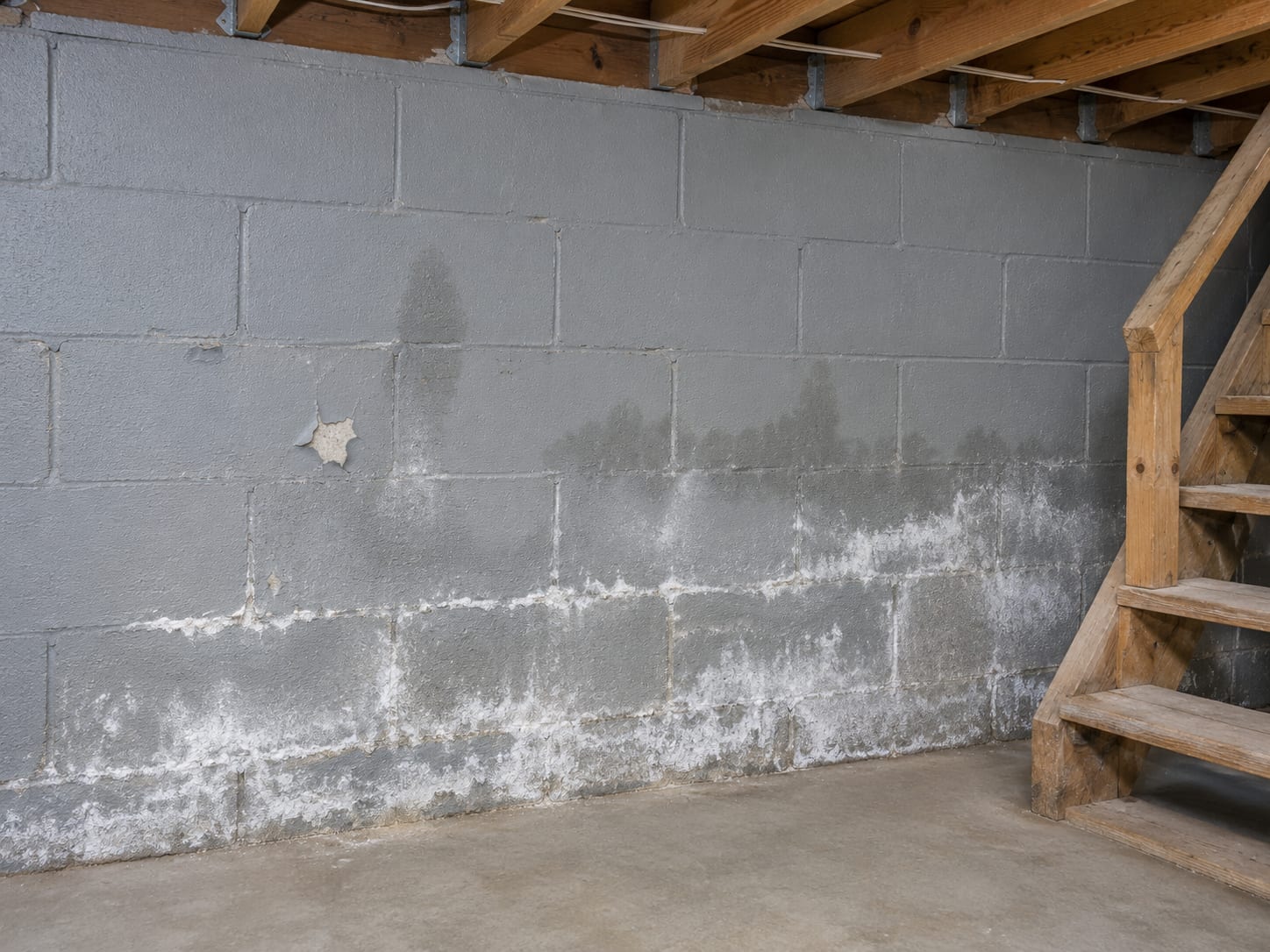
Spring brings the opposite problem: too much water outside. Snowmelt, freeze-thaw movement, heavy rain and stormwater can expose foundation, roof, gutter, sump-pump and grading problems. Check the basement, crawl space, sump pump, foundation walls and floor drains after snowmelt or heavy rain. Look for efflorescence, which is the white mineral crust water leaves on masonry, along with damp spots, peeling paint, musty odors and water stains. Check roof flashing, attic sheathing and ceilings for storm-related leaks, and dry any wet materials promptly.
Know What to Do in the First 24 Hours After Water or Mold Appears
Seasonal checks are an early warning. A damp basement with visible growth, wet drywall, an odor that persists or condensation that keeps returning calls for an assessment, and the first day sets up everything that follows.
After Water or Mold Appears
- 1
In the first hour
Stop active water if it is safe, photograph the affected area and the water source, keep children, older adults and people with asthma away from visibly contaminated areas, and do not paint, caulk or close up wet or mold-contaminated materials.
- 2
Over the next day
Dry wet materials as quickly as possible, within 24 to 48 hours; run bathroom and kitchen exhaust fans, and measure humidity to confirm it is heading below 60 percent.
- 3
During the next week
Correct the moisture source, such as a leak, a clogged gutter, a grading problem, a failed sump pump, condensation or poor ventilation, and arrange an assessment if growth is extensive, materials are porous or hidden, or the source is unresolved.
In the first hour, stop active water if it is safe to do so, and photograph the affected area and the water source. Check for standing water, wet drywall, ceiling stains, basement seepage, condensation or a musty odor. Keep children, older adults and people with asthma or other respiratory conditions away from visibly contaminated areas. Do not paint, caulk or close up wet or mold-contaminated materials.
Over the next day, dry wet materials as quickly as possible; EPA recommends drying within 24 to 48 hours. Run bathroom and kitchen exhaust fans, and measure indoor humidity with a hygrometer to confirm it is heading below 60 percent. Contact your insurer promptly if the problem followed a sudden event.
During the next week, correct the moisture source, whether that is a roof or plumbing leak, a clogged gutter, a grading problem, a failed sump pump, a condensation problem or poor ventilation. Arrange an assessment when growth is extensive, materials are porous or hidden, HVAC equipment is affected, the water was contaminated, or the source is still unresolved. Our mold remediation service covers assessment, containment, removal and moisture-source correction, and our mold removal page covers containment, HEPA filtration, disposal of porous materials and moisture correction.
Get Your Insurance, Tenant and Records Questions Answered
Keep a dated record from the first day: humidity readings, photographs, communications, drying work, invoices and repairs. Also keep damaged-material lists, temporary-repair receipts and any contractor or laboratory reports. That file helps with an insurer, a landlord or a later sale.
Insurance depends on the policy and the cause. The New Jersey Department of Banking and Insurance states that all homeowners policies exclude water damage caused by flood, and its consumer guidance says to report losses promptly, document damage, save receipts, and wait for the adjuster to inspect before permanent repairs or discarding damaged property.
NJDOBI Bulletin 03-24, issued in 2003, set guidelines for mold coverage, including a $10,000 annual aggregate option with optional higher limits of $25,000 and $50,000, and it is not a determination of coverage under any individual policy. Ask your insurer in writing what your policy covers before you discard or repair anything, and remember that a contractor's statement does not decide coverage. Our insurance restoration services page describes drying logs and documentation.
If you rent, notify your landlord in writing and contact the local building-code office about unrepaired leaks, plumbing problems or other structural defects. The Department of Health points renters to the Department of Community Affairs landlord-tenant information and says legal advice may be appropriate for questions about rights. New Jersey has no state certification program for companies performing mold or indoor-air services, so ask any company you consider for a written scope, references, licensing and insurance information.
Prevent the Next Seasonal Mold Problem
Prevention is a short calendar. In winter, check condensation spots, hold humidity near 30 to 40 percent where practical, and confirm that exhaust fans vent outdoors. In spring, clean the gutters, check the sump pump and floor drains after snowmelt, and look for efflorescence and damp spots. In summer, read the humidity in the basement and keep condensate lines open. In fall, clear leaves and inspect the roof before the cold arrives.
Your Seasonal Mold Calendar
Winter
Check condensation spots, hold humidity near 30 to 40 percent where practical, and confirm that exhaust fans vent outdoors.
Spring
Clean the gutters, check the sump pump and floor drains after snowmelt, and look for efflorescence and damp spots.
Summer
Read the humidity in the basement and keep condensate lines open.
Fall
Clear leaves from gutters, downspouts and window wells, and inspect the roof before the cold arrives.
Keep a hygrometer in the basement all year. Keep HVAC filters and condensate drains maintained. If a leak comes back, a stain spreads or a musty smell does not clear, treat that as the cue to bring in help, because cleaning visible growth without correcting the water or humidity source does not last.
For larger jobs, our water damage restoration and structural drying pages explain how wet materials are dried, and our build-back services cover rebuilding afterward.
Frequently Asked Questions About Mold Season in New Jersey
Is outdoor mold spore season the same as indoor mold season?
No. Outdoor spores reach their highest levels in summer and fall, according to NIEHS. Indoor mold depends on moisture in the house, which can show up in any season.
Can winter condensation cause mold?
It can. Moisture from showers, cooking, drying clothes and humidifiers can condense on cold windows, exterior walls, pipes and attics, and damp surfaces can support mold growth. Keep humidity around 30 to 40 percent during the heating season where practical.
Should the air conditioner or dehumidifier run in spring and fall?
When the humidity reading stays high, supplemental dehumidification may be needed, because mild weather can keep the air conditioner from running long enough to remove moisture. Aim for below 60 percent, ideally 30 to 50 percent.
What should I check after a storm?
Check the basement and crawl space for damp spots, seepage and odors, and check roof flashing, attic sheathing and ceilings for leaks. Confirm that gutters and downspouts are clear and that the sump pump and floor drains work.
Should mold be tested before cleanup?
EPA states that visible mold usually does not require sampling before cleanup, and that there is no federal mold-spore limit for determining building compliance. The more useful first step is finding and correcting the moisture source. Ask a qualified professional whether testing would answer a question you have.
Is a musty smell enough reason to schedule an inspection?
Yes. A musty odor, water stains, damp spots and recurring condensation are practical warning signs of a moisture problem, and an assessment can find where the moisture is coming from.
What should a tenant do when a landlord does not correct a leak?
Notify the landlord in writing, give access for repairs, and contact the local building-code office about the unrepaired leak or plumbing defect. For questions about your rights, speak with an attorney.
Mold Season Quick Check
1. What does indoor mold follow?
2. When does NIEHS say outdoor mold reaches its highest levels?
3. What indoor relative humidity does EPA recommend?
4. What humidity does ENERGY STAR recommend in the heating season in colder climates?
5. How soon does EPA recommend drying wet materials?
Pick an answer to begin.
Final Thoughts
Mold risk in New Jersey follows moisture through the whole year: summer humidity, fall rain and leaves, winter condensation and spring thaw each leave their own signs. Outdoor spores peak in summer and fall, while indoor growth needs water, so the dependable defense is a humidity reading of below 60 percent and the one check that belongs to the season you are in.
A dated record of readings, photographs and repairs makes every later conversation with an insurer, a landlord or a buyer easier. The habit that protects a house is to read the humidity and look at the same spots each season.
If a damp basement, wet drywall, a lingering odor or condensation that keeps returning has you looking for help, call ExecPro Restoration & Cleaning at (888) 300-3772 or reach us through our contact page. We provide moisture mapping, containment, physical removal, documentation, water damage restoration, structural drying and build-back services for New Jersey homes and buildings.
Mold Season Terms
Tap a term to see what it means.
Relative humidity. The share of moisture the air holds; EPA recommends keeping it below 60 percent indoors, ideally 30 to 50 percent.
Related Articles
Winter Condensation Mold on Walls, Closets and Windows in NJ
Wet windows and dark spots in closet corners? Learn why winter condensation mold forms, how to tell it from a leak, and what to do this week in New Jersey.
Basement Humidity Level to Prevent Mold: Aim for 30 to 50%
Keep your New Jersey basement between 30% and 50% humidity. Learn how to measure it, size a dehumidifier and fix the water source behind the damp.
A Musty Smell With No Visible Mold: How to Track Down the Source
Musty smell but no visible mold? Check these places tonight, learn what a moisture inspection covers, and know when to call. A New Jersey guide.