
Winter Condensation Mold on Walls, Closets and Windows in NJ
Cal HewittPublished
- mold inspection
- moisture source
- moisture control
- new jersey
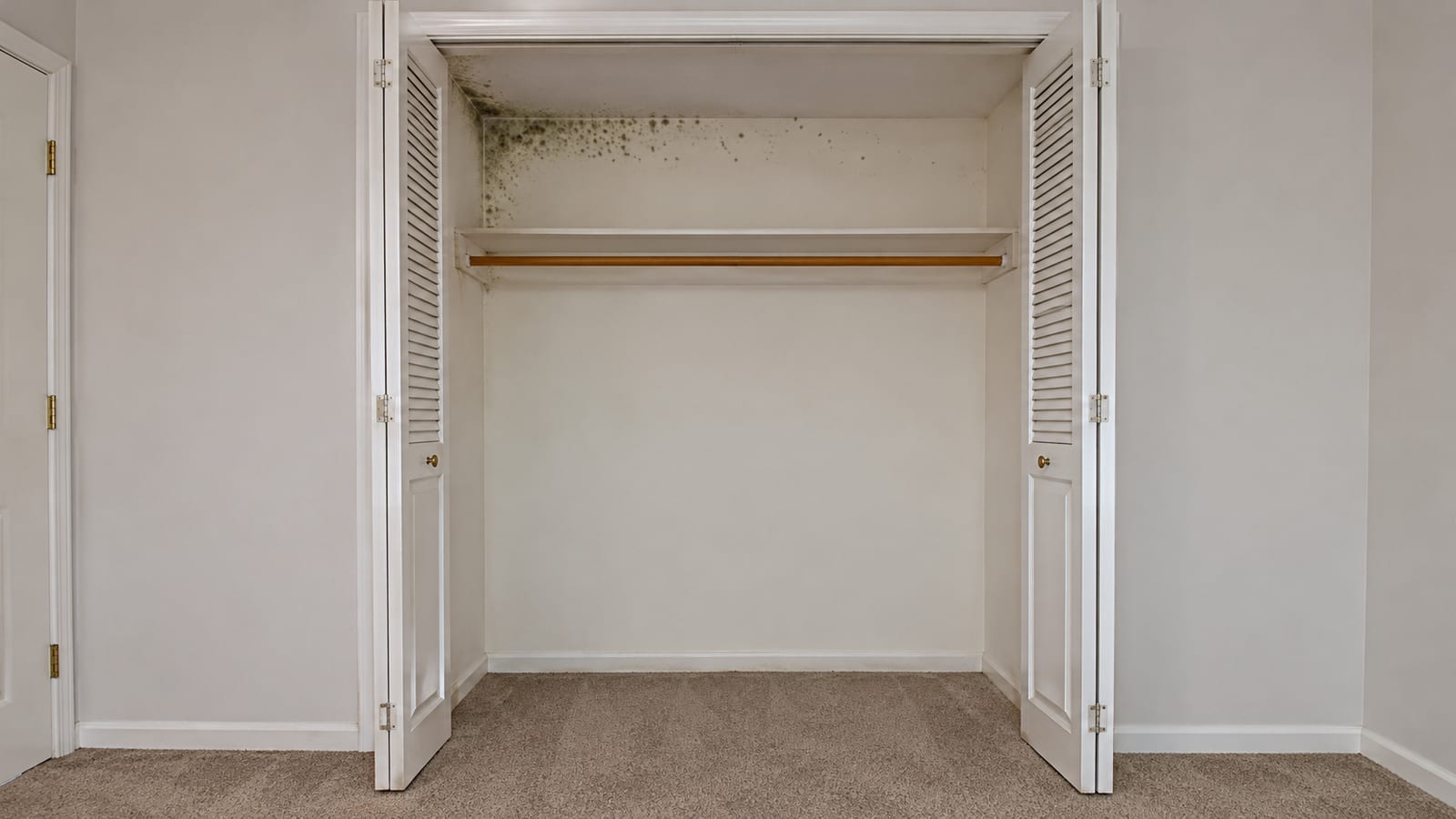
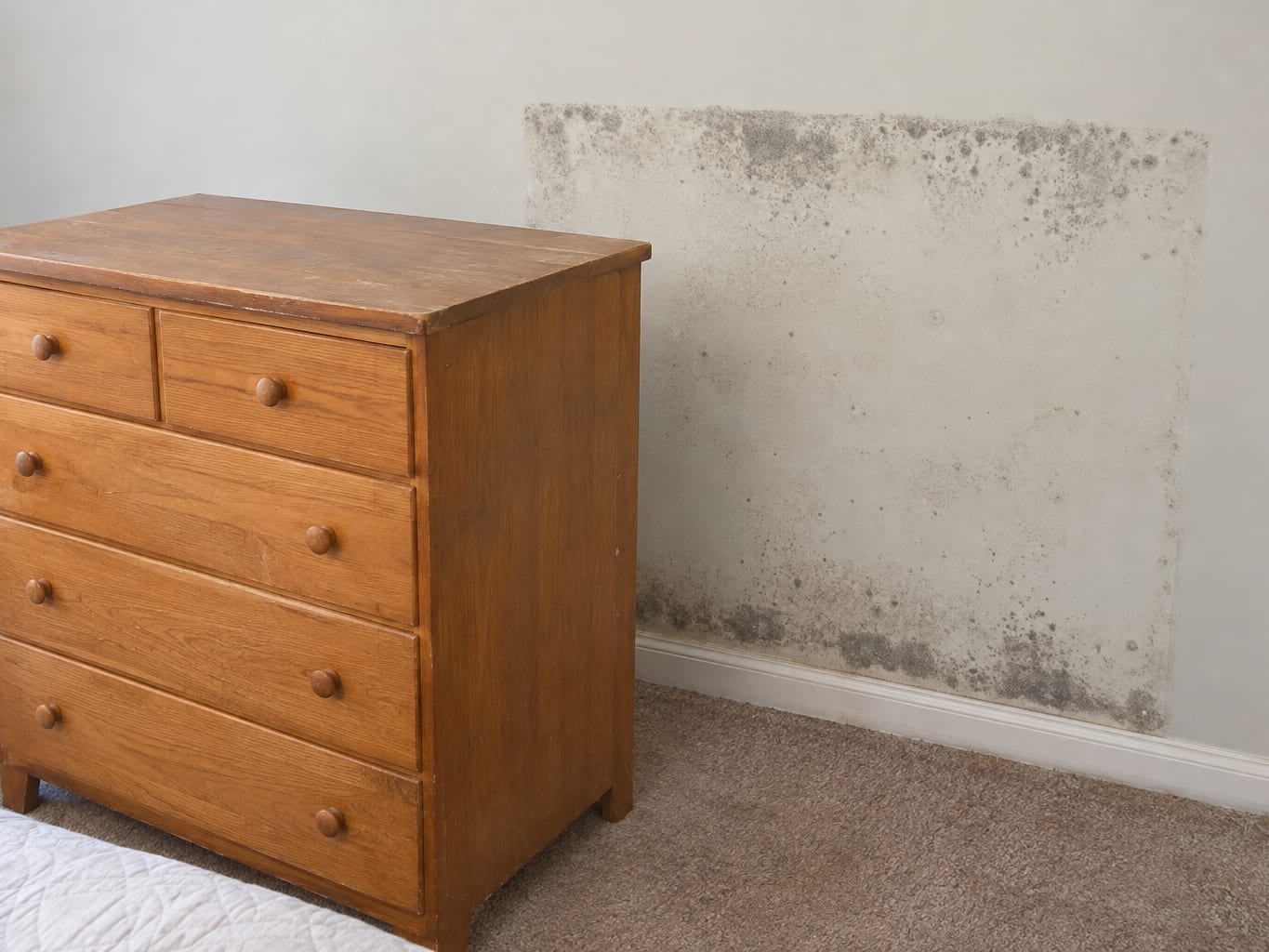
Once the heat comes on, some New Jersey homes start to show it: water beading on the windows, dark spots in a closet corner, dark marks on an exterior wall behind the dresser. Winter condensation mold on walls follows a simple pattern, and the pattern tells you a lot about what to do next.
Humid indoor air touches a surface that is colder than the air's dew point, the temperature at which air can no longer hold its moisture, and the moisture turns to liquid. Windows, exterior corners, poorly insulated walls and the wall behind a packed closet are the cold surfaces. Slow air keeps the spot wet longer.
A cold wall adds no moisture of its own, so indoor humidity and air movement matter as much as the wall temperature. A few checks tell you whether you are looking at air and a cold surface or at a leak that needs tracing.
Key Takeaways
Condensation needs three things
ENERGY STAR's building-science guidance names indoor and outdoor temperatures, relative humidity and air speed across the surface as the factors behind it.
Start near 30 to 40 percent humidity and adjust
ENERGY STAR gives 30 to 40 percent relative humidity as the general heating-season range in colder climates to help prevent window condensation, and you lower it if condensation continues.
Size decides who cleans
New Jersey's mold guidance puts areas under 10 square feet within reach of homeowner or maintenance cleanup, 10 to 100 square feet in professional-advice territory, and over 100 square feet with a qualified contractor.
Winter Condensation Starts Where Humid Air Meets a Cold Surface
ENERGY STAR's building-science guidance says condensation occurs when an interior surface is colder than the dew point of humid indoor air. Colder surfaces condense moisture more easily, and slower air gives condensation more time to form. Relative humidity is the share of water vapor the air holds compared with the most it can hold at that temperature, and warm air holds more than cold air.
That explains wet windows: the inside of the glass can be far colder than the room. The same mechanism works on an exterior-wall closet, an exterior corner or the wall behind a large piece of furniture. A thermal bridge, a spot in the building shell that conducts heat more readily than the wall around it, can leave one patch of interior surface colder than the rest and more likely to reach the dew point.
Closets and furniture make it worse by keeping warm room air away from the cold wall. A closed closet door, tightly packed clothing, shelving or a dresser pushed against an exterior wall slows the air along the surface. Mold needs moisture to grow, and the New Jersey Department of Health says mold problems usually occur when there is excess water.
Look for Spots on Windows, Closet Corners, Exterior Walls and Behind Furniture
Water that beads or runs down the inside of a window after the heat comes on is the first sign. Dark spotting then appears in closet corners, behind furniture, near baseboards, on exterior-facing walls and around window trim. The affected wall often feels colder than the walls nearby, and the spots concentrate where air is stagnant: behind a dresser, inside a packed closet, in a corner.
Winter is a high-risk season for this kind of growth because heated indoor air carries moisture and exterior-facing surfaces turn cold. Leaks and flooding can lead to mold in any season, so winter condensation should not be assumed to be the only moisture source.
What Can Be Mistaken for Mold on Walls?
EPA says paint on the back of drywall or wood, alkaline crystals on soil or concrete walls and carpet stains can look like mold. Alkaline crystals are usually water-soluble, unlike mold growth, and dirt and soot can also pass for it. If the appearance is uncertain, the material is porous or the wall has a moisture history, an experienced evaluation can settle it. Appearance does not identify a substance, and color alone does not tell you the species or the health risk.
The Moisture Pattern Tells You Whether to Look at the Air or for a Leak
A condensation pattern sits on cold surfaces and returns after the heat comes on. A leak is more likely when the evidence follows a water route. The table sets the two side by side.
Hover or tap a row to highlight it.
| What you see | Points toward condensation | Points toward a leak |
|---|---|---|
| Where it sits | Cold surfaces: window trim, exterior corners, behind furniture, closets on exterior walls | Along a roofline, window opening, pipe, gutter or foundation route |
| When it appears | Cold weather, after the heat comes on, with wet windows and elevated humidity | After rain, snow or plumbing use, or independent of cold weather |
| The material | The wall feels colder than nearby walls, with spots where air is stagnant | Soft or swollen drywall, a localized tide mark, bubbling paint, staining that spreads downward |
| After you lower humidity | Wet windows and recurrence after the heat comes on support condensation | The area stays wet, or keeps expanding |
A condensation pattern does not prove there is no leak, and a single humidity reading does not prove the wall is safe. A musty odor or visible growth behind wallpaper, baseboards or inside a wall cavity can indicate hidden moisture, and EPA notes that moisture meters, borescopes and experienced investigation may help locate it. No visual pattern alone proves the source. The Department of Health recommends inspection when a mold problem cannot readily be traced to a leak, and the inspection should look at both excess humidity and water entry.
What to Do in the First Hour, the First Day and the First Week
In the first hour, photograph each affected spot before you touch it. Note whether the surface is wet, whether water appears after rain or snow, and whether the pattern follows a window, roofline, pipe, exterior corner or foundation wall. Check indoor humidity with a gauge if you have one, and compare the affected room with a central living area. Wipe the window condensation, dry the sill and wall, and slide furniture away from the exterior wall. Stop using a humidifier until you understand the pattern.
By the next day, see whether the marks return after drying. Look at the outside of the wall, the roof, gutters, window flashing and nearby plumbing where you can reach them, and watch for bubbling paint, soft drywall, swollen trim or staining that spreads. Run bathroom and kitchen exhaust fans during showers and cooking, and confirm they vent outdoors. If you rent, notify the landlord in writing.
Over the week, keep a short log of indoor humidity, outdoor weather, condensation and recurrence. Arrange an inspection when the source is unclear, the area is large, the wall is soft or wet, mold may be hidden or the problem returns after cleaning. Have the moisture source corrected before you repaint, seal or rebuild.
The First Hour, Day and Week
- 1
In the first hour
Photograph each affected spot before you touch it, note whether the surface is wet and whether the pattern follows a window, roofline, pipe, exterior corner or foundation wall, check indoor humidity, wipe the window condensation, slide furniture away from the exterior wall and stop using a humidifier.
- 2
By the next day
See whether the marks return after drying, look at the outside of the wall, roof, gutters, window flashing and nearby plumbing, run bathroom and kitchen exhaust fans that vent outdoors, and notify a landlord in writing if you rent.
- 3
Over the week
Keep a short log of indoor humidity, outdoor weather, condensation and recurrence, and arrange an inspection when the source is unclear, the area is large, the wall is soft or wet, mold may be hidden or the problem returns after cleaning.
- 4
Before you rebuild
Have the moisture source corrected before you repaint, seal or rebuild.
Lower Humidity, Move Air and Warm the Cold Spots
EPA recommends keeping indoor relative humidity below 60 percent, ideally between 30 and 50 percent. For winter, ENERGY STAR says indoor humidity in colder climates should generally be 30 to 40 percent to help prevent window condensation. Treat that as a starting range. If condensation continues, lower the setting, especially with older windows, cold exterior corners, poorly insulated walls or strong thermal bridges. Visible condensation is a signal to reduce moisture and look at the cold surfaces, because the humidity a room can hold without condensing depends on surface temperature, window type, insulation, air movement and outdoor temperature.
Reduce or stop humidifier output while condensation shows, and clean and refill the humidifier as the manufacturer directs. Run exhaust fans that vent outdoors during moisture-producing activities, and vent the clothes dryer outdoors. ENERGY STAR's dehumidifier page notes that some portable units perform poorly in rooms below 65°F because frost can form on the coils.
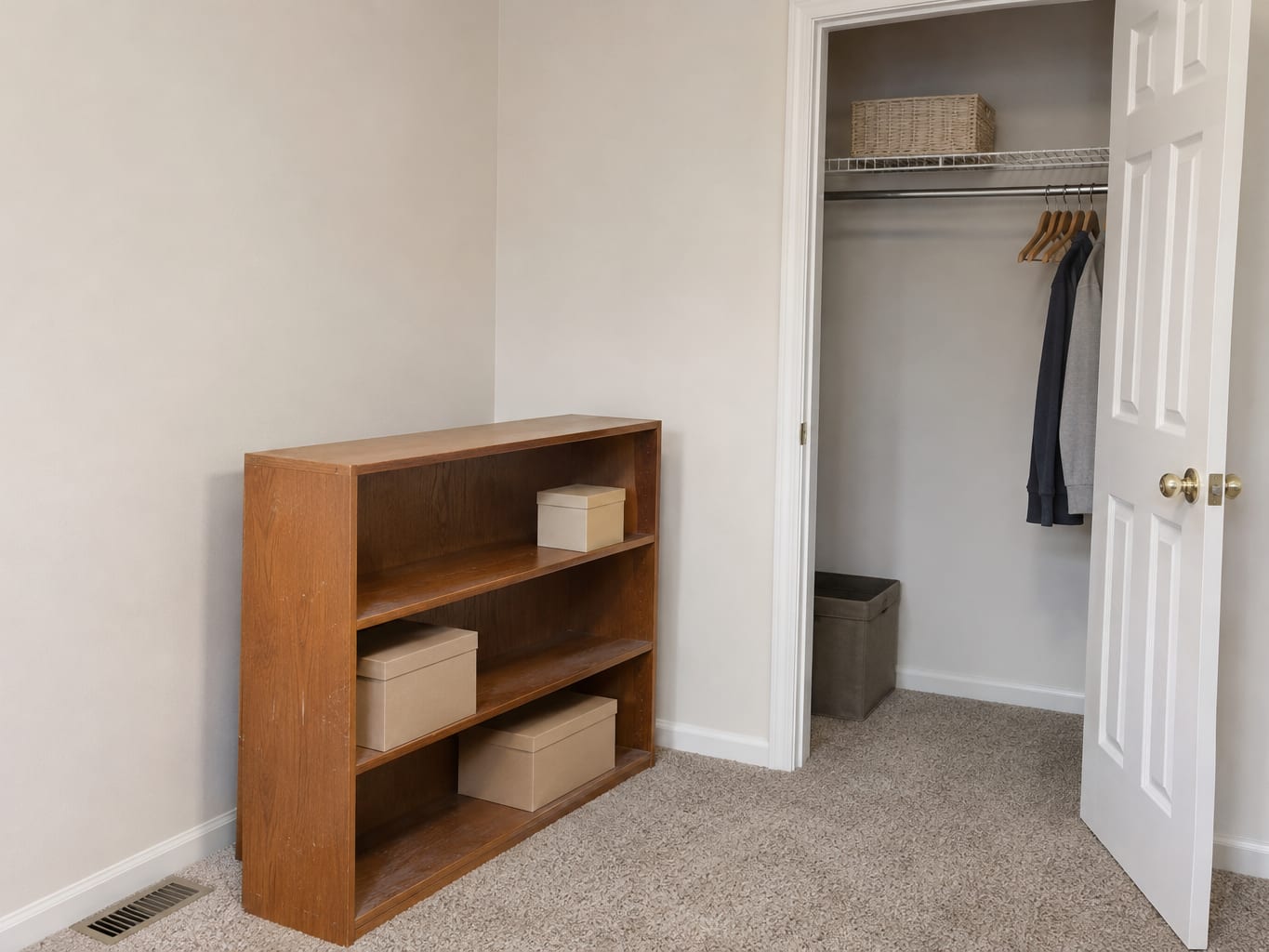
Air movement helps, within limits. Leave space between furniture and exterior walls so warm room air reaches the wall, avoid packing closets against exterior walls, open closet and interior doors now and then, and keep supply registers clear. Air movement can reduce cold-surface condensation, but it does not replace repairing a leak or filling in missing insulation.
Then look at the cold surface itself. Check for missing or compressed insulation at exterior corners and behind closets before a wall is closed up, and seal gaps around windows, doors, attic hatches and plumbing vents. Avoid trapping wet materials behind paint, caulk or new finishes.
Ways to Reduce Winter Condensation
Start near 30 to 40 percent humidity
Treat it as a starting range for the heating season and lower the setting if condensation continues.
Reduce humidifier output
Cut back or stop while condensation shows, and clean and refill the humidifier as the manufacturer directs.
Vent moisture outdoors
Run exhaust fans that vent outdoors during showers and cooking, and vent the clothes dryer outdoors.
Keep air moving
Leave space between furniture and exterior walls, avoid packing closets against exterior walls and keep supply registers clear.
Warm the cold spots
Check for missing or compressed insulation at exterior corners and behind closets, and seal gaps around windows, doors, attic hatches and plumbing vents.
Clean Small Areas Safely and Know When to Bring in Help
For a small area, stop the moisture first. Wear gloves and goggles, plus respiratory protection suited to the work. Clean hard surfaces with detergent and water, then dry them completely. Do not paint, caulk or seal wet or moldy material, and replace porous material with embedded growth that cannot be cleaned and dried. People with asthma, serious allergies, chronic lung disease or a weakened immune system should stay out of the cleanup, and CDC's mold health guidance covers who is most at risk.
EPA's current guide says routine use of a chemical or biocide such as chlorine bleach is not recommended during mold cleanup, and CDC warns never to mix bleach with ammonia or other cleaners. Dead mold can remain allergenic, which is why cleaning and correcting the moisture both matter. EPA says cleanup is complete when the moisture problem is fixed, visible mold and moldy odors are gone, and the area shows no renewed water damage or growth.
New Jersey's mold guidelines, dated June 16, 2017, sort jobs by size.
Hover or tap a row to highlight it.
| Affected area | Suggested approach |
|---|---|
| Under 10 square feet | May suit homeowner or building-maintenance cleanup |
| 10 to 100 square feet | Professional advice is appropriate |
| Over 100 square feet | A qualified contractor experienced in mold or environmental-contamination cleanup |
Visible growth usually does not call for routine air sampling, according to EPA. Testing may help when it would change a decision, such as an unclear source, a health concern or confirming a cleanup. When the job is larger than you can handle, or the growth keeps returning, our residential mold remediation team handles containment and removal.
Tenants and Insurance: Notify in Writing and Keep Records
If you rent, tell the landlord in writing, describing the location, the moisture pattern and the dates, and provide access for repairs. The Department of Community Affairs says tenants have rights to safe, sanitary and habitable housing, and its habitability bulletin lists leaks and mold among serious conditions. The Department of Health advises renters with unrepaired leaks to contact the local building-code office. Before withholding rent or repairing and deducting, speak with an attorney, because the DCA bulletin is informational.
Insurance depends on the policy, the cause of loss, its exclusions, endorsements and timing. Recurring condensation is not automatically treated like a sudden pipe break or storm loss, so ask the insurer how your policy treats the documented cause. The state insurance department's claims guidance says to report a possible loss promptly, photograph damage before disposal, keep damaged materials until the insurer inspects them or gives disposal instructions, save receipts for temporary repairs and wait for the adjuster before permanent repairs.
Useful records include dated photographs, humidity readings, weather dates, a moisture timeline, written notices, inspection findings, repair invoices and drying records.
Records Worth Keeping
Dated photographs
Taken before you clean, repair or throw anything away.
Humidity readings and weather dates
A short log shows whether the problem follows cold weather.
Written notices
Notices to a landlord or an insurer, with the location, the moisture pattern and the dates.
Inspection findings
What the inspection found about the moisture and the affected materials.
Repair invoices and drying records
Proof of what was corrected and dried.
A Moisture Assessment Should Document Cause, Extent and Next Step
When the source is unclear, an assessment turns guesses into a record. It should separate condensation from active water entry, note the affected locations, materials, visible extent and moisture readings, and say whether the condition suits limited cleaning or needs containment, removal and drying. It should correct moisture before any cosmetic rebuild and end with a written scope and completion documentation you can hand to a landlord, insurer or buyer.
Our residential mold inspection works toward that record. If the evidence points to a plumbing, roof, window or foundation event, water damage restoration is the next step, and when drywall or trim has to come out, our drywall replacement after mold work rebuilds it once the moisture is under control.
Frequently Asked Questions About Winter Condensation Mold on Walls
What time of year is worst for mold?
For condensation-related growth, winter is a high-risk season, because heated indoor air carries moisture and exterior walls, corners and windows turn cold. Leaks and flooding can produce mold in any season.
What kills mold effectively?
EPA and New Jersey guidance focus on cleaning or removing the mold and correcting the moisture source. Hard surfaces can generally be cleaned with detergent and water and dried completely, and porous materials with embedded growth may need to be replaced.
How can you tell if your house has poor air quality?
EPA lists condensation on windows or walls, stuffy or smelly air, dirty heating or cooling equipment and moldy belongings as signs that ventilation may be inadequate. Symptoms such as headaches, fatigue or coughing have many possible causes, so discuss them with a physician. Sudden headache, dizziness, nausea or confusion near fuel-burning equipment needs urgent attention because carbon monoxide is a possible cause.
Do I need a mold test?
EPA says routine sampling is usually unnecessary when mold is visible, and that no federal limits make indoor spore sampling a compliance test.
Winter Condensation Quick Check
1. What happens when humid indoor air touches a surface colder than its dew point?
2. What heating-season humidity range does ENERGY STAR give as a starting point in colder climates?
3. Which sign points toward a leak rather than condensation?
4. Under New Jersey's guidance, who handles an area over 100 square feet?
Pick an answer to begin.
Moving Forward
Winter condensation comes from humid air meeting cold surfaces, and the fixes follow from that: start near 30 to 40 percent humidity and lower it if condensation continues, keep air moving across closets and exterior walls, and warm the cold spots where insulation is thin. If the pattern does not fit condensation, trace the leak.
Cleaning without correcting the moisture usually lets the problem return, so a short log of humidity, weather and recurrence is worth the few minutes it takes.
If dark spots keep coming back, a wall stays wet after you lower the humidity or you cannot tell whether you have condensation or a leak, ExecPro Restoration & Cleaning can inspect the moisture and document what we see for your New Jersey home. Call us at (888) 300-3772 or reach us through our contact page, and tell us where the spots are and when they appear.
Winter Condensation Terms
Tap a term to see what it means.
Dew point. The temperature at which air can no longer hold its moisture, so the moisture turns to liquid.
Related Articles
Mold Risk in New Jersey by Season and What to Check
When is mold worst in New Jersey? Indoor mold follows moisture all year. Get a check for summer, fall, winter and spring, plus first-day steps and next calls.
Buying a House With Mold: When to Walk Away or Repair
Found mold during a home inspection in New Jersey? See which findings are fixable, which mean walking away, and what to ask before attorney review ends.
What Looks Like Mold on Walls: Common Stains and Their Causes
Spots or staining on a wall and not sure if it is mold? Learn how to tell mold from mildew, dirt and water stains, and when to get an inspection.