
Mold in Washing Machines: Cleaning Gasket, Drawer and Drum
Cal HewittPublished
- mold remediation
- moisture control
- moisture source
- new jersey
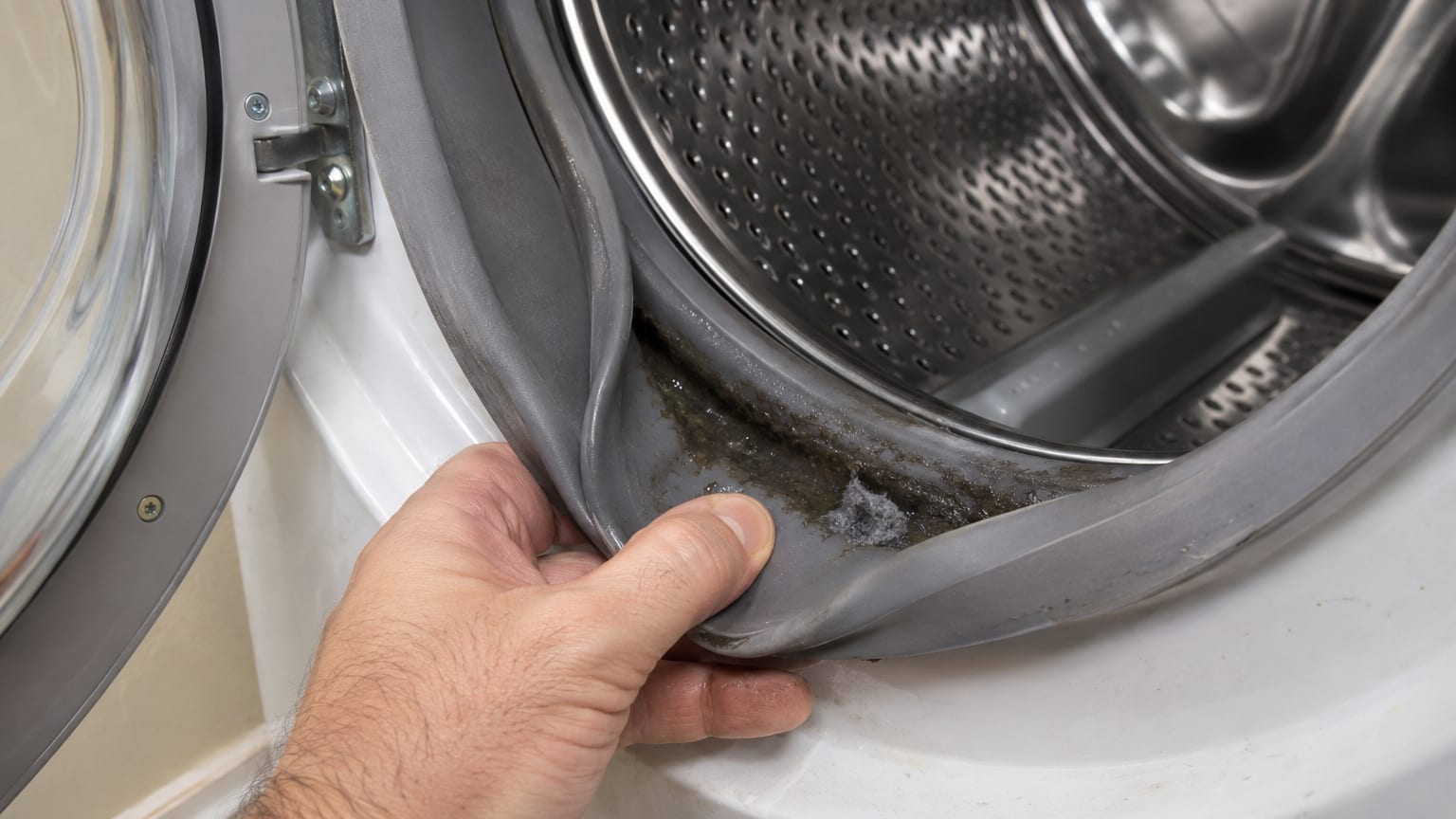
A musty smell comes off a load of towels you just washed, or you pull back the rubber door seal and find black, slimy buildup in the fold. Mold in a washing machine is common, and the first question is whether this is residue the washer's own cleaning steps can handle or a sign that water is going somewhere it should not.
The parts to check, in the order most people come across them, are the door gasket, the detergent drawer, the drum and the pump filter. LG and Samsung both publish a cleaning step for each one, and each step comes with a caution worth reading before anything goes into the machine.
If the washer is leaking, the floor is wet, or the smell is closer to sewage than mildew, stop using it and read the section on drains, hoses and floors first. Otherwise you have time to work through the parts one at a time with your manual in hand.
Key Takeaways
Start with the manual
LG and Samsung publish model-specific cleaning steps for the gasket, drawer, drum and pump filter, and the product your manual names is the one to use.
Never mix cleaners
Bleach and vinegar together make chlorine gas, so use one or the other only where your manual allows it, and never put undiluted bleach on the gasket.
Empty means empty
A tub-clean or self-clean cycle runs with nothing inside, and the door stays open afterward so the washer can dry.
Water outside the machine changes the job
A leak, slow drain, sewage smell or damp floor, baseboard or wall points past the appliance, and wet building materials should dry within 24 to 48 hours.
Renters and insurers need notice early
Report leaks right away, photograph everything, and call your insurer before you throw damaged property away.
Why Catching Washer Mold Early Protects More Than the Laundry
Mold needs moisture to grow, and a washer is built to be wet. EPA calls moisture control the key to controlling mold indoors and recommends keeping indoor relative humidity below 60 percent, ideally between 30 and 50 percent. A front-load washer's door gasket has folds that hold lint, hair, detergent residue and water, and LG and Samsung both point to the gasket, the drawer, the tub and the pump filter as places that trap moisture or residue.
The smell is the first reason to act, and it is not the only one. Samsung says clothes left wet in the machine for a long time can grow mold or bacteria directly on the fabric. If the washer leaks or drains badly, water can reach the floor, the baseboard or the wall behind it, and EPA says materials that cannot be cleaned and dried may need to be removed and replaced.
Health effects vary from person to person. EPA lists allergic reactions, asthma aggravation in people who are allergic to mold, and irritation of the eyes, skin, nose, throat or lungs as possible effects. If anyone in your home has symptoms you think are related to mold, talk to a physician.
The Signs of Mold in a Washing Machine, Part by Part
Most washer problems announce themselves through the nose or the eyes. You may notice a musty or mildew smell in the laundry room, the drum or freshly washed clothes. You may see black, gray, pink or slimy residue around a front-loader's rubber door gasket, leftover detergent or softener in the dispenser drawer, or standing water and sludge at the bottom of the drum. The answer below sorts what you see by where it shows up.
Where Washer Mold and Residue Collect
Door gasket
The folds in a front-loader's rubber seal hold lint, hair, detergent residue and water.
Detergent drawer
Leftover detergent or softener can sit in the drawer and its housing.
Drum and tub
Standing water and sludge can collect at the bottom of the drum.
Pump filter
Samsung says a dirty filter can cause odors.
How can you tell if there is mold in your washing machine?
Look for visible growth or dark, slimy buildup in the front-loader gasket, the detergent drawer, the drum and the area around the pump filter. A persistent musty smell is reason enough to inspect the washer and the moisture sources around it. Odor alone does not identify the type of growth, so the useful questions are where the smell is strongest and whether any water is sitting where it should not be.
Top-loaders generally do not have a front-door gasket, but the tub, the lid area, the dispenser, the agitator or impeller area and the drain system can still hold moisture and residue. LG explains that high-efficiency washers use less water, which lets soap and wash-load residue build up over time.
What to Do in the First Hour, First Day and First Week
In the first hour, stop using the washer if water is leaking, the floor is wet, the drain hose has come loose or the odor smells like sewage or burning. Take wet clothing out. Photograph the gasket, the drawer, the drum, the floor, the hoses and any visible water damage before you clean anything. If you rent, report the leak or moisture problem to the landlord, manager or superintendent right away, as EPA advises, and keep a written record of the notice.
Over the next day, clean only the parts and products your manual identifies and run its empty tub-clean or self-clean cycle if the washer has one. Check the position of the drain hose, the pump filter and the visible supply connections. Dry the gasket, the drawer and the drum, and leave the door or lid open where the manufacturer permits it. Look at the floor, the baseboard and the wall behind the washer for moisture.
Across the next week, watch whether the odor returns after repeated manufacturer-approved cleaning. If the washer keeps retaining water, leaking or smelling, arrange appliance service. If mold or water damage reaches beyond the appliance, arrange a moisture inspection. If you may file an insurance claim, contact your insurer before you discard damaged property and ask what documentation and coverage rules apply.
The First Hour, Day and Week
- 1
First hour
Stop using the washer if it is leaking, the floor is wet, the drain hose has come loose or the smell is like sewage, take wet clothing out, photograph the gasket, drawer, drum, floor and hoses, and report a leak to your landlord right away if you rent.
- 2
First day
Clean only the parts your manual names, run its empty tub-clean or self-clean cycle, check the drain hose, pump filter and supply connections, dry the gasket, drawer and drum, and look at the floor, baseboard and wall behind the washer.
- 3
First week
Watch whether the odor returns after repeated manufacturer-approved cleaning, arrange appliance service if the washer keeps leaking, retaining water or smelling, arrange a moisture inspection if damage reaches beyond the appliance, and call your insurer before discarding damaged property.
How to Get Rid of Washing Machine Mold, One Part at a Time
Cleaning instructions vary by model, and the owner's manual takes priority. The steps below follow what LG and Samsung publish, so treat them as examples of what your own manual likely says, and use the product and amount it names. Each part has its own step, and skipping one is a common reason an odor comes back.
Door gasket
LG's instructions say to remove foreign objects from the gasket groove, including the low spot at the six o'clock position. For the LG procedure written for certain models, you dilute three quarters of a cup (177 mL) of liquid chlorine bleach in 1 gallon (3.8 L) of warm or hot water. LG says vinegar may be used in place of the bleach, never together with it. Wipe the gasket surface, pull the lip back and clean underneath, then leave the door open to dry.
Detergent drawer
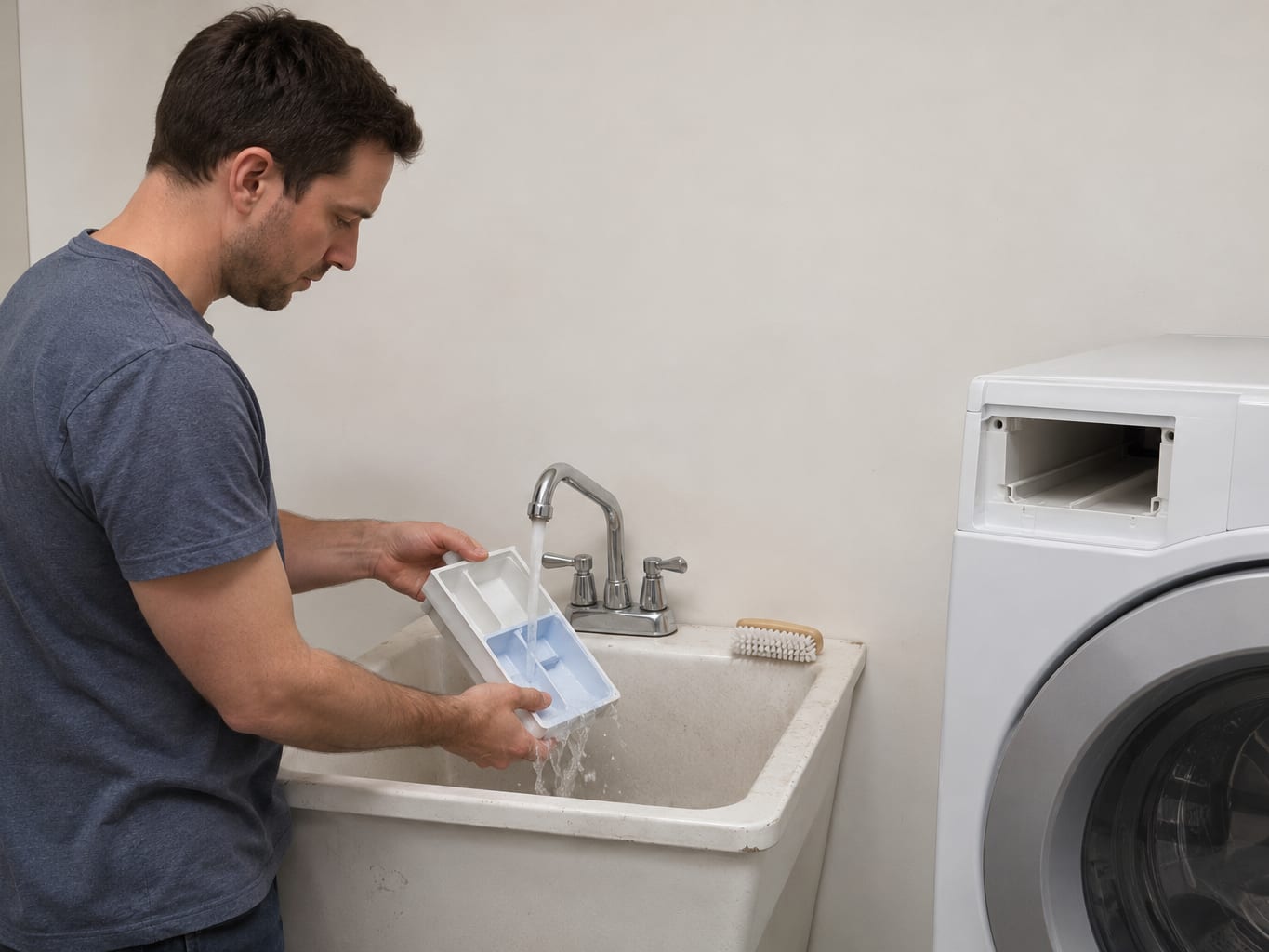
Samsung says to pull out the drawer, remove its inserts, rinse them in warm water and use a soft brush. Clean the drawer opening with a soft cloth or non-metallic brush, and dry the recess before you put everything back. LG's instructions are similar: separate the tray's attachments, clean them and the housing with warm water and a soft-bristle brush, then reinstall the parts.
Drum and tub
LG's tub-clean procedure requires an empty drum. Add the washing-machine tub cleaner your manual recommends, as a powder, liquid or tablet; LG says tablets go directly into the drum. Close the door and the dispenser, select TUB CLEAN and press start, then open both afterward to ventilate. Samsung also requires an empty tub for Self Clean or Pure Cycle, and warns that running it with items inside can damage the washer or its contents.
Pump or drain filter
On applicable LG front-load models, turn the washer off and unplug it, open the lower service panel and set a container beneath the drain area. Drain the leftover water through the small hose, remove the pump filter, clean it with a toothbrush, then reinstall the filter, the hose cap and the service cover. LG warns that the water may be hot. Samsung says a dirty filter can cause odors.
Is bleach or vinegar better to kill mold in a washing machine?
The model and the product instructions decide, so there is no single answer for every washer. LG's tub-cleaning guidance recommends a washing-machine tub cleaner, and its gasket instructions allow diluted bleach or vinegar, one or the other, and never undiluted bleach on the gasket.
Never mix bleach with vinegar. Poison Control says the combination makes highly irritating chlorine gas, and EPA and Poison Control's guidance on household cleaners both warn that bleach with ammonia can give off dangerous fumes. Do not combine washer cleaners, bleach, vinegar or detergent in one step unless the manual expressly allows it. Routine mold cleanup is about removing the contamination and controlling moisture, and EPA advises against trying to sterilize the area with a biocide.
Hover or tap a row to highlight it.
| Do not | What the sources say |
|---|---|
| Mix bleach with vinegar | Poison Control says the combination makes highly irritating chlorine gas |
| Mix bleach with ammonia | EPA and Poison Control warn it can give off dangerous fumes |
| Put undiluted bleach on the gasket | LG's gasket instructions allow diluted bleach or vinegar, one or the other, never undiluted bleach |
| Run a tub-clean or self-clean cycle with items inside | Samsung warns it can damage the washer or its contents |
| Combine washer cleaners, bleach, vinegar or detergent in one step | Only when the manual expressly allows it |
What the Tub-Clean Cycle Does and Why the Door Stays Open
The tub-clean, Clean Washer, Self Clean or Pure Cycle setting is the manufacturer's own treatment for the drum and the hidden tub surfaces, where LG says detergent residue, soil and moisture build up and cause odor. It works with the cleaner your manual names and an empty drum. If the smell remains after several cleaning attempts, LG directs owners to request service.
Hover or tap a row to highlight it.
| Task | What the manufacturer says |
|---|---|
| Tub-clean cycle (LG, September 2026 guidance) | Monthly |
| Tub-clean cycle when a musty smell already exists (LG) | Once a week for three weeks in a row |
| Tub-clean cycle (older LG maintenance page, June 2023) | Once or twice a month, depending on the model |
| Detergent drawer (Samsung, specified auto-dispenser model) | Wipe after each wash session; deep clean at least monthly |
The door or lid stays open afterward because a closed washer dries slowly. Samsung and LG both recommend leaving the door or lid open after use so moisture can leave.
When the Problem Is the Drain, Hose, Floor or Wall
Sometimes cleaning is not the answer, because the smell and the growth are the visible end of a water problem. A washer that holds water, drains slowly, leaks behind the machine or sits on a damp floor needs the water route fixed before any amount of gasket scrubbing will last.
Can a moldy washing machine be fixed?
Often, yes. Odor and residue can improve with manufacturer-approved cleaning and moisture control. A washer may need appliance service when the smell continues after repeated tub-clean cycles, the pump filter stays blocked, the machine does not drain, the drain hose is installed incorrectly or the appliance leaks.
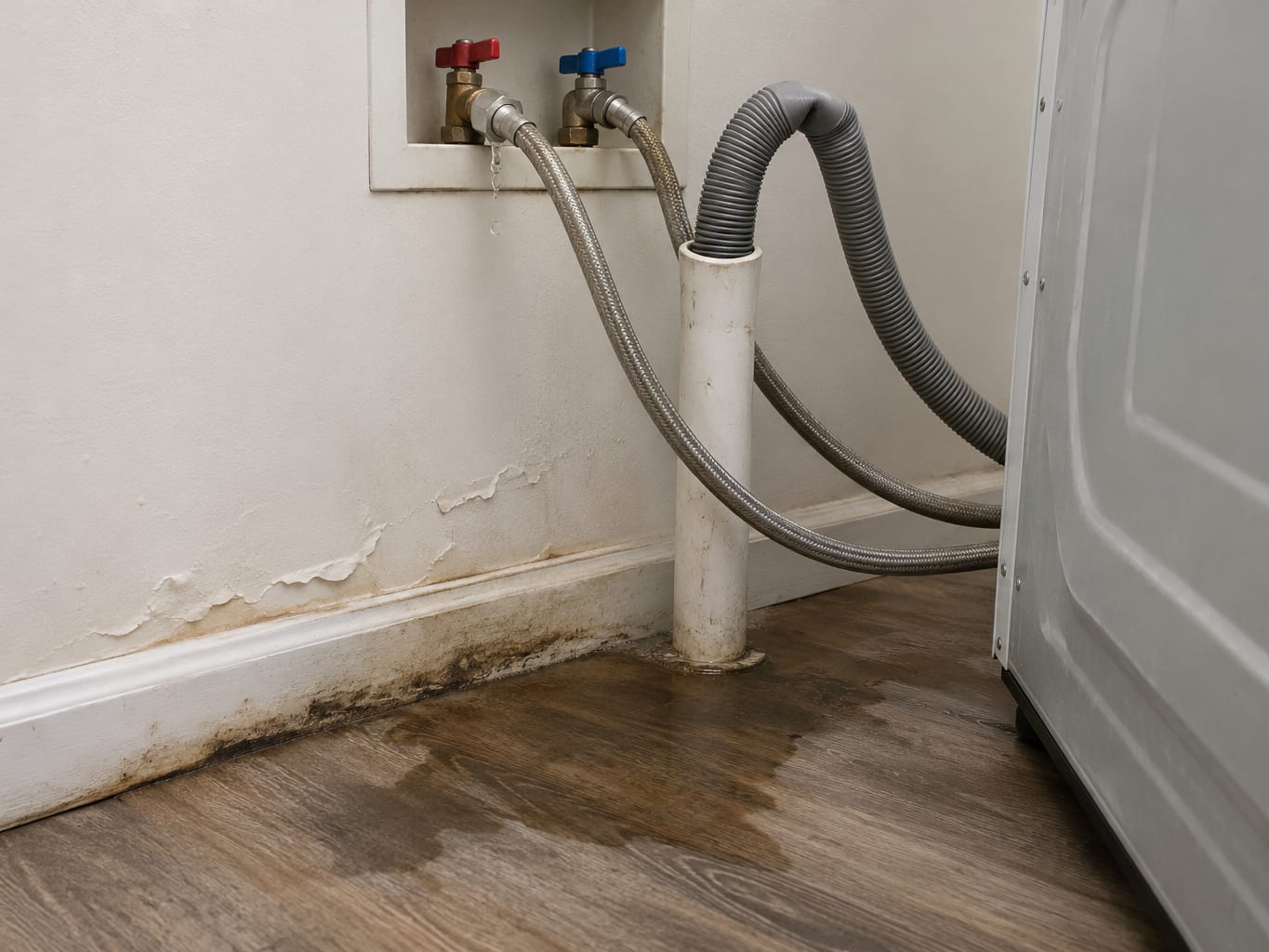
Water left in the drum, a kinked or badly positioned drain hose, drips at the supply hoses or valves, and a damp floor, baseboard or wall behind the machine all point past the appliance, as does a smell that resembles sewage rather than mildew. Samsung names improper drain-hose setup as a cause of washer odor, and LG says a clogged drain-pump filter can leave water in the drum and that foreign objects in the gasket can create gaps that let water leak.
Signs the Problem Is Past the Appliance
Water left in the drum
A drum that holds water after a cycle points to the drain or the pump filter.
A kinked or badly positioned drain hose
Samsung names improper drain-hose setup as a cause of washer odor.
Drips at the supply hoses or valves
Water appearing behind the machine rather than inside the gasket or drawer.
A damp floor, baseboard or wall
Moisture has reached the building materials behind the machine.
A smell like sewage
A smell that resembles sewage rather than mildew.
Once moisture has reached building materials, the job belongs to a different trade. EPA recommends fixing the leak right away, cleaning visible mold and drying the area completely. The NJDOH resident guidelines treat an area smaller than 10 square feet as manageable by a homeowner or building staff, recommend a professional opinion for 10 to 100 square feet and call for a qualified contractor above 100 square feet. Our mold remediation and water damage restoration pages cover the work once a washer leak has reached a floor, baseboard or wall.
New Jersey Rental, Insurance and Professional-Cleaning Questions
If you rent, the first step is notice to the landlord, manager or superintendent. The New Jersey Department of Community Affairs publishes landlord-tenant information, with the Truth in Renting guide as its principal publication. The DCA process guide says leaks or mold may be serious health and safety conditions in a habitability dispute, but a tenant must notify the landlord, give access for repairs and meet the applicable legal requirements. NJDOH directs renters with unresolved leaks to the local building-code office and says they may wish to seek legal advice, so ask an attorney what applies to your tenancy.
For insurance, the New Jersey Department of Banking and Insurance tells homeowners and renters to read their policies carefully, because coverage depends on the policy. Call your insurer promptly, ask for a coverage determination under your actual policy and ask before you discard damaged items. Write down the date and location of the odor, any visible growth and any leaks, plus the appliance model, your cleaning steps, service visits, landlord notices and the resulting damage.
What do professionals use to kill mold?
NJDOH's guidance centers on correcting the moisture source, removing or cleaning contaminated material and drying completely, and it does not name one chemical for residential washer mold. For extensive contamination, ask the contractor for a written plan that describes the moisture correction and the cleaning or removal methods. New Jersey has no state certification program for residential mold inspection, testing or remediation, and NJDOH's company lists are not endorsements, so judge a company by its qualifications, written scope and method.
If you want help with the laundry room around the washer, our residential deep cleaning services page describes that service, and a call to us will tell you whether your situation fits it.
How to Keep the Odor and Growth From Coming Back
Most of what keeps a washer fresh is drying it out and not overfeeding it. Samsung names wet clothing left in the washer as a common source of odor, and LG says too much detergent creates buildup and odor.
- Empty it promptly: Take clothes out as soon as the cycle ends.
- Let it dry: Wipe the gasket, drum and drawer with a clean, dry cloth, and leave the door or lid and the drawer open when your manufacturer permits it.
- Measure the detergent: Use the recommended HE detergent in the recommended amount, and do not exceed the dose, even when it is below the drawer's MAX line.
- Warm it up now and then: Samsung suggests an occasional warm or hot cycle when you normally wash cold, subject to your model's instructions, because cold water can leave detergent undissolved.
- Keep to the schedule: Run the tub-clean cycle and clean the pump filter at the intervals in your manual.
The room matters too. EPA recommends laundry-room humidity below 60 percent, ideally between 30 and 50 percent, and says to dry spills and leaks promptly and correct what caused them.
Frequently Asked Questions About Mold in Washing Machines
What kills mold on clothes in the washing machine?
The washer manufacturer's clothing-care instructions and the garment-care label decide. Clothes that stay wet in the machine can develop odor, and Samsung says prolonged wet storage can let mold or bacteria grow on the clothing itself. Do not add unapproved chemicals to a load or combine cleaning products.
How long can clothes be in the washer before mildew smells?
Samsung says clothes left in the washer for a long time hold moisture and are a common source of odor, and no fixed number of hours applies to every machine. Take clothing out as soon as the cycle ends.
Why does the odor come back after a clean cycle?
Residue in the gasket, drawer or pump filter, wet clothing, a closed door or too much detergent can all bring it back. If the smell remains after several manufacturer-approved cleanings, LG directs owners to request service, and a leak or slow drain needs repair rather than more cleaning.
Will insurance pay for the washer, floor or wall damage?
That depends on your policy. Notify your insurer promptly and ask for a coverage determination before you discard anything.
Washer Mold Quick Check
1. What happens when bleach and vinegar are mixed?
2. What should be inside the drum during a tub-clean or self-clean cycle?
3. What should you do with the washer door after a cycle?
4. Whose cleaning steps take priority for your washer?
5. Which sign suggests the problem is past the appliance?
Pick an answer to begin.
Final Thoughts
A musty washer usually comes down to a few places that stay wet: the gasket, the drawer, the drum and the pump filter. Clean each with the product your manual names, never mix cleaners, run the tub-clean cycle with the drum empty, and leave the door open so everything dries. When water is leaking, draining slowly or smelling like sewage, treat that as a repair first.
Keeping the washer dry and the detergent measured prevents most repeat trouble, and a floor, baseboard and wall that stay dry protect the building as well as the machine. Acting on the first musty smell is far easier than repairing wet drywall later.
If moisture has reached the floor, baseboard or wall behind your washer, ExecPro Restoration & Cleaning works on mold and water damage in New Jersey, and we would like to hear what you are seeing. Call us at (888) 300-3772 or reach us through our contact page.
Washer Mold Terms
Tap a term to see what it means.
Door gasket. The rubber seal on a front-load washer, whose folds can hold lint, hair, detergent residue and water.
Related Articles
Black Mold in the Toilet: What the Ring Is and How to Clean It
Black mold in toilet bowls can be a deposit, a mineral stain or a moisture sign. Learn what to clean, what never to mix, and when to call a plumber.
Mold Remediation Products: Reading the Label Before You Use One
Learn what each mold product is for, what an EPA registration and a 99.9% claim cover, and when a spray is the wrong answer for your New Jersey home.
Winter Condensation Mold on Walls, Closets and Windows in NJ
Wet windows and dark spots in closet corners? Learn why winter condensation mold forms, how to tell it from a leak, and what to do this week in New Jersey.