Black Mold in the Toilet: What the Ring Is and How to Clean It
Cal HewittPublished
- mold remediation
- black mold
- moisture source
- new jersey
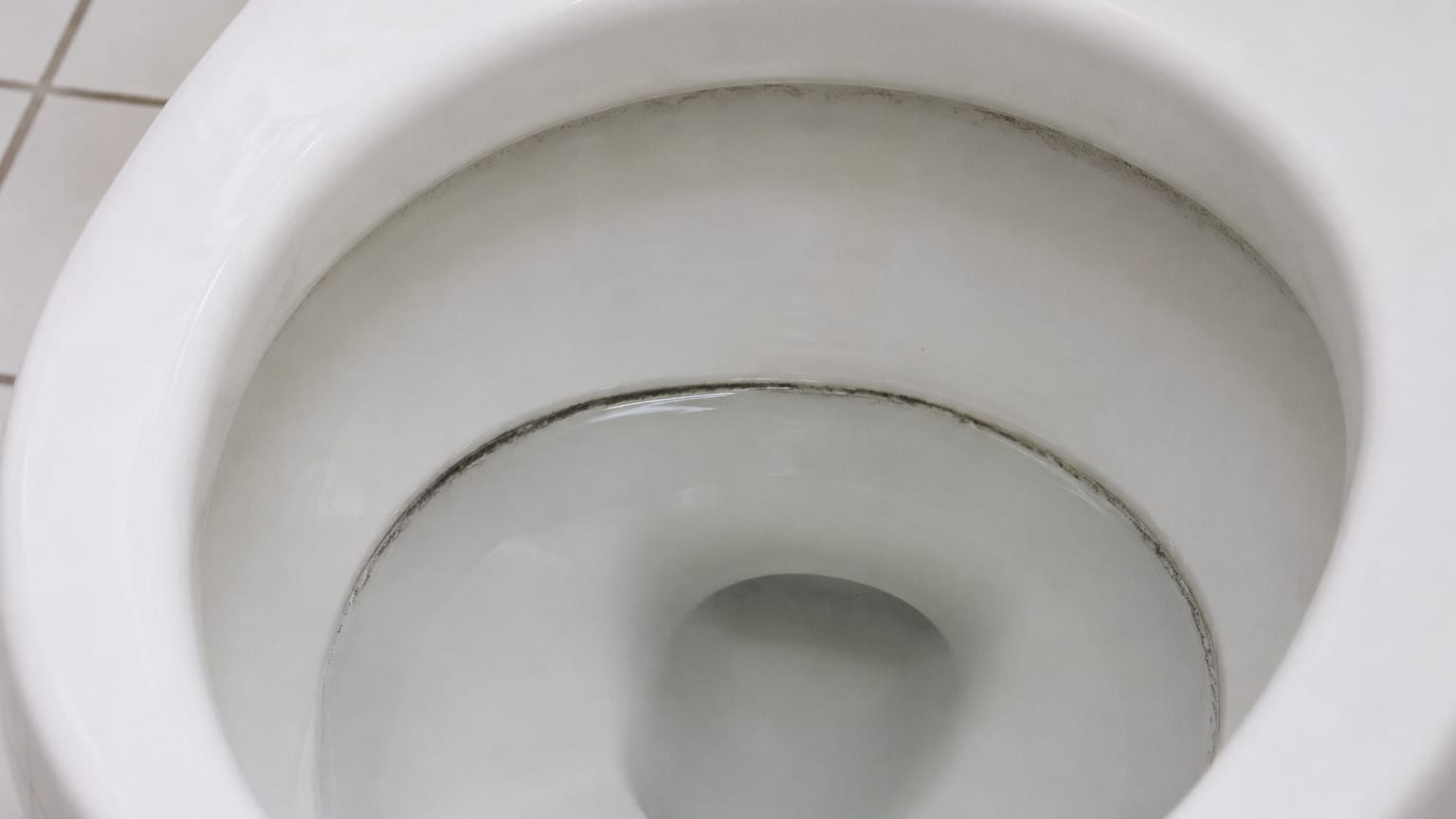
A dark ring at the waterline, or a black film under the rim, is the kind of thing you scrub away on Sunday and see again by Thursday. Black mold in the toilet is what most people call it, and the ring may be mold. It can also be a mineral deposit, a slime from bacteria or a stain carried in by the water.
Tonight, photograph the ring, the underside of the rim, the inside of the tank, the base of the toilet and the floor around it. Open a window or run the fan, put on gloves and eye protection, and use one cleaner at a time. Never mix one cleaner with another, and if you already used a chemical, flush well before adding anything else.
Tomorrow you can sort out which kind of ring you have, clean it without damaging the toilet and check whether the room is staying damp. A ring that keeps coming back has a cause behind it, and the sections below help you find the one that fits your bathroom.
Key Takeaways
Photograph before you clean
Dated pictures of the bowl, rim, tank, base and flooring give a landlord, insurer or plumber something to work from.
One cleaner at a time
Poison Control says bleach mixed with an acid forms chlorine gas, and bleach mixed with ammonia forms chloramine gas.
Match the ring to a cause
Penn State Extension ties black stains to manganese and slimy tank coatings to iron bacteria.
The same stain on several fixtures points to the water
With private well water, test for iron and manganese through a New Jersey certified laboratory.
Damp flooring, a rocking toilet, ceiling stains or a musty smell point to a moisture inspection
Those signs mean the problem is bigger than the bowl.
Is the Dark Ring Mold, Mineral Staining or a Water Problem?
Dark material in a toilet can come from several places, and each calls for a different fix. Before you clean, touch it with a gloved finger or a brush and note whether it is slimy, powdery, hard, gritty or wipes away easily. Note where it sits too, because a ring at the waterline, a film under the rim and a coating inside the tank can have different causes.
What is the black stuff in my toilet bowl?
It is usually one of these five materials, and sometimes more than one at a time.
- Manganese: Penn State Extension says it can leave black specks, black stains and gray or black standing water in tubs and toilet tanks.
- Iron bacteria: These form slimy strands, gelatinous deposits and tank coatings, and they feed on dissolved iron or manganese, according to Penn State Extension.
- Iron: It commonly causes orange, brown or reddish staining and often appears alongside manganese, says Penn State Extension.
- Hard-water deposits: Kohler names them as a cause of blocked rim holes. They are generally pale, white or gray rather than a soft black slime.
- Mold: CDC says it can grow around leaking pipes and other persistently damp areas, and the New Jersey Department of Health says mold spores need water to grow.
Pink or reddish slime on a fixture that stays wet is a different organism; Penn State Extension names the airborne bacterium Serratia marcescens as the cause. The look of a ring gives clues but does not settle one cause, so compare the toilet with your other fixtures and the room around it.
Hover or tap a row to highlight it.
| Material | What the sources describe | Named by |
|---|---|---|
| Manganese | Black specks, black stains, and gray or black standing water in tubs and toilet tanks | Penn State Extension |
| Iron bacteria | Slimy strands, gelatinous deposits and tank coatings that feed on dissolved iron or manganese | Penn State Extension |
| Iron | Orange, brown or reddish staining, often alongside manganese | Penn State Extension |
| Hard-water deposits | A cause of blocked rim holes, generally pale, white or gray rather than a soft black slime | Kohler |
| Mold | Can grow around leaking pipes and other persistently damp areas, and needs water to grow | CDC and the New Jersey Department of Health |
Why Does Black Mold Keep Coming Back in the Toilet?
A ring that returns soon after cleaning usually means the condition behind it is still in place. CDC and the New Jersey Department of Health both put the emphasis on correcting the moisture source rather than treating the visible material again and again.
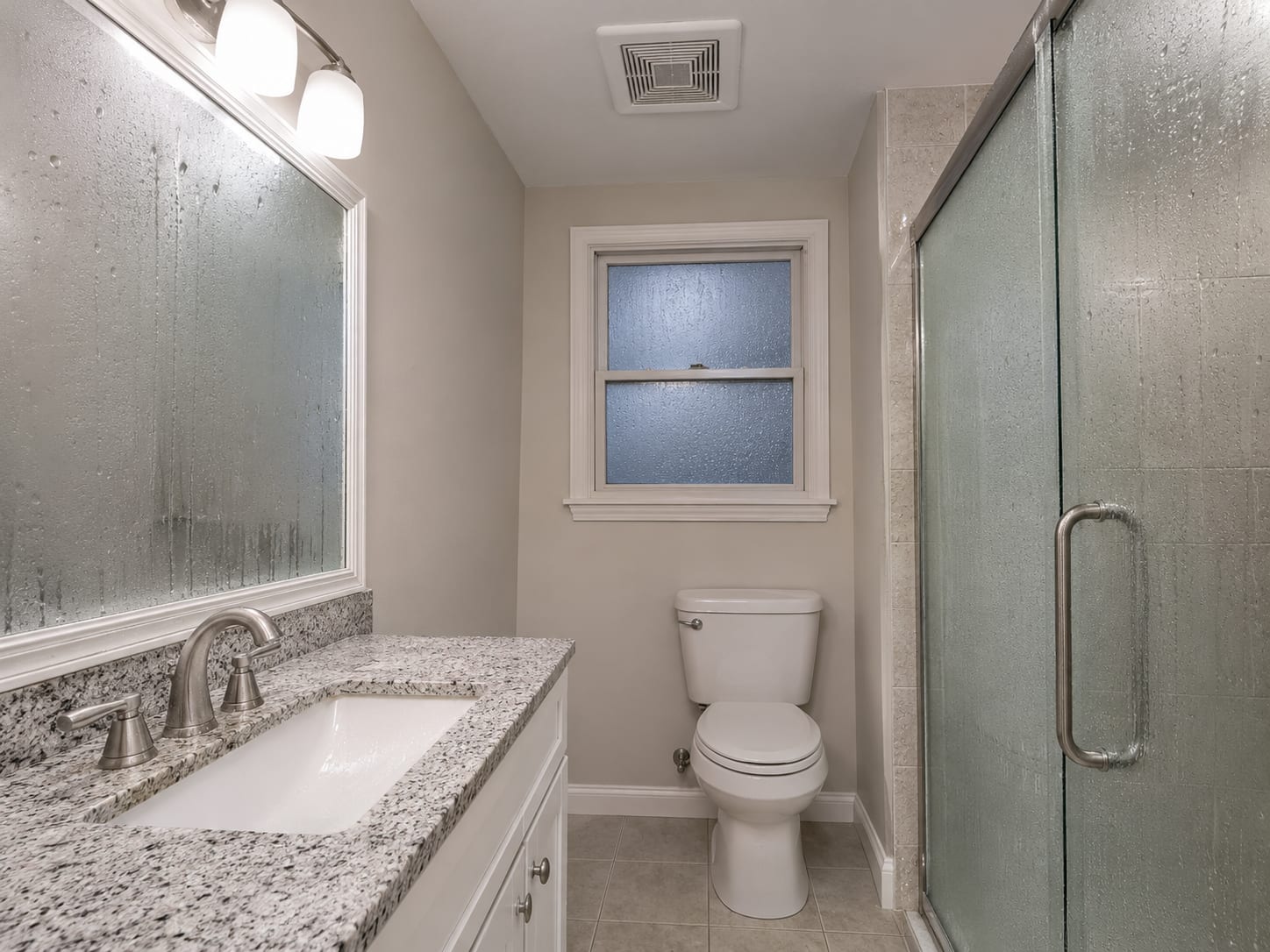
Steam and humidity come first. The Department of Health says bathroom mold commonly results from excess water or steam, and CDC recommends keeping indoor humidity no higher than 50%, venting bathrooms outdoors and repairing plumbing leaks. A fan that ends in an attic or a wall cavity pushes wet air into a hidden space.
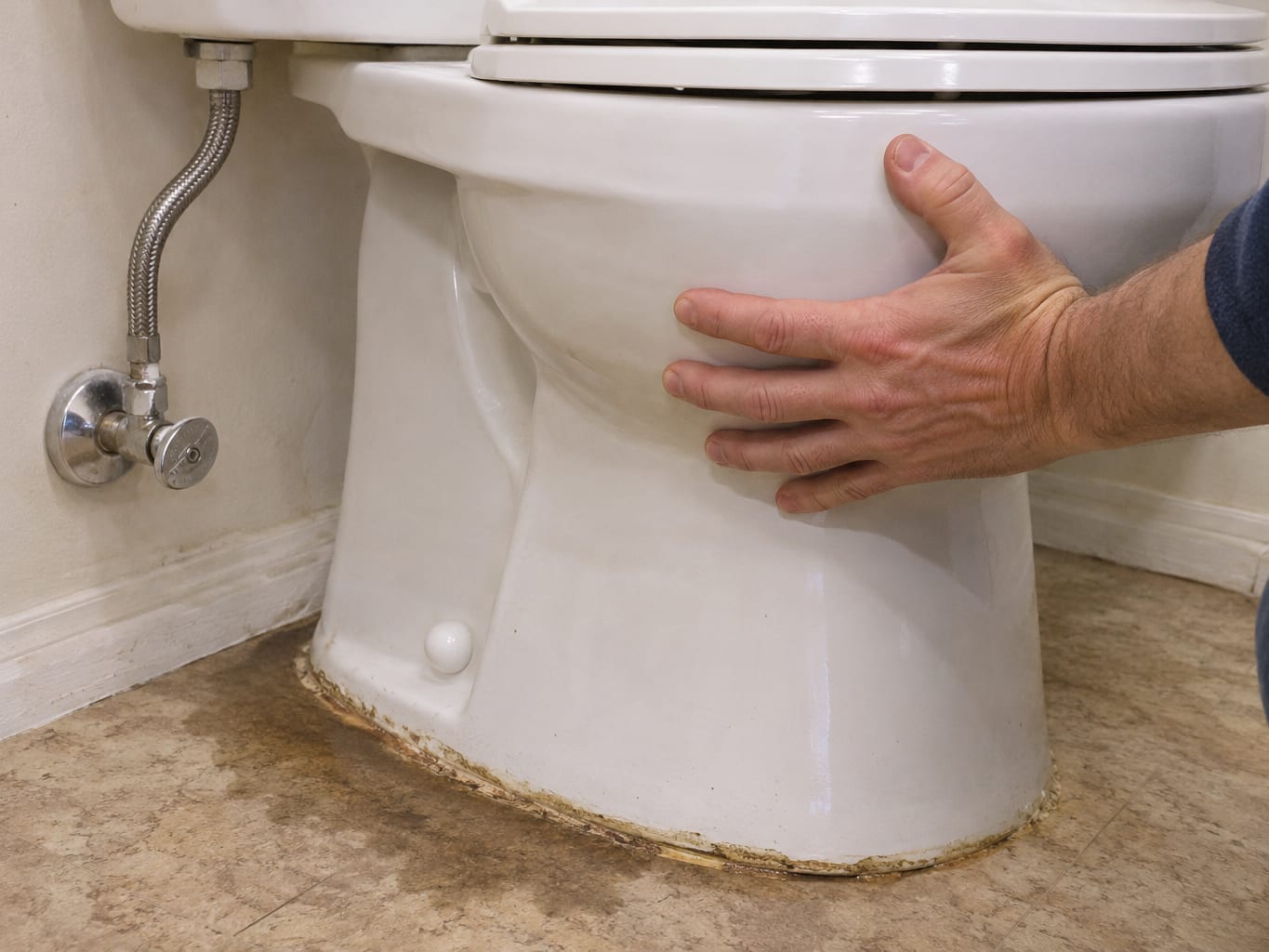
Leaks come next. A leaking toilet base, supply connection, tank part or nearby pipe can keep the floor and the underside of the fixture wet long after the bowl is clean.
The water itself is the third cause. Manganese and iron in private well water can produce recurring stains, and Penn State Extension says a toilet tank can provide the conditions iron bacteria need. A toilet that sits unused for long stretches, such as one in a guest bathroom, may also let deposits settle undisturbed, so clean and flush it on a routine you can keep.
How Do You Clean Black Mold in a Toilet Without Damaging It?
For a small amount of growth on a hard toilet surface, ordinary cleaning is the right start. The EPA says mold areas under about 10 square feet can generally be cleaned by a homeowner, and a ring in a bowl is far smaller. Use a product labeled for toilet use and keep the room ventilated.
Cleaning a Small Ring, Step by Step
- 1
Protect yourself and ventilate
Put on gloves and eye protection, and open a window or run the fan.
- 2
Choose the cleaner
Use soap and water, or a toilet cleaner labeled for the surface, and direct bowl cleaner under the rim and onto the inside of the bowl only.
- 3
Brush the bowl and rim jets
Follow the label for contact time and rinsing, and keep splashes away from your face.
- 4
Flush and rinse the brush
Flush the toilet, then rinse the brush.
- 5
Dry and look for moisture
Dry the surrounding surfaces and look for any leak or dampness that could bring the growth back.
1. Put on gloves and eye protection, and open a window or run the fan. 2. Use soap and water, or a toilet cleaner labeled for the surface, and direct bowl cleaner under the rim and onto the inside of the bowl only. 3. Brush the bowl and rim jets, follow the label for contact time and rinsing, and keep splashes away from your face. 4. Flush, then rinse the brush. 5. Dry the surrounding surfaces and look for any leak or dampness that could bring the growth back.
What kills black mold in a toilet?
Removing it matters more than killing it. The EPA says routine use of bleach or another biocide is not recommended for mold cleanup, and that dead mold can still cause allergic reactions. Growth on a hard surface should be physically removed with an appropriate cleaner, then dried while the moisture source is corrected. CDC says a bleach solution of no more than 1 cup of household laundry bleach per gallon of water is an option for hard surfaces, alongside soap and water. If you use a disinfectant, follow its label.
Does white vinegar kill mold in the toilet?
Reach for a product labeled for toilet use and follow its directions. Vinegar is an acid, and Poison Control warns that acids can form chlorine gas when they meet bleach. If bleach, an acid toilet cleaner or any other chemical has already been in the bowl, flush thoroughly before you use anything else. If you breathe fumes and start coughing or wheezing, step into fresh air and call Poison Control or a physician.
Which Cleaner, Tools and Tank Products Are Safe for the Toilet Itself?
The glazed ceramic of a toilet, called vitreous china, wears under the wrong tools, and the parts inside the tank react badly to some chemicals. Kohler's care instructions are the most direct guide to what the toilet can take, and your own model's manual is the final word.
Keep Chemicals Separate
Bleach and an acid
Poison Control says the mix forms chlorine gas, and vinegar is an acid.
Bleach and ammonia
Poison Control says the mix forms chloramine gas.
A chemical already in the bowl
Flush thoroughly before you use anything else.
Anything poured into the tank
Only a product the toilet's maker approves, because in-tank cleaners can damage flush valves and other parts.
Abrasive tools
Skip abrasive cleaners, scouring pads and solvents, which can damage the surface.
Fumes that make you cough or wheeze
Step into fresh air and call Poison Control or a physician.
What is the best toilet bowl cleaner to remove mold stains?
No single cleaner is best for every toilet, stain or material. Kohler recommends a commercial cleaner made for hard-water deposits when minerals are involved, following the label, and using toilet-bowl cleaner only inside the bowl. Skip abrasive cleaners, scouring pads and solvents, which can damage the surface.
What can I dump in a toilet tank to kill mold?
Nothing the toilet's maker has not approved. Kohler warns that in-tank cleaners can damage flush valves and other parts, and Poison Control warns against mixing bleach with toilet-bowl cleaners. A slimy or dark tank is often a clue about the water supply, so the well water section below is a better next stop than a tablet.
Can I leave vinegar in the toilet tank overnight?
Only if the toilet's manufacturer or the product's maker specifically permits it. Check the care and installation guide for your model, such as Kohler's installation guide, before leaving any liquid in the tank.
Can I flush mold down the toilet bowl?
A small amount of residue loosened from a hard bowl during normal cleaning can be flushed, following the cleaner's label. Do not flush scrub pads, wipes or hazardous chemicals. Penn State Extension says only human waste and toilet paper belong in the toilet, which matters most on a septic system.
Why Does Well Water Leave Black Stains in New Jersey Toilets?
If the same dark stain shows up in the sink, the tub, the laundry or a water filter, the toilet is probably not the cause. The New Jersey Department of Environmental Protection (NJDEP) classifies iron and manganese as nuisance contaminants that can stain bathroom fixtures and leave sediment, and Penn State Extension lists a secondary maximum contaminant level of 0.05 mg/L for manganese. Water with a metallic taste adds to the case for testing.
Use a New Jersey certified laboratory. The state's Private Well Testing Act requires testing when a property with a covered well is sold, and every five years when it is leased. Iron, manganese, pH, coliform bacteria, nitrates, lead and arsenic are among the required tests, and exact requirements vary by transaction and county.
NJDEP also recommends testing when the law does not require it: at minimum yearly for total coliform, nitrates and pH, and for iron and manganese at least every five years. A stain pattern supports testing but does not give the concentration or the right treatment. Some South Jersey municipalities may qualify for free testing through the Department of Health's Private Well Outreach Project, subject to eligibility and funding.
Hover or tap a row to highlight it.
| Situation | Testing |
|---|---|
| A property with a covered well is sold | Required under the Private Well Testing Act |
| A property with a covered well is leased | Required every five years |
| Total coliform, nitrates and pH | NJDEP recommends testing at minimum yearly |
| Iron and manganese | NJDEP recommends testing at least every five years |
When Does a Toilet Problem Need a Bathroom Moisture Inspection?
A ring in one bowl points to that fixture. Signs around the toilet point past it, to the floor, the walls or the plumbing, and they deserve a look the same day. The Department of Health recommends an inspection when the moisture cannot be traced to a visible leak.
A toilet ring is more likely to signal a larger moisture problem when it appears with any of these:
- Damp flooring or a rocking toilet: Either can mean a leak at the base.
- Water at the supply line, shutoff valve or tank: Look for drips, wet spots and corrosion.
- Soft or discolored flooring, or a stain on the ceiling below: Water has traveled beyond the bowl.
- Peeling paint, swollen trim or damaged drywall: These point to moisture in the wall.
- A musty odor outside the bowl, or growth on walls, ceilings or cabinets: Porous materials hold moisture.
A ring alone does not prove a failed wax ring or a hidden leak; a plumber or a building inspection confirms those.
The EPA says larger areas, substantial water damage or extensive growth warrant professional guidance. Growth that has reached walls or ceilings falls under bathroom mold remediation, and water leak detection or a mold inspection traces where the water is coming from. People with asthma, allergies or chronic lung disease may react more to damp rooms, and a physician is the right contact for symptoms.
What Should You Document for a Landlord, Insurer or Contractor in New Jersey?
The photographs from tonight start your record. Add dates, receipts for repairs or products, and every written message.
If you rent, notify the landlord in writing about leaks, recurring moisture or visible mold, and give access for repairs. The Department of Health says renters can contact the local building-code office about unrepaired leaks or plumbing problems. The state's tenant process guide separates serious health and safety conditions from aesthetic ones. Talk with an attorney or legal aid office before withholding any rent.
If you own the home, the Department of Banking and Insurance says a homeowners policy is a contract, so coverage depends on the policy. Its summary lists sudden and accidental water damage as commonly covered, mold as commonly excluded unless it results from a covered loss, and continuous or repeated seepage as an exclusion. When there is damage, the Department advises notifying the insurer promptly, keeping receipts, holding damaged property for inspection and delaying permanent repairs until the adjuster reviews them, while making temporary repairs to stop further damage. Our insurance restoration services page covers the insurance side of repair work.
New Jersey has no state certification program for residential mold companies. The Department of Health's mold guidelines suggest asking any contractor about experience, references, a detailed work plan and liability insurance covering mold or microbial work.
How Do You Keep the Ring From Returning?
Prevention comes down to three habits: keep the room dry, keep the fixture clean and watch the water.
Run the exhaust fan during and after showers, and confirm that it vents outdoors. Keep humidity at or below the 50% CDC recommends, and repair plumbing leaks as soon as you see them.
Clean the bowl and rim on a routine with a product labeled for toilet use, and flush rarely used toilets so the water does not sit for weeks. Photograph the bowl after cleaning and again a week later. If the ring returns, compare it with your other fixtures; a match across the house points to the water, and a ring in one toilet points to that fixture and its ventilation.
A ring that keeps returning after proper cleaning calls for a plumbing or water-quality evaluation. Private well owners can add iron, manganese, pH and bacteria testing.
Frequently Asked Questions About Black Mold in the Toilet
Is it mold, bacteria or manganese?
It can be any of them. Manganese tends to show as black specks, stains or gray-black water; iron bacteria show as slimy coatings in the tank; mold grows where moisture persists. The same stain on other fixtures points to the water.
Why is the stain only under the rim?
The underside of the rim and the rim jets are easy to miss when you clean only the visible bowl, and hard-water deposits can block the rim holes. Direct the bowl cleaner under the rim and brush the jets.
Why is the tank slimy?
Penn State Extension associates slimy tank deposits with iron bacteria. Do not pour a chemical into the tank unless the toilet's maker approves it, and test private well water through a New Jersey certified laboratory.
When is a small toilet problem large enough for professional help?
When the signs go beyond the bowl: damp flooring, a rocking toilet, ceiling stains below, a musty smell, growth on walls, or a ring that returns after you have cleaned and dried everything.
Test Your Toilet Ring Knowledge
1. What does Poison Control say forms when bleach is mixed with an acid?
2. What does Penn State Extension associate with slimy coatings in a toilet tank?
3. What is the highest indoor humidity CDC recommends?
4. Below about what size can the EPA say a homeowner can generally clean mold?
5. Where should private well water be tested for iron and manganese?
Pick an answer to begin.
Final Thoughts
A dark ring in the toilet may be mold, a mineral, a manganese stain or bacterial slime, and each has its own fix. Photograph it, clean it with a product labeled for toilet use, keep every chemical separate and leave unapproved products out of the tank. If it returns, compare your fixtures, check the fan and the toilet base for moisture and test private well water.
Dealing with the cause once saves you from scrubbing the same ring every week. A dry bathroom, a working fan and a dated record of what you saw and repaired protect the floor under the toilet and your position with a landlord or insurer.
When the signs point past the bowl, to damp flooring, ceiling stains, a musty smell or growth on the wall, we can help. Contact ExecPro Restoration & Cleaning in New Jersey at (888) 300-3772 or through our contact page to talk through bathroom mold remediation and water damage restoration for your home.
Toilet Ring Terms
Tap a term to see what it means.
Manganese. A mineral that Penn State Extension says can leave black specks, black stains and gray or black standing water in tubs and toilet tanks.
Related Articles
Mold in Washing Machines: Cleaning Gasket, Drawer and Drum
A musty smell or black gunk in the door gasket often comes from trapped water and residue. Learn how to clean each part and what never to mix with bleach.
Mold Remediation Products: Reading the Label Before You Use One
Learn what each mold product is for, what an EPA registration and a 99.9% claim cover, and when a spray is the wrong answer for your New Jersey home.
Black Mold in a House: What It Looks Like and What to Do Next
Black mold on drywall, wood or grout may be cleaned or removed, but the moisture must be fixed first. Here is what a New Jersey owner or tenant should do.