Mold Remediation Products: Reading the Label Before You Use One
Cal HewittPublished
- mold remediation
- moisture source
- documentation
- new jersey
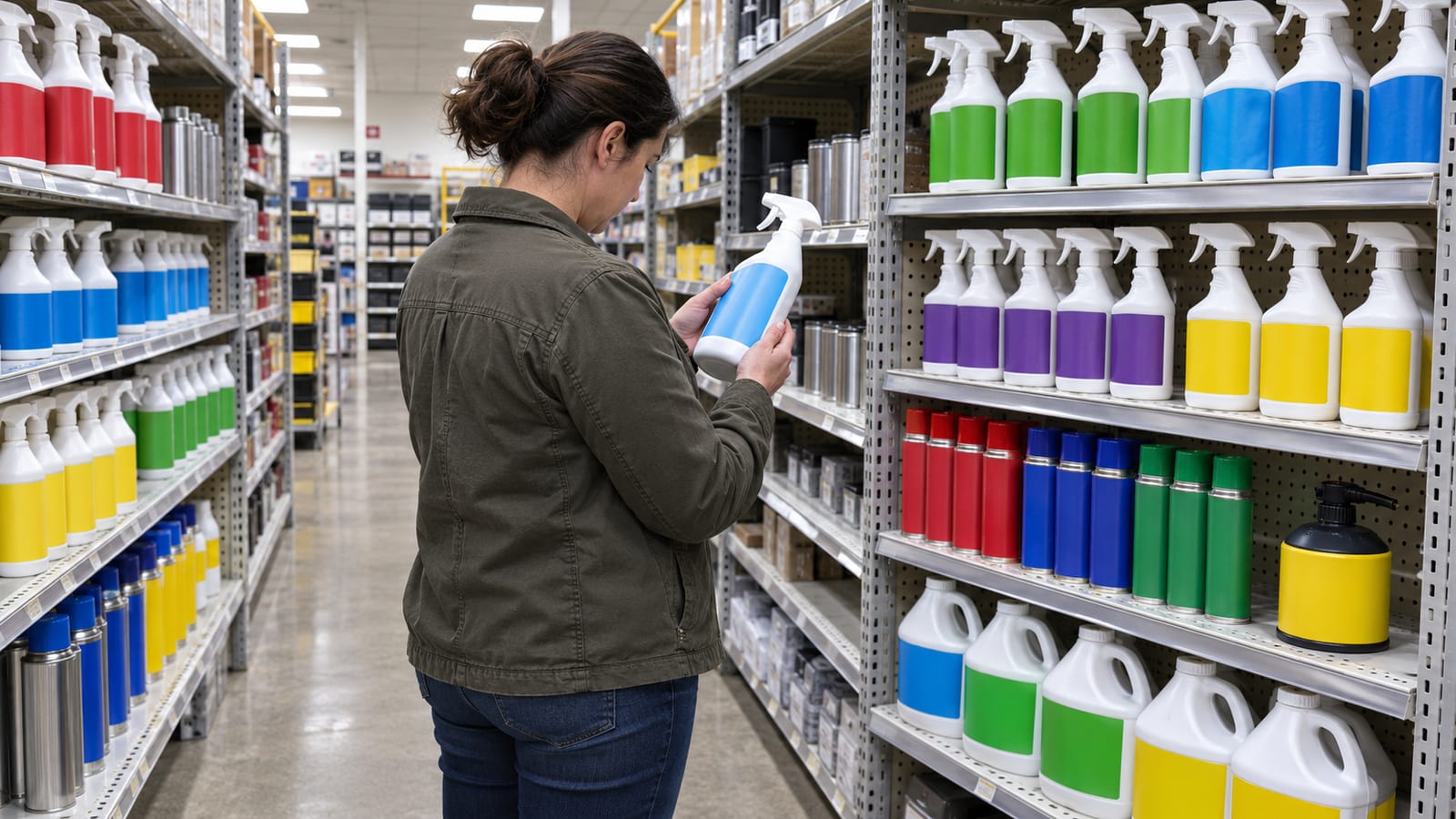
You are standing in a store aisle, or scrolling a shopping page, looking at sprays, foggers, coatings and cleaners that all promise to deal with mold. Every label sounds confident, and none of them says which one fits the wall, ceiling or bathroom grout you are looking at.
The label itself is the most useful thing on the shelf. It lists the surfaces a product is approved for, how long it has to stay wet, what you have to wear and whether it can be used as a fog. A product that matches your surface and your situation can help. One that does not match can leave the mold in place and add a chemical exposure.
Below, each kind of mold remediation product is sorted by the job it does, along with what an EPA registration number means, what a "kills 99.9%" claim covers, and the situations where the right answer is not a product at all.
Key Takeaways
The label controls the product
An EPA-registered antimicrobial may be used only on the surfaces, organisms, application method and contact time its label lists.
Removal comes before any product
EPA treats cleaning, physical removal and moisture correction as the core of remediation, and dead mold can still cause allergic reactions.
Some jobs are not a product job
Mold covering more than 10 square feet, hidden growth, a possible HVAC problem and a leak that is still running all call for a professional evaluation.
Product Types Match Surfaces, Not Strength
There is no single best product for every surface. What works is a match between the product, the material and the size of the problem. On a small patch of visible growth on a hard, nonporous surface such as tile, glass or sealed plastic, detergent and water followed by complete drying may be all you need. An EPA-registered antimicrobial can be added only for the surfaces, organisms, method and contact time on its label.
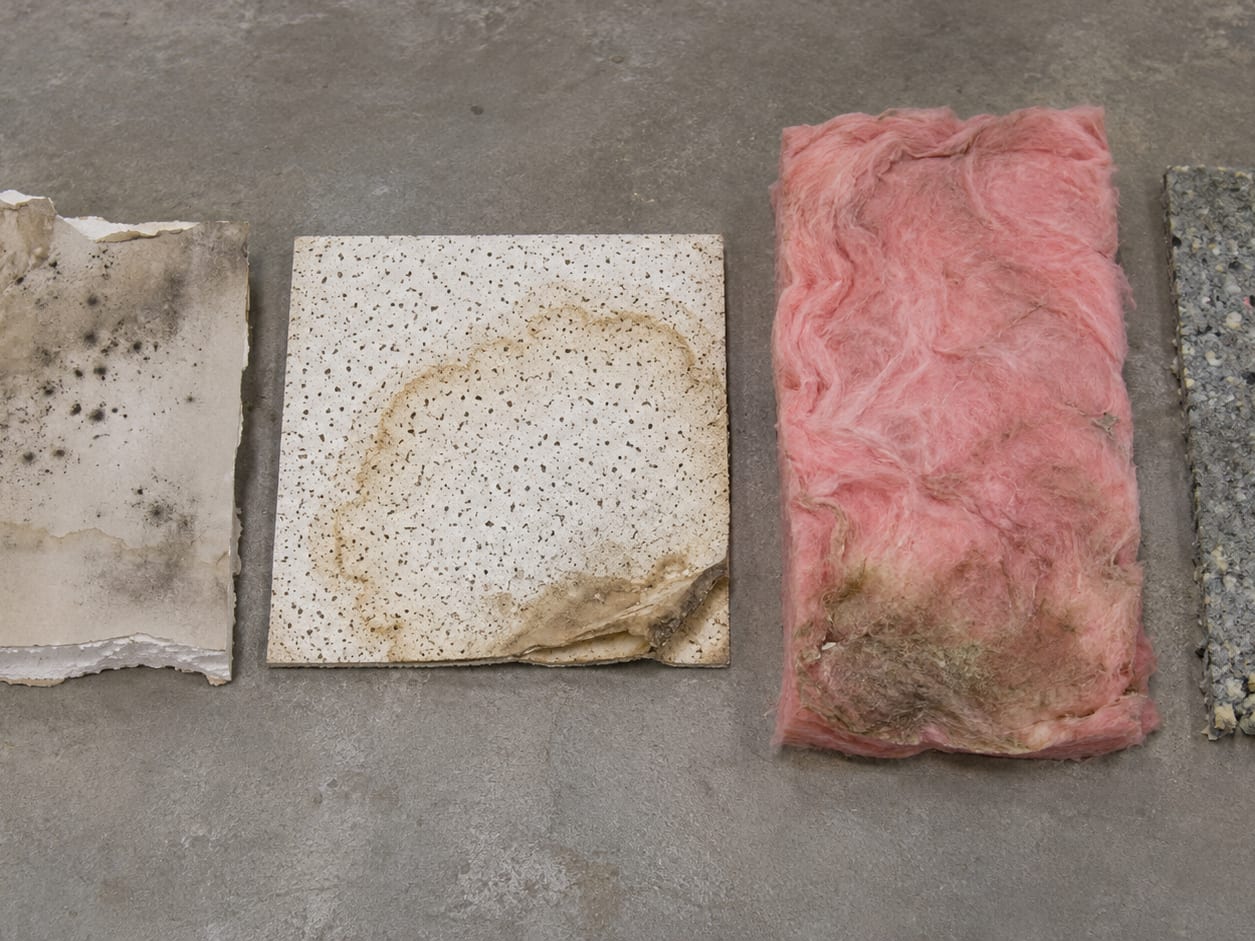
Porous materials are a different story. Mold can grow into drywall, ceiling tile, insulation, carpet pad and wallpaper, and a spray on the face of those materials does not reach what is inside them. EPA's guidance says porous material that cannot be cleaned and dried completely may have to be removed. For that material, a stronger product is not the answer; removal is.
A few questions sort most shopping decisions. What is the surface made of? How big is the area? Is the water problem fixed? Could the growth be inside the wall or in the ductwork? If the first answer is a hard surface and the rest are reassuring, a detergent cleaner is the usual starting point. If any answer is troubling, the sections below explain what changes.
Stop the water first if you can do it safely, and photograph the area before you clean or throw anything away. If you are working through the steps for a small patch, our black mold removal page shows how a contained removal is organized, and what kills mold and what not to use covers bleach and household cleaners so they are not repeated here.
Mold Returns While the Moisture Problem Remains
Mold grows where moisture is present. The New Jersey Department of Health says the moisture source should be identified and corrected before proper remediation begins, and EPA says mold spores will not grow when the building's moisture problem has been resolved.
That is why no spray, coating or fog on the market can promise that mold stays gone. A surface that is cleaned and then sits next to a leaking pipe, a damp foundation wall or a bathroom with weak ventilation is a surface that will be wet again. Cleaning does not repair a leak, a condensation problem, a wet wall cavity or a contaminated HVAC system.
The practical order is the same for every product. Fix the leak, condensation, drainage or ventilation problem. Dry wet materials; EPA guidance emphasizes drying them within 24 to 48 hours. Clean or remove the contaminated material. Only then does it make sense to ask whether a product adds anything.
The Order of Work Before Any Product
- 1
Fix the water problem
Correct the leak, condensation, drainage or ventilation problem first.
- 2
Dry wet materials
EPA guidance emphasizes drying them within 24 to 48 hours.
- 3
Clean or remove
Clean the contaminated surfaces or remove contaminated material.
- 4
Then ask about a product
Only after the first three steps does it make sense to ask whether a product adds anything.
The color or common name of the mold does not decide which product you buy. The material, the moisture and the size of the area do. If you are unsure what the dark patch is, our post on what looks like mold on walls helps you sort mold from dirt, and if the cause is unclear, a mold inspection can trace the moisture.
Cleaners, Disinfectants, Coatings and Foggers Each Have One Job
The shelf is easier to read when you sort it by job. The main types, with what each is for and where each stops, look like this:
Hover or tap a row to highlight it.
| Product type | Appropriate role | Important limitation |
|---|---|---|
| Detergent or soap cleaner | Loosens soil and removes mold from cleanable hard surfaces through physical cleaning | Does not make porous materials salvageable and does not correct moisture |
| EPA-registered antimicrobial, fungicide or disinfectant | May kill, control or disinfect mold on listed surfaces when used exactly as labeled | The label controls the organism, surface, dilution, contact time, protective gear and application method |
| Stain remover or bleaching product | May lighten discoloration or clean a surface | A lighter stain is not proof that mold or moisture damage has been removed |
| Encapsulant or sealant | May have a limited role after removal when the product and the remediation plan support it | Must not replace removal and cleaning; never coat active mold |
| Mold-resistant paint or coating | May be used after cleaning and drying as a finishing material or added control | Not a substitute for removal, drying or leak repair |
| Fogger or misting product | May be used only when the pesticide label specifically authorizes fogging, wide-area spraying or misting | EPA has not evaluated safety or efficacy for methods that are not on the label |
The reason the table puts so much weight on the limitation column is how remediation is defined. EPA's remediation guide says the purpose is to remove mold contamination, not merely to kill it, because dead mold can remain allergenic. It does not recommend routine use of biocides such as chlorine bleach during remediation, and it says outdoor fungicides should not be used for indoor mold.
The S520 standard treats cleaners, antimicrobial chemicals and coatings as tools inside a process of inspection, source control, removal, safety and documentation. Its public review material distinguishes a fungicidal or mold-resistant coating applied after removal from a coating applied over active contamination, and it says contamination should be removed rather than encapsulated in place of cleaning.
An EPA Registration Number Tells You Where to Find the Label
An EPA registration number identifies a pesticide product that is registered with EPA. You can search EPA's pesticide label database by product name, company, active ingredient or registration number, and EPA's labeling guidance treats the label as the controlling document for approved uses.
A claim such as "kills 99.9%" is tied to the organisms, test conditions and directions behind that label. It does not mean the product removes all mold from a building, works on every material, prevents future growth, cleans the air or replaces physical removal.
Before you buy, read these parts of the label:
- The exact mold or microorganism named in the claim
- The surfaces approved, such as hard nonporous material
- Whether the product has to be diluted
- The wet or contact time, and whether the surface must stay visibly wet
- Ventilation and protective gear requirements
The label also says whether rinsing is required and whether fogging, misting or wide-area spraying is allowed. Storage, disposal and re-entry instructions are printed there too.
Read These Parts of the Label Before You Buy
The exact organism
The mold or microorganism named in the claim.
The approved surfaces
Such as hard nonporous material.
The dilution
Whether the product has to be diluted.
The wet or contact time
Whether the surface must stay visibly wet, and for how long.
Ventilation and protective gear
The requirements printed on the label.
Rinsing, fogging and storage
Whether rinsing is required, whether fogging, misting or wide-area spraying is allowed, and the storage, disposal and re-entry instructions.
Directions differ from product to product. One EPA-registered 2026 label directs users to preclean, apply the ready-to-use product to hard nonporous surfaces, keep the surface visibly wet for 10 minutes and let it air-dry. Those directions belong to that label and are not a rule for every mold product.
Safe DIY Cleanup Is Limited to Small, Accessible Areas
Cleanup at home fits a small, accessible area where the moisture source has been corrected and the material can be cleaned and dried. EPA recommends consulting a professional when mold covers more than 10 square feet, when there has been extensive water damage, or when an HVAC system may be contaminated.
Wear protection even for a small job. CDC recommends at least a NIOSH-approved N95 respirator, non-latex gloves such as vinyl, nitrile or rubber, and goggles that give complete eye protection and keep out dust and small particles. For extensive removal work such as ripping out moldy drywall, CDC recommends a half-face or full-face respirator. Open windows or doors for fresh air whenever you use a cleaning product, and never mix bleach with ammonia or any other cleanser.
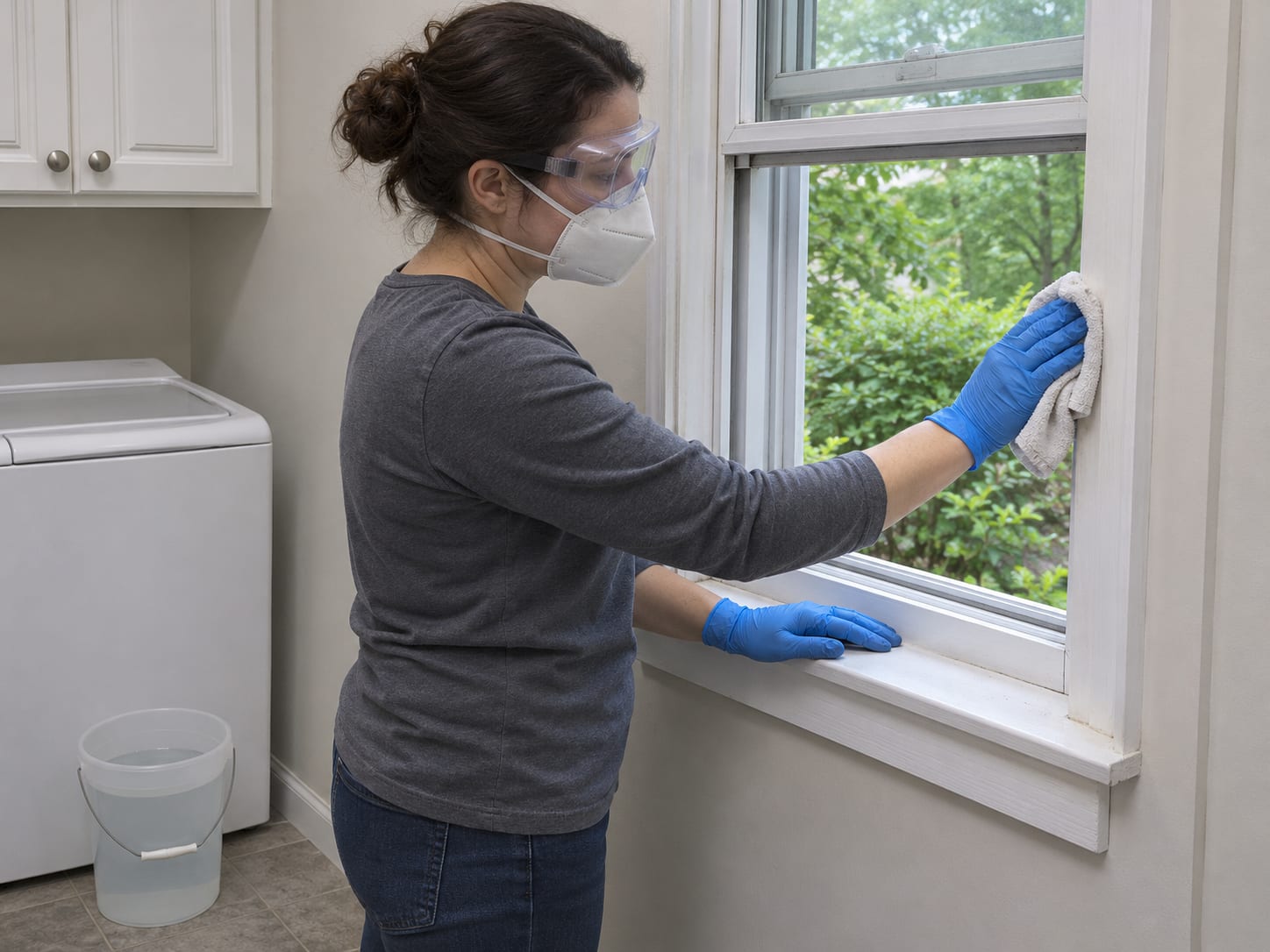
EPA notes that biocides are toxic to people as well as mold, so the protective gear and label directions apply to the products themselves. People with allergies, a weakened immune system, asthma, COPD or other lung disease should not take part in cleanup, and a physician is the right person for questions about their health. Run fans only in a way that does not push spores into clean areas, and keep a suspected contaminated HVAC system off.
For small hard-surface patches, detergent and water, careful scrubbing and complete drying handle most of the work. A product is one part of that job and not a replacement for any other part of it.
Porous Materials, Hidden Growth and HVAC Contamination Change the Plan
A product is the wrong answer in several situations. The situations that call for a different plan are these: mold on porous material that cannot be dried completely, an area over 10 square feet or one that follows extensive water damage, a leak or humidity problem that is still active, a label that does not cover the material or the method, and a coating about to go over visible or suspected active growth.
When a Product Is the Wrong Answer
Porous material
Mold on porous material that cannot be dried completely may have to be removed.
A large area
An area over 10 square feet, or one that follows extensive water damage.
An active moisture problem
A leak or humidity problem that is still running.
A label mismatch
A label that does not cover the material or the method.
A coating over growth
A coating about to go over visible or suspected active growth.
Hidden or HVAC contamination
Growth that may sit inside a wall cavity or a duct.
Hidden mold deserves its own mention. EPA says it can sit behind drywall, wallpaper, paneling and ceiling tiles, under carpets, inside walls, in ductwork and in roof materials. A fogger or spray applied to a room cannot reach a wet wall cavity, and the stain on the face of a wall may be only part of the problem.
An HVAC system that may be contaminated is a separate job. EPA says to leave it off, because running it can distribute spores through the building, and it recommends professional consultation. Our HVAC mold remediation page describes how that work is scoped.
When wet building materials are involved, structural drying comes before any cleaner. After removal, the opened wall has to be rebuilt, which is where drywall replacement after mold comes in.
New Jersey Insurance, Rental and Documentation Questions
Keep the product label, the receipt and photographs of the area along with your repair records. Photos before cleanup, receipts, estimates and disposal records help whether the question comes from an insurer, a landlord or a buyer.
On insurance, the New Jersey Department of Banking and Insurance says coverage depends on the policy. Its homeowners summary lists sudden and accidental water damage as covered, mold as generally excluded unless it results from a covered loss, and flood as excluded from ordinary homeowners coverage. DOBI advises reporting a loss promptly, making necessary temporary repairs, saving receipts, photographing the damage, keeping damaged property until the insurer inspects it or gives instructions, and waiting for the adjuster before permanent repairs. Clean-up with a spray before the insurer has looked can remove the evidence, so ask the insurer for written instructions first. Our insurance restoration services page describes the documentation side of restoration work.
If you rent, notify the landlord in writing and document the condition. NJDOH says local building-code offices generally address structural deficiencies such as leaks and plumbing problems. The Department of Community Affairs habitability bulletin says tenants have a right to safe, sanitary and decent housing, and that serious conditions such as leaks or mold can bear on habitability. Rent withholding, repair-and-deduct and other remedies depend on the facts and on notice requirements, so take those to an attorney or the appropriate state agency.
Professional Mold Removal Includes Containment, Removal and a Written Record
Professional work is organized around the building and the contamination route, with products as one tool inside it. The S520 standard covers inspection, safety, documentation, structural remediation, HVAC remediation, contents remediation and post-remediation verification, along with cleaners, antimicrobials and coatings.
In practice, a scope for a larger job usually includes identifying the moisture source, assessing visible and hidden contamination, containing the work area, removing contaminated material, cleaning salvageable surfaces, drying the structure, addressing the HVAC system when it is involved, and documenting the work. A written scope should say what comes out, what gets cleaned and what is verified afterward. If a quote leans on a spray or a fog alone, ask what is being removed and how the moisture problem is being fixed.
New Jersey has no state certification program for companies that perform mold or general indoor-air work, and NJDOH's lists of private companies are not an endorsement or a statement of qualification. Ask any contractor for their experience, insurance, proposed work and documentation in writing. Verification after the work, such as post-remediation verification, can add a written record of the result.
Frequently Asked Questions About Mold Remediation Products
What is the best product for mold remediation?
No single product is best for every surface. A detergent cleaner with thorough drying often suits a small hard-surface patch, an EPA-registered antimicrobial can be used where its label lists the surface, organism and method, and porous material that cannot be dried completely may need to come out instead. Large, hidden, recurring or HVAC-related contamination calls for a professional evaluation.
What is the strongest thing to get rid of mold?
Strength is not what makes a product suitable for a building. EPA places physical removal, cleaning and moisture correction at the center of remediation, and a more concentrated chemical cannot reach into drywall, a wall cavity or a duct, or outlast a leak.
What should you not put or spray on mold?
Skip these: an outdoor fungicide used indoors, any product on a surface its label does not cover, a fog or mist from a product whose label does not authorize that method, and paint, caulk or an encapsulant over active mold. Bleach should never be mixed with ammonia, acids or another cleaner, and it should not be sprayed in a way that creates a hazardous mist.
What is the difference between mold mitigation and mold remediation?
Homeowners and contractors use these two words inconsistently, so a quote that says either one should be read for what it lists, not for the word. In common use, mitigation points to controlling moisture and reducing exposure, and remediation points to dealing with the contaminated materials through cleaning, removal, drying and verification. Ask for the written scope and check that it covers both the moisture problem and the contaminated material. EPA's guidance centers on removing the contamination and fixing the moisture problem.
Does black mold come back after you clean it?
It can, when moisture remains or returns. Cleaning a surface does not fix a leak, condensation, a wet cavity or a contaminated HVAC system, so dry the area completely and recheck it over the following weeks for moisture, odor, staining and new growth.
Mold Product Quick Check
1. What controls how an EPA-registered antimicrobial may be used?
2. What is the purpose of remediation, according to EPA?
3. At what size does EPA recommend consulting a professional?
4. What should you do with an HVAC system that may be contaminated?
Pick an answer to begin.
Wrapping Up
Read the label for the exact surface before you buy, and use a product only for the job its label lists. Detergent and water with complete drying cover a small hard-surface patch, an EPA-registered antimicrobial fits only the surfaces and methods it names, and coatings and foggers have narrow roles that come after removal and drying.
Your decision tonight is short. Stop the water if it is safe to do so, photograph the area, and read the label to see whether the product covers your surface. If the material has to come out, the patch is over 10 square feet, the mold may be hidden or in the HVAC system, or the moisture is still active, bring in a professional rather than buying a stronger spray.
If you want a written scope for your New Jersey home before you spend money on products, ExecPro Restoration & Cleaning can look at the moisture and the materials with you. Call us at (888) 300-3772 or reach us through our contact page, and tell us what you see and where it is.
Mold Product Terms
Tap a term to see what it means.
EPA registration number. A number that identifies a pesticide product registered with EPA and helps you find its label.
Related Articles
What to Throw Away After Mold and What You Can Clean and Keep
Sorting belongings after mold in a New Jersey home? See what usually goes, what can be cleaned and kept, and what to document before anything is discarded.
Can a House With Mold Be Saved? What Decides the Scope
Whether a New Jersey house with mold can be saved comes down to the moisture source, the structure and the materials. See the steps, limits and next calls.
Mold in a NJ Rental: What a Tenant Does First and Who to Call
A tenant with mold in a NJ rental should notify the landlord in writing and document it. Learn which local office to call and when to get legal advice first.