
What Looks Like Mold on Walls: Common Stains and Their Causes
Cal HewittPublished
- mold inspection
- moisture source
- documentation
- new jersey
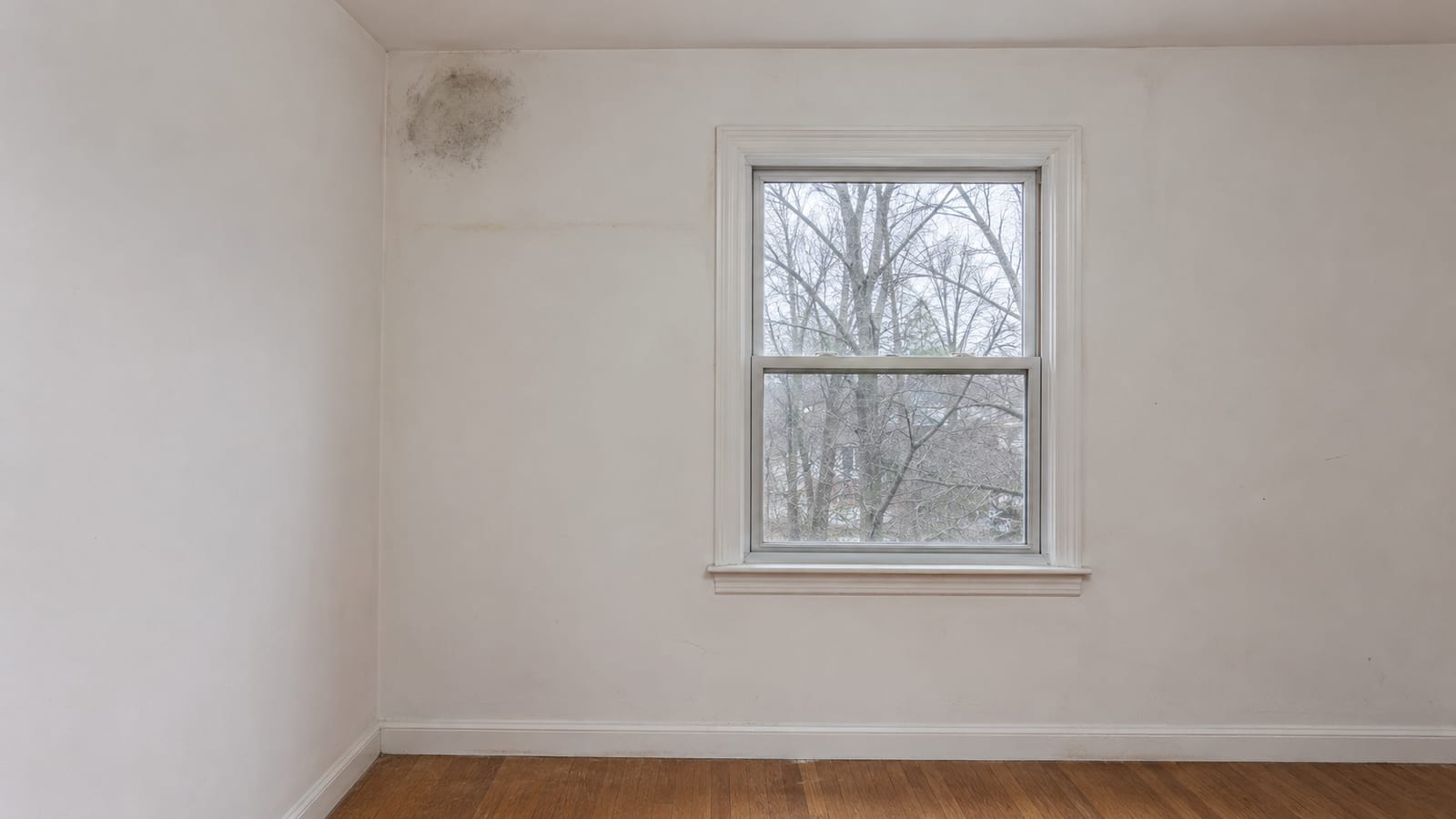
You have spotted a dark patch, a smudge or a line of discoloration on a wall, and you want to know what it is before you touch it. The first thing to do costs nothing. Photograph the mark with a ruler or a familiar object next to it for scale, leave the surface alone, stop adding moisture to the area, and do not paint or caulk over it.
What that mark turns out to be decides your next step. Some marks are surface dirt or deposits that clean off. Others are the first visible sign of water, a damp wall cavity or a larger problem that needs a professional. You can sort most marks into a likely category with a few careful observations.
Key Takeaways
Pattern and moisture beat color
A repeating line at stud spacing, a white powder on masonry, a brown ring or a musty odor each point to a different cause, and any mark on a damp or soft wall needs its moisture source fixed first.
Small hard surfaces can be cleaned by you
EPA treats about 10 square feet, a patch roughly 3 feet by 3 feet, as the benchmark; larger areas, contaminated water, HVAC involvement or a mark that returns call for a professional.
Never mix cleaners, paint over it or dry-brush it
Bleach combined with ammonia or other cleaners can give off toxic fumes, and disturbing a mark can send particles into the air.
What Could That Mark on Your Wall Be?
Walls collect more kinds of marks than most people expect, and several of them look alike from across the room. The useful questions are where the mark sits, what it feels like, whether the wall is damp and whether you have had a leak, a flood or a humid season. Texture, location and pattern tell you more than color does.
What can be mistaken for mold on walls?
EPA names paint on the back of drywall or wood, alkaline crystals on soil or concrete walls, and carpet stains as things that can resemble mold. Alkaline crystals are usually water-soluble, which mold is not. The look-alikes you are most likely to meet in a New Jersey house include these:
- Soot or candle residue: Dark deposits near candles, fireplaces, furnaces and cooking areas.
- Ghosting along framing: Dark lines that follow the studs, explained in the next section.
- Efflorescence: A white powder or crystalline crust on masonry and concrete.
- Water stains: Brown, yellow, gray or ring-shaped discoloration, sometimes with buckled or peeling paint.
- Dirt and dust: Flat discoloration with no growth texture.
None of these is automatically harmless. Several of them tell you that moisture has been present, which is the next thing to check.
Hover or tap a row to highlight it.
| Look-alike | What to notice |
|---|---|
| Soot or candle residue | Dark deposits near candles, fireplaces, furnaces and cooking areas |
| Ghosting along framing | Lines that repeat at consistent stud spacing, stay fairly flat and show up on exterior walls |
| Efflorescence | A white powder or crystalline crust on masonry and concrete |
| Water stains | Brown, yellow, gray or ring-shaped discoloration, sometimes with buckled or peeling paint |
| Dirt and dust | Flat discoloration with no growth texture |
Which Signs Point to Moisture or Hidden Damage?
A mark is worth taking seriously when it comes with signs of water. Mold needs moisture to grow indoors, and the New Jersey Department of Health says mold problems usually involve excess water. A musty odor, a damp or soft wall, paint that bubbles or peels, a stain that returns after cleaning, a repeating line at stud spacing, or white powder on masonry all suggest that moisture is moving through the wall.
Signs That Point to Moisture
A musty odor
Even with no visible source, it is worth taking seriously.
A damp or soft wall
A wall that feels wrong needs a closer look.
Paint that bubbles or peels
Buckled or peeling paint can go with a water stain.
A stain that returns after cleaning
The source is probably still active.
A repeating line at stud spacing
It can fit ghosting, and thermal bridging can also create condensation.
White powder on masonry
Efflorescence signals that moisture has moved through the wall.
Ghosting is a good example. Building Science describes cold framing members as thermal bridges, cool spots where airborne particles settle on the wall surface. Candle soot, smoke and fireplace particles can contribute. Lines that repeat at consistent stud spacing, stay fairly flat and show up on exterior walls fit this pattern. Thermal bridging can also create condensation, so a repeating pattern does not rule out a moisture problem.
Efflorescence is another. The National Park Service explains that water carries soluble salts through masonry, and as the water evaporates the salts show up as white powder. It signals that moisture has moved through the wall, and it can return until the source is addressed.
What does water damage look like in a basement?
Basements show the full set of signs: wet spots, water stains, buckled or peeling paint, damp drywall, a musty odor, efflorescence on masonry, condensation, deteriorated materials and visible growth. EPA advises dealing with wet spots and stains quickly, because a roof, plumbing, foundation or condensation problem can worsen and support hidden mold.
Is It Mold, Mildew or Something Else, and Which Is Worse?
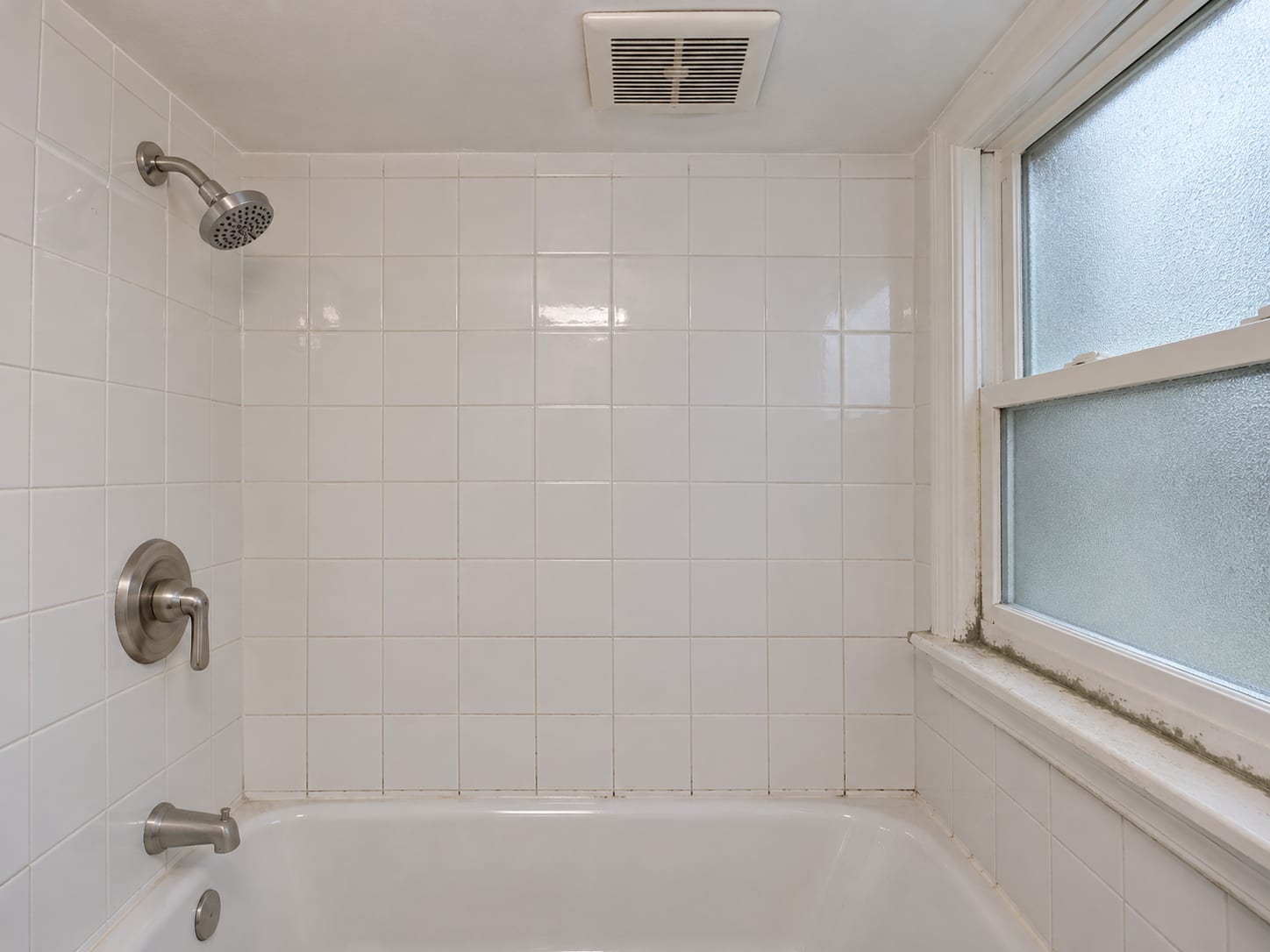
EPA uses "mildew" for certain kinds of mold or fungus, usually with a flatter growth habit, and you will most often see it on shower walls, windowsills and other damp spots. Mold is the broader term for microscopic fungi that can grow on paper, wood, drywall, wallpaper and furnishings whenever moisture is available.
Neither is automatically worse. Growing indoors, both mean a moisture condition, and the action is the same: clean what can be cleaned, dry the area and correct the moisture source. Common sources are leaks, condensation, high humidity, poor ventilation, flooding and damp masonry.
What does toxic mold look like on walls?
No visual test tells you whether growth is toxic. Mold comes in many colors, and CDC and EPA both say color does not identify the type or make one patch more dangerous than another. What matters is the moisture, how much surface is involved and who is exposed. If a mark is visibly growing, treat the water problem and bring in a professional when the source, the size or the material is uncertain. Bring any health concern to a doctor or other health professional.
What Should You Do in the First Twenty-Four Hours?
Start with a record. Write down the location, the approximate size, the smell and the texture, and note nearby plumbing, windows, exterior walls and anything that happened recently, such as a leak, a flood or heavy condensation. If water is actively coming in and it is safe to reach the shutoff, stop the source and protect belongings with temporary measures. If sewage, floodwater or other contaminated water is involved, or water is actively coming in, leave the area undisturbed and call a professional such as our emergency services team.
During the day, check indoor humidity with a hygrometer, a small meter that reads relative humidity. EPA recommends keeping it below 60 percent, with 30 to 50 percent ideal. Look over the nearby pipes, windows, roof or ceiling area, HVAC components, gutters and foundation. EPA says wet or damp materials should generally be dried within 24 to 48 hours after a leak or spill to reduce the chance of mold growth.
A consumer moisture meter works as a screening tool for finding wet areas in wallboard, wood, brick and concrete. Readings depend on the material and the instrument, so treat a reading as a clue to confirm, not a final answer.
The First Twenty-Four Hours
- 1
Write down what you see
Location, approximate size, smell and texture, plus nearby plumbing, windows, exterior walls and anything that happened recently.
- 2
Stop the source if it is safe
If water is actively coming in and you can reach the shutoff, stop it and protect belongings with temporary measures.
- 3
Leave contaminated areas alone
With sewage or floodwater involved, leave the area undisturbed and call a professional.
- 4
Check the humidity
Use a hygrometer; EPA recommends below 60 percent, with 30 to 50 percent ideal.
- 5
Look over the usual suspects
Nearby pipes, windows, the roof or ceiling area, HVAC components, gutters and the foundation.
- 6
Dry wet materials
Wet or damp materials should generally be dried within 24 to 48 hours.
When Does a Wall Mark Need a Professional Inspection?
Book an inspection when the situation is bigger than a quick wipe-down. EPA's cleanup guidance gives about 10 square feet as the line, and a professional is appropriate in these cases:
- A larger area: More than roughly 10 square feet, or extensive water damage.
- Contaminated water or HVAC involvement: Sewage, floodwater, or growth near an HVAC intake or inside the system.
- A wall that feels wrong: Damp, soft, swollen, buckled or deteriorating.
- A mark that returns: Or a musty odor with no visible source.
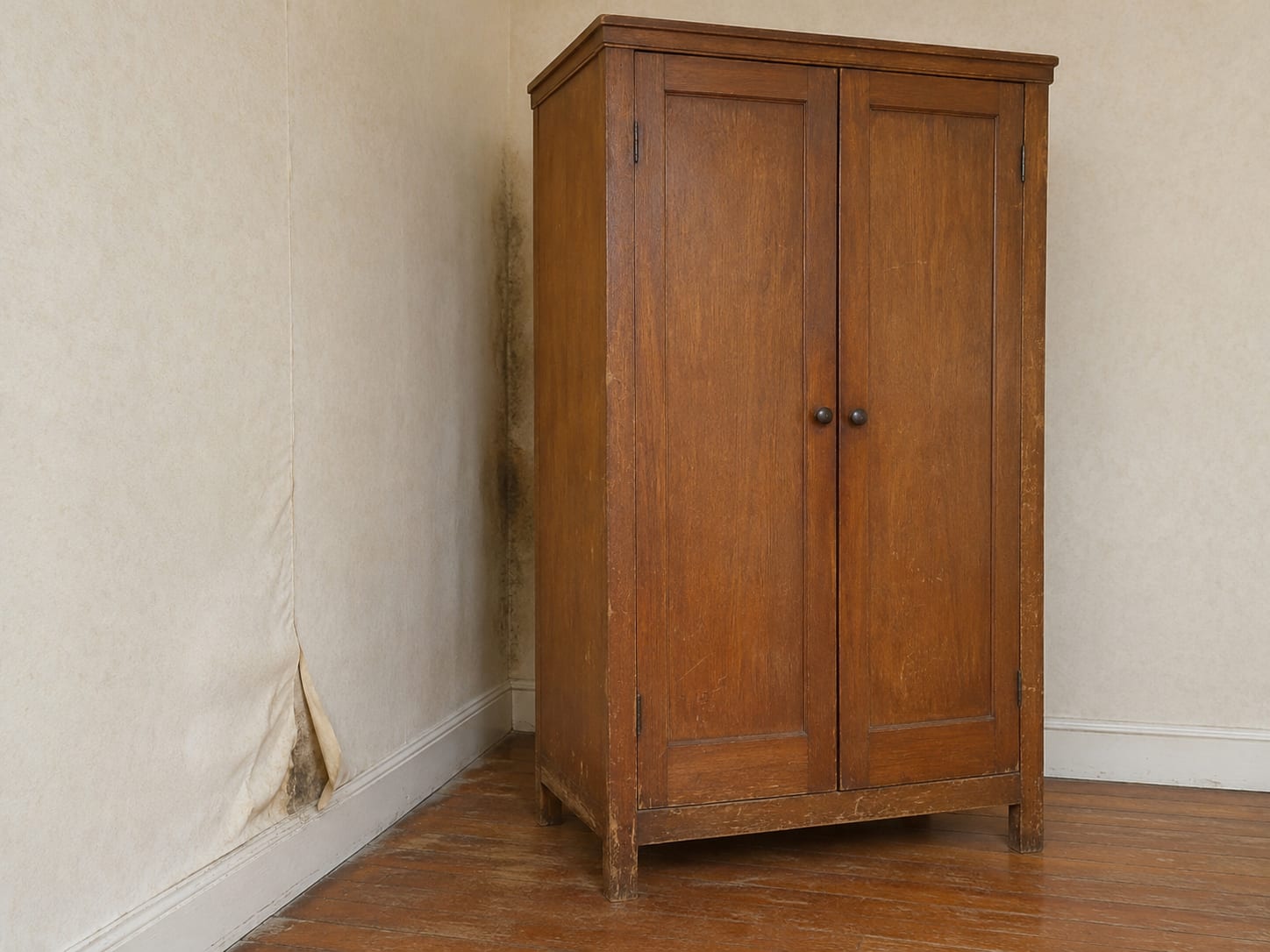
- Hidden damage: Known water damage with suspected growth behind drywall, wallpaper, paneling or furniture.
New Jersey's health department recommends inspecting the building to identify the excess-water source when a mold problem cannot be readily traced to a leak. An inspection is also the right step when an insurer, a property manager or a buyer needs documentation. Our mold inspection work separates a visual inspection, a moisture assessment, testing and remediation, so you know which question each one answers, and our residential mold inspection reports include findings, photographs, moisture readings and recommended next steps.
New Jersey has no state certification program for companies that perform mold or indoor-air services, so ask any company about its qualifications, experience, insurance and the scope of work in writing.
What Can You Clean Safely, and What Should You Never Use?
For a small mark on a hard surface, EPA recommends scrubbing with detergent and water and then drying the surface completely. A porous material such as drywall that is visibly moldy needs a different decision, because it may have to be removed instead of cleaned.
What kills mold effectively?
Cleaning and fixing the moisture go together, and neither works alone. CDC says hard surfaces can be cleaned with soap and water, household products, or a bleach solution of no more than 1 cup of household laundry bleach in 1 gallon of water. EPA does not recommend bleach or another biocide as routine practice, and dead mold still has to be removed. Whatever you use, the growth returns if the water problem is still there.
What should you never clean mold with?
Never mix chlorine bleach with ammonia or any other cleaning solution, because toxic fumes can result. Do not dry-brush or scrape suspected mold, which can send particles into the air. Do not paint or caulk over a wet or moldy surface, since EPA says to clean and dry it and correct the water problem first. Do not open a wall or strip wallpaper to investigate without a plan, because disturbing hidden mold can release spores.
Four Things Never to Do to a Wall Mark
Never mix cleaners
Chlorine bleach with ammonia or any other cleaning solution can give off toxic fumes.
Never dry-brush or scrape it
Suspected mold disturbed this way can send particles into the air.
Never paint or caulk over it
Clean and dry the surface and correct the water problem first.
Never open a wall casually
Opening a wall or stripping wallpaper without a plan can release spores from hidden mold.
Testing has its place, but it rarely answers the question people ask first. EPA says sampling is usually unnecessary when mold is visible, and CDC and NIOSH do not recommend routine air sampling. Residential mold testing makes sense when the result would change your plan, such as when the source is unclear or documentation is needed.
What Do New Jersey Renters and Homeowners Need to Document?
If you rent, tell your landlord or property manager about the mark in writing and keep photographs and copies of every message. The state health department directs renters with unrepaired leaks or plumbing problems to the local building-code office. The Department of Community Affairs says tenants have a right to safe, sanitary and decent housing and that landlords must keep rental units fit to live in. Tenant remedies carry specific notice, access and escrow conditions, so talk to an attorney or the appropriate housing agency before you withhold any rent.
If you own, call your insurer promptly when the mark followed a water event. The New Jersey Department of Banking and Insurance advises reporting losses promptly, photographing damaged property before you dispose of it, keeping damaged items for inspection when possible, saving receipts and writing down notes of every conversation with the adjuster. Temporary repairs to prevent more damage are appropriate, while permanent repairs should wait until the adjuster has reviewed the damage. Homeowners policies exclude flood damage, and coverage for other water events, mold limits and deductibles depends on your policy and the cause of the loss. When a wall needs drying, drywall replacement or rebuilding, our insurance restoration services coordinate that work with your documentation.
Keep one dated record for everything: photographs, moisture readings, reports, receipts, temporary repairs and messages.
How Do You Keep the Mark From Coming Back?
Marks come back when the moisture does. EPA says mold is likely to return when the water problem is not fixed, and the same logic applies to efflorescence and water stains. Confirm that the source has been corrected, and then recheck the area over the following week for dampness, odor, staining, growth or paint failure.
Keep humidity in range with the hygrometer, and look at the usual suspects: pipes, windows, the roof or ceiling above, HVAC components, gutters and the foundation. Ventilation counts too, since poor ventilation is a common moisture source. If a mark returns after you have cleaned it properly, the source is still active, and that is the point to book an inspection instead of cleaning it again. When growth is confirmed or significant, our mold remediation work covers containment, removal and fixing the moisture source.
Wall Mark Terms
Tap a term to see what it means.
Ghosting. Dark lines on a wall that follow the framing, where airborne particles such as candle soot, smoke and fireplace particles settle on cool spots.
Frequently Asked Questions About Marks That Look Like Mold
Is a brown ring on the wall just old water damage?
A water stain can mean past or active water entry, so it deserves a look. Check whether the wall is damp or soft and whether the ring is growing, then trace the source in the ceiling, plumbing or exterior wall.
Why did the mark come back after I cleaned it?
The moisture source is probably still active. Cleaning removes what you can see; fixing the leak, condensation or humidity keeps it from returning.
Can I just seal it with primer or paint?
Clean and dry the surface and correct the water problem first. Paint over a wet surface hides the mark and leaves the cause in place.
Do I need a mold test if I can already see it?
Usually not. Testing helps when the source is unclear or a record is needed, and an inspection with moisture readings is often the more useful first step.
Check What You Know About Wall Marks
1. What should you do first when you spot a mark on a wall?
2. About how large an area does EPA treat as the benchmark for cleaning it yourself?
3. Does the color of a mark tell you whether mold is toxic?
4. What does a stain that keeps returning after cleaning usually mean?
Pick an answer to begin.
The Bottom Line
A mark on a wall is a question about moisture. Photograph it, leave it alone, stop adding water, and look for the signs that separate a surface deposit from a damp wall: a musty odor, a soft surface, a stain that returns, a repeating line at stud spacing or white powder on masonry. Clean only small hard surfaces, and call for help when the area is larger, the water was contaminated, the HVAC is involved or the mark keeps coming back.
Fixing the source first protects the wall, your belongings and your paperwork if an insurer or landlord gets involved. It also means you pay to clean the mark once.
If you cannot tell what is on your wall, call ExecPro Restoration & Cleaning at (888) 300-3772 or contact us. We provide mold inspection, mold remediation, water damage restoration and build-back work across New Jersey, and we will help you find out what is behind the mark and what to do next.
Related Articles
Buying a House With Mold: When to Walk Away or Repair
Found mold during a home inspection in New Jersey? See which findings are fixable, which mean walking away, and what to ask before attorney review ends.
Can a House With Mold Be Saved? What Decides the Scope
Whether a New Jersey house with mold can be saved comes down to the moisture source, the structure and the materials. See the steps, limits and next calls.
Mold in a NJ Rental: What a Tenant Does First and Who to Call
A tenant with mold in a NJ rental should notify the landlord in writing and document it. Learn which local office to call and when to get legal advice first.