
Mold on Window Sills: Condensation, Leaks and Cleaning Steps
Cal HewittPublished
- mold inspection
- moisture source
- condensation
- new jersey
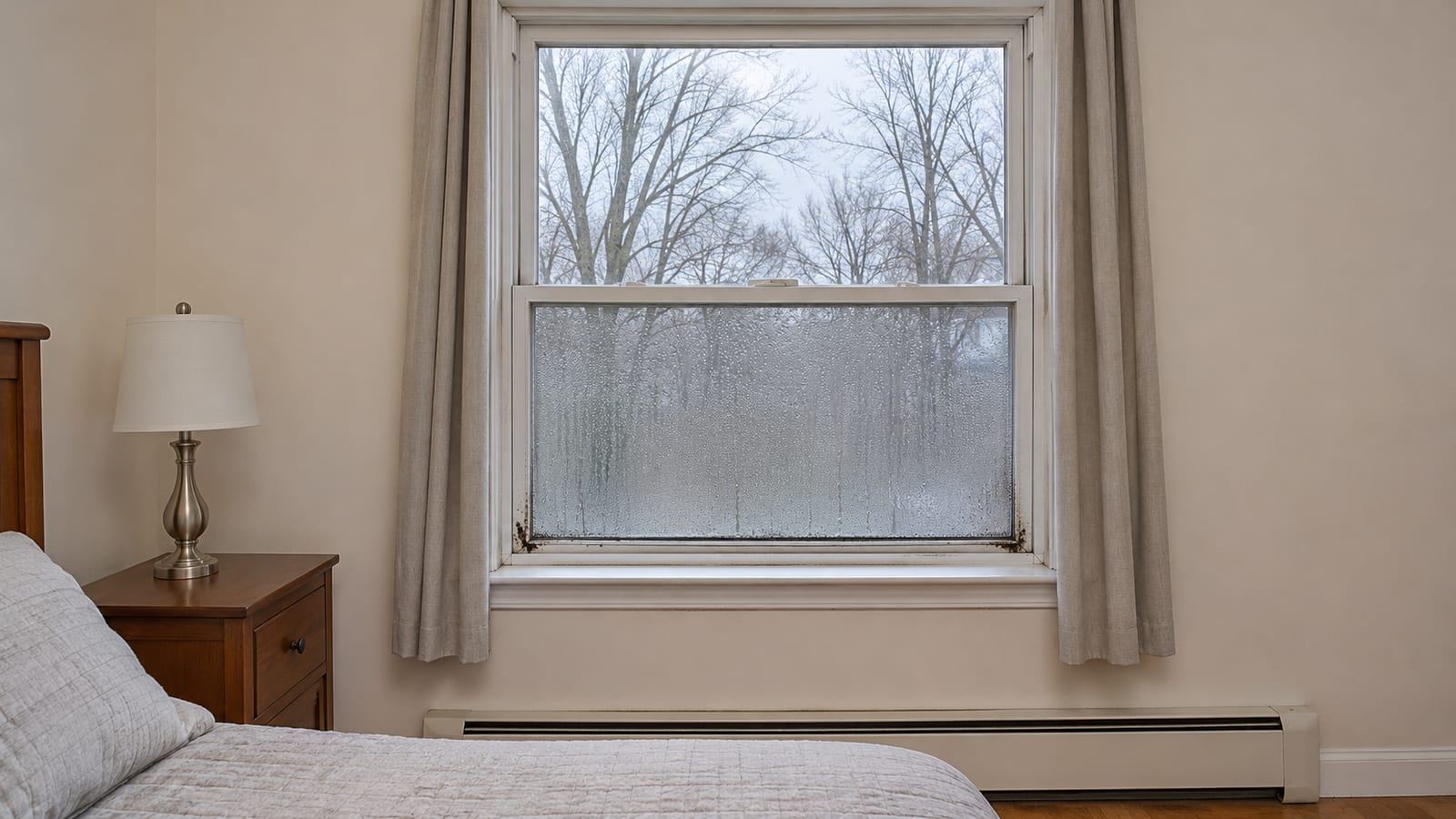
You wipe the black spots off the sill on Saturday, and by the next weekend they are back along the frame and the rubber seal. Mold on a window sill that returns every winter usually points to moisture in the room or in the wall, and cleaning alone rarely settles it.
This week comes down to one decision. Is the water coming from the air inside your home, from outside through the trim or the wall, or from a window that has failed? A few quick checks answer that, and most of them take a camera, a dry cloth and a few minutes at the window.
Once you know where the moisture is coming from, the rest follows: how to clean wood, vinyl and rubber without spreading the problem, what to change in the house so the spots stay away, and when a sill, seal or wall needs someone to open it up and look.
Key Takeaways
Condensation is the usual cause
Warm indoor air cools at the window, and EPA calls the coldest surface the "first condensing surface," so glass, frames and sills show moisture before the walls do.
Two checks separate condensation from a leak
Moisture between the panes points to a failed glass seal, and dampness in the trim or wall after rain points to water getting into the building.
Detergent, water and complete drying
That is how small hard surfaces are cleaned, with gloves, eye protection and at least an N95 respirator, and never with paint or caulk over the mold.
Humidity between 30 and 50 percent
EPA's ideal range, with 60 percent as the upper limit, works with exhaust fans, open curtains and moving air to keep window condensation down.
Understand Why Mold Keeps Returning to New Jersey Windowsills
Mold needs moisture, and a window is one of the first places in a New Jersey home where moisture shows up in winter. EPA says condensation, leaks, seepage, plumbing failures and high indoor humidity can all supply it, and that mold control depends on controlling moisture. Warm indoor air carries water vapor. When that air reaches a cold surface, it cools, can hold less moisture and drops the extra as water on the glass, frame, sill or gasket.
Is it normal for mold to grow on window sills?
It is common, but it is not something to live with. Growth happens when condensation keeps wetting a cold sill or frame, or when liquid water gets in around the window. A small patch on a hard surface you can reach is something a homeowner can clean. Spots that return after cleaning mean the moisture is still there, and that is the part to track down.
Why do windows show mold before the walls do?
EPA's reference guide uses the term "first condensing surface" for the coldest surface in a room, and windows and frames often fill that role. DOE adds that cooled air at a cold window reaches its dew point, the temperature where it can no longer hold its water vapor. It also lists condensation resistance as a window rating, and a higher value means less condensation in cold weather.
What time of year is worst for mold on windows?
Winter is the most direct season for window condensation, because heated indoor air meets cold glass and frames. Mold can still grow in any season when moisture persists, including after summer humidity, heavy rain, storms or leaks.
Tell Condensation From a Window Leak With Two Checks
Condensation alone does not prove a leak. Moisture on the room side of the glass, the frame or the sill during cold weather is generally a temperature and humidity issue. Two checks separate it from water entering the house, and both are quick enough to do before you pick up a sponge.
The first check is between the panes. Pella states that condensation between the panes of insulated glass usually indicates a failed glass seal, and Andersen says the same. Wiping the room side will not reach it, so ask a window professional about the glass unit.
The second check is dampness after rain, snow or a thaw, in the trim, the wall or the sill. EPA names rainwater entering through windows, walls, roofs and foundations as a moisture source. Condensation tends to show on several windows at once, eases when indoor humidity falls, gets worse behind curtains or blinds that block warm room air, and leaves no exterior staining or wall damage.
Water appearing after weather, a swollen, soft or stained sill, moisture at one window instead of many, damp drywall beside it, or damaged exterior caulk, siding or flashing points toward a leak. So does moisture that persists after reasonable humidity control. These signs tell you where to look; a window, flashing, siding and wall may need to be inspected together. Our water leak detection work follows liquid water to where it enters.
Hover or tap a row to highlight it.
| Pattern | What you see | What it points to |
|---|---|---|
| Condensation | Moisture on several windows at once, easing when indoor humidity falls, worse behind curtains or blinds, with no exterior staining or wall damage | A temperature and humidity issue |
| Leak | Water after weather, a swollen, soft or stained sill, moisture at one window, damp drywall beside it, or damaged exterior caulk, siding or flashing | Water entering the building |
| Failed glass seal | Condensation between the panes | A window professional should look at the glass unit |
Pella adds that replacement windows can reduce the air exchange older windows allowed, so condensation may show on new glass if indoor humidity stays high.
Plan the Next Twenty-Four Hours Before You Wipe Anything Else
The next hour is about recording what you see, because cleaning erases the evidence that tells you where the moisture is coming from.
- Photograph the sill, frame, gasket, nearby wall and the outside of the window before cleaning.
- Check indoor relative humidity with a hygrometer, a small meter sold at hardware stores.
- Look for active dripping, wet paint, swollen wood, soft trim, damaged caulk or water that appears after rain.
- Note where the moisture sits: room-side glass, frame, sill, wall or between the panes.
- Leave paint and caulk alone, because neither belongs over visible mold or wet material.
By the next day, you can clean a small, accessible hard-surface area with detergent and water and dry it completely. EPA says wet materials should be dried within 24 to 48 hours when possible, and materials that cannot be cleaned and dried may need replacement. Open curtains or blinds enough to let warm room air reach the glass. If you rent, send your landlord written notice, especially when there is a leak, a damaged window or a wet wall.
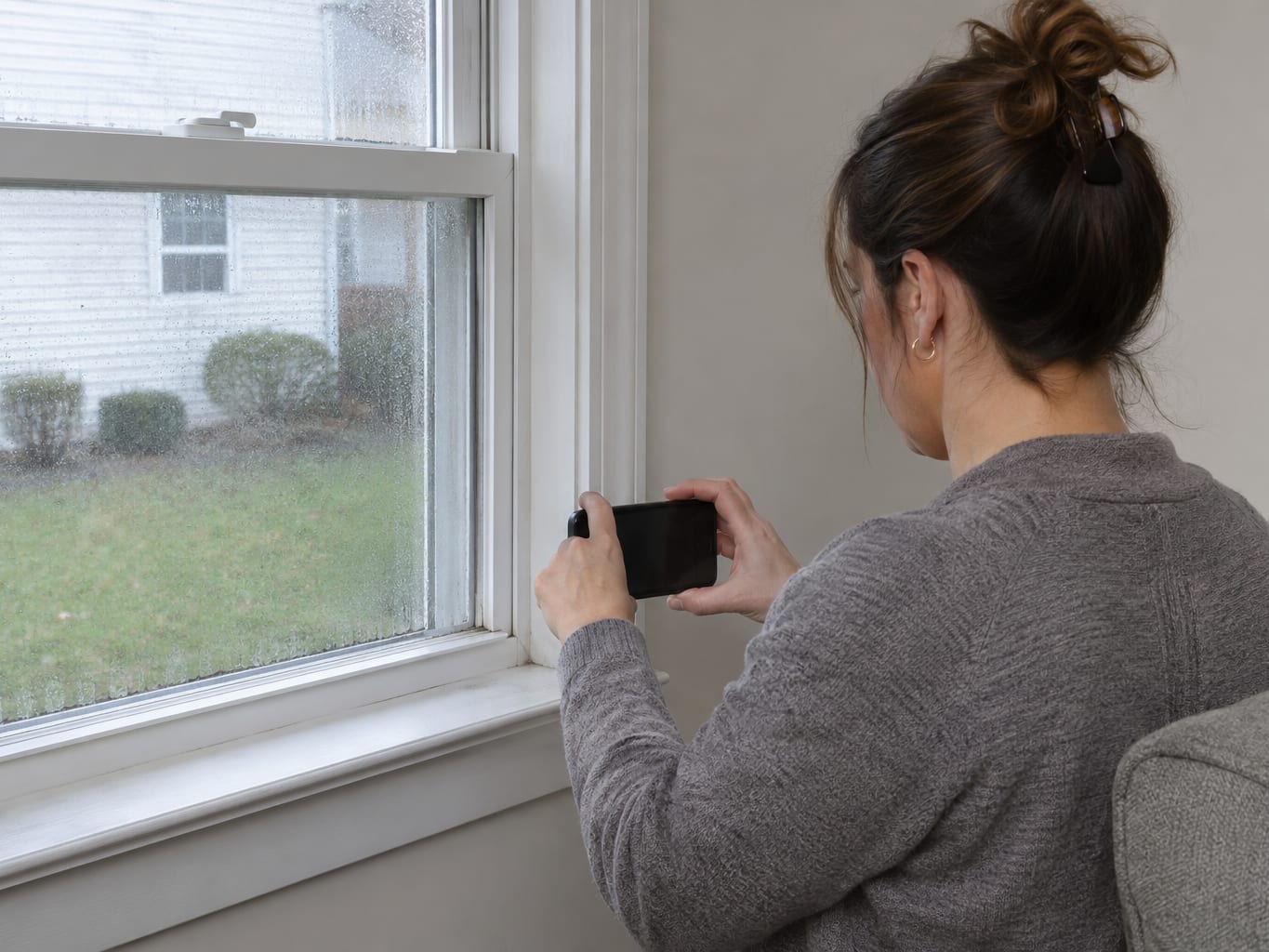
Over the following week, track humidity and condensation on different weather days. If moisture continues after you have controlled humidity, have the window, flashing, roof, siding or adjacent wall inspected.
The Next Twenty-Four Hours and the Week After
- 1
The next hour
Photograph the sill, frame, gasket, nearby wall and the outside of the window before cleaning, check indoor humidity with a hygrometer, and look for dripping, wet paint, swollen wood or soft trim.
- 2
By the next day
Clean a small, accessible hard-surface area with detergent and water and dry it completely, open curtains or blinds so warm room air reaches the glass, and send your landlord written notice if you rent.
- 3
Over the following week
Track humidity and condensation on different weather days, and have the window, flashing, roof, siding or adjacent wall inspected if moisture continues after humidity control.
Clean Wood, Vinyl and Rubber Without Making the Problem Worse
Each material on a window takes cleaning differently. A hard, nonporous surface can be wiped clean, while a porous one can hold mold below the surface where a cloth does not reach, and EPA says it may be difficult or impossible to clean completely. The right method depends on the material in front of you.
Hover or tap a row to highlight it.
| Material | How it is cleaned | What to watch for |
|---|---|---|
| Wood sill | Detergent and water with minimal moisture, then dry completely | Do not dry-brush, sand or scrub hard; swollen, soft or decayed wood may need repair or replacement |
| Vinyl frame | Detergent and water, dried completely | A stained or warped frame is not automatically cleanable; check the caulk, cavities, drywall and wood next to it |
| Rubber gasket | Gentle detergent and water, dried completely | Ask the window manufacturer which cleaner is safe before using anything stronger |
How do I clean mold from a wood sill?
Wood is semi-porous. EPA guidance says structurally sound wood can be cleaned with detergent. For a small area, use detergent and water with minimal moisture, then dry the wood completely. Do not dry-brush, sand or scrub hard, because disturbing mold creates exposure to spores and dust. Wood that is swollen, soft, decayed, repeatedly wet or contaminated below the surface may need repair or replacement.
How do I clean mold from vinyl window frames?
Vinyl is a hard plastic, and EPA says hard, nonporous surfaces can be cleaned with detergent and water and dried completely. A stained or warped frame is not automatically cleanable just because the visible part is vinyl, so look at the caulk, the cavities and the drywall and wood next to it.
How do I clean a moldy rubber window gasket?
For an accessible gasket, use gentle detergent and water and dry it completely. Ask the window manufacturer which cleaner is safe for that gasket before you use anything stronger, and follow the product label.
What kills black mold on window sills?
Detergent and water, followed by complete drying, is the method for hard surfaces. Removing the mold matters more than killing it, because EPA says dead mold can still cause allergic reactions. EPA does not recommend routine bleach use, so it is not a first step. If you do use it, CDC allows no more than 1 cup per gallon of water, and bleach is never mixed with ammonia or another cleaner. Color does not tell you the type of mold, and CDC says you do not need to identify the species before cleaning.
What protective gear should I wear?
CDC recommends gloves, complete eye protection and at least a NIOSH-approved N95 respirator for mold cleanup. People with allergies, immune suppression, asthma, COPD or other chronic respiratory disease should leave the cleanup to someone else.
Decide When a Small Sill Problem Needs Professional Remediation
NJDOH guidelines say a homeowner or building maintenance staff may be capable of cleaning an area under about 10 square feet. For areas over 100 square feet, they recommend a qualified contractor experienced in mold cleanup, and sizes in between call for professional judgment. Size is only part of it, so look at the material and the cause as well.
Call for help when the growth is on drywall, insulation or trim that stayed wet, when it returns after you have cut humidity and cleaned, when the sill is soft or swollen, or when the wall below the window is damp. The same goes for a household with someone who has asthma, COPD, immune suppression or significant mold allergies. NJDOH says that when mold cannot be traced to a leak, the building should be inspected to identify the excess water. Our mold removal and residential mold remediation work covers containment, cleaning or removal of affected material, and drying.
Call for Help When
Growth on wet materials
The mold is on drywall, insulation or trim that stayed wet.
The spots keep returning
They come back after you have cut humidity and cleaned.
The sill is soft or swollen
Soft or swollen wood may need repair or replacement.
The wall below the window is damp
Moisture may have reached hidden materials.
Someone in the home is vulnerable
Asthma, COPD, immune suppression or significant mold allergies.
Can I replace the window sill without removing the window?
That depends on how the sill, frame, trim, flashing and surrounding wall are built, and on whether moisture has reached hidden materials. Have the window inspected before choosing between repairing and replacing the sill, so the plan covers what is behind it.
New Jersey has no state certification program for mold inspection, testing or remediation, and NJDOH's company lists are a public service rather than an endorsement. Ask any contractor about licensing, insurance and credentials before you authorize work.
Protect Your Position With New Jersey Rental, Insurance and Documentation Steps
If you rent, NJDOH points residents to the local building-code office for unrepaired building leaks and to the Department of Community Affairs for landlord-tenant questions. The DCA tenant guide says tenants have a right to safe, sanitary and decent housing, names leaks, broken windows and mold as potentially serious conditions, and says aesthetic issues do not qualify for rent deduction or withholding. Give written notice, keep proof it was delivered, let the landlord in for repairs, and talk to an attorney before you withhold rent or make a habitability claim. Landlords and managers can use our property management mold services for tenant reports.
Insurance depends on the policy and the cause of the damage. NJ Department of Banking and Insurance materials on renters coverage list mold, wear and tear, rot, maintenance, repeated seepage and flood among excluded or commonly excluded situations, while mold that follows a covered loss may be treated differently. A burst pipe or storm can be handled differently from long-term condensation. Contact your insurer before permanent repairs if a sudden water event may be involved. Our insurance restoration services apply when a covered water event is involved, and our water damage restoration work applies when the sill follows a burst pipe, storm or flood.
A useful record includes dated photographs, the location and rough size of each affected area, the materials, humidity readings, leak dates and the weather that day, landlord notices, contractor reports, moisture readings, invoices and disposal records.
Cut Winter Condensation Before Mold Returns
Humidity is the number you control. EPA and CDC give a few ranges, and a manufacturer gives a stricter one for cold weather. The right setting for your house depends on outdoor temperature, window construction, indoor temperature and how the glass behaves.
Hover or tap a row to highlight it.
| Who gives it | Range | Note |
|---|---|---|
| EPA, mold guide | Below 60%, ideally 30% to 50% | Upper limit and ideal range |
| EPA, reference guide | 30% to 60% | Range that helps control mold |
| CDC, asthma guidance | Under 50% | For people managing asthma |
| Andersen | No more than 30% to 35% in cold weather | Manufacturer recommendation |
Start with the moisture you add. Run the bathroom fan during showers and afterward, use the kitchen exhaust while cooking, vent the clothes dryer outdoors, and turn down a furnace humidifier when the room is already humid. A dehumidifier helps when humidity stays high. EPA and Andersen both point to ventilation and humidity control.
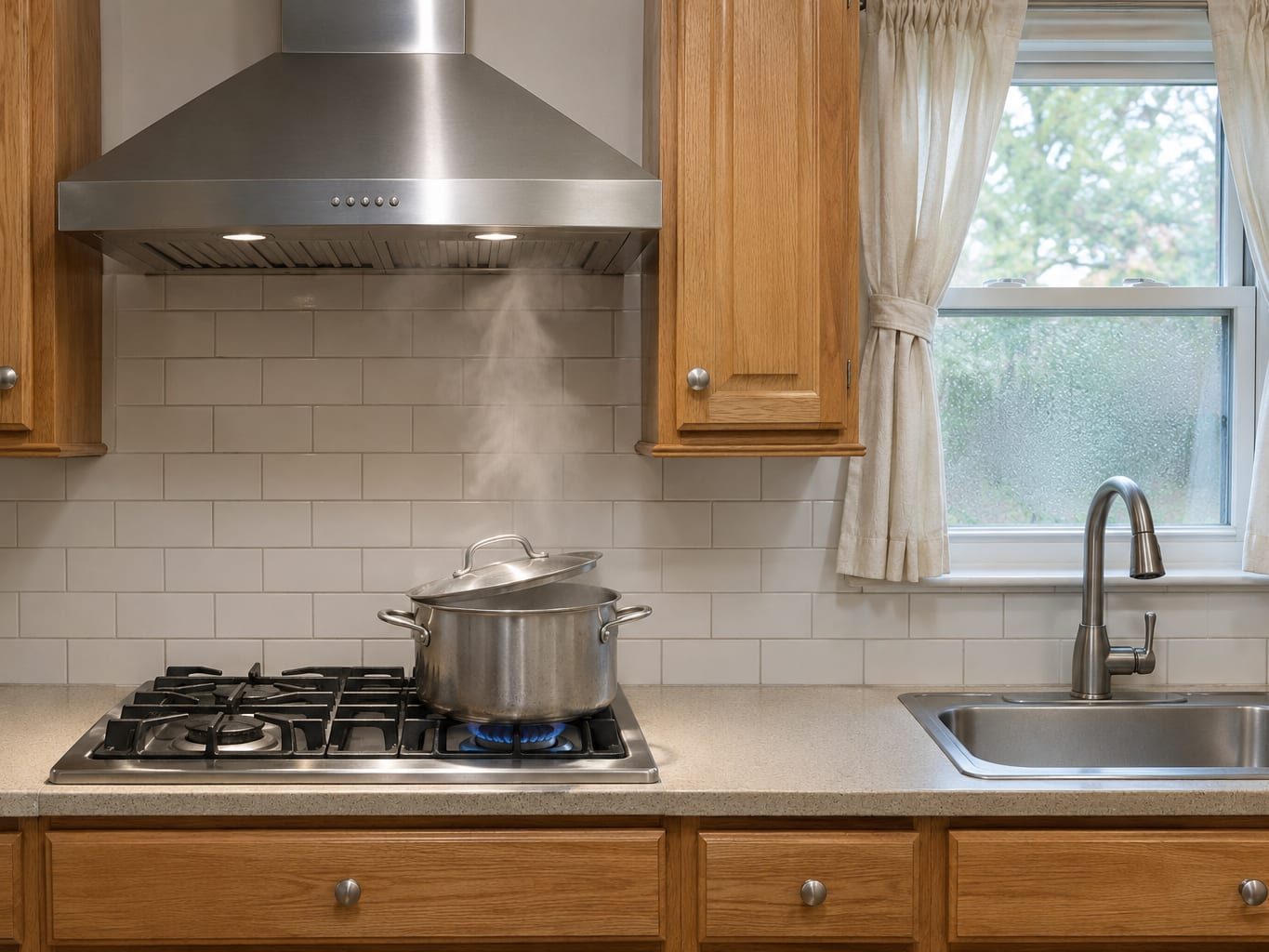
Then move air past the glass. Curtains, blinds, furniture and stored items cut air movement at the window, so keep blinds and curtains open during the day and dry condensation off promptly. Andersen notes that condensation can still form on storm, insulating, Low-E and triple-pane glass when warm, humid indoor air reaches a cold surface.
What ExecPro Restoration & Cleaning Can Inspect, Remediate and Document
When humidity control does not end the spots, or the signs point to water getting in, the next step is working out where the moisture comes from. ExecPro Restoration & Cleaning provides mold inspection, containment, removal, moisture correction, structural drying, documentation, post-remediation verification and rebuild services across New Jersey. Our residential mold inspection records photographs, moisture readings and scope notes, so the question of condensation versus liquid water gets a documented answer.
From there, the work follows the material: cleaning versus removal, containment and controlled cleaning when the problem is bigger than a small surface, and structural drying when the sill, wall or framing is still wet. Drying comes before replacement or painting. Our inspection and remediation work includes photos, moisture readings, scope notes and disposal records.
When the work is done and you need it documented, post-remediation verification provides that record, and our post-mold remediation rebuild work covers trim, drywall or flooring that had to come out. Confirm licensing, insurance, credentials and availability with us before you authorize anything.
Frequently Asked Questions About Mold on Window Sills
What does mold look like on window sills?
It can appear as black, green, gray, brown or white spotting, staining, fuzzy growth or a lasting discoloration. A musty smell, spots that keep returning and dampness are useful signs that moisture remains.
Is mold on window sills bad?
It signals an unresolved moisture condition and can damage materials if it continues. NJDOH says mold can be a health concern, particularly for people with allergies, asthma, emphysema or weakened immune systems. If you have symptoms you connect to mold, talk with a medical professional.
Do I need a professional for one sill?
Not always. A small, accessible hard-surface patch can be cleaned with detergent and water and dried completely. Call for help when the material is soft, porous or swollen, when the growth is spreading, or when the spots return after you have cut humidity.
Window Sill Mold Quick Check
1. What does moisture between the panes of insulated glass usually point to?
2. What does EPA call the coldest surface in a room, where condensation shows up first?
3. How is a small mold patch on a hard surface cleaned?
4. What is EPA's ideal range for indoor relative humidity?
Pick an answer to begin.
The Bottom Line
Mold on a window sill is telling you where water is landing. Check between the panes and look for dampness after rain to learn whether the moisture is in the room or in the wall. Clean small hard surfaces with detergent and water, dry them completely, and wear the gloves, eye protection and N95 respirator CDC recommends.
Humidity near 30 to 50 percent, running exhaust fans and warm air reaching the glass keep winter condensation down, and a dated record protects you with a landlord or an insurer.
When the spots keep returning, the sill is soft, or the wall below the window is damp, we can help. Contact ExecPro Restoration & Cleaning in New Jersey at (888) 300-3772 or through our contact page, and our team will start with the moisture source and coordinate any mold remediation and rebuild from there.
Window Sill Mold Terms
Tap a term to see what it means.
First condensing surface. EPA's term for the coldest surface in a room, which is often the window glass, frame or sill.
Related Articles
Mold Inspection in Robbinsville, NJ: Leaks, Condensation or Seepage, and What an Inspector Checks
Most of the township's land sits outside the mapped floodplain, so a musty room usually traces to a leak. See what mold inspection in Robbinsville, NJ checks.
Mold Inside Walls: How It Is Found and What Has to Come Out
Signs of mold inside walls, how a professional finds it with moisture readings and small openings, and what drywall and insulation come out. A New Jersey guide.
Winter Condensation Mold on Walls, Closets and Windows in NJ
Wet windows and dark spots in closet corners? Learn why winter condensation mold forms, how to tell it from a leak, and what to do this week in New Jersey.