Mold Inspection in Robbinsville, NJ: Leaks, Condensation or Seepage, and What an Inspector Checks
Cal HewittPublished Updated
- mold inspection
- moisture source
- condensation
- robbinsville nj
- new jersey
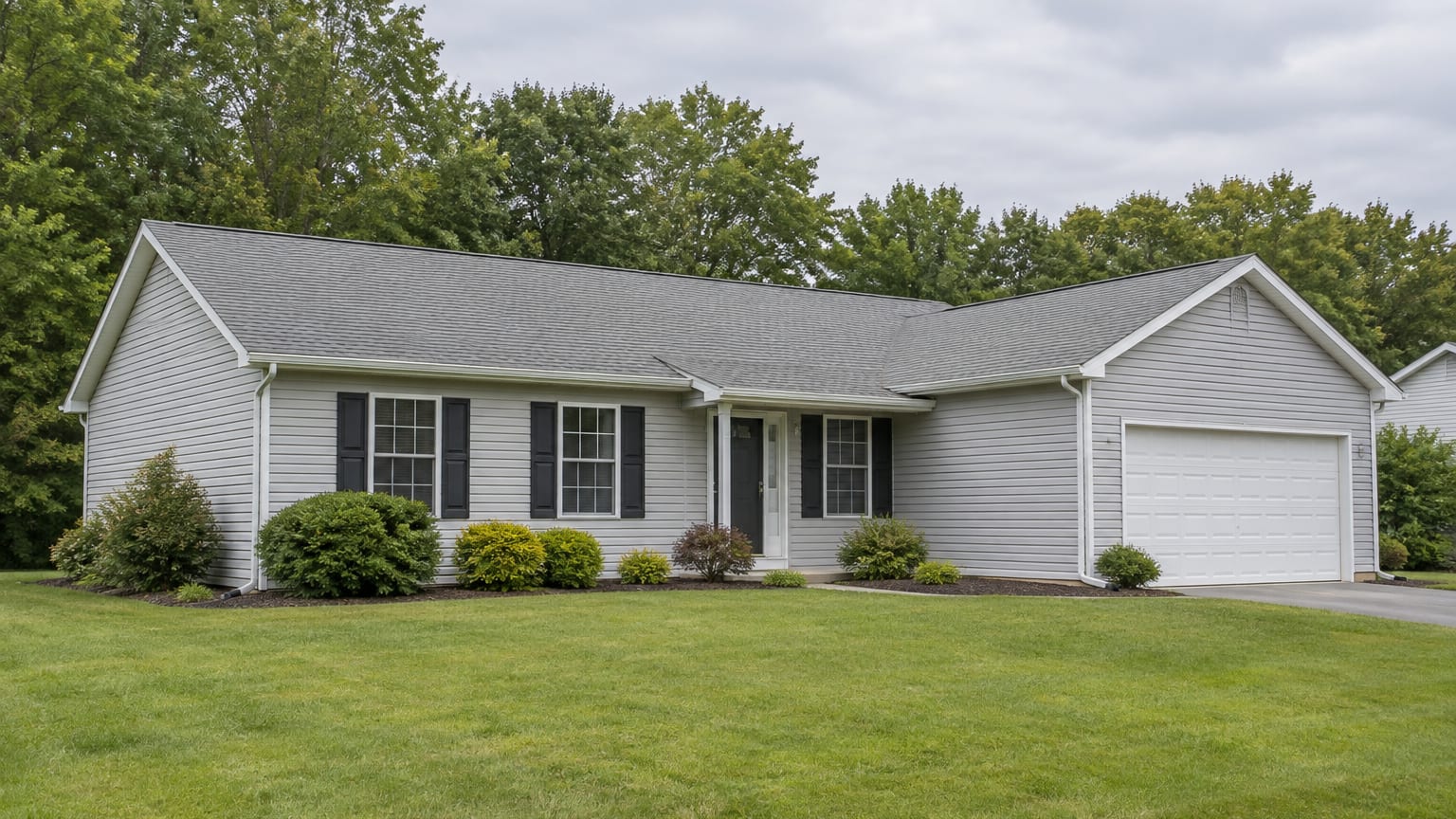
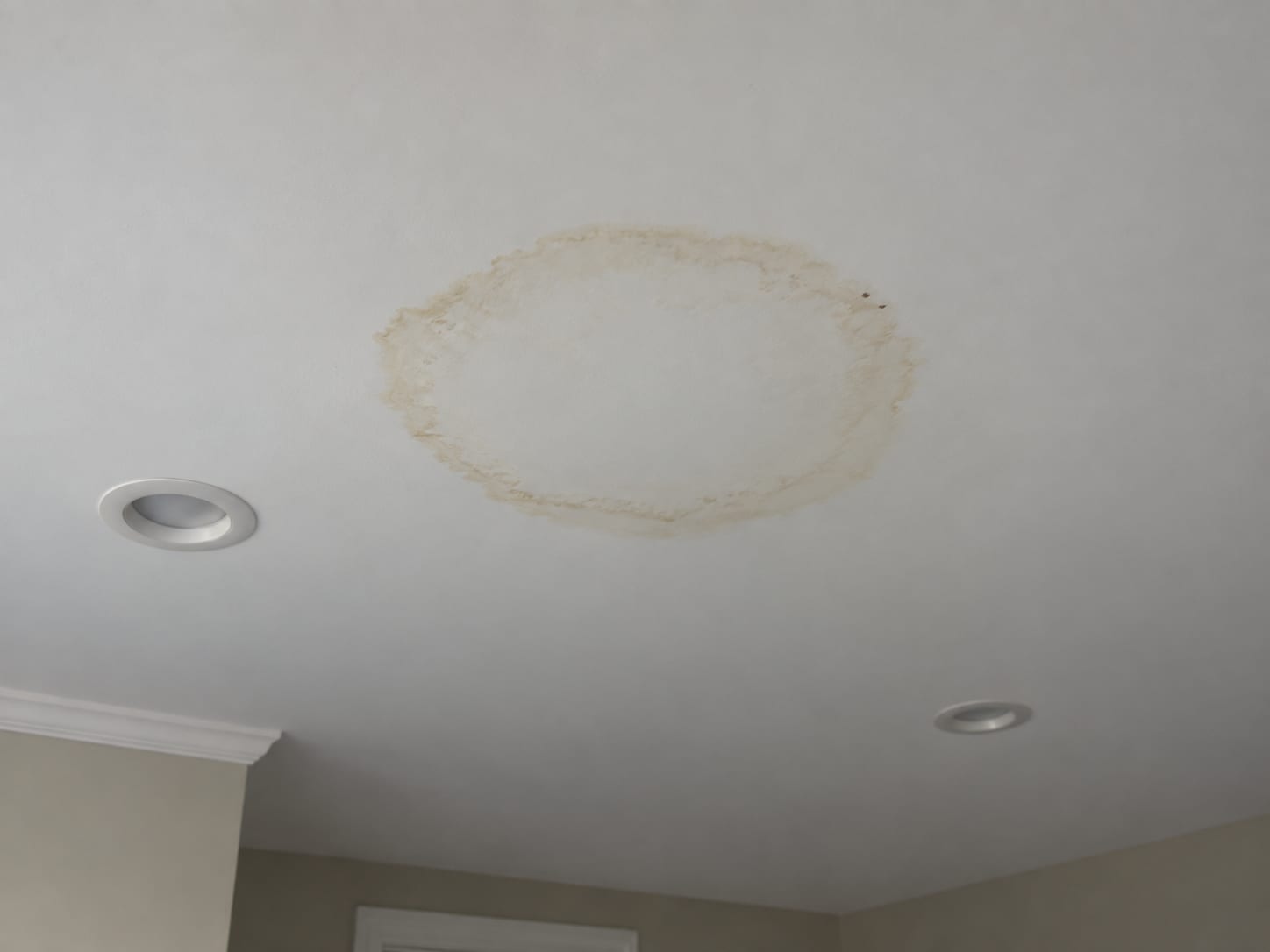
Whether it is a musty smell in the lower level or a stain that has shown up on a ceiling or a wall, you are deciding whether it is worth paying someone to look. Your house is not near a creek and has never flooded, so it is not obvious where the water could be coming from. That is a fair thing to wonder about before you book a mold inspection in Robbinsville, NJ, because the visit only earns its fee if it answers a question you cannot answer yourself. In a house that never flooded, that question is usually where a small, steady amount of water is getting in. An inspector traces that water, records what is visible, and tells you what to fix first. What follows covers what an inspector looks at, what the visit can and cannot tell you, and what you should be holding when it is over.
Key Takeaways
Most addresses are looking for a leak, not a flood
The township's 2012 environmental inventory put about 5.1% of the township's land in the 100-year floodplain, so in most houses an inspector traces roof, plumbing, condensation, grading or drain problems.
An inspection finds the water; a lab sample records a moment
EPA says visible mold usually makes sampling unnecessary, and no federal limit exists for airborne mold, so ask what a sample would change before you pay for one.
Ask for the fee itemized in writing
Inspection, moisture work, sampling, lab analysis, report and follow-up should each be priced on their own line, and a free visit should come with a written list of what it includes.
Leak, Condensation or Seepage: What Brought the Water In
Mold needs moisture, so an inspection is mostly a search for water. In a house that has never flooded, the water usually comes from one of a handful of routes, and each leaves a different trail:
- Roof and flashing leaks: Water runs along the roof deck or down a wall, and shows up as a ceiling stain, often some distance from where the water got in.
- Plumbing and appliance leaks: A supply line, a drain, a dishwasher hose or a water heater can drip inside a wall or under a floor for months before a smell appears.
- HVAC condensate: Air conditioning pulls water out of the air, and a clogged or disconnected condensate line can wet a ceiling, a closet floor or the equipment platform.
- Condensation on cold surfaces: Warm, humid air meets a cold duct, window, pipe or basement wall and leaves water behind, with no leak at all.
- Grading and downspouts: Soil that slopes toward the foundation, or a downspout that empties at the wall, sends rainwater toward the house.
- A failed sump or drain: A sump pump that stopped or a drain that backed up can let water into the lowest level after heavy rain.
- Seepage through a foundation wall: Water moves through the wall or the joint at the floor, leaving damp patches, mineral deposits or a smell.
Newer houses can have any of these too, and older ones may add longer repair histories and older plumbing, roofing, drainage or foundation details.
Hover or tap a row to highlight it.
| Route | What it looks like |
|---|---|
| Roof and flashing leaks | A ceiling stain, often some distance from where the water got in |
| Plumbing and appliance leaks | Dripping inside a wall or under a floor for months before a smell appears |
| HVAC condensate | A wet ceiling, closet floor or equipment platform from a clogged or disconnected line |
| Condensation on cold surfaces | Water on a cold duct, window, pipe or basement wall, with no leak at all |
| Grading and downspouts | Rainwater sent toward the house by sloping soil or a downspout that empties at the wall |
| A failed sump or drain | Water in the lowest level after heavy rain |
| Seepage through a foundation wall | Damp patches, mineral deposits or a smell |
The New Jersey Department of Health recommends an inspection when a mold problem cannot be readily traced to a leak, so the excess water can be located and corrected before any cleanup. If you can already name the source, the visit can be shorter and more focused. If you cannot, the trace is the whole point.
What Does an Inspector Check?
A mold inspection looks at the building conditions that can be seen and measured on site. The New Jersey Department of Health treats a visual inspection as the most important part of the job, and it covers these things:
- Visible growth: Where it is, how large the area is and what material it is on.
- Water staining: Rings and discoloration on ceilings, walls, floors and the underside of wet materials.
- Damp materials: Drywall, carpet, wood and insulation that feel or read wet.
- Elevated moisture: Readings taken with a moisture meter, which senses water inside a material without cutting into it.
- Condensation conditions: Cold surfaces, poor airflow and humid rooms where water forms on its own.
- Likely pathways: The route the water took, from the entry point to where it ended up.
- Areas needing more investigation: Places where concealed damage could exist and a closer look, or a small opening, may be justified.
The inspector looks in attics, crawl spaces, basements and mechanical rooms wherever they can be reached, and should note anything that could not be.
What an Inspector Looks At
Visible growth
Where it is, how large the area is and what material it is on.
Water staining
Rings and discoloration on ceilings, walls, floors and the underside of wet materials.
Damp materials
Drywall, carpet, wood and insulation that feel or read wet.
Elevated moisture
Readings taken with a moisture meter, which senses water inside a material without cutting into it.
Condensation conditions
Cold surfaces, poor airflow and humid rooms where water forms on its own.
Likely pathways
The route the water took, from the entry point to where it ended up.
Areas needing more investigation
Places where concealed damage could exist and a closer look, or a small opening, may be justified.
What Can an Inspection Establish, and What Can It Not?
An inspection establishes conditions: what is visible, what is wet, where the water probably came from, and which areas need more work. It gives you a plan for the source and the affected materials. It does not give you a pass-or-fail number for the air.
Two limits are worth knowing before you book. First, EPA says no federal standards or threshold limits have been set for airborne mold or mold spores, so a lab result on an air sample cannot be presented as proof that a home has crossed a federal line between safe and unsafe. Second, a visual inspection cannot promise that every concealed area is clear, because mold can sit under or behind carpet, cushions, drywall and furniture. What the inspector can do is identify indicators that justify a closer look.
Sampling is a separate decision. EPA says visible mold usually makes sampling unnecessary, and that sampling should be designed and interpreted by professionals with the right experience. A lab can identify or count what is in the sample it receives, but it does not map hidden growth or locate the water. EPA also warns that sampling can be expensive, and that the money may do more good spent on fixing the water and mold problem when the condition is already visible. Sampling can still help in some cases, such as a sale, a dispute or a hidden problem where a result would change what you do, and our mold testing service covers those.
An inspection also cannot diagnose an illness. It documents the building, and a doctor evaluates a person. CDC/NIOSH associates damp buildings and mold with respiratory symptoms, allergic rhinitis and asthma development or worsening, and CDC advises people with asthma, other lung conditions or a suppressed immune system to stay out of buildings with indoor water leaks or visible or smelled mold. If someone in your home is in that group, keep them away from the affected room until the source is dealt with.
What Happens Before, During and After the Visit?
Before the visit, gather what you know and tell the inspector:
- Water history: Any leak, flood, backup or storm entry, with dates.
- Odor and symptoms: Where the smell is strongest, and whether anyone's symptoms change in one room.
- Renovation history: Recent work on the roof, plumbing, windows, HVAC or lower level.
- Prior remediation: Any earlier mold cleanup and the paperwork from it.
- Access: Which rooms, attic hatches, crawl spaces and mechanical areas can be reached.
During the visit, the inspector goes through the accessible areas, traces the moisture conditions, documents visible evidence with notes and photographs, and decides whether sampling or a limited opening in a wall would change the decision. Ask to be shown each finding on the spot.
After the visit, you receive findings and recommendations. The order that follows is to correct the water source, then decide whether cleaning, removing materials, drying, repair or more lab analysis is justified. If the answer is removal or a larger job, our Robbinsville mold remediation page lays out the whole sequence from the source to the rebuild.
A visit length and a report turnaround depend on the property and the provider, so confirm access needs, report timing, sampling fees and return-visit terms when you book, and get them in writing.
Before, During and After the Visit
- 1
Before the visit
Gather your water history, odor and symptoms, renovation history, prior remediation and which areas can be reached.
- 2
During the visit
The inspector goes through the accessible areas, traces the moisture conditions and documents visible evidence with notes and photographs.
- 3
Decide on sampling
The inspector decides whether sampling or a limited opening in a wall would change the decision.
- 4
After the visit
You receive findings and recommendations.
- 5
Correct the water source
Then decide whether cleaning, removing materials, drying, repair or more lab analysis is justified.
What an Inspection Fee Covers, Line by Line
The cost of a mold inspection depends on your building, so the useful move is to ask for a quote that shows what you are paying for. The main drivers are:
- Size: The number of rooms or buildings.
- Extent of the concern: A visible patch is quicker to assess than concealed spaces.
- Access: Basements, crawl spaces, attics, wall cavities and occupied areas can take more time to reach.
- Moisture mapping: Extra diagnostic work to trace a hidden source.
- Sampling: Whether samples go to a lab, and how many and of what type.
- Report needs: What a buyer, seller, landlord, tenant, insurer, employer or school asks for.
- Scheduling: Travel, emergency timing and return visits.
- What follows: Drying, demolition, remediation, reconstruction or an independent check after cleanup.
Ask for an itemized quote that separates the inspection, moisture work, sampling, lab analysis, the report and any follow-up. If a provider offers a free inspection, ask in writing what it includes, whether moisture readings and a written report are part of it, whether lab testing costs extra, and whether the provider expects to be hired for the remediation. A free visit is a business decision, and the written answers tell you what you are getting.
Questions to Ask About a Free Inspection
What does it include?
Ask in writing exactly what the free visit covers.
Are moisture readings and a written report part of it?
Confirm both before you book.
Does lab testing cost extra?
Ask whether any sampling or lab analysis is billed separately.
Will the provider expect the remediation job?
A free visit is a business decision, and the written answers tell you what you are getting.
Since you are choosing whom to hire, remember that New Jersey has no state certification program for mold companies, so ask any provider about training, experience and insurance.
Is Your Address Near a Creek, or on Higher Ground?
Most of the township's land sits outside the mapped floodplain. Robbinsville's 2012 environmental resource inventory, built from FEMA mapping, put 675.70 acres, about 5.1% of the township, in the 100-year floodplain, and 142.46 acres, about 1.0%, in the 500-year floodplain. Those figures measure land, not homes, and they are more than a decade old, so they describe how the township is laid out and not the status of any one house.
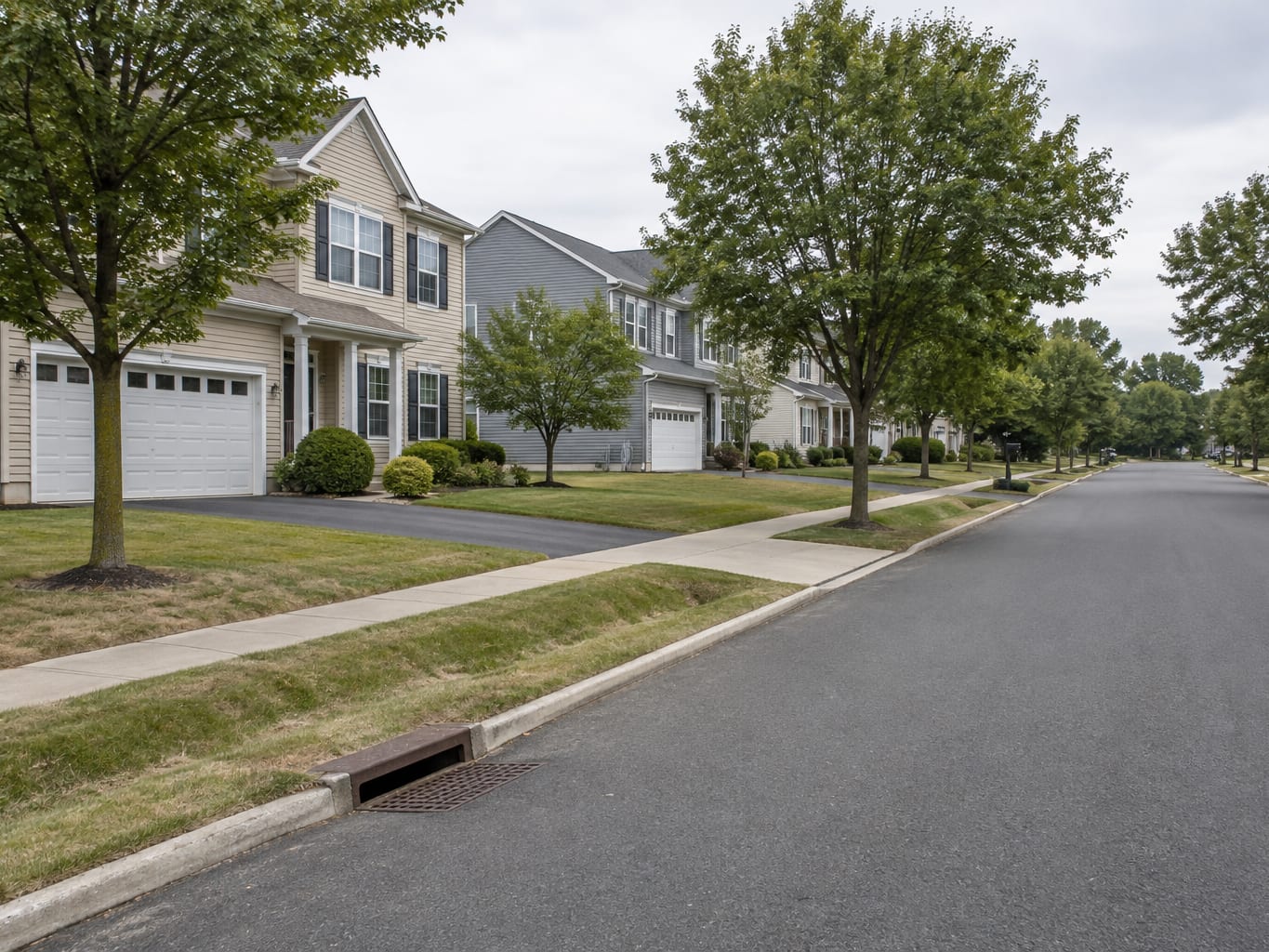
What that means for you is practical. For most addresses, the inspector will be tracing a leak, condensation, grading or a drain problem, and a flood is the less likely explanation. If your property is near water, or if water ever came in from outside, tell the inspector at the start, because it changes what gets examined and how the materials are handled. To find out where your own parcel stands, check it with current FEMA and New Jersey maps.
Which Paper Is Which? Report, Lab Result, Complaint, Permit and Claim
A mold problem produces several kinds of paper, and each does a different job. Keep them separate:
- The inspection report: The inspector's written findings on the building, the moisture and the likely source.
- A lab report: Results from samples, which describe those samples and not the whole house.
- A code complaint or housing inspection: A request to the municipality, which enforces housing standards under its municipal code. The state notes that building-code offices most likely do not have mold regulations, and it directs renters with unrepaired leaks to the local building-code office.
- A permit: Needed for some repair or alteration work, depending on the work and the property. Ask the township construction office whether the repair you plan needs one.
- An insurance claim: Coverage depends on the policy and the cause of the loss, such as a sudden covered event, long-term maintenance, groundwater or flood, a plumbing failure or a roof failure. Ask your insurer before you authorize optional sampling.
- A completion or clearance document: Written proof from the contractor that the work is finished.
Keep photographs, dates, plumber or roofer invoices, moisture readings and the inspection report in one place, since a buyer, a landlord or an adjuster may ask for any of them.
Hover or tap a row to highlight it.
| Paper | What it does |
|---|---|
| The inspection report | The inspector's written findings on the building, the moisture and the likely source |
| A lab report | Results from samples, which describe those samples and not the whole house |
| A code complaint or housing inspection | A request to the municipality, which enforces housing standards under its municipal code |
| A permit | Needed for some repair or alteration work, depending on the work and the property |
| An insurance claim | Coverage depends on the policy and the cause of the loss |
| A completion or clearance document | Written proof from the contractor that the work is finished |
Is a Mold Inspection Worth Paying For at Your Address?
An inspection is most useful when the water source is unclear, the suspected growth is concealed, the property is being bought or sold, a landlord-tenant dispute needs documentation, the affected area is bigger than a small patch you could clean yourself, or someone vulnerable lives in the home and their exposure needs to come down. If the growth and the water source are already clear, an air sample may not change what you do next: correct the moisture and take out the affected materials.
Whichever way you decide, the first day matters. In the next hour, keep people with asthma, other lung disease or a suppressed immune system away from visible mold or indoor leaks, avoid disturbing anything that might be contaminated, photograph the area, stop the water if it is safe to reach, and contact your insurer if a covered event may be involved. In the next day, arrange an inspection or a trade evaluation and protect the area from more wetting. CDC guidance says wet materials should be dried fully and quickly, within 24 to 48 hours, to reduce growth. If the source turns out to be a plumbing failure or storm water, our water damage restoration team handles the drying stage.
Frequently Asked Questions About Mold Inspection in Robbinsville, NJ
Is this mold, or is there still moisture causing it?
A visual and moisture inspection can identify visible growth, staining, damp materials, condensation and likely moisture pathways. Whatever the growth is, the moisture is what has to be located and fixed.
Could it be hidden behind a wall or under flooring?
Yes. Mold can be under or behind carpet, cushions, walls, drywall and furniture. An inspection can point to indicators that justify a closer look, but it cannot promise that every concealed area is clear.
How much does a mold inspection cost in New Jersey?
The price depends on the size of the property, access, moisture work, sampling and reporting. Ask for separate prices for inspection, moisture mapping, sampling, lab analysis, the report and follow-up.
How can I get a free mold inspection in New Jersey?
A free inspection is an offer some companies make, not a state entitlement. Ask in writing what it includes, whether moisture readings and a written report are part of it, whether lab work costs extra, and whether the company also wants to do the remediation.
Will insurance pay for a mold test?
Coverage depends on the policy and the cause of the loss. Ask your insurer before authorizing optional sampling, and keep photographs, dates, invoices, moisture readings and the inspection report.
Can an inspection tell me whether mold is making someone sick?
No. An inspection documents building conditions and helps locate moisture. A doctor evaluates symptoms, and CDC/NIOSH identifies medical breathing tests and allergy tests as separate clinical tools.
Check What You Know About Mold Inspection
1. What is an inspection mostly a search for?
2. What does EPA say about federal limits for airborne mold?
3. When does EPA say sampling is usually unnecessary?
4. Who can tell you whether mold is making someone sick?
5. What do the township's 2012 floodplain acreage figures measure?
Pick an answer to begin.
Moving Forward
A mold inspection is worth its fee when it answers the question you cannot answer yourself: where the water is coming from. For most addresses in Robbinsville that means a leak, condensation, grading or a drain problem, and the inspector traces it, records what is visible and tells you what to fix first. A lab sample is a separate decision, and an itemized quote keeps the cost of each part clear.
When you leave with a written report, a corrected water source and your records in one place, the next step, whether that is cleaning, removal or nothing at all, rests on facts. That protects your house, your insurance position and your peace of mind at a sale.
If you are trying to decide whether to have a look at a Robbinsville, NJ home, ExecPro Restoration & Cleaning can inspect the areas you are worried about, trace the moisture and put what we find in writing. Call us at (888) 300-3772 or contact us to schedule a mold inspection, and see our mold inspection service for how we approach the visit.
Mold Inspection Terms
Tap a term to see what it means.
Moisture meter. A tool that senses water inside a material without cutting into it.
Serving Robbinsville
ExecPro Restoration & Cleaning provides mold remediation services in Robbinsville, NJ, from inspection and testing through removal, drying, and post-remediation verification. Call (888) 300-3772 for 24/7 emergency response.
Related Articles
A Musty Smell With No Visible Mold: How to Track Down the Source
Musty smell but no visible mold? Check these places tonight, learn what a moisture inspection covers, and know when to call. A New Jersey guide.
Air Quality Testing in Robbinsville, NJ: A Musty Smell After a Thunderstorm
A musty smell that shows up after heavy rain often means hidden moisture. See what air quality testing in Robbinsville, NJ can tell you and what to check.
Basement Mold Remediation in Robbinsville, NJ: Fieldstone, Poured Concrete and Rain That Soaks In
Whether the wall is fieldstone or poured concrete, basement mold remediation in Robbinsville starts with where rain gets in. Learn what shapes the scope.