
Mold Inside Walls: How It Is Found and What Has to Come Out
Cal HewittPublished
- mold inspection
- moisture source
- structural drying
- new jersey
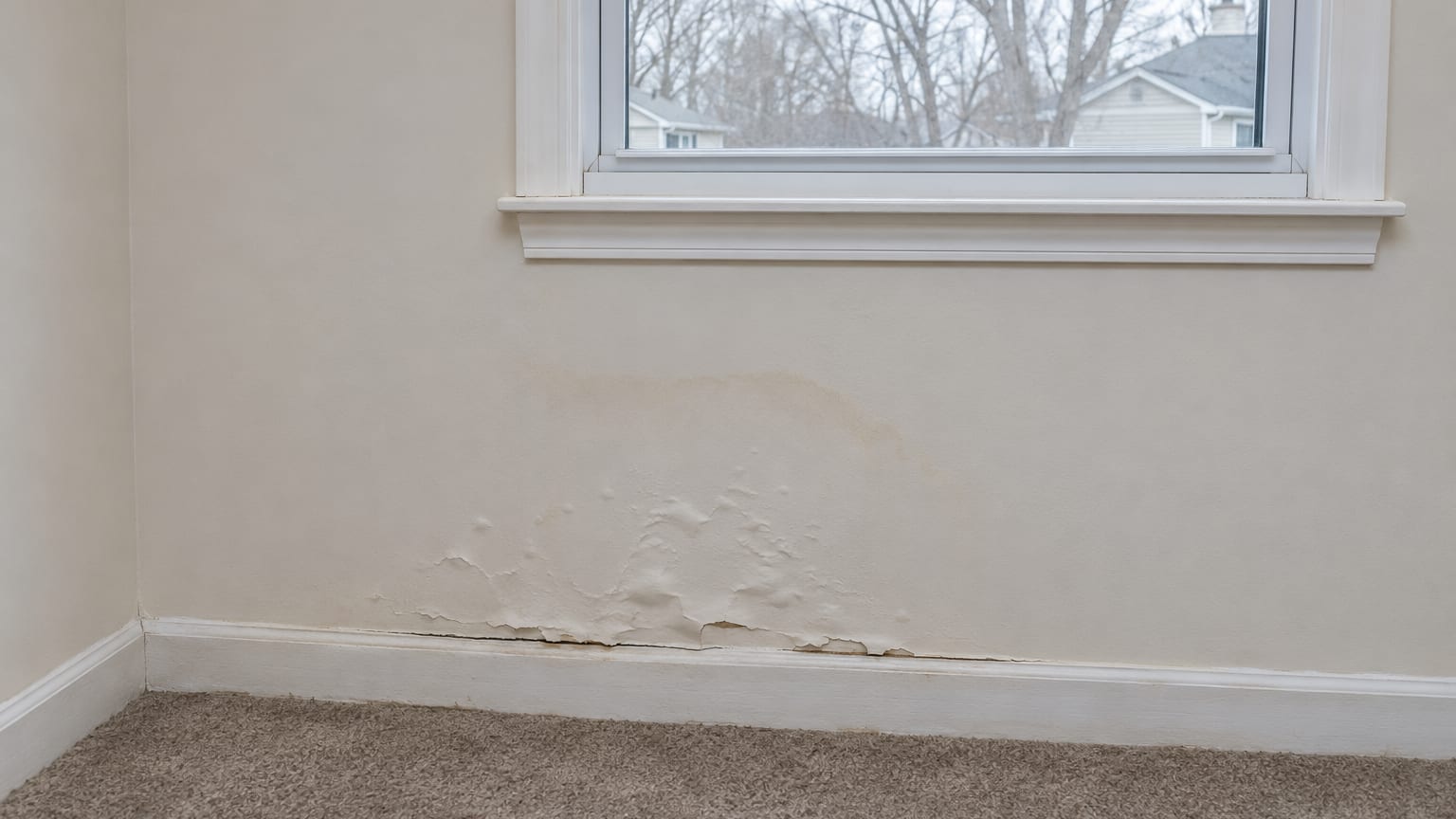
You smell mustiness near a wall, or the paint is bubbling, or the baseboard has gone soft, and you wonder whether mold inside the wall is growing where you cannot see it. Do not paint, caulk or close up a damp wall while you find out.
Whether the wall needs a professional now or can wait depends on the leak history, how wet the wall is and how much of it looks affected. A wall with a known leak, swelling or soft material should get a look soon. The rest of this page shows how that look works, what usually has to come out, and which decisions you can make this week.
Key Takeaways
Several tools, no single answer
A moisture meter shows moisture conditions but not whether mold is present, and a thermal camera shows surface temperature differences, so a professional combines a visual check, moisture readings and a small opening before drawing a conclusion.
Swollen or seam-split drywall comes out
EPA says drywall can be dried in place only when it shows no obvious swelling and its seams are intact, and wet insulation is often replaced.
The leak comes first
Painting, caulking or closing a wall before the water source is repaired and the cavity is dry lets the growth return.
Mold Inside a Wall Needs More Than a Surface Fix
Mold needs moisture. EPA says that drying wet materials within 24 to 48 hours will, in most cases, prevent mold growth, and that the answer to a mold problem is to fix the leak, control condensation and keep indoor humidity below 60 percent, ideally between 30 and 50 percent. Inside a wall, that drying is harder, because the cavity holds drywall, insulation and wood in a closed space.
Hidden growth also hides on surfaces you never see. EPA lists the back of drywall, wallpaper and paneling, pipe chases and areas behind furniture where condensation forms. A fresh coat of paint over any of those covers the stain and leaves the moisture and the growth in place, and EPA advises against enclosing wet materials or materials showing biological growth.
The first hour has a short list. Do these before you call anyone.
- Stop the water: Shut off a leaking fixture, or call a plumber for a plumbing leak, and stay out of any area where water is near electrical equipment until it is safe.
- Protect people: Keep infants, older adults and anyone with asthma, chronic lung disease or a weakened immune system away from damaged or moldy material.
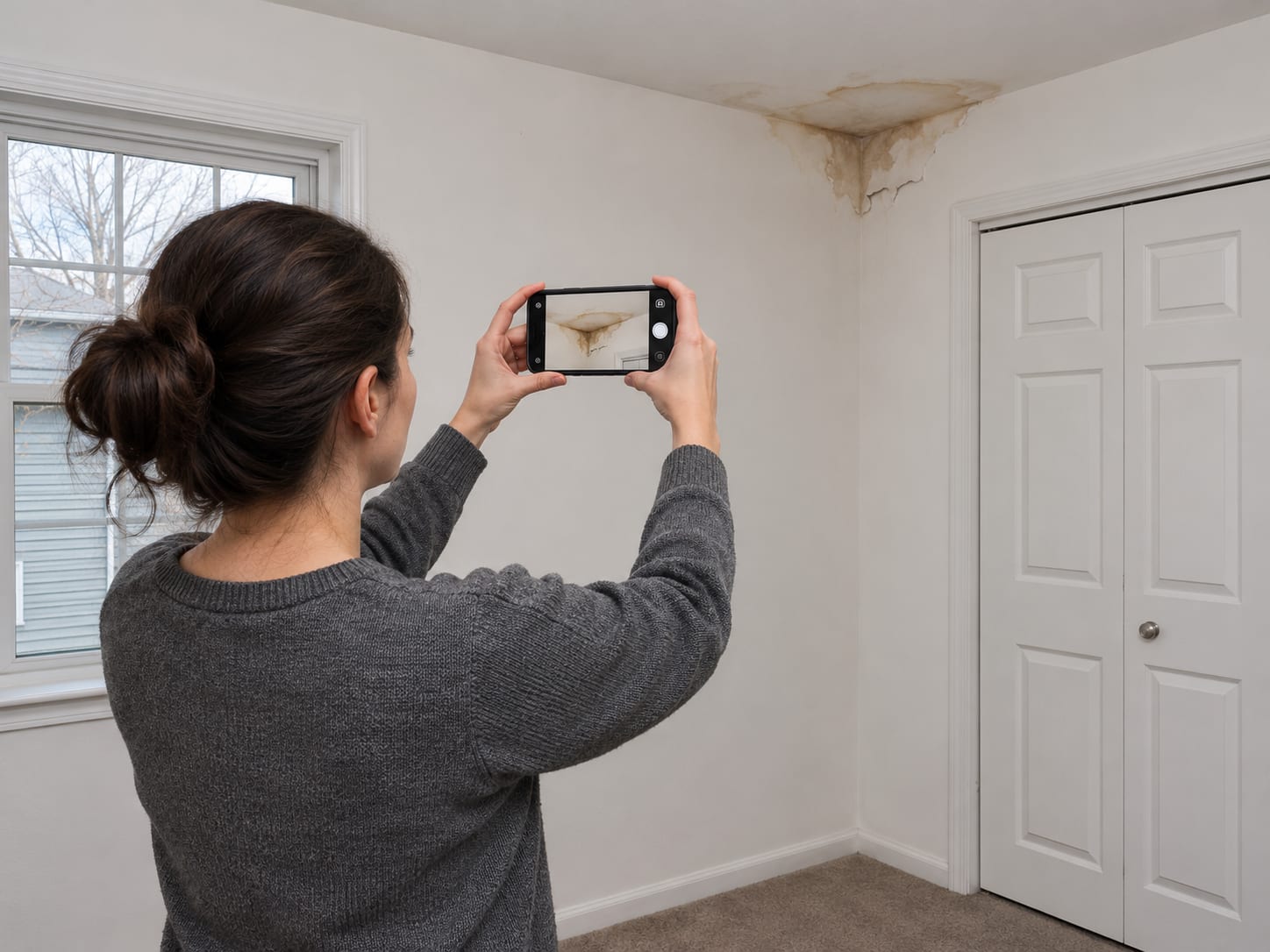
- Take photographs: Capture the wall, baseboard, ceiling, nearby flooring and the suspected source before anything is moved or thrown out.
- Hold off on finishes: Do not paint, caulk or seal the wall.
- Call your insurer: If a sudden water event caused this, ask what records and temporary protection the insurer requires.
The Signs Point to Moisture Behind the Wall
EPA's list of indicators of hidden mold or moisture reads like what you may already be seeing: a persistent musty odor, a known leak from a pipe, roof, window or foundation, water stains, bubbling or peeling paint, swollen drywall or split seams, and warped paneling or baseboards. Mold you can see at the wall surface, behind furniture, around windows, near pipe chases or where the wall meets the floor belongs on that list too, as does condensation on exterior walls, pipes and cold surfaces.
Signs of Moisture Behind a Wall
A persistent musty odor
One of EPA's indicators of hidden mold or moisture.
A known leak
From a pipe, roof, window or foundation.
Water stains, bubbling or peeling paint
Marks on the wall that a fresh coat of paint would only cover.
Swollen drywall or split seams
Material that has taken on water.
Warped paneling or baseboards
Soft or distorted trim near the wall.
Condensation
On exterior walls, pipes and cold surfaces.
Symptoms alone do not show that mold is in the wall. If someone coughs or wheezes more in a damp room, look for moisture and ask a physician what the symptoms mean.
If you are unsure whether a mark is mold at all, our post on what looks like mold on walls covers the common look-alikes. A stain that comes back, a smell that follows a leak, or a soft spot in the wall is enough to book an inspection. A residential mold inspection starts with the history and the moisture before anyone cuts into drywall.
A Professional Reads a Wall Cavity With Several Tools, Not One
A professional investigation combines several forms of evidence. Each tool answers a narrow question and has limits, which is why you should be wary of anyone who promises to find or rule out hidden mold with one device. The sections below take them in the order an inspector usually works.
Hover or tap a row to highlight it.
| Tool | What it shows | Its limit |
|---|---|---|
| Visual review and leak history | Accessible mold and likely sources of water | Cannot see through an intact wall finish |
| Moisture meter | Moisture in drywall, wood, brick and concrete, which helps map the wet area and track drying | Shows moisture conditions, not whether mold is present |
| Thermal camera | Differences in surface temperature | Does not directly detect moisture or measure through materials |
| Borescope or small opening | The part of the cavity that was opened | Limited to the spot opened; breaking moldy wallboard can make spores airborne |
| Air sampling | Helps when the source is unclear, a dispute is involved, health concerns are significant or the result would change the plan | Cannot establish how much mold is inside a cavity |
Visual review and leak history
The inspector starts with what you know: leaks, odors, stains, repairs, flooding, roof or window leaks and any earlier cleanup. EPA calls the investigator's eyes and nose central parts of a mold investigation. Looking identifies accessible mold and likely sources of water, but it cannot see through an intact wall finish.
Moisture mapping
A moisture meter reads moisture in drywall, wood, brick and concrete, and the readings help map the wet area and track drying. The EPA mold course says meters can help locate areas where hidden mold may be growing, but they indicate moisture conditions rather than proving mold is present. ASHRAE gives an example in which readings differed within a few millimeters and mold was present in one spot but not the next, so one normal reading does not clear a wall.
Thermal imaging
An infrared camera shows differences in surface temperature. The IICRC S500 water damage standard states that it does not directly detect moisture or measure through materials, so a cool patch on a wall is a lead to check with a moisture reading. Temperature differences can also come from evaporative cooling, thin or compacted insulation, thermal bridging or moving air from the heating and cooling system.
Small openings and sampling
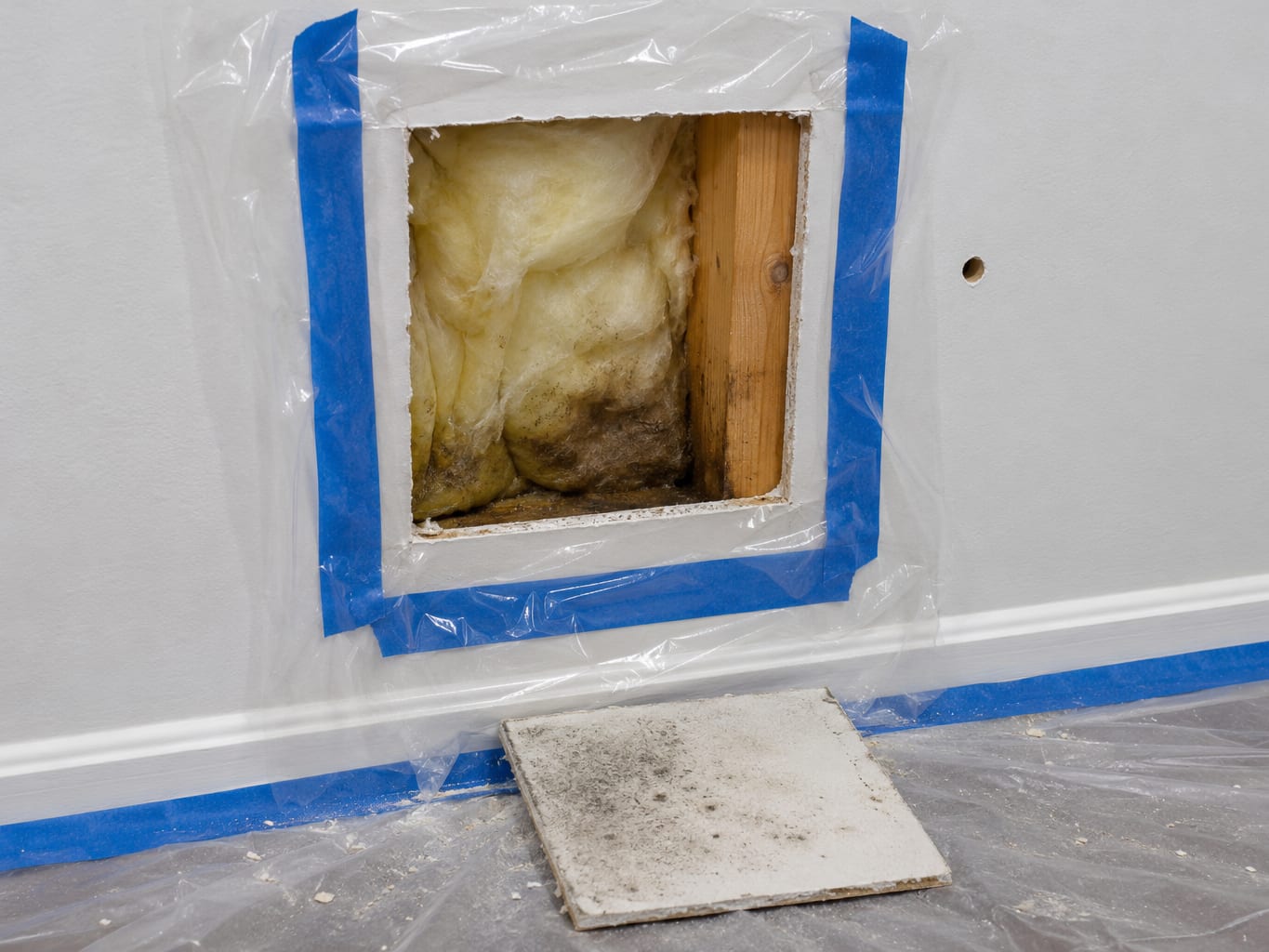
A borescope can enter through a small drilled hole and inspect part of a cavity, and a targeted opening can show the back of the drywall, the insulation or the framing. Both are limited to the spot that was opened, and OSHA warns that breaking apart moldy wallboard or working inside a cavity can make spores airborne, so openings need controls such as dust protection and sealed disposal.
Air sampling cannot establish how much mold is inside a cavity. EPA says visible mold usually does not need routine sampling before cleaning and moisture correction, and that sampling helps when the source is unclear, a dispute is involved, health concerns are significant or the result would change the plan. Before paying for a sample, ask whether the result would change what you do, and see our mold inspection page for what a visit covers.
Drywall, Insulation and Framing Each Get Their Own Decision
Once the water is stopped and the extent is mapped, the work follows a sequence that EPA and the New Jersey Department of Health support: correct the moisture source, assess the extent, contain the work when size or disturbance calls for it, remove porous materials that cannot be cleaned, clean what can be saved, dry everything completely, confirm the area is ready, then rebuild. Each material in the wall follows its own rule inside that order.
From Leak to Rebuild
- 1
Correct the moisture source
The water has to be stopped first.
- 2
Assess the extent
Map how far the damage reaches.
- 3
Contain the work
When size or disturbance calls for it.
- 4
Remove porous materials that cannot be cleaned
Such as swollen drywall and wet insulation.
- 5
Clean what can be saved
Including structurally sound framing.
- 6
Dry everything completely
Before anything is closed up.
- 7
Confirm the area is ready
Through any inspection, testing or verification you agreed on.
- 8
Rebuild
Reconstruction follows once the cavity is dry.
Drywall. EPA says drywall may stay when there is no obvious swelling and the seams are intact, as long as it can be dried completely. When it is swollen or the seams have failed, removal is necessary. If it stays, the cavity should be ventilated, because wall cavities are hard to dry.
Insulation. Cellulose and fiberglass insulation may need to be thrown out after water damage or mold, since porous fibers are hard to clean thoroughly. When insulation cannot be dried and cleaned fully, replacement is preferred.
Framing. Structurally sound wood can be cleaned with mild detergent and clean water and then dried. Cleaning does not replace fixing the moisture source, and heavily damaged framing needs a structural evaluation and repair.
Hover or tap a row to highlight it.
| Material | The decision |
|---|---|
| Drywall | May stay when there is no obvious swelling, the seams are intact and it can be dried completely; removal is necessary when it is swollen or the seams have failed |
| Insulation | Cellulose and fiberglass may need to be thrown out; replacement is preferred when it cannot be dried and cleaned fully |
| Framing | Structurally sound wood is cleaned with mild detergent and clean water, then dried; heavily damaged framing needs a structural evaluation and repair |
Dust control scales with the job. OSHA recommends isolating the work area with sealed barriers, airlocks, negative pressure and HEPA-filtered exhaust for extensive contamination. Smaller isolated areas may not need full containment, but surfaces should still be protected, dust suppressed and removed materials sealed.
Before the wall is closed, the area should be completely dry. NJDOH's guidance for residents says the same, and closing a wet wall hides ongoing moisture and invites the growth to return. Our structural drying and drywall replacement after mold pages describe those two stages.
The First Day Comes Before Any Demolition
Within a day, arrange an inspection if the wall is swollen, soft, stained, persistently damp, musty or tied to a known leak. Give the inspector the history: leaks, roof or window intrusion, heating and cooling condensation, plumbing repairs, floods and earlier cleanup. Keep photographs, receipts, invoices, readings, reports and messages together in one folder.
Ask whether the wall can be dried in place or needs targeted removal, and who repairs the leak if that falls outside the mold contractor's scope. If you rent, write to the landlord now.
In the following week, confirm the leak was repaired and not just covered. Read the written scope before any demolition: what happens to drywall, insulation, baseboards, framing, contents and heating and cooling parts, how the work area will be isolated, and how drying will be recorded. Before reconstruction, make sure the affected materials are dry and that any inspection, testing or post-remediation verification you agreed on is done.
New Jersey Renters, Buyers and Insurance Claims Have Different Next Steps
New Jersey has no state certification program for companies that perform mold inspection, testing or remediation, according to NJDOH, and the department does not endorse the firms on its lists. So, the checking falls to you: ask about training, insurance, a written scope, containment, drying records and documentation.
Renters. Notify the landlord in writing about the leak, damage, odor or suspected mold, ask for repair of the underlying leak, and allow access for inspection and repairs. NJDOH says local code offices generally address the underlying structural problem, such as a leak or plumbing defect, because New Jersey has no mold-specific regulations. The Department of Community Affairs guide says serious conditions may affect habitability, but a tenant must notify the landlord, allow access and meet other legal requirements first. Talk to an attorney before withholding or deducting rent.
Buyers. Arrange a specialist inspection within the inspection-contingency period, and ask the seller for records of leaks, flooding, earlier remediation, repairs and insurance claims. New Jersey's seller disclosure form requires sellers to disclose known material defects, and it says the form does not replace a qualified inspection. A pre-purchase mold inspection fits that window. A state flood-disclosure law, effective March 20, 2024, also requires certain flood-risk disclosures from sellers and landlords. Ask your attorney how disclosure, repair credits and contract rights apply to your sale.
Insurance. The Department of Banking and Insurance says policy terms control coverage. Sudden and accidental water damage may be covered, flood damage is excluded from ordinary homeowners policies, and mold is generally excluded unless it results from a covered loss. Long-term seepage and maintenance exclusions can change the answer for a slow leak. Report the loss promptly, ask what records are required and photograph the damage. Keep damaged property for the insurer to inspect unless safety or immediate mitigation requires removal.
Prevention Starts at the Water Source
The first repair belongs to the source, not the visible wall. Painting, caulking or replacing drywall without correcting the leak or the condensation lets the problem come back. Common water routes into New Jersey walls include supply and drain leaks in kitchens, baths and laundry rooms, burst or frozen pipes, roof leaks, failed flashing, siding, caulk and window frames, foundation seepage, condensation on cold exterior walls and pipes, blocked air conditioner condensate lines and storm flooding.
EPA recommends repairing roof gutters, grading soil away from foundations, maintaining air conditioner drip pans and drain lines, reducing humidity and venting moisture-producing appliances. NJDOH adds that when a leak cannot readily be traced, the building should be inspected to find the source of excess water before remediation. Our post on basement humidity levels covers the readings to aim for.
A Written File Should Follow the Job From Inspection Through Rebuild
Inspection, testing, remediation, drying and reconstruction are separate decisions, and each one should leave a record. An inspection report should include photographs, moisture readings, room-by-room findings, suspected source areas, the limits of what was learned and recommended next steps. We do not treat any single tool as proof either way, and the report should say what each reading can and cannot show.
Ask for the written scope before demolition: which materials will be removed, which framing will be cleaned, how the area will be contained and the heating and cooling system protected, how waste will be sealed, and how drying will be documented. Moisture readings and drying logs, remediation and reconstruction reports, repair invoices, permit and inspection records and your insurance claim paperwork belong in the same file. New Jersey reconstruction goes through the Uniform Construction Code, enforced by municipal construction officials, so ask who handles any permits before the wall is rebuilt.
What the Written File Should Hold
The inspection report
Photographs, moisture readings, room-by-room findings, suspected source areas, limits and next steps.
The written scope
Which materials come out, which framing is cleaned, how the area is contained and how waste is sealed.
Drying records
Moisture readings and drying logs.
Job reports and invoices
Remediation and reconstruction reports and repair invoices.
Permits and inspections
Permit and inspection records.
Claim paperwork
Your insurance claim documents.
An inspection by the company that does the cleanup is not independent confirmation of its own work, so ask about separate verification if you want it. Our services page lists the inspection, remediation, drying and rebuild work we handle.
Frequently Asked Questions About Mold Inside Walls
Is mold inside walls harmful?
It can be. CDC says damp and moldy places may cause no symptoms in some people and nose, throat, eye, skin or breathing symptoms in others, and people with asthma, chronic lung disease or a weakened immune system face greater concern. NJDOH says the amount of mold needed to cause health problems is not known. If anyone has breathing trouble or severe symptoms, contact a medical professional.
How do you get rid of mold inside your walls?
Correct the moisture first. Then a professional decides which drywall and insulation can be dried and cleaned and which must be removed, cleans salvageable framing, and dries the cavity. Containment, sealed bags, HEPA filtration and protective gear are used as the extent calls for.
Is it safe to sleep in a room with mold on the wall?
That depends on how much there is, the condition of the room and who sleeps there. OSHA and EPA recommend keeping a work area unoccupied during remediation, and OSHA recommends moving infants, people recovering from surgery, people with weakened immune systems and people with chronic inflammatory lung disease out of adjacent spaces for larger jobs. A person with asthma or a weakened immune system should ask a physician about exposure.
What kills mold off walls, and what is the strongest wall mold remover?
The strength of a chemical is not the deciding factor. EPA emphasizes fixing the source, cleaning, removing materials that cannot be cleaned and drying completely, and EPA states that dead mold remains allergenic. Hard, nonporous surfaces can be cleaned with detergent and water and dried fully. Never mix bleach with ammonia or other cleaners, and do not use a chemical to hide or seal a wet wall. Our post on what kills mold and what not to use goes through the common products.
What kills black mold instantly in walls?
No instant treatment makes hidden mold inside a wall safe. Mold comes in many colors, and color does not establish the species or the hazard, so the response is the same: address the moisture, assess the materials, clean or remove them and dry the area.
Do you have to throw everything away with mold in the house?
No. Nonporous materials can often be cleaned and reused, and structurally sound wood can be cleaned and dried. Drywall, insulation, carpet and ceiling tile are hard to clean once mold or water has gone into them and may have to go. Contents are judged one item at a time.
Does turning the AC off cause mold?
It can let humidity and condensation rise in warm, humid weather. EPA recommends running air conditioners or dehumidifiers as needed to keep humidity below 60 percent, ideally 30 to 50 percent. Uncontrolled humidity can support growth.
Mold Inside Walls Quick Check
1. Does a moisture meter show whether mold is present?
2. When does EPA say drywall may stay in place?
3. What happens if you paint, caulk or close a wall before the leak is repaired?
4. What does a thermal camera show?
5. Does New Jersey certify companies that perform mold inspection, testing or remediation?
Pick an answer to begin.
Final Thoughts
Mold inside a wall follows moisture, and no single tool proves it is there or rules it out. A visual check, moisture readings and a small opening together show what is happening, and the wall is rebuilt only after the leak is repaired and the cavity is completely dry. Swollen drywall and wet insulation usually come out, and sound framing is cleaned and dried.
Acting while the problem is one wall protects the framing and finishes around it. This week, confirm the leak is repaired, read the scope and decide who documents the drying.
If you are in New Jersey and something is wrong near a wall, we at ExecPro Restoration & Cleaning can inspect it, take moisture readings and give you a written scope before any demolition. We handle mold inspection, remediation, drying and rebuilds. Call us at (888) 300-3772 or reach us through our contact page, and tell us where the wall is and what you have noticed.
Mold Inside Walls Terms
Tap a term to see what it means.
Wall cavity. The closed space inside a wall that holds drywall, insulation and wood, where drying is harder.
Related Articles
Winter Condensation Mold on Walls, Closets and Windows in NJ
Wet windows and dark spots in closet corners? Learn why winter condensation mold forms, how to tell it from a leak, and what to do this week in New Jersey.
Buying a House With Mold: When to Walk Away or Repair
Found mold during a home inspection in New Jersey? See which findings are fixable, which mean walking away, and what to ask before attorney review ends.
Ceiling Mold After a Roof Leak: What to Do and Remove
Ceiling mold after a roof leak can mean water reached the insulation and drywall above. Learn the first steps, what can stay and the repair order.