Ceiling Mold After a Roof Leak: What to Do and Remove
Cal HewittPublished
- mold remediation
- moisture source
- structural drying
- new jersey
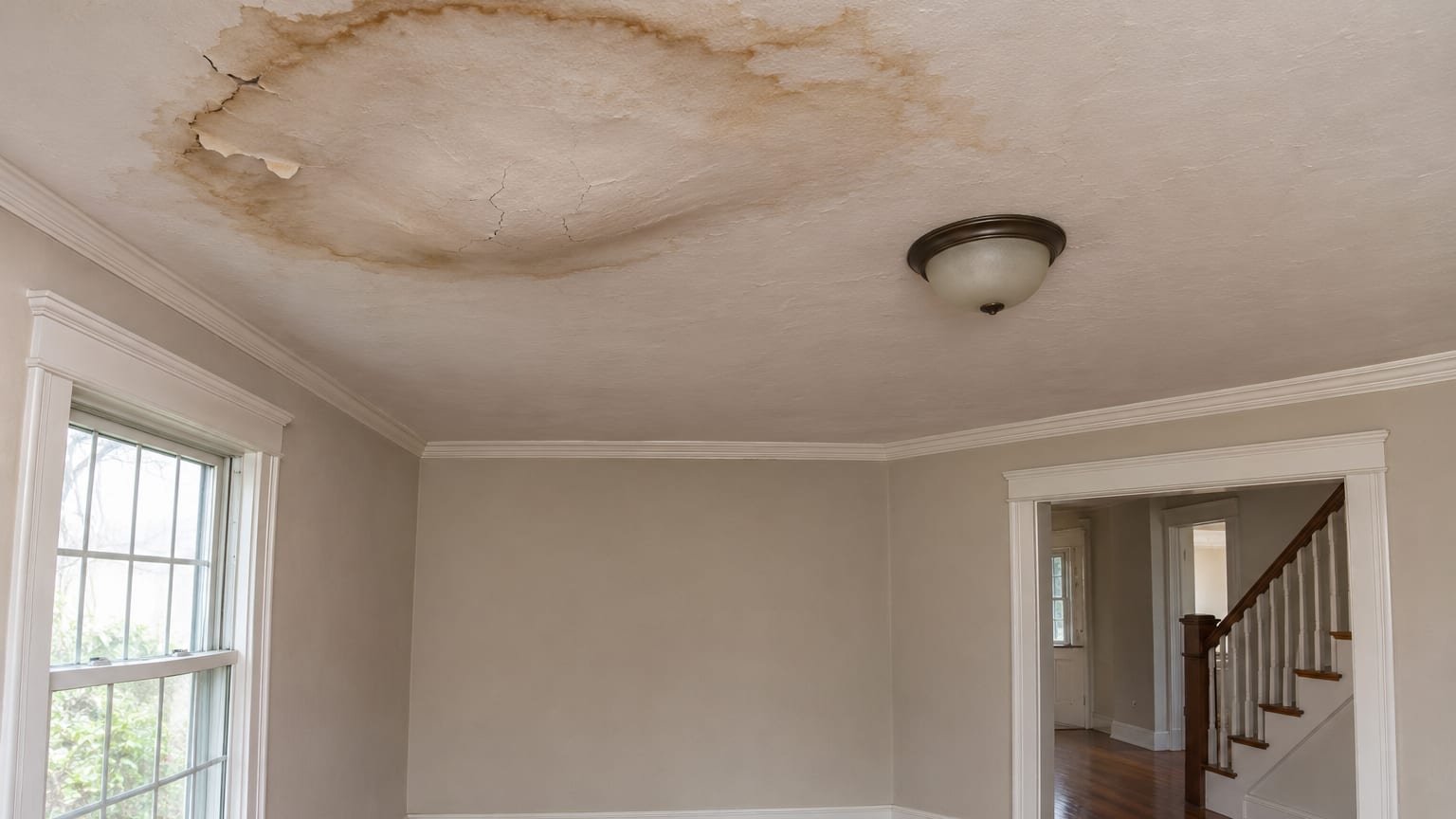
A brown ring has spread across the ceiling since the last storm, or the paint is bubbling, or a dark patch has shown up near the bathroom. Ceiling mold after a roof leak puts you in a hurry and in the dark at once, because the spot you can see below may be a small part of what is wet above.
The first hour comes first: stop the water if you can do it safely, keep people clear of sagging material, and leave a wet ceiling light switched off. After that, order matters. The roof, the mold and the ceiling each get fixed in sequence, and each step protects the next one.
You can follow that sequence with your roofer, a remediator and a drywall contractor, and you can ask each of them for a written scope that keeps their work separate.
Key Takeaways
The first hour
Stop or isolate the water when it is safe, keep people away from sagging ceilings, leave wet ceiling lights off, and photograph the ceiling, the attic side and any mold before cleanup.
Source, then mold, then ceiling
NJDOH says to correct the water source before remediation, and closing a wet or contaminated cavity can conceal continuing damage.
Material rules
EPA lets wallboard dry in place only when it shows no obvious swelling and its seams are intact, water-damaged cellulose and fiberglass insulation get replaced, and a plaster ceiling stays only after a professional confirms the plaster, lath and cavity are sound and dry.
A written scope
Ask for one that separates drying, cleaning, removal, disposal and rebuild, and keep the photographs, moisture readings and invoices an insurer, landlord or buyer will ask for.
Ceiling Mold After a Roof Leak: Why the First Steps Matter
Mold needs moisture, and EPA recommends drying water-damaged areas and belongings within 24 to 48 hours to help prevent growth. That window is a prevention target, and it explains why the first hour counts. Work through these in order:
1. Stop or isolate the water if you can do it safely, and call a roofer or plumber for an active leak. 2. Keep people away from sagging ceilings, wet electrical fixtures and visibly contaminated areas. 3. Leave a wet ceiling light or fixture off. If water reached electrical equipment, have a qualified electrician evaluate the circuit. 4. Move furniture and belongings out from under the wet area, as long as the ceiling is stable and you are not spreading contaminated material. 5. Photograph and video the ceiling, the roof-related conditions outside, the attic side, wet belongings and any visible mold before cleanup.
Call your insurer before you discard damaged property if a claim may apply. EPA recommends contacting the insurance company and photographing the home and belongings before cleanup.
Then work out what kind of water it was. Rain through a roof and a clean supply line are different from sewage or floodwater, and EPA says fans should not run until you know the water is clean. If you cannot tell where the water entered, NJDOH recommends having the building inspected to find the source.
What May Be Above the Stained Ceiling
EPA says mold may be hidden behind drywall, above ceiling tiles, in insulation and on roof materials above ceilings. A clean-looking ceiling surface does not tell you the cavity is dry. Persistent moisture keeps working on drywall, insulation, roof sheathing, framing and finishes, and EPA notes that mold gradually destroys the materials it grows on.
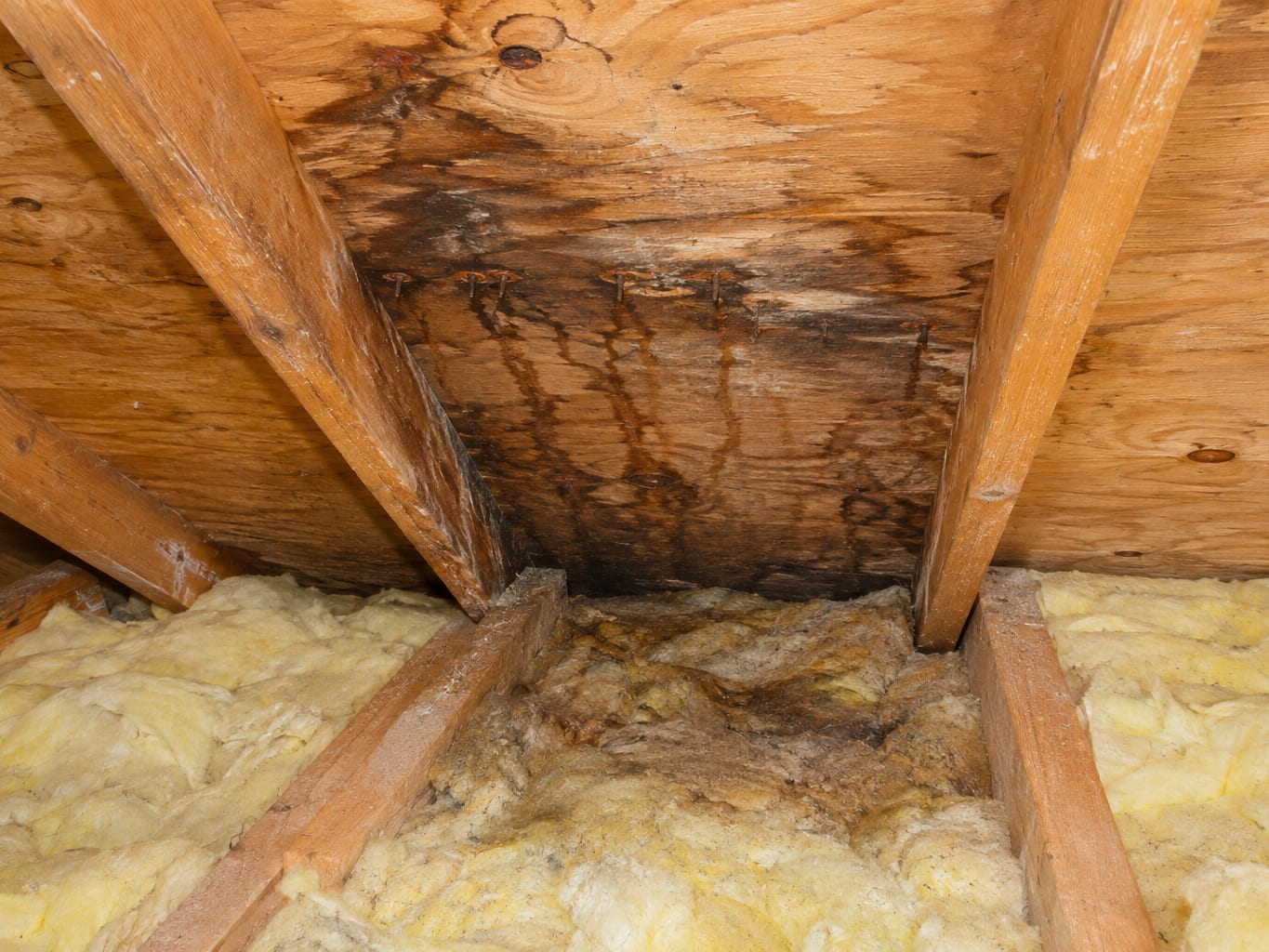
When it is safe to get into the attic, look at the insulation, roof sheathing, rafters, bath-fan ducting and plumbing lines. Wet or compressed insulation, darkened sheathing, water tracks, rusted fasteners, deteriorated flashing, disconnected exhaust ducts, blocked soffit vents and air leaks around ceiling penetrations show where the water came from and where it went. Our page on attic mold remediation covers what happens when that look finds growth.
What to Look For in the Attic
Insulation
Wet or compressed insulation.
Roof sheathing
Darkened sheathing and water tracks.
Fasteners and flashing
Rusted fasteners and deteriorated flashing.
Exhaust ducts
Disconnected exhaust ducts.
Soffit vents and air leaks
Blocked soffit vents and air leaks around ceiling penetrations.
Rafters and plumbing lines
These get a look too whenever it is safe to get into the attic.
Bring in a qualified remediation professional when mold is visible, the area is extensive, the water was contaminated, the HVAC system may be affected, or someone in the home has health concerns. EPA recommends at least an N95 respirator, goggles and protective gloves for mold cleanup. NJDOH advises anyone who suspects health effects from mold to see a physician.
If the source or the extent is uncertain, a residential mold inspection puts a visual and moisture assessment first. CDC and NIOSH state that there are no health-based standards for mold in indoor air, which is why a single air-sample number makes a poor pass or fail line.
The Repair Order: Stop the Leak, Dry the Assembly, Then Remove Mold
The sequence follows the moisture. You get the roofer or plumber first, the remediator second and the drywall contractor last, and that order keeps you from rebuilding over a wet cavity.
The Ceiling Repair Order
- 1
Make the space safe and stop the water
Repair the roof, flashing, ice-dam cause, plumbing leak or exhaust-duct problem.
- 2
Inspect the cavity
Check the attic or ceiling cavity for wet insulation, damaged sheathing or framing, and hidden mold.
- 3
Dry the assembly
Dry the ceiling assembly and the affected contents.
- 4
Remove what cannot stay
Take out porous materials that are moldy, swollen, structurally compromised or impossible to clean and dry completely, then clean the surfaces that remain.
- 5
Verify, then rebuild
Confirm the source is corrected and the assembly is dry, rebuild after that, and recheck the attic and the repaired roof after the next significant weather event.
1. Make the space safe and stop active water entry. Repair the roof, flashing, ice-dam cause, plumbing leak or exhaust-duct problem. 2. Inspect the attic or ceiling cavity for wet insulation, damaged sheathing or framing, and hidden mold. 3. Dry the ceiling assembly and the affected contents. Our structural drying page describes how that is done. 4. Remove porous materials that are moldy, swollen, structurally compromised or impossible to clean and dry completely, then clean the surfaces that remain. 5. Verify that the source is corrected and the assembly is dry. Rebuild with new drywall, plaster, insulation or finishes only after that, and recheck the attic and the repaired roof after the next significant weather event.
The roof comes before remediation because NJDOH says the source should be identified and corrected before proper remediation. The ceiling comes last because closing a wet or contaminated cavity can hide continuing damage. The University of Minnesota Extension advises waiting to repair interior damage until ceilings and walls are dry, and doing that repair together with correcting the heat-loss problem behind an ice dam.
Our post-remediation verification page covers confirming that the area is dry and the source is corrected before the ceiling goes back, and post-mold remediation rebuild covers the rebuild.
What kills mold instantly in walls?
Nothing sprayed into a wall cavity settles it. EPA emphasizes fixing the moisture problem, drying materials, cleaning hard surfaces and removing porous materials when mold cannot be completely cleaned. Hidden mold behind drywall or above a ceiling needs inspection and may need the affected porous materials taken out. Bleach or a surface spray does not replace removing mold from porous drywall or insulation, and EPA says moldy surfaces should not be painted or caulked before they are cleaned and dried, because paint over mold is likely to peel.
When Drywall, Plaster, and Insulation Can Stay
Ceiling drywall or plaster can stay when it is structurally sound, can be dried completely, and shows no obvious swelling, sagging, crumbling, delamination or failed seams. No rule removes a ceiling based only on how big the stain looks. The decision depends on the condition of the material, how long it was wet, whether mold is growing, how clean the water was, whether the cavity is still damp and whether the ceiling is structurally safe.
Hover or tap a row to highlight it.
| Material | Rule |
|---|---|
| Ceiling drywall or plaster | Can stay when it is structurally sound, can be dried completely, and shows no obvious swelling, sagging, crumbling, delamination or failed seams |
| Wallboard (EPA) | Dries in place when there is no obvious swelling and the seams are intact, with the cavity ventilated if possible; if it is swollen or the seams are damaged, remove, discard and replace |
| Cellulose and fiberglass insulation | EPA lists both for replacement when they are water-damaged |
| Ceiling tiles and carpet | Moldy absorbent materials like these may need replacement |
| Plaster ceiling | Stays only after a professional confirms the plaster, the keys, the lath, the framing and the cavity are sound and fully dry |
| Any other material | Can stay when it is structurally sound and can be cleaned and dried completely |
How can you tell if water damage is permanent?
The color of a stain does not settle it. Look for sagging, swelling, soft drywall, crumbling gypsum, delaminated paper, failed seams, persistent dampness, odor, damaged insulation or deteriorated roof sheathing. EPA's water-damage table allows wallboard to dry in place when there is no obvious swelling and the seams are intact, with the cavity ventilated if possible. If it is swollen or the seams are damaged, EPA says to remove, discard and replace it.
What to throw away after mold remediation?
EPA says mold can penetrate porous materials, which makes them difficult or impossible to clean completely, and that moldy absorbent materials such as ceiling tiles and carpet may need replacement. Its table lists cellulose and fiberglass insulation for replacement when they are water-damaged. Materials that are structurally sound and can be cleaned and dried completely may stay.
Plaster follows its own rule. A plaster ceiling stays only after a professional confirms that the plaster, the keys, the lath, the framing and the cavity are sound and fully dry. Cracking, detachment, sagging or wet insulation above it calls for further assessment, and a ceiling that looks fine from below can still hold wet insulation above. Our page on drywall replacement after mold covers the rebuild once the material has come out.
Roof Leaks, Ice Dams, Exhaust Ducts, and Attic Condensation in New Jersey
Matching the stain to a cause tells you who to call first. These are the places a New Jersey ceiling stain can start:
- Flashing: Failures around chimneys, walls, valleys, skylights and other roof penetrations.
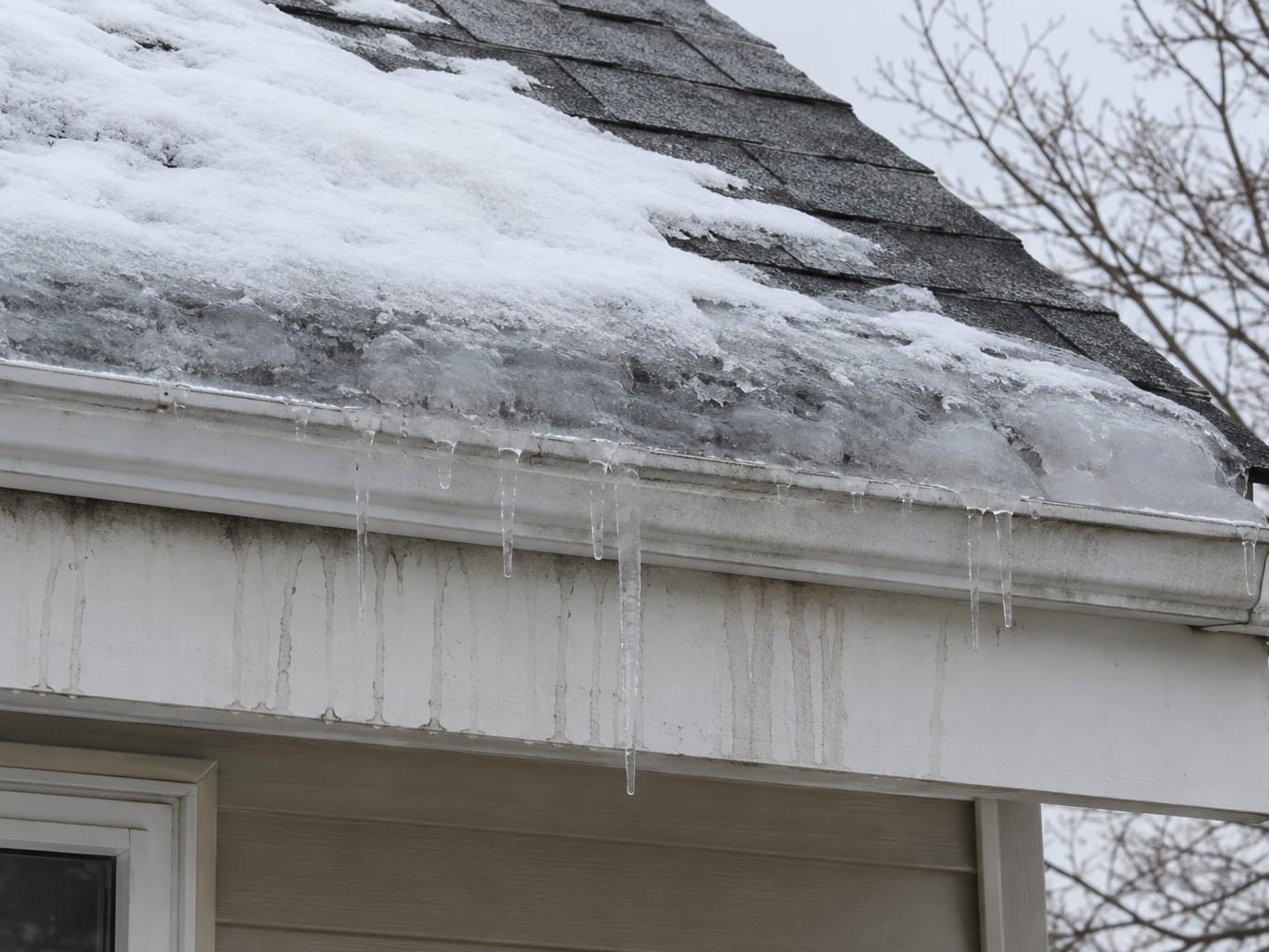
- Ice dams: Meltwater backs up behind an ice ridge at the roof edge, enters through openings in the roof covering, moves through attic insulation and stains the ceiling.
- Exhaust ducts: Bathroom or kitchen exhaust that ends in or near the attic instead of outdoors. EPA says bathroom, kitchen and dryer exhaust should vent directly outdoors, not into an attic or enclosed space.
- Attic air and heat: Air leaks through ceiling penetrations such as recessed lights, thin insulation and blocked ventilation create uneven roof temperatures and condensation on cold surfaces.
- Plumbing above the ceiling: Supply lines, drains, toilet connections and heating or cooling equipment.
The University of Minnesota Extension explains that an ice dam forms when the upper roof is warmed above 32°F while the lower edge stays below freezing. Heat loss through ceiling air leaks, insufficient insulation, exhaust ducts ending near the roof, chimneys and leaky attic ductwork all contribute to the uneven temperatures. If the source is hard to pin down, water leak detection can trace it before anyone opens the ceiling.
What time of year is worst for mold?
No single season is worst. CDC and NIOSH state that mold occurs indoors and outdoors in all climates and seasons, and that excess moisture is generally the major cause of indoor mold. In New Jersey, roof leaks and ice dams bring winter moisture, while summer humidity and condensation can support growth too. Moisture decides it, so the season matters less than whether the ceiling is still wet.
Insurance, Rental Housing, and Documentation in New Jersey
The NJDOBI states that homeowner policies exclude water damage caused by flood, and how a policy treats a roof leak, ice dam, plumbing leak or the mold that follows depends on the policy and the cause. The NAIC says water damage from household plumbing or a roof leak is typically covered while mold is often excluded or limited, and it recommends keeping inventories, photographs, receipts and repair records. Document the cause, notify the insurer promptly and read the policy before assuming anything is covered. Our insurance restoration services page covers claim documentation and reconstruction.
Tenants have a right to safe, sanitary and decent housing, and landlords must maintain rental units and repair damage to vital facilities. Notify the landlord of the leak in writing and allow adequate time for repairs. DCA advises written notice by certified mail before remedies such as repair-and-deduct, rent abatement or withholding rent, and a New Jersey housing attorney can advise on those steps. NJDOH directs renters with unrepaired leaks to the local building-code office. Buildings with three or more rental units fall under the Bureau of Housing Inspection, and one- and two-unit buildings generally follow local ordinances.
Whoever pays, ask for a written scope that separates drying, cleaning, removal, disposal and rebuild, and get the estimate after the ceiling and attic have been inspected. Keep the photographs, moisture records, invoices and messages with your insurer or landlord. Check permit requirements with your municipality's construction office before structural or exterior work.
How to Prevent the Next Ceiling Leak and Mold Problem
Prevention follows the same moisture path. Start with the attic, where most of the answers sit.
EPA says indoor relative humidity should stay below 60 percent, ideally between 30 and 50 percent, to help control mold. Vent bathroom, kitchen and dryer exhaust directly outdoors, since EPA advises against venting them into an attic. Seal air leaks around ceiling penetrations, check that the insulation is sufficient, and look at attic ductwork, because those are the heat-loss routes the University of Minnesota Extension ties to ice dams.
Ceiling Leak Prevention Checklist
Humidity
EPA says indoor relative humidity should stay below 60 percent, ideally between 30 and 50 percent.
Exhaust
Vent bathroom, kitchen and dryer exhaust directly outdoors, since EPA advises against venting them into an attic.
Air leaks
Seal air leaks around ceiling penetrations.
Insulation
Check that the insulation is sufficient.
Attic ductwork
Look at attic ductwork, another heat-loss route tied to ice dams.
After a repair
Go back up after the next significant weather event and confirm the sheathing and insulation are dry.
Records
Keep every photograph, moisture reading, invoice and clearance document in one folder.
After any roof repair, go back up after the next significant weather event and confirm that the sheathing and insulation are dry. Keep every photograph, moisture reading, invoice and clearance document in one folder for insurers, landlords and future buyers.
Ceiling Leak Terms
Tap a term to see what it means.
Flashing. The roofing detail around chimneys, walls, valleys, skylights and other roof penetrations. Failures there are one place a ceiling stain can start.
Frequently Asked Questions About Ceiling Mold After a Roof Leak
Can I leave the drywall if it is not sagging?
Sometimes. EPA allows wallboard to dry in place when it has no obvious swelling and its seams are intact, with the cavity ventilated if possible. Swelling or damaged seams mean removal and replacement, and the insulation above it needs a look either way.
Is the mold only on the painted surface, or is it behind the ceiling?
You cannot tell from the room. EPA says mold may hide behind drywall, above ceiling tiles and in insulation, so an inspection of the attic side and the cavity gives you the answer.
Does the insulation above the ceiling have to be removed?
EPA lists cellulose and fiberglass insulation for replacement when it is water-damaged. Have the attic side checked for wet or compressed insulation before the ceiling is rebuilt.
Should the roofer, plumber, remediator or drywall contractor come first?
The roofer or plumber comes first to stop the water. The remediator follows to dry the assembly and remove affected material, and the drywall contractor comes last, once the area is dry.
Do I need mold testing?
A visual and moisture assessment comes first. Testing fits when a specific question needs an answer, and it works alongside fixing the moisture and removing affected materials. Our mold testing page describes when sampling is useful.
What should a tenant do if the landlord does not respond?
Put the problem in writing, allow access for repairs, and contact the local building-code office about the leak. Ask a housing attorney before withholding rent or deducting repair costs.
Ceiling Mold After a Roof Leak, Quick Check
1. In what order do the roof, the mold and the ceiling get fixed?
2. When does EPA let wallboard dry in place?
3. Which materials does EPA list for replacement when they are water-damaged?
4. What stays only after a professional confirms the plaster, keys, lath, framing and cavity are sound and dry?
5. What indoor relative humidity range does EPA call ideal?
Pick an answer to begin.
Wrapping Up
A ceiling leak calls for a sequence: make the space safe, stop the water, inspect above the ceiling, dry the assembly, remove what cannot be dried and cleaned, and rebuild last. EPA's material rules, NJDOH's source-first guidance and your own photographs and moisture readings tell you what stays and what goes.
Doing it in that order protects you from rebuilding over a wet cavity, and the records you keep along the way serve the insurer, the landlord and the next buyer.
If you have a stain, a sag or a dark patch on a ceiling, call ExecPro Restoration & Cleaning at (888) 300-3772 or reach us through our contact page. We serve New Jersey with mold inspection, mold remediation, water damage restoration, structural drying, ceiling mold removal, post-remediation verification and drywall rebuild.
Related Articles
Can a House With Mold Be Saved? What Decides the Scope
Whether a New Jersey house with mold can be saved comes down to the moisture source, the structure and the materials. See the steps, limits and next calls.
Mold in a NJ Rental: What a Tenant Does First and Who to Call
A tenant with mold in a NJ rental should notify the landlord in writing and document it. Learn which local office to call and when to get legal advice first.
How Long Mold Remediation Takes, From Assessment to Rebuild
Testing, insurer approval and rebuilding all change how long mold remediation takes. Learn what to ask before work starts and when you can use the space.