Mold in Carpet and Rugs: Cleaning, Drying and When to Discard
Cal HewittPublished
- water damage restoration
- structural drying
- moisture source
- new jersey
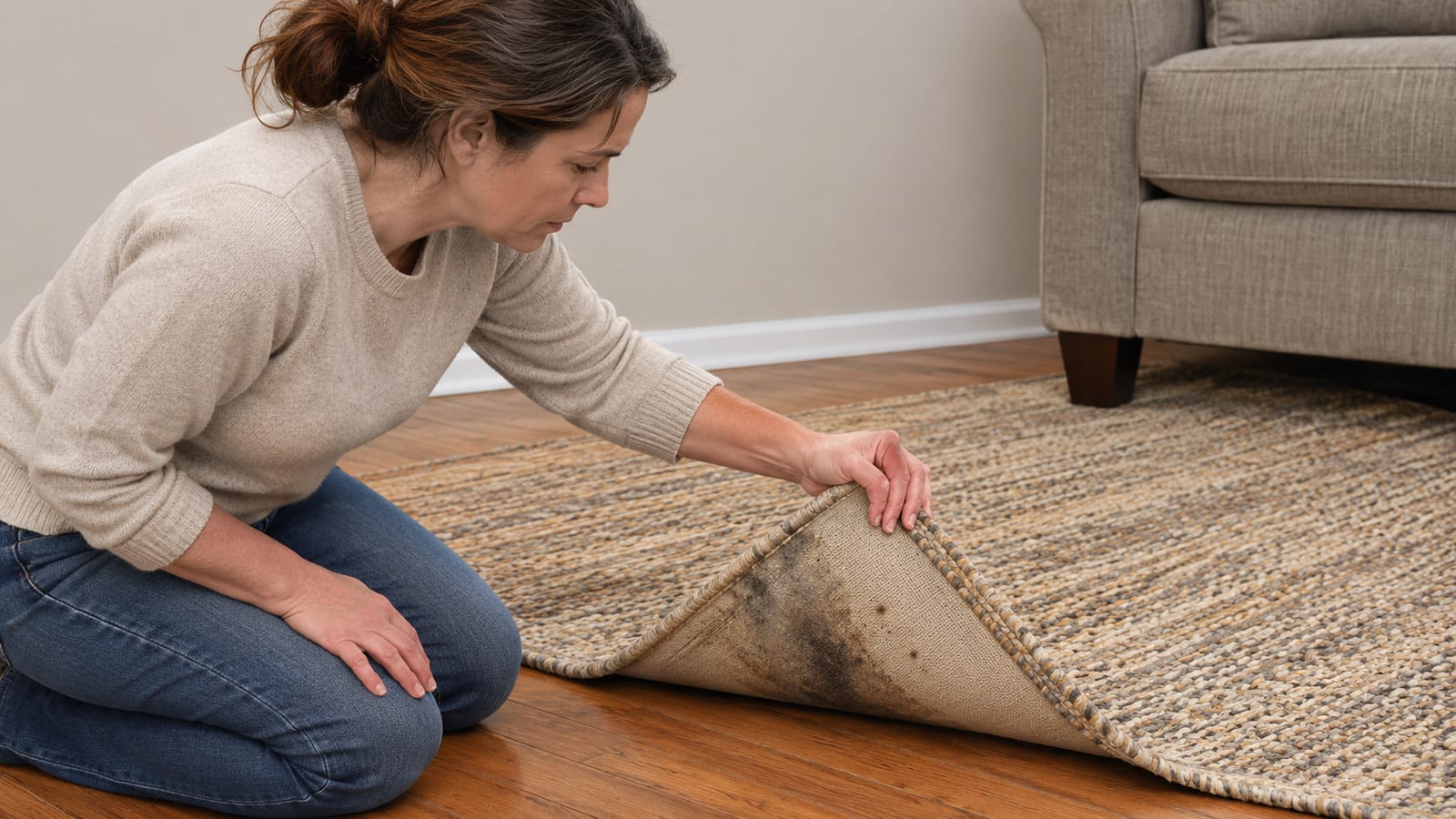
You pulled back a corner of the carpet, or caught a musty smell near a rug, and now you are wondering whether mold in carpet means the whole floor has to come out. It usually shows up after a leak, a burst pipe or a flooded basement, when the carpet looked fine for a day or two. The decision ahead of you is simple to state: dry and clean it, or discard it.
The answer depends on what is wet, how long it has been wet, and what the water was. Carpet, the pad underneath and the subfloor each get their own verdict, and the pad often decides the outcome. You can check most of this tonight with a flashlight and a few photos.
Some situations have to go to a professional the same day, including sewage, floodwater and growth that covers more than a small patch. Below, you will find what to check first, which signs mean the carpet is done, and what a safe next step looks like.
Key Takeaways
The pad decides the outcome
Carpet can look dry while the pad and subfloor stay wet, so lift a corner and check both before you decide anything.
Past 48 hours, plan to discard
Carpet and pad that stay wet beyond the 24 to 48 hour drying window, or that sewage or floodwater touched, generally come out.
Under 10 square feet is the DIY line
Larger patches call for professional advice, and anything over 100 square feet calls for a qualified contractor.
Photograph before anything moves
Dated photos and notes about the water source protect your insurance claim and guide the drying plan.
Why Does Moldy Carpet Need a Fast, Material-by-Material Decision?
Mold needs moisture, and carpet holds a lot of it. The New Jersey Department of Health says excess water commonly causes mold problems, from plumbing leaks, roof or window leaks, flooding, high humidity and condensation. It also notes that mold can hide beneath or behind carpet, cushions and walls, so the visible surface tells you only part of the story.
Time is the other factor. The EPA's mold course says wet or damp materials should generally be dried within 24 to 48 hours to reduce the chance of mold growth. After that window, the question shifts from "can I dry this?" to "has growth already started?"
That is why the decision runs material by material. A rug, the wall-to-wall carpet, the cushion beneath it and the floor under that can each end up with a different answer. If anyone in the home has asthma or allergies, the NJ Department of Health says they may be at increased risk from mold exposure, as may infants and older adults. Keep those people out of the affected room and talk to a physician about any symptoms.
What Should You Check Under the Carpet, Pad and Rug?
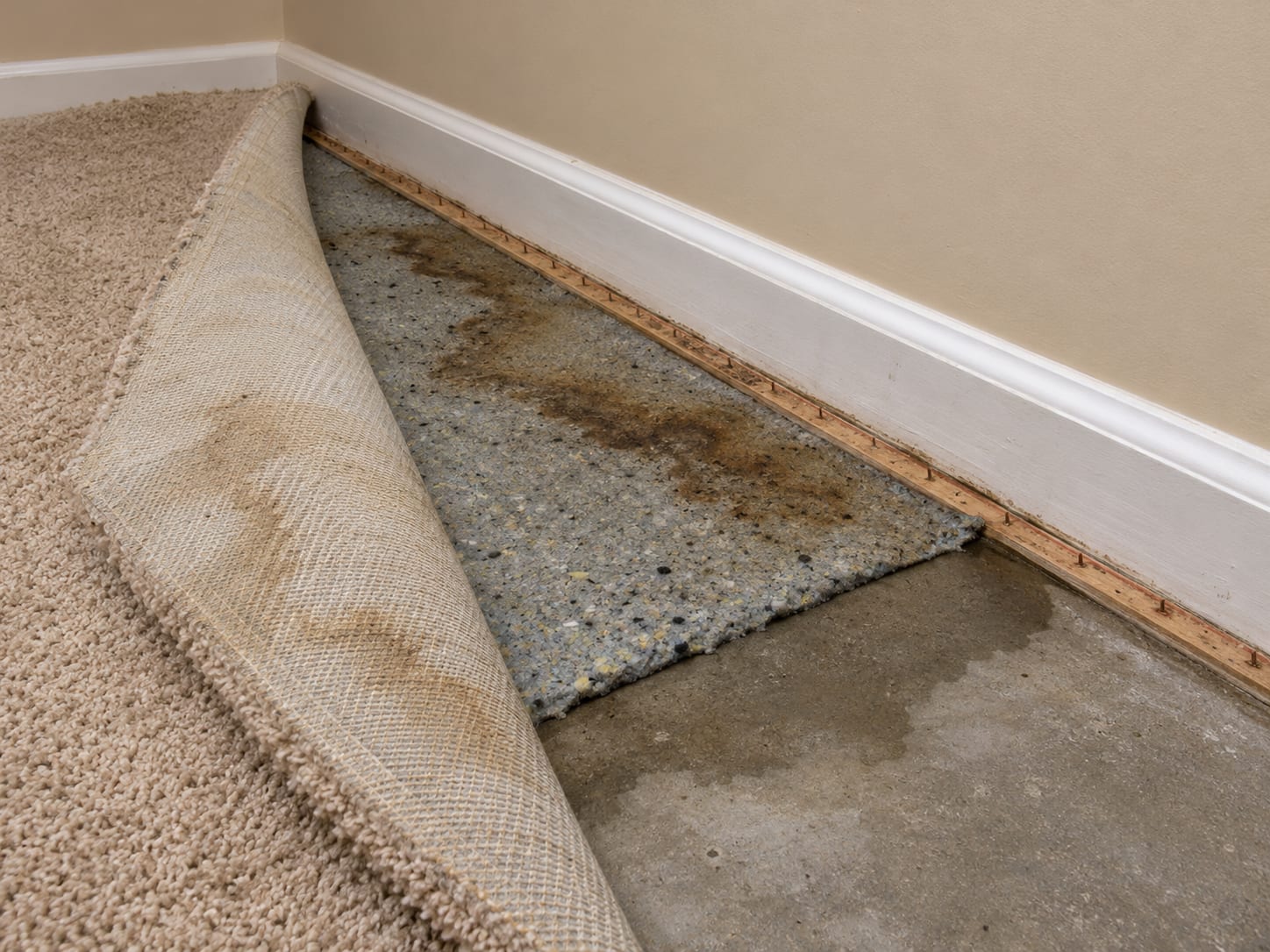
Start with the pad. Carpet can look and feel dry on top while the backing and pad hold water, and the EPA's carpet guidance is built around lifting the carpet and pad off the floor so each can be dried. Tonight, check the room in this order, wearing gloves and an N95 respirator if you see growth.
- Lift a corner: Pull the carpet back from a wall edge or a seam and look at the underside of the carpet and the top of the pad for dampness, staining or growth.
- Smell the pad: A musty odor that gets stronger near the floor usually points to moisture trapped below the surface.
- Check the subfloor: Look for dark spots, warping or soft spots on wood, and dampness or condensation on a concrete slab.
Basements deserve extra attention. The EPA says carpet over a concrete slab can develop chronic dampness from water vapor moving through the slab, or from condensation on a cold slab. A basement carpet that stays damp with no obvious leak may be reacting to the slab itself.
How do I know whether the subfloor is wet?
You can see some of it: dark patches, cold damp concrete, or wood that has swollen or softened. You cannot see all of it. Wood and concrete both hold moisture below the surface, and the EPA's guidance says masonry and concrete should be thoroughly dry before carpet goes over them. A moisture meter gives a number instead of a guess, which is one reason an assessment helps when the floor cannot be checked well.
What Should You Do in the First 24 to 48 Hours After a Leak or Basement Flood?
The first hour is about safety and records. After that, the work is getting water out and air moving, in the right order for the kind of water involved.
In the first hour:
- Stop the source if it is safe: Shut off the supply line or appliance, and stay out of any room with electrical, structural or sewage hazards.
- Photograph everything before it moves: Carpet, rug, pad, walls, baseboards, furniture and the visible water line.
- Write down what happened: Note when it started and whether the water came from a supply line, an appliance, stormwater, groundwater or a sewer.
- Call your insurer: If a claim is possible, report the loss promptly.
- Close the area off: Keep people out, especially anyone with asthma or allergies.
Remove standing water only when you know it is clean and the electricity is safe. If mold is already visible, hold off on pointing household fans at it. The EPA warns that fans can spread mold once growth has begun.
On day two: The carpet and pad need to be separated from the floor so the backing, pad and subfloor can be assessed and dried. If something cannot be completely cleaned and dried within the 24 to 48 hour window, the discard guidance applies. The FEMA and CDC homeowner mold guide says that when a flooded home and its contents were not dried in that window, you should assume mold growth may be present.
Over the next week: Fix the reason water got in, confirm the carpet assembly and subfloor are dry, and keep your photos, receipts and notes together. Do not put carpet back over a basement slab until the slab and humidity conditions are suitable.
What to Do After a Leak or Flood
- 1
In the first hour
Stop the source if it is safe, photograph everything before it moves, write down what happened, call your insurer, and close the area off.
- 2
On day two
Separate the carpet and pad from the floor so the backing, pad and subfloor can be assessed and dried; if something cannot be cleaned and dried within the 24 to 48 hour window, the discard guidance applies.
- 3
Over the next week
Fix the reason water got in, confirm the carpet assembly and subfloor are dry, and keep your photos, receipts and notes together.
For a flood or pipe break that needs water removed fast, our 24-hour water damage response page explains how emergency extraction works.
When Can Carpet Be Dried, and When Does It Need to Go?
Sometimes carpet exposed to clean water can be dried and restored, if extraction and complete drying happen promptly. The EPA's procedure for clean-water damage is to extract the water, pull up the carpet and pad, and dry both with air movement and dehumidification.
Several conditions point the other way. The CDC says carpeting, carpet padding and rugs that cannot be cleaned or dried quickly should be discarded, and OSHA says porous materials wet for more than 48 hours should generally be removed and discarded, with carpet and padding as examples. Plan on discarding when:
- The drying window has passed: The carpet or pad stayed wet beyond 24 to 48 hours.
- Mold is established: Growth is visible in material that cannot be thoroughly cleaned.
- Sewage or floodwater touched it: Contaminated water changes the answer completely.
- Odor or moisture remains: It still smells or feels damp after drying was attempted.
- The layers cannot be checked: The backing, pad or subfloor cannot be reached and confirmed dry.
Damaged carpet also goes. Backing that has delaminated or deteriorated will not hold up after drying.
Plan on Discarding Carpet When
The drying window has passed
The carpet or pad stayed wet beyond 24 to 48 hours.
Mold is established
Growth is visible in material that cannot be thoroughly cleaned.
Sewage or floodwater touched it
Contaminated water changes the answer completely.
Odor or moisture remains
It still smells or feels damp after drying was attempted.
The layers cannot be checked
The backing, pad or subfloor cannot be reached and confirmed dry.
The backing has failed
Backing that has delaminated or deteriorated will not hold up after drying.
How does the type of water change the decision?
Clean water, such as a burst supply line, gives carpet the best chance. Gray water, such as appliance discharge, calls for more cautious cleaning and drying, and the longer the material stays wet, the less likely it is to be saved. Sewage and floodwater of unknown origin need containment, protective equipment and trained handling. The EPA says an experienced professional should be consulted for contaminated-water situations.
Hover or tap a row to highlight it.
| Water type | Example | What it means for carpet |
|---|---|---|
| Clean water | A burst supply line | The best chance of saving carpet, if extraction and drying happen promptly |
| Gray water | Appliance discharge | More cautious cleaning and drying; the longer the material stays wet, the less likely it is to be saved |
| Sewage or floodwater | Sewage and floodwater of unknown origin | Needs containment, protective equipment and trained handling; the EPA says to consult an experienced professional |
Can moldy carpet be saved?
A small area of surface growth on a rug that dried quickly may be cleaned. Carpet and pad that have been wet past the window, or carry established growth through the backing, generally come out. When you are unsure, the pad and subfloor findings settle it.
What Does Professional Carpet and Mold Remediation Involve?
A professional visit starts with the same questions you have been asking. Where did the water come from, how long was the material wet, and what are the carpet, pad and subfloor doing now? At ExecPro Restoration & Cleaning, our carpet water extraction work uses moisture meters to map where water has traveled, determines the water category, extracts water with truck-mounted equipment, and evaluates the pad for removal.
When the pad and carpet cannot be saved, they are removed so the subfloor can be dried and checked. Drying uses air movement and dehumidification, the same approach the EPA describes.
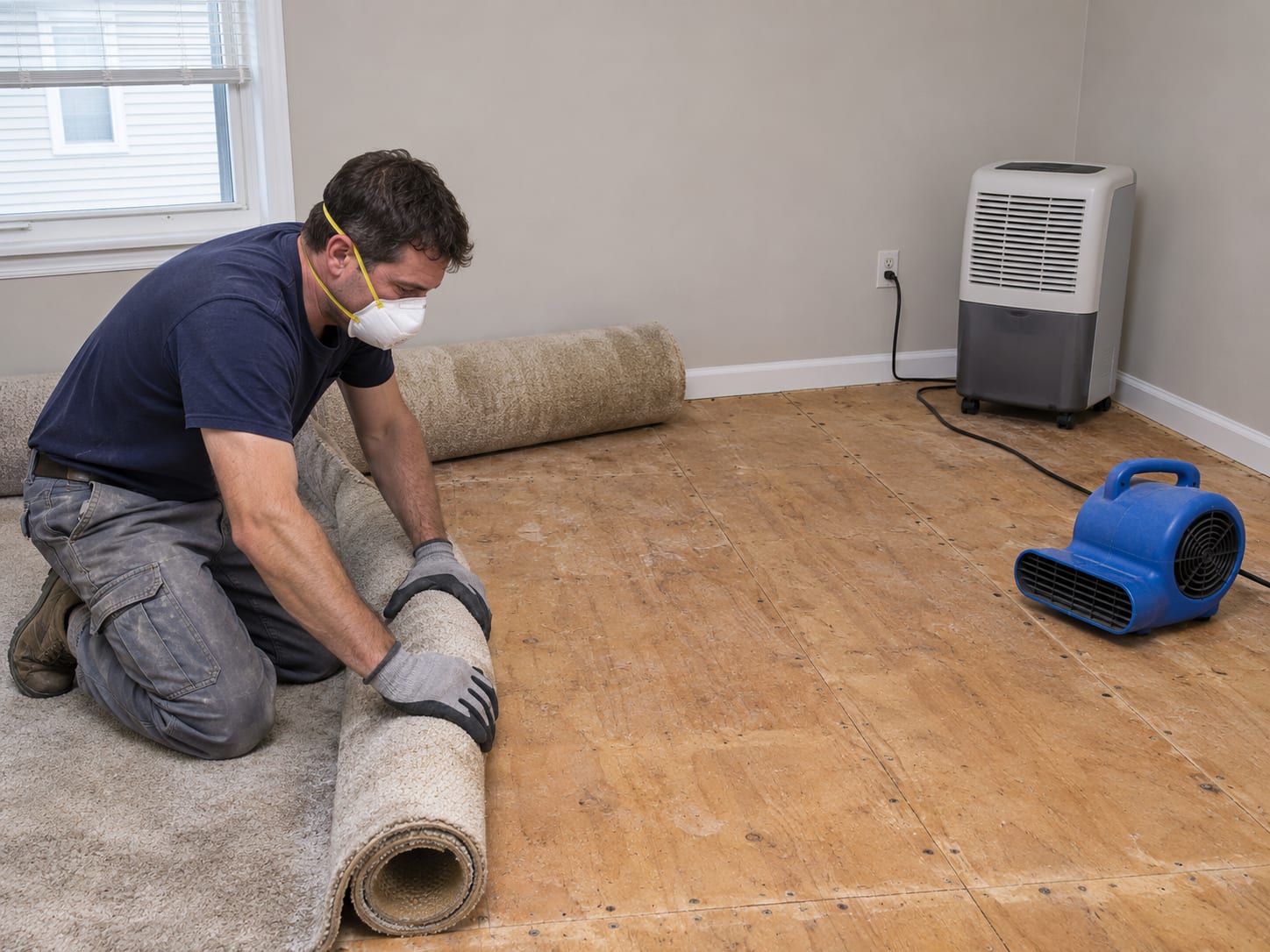
When growth is present, mold remediation comes next. Our mold remediation service covers assessment, containment, removal of affected materials and verification afterward. If drywall, trim or flooring has to be replaced after removal, the same team can handle the rebuild.
A few cases should go to a professional rather than a DIY attempt: sewage or floodwater, growth beyond a small area, and any floor you cannot get under to check. The NJ Department of Health says visual inspection and correcting the moisture source are necessary, and that sampling alone does not show the full extent of a mold and moisture problem.
What Are the Safe DIY Limits for a Small Rug or Surface Area?
The state's size guide is a useful starting line. NJDOH says mold areas under 10 square feet may be manageable by a homeowner, areas between 10 and 100 square feet warrant professional advice, and areas over 100 square feet call for a qualified contractor. Material type and water category still count. A small patch of sewage-soaked carpet is a different job from a small patch of mold on a hard surface.
Hover or tap a row to highlight it.
| Affected area | What NJDOH says |
|---|---|
| Under 10 square feet | May be manageable by a homeowner |
| 10 to 100 square feet | Warrants professional advice |
| Over 100 square feet | Calls for a qualified contractor |
If you clean a small area, protect yourself and the household first. The CDC advises goggles, an N95 respirator and protective gloves, and the area should be closed off from occupants, especially anyone with asthma, allergies or a weakened immune system. Correct the moisture source before anything else, and bag loose contaminated material without shaking it. Never paint or caulk over mold.
What kills mold in your carpet, and does vinegar remove it?
For carpet and pad, getting rid of the contamination takes removal, cleaning where appropriate, and complete drying. Carpet is porous, and moisture left in the backing or pad lets the problem continue underneath whatever you apply on top. The EPA's bleach guidance is aimed at hard, nonporous surfaces and does not promise that bleach restores moldy carpet. The public guidance from EPA, CDC and NJDOH does not establish vinegar as a reliable treatment either. Never mix bleach with ammonia or other cleaners.
For a rug, check the label and the maker's instructions first. Dry-clean-only, wool, silk and antique rugs follow the manufacturer's directions, and the rug maker or a professional rug cleaner is the right person to ask before you put any household chemical on one.
What Do New Jersey Basement, Rental and Insurance Situations Change?
Basement carpet in New Jersey carries a few extra risks. Below-grade rooms deal with foundation leaks, downspout discharge, slab moisture and condensation, and these need to be considered together. The EPA recommends correcting basement leaks and foundation moisture before carpeting a space, and indoor humidity below 60 percent, ideally between 30 and 50 percent.
New Jersey does not run a state certification program for mold inspection, testing or remediation firms, according to NJDOH, so an advertisement that says "certified" is not a state credential. Ask any company what training, equipment and written scope come with the work.
If you rent: NJDOH says renters with unrepaired leaks should contact the local building-code office. The Department of Community Affairs says tenants have rights to safe and decent housing, and its landlord-tenant process guide lists leaks and mold among serious conditions when the landlord knew of the problem and failed to repair it. Notify the landlord in writing, allow access for repairs, and ask an attorney or legal-aid organization before you take any step with legal consequences.
If you own and have insurance: The NJ Department of Banking and Insurance advises reporting a loss promptly, making necessary temporary repairs, saving receipts, and waiting for the adjuster to review the damage before permanent repairs where possible. Claim requirements vary by insurer, and ordinary homeowners and renters policies commonly exclude flooding. Your policy controls what is covered, so ask your insurer what documents they need. Keep dated photos, the water source, moisture readings, drying records, a list of discarded items, receipts and written scopes of work.
How Do You Keep Mold From Returning Under New Flooring?
New carpet over a damp floor repeats the original problem. Before anything goes back down, the leak is fixed, the subfloor is verified dry, and the cause of the moisture is addressed. EPA guidance says concrete slabs and masonry can hold substantial water and should be thoroughly dry before they are covered with carpet or other moisture-sensitive finishes.
For a basement that stays damp, correct the water entry and slab conditions first, then choose flooring that suits the moisture you actually measure. Our services cover water damage restoration, mold remediation and rebuilding when flooring or drywall has to be replaced.
A few habits keep the room dry afterward. Run a dehumidifier to hold humidity in the 30 to 50 percent range, direct downspouts away from the foundation, and treat a musty smell as a reason to look for hidden moisture.
Frequently Asked Questions About Mold in Carpet
How fast does mold grow on carpet?
The EPA says mold generally may not grow when wet or damp materials are dried within 24 to 48 hours. FEMA says that when a flooded home and contents were not dried in that window, you should assume mold growth may be present. The actual pace depends on moisture, temperature, the material and ventilation.
What causes mold in carpets?
Plumbing leaks, roof or window leaks, flooding, high humidity and condensation all do. In basements, water vapor moving through the slab and moisture trapped under the carpet or pad are common causes too.
Will mold go away on its own if the carpet is dry?
Drying removes the moisture mold needs to grow, though it does not remove growth that already started or contaminated porous material. The EPA says the moisture problem must be fixed and mold cleaned up, and materials that cannot be cleaned and dried completely should be discarded.
What is worse, mildew or mold?
"Mildew" is a common word for certain surface growths, while "mold" is the broader term in public-health and building guidance. The practical decision rests on moisture, material, how far it spread, the water type, and whether the material can be cleaned and dried.
Test Your Moldy Carpet Knowledge
1. How long does the EPA say wet or damp materials should generally be dried to reduce the chance of mold growth?
2. Which layer often decides whether wet carpet can be saved?
3. Under what size does NJDOH say a mold area may be manageable by a homeowner?
4. What generally happens to carpet and pad that sewage or floodwater reached?
5. Who should you ask before putting a household chemical on a rug?
Pick an answer to begin.
Final Thoughts
Mold in carpet comes down to three checks: how long the material stayed wet, what kind of water it was, and whether you can get to the pad and subfloor. Clean water caught within a day or two gives carpet a fair chance. Carpet and pad that sat wet past 48 hours, or that sewage or floodwater reached, generally have to go. Photograph everything first, keep the room closed to people with asthma or allergies, and ask the rug maker before putting any chemical on a rug.
Acting early keeps a flooring problem from turning into a wall, subfloor and insurance problem.
If you are in New Jersey and your carpet, rug or pad is wet or moldy, we at ExecPro Restoration & Cleaning can assess the carpet, pad, subfloor and water source, handle extraction and drying, remove what cannot be saved, and rebuild afterward. Call us at (888) 300-3772 or reach us through our contact page and tell us when the water arrived and where the carpet is wet.
Moldy Carpet Terms
Tap a term to see what it means.
Pad. The cushion under the carpet, which can stay wet while the carpet looks dry and often decides the outcome.
Related Articles
Mold Inside Walls: How It Is Found and What Has to Come Out
Signs of mold inside walls, how a professional finds it with moisture readings and small openings, and what drywall and insulation come out. A New Jersey guide.
Water Damage Repair: What Stays and What Gets Replaced
Dried out after a leak or flood? Learn what drywall, insulation, floors and cabinets can stay, how drying is confirmed, and when New Jersey permits apply.
Mold After a Burst Pipe: Drying, Cleanup and Insurance Claims
A pipe burst in your New Jersey home? Get the first-hour steps, what EPA says about drying, what gets opened, and how insurance generally treats a sudden burst.