
Water Damage Repair: What Stays and What Gets Replaced
Cal HewittPublished
- water damage restoration
- structural drying
- build back
- new jersey
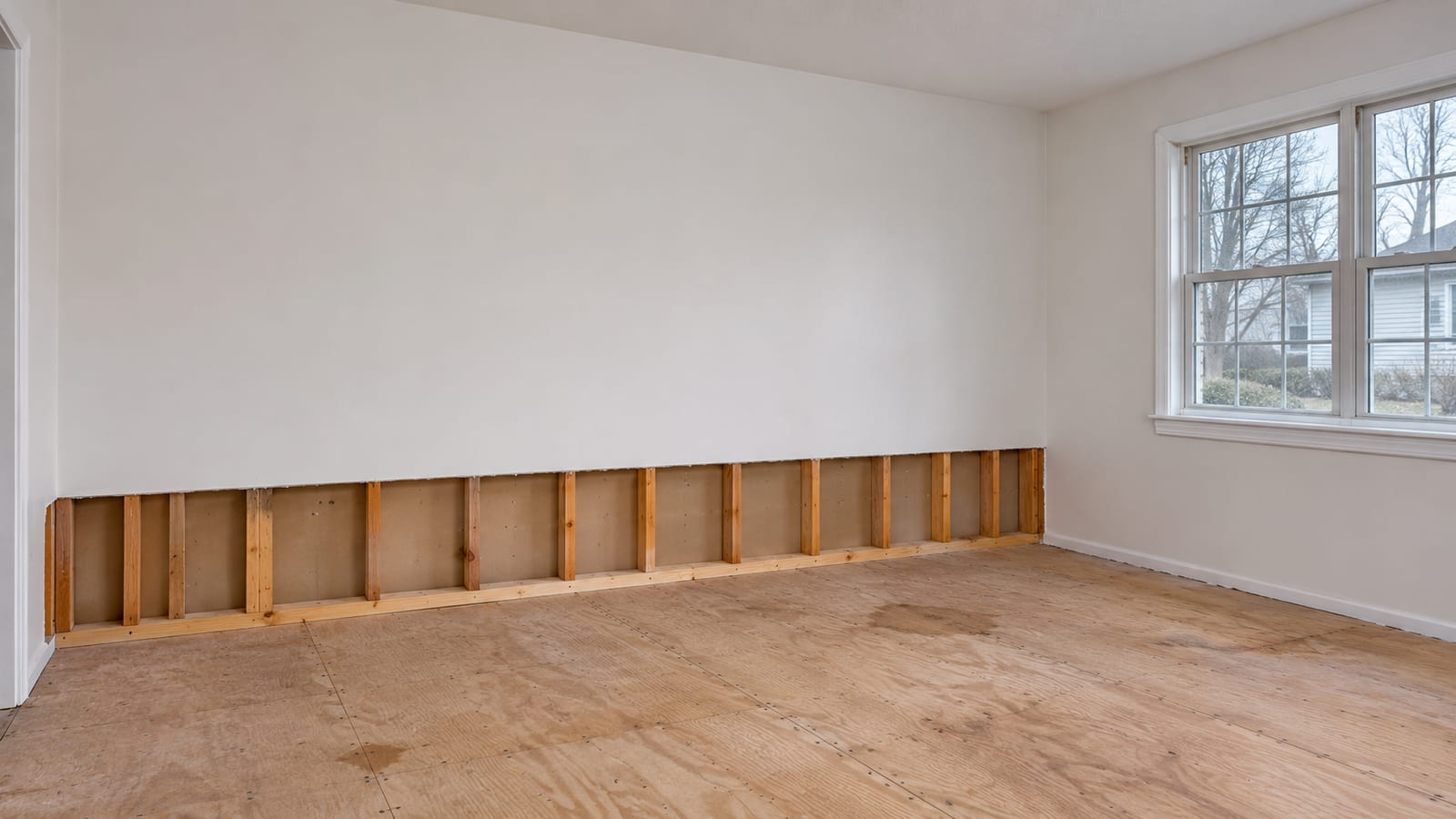
The standing water is gone and the drying equipment is out, and now you are looking at bare studs, a cut-out wall or a floor you are not sure about. Water damage repair comes down to one decision per material: dried and kept, or removed and rebuilt. The answer depends on the water and on what the material is made of.
EPA's disaster cleanup guide says porous materials such as drywall, carpet and insulation that stay wet for more than 48 hours are generally best removed and replaced, while structurally sound wood and concrete may be cleaned and dried. Those materials soak water up, so water and mold get into places a cleaner cannot reach.
If you are about to start, photograph everything before any material leaves the house, and hold off on closing walls until readings say they are dry.
Key Takeaways
Materials decide the scope
Porous drywall, carpet and insulation wet for more than 48 hours are generally removed, while sound wood and concrete can often be cleaned and dried.
Drying is measured, not guessed
EPA's 24 to 48 hour figure is a mold-prevention guideline, so walls close when moisture readings, taken by material and location, support it.
Permits depend on scope
New Jersey treats interior finishes under 25% of the wall area in a one- or two-family home as ordinary maintenance, while structural, plumbing, electrical and mechanical work falls outside it.
Insurance follows the policy
Standard homeowners policies exclude flood, temporary repairs are generally covered, and permanent work should wait for the adjuster.
Cost has drivers, not a standard price
Area, water source, time wet, demolition, drying, mold work, permits and contents set the number.
The Best Way to Fix Water Damage Is a Documented Sequence
The order of the work protects you, and it also protects your claim. Stop the water source first, then identify what kind of water it was and which materials it touched. Remove what cannot be cleaned or dried safely, dry the rest, and confirm dryness with readings. Deal with any mold or contamination before closing walls, finish permitted work where a permit applies, and rebuild in order while keeping the paperwork.
In the first hour, confirm the leak is stopped and stay away from wet electrical areas; OSHA says not to enter flooded areas or touch electrical equipment when the ground is wet. Photograph rooms, materials and anything removed before it goes in the dumpster, and call your insurer. When the dried house is ready to rebuild, our post-water damage reconstruction work picks up from the drying records, and our water damage restoration team handles the mitigation that comes before it.
Know What Can Stay Before Anyone Starts Cutting
Treat clean supply-line water, gray water, and sewage or floodwater as separate cases. FEMA lists drywall, insulation, carpeting, wood flooring, plaster, wood paneling and non-pressure-treated wood or plywood among the materials floodwater can damage. EPA's worker guide adds that metal, glass and hard plastics can generally be cleaned, dried and reused if they remain serviceable.
Hover or tap a row to highlight it.
| Material | Clean water | Sewage or floodwater |
|---|---|---|
| Drywall | May be dried in place if there is no swelling and seams are intact | Generally removed |
| Insulation | Kept only if fully dried, clean and serviceable | Often more cost-effective to replace when contaminated |
| Hardwood | May be cleaned and dried if finished or treated and structurally sound | May need removal or replacement based on contamination and swelling |
| Laminate | Kept only if fully dry and serviceable | Generally removed |
| Carpet and pad | Carpet and backing dried within 24 to 48 hours; subfloor also cleaned and dried | Generally removed |
| Cabinets | Kept if sound, cleanable and fully dry; open doors and drawers | Replacement favored when swelling, delamination or hidden contamination remains |
Gray water falls between the columns. Each material is judged on contamination, swelling and whether it can be cleaned and dried completely. When the water was sewage, sewage cleanup comes before any rebuild.
Can water-damaged drywall be fixed, or does it have to be replaced?
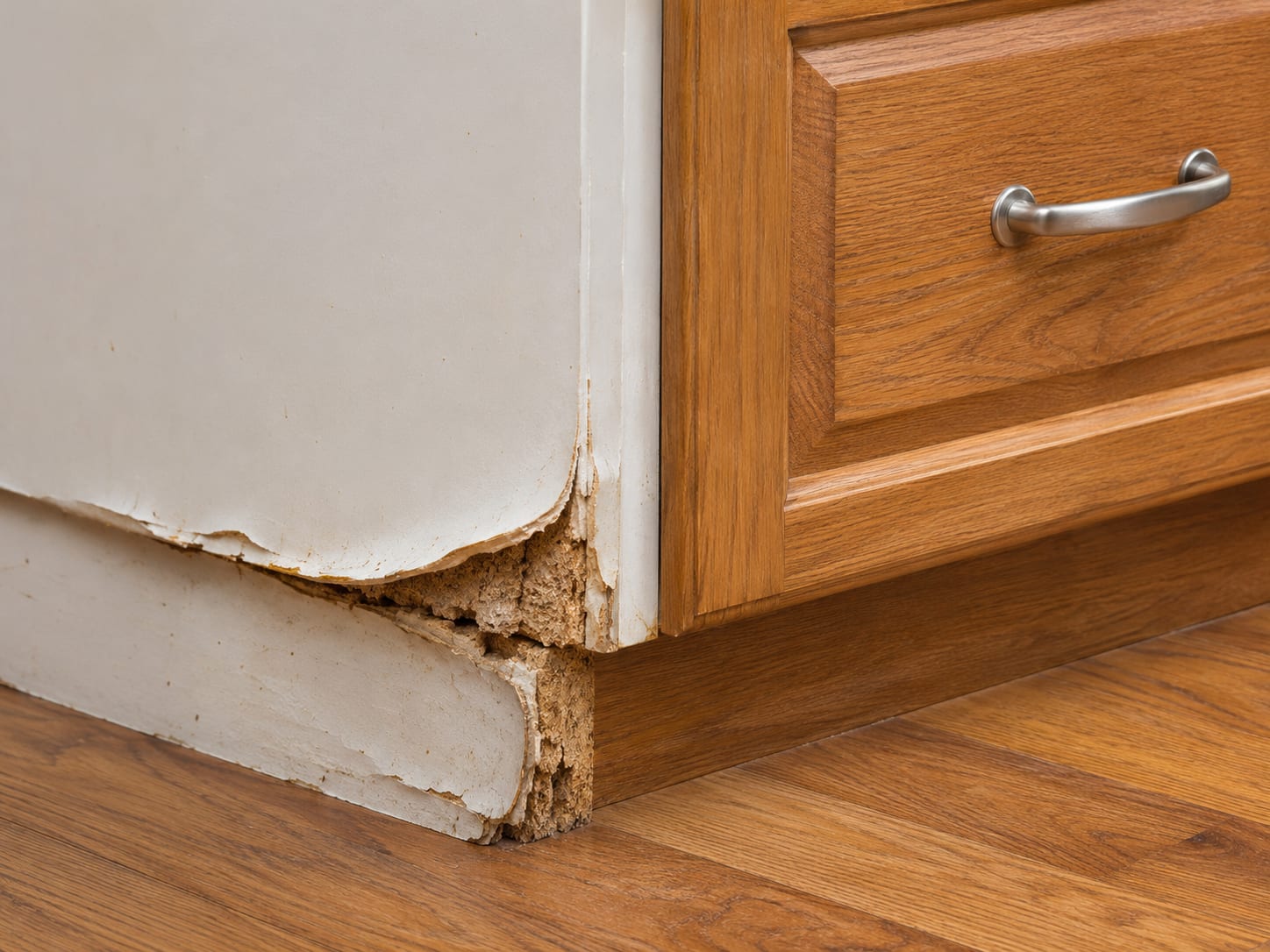
It depends on the water, the time wet and the condition of the board. Drywall that stayed wet for more than 48 hours is generally best removed and replaced under EPA's general rule, and drywall touched by sewage or floodwater is generally removed. Clean-water drywall with no swelling and intact seams may be dried in place.
How do you tell if water damage is permanent?
Look for swelling, delamination, crumbling, staining, loss of finish, odor, visible growth or structural deterioration. A material that is sound, cleanable and able to dry may stay. A visual check cannot confirm that a concealed wall or subfloor is dry; that takes readings.
Signs a Material May Not Stay
Swelling and delamination
Boards and panels that swell or layers that separate are candidates for removal.
Crumbling, staining or loss of finish
Visible breakdown of the material or its surface.
Odor or visible growth
A smell or visible mold means the material needs a closer look.
Structural deterioration
Weakened framing or subfloor changes the scope.
Concealed areas
A visual check cannot confirm that a hidden wall or subfloor is dry; that takes readings.
Confirm the Wall Is Dry Before It Is Closed
A dry-looking surface proves little. EPA identifies moisture meters as tools for measuring moisture in carpet, wallboard, wood, brick and concrete and for tracking drying progress. A restorer records readings by location and material, compares them with a dry reference for that material or with an unaffected area, and repeats the readings to show moisture falling.
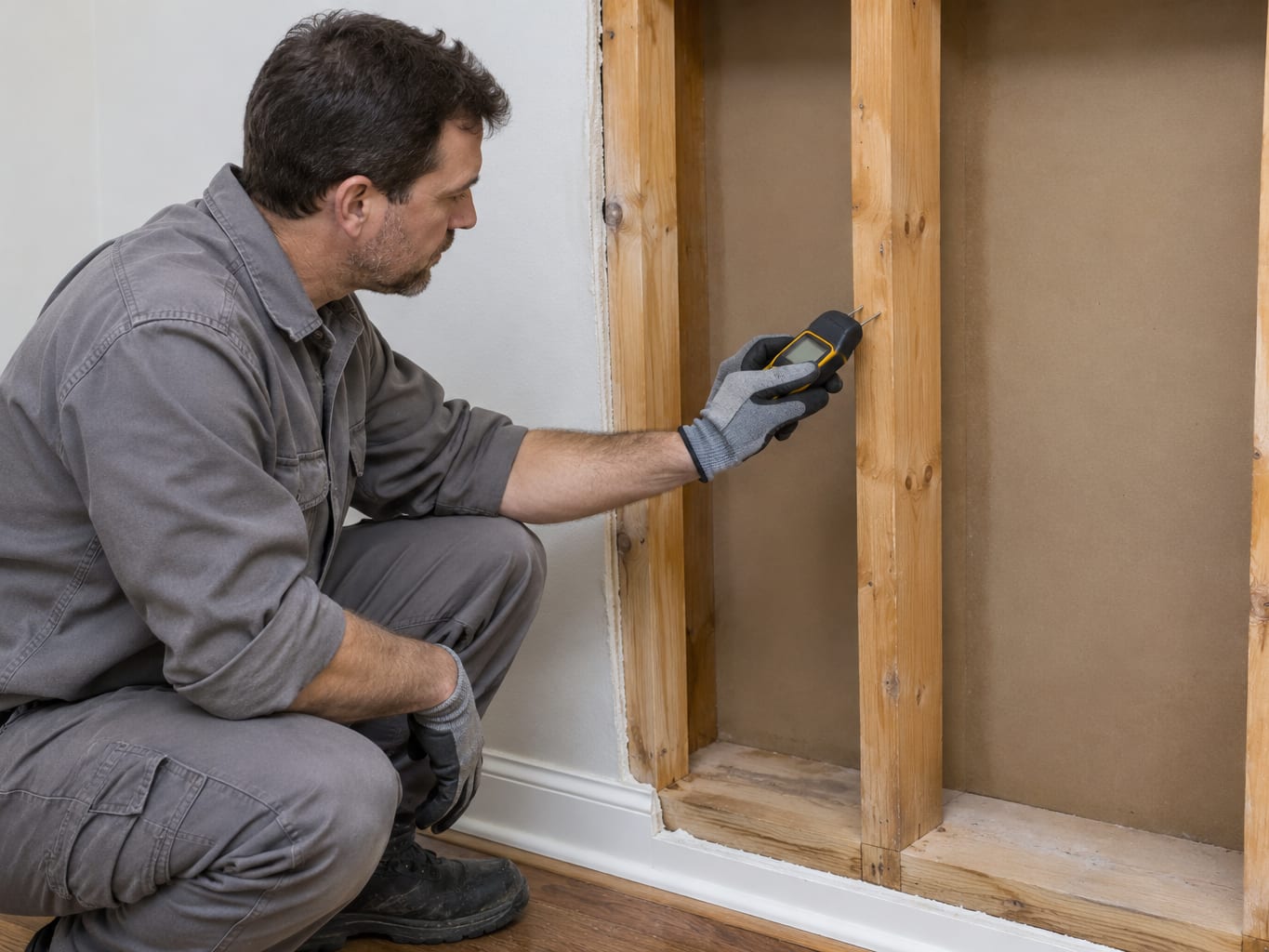
Thermal imaging can show temperature patterns, but it does not replace the meter. No single percentage applies to every wall, floor and framing type, so ask which reference your readings are measured against and get the numbers in writing.
How long does it take for a wall to dry after water damage?
The answer depends on construction, how wet the wall got, temperature, humidity, air movement, the material and whether the cavity is open. EPA's guidance says wet or damp materials dried within 24 to 48 hours will in most cases not develop mold. That is a mold-prevention target, not a wall drying time, so rebuild on documented readings rather than a calendar date.
How likely is mold after water damage?
Mold risk rises when moisture stays, hidden areas remain wet, materials cannot be fully cleaned or the water was contaminated. Closing a wall early can trap moisture in the drywall, insulation, framing or cavity, and EPA names the space behind drywall, wallpaper and paneling as places mold hides. If mold or contamination is present, resolve it before new finishes go in; mold remediation covers that step.
The Rebuild Follows a Fixed Order From Framing to Final Paint
Once the source is corrected and the demolition, cleaning, contamination work and drying are complete, the crew inspects the framing, subfloor and concealed areas. Framing corrections and structural work come next, then insulation where it is required, then drywall or other wall finishes. Surfaces are primed, trim and cabinetry go in, flooring follows in the order the chosen product calls for, and final paint finishes the job. A final inspection, the documentation and an owner walkthrough close it out.
The Rebuild, From Framing to Final Paint
- 1
Inspect the concealed areas
The crew checks the framing, subfloor and concealed areas once demolition, cleaning, contamination work and drying are complete.
- 2
Framing and structural corrections
These come first in the rebuild.
- 3
Insulation
Installed where it is required.
- 4
Drywall or other wall finishes
Hung once the cavity is dry and the work behind it is done.
- 5
Priming
Surfaces are primed.
- 6
Trim and cabinetry
Installed after priming.
- 7
Flooring
Laid in the order the chosen product calls for.
- 8
Final paint
Finishes the job.
- 9
Close out
A final inspection, the documentation and an owner walkthrough.
Our reconstruction service lists framing corrections, insulation, drywall, priming, trim, cabinetry, flooring and final paint as its sequence, with written scopes, permit-requirement identification and moisture readings before new materials go in. Ask any contractor for the same sequence in writing, with the room-by-room scope marking each material as kept, removed or replaced.
What Sets the Price of Water Damage Repair in New Jersey
How expensive is it to fix water damage in a house? A repair price depends on the job, and a contractor's or insurer's figure is not a statewide standard. What you can control is the quality of the written estimate, which should identify quantities, material specifications, labor, demolition, disposal, permits, inspections, drying documentation and exclusions.
The drivers behind the number are:
- The water: Its source, contamination level and how long materials stayed wet.
- The affected area: The size and number of rooms, and moisture hidden in walls, ceilings, floors or insulation.
- The work: Demolition, disposal, drying equipment and monitoring, and any mold work or post-remediation verification.
- The rebuild: Framing or subfloor repairs, replacement drywall, insulation, trim, cabinets and flooring, and material grade and finish matching.
- The rules and policy: Permits, plan review and inspections, plus your deductible, limits, depreciation and any replacement-cost holdback.
Ask both the contractor and the adjuster for their assumptions so you can compare the two scopes line by line.
Hover or tap a row to highlight it.
| Driver | What it covers |
|---|---|
| The water | Its source, contamination level and how long materials stayed wet |
| The affected area | The size and number of rooms, and moisture hidden in walls, ceilings, floors or insulation |
| The work | Demolition, disposal, drying equipment and monitoring, and any mold work or post-remediation verification |
| The rebuild | Framing or subfloor repairs, replacement drywall, insulation, trim, cabinets and flooring, and material grade and finish matching |
| The rules and policy | Permits, plan review and inspections, plus your deductible, limits, depreciation and any replacement-cost holdback |
Insurance and Flood Coverage Come Down to the Policy and the Paperwork
Coverage depends on the policy, the cause of loss, exclusions, deductibles, endorsements and your documentation. The New Jersey Department of Banking and Insurance (NJDOBI) says homeowners policies generally protect the home and personal property against covered losses, with flood excluded. The questions below are the ones owners ask most, and your insurer has the final answer on each.
Will insurance pay for water damage?
For a sudden loss, possibly. NJDOBI says temporary repairs needed to prevent further damage are generally covered, and permanent repairs should wait until the adjuster has reviewed the damage. Replacement-cost policies may hold back part of a payment until the repair expense is incurred. Report the loss promptly, photograph damage before disposal, keep damaged property when practical, save receipts and keep written notes of claim conversations.
How to Protect Your Claim
Report the loss promptly
Tell the insurer as soon as you know about the damage.
Photograph before disposal
Document rooms, materials and anything removed before it goes in the dumpster.
Keep damaged property when practical
The adjuster may want to see it.
Save receipts
Keep every receipt for temporary repairs and cleanup.
Keep written notes
Record claim conversations in writing.
Wait for the adjuster
Make only temporary repairs until the adjuster has reviewed the damage.
What type of water damage is not covered by insurance?
New Jersey's flood notice states that standard homeowners insurance does not cover property, contents or structures damaged by flood, and NJDOBI's storm guidance says only flood insurance covers a home and belongings from floods. Gradual leakage and maintenance-related deterioration depend on the policy wording. A burst pipe and surface-water flooding are not treated the same way.
How long do you have to file a claim for water damage?
Filing requirements vary by company and policy, so ask your insurer for the notice, proof-of-loss and suit-limitation deadlines and keep the answer in writing. If a deadline or a dispute is involved, NJDOBI or an attorney can advise you. Our insurance restoration services help organize photographs, moisture readings, written scopes and dated invoices into a claim file.
Check Whether a Permit Applies Before the Drywall Goes Up
New Jersey's Uniform Construction Code requires permits for new construction and for structural, plumbing, mechanical or electrical work, and the Department of Community Affairs also describes repair, renovation, alteration, reconstruction and demolition as work that may need one. The ordinary-maintenance rule, N.J.A.C. 5:23-2.7, lets some work proceed without a permit application. That includes interior painting and repair or replacement of interior finishes covering less than 25% of the wall area in a one- or two-family dwelling, drywall installation among them.
Work affecting loadbearing walls, structural or fire safety, plumbing, electrical wiring or mechanical systems falls outside the exemption. The local construction official decides how your scope is classified and which inspections apply, so call the municipal construction office with a written scope before work begins. The property owner or the owner's agent is responsible for obtaining required permits.
Keep Moisture From Getting Sealed Into the House
The costly mistakes happen at closing time: closing walls on appearance, treating a calendar period as proof of dryness, replacing visible drywall without checking the cavity, framing and insulation, and painting or caulking over moisture. Rebuilding before the water source is corrected repeats the whole loss. Keep the affected area open until your insurer gives direction, and keep dated photographs, moisture logs, estimates, invoices, permits and change orders in one folder.
Keep humidity below 60%, ideally between 30% and 50%, per EPA, while the house settles. Our post on the basement humidity level that prevents mold covers how to measure it.
Frequently Asked Questions About Water Damage Repair
Can permanent repairs begin before the adjuster arrives?
NJDOBI advises waiting for the adjuster to review the damage before permanent repairs, while making only the temporary repairs needed to prevent further damage. Photograph first, keep receipts and ask what must stay available for inspection.
Does drywall replacement need a New Jersey permit?
Interior finishes covering less than 25% of the wall area in a one- or two-family dwelling fall under ordinary maintenance. Larger areas, and any work touching structure, plumbing, electrical or mechanical systems, are for the local construction official to classify.
Water Damage Repair Quick Check
1. How long can porous materials like drywall, carpet and insulation stay wet before they are generally best removed?
2. What does EPA's 24 to 48 hour figure describe?
3. What tool measures moisture in wallboard, wood and concrete?
4. How much of the wall area can interior finishes cover and still count as ordinary maintenance in a one- or two-family home?
5. How does standard homeowners insurance treat flood damage?
Pick an answer to begin.
Final Thoughts
Water damage repair goes well when each material gets a decision, each decision has a reading or a photograph behind it, and no wall closes until the drying records support it. Porous materials that stayed wet are usually replaced, sound wood and concrete often dry in place, and the water type changes the answer. Permits and insurance depend on your scope and your policy, so ask early.
A repair built on documented drying leaves you with a file of photographs, readings and invoices that supports your claim and your contractor's scope.
If your house is dried out and you need a clear scope for what stays, what goes and what the rebuild involves, call ExecPro Restoration & Cleaning at (888) 300-3772 or reach us through our contact page. We rebuild water-damaged homes across New Jersey, and we can walk the rooms with you.
Water Damage Repair Terms
Tap a term to see what it means.
Porous material. A material such as drywall, carpet or insulation that soaks up water, so water and mold get into places a cleaner cannot reach.
Related Articles
Mold After a Burst Pipe: Drying, Cleanup and Insurance Claims
A pipe burst in your New Jersey home? Get the first-hour steps, what EPA says about drying, what gets opened, and how insurance generally treats a sudden burst.
Mold After Water Damage in NJ: Timing and Drying Steps
How long wet materials can sit before mold becomes a risk in a New Jersey home, which materials go first, how to confirm they are dry and when to call.
Commercial Basement Water Removal in NJ: First Day to Reopening
Commercial basement water removal after a storm, sump failure or pipe break? Learn the first safety steps, how drying works and when the space can reopen.