Commercial Basement Water Removal in NJ: First Day to Reopening
Cal HewittPublished
- water damage restoration
- basement water
- structural drying
- new jersey
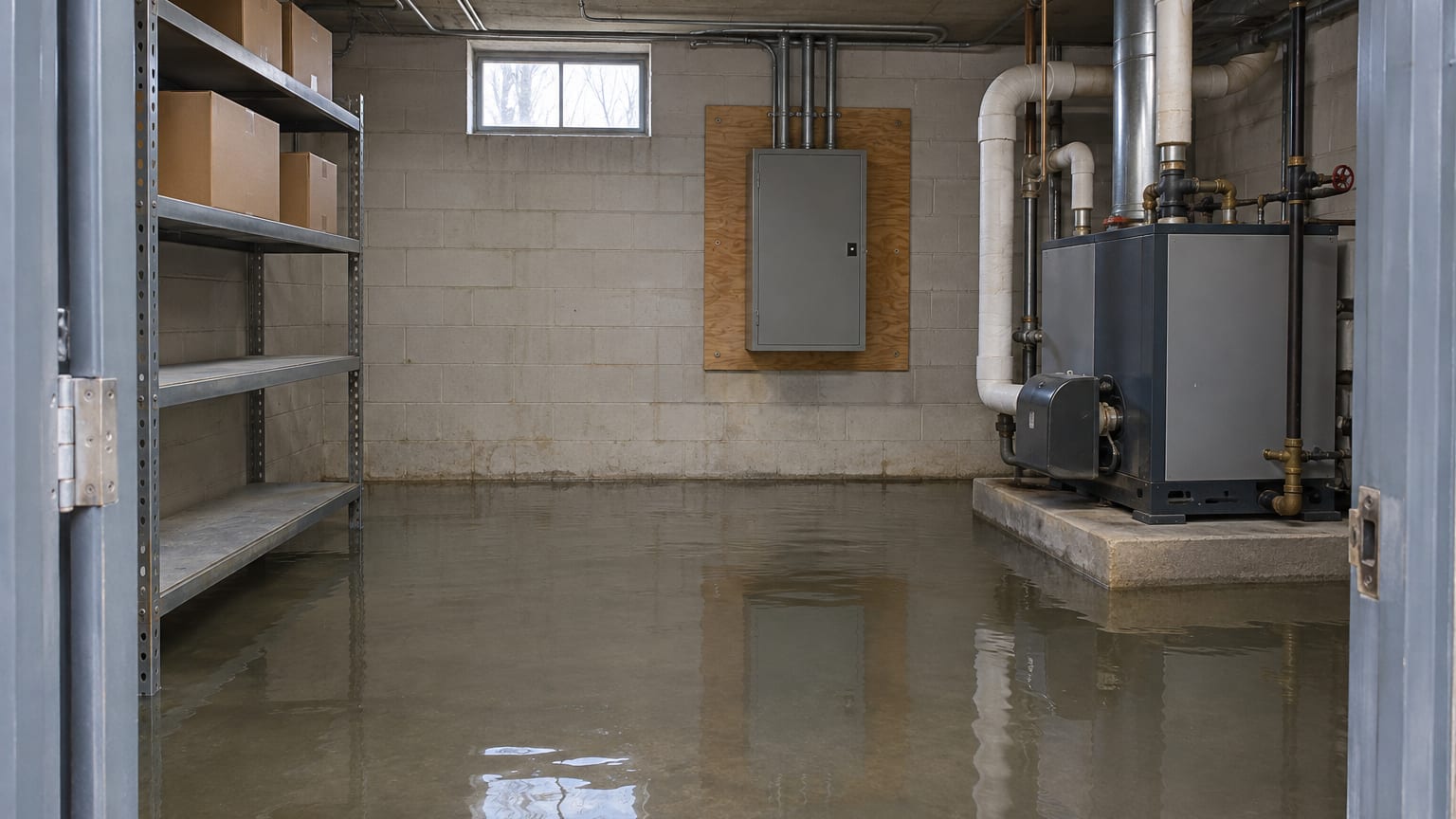
Water is standing in a commercial basement or lower level, and the next hour matters. Commercial basement water removal starts with a safety call, not a pump: who can enter, what is energized, and whether the source has stopped.
After that come photographs, a call to your insurer, bulk water removal, drying measured by readings, and checks before anyone returns to the space. Each step protects the one after it.
The sections below follow that order, so you can act on the first hour today and know what the first day, the drying and the reopening should look like.
Key Takeaways
Safety before equipment
Keep people out of water near energized equipment, and run generators, pumps and pressure washers outdoors only, because they produce carbon monoxide.
Photograph before you move anything
Record the water level, entry points, equipment and inventory first, then call your insurer and ask what must stay available for inspection.
Dry by readings
Drying can take several days to weeks, so ask for daily moisture readings and a documented drying goal instead of a promised number of days.
Reopen after the checks
The space returns to use only after electrical, structural, gas, contamination and moisture concerns have been evaluated.
When Should You Worry About Water in a Commercial Basement?
Treat it as urgent when water is near electrical equipment, gas appliances, boilers, elevators, mechanical systems, chemicals or sewage, when the source is unknown or the water is rising, when you see structural cracks, or when employees, tenants or visitors could walk in. OSHA lists electrical hazards, mold, chemical and biological contamination, sewage, dead animals and hazardous containers among floodwater risks.
Time matters too. EPA says mold can grow on wood, drywall, carpet and furniture that stay wet for more than 24 hours, and its clean-water table uses 24 to 48 hours as a response guideline for reducing mold growth. It is a guideline, not a guarantee in either direction.
What Should You Do in the First Hours?
Work the list in this order. If water has been near electrical circuits or equipment, OSHA says to turn off power at the main breaker or fuse, and not to enter flooded areas or touch electrical equipment while standing on wet ground. Where water has reached panels or machinery, have qualified personnel or the utility handle the power hazard.
- Keep employees, tenants and visitors out of standing water and out of contaminated or structurally questionable areas.
- Stop the source if that is safe: shut off a known plumbing supply, call the utility for a water main, report a sewer problem or address a failed sump system.
- Run no generators, pumps or pressure washers indoors; New Jersey's Department of Health also warns against gasoline engines in basements and enclosed spaces, even with doors or windows open.
- Photograph and video the water level, entry points, rooms, equipment, inventory, walls, floors and exterior conditions before anything moves.
- Call your commercial property insurer or agent and ask what must remain available for inspection.
On the first day, establish the likely source and water category, remove standing water, and protect or relocate records and inventory only if the area is safe, keeping a list of what was moved, damaged, discarded or kept. Structural drying begins once the safety and contamination decisions are made. If the water is beyond what your own crew can handle, our emergency water extraction page describes the response we offer in New Jersey.
From the First Hour to Reopening
- 1
Make it safe
Keep people out of water near energized equipment, shut off power at the main breaker or fuse if water has been near electrical equipment, and run no generators, pumps or pressure washers indoors.
- 2
Stop the source
Shut off a known plumbing supply, call the utility for a water main, report a sewer problem or address a failed sump system, if that is safe.
- 3
Photograph and call the insurer
Record the water level, entry points, equipment and inventory before anything moves, then ask what must stay available for inspection.
- 4
Remove the standing water
Bulk extraction with pumps or professional equipment, paced gradually where saturated soil presses on the walls.
- 5
Dry by readings
Moisture mapping, air movement and dehumidification, with room-by-room readings recorded in a drying log.
- 6
Check before reopening
Electrical, structural, gas, contamination, moisture and HVAC concerns are evaluated and drying is supported by documented readings.
How Can You Tell Where the Water Is Coming In?
Trace the highest or wettest point, visible flow paths, stains, cracks, wall penetrations, floor drains, sump pits, plumbing fixtures, window wells and exterior grading. The cause decides the fix, the specialist and the insurance analysis. Common causes include:
- A broken supply line, failed valve, water heater or boiler connection, which a plumber addresses (our water leak detection service helps trace hidden ones).
- A failed sump pump, blocked discharge or power loss during rain.
- Sewer or drain backup, which may involve the sewer authority or a plumber.
- Storm runoff or overland flooding through doors, ramps, window wells or floor drains.
- Groundwater seepage through walls, joints or the slab, or foundation and drainage failures.
Hover or tap a row to highlight it.
| Source | What it involves |
|---|---|
| Broken supply line, failed valve, water heater or boiler connection | A plumber addresses it |
| Failed sump pump, blocked discharge or power loss during rain | Needs backup capacity, discharge routing and a plan for power loss |
| Sewer or drain backup | May involve the sewer authority or a plumber |
| Storm runoff or overland flooding | Water can enter through doors, ramps, window wells or floor drains |
| Groundwater seepage or foundation failure | Points to drainage, grading, waterproofing or a structural review |
Water category matters just as much, and it changes how the job is run.
Clean water comes from a source with no significant contamination at the time of the event. Gray water may carry elevated contamination from appliances or building systems. Black water, or Category 3, may contain sewage, pathogens or chemicals. Category is not a visual judgment, since clean water can become contaminated by mixing with sewage, floodwater, chemicals or debris, or by standing too long. OSHA advises treating floodwater as potentially contaminated, with protective clothing, gloves, boots, eye protection and trained workers. For sewage, see our sewage cleanup service.
Three Water Categories
Clean water
Comes from a source with no significant contamination at the time of the event.
Gray water
May carry elevated contamination from appliances or building systems.
Black water, or Category 3
May contain sewage, pathogens or chemicals, and it changes how the job is run.
Category is not a visual judgment
Clean water can become contaminated by mixing with sewage, floodwater, chemicals or debris, or by standing too long.
What Is the Fastest Way to Remove Water From a Basement?
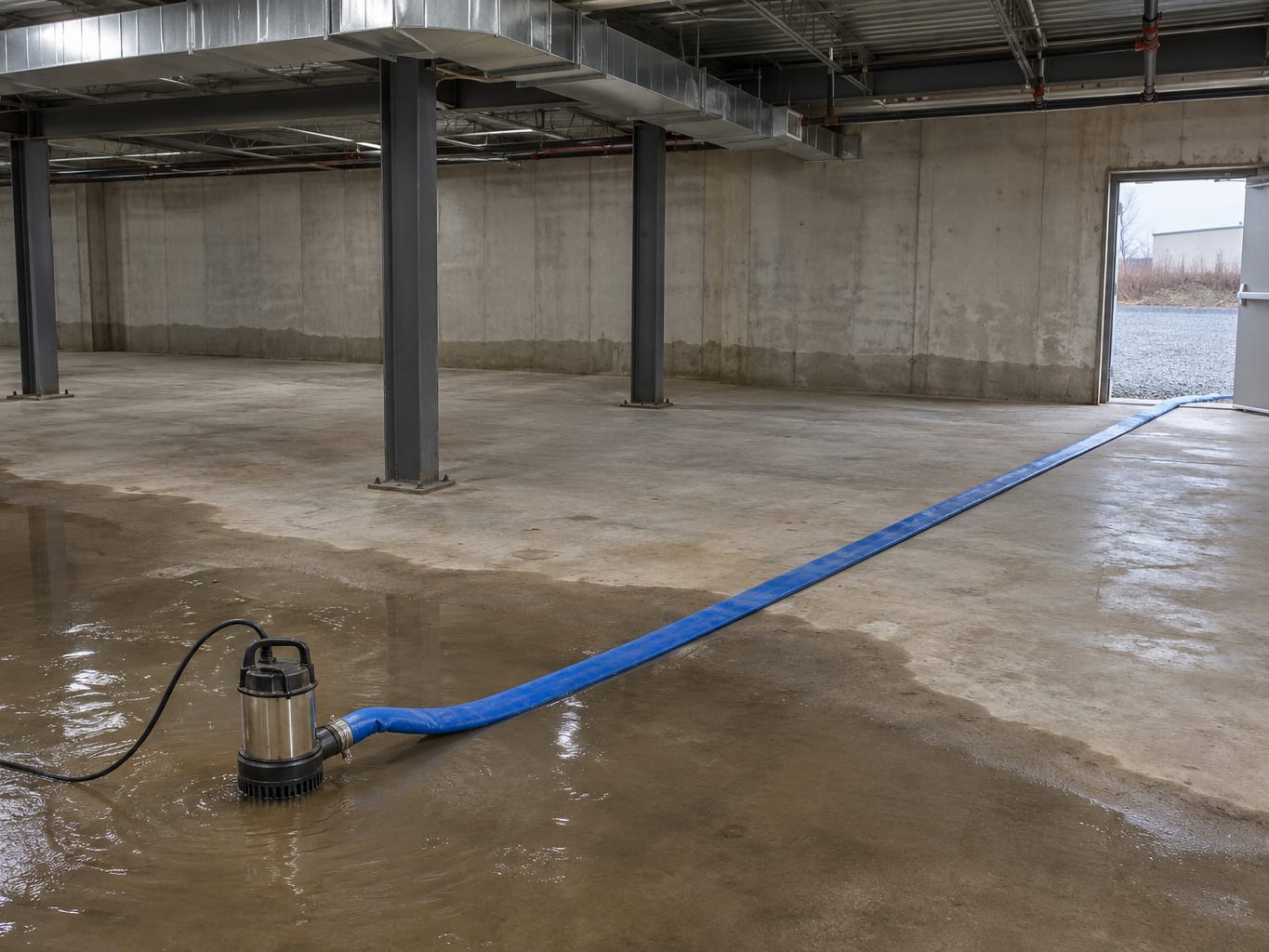
The fastest safe approach is source control, then bulk extraction with pumps or professional extraction equipment, then structural drying. Extraction removes standing water. It does not remove moisture trapped in drywall, insulation, framing, flooring or concrete, so the job is not finished when the floor looks dry.
Faster is not always safer. Where saturated soil outside is pressing on the basement walls, the Red Cross advises pumping a flooded basement gradually, about one-third of the water per day, to reduce the risk of wall failure. For a large commercial space, that pacing is a reason to bring in a professional crew with the right equipment.
Extraction tools range from pumps to truck-mounted and portable extractors, and the choice depends on volume, access, floor finish and contamination. Contaminated areas also call for containment, protective equipment and disposal procedures appropriate to the hazard.
How Do You Dry Up Water in a Basement, and How Do You Know It Is Dry?
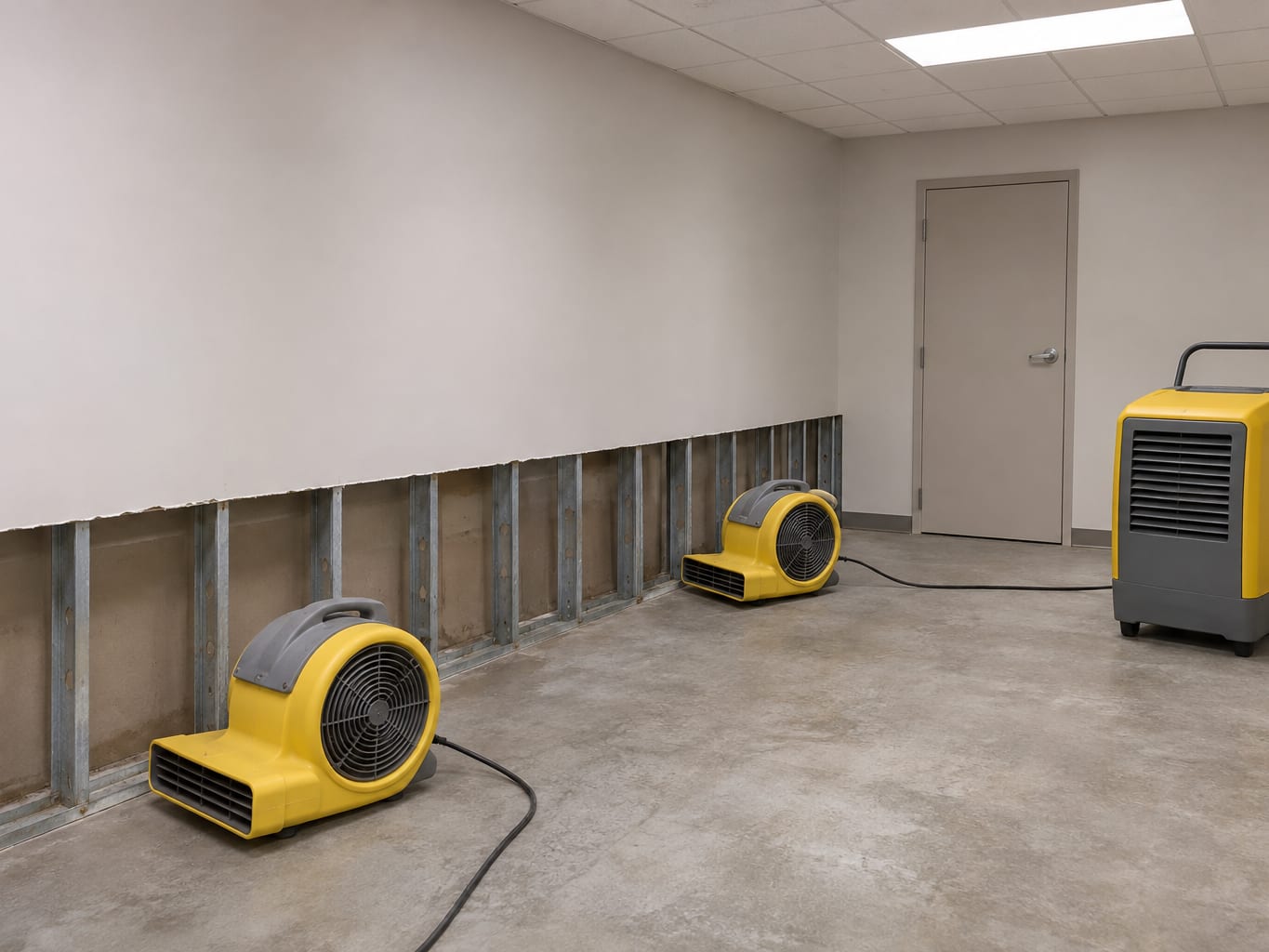
After safety and contamination are settled and bulk water is out, IICRC's S500 standard for professional water damage restoration describes the sequence restoration contractors commonly follow: moisture mapping with meters across affected and unaffected areas, wall cavities, flooring, framing and insulation; removal of materials that cannot be safely cleaned and dried; then air movement and dehumidification. Air movers speed evaporation from wet surfaces, and dehumidifiers or controlled ventilation take moisture out of the air. Equipment is chosen to fit the building, water category and materials, and fans should not spread contamination.
EPA says drying can take several days to weeks and recommends moisture-meter readings over judging by appearance. Materials should generally read 15 percent or less before refinishing, and concrete slabs may need extra verification, such as the plastic-sheet test EPA describes, before moisture-sensitive flooring goes down. A calendar promise is not proof of dryness. A drying log is.
A useful log records:
- Room-by-room moisture readings, compared with unaffected materials or another documented drying goal.
- Temperature and relative humidity.
- Equipment placement and changes.
- Demolition, cleaning and disposal.
- Photographs from each visit, with the date.
Our structural drying page describes the drying side in more detail.
What Does Lasting Water Damage Look Like?
Two questions come up once the water is out: whether materials can be saved, and whether the structure is at risk. The answer to both comes from conditions and measurements, not from how the room looks.
How can you tell if water damage is permanent?
Appearance alone is not enough, since materials can look dry while holding moisture behind walls, under flooring, inside insulation or beneath carpet backing. Permanent damage becomes more likely when porous materials are contaminated, swollen, delaminated, structurally weakened or impossible to clean and dry completely. The decision rests on material type, contamination, condition, readings and drying response, plus what the space will be used for.
How long does it take for water to damage a foundation?
No single timeframe applies. It depends on soil saturation, water pressure against the wall, drainage, wall construction, existing cracks, water level, weather and pumping conditions. Treat cracking, bowing, movement, unusual seepage, settlement or doors and windows that suddenly bind as reasons to keep people out and get a qualified structural evaluation.
Will Insurance Cover Basement Water Damage?
It depends on the cause of loss, the policy wording, endorsements, exclusions, deductibles and the type of policy. The New Jersey Department of Banking and Insurance states that flood insurance is generally separate from ordinary property coverage for businesses. A sudden plumbing or equipment discharge is analyzed under the commercial property policy, while sewer or drain backup and sump overflow may involve a specific endorsement or a flood-related review, depending on cause and direction of water movement. FEMA's claims guidance also puts special limits on what a flood policy covers in a basement.
Hover or tap a row to highlight it.
| Cause | How it may be treated |
|---|---|
| Sudden plumbing or equipment discharge | Analyzed under the commercial property policy |
| Sewer or drain backup | May involve a specific endorsement or a flood-related review |
| Sump overflow | May involve a specific endorsement or a flood-related review, depending on cause and direction of water movement |
| Flood | Flood insurance is generally separate from ordinary property coverage for businesses |
Do not assume a label such as "flood," "sewer backup" or "pipe leak" settles coverage; read the policy. DOBI advises policyholders to report promptly, ask what documentation is required, photograph damage before disposal, keep damaged property when possible, save receipts and cooperate with the adjuster. You are not required to use the insurer's recommended contractor. FEMA adds that damaged and undamaged items should be separated when possible.
What should you not say to an insurance adjuster about water damage?
Do not guess about the cause, age, extent or value of the damage. Describe what you observed, when you found it, what you did and what remains. Keep written notes of every conversation, and do not sign a statement or settlement you do not understand. The insurer must explain policy exclusions when part of a loss is not covered, and coverage questions can also go to your agent, a public adjuster or an attorney.
Keep the policy and endorsements, claim number, photographs, inventory, maintenance records, plumber or utility reports, temporary-repair receipts, disposal records, drying logs and moisture readings. Our insurance restoration services page covers the documentation side.
What New Jersey Rules Apply Before Reopening or Rebuilding?
Construction work in New Jersey falls under the Uniform Construction Code. The Department of Community Affairs lists current commercial codes, including the 2024 International Building Code, the 2024 National Standard Plumbing Code, the 2023 National Electrical Code and the 2024 International Mechanical Code, adopted August 17, 2026. The Rehabilitation Subcode treats reconstruction as work where the area cannot be occupied during the work and a new certificate of occupancy is required before reoccupation. Whether your water damage work counts as repair, renovation, alteration or reconstruction depends on the scope and the local construction official, so call that office early.
On mold, the Department of Health recommends correcting the moisture source and doing a thorough visual inspection. New Jersey does not certify mold or indoor air companies, so check any contractor's qualifications, insurance, scope, safety procedures and documentation yourself. Our post-water-damage reconstruction page covers the rebuild.
Before employees, tenants or customers return, the electrical, structural, gas, contamination, moisture and HVAC systems should be evaluated, and drying should be supported by documented readings and a final inspection suited to the materials and the intended use.
Commercial Water Removal Terms
Tap a term to see what it means.
Bulk extraction. Removing standing water with pumps or professional extraction equipment, which does not remove moisture trapped in drywall, insulation, framing, flooring or concrete.
How Do You Prevent the Next Flood and Choose the Right Response Team?
Prevention follows the cause. A failed sump needs backup capacity, discharge routing and a plan for power loss. Groundwater seepage points to drainage, grading, waterproofing or a structural review. Sewer backup involves the sewer authority or a plumber. Plumbing leaks call for documented repairs.
Mistakes to avoid are the ones above: entering water near energized equipment, treating unknown water as clean, starting fans before contamination is evaluated, throwing out contents before photographs, closing walls before hidden moisture is measured, and signing an agreement you do not understand.
Choose a team that offers a safety-first assessment, identifies the likely source and water category, brings commercial-capable extraction equipment, maps moisture, documents daily readings and equipment, and keeps emergency mitigation, cleaning, mold work and reconstruction clearly separated in a written scope. Our emergency water extraction page lists extraction, structural drying, moisture mapping, post-extraction monitoring, equipment logs, photographs and drying documentation. If mold appears, our commercial mold inspection and commercial mold remediation pages explain the next step. Confirm service-area availability for your address.
Check What You Know About Commercial Basement Water
1. What comes first when a commercial basement has standing water?
2. Why should generators, pumps and pressure washers run outdoors only?
3. How should drying be judged?
4. How does the Red Cross advise pumping a flooded basement when saturated soil presses on the walls?
Pick an answer to begin.
Final Thoughts
A commercial basement loss goes best when the order holds: safety and power first, then the source, photographs, the insurer call, bulk extraction, moisture mapping and drying measured by readings. The space returns to use after the electrical, structural, gas, contamination and moisture checks, and your file holds the logs that show it.
Following that order protects your building, your people and your claim. The exact price and drying schedule come after an inspection and a written scope, and the daily readings tell you when the work is done.
If you have water in a commercial lower level in New Jersey, ExecPro Restoration & Cleaning can help. Call us at (888) 300-3772 or reach us through the contact page, and we will talk through safety, source and next steps with you.
Related Articles
Mold After Water Damage in NJ: Timing and Drying Steps
How long wet materials can sit before mold becomes a risk in a New Jersey home, which materials go first, how to confirm they are dry and when to call.
Where Water Comes Into a Basement: Finding the Entry Point in NJ
Wondering where water is coming into your basement after rain or a wet carpet? Learn how to tell condensation from a leak before paying for the wrong fix.
Water Got Into Your New Jersey Home in the Nor'easter: The First 48 Hours
Water got into your New Jersey home in the September nor'easter? What is safe to touch, what to photograph, and how to start drying in the first 48 hours.