Mold After Water Damage in NJ: Timing and Drying Steps
Cal HewittPublished
- water damage restoration
- moisture control
- structural drying
- new jersey
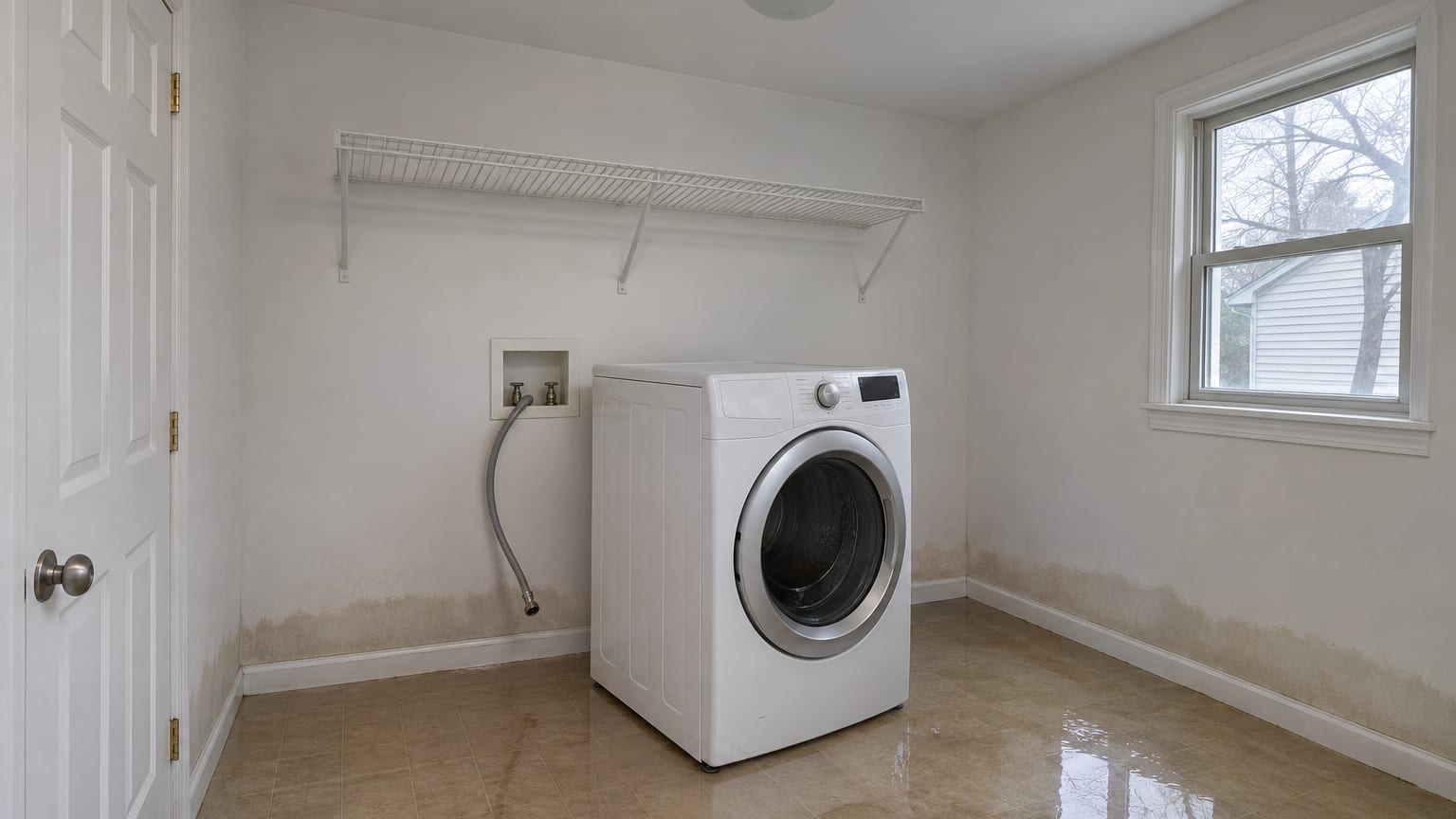
Your basement floor is wet, or the ceiling under the bathroom has a stain that keeps spreading, and the question running through your head is how long you have before mold starts. What you have is a drying window, and what you do in the next few hours counts for more than any single number.
Mold needs moisture to grow. Take the moisture out of every layer that got wet, including the layers you cannot see, and mold has little to work with. Leave drywall, carpet padding or framing damp, and the risk builds day after day.
Start by stopping the water if you can do it safely, then photograph the damage before anything is thrown away. The sections below cover which materials go first, how to tell when a structure is truly dry, and when to bring in extraction and drying equipment.
Key Takeaways
The drying window has a condition
EPA and FEMA's window applies to wet materials that still hold moisture, and it is guidance for preventing growth rather than the hour mold starts.
Surface dry is not structure dry
Moisture readings taken at several spots and compared with unaffected material tell you more than how a wall or floor looks.
Some losses call for professional drying early
Standing water, saturated padding or subfloor, contaminated water, hidden wall cavities, visible mold, a lingering musty smell, or anyone in the home with asthma or a lung condition.
Why the First Wet Hours Decide Whether Mold Gets a Start
EPA's guidance is to dry water-damaged areas and items within 24 to 48 hours to prevent mold growth, and FEMA uses the same window for the events that soak New Jersey homes: flooding, plumbing and roof leaks, sewage backups, overflows and damp basements. Read the figure with its condition attached. It is a target for drying materials while moisture is still present, not the hour mold begins, and drying inside it does not promise that mold will never appear.
The condition is where your attention belongs. The New Jersey Department of Health says mold spores need water to grow and that excess water is the usual cause of mold problems. So the practical question is how fast you can pull the water out of everything that got wet.
Several things change that speed. EPA's mold course says drying goes faster with more air circulation and higher temperature, and that high humidity makes blowers less effective. It recommends holding indoor relative humidity below 60 percent, and ideally between 30 and 50 percent, where you can.
Hover or tap a row to highlight it.
| Factor | Effect on drying |
|---|---|
| Air circulation | Drying goes faster with more air moving |
| Temperature | Drying goes faster at a higher temperature |
| High humidity | Makes blowers less effective |
| Indoor humidity target | Below 60 percent, and ideally between 30 and 50 percent |
| Porous material | Soaks up water and is hard to clean afterward |
Material matters too, especially porous material, which soaks up water and is hard to clean afterward. EPA's flood-cleanup guidance says that when porous materials stay wet for more than 48 hours, removal and replacement is generally recommended. The same guidance cautions that mold will not always appear after that point and that the timeframe is a guideline.
What Gets Wet First Inside a New Jersey Home
Most New Jersey owners and property managers meet water in one of four ways: a burst or leaking pipe, an appliance or plumbing overflow, water in the basement or crawl space, or a storm that pushes water in from outside. The puddle you see is only part of the loss. Moisture travels beneath carpet, into padding, behind baseboards, inside wall cavities, under flooring and along framing.
The materials in its path do not behave alike, and knowing which is which tells you what to dry, what to watch and what will probably need to come out.
- Drywall and gypsum board: porous, with a paper facing water can penetrate, and mold can develop behind it or behind wallpaper where you cannot see it.
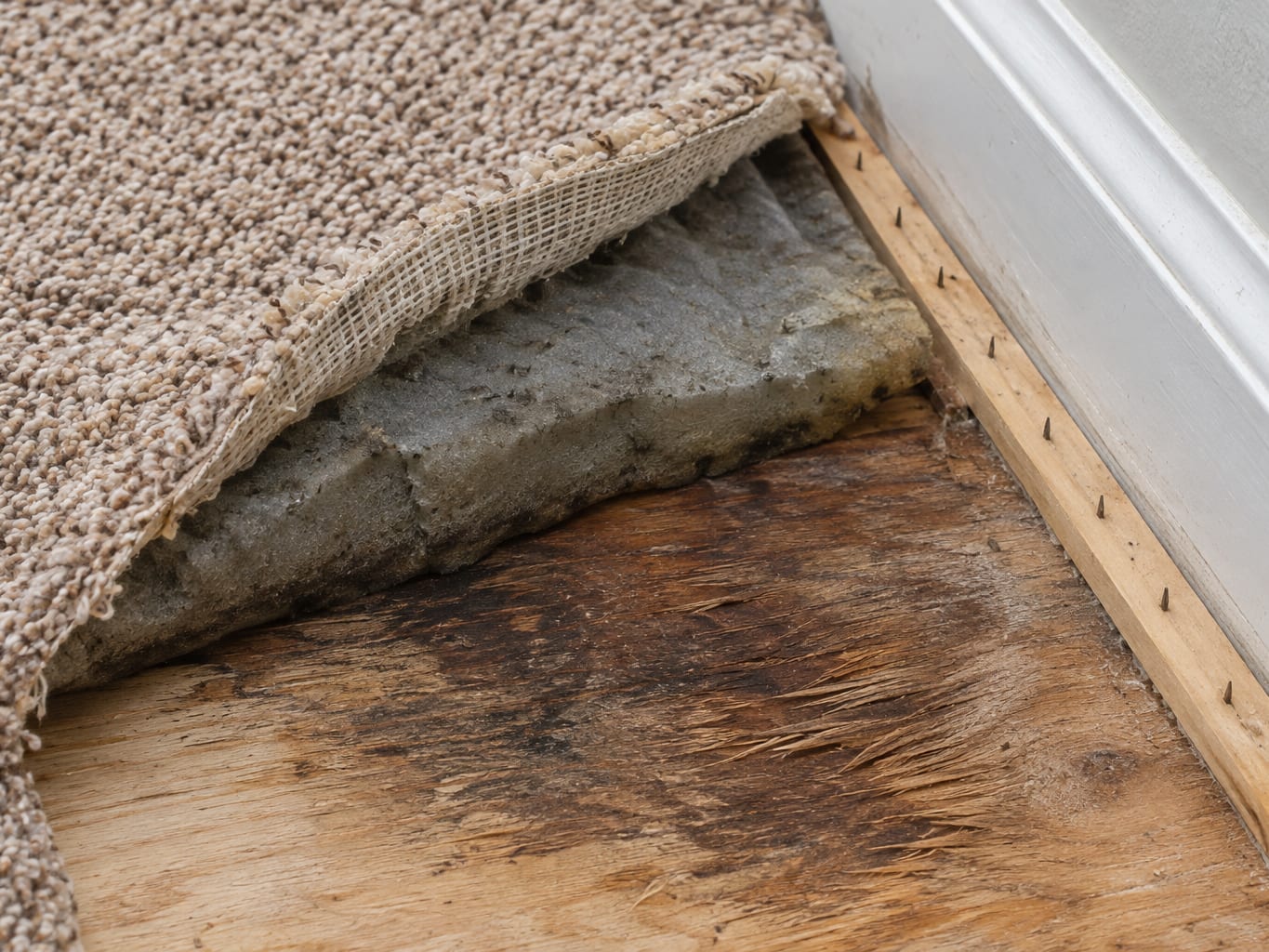
- Carpet padding and backing: these have to be extracted and dried together, and EPA says removal and replacement may be needed if they are not dried in time.
- Ceiling tile and cellulose insulation: absorbent, and generally replaced after significant wetting.
- Paper, cardboard and books: difficult to clean completely once wet.
- Wood: semi-porous, so sound wood can often be cleaned and dried, though prolonged wetting, swelling or rot can change that call.
Metal, glass and hard plastic dry and clean more readily, and structurally sound wood and concrete can often be dried and cleaned too. Concrete and masonry take in less water than drywall, but they can hold moisture and keep a basement wall damp after the floor looks clear. The outcome for each material depends on the water category, how long it stayed wet, whether it was contaminated, its structural condition and whether it can be fully cleaned and dried.
Hover or tap a row to highlight it.
| Material | What to know |
|---|---|
| Drywall and gypsum board | Porous, and mold can develop behind it or behind wallpaper where you cannot see it |
| Carpet padding and backing | Extract and dry together; removal and replacement may be needed if they are not dried in time |
| Ceiling tile and cellulose insulation | Absorbent, and generally replaced after significant wetting |
| Paper, cardboard and books | Difficult to clean completely once wet |
| Wood | Sound wood can often be cleaned and dried, but prolonged wetting, swelling or rot can change that call |
| Concrete and masonry | Take in less water than drywall but can hold moisture and keep a basement wall damp |
How Can You Tell Whether Water Damage Is Permanent?
Damage is more likely to be permanent when a material is porous, contaminated, swollen, delaminated or structurally weakened, or when it is still wet after drying has been underway. Structurally sound wood and concrete may often be cleaned and dried, while damaged or contaminated porous materials may need to come out.
Appearance settles very little. A wall can look dry while the cavity behind it is wet, and moisture readings compared with unaffected material are far stronger evidence.
How to Confirm the Structure Is Truly Dry
The point of drying is a building that has reached its dry goal, the target moisture reading for each material, and not a floor with no visible water on it. EPA recommends moisture meters for measuring moisture in carpet, wallboard, wood, brick and concrete, and for tracking drying progress from one day to the next.
One reading proves little. A single number does not establish that an entire wall, floor or assembly is dry, so readings should be taken at several locations and compared with similar material that never got wet. Dry goals depend on the material, the construction and the comparison readings, so ask for the record rather than one percentage for the whole house. A solid drying record lists:
- Material and location: what was measured and where.
- Starting and comparison readings: a baseline from affected and unaffected material.
- Daily readings: with indoor temperature and humidity as drying progresses.
- Equipment: what was placed and whether it was running.
- Final readings and notes: the dry-goal readings, plus any cavity that could not be reached or material removed.
Keep that record. It tells you when to close walls or lay new flooring, and it shows an insurer what was affected and when the structure was ready for repair.
What a Solid Drying Record Includes
Material and location
What was measured and where.
Starting and comparison readings
A baseline from affected and unaffected material.
Daily readings
Taken with indoor temperature and humidity as drying progresses.
Equipment
What was placed and whether it was running.
Final readings and notes
The dry-goal readings, plus any cavity that could not be reached or material removed.
The First Day: Safe Steps You Can Take Yourself
The first hour is about safety and evidence. Stop the active leak if you can do it safely. Keep everyone away from unsafe electrical equipment and from water that may be contaminated. Photograph the affected rooms and materials before anything is thrown out, and call your insurer or property manager promptly.
Next, work out what kind of water you have. If it may contain sewage, floodwater or chemicals, skip the household fans, which can spread the problem, and arrange a professional assessment. For clean water from a supply line or an overflow in a safe area, the rest of the day looks like this:
1. Confirm that electricity, gas and the structure are safe. 2. Remove standing water with suitable extraction equipment. 3. Move furniture and belongings away from wet areas. 4. Pull back or expose wet carpet padding where appropriate. 5. Start dehumidification and controlled air movement, and record readings as drying progresses.
The goal is complete drying, not just removing puddles, so carpet, padding, subfloor, drywall, insulation, cabinets and framing all need to be assessed. Open or remove materials only when you need to and it is safe.
The First Day After a Clean-Water Loss
- 1
Check safety
Confirm that electricity, gas and the structure are safe.
- 2
Extract standing water
Use suitable extraction equipment.
- 3
Clear the wet areas
Move furniture and belongings away from wet areas.
- 4
Expose the padding
Pull back or expose wet carpet padding where appropriate.
- 5
Dry and record
Start dehumidification and controlled air movement, and record readings as drying progresses.
What Is the Fastest Way to Remove Water From a Basement?
For clean water, extraction equipment is faster and more thorough than towels. A wet-dry vacuum can pick up surface water when the electricity and the water source are safe, but household equipment generally cannot pull moisture out of wall cavities or subfloors. When water is widespread or hidden, professional extraction followed by dehumidification and monitored air movement is the right approach.
Do not enter a flooded area with electrical hazards, unstable walls, sewage, fuel or unknown contamination. EPA advises checking the building for structural hazards before anyone goes in.
When Professional Extraction and Structural Drying Make Sense
Some losses are beyond a wet-dry vacuum and a borrowed fan, and professional extraction and structural drying are the better call when any of these is true:
- Water has reached inside the structure: walls, floors, ceilings, insulation or framing.
- The wet area is large or spread over several rooms: or the building has hidden cavities.
- Padding or subflooring is saturated: or the building cannot be dried quickly with the equipment you have.
- The water is contaminated: sewage, floodwater or anything that is not clean.
- Mold is visible or a musty smell will not go away: or someone in the home has asthma, lung disease or a weakened immune system.
New foundation cracks, bulging walls and electrical hazards are also reasons to stop and call for help. The professional standard for this work is IICRC S500, which covers procedures and precautions for water-damage restoration, including drying technology and the science of moisture in air and materials.
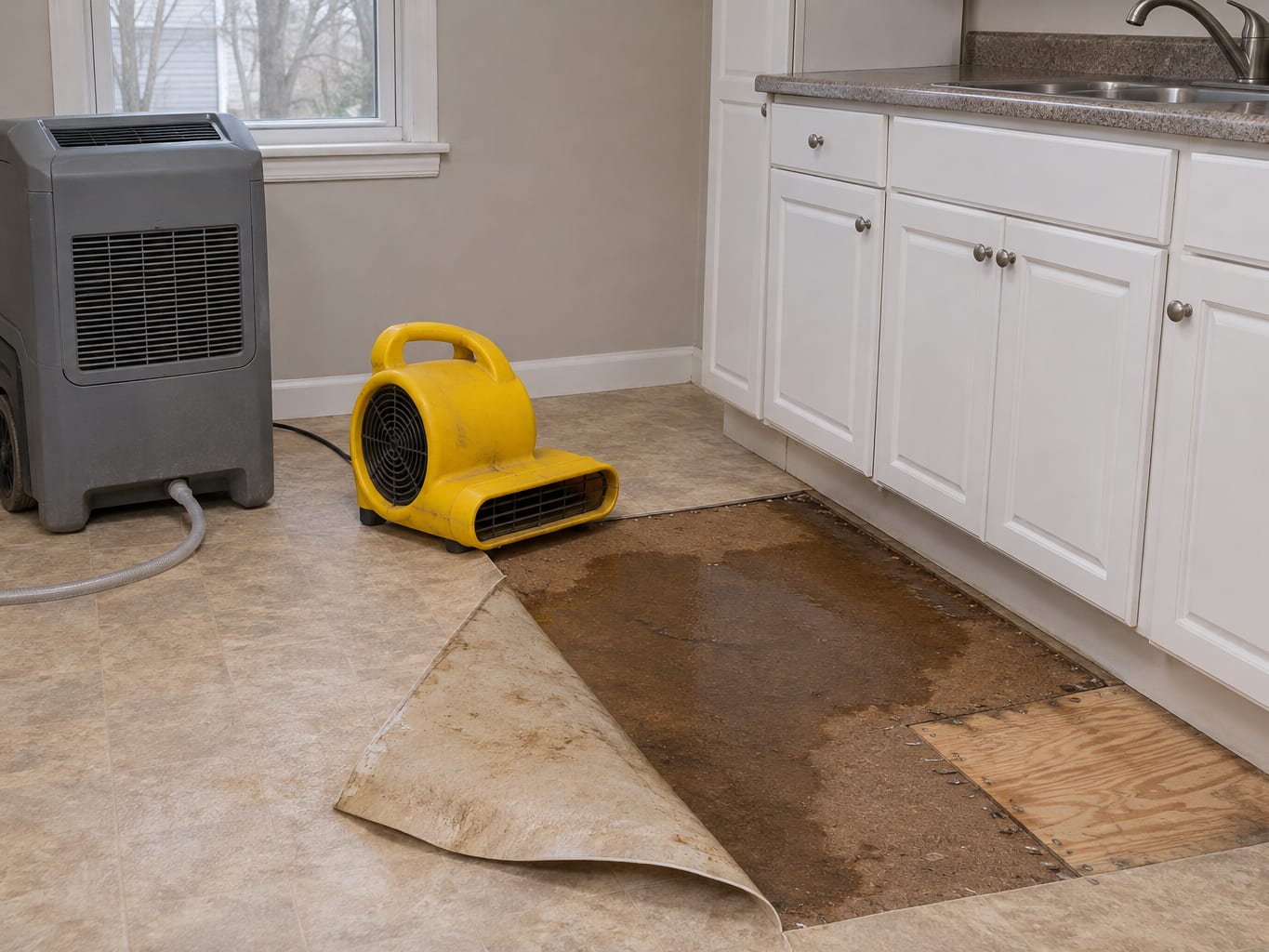
At ExecPro Restoration & Cleaning, structural drying starts with moisture mapping, followed by industrial air movers and dehumidifiers, daily monitoring and final dry-goal documentation. Our typical range for a residential project is three to five days. The actual time depends on water volume, materials, when drying started, temperature and humidity.
For an urgent loss, our 24-hour water damage response page explains how that starts, and flood damage cleanup covers storm, sump-pump and contaminated-water situations. When you cannot tell where the moisture comes from, water leak detection helps locate it.
What Insurance, Tenancy and New Jersey Rules Mean for Your Next Call
Call your insurer early. The New Jersey Department of Banking and Insurance advises policyholders to report losses promptly, document damage with photographs or video, keep receipts, and avoid discarding damaged property until the insurer has inspected it or authorized disposal. Document temporary repairs, and wait on permanent repairs until the adjuster has reviewed the damage.
The department's storm-claims guidance says standard homeowners and renters policies generally exclude flood damage, while flood insurance covers flood damage to the home and personal property. Coverage for a plumbing leak, roof leak, sewer backup or mold-related loss depends on your policy language and the cause of loss. A moisture map, photographs, equipment log and daily readings help organize the claim, and the insurer decides coverage. Our insurance restoration services page covers how mitigation records fit alongside an adjuster's review.
If you rent, tell your landlord in writing and give access for repairs. The New Jersey Department of Community Affairs lists leaks and mold among the serious conditions that matter in habitability disputes. Withholding rent, repair-and-deduct and similar remedies carry specific legal requirements, so talk to an attorney before taking those steps.
NJDOH says New Jersey has no state certification program for mold companies and that government offices generally have limited authority over mold itself. Local building-code offices are more likely to act on unrepaired leaks and plumbing defects, so that is the office to call if a landlord is not fixing the source.
What Delayed Drying Does to Health and Property
Water that stays in a building keeps working on it. EPA says mold gradually damages whatever it grows on and that an unresolved moisture problem can lead to structural damage; wet wood can weaken floors and walls over time. Visible mold and a thin paper trail can also complicate repairs and, later, a sale.
On health, the CDC says people with asthma and other lung conditions should not enter buildings with indoor water leaks or visible or smelled mold. It also names people with weakened immune systems as a higher-risk group and says children should not take part in disaster cleanup. If anyone in your home has symptoms they connect to mold, a physician is the right person to ask.
How Long Does It Take for Water to Damage a Foundation?
Foundations do not follow one timeline after a leak or flood. Concrete and masonry can stay wet without the quick loss you see in drywall, but water coming in can point to drainage, water-pressure or structural problems.
Watch for new foundation cracks, leaning or bulging basement walls, buckling floors, doors and windows that suddenly bind, sagging roofs and missing supports. Any of these is a reason to have a qualified professional evaluate the building before you go in or repair anything.
Keeping the Next Moisture Problem From Starting
Fix the source before you clean anything, because cleaning mold while the leak continues only resets the clock. Dry the affected materials completely, and wait to close walls or install new flooring until hidden materials have reached their dry goals. Closing a damp wall cavity is how a small loss turns into a bigger one.
Between losses, control humidity. EPA's range of below 60 percent, ideally 30 to 50 percent, applies to everyday living too. Run a dehumidifier in a basement that feels clammy, keep air moving in closed rooms, and watch the places where moisture collects: under sinks, around the washing machine and along the basement wall.
If mold is already visible or suspected, the source has to be corrected and contaminated materials handled safely, which is the work of mold remediation. Once the area is dry and clean, post-water-damage reconstruction covers drywall, flooring, paint and trim.
What Time of Year Is Worst for Mold?
In New Jersey, mold risk follows moisture, temperature, ventilation and how quickly wet materials dry, so it can start in any season. Warm, humid conditions slow drying, and winter brings its own problems when warm indoor air condenses on cold surfaces. Respond right away whatever the month.
Frequently Asked Questions About Mold After Water Damage
Is the carpet safe if it feels dry?
Not on touch alone. Carpet and padding have to be dried together, and the padding or subfloor underneath can stay wet after the surface feels dry. Ask for readings of both.
Can I run fans overnight?
For clean water in a safe area, controlled air movement together with dehumidification helps. If the water may be contaminated, hold off until a professional has assessed it, since moving air can spread contamination.
Can I rebuild before the drying is finished?
Wait. Reconstruction should begin when the affected assemblies have reached their dry goals, as shown by final readings. Closing walls over wet materials is a common way for hidden moisture to turn into mold.
Can I stay in the house?
That depends on the water, the structure and who lives there. Anyone with asthma, lung disease or a weakened immune system should follow medical guidance before entering a wet or moldy building.
Test Your Knowledge of Drying After Water Damage
1. How long is the drying window EPA and FEMA point to for wet materials?
2. What does EPA generally recommend when porous materials stay wet for more than 48 hours?
3. What indoor relative humidity does EPA recommend aiming for?
4. How do you confirm a wall or floor is dry?
5. What should you do about household fans if the water may contain sewage?
Pick an answer to begin.
The Bottom Line
The drying window gives you a pace to work to. Remove the water, dry every material that got wet, measure the result at several spots and keep the written record. A surface that looks dry is no proof, and the framing, padding and cavities behind it are where growth gets its start.
Acting early protects the parts of your building that can be saved and gives your insurer, landlord or a future buyer a clear account of what happened and when it was fixed.
If you have standing water, wet padding, hidden moisture or a musty smell right now, call ExecPro Restoration & Cleaning at (888) 300-3772 or reach us through our contact page. We handle water extraction, structural drying, mold remediation and rebuild work for homes and buildings across New Jersey.
Water Damage and Drying Terms
Tap a term to see what it means.
Drying window. The 24 to 48 hours EPA and FEMA point to for drying wet materials to prevent mold growth; it is guidance, not the hour mold starts.
Related Articles
Commercial Basement Water Removal in NJ: First Day to Reopening
Commercial basement water removal after a storm, sump failure or pipe break? Learn the first safety steps, how drying works and when the space can reopen.
Water Got Into Your New Jersey Home in the Nor'easter: The First 48 Hours
Water got into your New Jersey home in the September nor'easter? What is safe to touch, what to photograph, and how to start drying in the first 48 hours.
Water Damage Restoration in Livingston NJ: From Hour Zero to Move-Back Day
Stopping the water is step one of about nine. A Livingston, NJ loss runs from source control through verified drying to the final call on each material.