Can a House With Mold Be Saved? What Decides the Scope
Cal HewittPublished
- mold remediation
- moisture source
- documentation
- new jersey
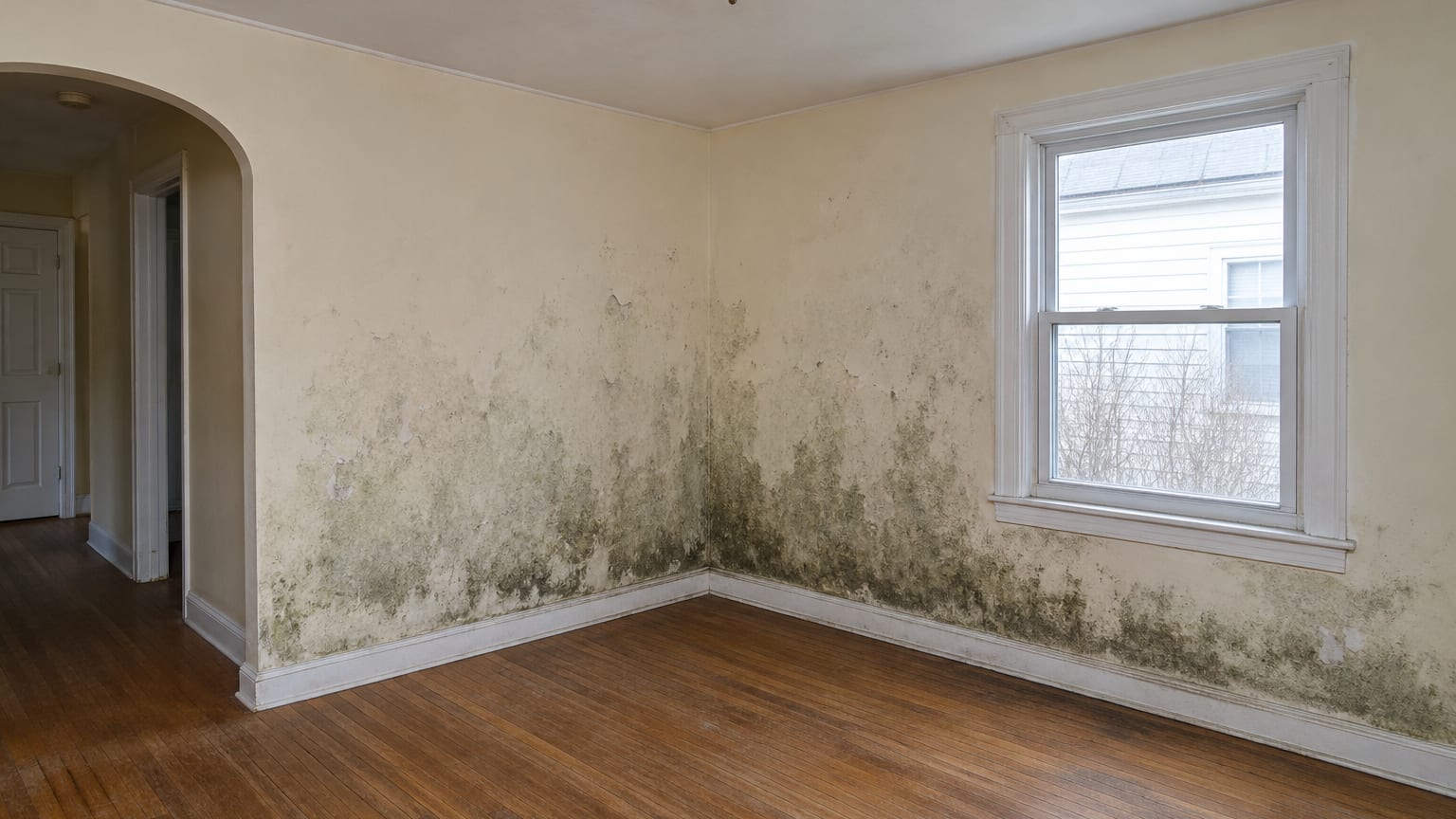
You are standing in a house with mold on more than one wall, and before you spend money, sign a purchase contract or move anyone back in, you need to know whether it is worth saving. The answer is often yes. A house can usually be repaired when the moisture source can be stopped, the structure is sound and the contaminated materials can be cleaned or removed.
Those three conditions are things you can check, and most of this page is about how to check them in order. You do not need to guess from photographs or from the size of the stain.
What you need first is a written scope from a qualified contractor, a safety check of the structure and a plan for the water. The sections below set out what each step involves and where repair gives way to rebuilding.
Key Takeaways
Three conditions decide the repair scope
A stopped moisture source, a sound structure, and contaminated materials that can be cleaned or removed.
New Jersey sets its own size guideline
The state's mold guidelines call for a qualified contractor above 100 square feet and professional advice from 10 to 100 square feet.
The 50 percent test applies only in a flood zone
FEMA's substantial-damage rule covers Special Flood Hazard Areas, and the local floodplain or construction official makes that call.
Can Mold-Damaged Houses Be Saved? The Decision Comes From Three Conditions
Start with the water. The New Jersey Department of Health says mold grows when excess water is present, and that the building should be inspected for the moisture source, which has to be corrected before remediation. EPA names moisture control as the key to mold prevention. A cleanup done while a roof leak, plumbing fault, groundwater problem or condensation continues is unlikely to last.
Next comes the structure. Unaddressed moisture can weaken wood framing, floors, walls and roof assemblies, and EPA advises consulting a structural engineer or another qualified professional when mold may have affected structural integrity. Sagging floors or ceilings, soft or rotted framing, foundation movement and unsafe electrical systems all need a qualified evaluation first.
The third condition is the material. Hard, nonporous surfaces can generally be cleaned, structurally sound wood and concrete may be cleaned, and porous materials such as drywall, insulation, carpet and ceiling tile usually have to be removed and replaced. When all three conditions are in your favor, the house can generally be remediated, and the work is mostly a matter of scope and sequence.
What To Do in the First Hour, Day, and Week
In the first hour, stay out of areas with sagging ceilings, unstable floors, standing water near electrical equipment, sewage contamination or suspected structural damage. Keep people with asthma, serious allergies or lung disease, infants and older adults away from contaminated areas. If power was affected, keep it off until an electrician or the authorities say it is safe, and do not run an HVAC system you suspect is contaminated, because it can carry mold through the building.
Photograph rooms, waterlines, visible mold, damaged contents and structural conditions before anything is thrown out, and contact your insurer promptly.
During the first day, identify the moisture source, whether it is the roof, plumbing, foundation, groundwater, condensation, HVAC, drainage or floodwater. Arrange a building and moisture assessment that maps visible and hidden damage. Keep three questions separate, because they have different answers: is the structure safe, which materials can be saved, and how will moisture be controlled from now on. If you are buying, get written findings before you waive inspection rights or commit to repairs.
Over the first week, get a written remediation scope that covers containment, material removal, cleaning, drying, disposal, verification and reconstruction. Ask whether a structural engineer, electrician, plumber, roofer or floodplain official needs to be involved, and confirm whether permits apply. Do not move back in until cleanup is complete and the structural, electrical and environmental hazards have been addressed.
The First Hour, Day and Week
- 1
First hour
Stay out of areas with sagging ceilings, unstable floors, standing water near electrical equipment, sewage contamination or suspected structural damage, and photograph conditions before anything is thrown out.
- 2
First day
Identify the moisture source and arrange a building and moisture assessment that maps visible and hidden damage.
- 3
First week
Get a written remediation scope that covers containment, material removal, cleaning, drying, disposal, verification and reconstruction.
- 4
Before moving back in
Wait until cleanup is complete and the structural, electrical and environmental hazards have been addressed.
What a Whole-House Mold Remediation Involves
New Jersey's mold guidelines recommend hiring a qualified contractor experienced in mold or environmental-contamination cleanup for areas larger than 100 square feet, and professional advice for areas between 10 and 100 square feet. New Jersey has no state certification program for mold companies, and the state's lists of firms are information only, so ask any contractor for references, licensing and insurance information, and a written scope. A written mold remediation scope should name each of the stages below. If you handle any part of the cleanup yourself, EPA recommends at least an N-95 respirator, goggles and protective gloves for disaster-related mold work.
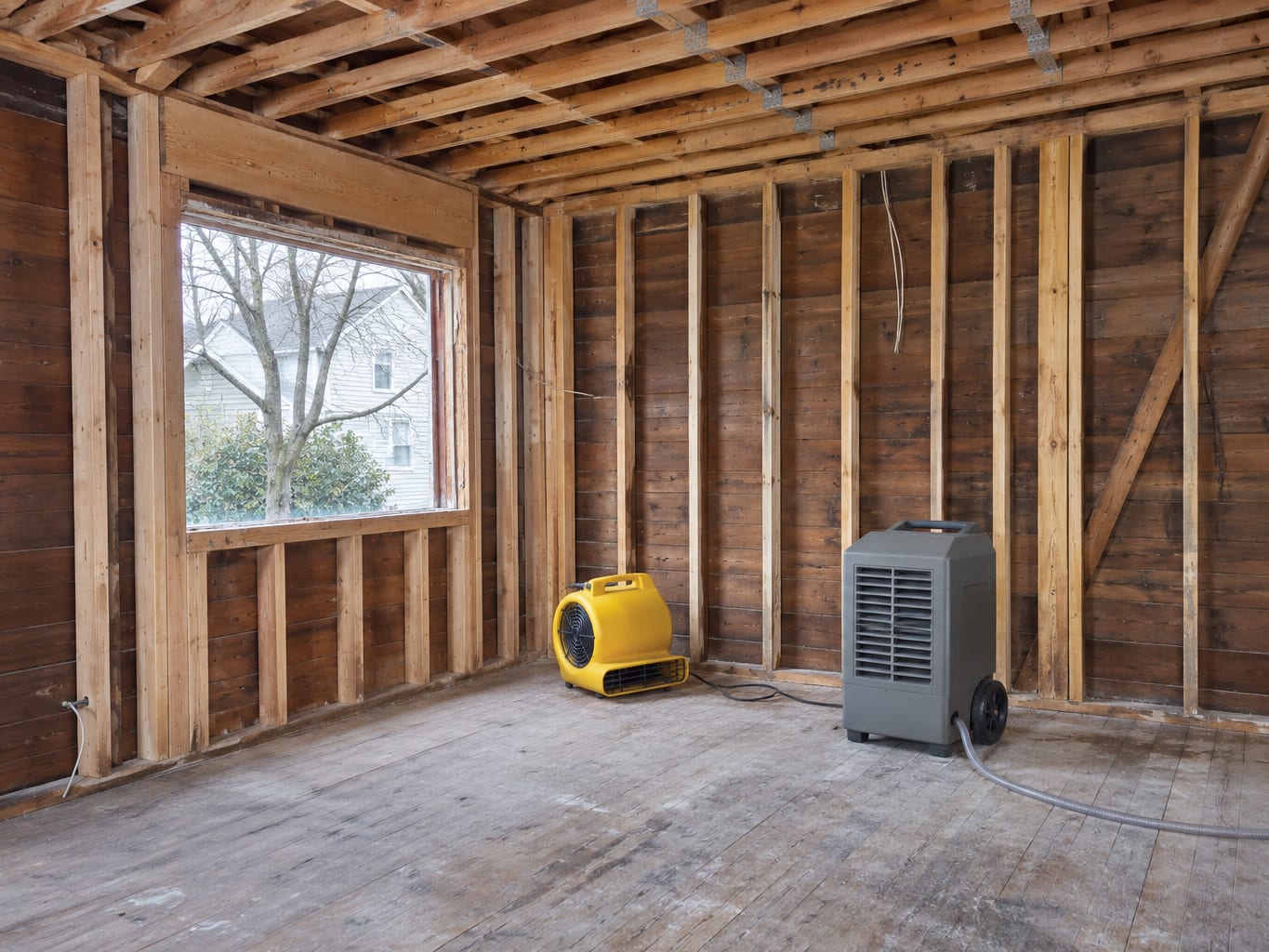
A large job generally moves through these stages:
1. Safety and documentation: Check that the building is safe to enter, assess electrical, structural, floodwater, sewage and HVAC hazards, then photograph conditions and record moisture readings. 2. Containment: Isolate the work areas to limit cross-contamination, and shut down or isolate HVAC systems serving contaminated zones. 3. Removal and opening assemblies: Remove wet or contaminated drywall, insulation, carpet, padding, ceiling tile and damaged cabinetry. Flood guidance commonly calls for opening walls and exposing framing so cavities can be inspected and dried. 4. Cleaning and drying: Clean the salvageable wood, concrete and metal, then dry the wall cavities, framing, floors and crawl spaces with air movement and dehumidification while monitoring moisture. 5. Verification and rebuild: Confirm that visible contamination is gone and the moisture problem is corrected, then replace insulation, drywall, flooring and trim only after the area is clean and dry.
Stages of a Large Mold Remediation
- 1
Safety and documentation
Check that the building is safe to enter, assess the hazards, then photograph conditions and record moisture readings.
- 2
Containment
Isolate the work areas to limit cross-contamination, and shut down or isolate HVAC systems serving contaminated zones.
- 3
Removal and opening assemblies
Remove wet or contaminated porous materials, and open walls so cavities can be inspected and dried.
- 4
Cleaning and drying
Clean the salvageable wood, concrete and metal, then dry cavities, framing, floors and crawl spaces while monitoring moisture.
- 5
Verification and rebuild
Confirm that visible contamination is gone and the moisture problem is corrected, then replace materials only after the area is clean and dry.
Can a House Full of Mold Be Saved?
The size of the problem matters, but it is only one input. A full-house assessment should map the moisture source, the affected materials, hidden contamination, the structural condition, HVAC involvement, any floodwater or sewage contamination and the amount of material that has to come out. The amount of visible mold alone does not decide whether a building must be demolished.
For a building that was heavily flooded, FEMA says the structure should be assessed for structural integrity and remediated by experienced professionals. Structural instability, contaminated hidden cavities, repeated flooding or floodplain repair requirements can move the decision toward rebuilding.
Which Materials Can Stay and Which Usually Come Out
EPA sorts materials by porosity. Nonporous materials can generally be cleaned. Structurally sound semi-porous wood and concrete may be cleaned. Porous drywall, carpet, insulation and ceiling tile are difficult to clean, and EPA's worker guide says they generally should be removed and replaced when they have been wet for more than 48 hours. MDF and some sheathing can hold contamination as well and often come out.
Hover or tap a row to highlight it.
| Material | Usual outcome |
|---|---|
| Nonporous materials | Can generally be cleaned |
| Structurally sound wood and concrete | May be cleaned |
| Sound studs, joists and sheathing | Can often be cleaned, dried and kept |
| Drywall, carpet, insulation and ceiling tile | Usually removed and replaced, especially after more than 48 hours wet |
| MDF and some sheathing | Can hold contamination and often come out |
Framing is a large part of what a house keeps. When studs, joists and sheathing are structurally sound, they can often be cleaned, dried and kept.
Water type changes the list. Floodwater and sewage bring bacteria, chemicals and petroleum in addition to mold, so materials that touched contaminated water may need more extensive removal.
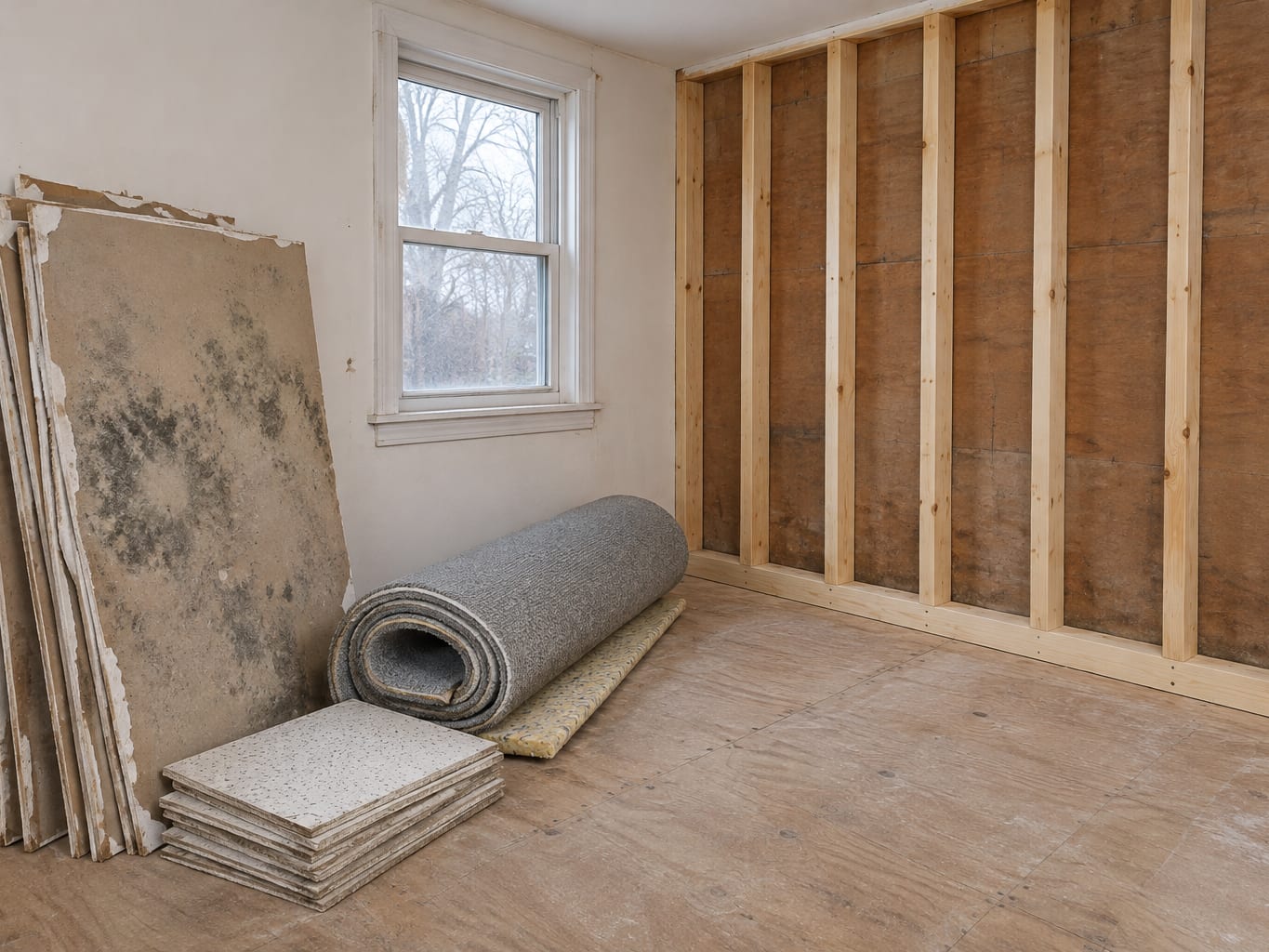
Hidden spread is the other factor. Mold can grow behind drywall, under flooring, around pipe chases, inside wall cavities, in crawl spaces and in HVAC components. A contaminated HVAC system can distribute mold through the building, so HVAC mold remediation belongs in the scope whenever the system is involved.
When Repair Gives Way to Rebuild or Demolition
Rebuilding or demolition becomes the practical answer in a few situations, and each is a matter of the specific property:
- The structure cannot be made safe: severe damage, collapse risk, extensive rot, foundation failure or framing that cannot be repaired.
- The moisture cannot be controlled: flood or water exposure that will keep returning.
- Contamination is widespread: floodwater or sewage has affected so much material that cleaning it is uneconomical.
- Removal strips the building to its frame: reconstruction becomes more practical than piecemeal repair.
- Funding cannot support the work: insurance, financing or available assistance falls short of the required repairs.
One test applies only in a mapped flood zone. In a FEMA-participating community inside a Special Flood Hazard Area, the local government determines whether a structure is substantially damaged, and FEMA defines that as repair costs equal to or greater than 50 percent of the structure's pre-damage market value, excluding land. A stricter local threshold may apply. A substantially damaged structure then has to meet current floodplain-management requirements, which can mean elevation, relocation or flood-resistant construction.
Flood status is parcel by parcel, so ask the local floodplain manager or construction official before major work whether the rule applies to your property. Demolition does not rule out rebuilding, but a rebuild may need current floodplain compliance and permits.
When Should You Walk Away From a House With Mold?
If you are a buyer, pause the transaction when the property cannot be safely inspected, the moisture source cannot be identified or corrected, structural damage is suspected, the scope cannot be defined, financing or insurance is unavailable, or the projected remediation and reconstruction obligations do not fit your budget and timeline.
A pre-purchase mold inspection gives you written findings to take to a structural engineer, your insurer, an attorney and the local building official, as the situation requires. The decision is financial and legal as well as environmental.
New Jersey Insurance, Floodplain Rules, and Assistance
Flood damage is excluded from New Jersey homeowners policies, and the Department of Banking and Insurance says flood insurance is the coverage for flood damage to the home and personal property. Whether your policy covers mold from a leak, vacancy or another cause depends on the policy language and the facts of the claim. Notify the insurer promptly and ask for a written coverage position.
If you rent, NJDOH advises contacting the local building-code office about unrepaired leaks, plumbing defects and structural deficiencies, and considering legal advice about your rights.
In a floodplain, contact the municipal building official or floodplain manager before major repairs. The community determines substantial damage and may require current floodplain standards, and permit requirements for gutting, structural work, demolition, elevation or relocation vary by municipality.
What If You Can't Afford Mold Remediation?
Start with the insurer and then look at assistance. After a declared disaster, the State of New Jersey says FEMA may provide help with immediate needs, rental assistance, legal assistance and grants to make a home livable. SBA disaster loans may support repair or replacement of damaged property for eligible owners, renters, small businesses and nonprofits.
Some programs are tied to a single event. The Hurricane Ida HARP reimbursement program can reimburse eligible out-of-pocket emergency repairs, subject to program rules and documentation. Contact the insurer, FEMA, SBA, your county emergency-management office and the Department of Community Affairs to confirm current eligibility before relying on any of it.
Hover or tap a row to highlight it.
| Source | What it may provide |
|---|---|
| FEMA | Help with immediate needs, rental assistance, legal assistance and grants to make a home livable |
| SBA disaster loans | Support for repair or replacement of damaged property for eligible owners, renters, small businesses and nonprofits |
| Hurricane Ida HARP reimbursement | Reimbursement of eligible out-of-pocket emergency repairs, subject to program rules and documentation |
What Documentation Protects the Property Owner
Documentation is what lets an insurer, lender or buyer see what happened, so start it before demolition. Photograph water, mold, damaged materials, contents and structural conditions, and save damaged personal property where possible so an adjuster can inspect it. NJOEM gives the same advice in its flood guidance.
Keep receipts for temporary housing, emergency work, drying, disposal and storage. Keep inspection reports, moisture maps, laboratory reports, remediation scopes, estimates, invoices, permits, code notices, structural reports, and proof of ownership and primary residence. Our insurance restoration services page describes how mitigation records fit alongside an adjuster's review.
A property with unresolved mold, active moisture, structural damage or incomplete records can be difficult to occupy, insure, finance, sell or value accurately, which is why the paper trail matters as much as the cleanup itself.
Get the written scope in a form that separates remediation, reconstruction, permit, engineering and temporary-housing costs, so you can compare repair with rebuilding on the same footing.
Keeping Moisture From Bringing the Problem Back
A repair holds only as long as the water stays away. Treating visible mold without correcting the leak, humidity, drainage or flood source is the most common reason it returns, and painting or caulking over mold leaves the contamination in place.
Choose a contractor by the scope rather than by a promised price. Ask how the moisture source will be corrected, how containment will work, where materials will go, what drying records you will receive and how the work will be verified.
What to Ask a Contractor Before You Hire
Moisture source
How will the moisture source be corrected?
Containment
How will containment work?
Disposal
Where will materials go?
Drying records
What drying records will you receive?
Verification
How will the work be verified?
Run the drying to completion, with moisture meters mapping wet materials and monitoring progress, and finish with verification before anything is closed up. Post-remediation verification can document indoor air conditions when you need a record for a lender or buyer.
Rebuilding starts after that. Structural mold repair and post-mold-remediation rebuild pick up where removal stops, and our build-back services cover the rebuild after remediation. If the cause was a water event, water damage restoration addresses the source, extraction and drying.
Frequently Asked Questions About Saving a House With Mold
Can the framing be cleaned and kept?
Often, yes. Structurally sound wood and concrete may be cleaned, and flood guidance calls for opening walls so framing can be inspected, cleaned and dried. If rot or weakened members turn up, a structural engineer or other qualified professional should evaluate them.
Do I need air testing before cleanup starts?
EPA says visible mold usually does not require routine sampling to establish that cleanup is needed. Sampling can help when the source is unclear or health concerns call for it, so ask whether the result would change the scope before paying for it.
Can I stay in the house during the work?
Do not move back in until cleanup is complete and the structural, electrical and environmental hazards have been addressed. People with asthma, lung disease, allergies, infants and older adults should stay away from contaminated areas.
Does a contractor's estimate settle whether the house is substantially damaged?
No. In a Special Flood Hazard Area, the local government makes that determination, so ask the floodplain manager or construction official before starting major work.
Test Your Knowledge of Saving a Moldy House
1. What three conditions usually decide whether a house with mold can be repaired?
2. Above what size does New Jersey's mold guidance call for a qualified contractor?
3. What does FEMA define as substantial damage in a Special Flood Hazard Area?
4. Which materials usually have to be removed and replaced?
5. When should you move back in?
Pick an answer to begin.
Final Thoughts
A house with mold can often be saved when the moisture source is stopped, the structure is sound and the contaminated materials can be cleaned or removed. The order matters: structure first, then water, then materials, then hidden spread, with a written scope that follows the same order and a check with your local floodplain or construction official before major work.
Taking those steps in that order protects you from paying for a cleanup that fails, or from keeping a building that cannot be repaired. It also leaves you with records that your insurer, lender or buyer can use.
If you own, manage or are buying a house with mold in New Jersey, call ExecPro Restoration & Cleaning at (888) 300-3772 or reach us through our contact page. We provide mold inspection, remediation, water damage restoration, post-remediation verification, structural mold repair and rebuild services for New Jersey properties.
Mold and Repair Terms
Tap a term to see what it means.
Moisture source. The leak, plumbing fault, groundwater problem, condensation or flood exposure feeding the mold, which has to be corrected before remediation.
Related Articles
Mold in a NJ Rental: What a Tenant Does First and Who to Call
A tenant with mold in a NJ rental should notify the landlord in writing and document it. Learn which local office to call and when to get legal advice first.
Can Mold Come Back After Remediation: Causes and Warning Signs
Mold can return after remediation when moisture remains. Learn the warning signs, what records to request, and how to keep a remediated area dry in New Jersey.
Mold Remediation in Bridgewater, NJ: From the Water Source to the Records You Keep
From the first call to the final paperwork, see what mold remediation in Bridgewater, NJ includes, what sets the size of the job, and which records to keep.