Staying Home During Mold Remediation: Who Should Leave
Cal HewittPublished
- mold remediation
- containment
- indoor air quality
- new jersey
Can you stay in your house during mold remediation? For many New Jersey households the answer is yes for some rooms and some people, and no for others. You are probably trying to decide this week whether to book a hotel, send the kids to a relative, or tell the crew you will sleep upstairs.
Three things settle it: how large and how deep the growth is, whether your heating and cooling system can carry air from the work area into the rest of the house, and how much dust the demolition will put into shared air. The people who live in the house count as much as the square footage.
You can get a clear answer before anyone picks up a tool by asking for a written, room-by-room occupancy plan that names the rooms off limits and what releases each one.
Key Takeaways
Four factors decide it
The size and intensity of the growth, where it sits, whether the HVAC system connects it to the rest of the house, and who lives there determine whether you stay, split the household, or all leave.
Some people leave first
CDC says people with weakened immune systems should not be present during mold removal, and infants, older adults and people with asthma, allergies or lung conditions need a clinician's advice before they stay.
Containment reduces spread
Limited containment is a single layer of 6-mil polyethylene, full containment adds a second layer and an airlock, and negative pressure pulls air toward the work zone.
A contaminated HVAC system stays off
EPA says it should not run until it is remediated, and the vents serving the work area get sealed.
Reoccupancy follows conditions, not a day count
The moisture is fixed, damaged materials are out, the area is dry, and a follow-up check shows no new water damage or mold.
Can You Stay Home During Mold Remediation?
Sometimes. There is no blanket yes or no, because the answer depends on the job and on who lives in the house. A household can often stay in clean, separated rooms when the work is localized and containment keeps the work area closed off from the rest of the house. EPA says occupant relocation depends on the size of the affected area, the planned remediation activities, debris hazards and the health of the people living there.
Moving out becomes the better choice when the affected area is large, demolition will create a lot of dust or debris, the growth touches the HVAC system or a return-air path, or containment cannot isolate the work. New Jersey has no single statewide rule that declares a house safe to stay in for every project, so the decision rests on your house and your household.
Start with the people. NJDOH names very young infants, elderly people, and people with allergies or lung conditions such as asthma and emphysema as groups that may face higher risk, so infants, older adults and anyone with asthma, allergies or another lung condition should get a clinician's advice before spending nights near the work.
If someone in your home has a weakened immune system, CDC says that person should avoid moldy buildings and should not be present during mold removal, and should stay in alternative shelter until cleanup is complete when possible. Weakened immunity includes organ or stem-cell transplant, blood cancers, chemotherapy, corticosteroids and biologic treatments. Call that person's healthcare provider, and see a physician for wheezing, shortness of breath or a cough that persists.
Pets stay out of the work area, away from demolition dust and cleaning products. Ask the remediator to confirm pet access against the containment setup and the products on the job.
Hover or tap a row to highlight it.
| Who | What the guidance says | What to do |
|---|---|---|
| Someone with a weakened immune system | CDC says that person should avoid moldy buildings and should not be present during mold removal | Stay in alternative shelter until cleanup is complete when possible, and call their healthcare provider |
| Infants, older adults, and people with asthma, allergies or lung conditions | NJDOH names them as groups that may face higher risk | Get a clinician's advice before spending nights near the work |
| Children and pets | Keep both out of the work area, away from demolition dust and cleaning products | Ask a pediatrician about infants and children with asthma or allergies, and ask the remediator to confirm pet access |
In the first hour, keep children, pets and everyone else out of the suspected work area and stop anything that disturbs moldy drywall, insulation or carpet. If water is still coming in, stop the source when it is safe to do so and call the plumber, roofer, building manager or an emergency service.
What Determines Whether You Need To Leave
Four connected factors drive the decision, and your remediator should be able to speak to each one for your house.
- Size and intensity: EPA describes limited containment for roughly 10 to 100 square feet and full containment above 100 square feet or when the work could spread mold through the building. Heavy growth in a small area can put more into the air than light growth over a larger one, and professional judgment sets the final level.
- Location: A bathroom ceiling away from living space raises a different question than a central hallway, a bedroom wall, a basement tied to the HVAC system, an attic return-air space or a crawl space. Hidden mold behind drywall, under flooring and inside wall cavities can enlarge the work area once demolition begins.
- HVAC involvement: EPA says a contaminated HVAC system should be shut down until it is remediated, with supply vents and intakes serving the work area sealed.
- Occupants: EPA's relocation guidance points to asthma, allergies, compromised immune systems and other health concerns, and it applies to every person in the household.
Square footage is only the starting point. What matters is whether the work can be isolated, whether the air path can be controlled, whether demolition will create airborne dust, and whether anyone in the house has more reason for concern. A closed door does not isolate a room when supply vents, return air, pipe chases, attic pathways or worker traffic connect it to the work area. If the growth is near ducts or an air handler, our page on HVAC mold remediation explains how that work is handled.
How Containment Limits Spread To The Rest Of The House
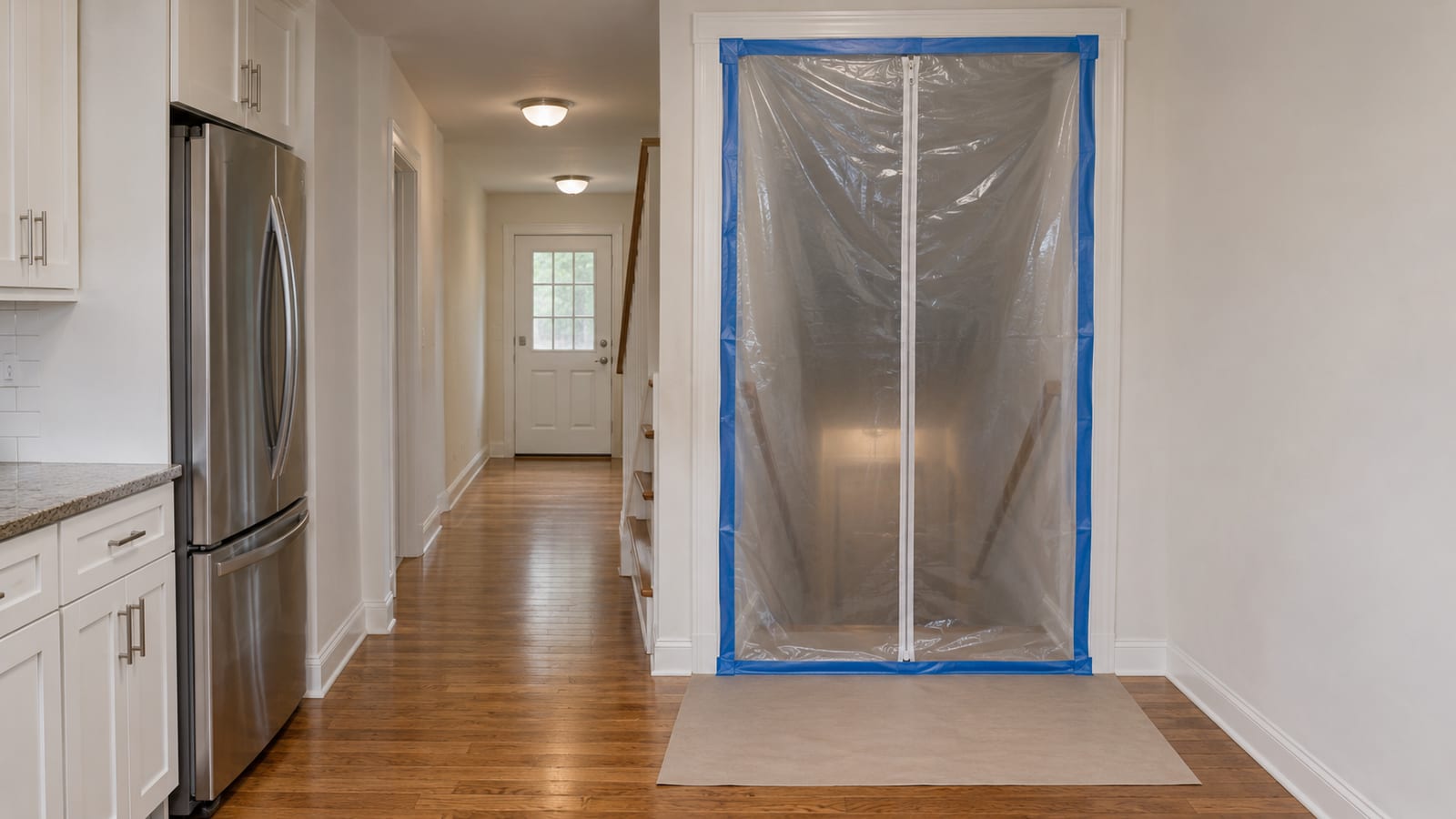
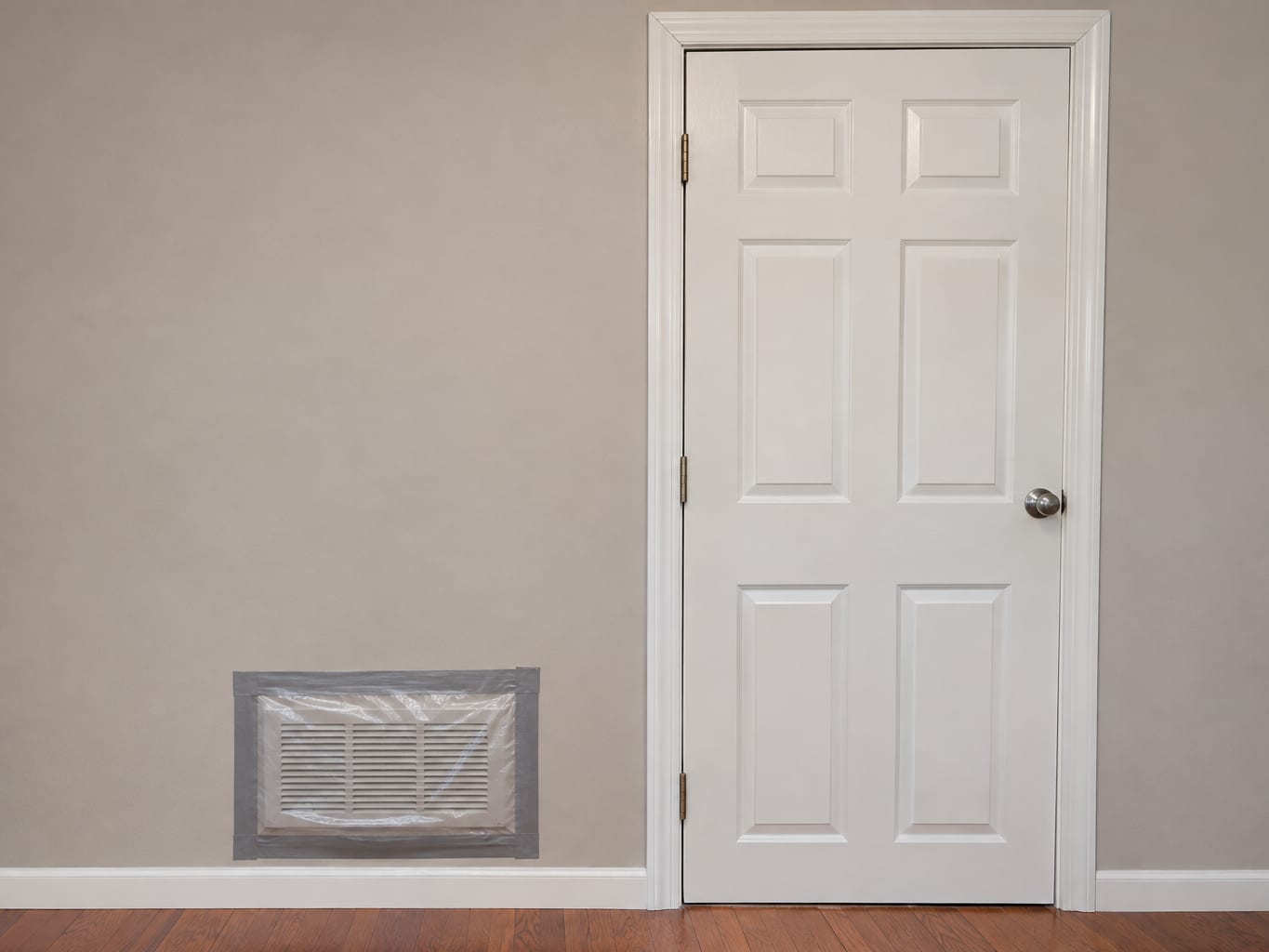
Containment is the set of barriers that controls the path between the work area and the rest of the house. EPA describes limited containment as a single layer of 6-mil fire-retardant polyethylene sheeting enclosing the moldy area, with a controlled slit for entry. Full containment uses two layers of polyethylene and an airlock or decontamination chamber for going in and out. Doors, supply vents, air vents, pipe chases and other openings inside the containment area get sealed.
Hover or tap a row to highlight it.
| Level | When EPA describes it | What is built |
|---|---|---|
| Limited containment | Roughly 10 to 100 square feet | A single layer of 6-mil fire-retardant polyethylene around the moldy area, with a controlled slit for entry |
| Full containment | Above 100 square feet, or when the work could spread mold through the building | Two layers of polyethylene and an airlock or decontamination chamber for going in and out |
Negative pressure keeps the work area at a lower air pressure than the rooms around it. Air is exhausted outdoors, often through a HEPA-filtered fan, so air flows toward the work zone and away from the clean rooms. EPA says the plastic should billow inward while containment is working. If it moves outward, containment has been lost and work stops until it is corrected.
The HVAC system is the largest pathway. Heavy mold above ceiling tiles can reach a return-air plenum, which calls for containment from the floor to the ceiling deck and possibly new air-handler filters after the work.
Containment reduces spread. Your occupancy plan covers the other routes air and debris can take: worker traffic, waste removal, shared air, pressure loss and dust from demolition. For a basement mold remediation job, ask how the stairway and the door at the top will be handled, because that tells you a lot about whether sleeping upstairs is reasonable.
What Happens During The Remediation Process
The work starts with an assessment that defines the moisture source, the affected materials, the air pathways, the containment level and which rooms will be closed. At ExecPro Restoration & Cleaning, our residential mold work follows IICRC S520 protocols, and the standard itself, ANSI/IICRC S520:2024, covers residential mold remediation, safety and health, documentation, structural and HVAC remediation, contents, and post-remediation verification.
Then containment goes up and the vents serving the area are sealed. Mold-damaged materials come out, hidden growth that turns up behind finishes is added to the scope, surfaces are cleaned, and the area is dried. The moisture source gets corrected too, because mold returns where moisture stays. Workers and debris pass through the controlled entry, and waste leaves the house by a route your plan names.
How a Remediation Job Runs
- 1
Assess the job
The assessment defines the moisture source, the affected materials, the air pathways, the containment level and which rooms will be closed.
- 2
Put up containment
Containment goes up and the vents serving the area are sealed.
- 3
Remove damaged materials
Mold-damaged materials come out through the controlled entry, hidden growth found behind finishes is added to the scope, and waste leaves the house by a route your plan names.
- 4
Clean and dry
Surfaces are cleaned and the area is dried.
- 5
Correct the moisture source
Mold returns where moisture stays, so the source gets fixed too.
- 6
Verify and release
A follow-up check and a written release name the areas cleared for use.
Bleach does not stand in for removal. EPA says routine bleach use is not recommended and that dead mold can still trigger allergic reactions. Chlorine bleach should never be mixed with ammonia-containing products.
Timing is the next thing most households ask about, and it follows the scope of the work.
How long does typical mold remediation take?
No standard duration applies to every job. The timeline depends on the number of affected rooms, how much material comes out, drying, HVAC involvement, containment, contents cleaning and reconstruction. Our residential mold remediation page describes one to two days for a bathroom or single room and several days for larger attic, basement or multi-area projects, and those are estimates that move with the scope. Ask for a written timeline that covers containment, removal, drying, verification and reconstruction.
When The Work Area Is Safe To Reoccupy
Reoccupancy follows conditions, with no fixed number of days. EPA's completion indicators are that the moisture problem is corrected, mold-damaged materials are removed, the area is dry, visible mold and moldy odors are gone, a follow-up inspection shows no water damage or mold growth, and people can use the space without health complaints or physical symptoms. EPA also says the final call is a professional judgment.
What Releases a Room
Moisture fixed
The moisture problem is corrected.
Damaged materials out
Mold-damaged materials are removed.
Area dry
The area is dry.
Mold and odor gone
Visible mold and moldy odors are gone.
Follow-up check clean
A follow-up inspection shows no water damage or mold growth.
No symptoms
People can use the space without health complaints or physical symptoms.
Professional judgment
EPA describes the final call as a professional judgment.
Air sampling does not replace a visual inspection. EPA states that air results describe conditions only at the moment of sampling, so a test result sits alongside the visual and moisture checks. Depending on the job, verification can include visual inspection, moisture readings, a review of the paperwork, surface or air sampling, or an independent indoor environmental professional. Our post-remediation verification page describes that step.
Can you live in a house after mold remediation?
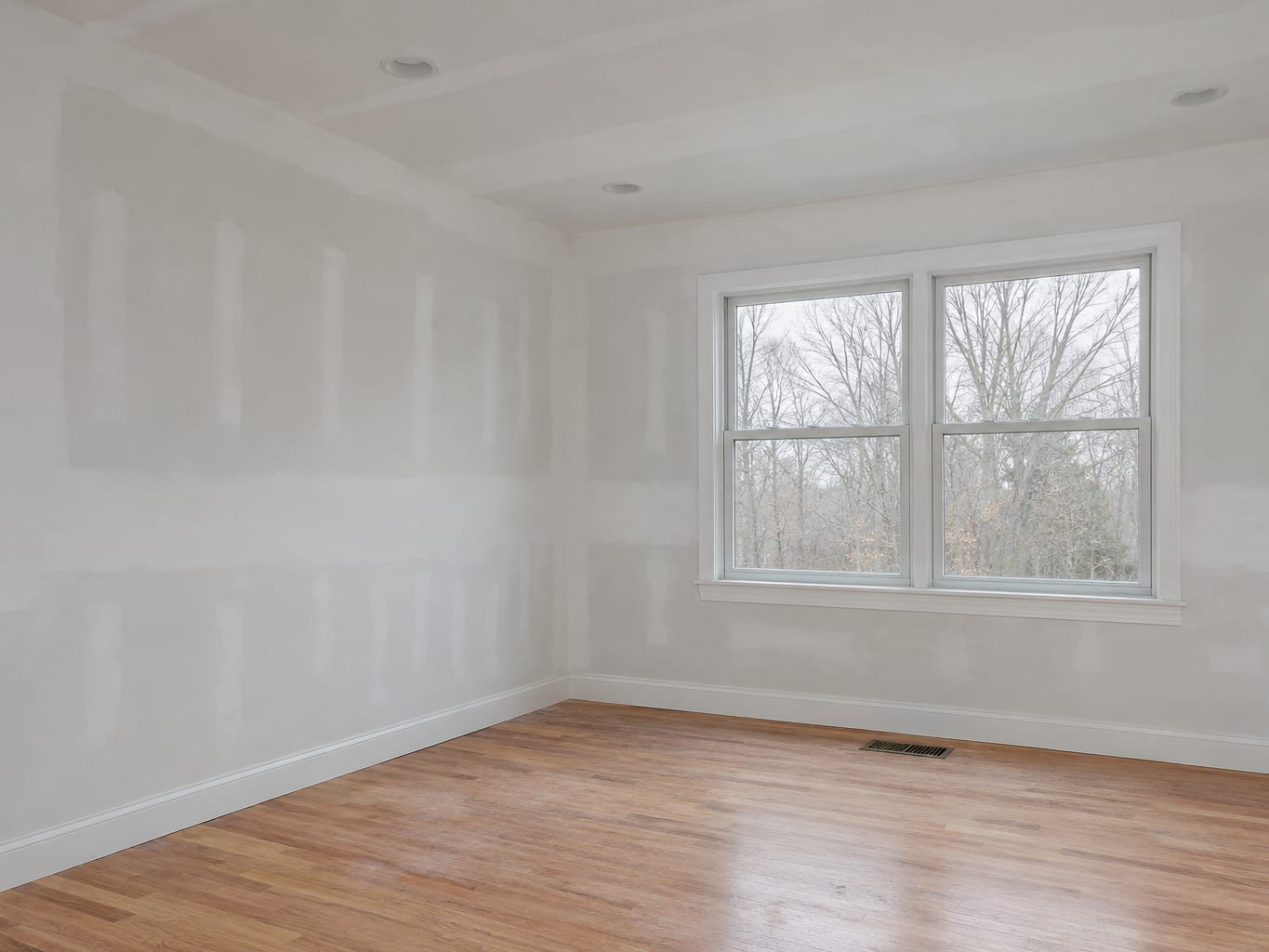
Yes, once the conditions above are met. A person with a weakened immune system should remain away until remediation is complete and should talk with a healthcare provider about going back. Ask the remediator for a written release that names the areas cleared for use, any areas still restricted, whether HVAC service has been restored, whether reconstruction remains, and the documents behind the release. Removed drywall, insulation, flooring or cabinets may still need rebuilding after the release, and drywall replacement after mold is part of that step.
New Jersey Insurance And Rental-Housing Considerations
Insurance first. The NJDOBI homeowners guidance lists mold as generally excluded unless it results from a covered loss, gives sudden and accidental water damage as a common covered event, and notes that flood damage may not be covered under an ordinary homeowners policy. The cause, timing, endorsements and policy language control the claim. NJDOBI advises reporting the loss promptly, asking the insurer what documents it needs, photographing the damage, saving receipts and keeping damaged property until the insurer has inspected it or gives instructions. Review the additional-living-expense language in your policy and ask the insurer before you commit to hotel costs. If a claim may apply, our insurance restoration services page covers the documentation side.
Tenants should notify the landlord in writing and allow access for inspection and repairs. For leaks and other structural problems, NJDOH directs renters to the local building-code office. DCA's habitability bulletin says tenants have a right to safe, sanitary and decent housing; buildings with three or more rental units fall under the Bureau of Housing Inspection, and one- and two-unit buildings generally follow local ordinances.
Is mold considered uninhabitable?
New Jersey has no single statewide declaration that every moldy home is uninhabitable. DCA names mold as an example of a serious health and safety condition that may support a habitability defense when notice, access for repairs and the other legal requirements are met. Whether your unit qualifies turns on the facts. Before withholding rent, moving out permanently or signing an agreement, ask an attorney or your local housing agency about your specific lease and building.
Questions To Ask Before The Crew Starts
These questions turn the general guidance into a plan for your house. Ask them in writing, and keep the answers with your other paperwork.
- Which rooms are off limits, and what releases each one?
- Is the HVAC system shut down, and which vents are sealed?
- How do workers enter and leave, and how does waste leave the house?
- What containment level is planned, and what happens if the plastic moves outward?
- Can the rest of the home stay occupied during demolition, removal, drying and cleaning?
New Jersey has no state certification program for companies that perform mold work, so ask each company about its training, insurance, relevant experience, containment methods, documentation and the professional standards it follows. By the end of the project you should hold the scope, photographs, moisture readings, containment plan, work log, disposal records and verification documents. If your household needs an assessment before anyone decides who moves out, a residential mold inspection is where that starts.
Mold Remediation Terms
Tap a term to see what it means.
Limited containment. A single layer of 6-mil fire-retardant polyethylene sheeting around the moldy area, with a controlled slit for entry. EPA describes it for roughly 10 to 100 square feet.
Frequently Asked Questions About Staying Home During Mold Remediation
Can we sleep upstairs while the basement is contained?
Sometimes. It depends on whether the HVAC system serving the work is shut down, how workers and debris move through the house, the containment level and who is sleeping there. Containment reduces spread, and your occupancy plan should answer the question room by room. If anyone upstairs has a weakened immune system, asthma or a very young infant, ask their clinician first.
Can the HVAC run during the work?
If mold has reached the HVAC system, EPA says to keep it off until it is remediated. If the growth is elsewhere, ask whether the system serving the work area will be shut down and which vents will be sealed.
Do children or pets need to leave?
Keep both out of the work area. A pediatrician can advise on infants and on children with asthma or allergies. For pets, ask the remediator to confirm access against the containment setup and the cleaning products.
Who decides when a room is safe to enter?
The remediator gives a written release, and EPA describes the final call as a professional judgment. You can ask an independent indoor environmental professional to confirm it.
What happens if the plastic barrier moves outward?
EPA says outward movement means containment has been lost. Work stops until it is corrected.
Can the insurer pay for a hotel?
That depends on your policy. Read the additional-living-expense language and ask the insurer before you book.
Staying Home During Mold Remediation, Quick Check
1. What does EPA say about a contaminated HVAC system until it is remediated?
2. What does full containment add to limited containment?
3. What does it mean if the plastic barrier moves outward?
4. What decides when a room is safe to reoccupy?
5. Who does CDC say should not be present during mold removal?
Pick an answer to begin.
Moving Forward
Whether you stay home comes down to the size and location of the growth, the HVAC pathway and the people in the house. Anyone with a weakened immune system leaves first, and infants, older adults and people with lung conditions get a clinician's advice. Containment reduces spread, and a written occupancy plan names the rooms that are off limits, what happens to the HVAC system and how each area is released.
Getting those answers before work starts lets you plan sleeping arrangements, pets and paperwork calmly instead of in the middle of demolition. Release follows the moisture fix, removal, drying and a follow-up check, so the date comes from the conditions in your house.
If you are deciding who stays and who goes, call ExecPro Restoration & Cleaning at (888) 300-3772 or reach us through our contact page. Our team serves central and northern New Jersey, and our residential mold work covers containment, removal, drying, post-remediation verification and reconstruction.
Related Articles
How a Mold Remediation Estimate Is Built, Line by Line
Holding a mold remediation estimate in NJ? See what each line covers, what moves the price, and how to compare two bids on equal terms before you sign.
Reopening a Deal NJ Shore Home: When Air Quality Testing Answers a Real Question
Reopening a closed Deal NJ shore home? Learn when air quality testing helps after vacancy, humidity, a storm, or renovation, and what a test cannot tell you.
One Home, Many Air Zones: Designing Indoor Air Testing for Princeton Junction, NJ Properties
Indoor air is not one thing across a Princeton Junction, NJ home. Learn how to design air-quality testing per zone, per floor, and against an outdoor baseline.