HEPA Vacuuming and Air Scrubbers in Mold Remediation Estimates
Cal HewittPublished
- mold remediation
- containment
- documentation
- new jersey
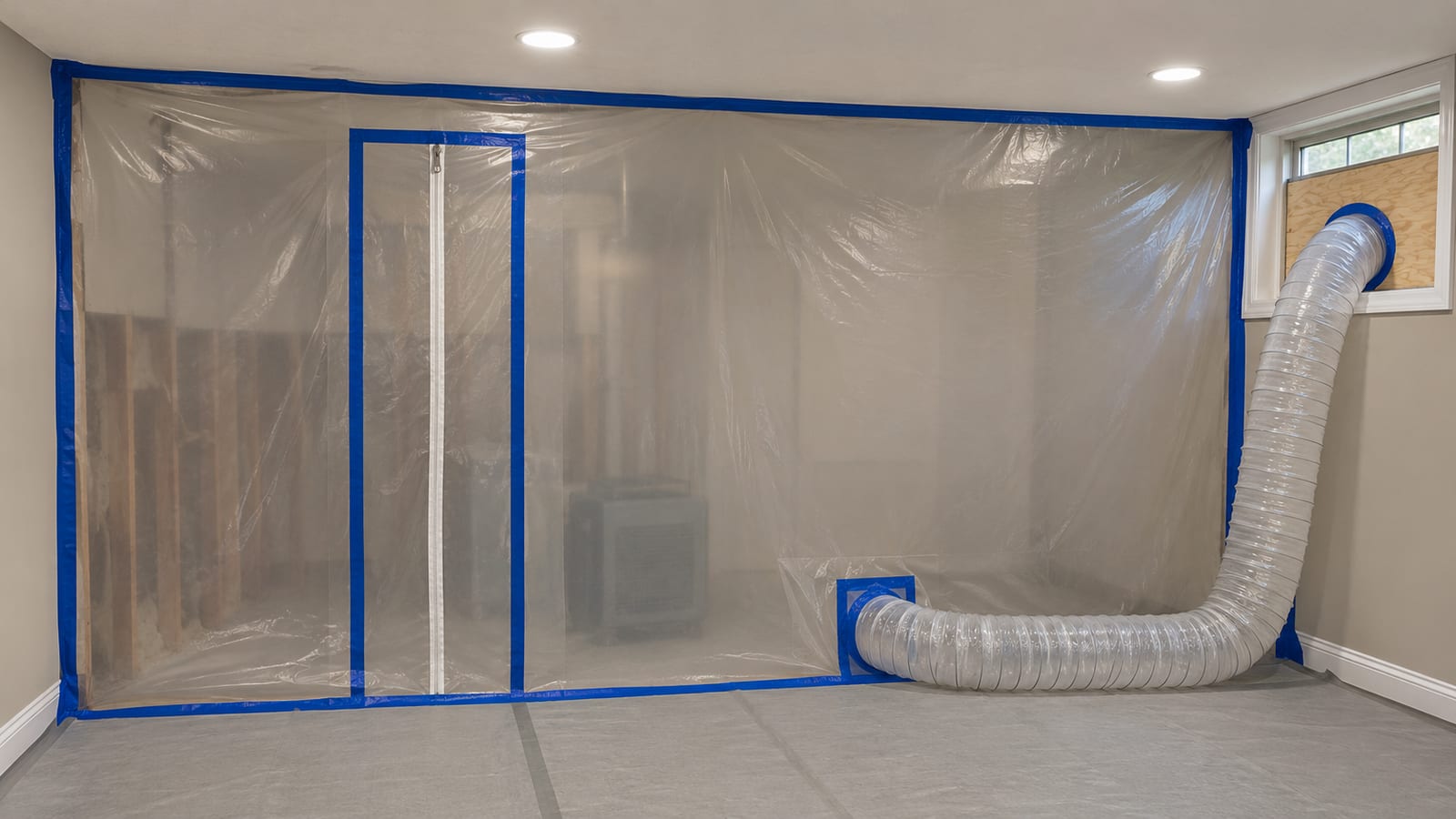
HEPA vacuuming, an air scrubber, a negative air machine and containment can each show up as a separate line on a mold remediation estimate, and each one carries a charge. You may be wondering what the machines actually do, whether one of them is padding, and how anyone will know the work was done properly when the crew leaves. Those are fair questions to ask before you sign anything.
The short version is that these pieces work as a team. Barriers keep the work inside one area, filtered machines control the dust that the work stirs up, and a final cleaning pass picks up what settled. Once you know which line does which job, you can read the estimate, compare it with a second one, and ask the contractor the questions that matter.
Key Takeaways
Each line has a separate job
Containment keeps spread inside the work area, a negative air machine pulls air inward and filters what it exhausts, an air scrubber filters air and returns it to the room, and HEPA vacuuming cleans up settled dust after materials are removed and dry.
A HEPA filter handles airborne particles only
EPA rates it to remove at least 99.97 percent of particles at 0.3 microns, but it does not dry a wall, fix a leak or reach growth inside porous material.
Ask what ends each phase
Federal guidance gives no single run time, air-change rate or pressure reading for every house, so the written scope for your room has to say when the machines come out.
Get the completion criteria and the final file in writing
Ask for the standard the area must meet before containment comes down, and for photographs, moisture records, disposal records and any lab report.
Why Do HEPA Vacuuming and an Air Scrubber Both Appear on a Mold Estimate?
Cleaning up mold means disturbing the material it grows on, and disturbed material puts dust and particles into the air. EPA's mold remediation guide, published in September 2008, therefore recommends a set of controls rather than one tool: containment, negative pressure with HEPA-filtered exhaust, removal of contaminated materials that cannot be cleaned, and final cleaning. An estimate that lists several machines is usually listing those controls one by one.
HEPA stands for high-efficiency particulate air. EPA describes a HEPA filter as theoretically able to remove at least 99.97 percent of particles measuring 0.3 microns, including mold particles. EPA calls 0.3 microns the most penetrating particle size, which makes it the worst-case test point.
That rating covers air passing through the filter and nothing else. A HEPA machine can clean the air in a work area, but it cannot dry a wet wall, repair a pipe or pull growth out of drywall. CDC states that mold cleanup has to be paired with correcting the moisture problem, and the filtered machines on your estimate are one part of a larger job.
EPA says it does not regulate mold or mold spores in indoor air, and its remediation guide is a set of recommendations. That is why two contractors can describe the same room differently, and why a written scope matters more than the equipment names.
What Does Each Piece of Equipment Do Inside Containment?
Containment keeps the work area separate from the rest of the building. The air machines manage what is floating inside it, and the HEPA vacuum handles what settles on surfaces. Knowing which is which makes the estimate easier to read line by line.
Hover or tap a row to highlight it.
| Line | What it does | What it does not do |
|---|---|---|
| Containment | Plastic sheeting and sealed openings separate the work area from occupied space | It does not clean or dry anything by itself |
| Negative air machine | Pulls air from surrounding spaces into the containment and sends it out through HEPA filtration | It does not dry a wall or reach growth inside porous material |
| Air scrubber | Draws air from the room through a filter and returns the filtered air to the work area | It does not hold negative pressure the way an exhaust unit does |
| HEPA vacuum | Picks up settled dust and particles on surfaces after materials are removed and dry | It does not replace removal of contaminated materials |
What does containment do, and when is it used?
Containment is plastic sheeting and sealed openings that separate the work area from occupied space. The heating and cooling system serving that area is shut down or isolated so it cannot carry particles to other rooms, and airlocks or decontamination areas cut down on tracking when people go in and out. EPA's guide describes limited containment for areas of roughly 10 to 100 square feet and full containment for areas larger than 100 square feet or where contamination could spread into occupied space. Those are guideline categories, so your contractor should explain why your job falls on one side of the line.
Can mold spores be vacuumed up, and what makes a HEPA vacuum different?
Yes, with a properly working HEPA vacuum. OSHA recommends HEPA vacuuming as a cleanup step after contaminated materials have been removed and surfaces have dried. It is meant for settled dust and particles on surfaces inside the work area, and for dust that may have drifted to nearby areas. The machine has to be assembled and maintained so air passes through the filter instead of around it, and OSHA calls for protective equipment during filter changes and for sealing the captured contents in impermeable bags or containers.
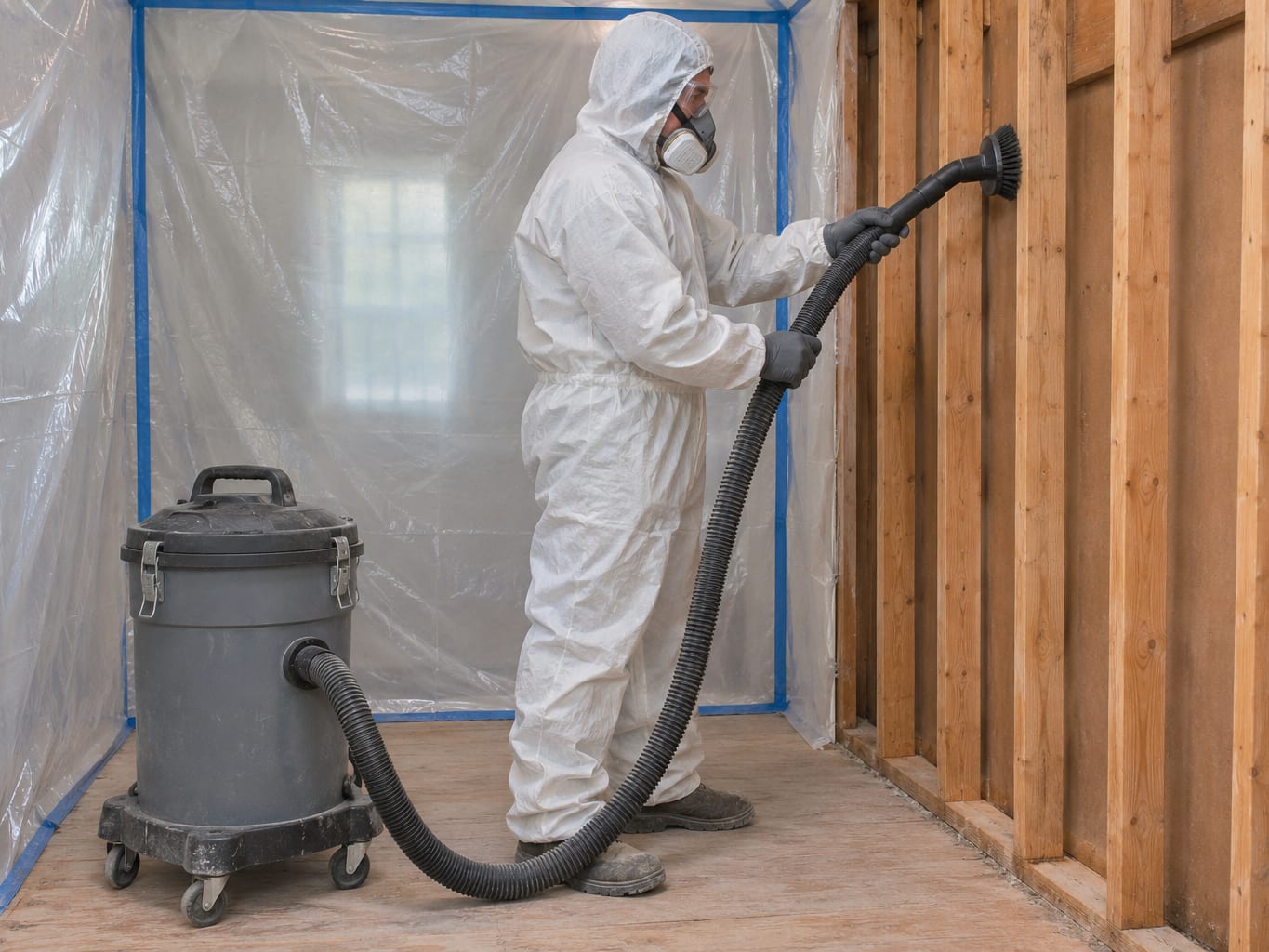
A household vacuum or an ordinary shop vacuum does not meet that description. OSHA warns that a wet vacuum can exhaust spores into indoor air when it does not have enough liquid in it. On an estimate, the useful distinction is between a shop vacuum used to pull up water and a sealed HEPA vacuum used for final particulate cleanup.
What is the difference between an air scrubber and a negative air machine?
An air scrubber generally draws air from the room through a filter and returns the filtered air to the work area. A negative air machine is set up as an exhaust unit. It pulls air from surrounding spaces into the containment and sends it out through HEPA filtration, often through ducting to the outside where the setup allows.
That difference is why some estimates list both. EPA states that the containment area should be under negative pressure relative to surrounding areas, which a HEPA-filtered fan unit exhausted outside can provide. OSHA recommends a HEPA-filtered exhaust fan to hold negative pressure when contamination is extensive. If your estimate says only "air scrubber," ask which kind it is, since the two do different work.
In What Order Does the Work Happen, From the Leak to the Final Cleaning?
The guidance describes a sequence, and the equipment fits inside it at specific points. The order described here follows the EPA, OSHA and New Jersey Department of Health material, and your contractor's scope may group or label the steps differently.
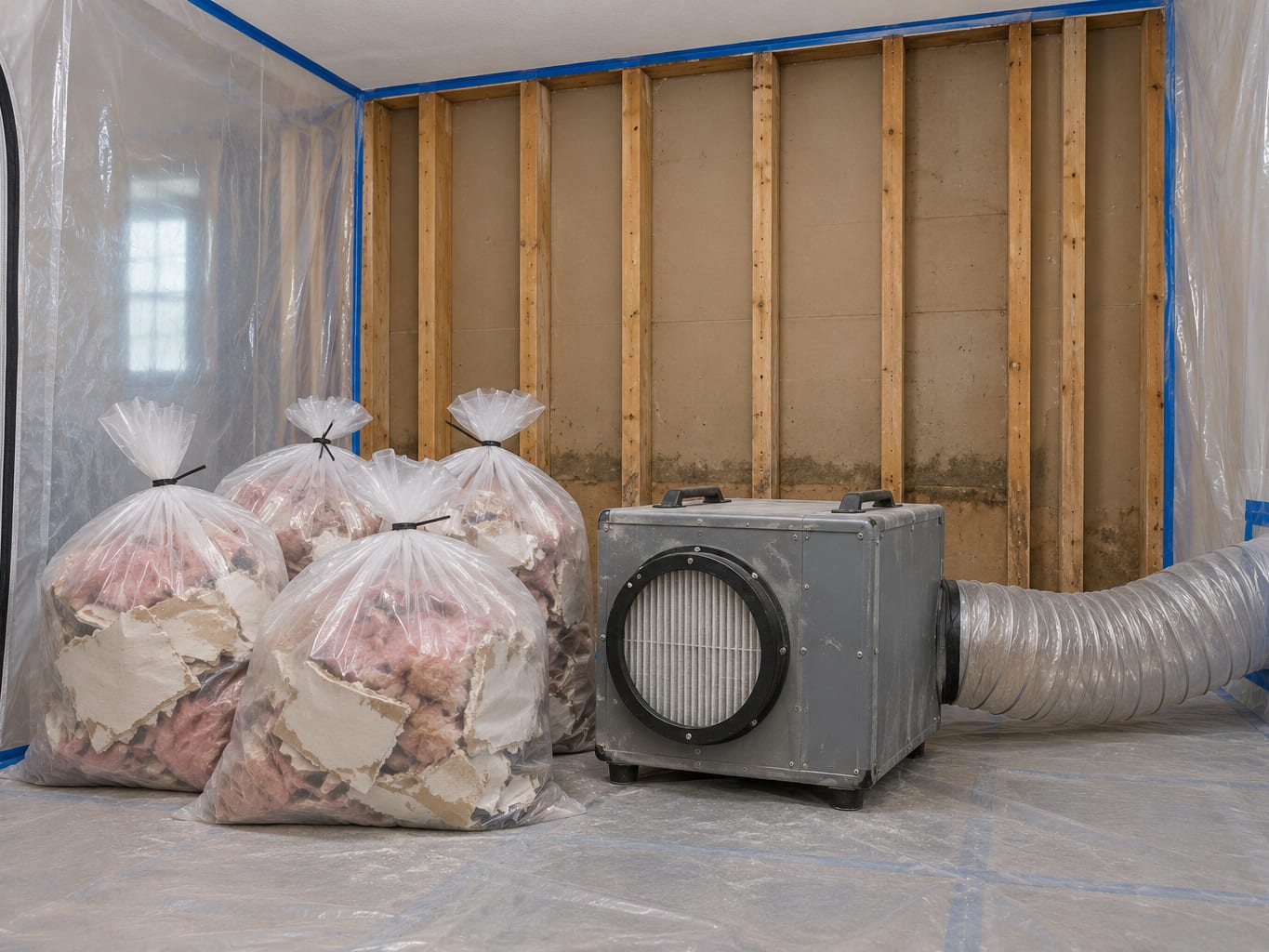
The moisture comes first. NJDOH's guidance for residents says moisture must be corrected, contaminated materials removed or cleaned, and affected areas dried before repair or reconstruction. After the leak, flood or humidity problem is handled, the crew assesses which materials and how much area are affected, then builds containment where spread is possible and isolates the heating and cooling system serving the area.
Inside containment, materials that cannot be cleaned come out and are sealed for transport. Porous materials such as drywall and insulation are the usual examples, which is why the estimate lists removal as its own line. Salvageable surfaces are cleaned next, and then the HEPA vacuum goes over the area once everything is dry. The work area and the path out of it are damp-cleaned, and the area is left dry and visibly free of mold, dust and debris.
Only then does the crew inspect the finished area and take down containment. Any agreed verification or laboratory testing follows, and reconstruction waits until the area is dry and the remediation scope is complete. Our post-mold-remediation rebuild page covers that last step.
Mold Remediation, From the Leak to the Final Cleaning
- 1
Correct the moisture
The leak, flood or humidity problem is handled first.
- 2
Assess the affected area
The crew identifies which materials and how much area are affected.
- 3
Build containment
Barriers go up where spread is possible, and the heating and cooling system serving the area is isolated.
- 4
Remove what cannot be cleaned
Porous materials such as drywall and insulation come out and are sealed for transport.
- 5
Clean and HEPA vacuum
Salvageable surfaces are cleaned, and the HEPA vacuum goes over the area once everything is dry.
- 6
Damp clean
The work area and the path out of it are damp-cleaned and left dry and visibly free of mold, dust and debris.
- 7
Inspect and take down containment
Any agreed verification or laboratory testing follows.
- 8
Rebuild
Reconstruction waits until the area is dry and the remediation scope is complete.
How Long Does the Equipment Run, and What Determines Completion?
You will probably see a line such as "air scrubber for 24 hours" or a daily rental charge, and it is reasonable to ask what it means. EPA and OSHA do not set one air-change rate, pressure reading or run time that applies to every home. The answer for your room has to come from the contractor's written scope, so the better question is what condition ends the machine's work.
Ask the contractor to explain the equipment choice, how negative pressure will be confirmed and monitored, where the exhaust will be discharged, and what event ends each phase. A good answer names an event, such as materials removed, surfaces dry, or a visual inspection passed, and does not simply name a number of hours.
Questions to Ask Before Work Starts
Why this equipment
Ask the contractor to explain the equipment choice for your room.
How negative pressure is confirmed
Ask how it will be confirmed and monitored.
Where the exhaust goes
Ask where the exhaust will be discharged.
What ends each phase
Ask for an event, such as materials removed, surfaces dry, or a visual inspection passed, and not only a number of hours.
What changes a fixed period
If the estimate lists a fixed period, ask what would change it and who decides.
If the estimate lists a fixed period, ask what would change it and who decides.
What Should the Final Inspection and Verification Document?
Before containment comes down, the area should meet written criteria you agreed on at the start. EPA and OSHA stress visible cleanliness, dryness, sealed waste and containment controls, and the work area and the path out of it should be HEPA-vacuumed, damp-cleaned and left dry and visibly free from mold, dust and debris before the barriers are removed. New Jersey's health department says the practical target is removal or cleaning of affected materials, moisture correction and a clean, dry work area.
Ask the contractor which of these apply to your job: visual inspection, dry materials, removal of visible debris, laboratory testing or another written standard. No single laboratory clearance threshold applies to every New Jersey home, so the criteria belong in your scope before work starts. Independent post-remediation verification is an option when you want someone other than the remediation crew to confirm the result, and you can ask whether it is included, optional or handled by a separate party.
Then ask for the final file. It should hold photographs, any scope changes, moisture records, disposal records, the equipment log if one is kept, and any laboratory report. Those papers help with insurance, property records and a future sale.
What the Final File Should Hold
Photographs
Images of the work area before, during and after.
Scope changes
Any change to the written scope.
Moisture records
Readings that show the materials are dry.
Disposal records
Records for materials that were removed.
Equipment log
If one is kept.
Laboratory report
Any report from agreed verification or testing.
If you have no written scope yet, a mold inspection gives you something to compare estimates against.
What Should You Ask About Insurance, Contractors and Paperwork in New Jersey?
The next day or so after you receive an estimate is the time to line up paperwork. If the mold followed a sudden water event, tell your insurer and keep photographs, reports, estimates, receipts and any damaged materials until the adjuster has seen them. Ask your local building-code office whether demolition or reconstruction needs a permit.
New Jersey does not certify companies that perform mold inspection, testing or remediation, according to the state health department's mold page. The state's company lists are informational and do not endorse or qualify any firm. So, the checking falls to you, and NJDOH's advice is to get a detailed written explanation of the work, ask about training and references, verify liability insurance and contact the local building-code office when code compliance is unclear. Ask specifically whether the contractor's liability insurance covers mold or microbial work.
On coverage, the policy controls. The Department of Banking and Insurance's Bulletin 03-24, issued in 2003, describes mold and fungus coverage guidelines, including a $10,000 annual aggregate option and higher optional limits, with coverage tied to a covered peril during the policy period. The department's homeowner policy summary says mold is generally not covered unless it results from a covered loss, and it lists sudden and accidental water damage as a covered loss. Commercial policies may carry limits, sublimits or exclusions. Review the mold, fungi, repeated seepage, flood and water damage provisions of your own policy with your agent or insurer.
When you compare two bids, make sure both describe the same rooms, materials, equipment and completion standard.
What Happens to Your Health and Your House if the Moisture Problem Waits?
Dampness keeps feeding mold on building materials, and continued dampness damages porous materials until they have to come out and be rebuilt. Mold contamination can also reach heating and cooling components and carry particles beyond the original room if the work area is not controlled. A leak that sits turns a small cleaning job into a larger removal and reconstruction scope.
On health, CDC says that exposure to damp and moldy places may cause no effects for some people and a range of effects for others. Reported effects include a stuffy nose, sore throat, coughing, wheezing, burning or itchy eyes and skin rash. People with asthma or mold allergies may react more strongly, and people with weakened immune systems or chronic lung disease can be at risk for lung infections. CDC and NIOSH also associate damp buildings and mold with asthma and allergic rhinitis.
A remediation job cannot tell you why a particular person has symptoms. If someone in your home is coughing, wheezing or short of breath, talk with a physician, and keep children, pets and anyone with asthma, chronic lung disease or a weakened immune system away from the affected area until the scope is clear.
If water is still coming in, our emergency mold removal and structural drying pages describe the response.
How Do You Keep Mold From Returning After the Crew Leaves?
Recurrence depends on whether the moisture source, the wet materials and any hidden contamination were all dealt with. CDC and NJDOH both place moisture correction at the center of mold control, and neither one offers a recurrence percentage. Before the crew leaves, ask what was done about the water, and ask to see the moisture readings that show the materials are dry.
After that, the work is ordinary building care. Look at the repaired area again after the next humid stretch or heavy rain, and call if you smell mustiness or see staining. Our post on basement humidity levels covers the numbers to aim for in a damp basement.
Reconstruction should wait until the area is dry and the remediation scope is complete. If the plan includes new drywall, ask how the contractor will confirm dryness before closing the wall, and see our page on drywall replacement after mold for how that stage fits in. Finally, keep the final file somewhere you can find it, since it is the record of what was cleaned, what was removed and what the readings showed.
Frequently Asked Questions About HEPA Vacuuming and Air Scrubbers in Mold Remediation
Will a HEPA filter get rid of mold?
It captures airborne particles at its stated efficiency, but mold growing on building materials stays where it is until the material is cleaned or removed. The water source also has to be corrected, since a filter does nothing about a leak.
What do professionals use for mold remediation?
The guidance describes containment barriers, sealed openings, heating and cooling isolation, HEPA-filtered exhaust or air filtration, HEPA vacuums, damp cleaning, sealed waste bags, moisture-control equipment and protective and respiratory gear. The exact mix depends on the size of the problem, the materials and the building.
Can black mold really be remediated?
Yes, in the sense that correcting moisture, removing or cleaning affected materials and controlling dust and spread is how remediation works. NJDOH says a building cannot be made completely free of mold, so a contractor should not promise that outcome. The label "black mold" does not replace an assessment of the materials, the moisture and how far the growth has spread.
Do mold spores stay in the air after cleaning, and for how long?
Spores can stay airborne for a time, settle on surfaces or be caught by a filter. No published figure applies to every home, so ask what written criteria, such as a visual inspection, dry readings or a laboratory result, decide when the area is ready to occupy.
Is there a better filter than HEPA?
HEPA is the rating EPA describes, at 99.97 percent for 0.3 micron particles. How well a machine performs also depends on airflow, sealing, maintenance and the design of the containment, so ask how the specific machine and setup will be used.
HEPA and Air Scrubber Quick Check
1. What does a negative air machine do?
2. What does an air scrubber generally do?
3. What does EPA say a HEPA filter can theoretically remove?
4. When does OSHA recommend HEPA vacuuming?
5. Does New Jersey certify companies that perform mold remediation?
Pick an answer to begin.
Final Thoughts
Each line on your estimate has a job. Containment holds the work in one area, a negative air machine pulls air inward and filters what leaves, an air scrubber filters the air inside, and HEPA vacuuming picks up settled dust once the materials are out and dry. The filtered machines are one part of a job that also depends on fixing the water and removing what cannot be cleaned, and the written scope should say what ends each phase.
Asking those questions before work starts gives you an estimate you can compare fairly and a file you can use later with an insurer, a buyer or a property manager.
If you are in New Jersey and holding an estimate you want to read with someone, we at ExecPro Restoration & Cleaning can go through the lines with you, from containment to the final cleaning, as part of our mold remediation work. Call us at (888) 300-3772 or reach us through our contact page, and tell us which machines are listed and what room they cover.
Mold Remediation Equipment Terms
Tap a term to see what it means.
HEPA. High-efficiency particulate air, a filter rating for removing at least 99.97 percent of particles measuring 0.3 microns.
Related Articles
Mold Remediation Products: Reading the Label Before You Use One
Learn what each mold product is for, what an EPA registration and a 99.9% claim cover, and when a spray is the wrong answer for your New Jersey home.
What to Throw Away After Mold and What You Can Clean and Keep
Sorting belongings after mold in a New Jersey home? See what usually goes, what can be cleaned and kept, and what to document before anything is discarded.
Can a House With Mold Be Saved? What Decides the Scope
Whether a New Jersey house with mold can be saved comes down to the moisture source, the structure and the materials. See the steps, limits and next calls.