Staying Open: Commercial Mold Remediation in Plainsboro, NJ
Cal HewittPublished
- commercial mold remediation
- containment
- facility management
- plainsboro nj
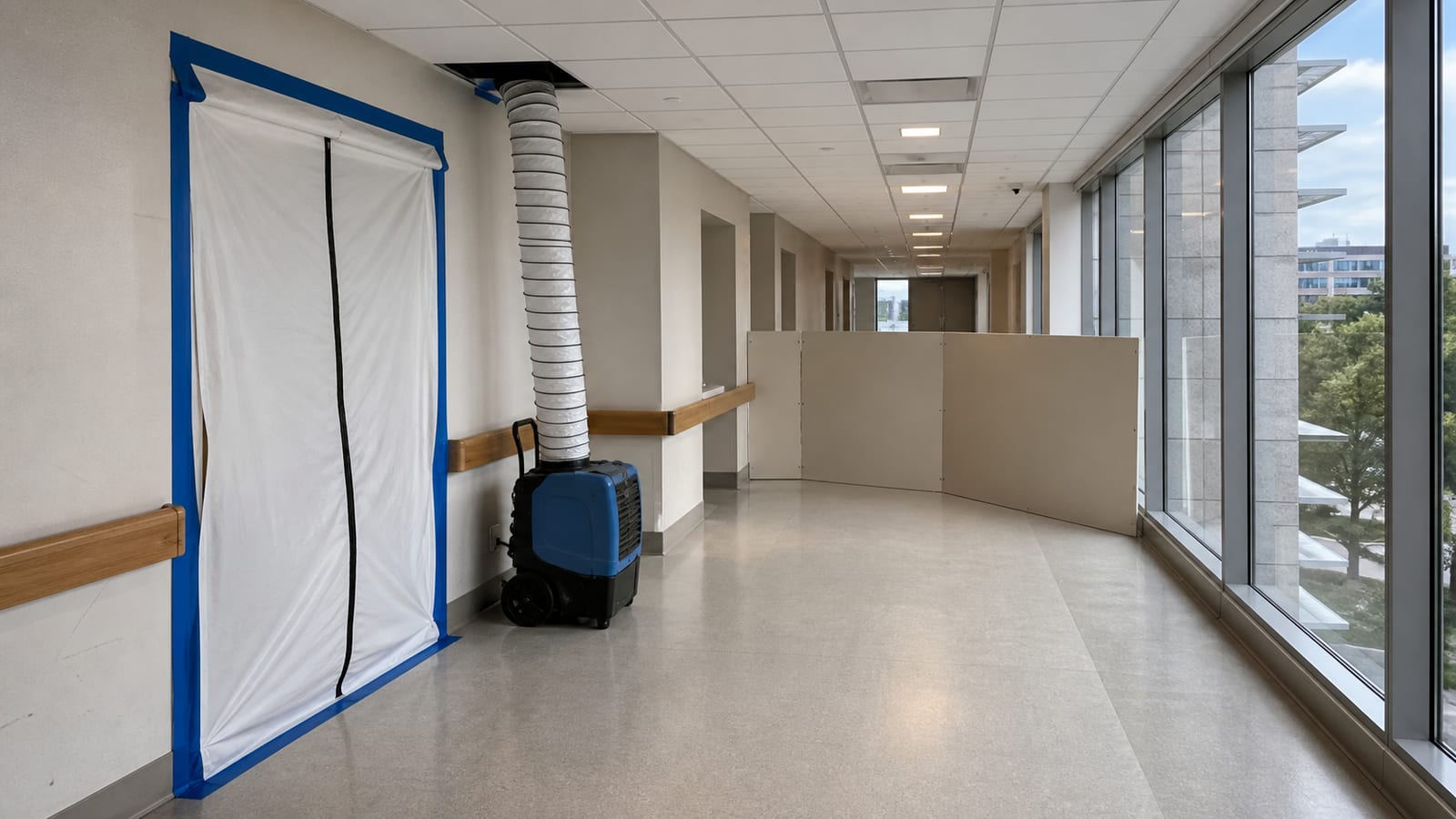
The building has to be open on Monday. That is usually the real constraint when a facility manager or a building owner in Plainsboro calls about a moisture finding, and it is a different problem from the one a homeowner has. Tenants are working, a lease is running, somebody upstairs wants an email today, and closing a floor is not on the list of acceptable outcomes. The mold is a technical matter. Continuity is the one that gets people out of bed.
Plainsboro's commercial stock makes that constraint more specific than it sounds. The Township's January 2026 draft re-examination describes large areas given over to suburban style office parks, notes a high vacancy rate in existing office developments, and records a policy shift toward mixed use in many non-residential districts. Around the Forrestal campus there is substantial technical space: Princeton identifies its High Performance Computing Research Center as a two story facility of roughly 40,000 square feet combining computing, electrical and mechanical support and offices, completed in 2011, and reports that Genmab occupies 270,000 square feet at the Forrestal Innovation Park following a March 2024 expansion into space formerly used by Bristol-Myers Squibb. Princeton Innovation Center BioLabs opened there in May 2018 with laboratory space, a freezer room and instrumentation including PCR and liquid chromatography. None of that says anything about mold in any of those buildings. It says that a commercial job here can land in an operating research, computing or laboratory environment, and those have constraints an office suite does not.
Key Takeaways
Containment is what keeps the rest of the building open
It is not a formality, it is the mechanism that lets the floor stay usable.
EPA scales the approach by area
Limited containment generally from 10 to 100 square feet, full containment above 100 or wherever occupied space is likely to be further contaminated.
Full containment has a specification
Two layers of polyethylene, an airlock or decontamination chamber, and negative pressure relative to adjacent areas.
Killing mold is not cleaning it
EPA's objective is removal, because dead mold can remain allergenic.
Removal is not permitted work here, the rebuild often is
Plans for most projects must be sealed by a licensed New Jersey architect.
No New Jersey certification exists for mold companies
The state health department says so directly, so credentials are verified rather than assumed.
First, Which Kind of Space Is It
The single question that shapes a commercial scope is what the affected zone actually is, because each type imposes a different constraint.
An occupied office suite is the most forgiving. Work can usually be contained to part of a floor and scheduled around business hours, and the main risks are noise, access and the return air path.
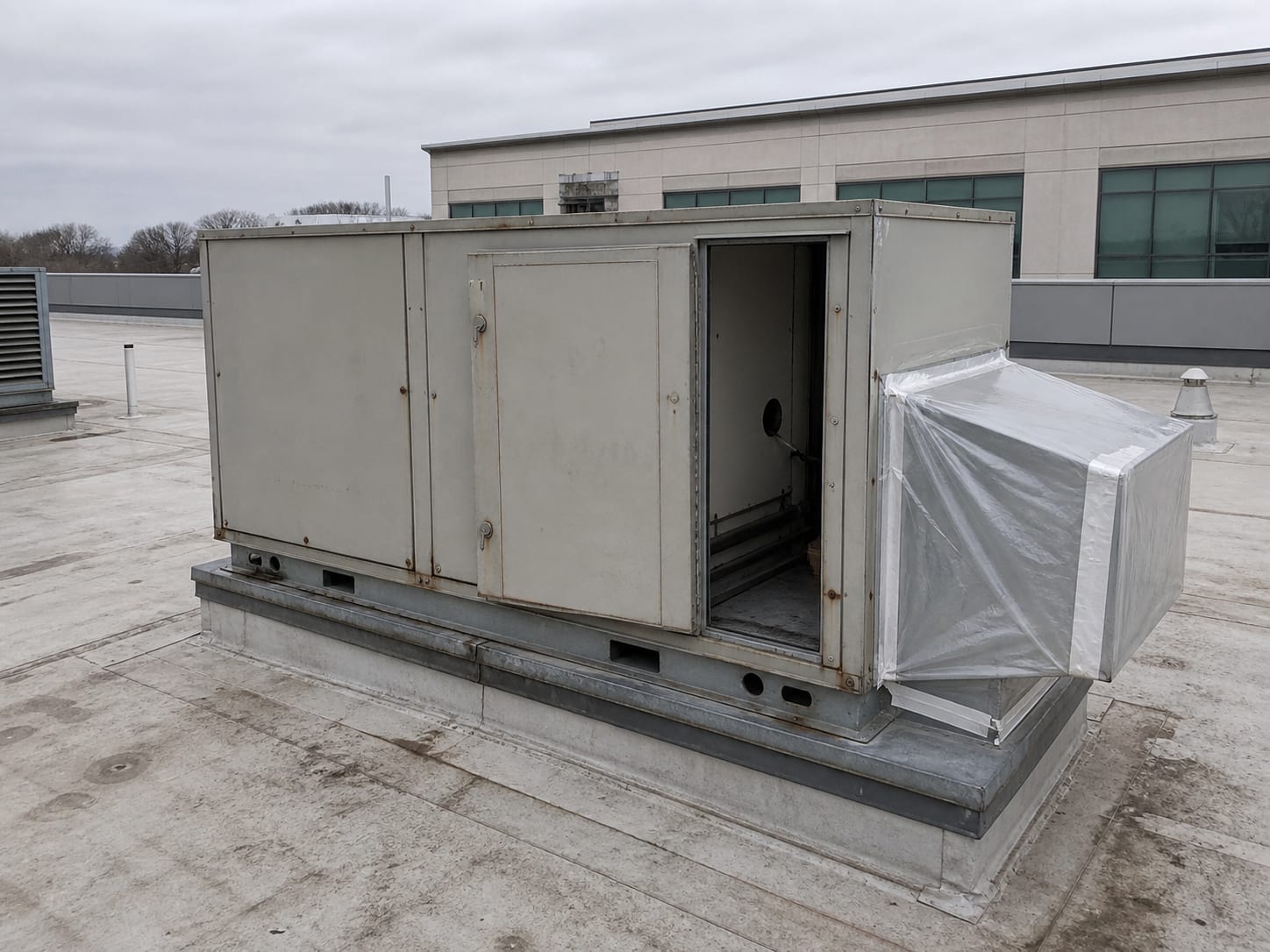
A mechanical or electrical support area is less forgiving, because the containment boundary has to account for equipment that other spaces depend on. Shutting down an air handler to isolate a zone is a decision with consequences three floors away.
A laboratory or incubator environment brings sample integrity, controlled conditions and instrumentation into the picture. Freezers, PCR and chromatography equipment do not tolerate an improvised power or airflow interruption, and the tenant's own protocols usually govern what may be disturbed and when.
A multi-tenant floor adds the access and notification problem. Work areas cross demised boundaries, and the party who controls the source is often not the party experiencing the symptom.
A mixed-use ground floor brings public access, trading hours and a separate ownership line above it.
Establishing which of these applies is the first hour of the assessment, not a detail settled later.
Containment Is What Keeps the Rest of the Building Open
This is the part worth understanding properly, because it is what makes staying open possible and it is the line item people try to cut.
EPA's commercial guidance scales the method to the material and the affected area. It generally calls for limited containment from about 10 to 100 square feet, and full containment above 100 square feet or whenever occupied space is likely to be further contaminated. That second condition matters more than the number in an operating building: an area under 100 square feet next to occupied desks can still warrant the higher standard.
Full containment is a specification rather than a vague sealing off. EPA describes two layers of polyethylene, an airlock or decontamination chamber for entry and exit, and the work area held at negative pressure relative to the areas around it. Negative pressure is the mechanism that makes the rest of the floor usable: air moves into the work zone and is filtered on its way out, rather than moving from the work zone into the corridor.
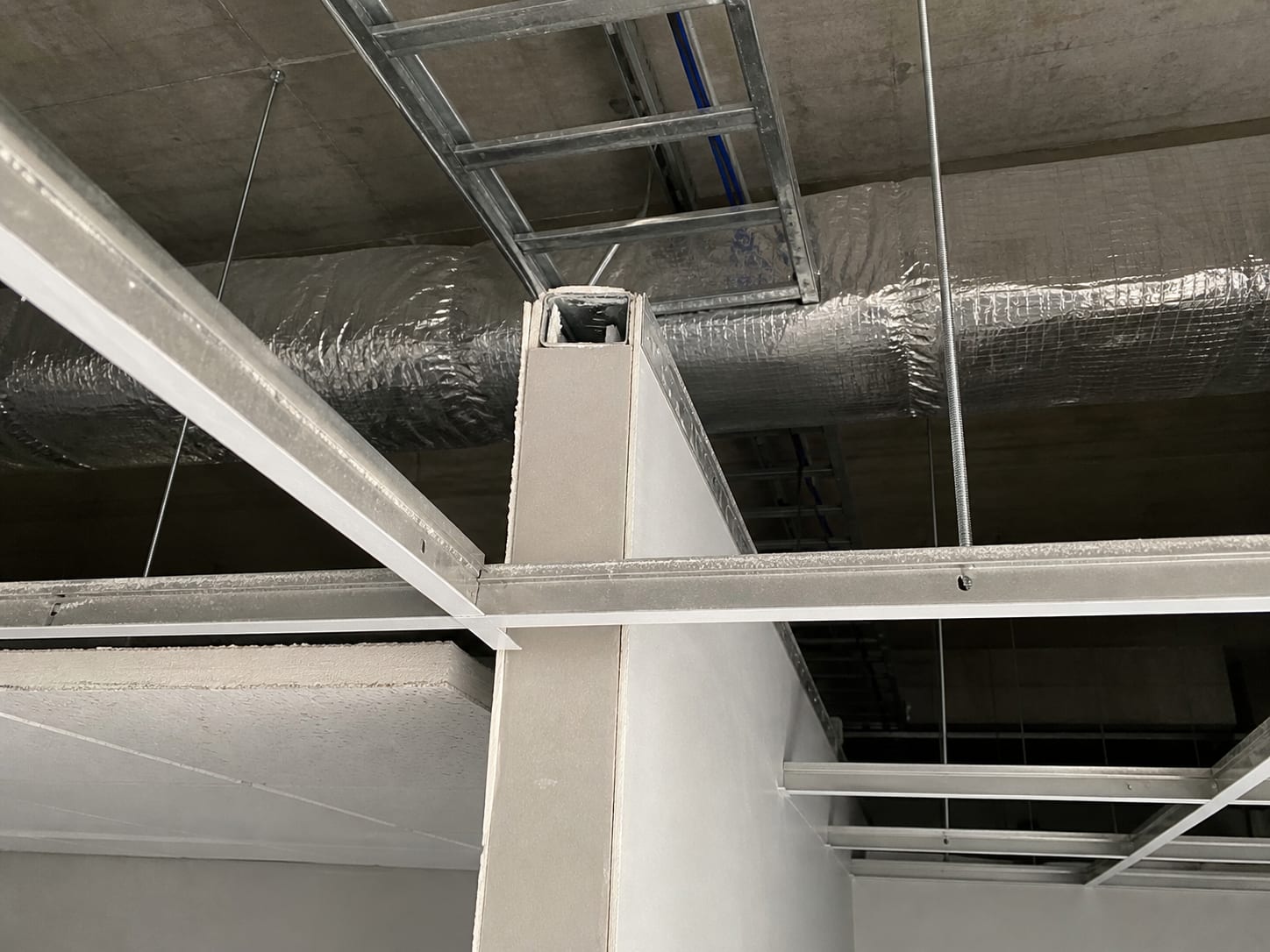
The related decision is the air handling system. A zone cannot be isolated while its return air path is still connected to the rest of the building, so part of scoping is establishing which units serve the affected area and what happens to everybody else when those are shut down or temporarily isolated.
The Sequence, and Where It Touches Your Operations
A Commercial Remediation, in Order
- 1
Establish the moisture source
New Jersey's health department is direct: mold needs water, a building should be inspected where the source is not readily traceable, and the source is corrected before remediation. OSHA names leaks, flooding, high humidity and poor HVAC upkeep among the common contributors.
- 2
Assess the extent and the boundaries
Affected area, materials, and where the containment line can physically go given the mechanical layout.
- 3
Plan access and notification
Who is told, when work can happen, which routes crews use, and what tenants will see.
- 4
Build the containment
To the standard the area and the occupancy call for, with air handling isolation confirmed before anything is opened.
- 5
Remove and clean
Porous material that stayed wet comes out. EPA's objective is removal of the contamination rather than killing it in place.
- 6
Dry and verify
Readings logged by location until they hold, then documented.
- 7
Repair the source, then rebuild
This is where the municipal path begins, and it is a separate decision from everything above.
Nobody can honestly give you a duration before an assessment. EPA makes scope contingent on the area, the intensity, the materials and the potential exposure, and there is no published Plainsboro average for assessment, containment, drying, clearance or permit review. A written building specific scope, a moisture source repair plan, an access plan and a permit determination are what produce a real schedule. Where the trigger was an actual water event, emergency water extraction and structural drying come before any of this.
When Remediation Becomes Construction
Removal and containment on their own are not permitted construction in Plainsboro. The rebuild frequently is, and the threshold is worth knowing before you promise a reopening date.
The Township says a construction permit is generally required for new construction, additions, and renovations or alterations affecting use, structure or egress. It also says plans are required for most projects and normally must be prepared, signed and sealed by a licensed New Jersey architect, and that zoning compliance applies to work affecting exterior conditions or setbacks. So structural repair, changes to egress, and heating, cooling, plumbing or electrical work all need a Building Division determination before they are scheduled, and the architect requirement can add time that a remediation timeline never accounted for.
There is a second path that catches commercial owners specifically. Township Code Chapter 66 governs development in the flood hazard areas it establishes, administered alongside the New Jersey Uniform Construction Code and the state Flood Hazard Area Control Act. Its stated aims include preventing disruption of commerce, access and public service during flooding. In a mapped flood hazard area, even ordinary maintenance and certain minor work are evaluated through the floodplain development permit process for substantial damage and substantial improvement compliance. The code also warns plainly that larger floods can occur and that a site outside a special flood hazard area is not guaranteed free of flooding or flood damage.
Whether your parcel is in one of those areas is an address level question for the Township, not something to infer from the corridor the building sits on. There is no standalone commercial mold permit in Plainsboro, and describing the municipal path as one is a mistake in both directions.
What Drives the Cost
There is no published Plainsboro price range for commercial mold remediation, and any figure presented as a local average is invented. What can be described is what actually moves a commercial number, which is what you need in order to read competing proposals.
The affected area and its intensity set the containment tier, and the tier is a real cost step rather than a gradient. Occupancy is the second driver: work that has to happen out of hours, in phases, or behind a maintained access route costs differently from an empty suite. Mechanical complexity is the third, since isolating air handling in an operating building takes planning and sometimes temporary provision for the spaces that share it. Then the material mix, how much is porous and unrecoverable, disposal, drying and verification, and finally the rebuild, which carries its own trades, its own permit path and possibly an architect.
Ask every proposal to separate those. A single bundled figure that does not identify the containment tier, the source correction, or whether the rebuild is included is not comparable to anything else you have been sent.
Who Decides, and Who Pays
In a leased building this is frequently the part that stalls the work, so it is worth resolving early and in writing.
The source is often outside the affected tenancy: a roof, an exterior wall, a shared line, or a mechanical space. The party experiencing the problem may have no authority to repair it, and the party with the authority may not have seen it. The lease governs the division, and no contractor can settle it for you.
What a contractor can do is remove the ambiguity from the facts: a dated record of the source, the extent, the affected materials by area, and what was done. That record is what turns a disagreement about responsibility into a discussion about a documented condition. For buildings under management, property management mold services is built around that reporting rather than around a single job.
One more credential point belongs in this conversation. New Jersey's health department states there are no state certification programmes for companies performing mold or general indoor air and environmental health services, and that its published lists are not an endorsement or a qualification. So a New Jersey mold licence is not a thing to ask for, because it does not exist. What is worth asking about is the written scope, insurance, training, the moisture source repair plan, and, where demolition is involved, whether an asbestos determination has been made. New Jersey does license asbestos abatement companies and permit their workers and supervisors, and a mold project's demolition scope should not be allowed to bypass that question.
What To Do in the First 24 Hours
Photograph the condition and the surrounding area before anything is moved, with dates. Identify and stop any active water if that can be done safely. Establish who owns the affected element under the lease, and tell them in writing as well as by phone. Note which air handling units serve the area, because that determines what can be isolated. Decide who needs to be notified among tenants and when, rather than letting people find out from a crew in the corridor.
What not to do: fog it, bleach it, or paint over it. EPA's objective is removing the contamination rather than killing it, New Jersey's health department does not recommend routine biocide use, and any product used as a pesticide has to be used consistently with its label. A proposal that never identifies and corrects the water source is incomplete regardless of what it applies.
Frequently Asked Questions About Commercial Mold Remediation in Plainsboro, NJ
Can we keep the building open while this is done?
Usually yes, and containment is what makes it possible. The affected zone is sealed and held at negative pressure relative to the surrounding areas, so air moves into the work area rather than out of it. What determines how much of the building stays usable is the containment tier, the location of the work relative to occupied space, and whether the air handling serving that zone also serves anybody else.
Is there a safe spore count we should be testing against?
No, and it is worth knowing before somebody sells you one. OSHA states there are no federal standards or recommendations for airborne mold spore concentrations. New Jersey's health department says the amount of mold needed to cause health problems is unknown, and identifies people with allergies or lung conditions such as asthma or emphysema, very young infants and older adults as groups that may be at increased risk. Sampling can answer a specific defined question; it cannot produce a pass mark.
Do we need a permit?
Not for the removal and containment. Very likely for the rebuild, since Plainsboro requires permits for renovations and alterations affecting use, structure or egress, and normally requires plans sealed by a licensed New Jersey architect. If the property sits in a mapped flood hazard area, even minor work can be evaluated through the floodplain development permit process. Get the Building Division determination before you commit to a reopening date.
How long will it take?
That comes from the assessment rather than from a phone call, and any firm answer offered before one is marketing. The variables are the affected area and intensity, the containment tier, how much has to be removed, how long drying takes to reach a stable reading, and whether a permitted rebuild follows. The permit and architect path is the one most likely to extend a schedule beyond what people expect.
Who pays, us or the landlord?
The lease decides, and the answer usually turns on which element the source sits in. What helps is documenting the source and the extent early, because most disputes we see are about facts nobody recorded rather than about the terms themselves.
Will our insurance cover it?
That depends on the policy, the cause of loss and the endorsements, and no contractor can answer it for you. Report promptly, photograph before anything is disturbed, and keep the itemised scope, the moisture readings, the disposal records and any permit or inspection paperwork. Those are the documents an adjuster asks for and the ones that cannot be reconstructed afterward. Where a carrier is funding the work, insurance restoration services is where the scope and the paperwork have to agree.
Final Thoughts
A commercial mold job in Plainsboro is a continuity decision before it is a technical one. The technical part is well established: find the water, correct it, contain the area to the standard the extent and the occupancy require, remove what cannot be cleaned, dry it, verify it, then rebuild. The part that decides whether it goes well is everything around that, which is knowing what kind of space you are working in, which air handling serves it, who under the lease can authorise the source repair, and whether the rebuild crosses into permitted construction with an architect and possibly a floodplain review attached.
Get those four answers early and the work fits around the building. Leave them until the containment is already up and the building starts fitting around the work instead. The wider local picture is on our Plainsboro service area page, and the service itself is on our commercial mold remediation page.
If you have a moisture finding in an occupied building and a date you have to keep, ExecPro Restoration & Cleaning will scope it around your operations. Call (888) 300-3772 or reach us through the contact page.
Commercial Remediation Terms
Tap a term to see what it means.
Containment tier. The level of isolation used, scaled by affected area and by whether occupied space is likely to be contaminated.
Serving Plainsboro
ExecPro Restoration & Cleaning provides mold remediation services in Plainsboro, NJ, from inspection and testing through removal, drying, and post-remediation verification. Call (888) 300-3772 for 24/7 emergency response.
Related Articles
Commercial Mold Remediation in Warren, NJ: Keeping the Building Open
Warren has a corporate office corridor and a Mountain Boulevard retail strip. What commercial mold remediation involves with tenants and staff in the building.
How Commercial Mold Remediation Works While a New Jersey Building Stays Open
Commercial mold remediation in New Jersey while tenants and staff stay: containment, after-hours phasing, notice, and the closeout documents to ask for.
Commercial Mold Remediation in West Windsor, NJ: Keeping the Building Open
Mold in an occupied commercial property: where it hides, how containment keeps the rest of the building working, what to tell tenants, and when a rebuild needs a permit.