Commercial Mold Remediation in West Windsor, NJ: Keeping the Building Open
Cal HewittPublished Updated
- commercial mold remediation
- containment
- business continuity
- west windsor nj
Somebody has found mold in an occupied building, and within about an hour of that the questions stop being about mold. Do we tell the tenants. Does the suite have to come out of use. Can any of this happen at night. What do we say to the employer on the second floor whose staff walked past it this morning. The remediation itself is a known quantity and follows a documented sequence. What makes a commercial job different from a house is that the work has to happen around people who are trying to run businesses, and that is a planning problem you can get ahead of.
Key Takeaways
Containment is what keeps the rest of the building working
, not an add-on: federal guidance sets limited containment at roughly 10 to 100 square feet of contamination and full containment above that.
Correcting the moisture source is part of the job, not a follow-up
remediating without it schedules the same work again.
Cleanup is generally not a permit question, but the rebuild can be
, and West Windsor's construction permit applies before work that goes beyond ordinary maintenance.
There is no federal spore threshold
, so no result can declare a suite safe or unsafe as a number.
A Commercial Mold Problem Is an Operating Decision First
The technical scope and the operating scope are different sizes, and the second one is usually larger.
A contained area of growth behind a wall in a vacant suite is a straightforward job. The same growth in an occupied open-plan office, a retail floor during trading hours, or a warehouse where forklifts need the aisle is the same remediation wrapped in access, notice, phasing and communication. Getting those wrong is what turns a three-day job into three weeks of disruption, and it is where most of the avoidable cost sits.
So the first decisions are not technical:
- Who is in the affected area, and who is in the air path from it.
- What are you telling them, and when. Federal guidance treats occupant communication as part of remediation planning rather than as a courtesy afterwards.
- What has to stay operational, and what can genuinely be released for the work.
- When can the noisy, dusty, access-heavy parts happen. Off-hours scheduling is specifically identified as a way to reduce occupant exposure and disruption.
Answer those four and the technical plan largely writes itself around them.
In a Commercial Building, the Mold Is Rarely Where You Can See It
Commercial interiors hide moisture in places a house does not have, and the EPA's commercial buildings guidance names them specifically. They are worth reading as an inspection list rather than a warning:
- The backs of drywall and wall coverings, particularly on the cold side of an exterior wall.
- The tops of ceiling tiles, where a slow roof or pipe leak lands before it stains anything visible.
- The undersides of carpet and pad, which stay wet long after the surface reads dry.
- Pipe chases and utility tunnels, which are also how contamination travels between areas.
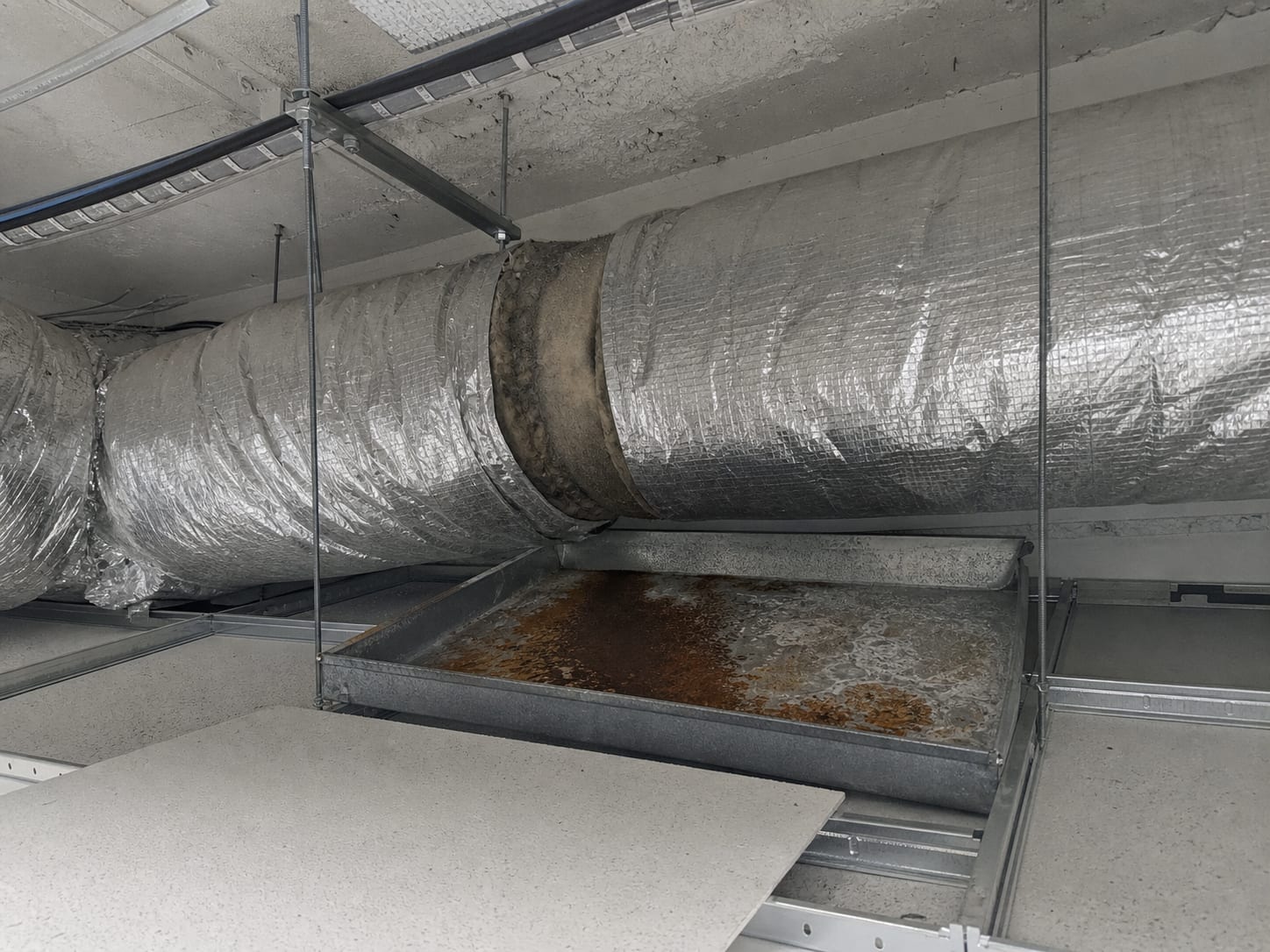
- Air handler condensate pans and duct liners, which combine standing water with a distribution system.
- Roof materials above ceiling tiles.
The pattern in that list is worth noticing: most of them are either above a ceiling or inside the mechanical system, which is exactly why a commercial complaint often arrives as a smell or a symptom in a room where nothing is visible at all. It also explains why a walk-through with a torch is not an assessment. The moisture history of the building, the roof and plumbing record, and the air handling layout are what point at the right void.
Where Commercial Mold Hides
Drywall and wall coverings
The backs, particularly on the cold side of an exterior wall.
Ceiling tiles
The tops, where a slow roof or pipe leak lands before it stains anything visible.
Carpet and pad
The undersides stay wet long after the surface reads dry.
Pipe chases and utility tunnels
Also how contamination travels between areas.
Air handler condensate pans and duct liners
Standing water combined with a distribution system.
Roof materials
Those above the ceiling tiles.
What to Check First After Water Enters the Building
Timing is the one thing entirely within your control, and it decides how much of this becomes a mold job at all.
EPA's guidance is that non-moldy wet materials should be dried within 48 hours, and its water damage guidance works to a 24 to 48 hour window. In a commercial building that clock is harder to meet than in a house, not because the drying is different but because discovering the water takes longer. A weekend roof leak over a suspended ceiling has a two-day head start before anybody opens the office on Monday.
So the first checks after any water event are the ones that find the water you have not seen: above ceilings in the affected bay, the condensate pans and the air handler serving that zone, the pipe chase the water could have followed, and the floor build-up under any carpet that got wet. Document what you find with dates, because in a tenanted building the record is what settles responsibility later.
Containment Is How the Building Stays Open
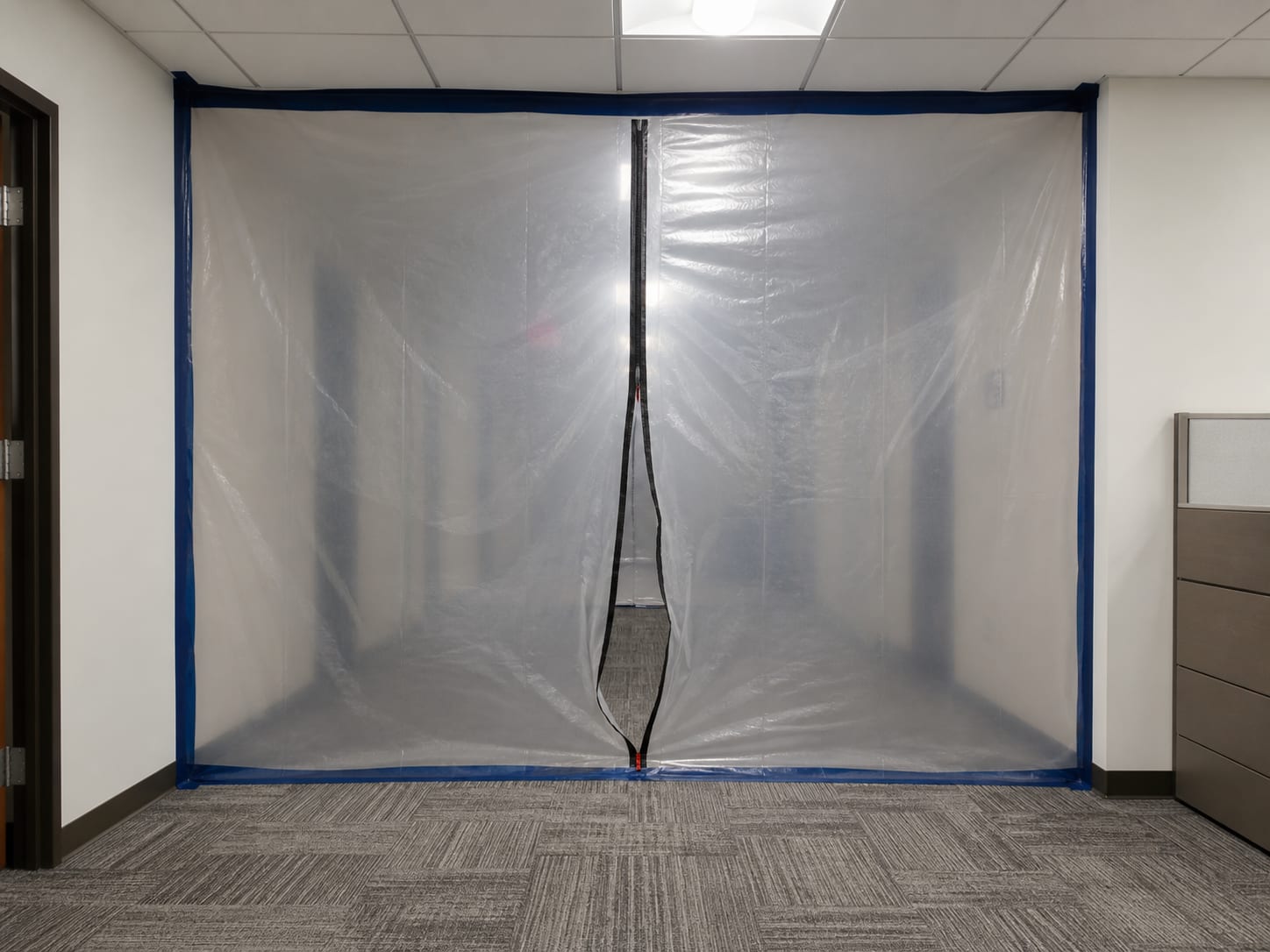
This is the part worth understanding properly, because it looks like a cost and functions like a continuity measure.
EPA's commercial guide uses the size of the contamination as a planning aid: limited containment is generally recommended for 10 to 100 square feet, and full containment for more than 100 square feet, or where the occupant space would otherwise risk further contamination. Those are national planning thresholds rather than legal cut-offs or timing promises, but they are the reference point a competent scope is built against.
Hover or tap a row to highlight it.
| Contaminated area | Containment generally recommended |
|---|---|
| 10 to 100 square feet | Limited containment |
| More than 100 square feet, or where the occupied space would otherwise risk further contamination | Full containment |
What containment buys you is the ability to keep everything outside the barrier working. Without it, the affected zone effectively expands to whatever the air can reach, which in a building with shared air handling can mean a whole floor. With it, the disruption footprint is the barrier.
A Commercial Remediation, in Order
- 1
Assess the size and the affected materials
Including the concealed locations above, not only the visible area.
- 2
Identify and correct the moisture source
This is inside the job, not after it. Skipping it books the same work again.
- 3
Plan the work and the occupant communication
Who is told what and when, and which areas are released.
- 4
Select PPE and the containment level
Limited or full, from the assessed area and the occupancy risk.
- 5
Remediate
Removal and cleaning within the barrier.
- 6
Clean and dry, or discard what cannot be saved
Porous material that held water long enough does not get dried back.
- 7
Check for recurrent moisture
The verification step that closes the job honestly.
The step that gets compressed in commercial work is the second one, because the moisture source is often somebody else's asset: a landlord's roof, an association's riser, a tenant's equipment. It still has to be corrected, and the remediation is not finished until it is.
West Windsor's Commercial Stock Is Four Different Buildings
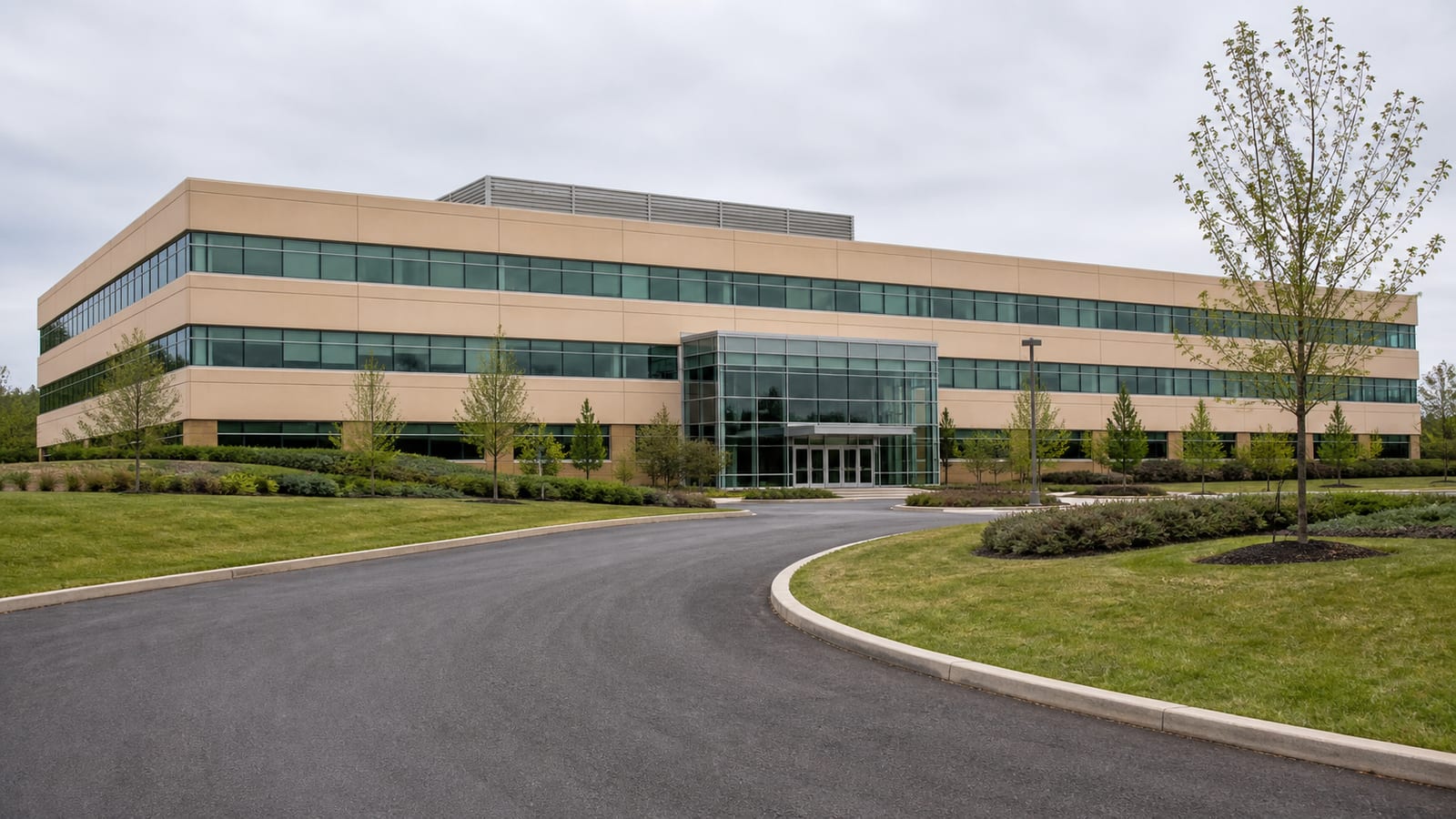
The Route 1 corridor is what makes this a West Windsor page rather than a generic one, and the Township's own planning documents describe what is on it.
The Master Plan identifies retail, commercial and office development along the Route 1 corridor, and names high-tech business and research development as the planned economic base there. The 2021 Utilities Plan separately records a warehouse and distribution centre project near Route 1 and Quakerbridge Road.
That is not one commercial building type, it is four, and each fails differently:
- Office and professional suites. Suspended ceilings, shared air handling, tenants who cannot easily relocate for a day. Containment and after-hours phasing matter most here.
- Retail. Trading hours are the constraint, and a barrier across a sales floor is a revenue decision. Night work is usually the answer.
- Research and technology space. Often has sensitive equipment, controlled environments and its own air handling, which changes both the containment design and who has to approve it.
- Warehouse and distribution. Large volumes, roof and dock-door water paths, racking that has to be worked around rather than moved.
Hover or tap a row to highlight it.
| Building type | What constrains the work |
|---|---|
| Office and professional suites | Suspended ceilings, shared air handling, and tenants who cannot easily relocate for a day |
| Retail | Trading hours; night work is usually the answer |
| Research and technology space | Sensitive equipment, controlled environments and its own air handling, which changes the containment design and who has to approve it |
| Warehouse and distribution | Large volumes, roof and dock-door water paths, and racking that has to be worked around rather than moved |
The drainage picture applies across all of them. The Township sits on a divide, with the west and south draining chiefly toward Assunpink Creek and the north and east toward the Delaware and Raritan Canal and the Millstone River through Big Bear Brook, Little Bear Brook and Duck Pond Run, on topography flat enough that the Utilities Plan says substantial flood opportunity would exist without on-site stormwater management. As one illustration of what that drainage handles, the Township's flood management page describes an intense rain event on an August 6 delivering 3.75 inches in two and a half hours and generating numerous flooding reports. The publisher gives no year for it, so treat it as an example rather than a recurrence statistic.
For any specific address, the Township directs owners to the NJDEP Flood Indicator Tool, FEMA mapping, or Township Community Development to establish flood zone and flood hazard status. That is the answer for your parcel; proximity to a named brook is not.
When Testing Helps a Commercial Job, and When It Does Not
Where mold is visible, EPA says routine sampling is usually unnecessary. The condition is established and the work is decided by extent and moisture source rather than by a species name.
Where sampling genuinely earns its place in commercial work is narrower and more specific than in a house, and it is usually about the file rather than the scope: an unclear source, a matter heading toward litigation, or documented health concerns raised by occupants. Those are real situations in a tenanted building and worth doing properly when they arise.
What no test can give you is a pass mark. There is no federal mold spore threshold, so nobody can hand a facility manager a number that declares a suite safe. That is worth knowing before a tenant asks for one, because the honest answer, that the moisture source was found and corrected and the affected materials were removed and verified dry, is both stronger and defensible.
The Permit Path in West Windsor
Two separate questions, and running them together delays work that did not need delaying.
Remediation cleanup is not identified by the Township as a standalone mold permit. Get the water stopped and the contamination contained.
Construction that follows is a permit question. Where the work goes beyond ordinary maintenance, such as removal and replacement, HVAC, plumbing or electrical work, or structural repair, a construction permit is required before work begins unless an exception applies. Emergency work may begin under the Uniform Construction Code exception when the Code Enforcement Office is notified as required.
Two practical local details worth knowing before you schedule. The Township performs building, electrical, plumbing and fire plan reviews in-house, and it publishes review targets of 20 business days for an initial submission or a critically deficient resubmission, 7 business days for a resubmission, and 10 business days for a complete certificate of occupancy application. Those are permit processing targets, not remediation timelines, but on a commercial rebuild they belong in the programme from day one. Contractors and subcontractors doing permit-subject work must be registered with the Code Enforcement Division, which is a fair question to ask any bidder.
Hover or tap a row to highlight it.
| Permit review step | Township target |
|---|---|
| Initial submission or critically deficient resubmission | 20 business days |
| Resubmission | 7 business days |
| Complete certificate of occupancy application | 10 business days |
Where the site is in a flood hazard area, the Township's floodplain rules cover repairs, reconstruction, rehabilitation and additions, and use the more restrictive available flood information.
What Changes the Scope and the Cost
No published local price range exists for commercial mold remediation in West Windsor, and the honest reason is that the variables are wider than in residential work:
- The concealed extent, which is what the assessment is for and what the containment level follows from.
- The containment level itself, and whether the occupied space forces full containment at a smaller area.
- Occupancy and access, including after-hours premiums, escorting, security and lift access.
- The moisture source, and whether correcting it is inside your control or a landlord's.
- The materials and the systems involved, particularly where duct liner or air handling is affected.
- Documentation depth, which in a tenanted building is usually higher than in a house.
- Whether the job continues into a permitted rebuild.
A scope written after somebody has been above the ceiling is worth something. A number given before that is a guess with a decimal point.
Frequently Asked Questions About commercial mold remediation West Windsor NJ
Do we have to close the building?
Usually not the whole building, and that is what containment is for. Federal guidance recommends limited containment for roughly 10 to 100 square feet of contamination and full containment above that or where the occupied space would otherwise risk further contamination. The disruption footprint becomes the barrier rather than the floor. Whether a specific suite stays occupied is a judgement about the affected area, the air path and who is in it.
Can the work happen after hours?
Often, and EPA specifically identifies off-hours scheduling as a way to reduce occupant exposure and disruption. It is worth raising at the scoping stage rather than after a programme is set, because phasing decisions drive the containment design.
What do we tell tenants and staff?
Something, promptly, and in writing. Occupant communication is part of remediation planning in the federal guidance rather than an optional courtesy. What generally works is the affected area, what is being done, what is contained, and when normal use resumes, with an update when any of those change.
Should we test the air first?
If the mold is visible, usually not. EPA says routine sampling is generally unnecessary where growth is visible, because the extent and the moisture source decide the work. Testing is worth doing where the source is unclear, where a matter may become a dispute, or where occupants have raised health concerns and a documented result is needed.
Do we need a permit?
Not for the cleanup itself. If the work becomes construction, meaning removal and replacement beyond ordinary maintenance, HVAC, plumbing, electrical or structural work, a construction permit is required before it begins unless an exception applies, and emergency work can start under the UCC exception with notification to Code Enforcement.
How long will it take?
It depends on the concealed extent, the containment level, the drying, the documentation and any rebuild, and no honest number exists before the assessment. What can be committed to early is the phasing: which areas are released when, and what is happening out of hours.
Commercial Mold Quick Check
1. At roughly what contaminated area does federal guidance move from limited to full containment?
2. Is there a federal mold spore threshold that declares a suite safe?
3. Within how many hours should non-moldy wet materials be dried?
4. Does the Township identify cleanup itself as a standalone mold permit?
5. What does containment let you do?
Pick an answer to begin.
Final Thoughts
Commercial mold work is a continuity problem with a remediation inside it. The assessment establishes the concealed extent, the containment level follows from that and from who is in the space, the moisture source gets corrected as part of the job rather than after it, and the verification closes it honestly. Everything that makes it harder than a house, tenants, access, trading hours, shared air handling, is manageable when it is planned at the start instead of discovered mid-job.
In West Windsor that also means knowing which of the Route 1 corridor's building types you are dealing with, because an office suite, a retail floor, a research space and a distribution building each put the constraint somewhere different.
If you have a moisture finding in an occupied West Windsor property, we will assess it, tell you what genuinely has to come out of use, and build the programme around your operating hours. ExecPro Restoration & Cleaning has worked on commercial and multi-tenant properties across Mercer County since 2015, from Princeton Junction NJ through West Windsor NJ, Princeton NJ, Plainsboro NJ, Hamilton NJ and Trenton NJ. Call ExecPro Restoration & Cleaning at (888) 300-3772 or get in touch. We handle phased and after-hours scopes, access control, and the documentation your tenants, insurer and legal team will ask for.
Commercial Mold Terms
Tap a term to see what it means.
Containment. A barrier that limits the affected zone, so everything outside it keeps working instead of the zone expanding to whatever the air can reach.
Serving West Windsor
ExecPro Restoration & Cleaning provides mold remediation services in West Windsor, NJ, from inspection and testing through removal, drying, and post-remediation verification. Call (888) 300-3772 for 24/7 emergency response.
Related Articles
How Commercial Mold Remediation Works While a New Jersey Building Stays Open
Commercial mold remediation in New Jersey while tenants and staff stay: containment, after-hours phasing, notice, and the closeout documents to ask for.
Commercial Mold Remediation in Warren, NJ: Keeping the Building Open
Warren has a corporate office corridor and a Mountain Boulevard retail strip. What commercial mold remediation involves with tenants and staff in the building.
Staying Open: Commercial Mold Remediation in Plainsboro, NJ
Commercial mold remediation in Plainsboro, NJ for buildings that cannot close: containment, out of hours sequencing, tenant access, cost drivers and records.