
Structural Mold Repair in Warren, NJ: Where the Line Sits
Cal HewittPublished
- structural mold repair
- framing
- load bearing
- warren nj
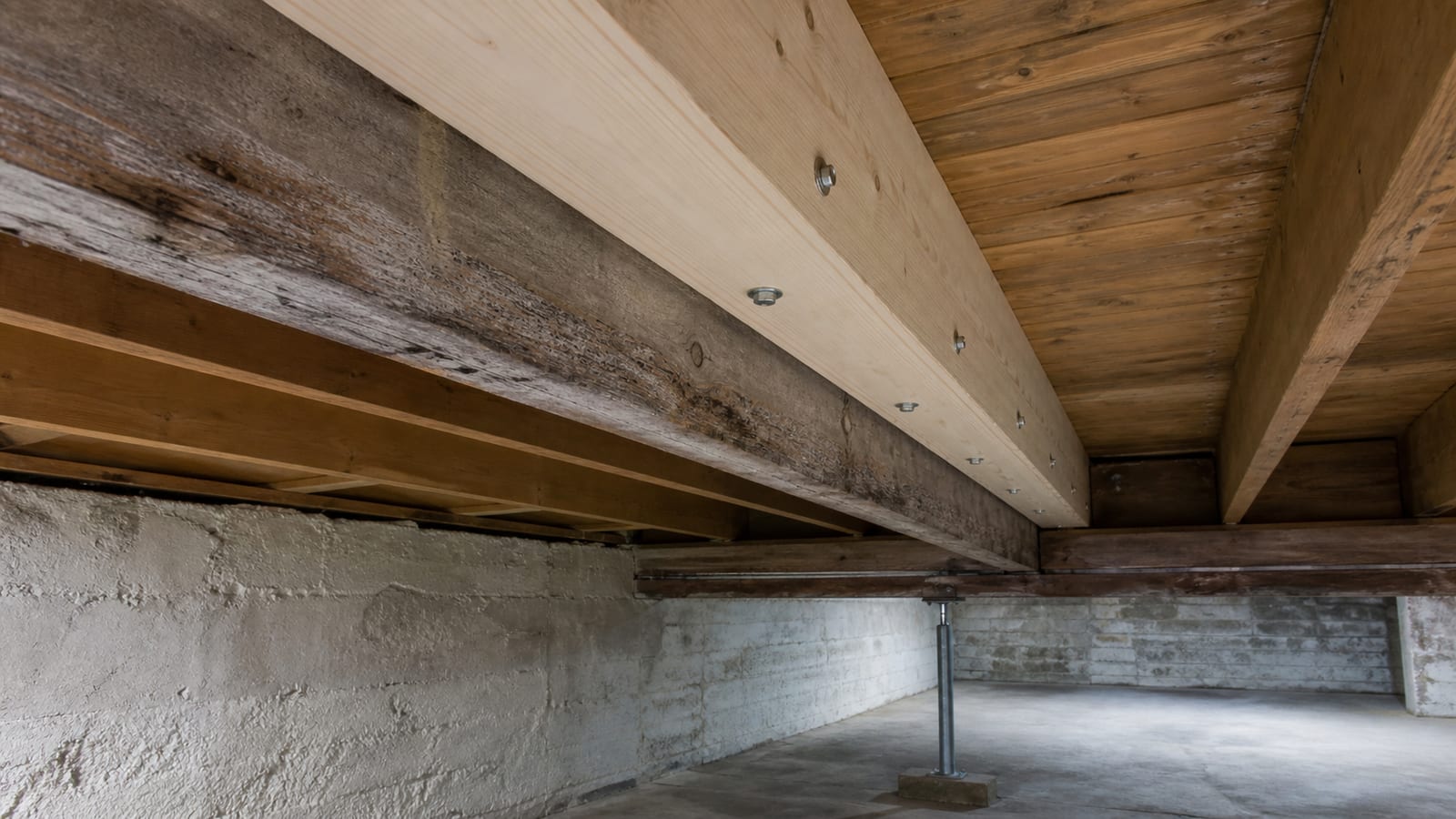
Somebody used the word structural about your house, and the conversation changed. It is a heavy word, it usually arrives without a definition attached, and it leaves people worrying about two things at once: whether the building is sound, and what a repair like that costs. The useful thing to know at the start is that structural is a defined condition rather than a description, most properties where it gets mentioned are on the safe side of the line, and there is a specific test for which side you are on.
Key Takeaways
Structural is a condition, not an adjective
growth on the face of a timber and loss of section are different findings with different consequences.
Most of the time it is the first one
surface growth on framing is common and is usually cleaned in place rather than replaced.
The test is section, not appearance
what matters is whether the member has lost material and capacity, which is assessed by probing and measurement.
A design professional decides the repair
, not a remediation contractor, once capacity is in question.
Warren's framing has eras
the Township records a 45 percent jump in homes between 1946 and 1948 and another boom in the 1960s, so lower level framing here is often of that vintage.
The moisture has to be corrected either way
, because wood that stays wet keeps deteriorating whatever is done to the surface.
When Mold Becomes a Structural Question
Growth on wood is not the same as damage to wood. Mold feeds on the surface and on the moisture; it discolours, it smells, and on its own it does not take strength out of a joist. What takes strength out of a joist is decay, which is a different set of organisms doing a different job, and it needs sustained wetness over time.
So the question a competent inspection is answering is not how much staining there is. It is whether any member has lost section.
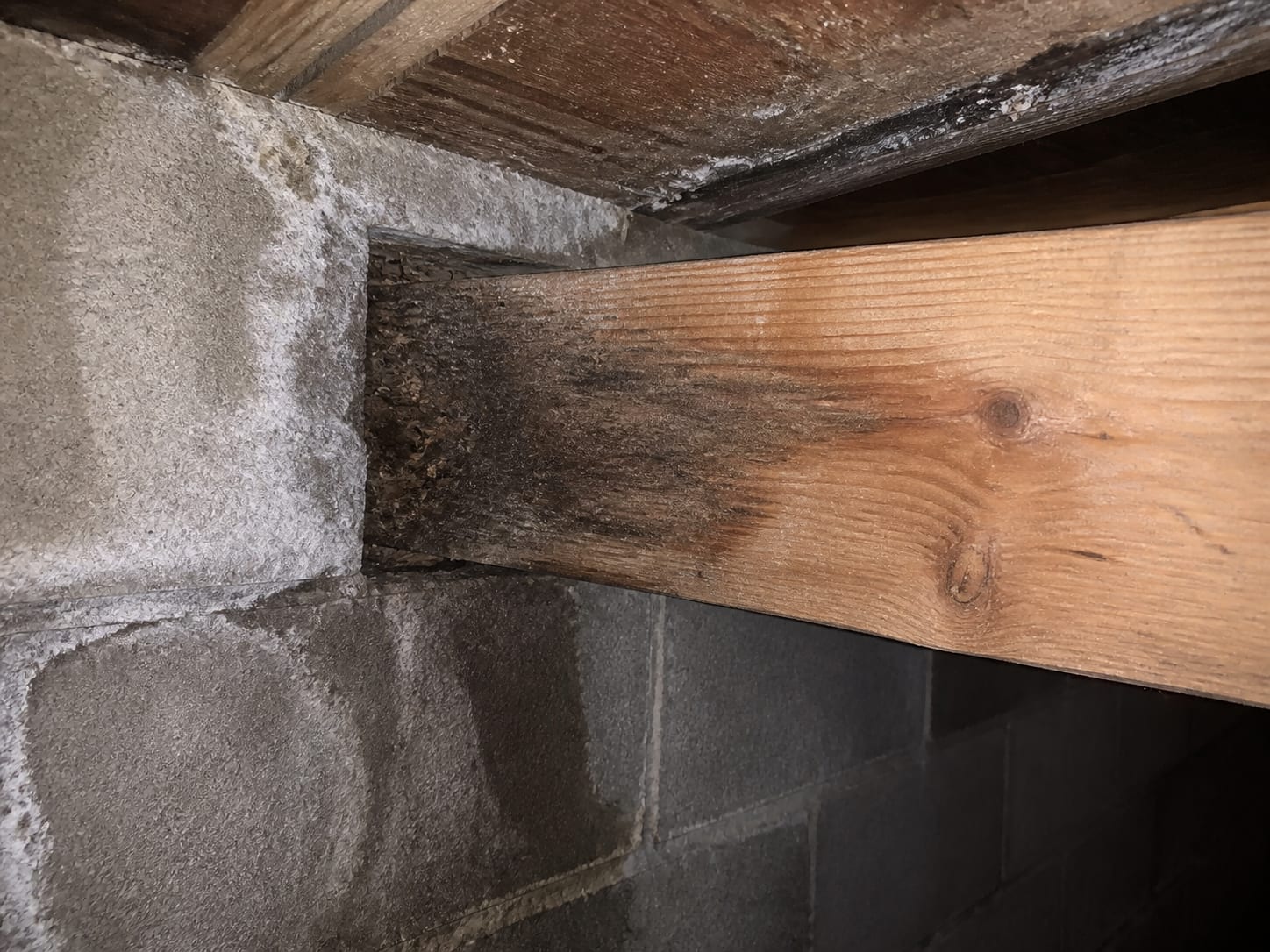
The practical test is physical. A sound timber resists a probe and rings solid. A decayed one gives, crumbles at the surface, or takes a probe further than it should. Where that is found, the extent is mapped along the member and into the bearing points, because the ends sitting in or on masonry are usually where the moisture was worst and where capacity matters most.
Three findings, roughly:
Surface growth, sound timber. Common. Cleaned in place, moisture corrected, documented. Not a structural repair.
Localised decay. A section of a joist, a sill area, a subfloor patch. Repaired by reinforcing or replacing that portion, often by sistering a new member alongside the sound part of the old one.
Loss of capacity across members or at bearings. This is the genuine structural case, and it is the one where a design professional specifies the repair and the work goes through permits and inspections.
Who Decides
This matters because it protects you.
A remediation contractor establishes the condition, removes the growth and corrects the moisture. Where capacity is in question, the specification of the repair is a design decision, and in New Jersey that work runs through the Uniform Construction Code with permits and inspections. Warren Township administers that code, requires permits for most construction activity, and asks that inspections be requested at least 24 hours ahead, with no same day inspections available.
If somebody is proposing to replace framing in your house without any of that, ask why. And if somebody is telling you framing needs replacing before anyone has probed it, ask what the finding was.
Warren's Framing, by Era
The Township's own history records a 45 percent increase in homes between 1946 and 1948, a second building boom in the 1960s, the completion of Interstate 78 in 1986, and approval of nearly 1,000 new homes in 1992, while its housing report states that a majority of Warren's housing was built after 1980.
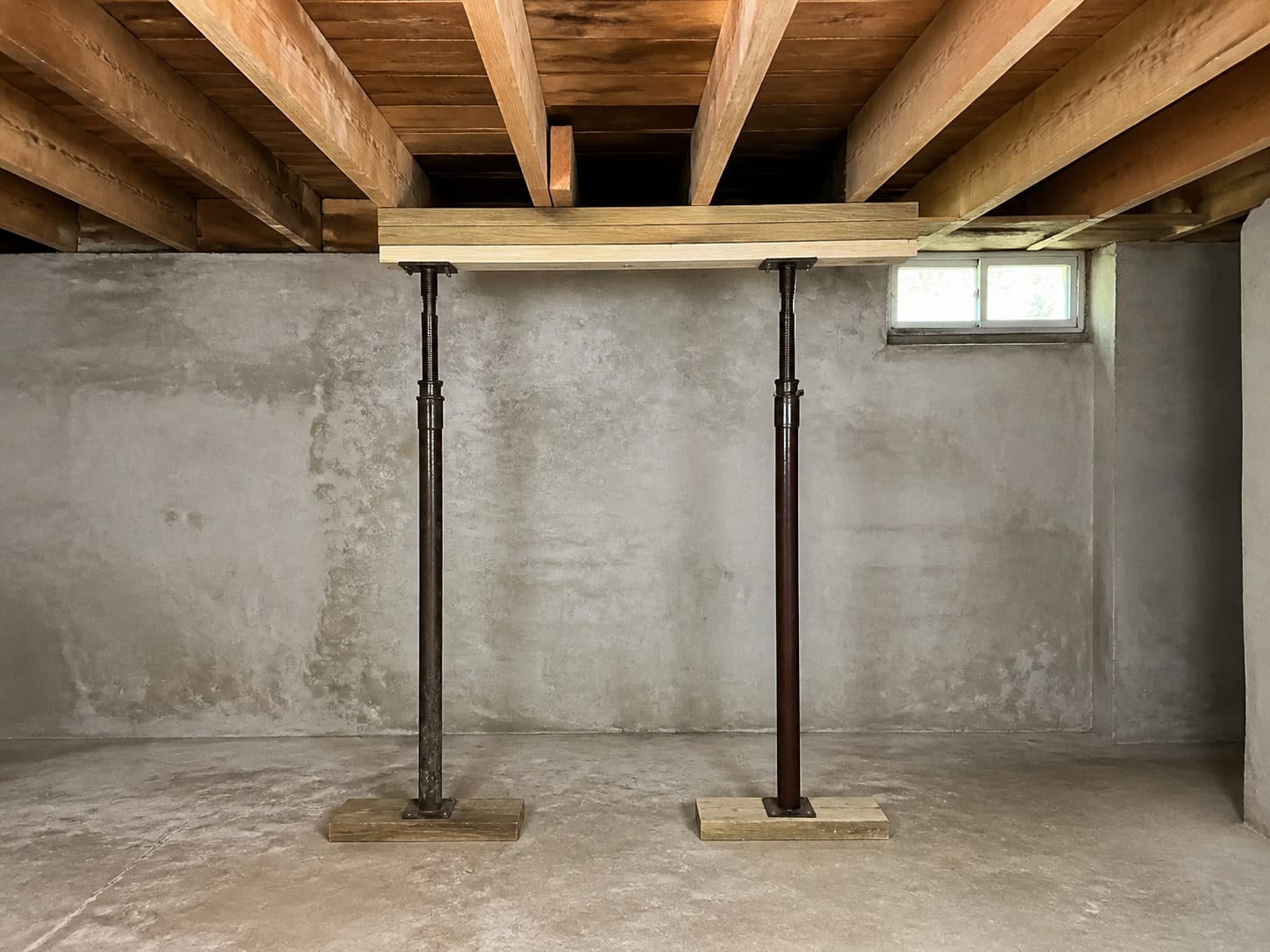
That spread matters underneath a house. Postwar and 1960s framing over a lower level is dimensional lumber, often with bearing on masonry walls or on a beam and column line, and it is the stock most likely to have spent decades near a damp foundation. Later stock is more likely to use engineered members, which behave differently when wet and are less forgiving of sustained moisture at a bearing.
Add the ground conditions. The Township names stoniness, steep slopes and a seasonal high water table as constraints, with the table within a foot of the surface in several soil associations, and describes low percolation and high runoff generally. Framing that sits close to that, in a lower level, over decades, is where the genuine cases turn up.
What the Work Involves
Establishing and Repairing a Structural Finding
- 1
Probe rather than look
A sound timber resists a probe and rings solid. A decayed one gives or crumbles at the surface.
- 2
Map the extent along the member
And into the bearing points, where the moisture was worst and where capacity matters most.
- 3
Correct the moisture
Nothing holds without this, and on a Warren lot the correction is often outside the building.
- 4
Remediate the growth
Affected porous material out, timber surfaces cleaned.
- 5
Specify the repair
Where capacity is lost, a design professional specifies it. That is not a decision made on site.
- 6
Support, then repair
Temporary shoring where a bearing is involved, then sistering or replacement.
- 7
Verify dry, then close
Measured with a meter, and documented, because this record is worth keeping permanently.
Establish the condition, member by member, by probing rather than by looking. Map the extent and pay attention to bearings and to anything concealed behind finishes.
Correct the moisture. Nothing else holds without this, and on a Warren lot the correction is often outside the building.
Remediate the growth. Affected porous material comes out; timber surfaces are cleaned.
Repair capacity where it is lost, to a specification, with permits and inspections where the work is regulated.
Dry and verify before anything closes, measured with a meter rather than judged.
Document all of it. For a structural repair this record is worth keeping permanently, because it is what answers a buyer's inspector years later.
What Drives the Cost
Access to the framing, which in a finished lower level means the finishes come off before anyone can see anything.
How many members are affected and whether the finding is surface growth or lost section, which is the largest single split.
Whether bearings are involved, because a repair at a bearing point often needs temporary support while it is done.
Whether a design professional and permitted work are required.
What correcting the moisture involves, which is separate from the framing repair and is often the larger job.
What to Ask Before Agreeing to Anything
What was probed, and what did it find?
Which members, and where along them?
Is this loss of section, or growth on sound timber?
Who is specifying the repair, and is it permitted work?
What is being done about the water, and when?
Those five questions separate a real structural finding from a word used loosely, and any competent contractor will be glad to answer them.
What a Proper Condition Assessment Involves
If somebody has used the word structural about your house, the single most valuable thing you can buy next is a proper assessment, because it usually narrows the problem sharply. Here is what one actually consists of, so you can tell whether you are getting it.
Access first. In a finished lower level the finishes come off before anything can be seen. That is not part of the repair, it is part of finding out whether there is one, and it should be scoped and priced as its own step.
Probing, member by member. A sound timber resists a probe and sounds solid when struck. A decayed one takes the probe further than it should, gives at the surface, or crumbles. This is done along the length of each affected member rather than at one point, because decay is rarely uniform.
The bearings, specifically. Where a joist end sits in a masonry pocket or on a sill is where moisture concentrates and where capacity matters most. A member can be sound along its length and compromised where it lands. Any assessment that has not looked at the bearings has not finished.
Moisture readings alongside. Because a member that is currently wet and one that dried out years ago are different situations with different urgency, even where the staining looks identical.
A written finding. Which members, where along them, what condition, and which of the three categories it falls into: surface growth on sound timber, localised decay, or loss of capacity. That document is what a design professional would work from, and it is what tells you whether you need one.
What it should not be. A quote to replace framing, issued before any of the above. If somebody has proposed replacing joists without probing them, the honest question is what the finding was.
On Warren framing specifically: much of the lower level framing here is dimensional lumber from the postwar and 1960s waves, bearing on masonry, and sitting above ground the Township describes as having low percolation and a seasonal high water table close to the surface in several soils. That combination is exactly the one that produces bearing-end problems, so it is where an assessment here should look first.
Frequently Asked Questions About structural mold repair Warren NJ
Is mold on floor joists a structural problem?
Usually not by itself. Surface growth on sound timber is cleaned in place. It becomes structural when the wood has lost section, which is assessed by probing rather than by how it looks, and which needs sustained wetness to develop.
How do I know if a joist has to be replaced?
It is a physical test. A sound member resists a probe; a decayed one gives or crumbles, and the extent is mapped along the member and into its bearing points. Where capacity is affected, the repair is specified by a design professional rather than decided on site.
Can you repair a joist rather than replace it?
Often, yes. Sistering a new member alongside the sound portion of the existing one is a common repair where the decay is localised. Whether it is appropriate is a design question.
Does this need a permit?
Structural repair generally does. Warren administers the New Jersey Uniform Construction Code, requires permits for most construction activity, and requires inspection requests at least 24 hours ahead with no same day inspections.
What is the average cost of mold remediation in New Jersey?
There is no meaningful local figure, and structural work in particular is priced from the finding rather than from a rate. What moves it is how many members are affected, whether bearings are involved, whether finishes have to come off to reach them, and what correcting the moisture requires.
The house is from the 1960s. Is that a problem?
Not on its own. Framing of that era is perfectly serviceable. What matters is what has been happening to it, and in Warren that usually comes back to how long it has been near a damp foundation and whether the water has been corrected.
Final Thoughts
If the word structural has come up about your Warren property, the first thing worth having is a proper condition assessment, because it usually narrows the problem considerably. ExecPro Restoration & Cleaning will probe the framing, map what is actually affected, and tell you plainly which of the three findings you have. Call ExecPro Restoration & Cleaning at (888) 300-3772 or get in touch. Emergency mold and water damage services are available 24/7, Monday through Sunday. Related: basement mold remediation where the condition is below grade, and post-mold remediation rebuild for putting the space back afterwards.
Structural Terms
Tap a term to see what it means.
Loss of section. Timber that has lost material and therefore capacity. This is what makes a finding structural.
Serving Warren
ExecPro Restoration & Cleaning provides mold remediation services in Warren, NJ, from inspection and testing through removal, drying, and post-remediation verification. Call (888) 300-3772 for 24/7 emergency response.
Related Articles
Clean, Retain, Reinforce, Replace: Structural Mold Repair in Alpine, NJ
Once growth is on a joist rather than on drywall, an Alpine job has four possible answers, and the one you pick changes how the state classifies the work.
When the Framing Is Involved: Structural Mold Repair in Plainsboro, NJ
Stained framing is not always damaged framing. How structural mold repair is assessed in Plainsboro, NJ, when it becomes permitted work, and what it involves.
Mold Remediation in Warren, NJ: What the Work Involves
Mold remediation cost is driven by area, material and the source repair. How the work runs in a Warren, NJ home, and what makes one job bigger than another.