Clean, Retain, Reinforce, Replace: Structural Mold Repair in Alpine, NJ
Cal HewittPublished
- structural mold repair
- framing
- construction permits
- alpine nj
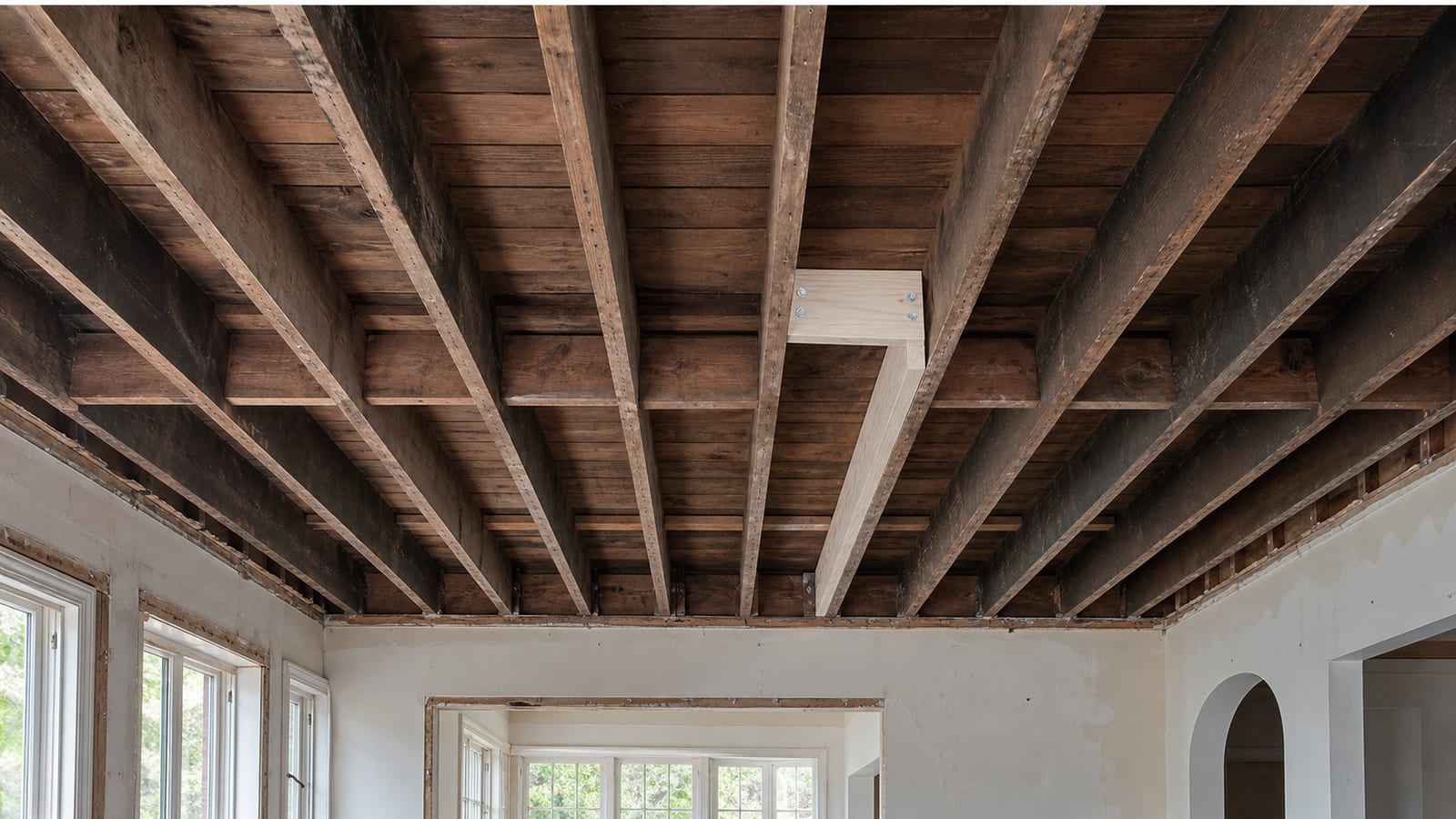
Staining on a joist reads as worse news than staining on drywall, and often it is not. Drywall is finish and it comes out. A joist is structure, and the useful question is not how dark it looks but whether it still does its job. Those are two separate findings, and the gap between them is where a lot of money is either spent or saved on an Alpine repair.
Getting from one to the other is a short list. The member gets cleaned and stays, it gets retained with the growth removed and the condition recorded, it gets reinforced, or it gets replaced. Only the last two change what the work legally is, and once a primary structural component comes out, New Jersey's rehabilitation rules stop calling it repair. That reclassification is the thing worth understanding before anyone opens a wall in a borough where the housing stock spans six decades of framing practice.
Key Takeaways
Surface growth is not structural damage
A darkened member and a weakened member are separate findings, and the second one has to be established rather than assumed.
There are four outcomes
Clean, retain, reinforce or replace, and the evidence for each is different.
Removal reclassifies the job
State rehabilitation rules treat permanent removal of a primary structural component as renovation, alteration or reconstruction, not repair.
Framing is inspected before it is covered
One and two family structural framing and connections are inspected before concealment, which sets the schedule.
Alpine exempts a lot, and not this
Its site plan ordinance exempts detached houses and minor repairs without structural change, which is precisely what a framing replacement is not.
The permit cost has a published mechanism
The borough's fee schedule uses 40 dollars per 1,000 dollars of estimated residential work, with a 100 dollar minimum.
The Face of a Member and the Capacity of It
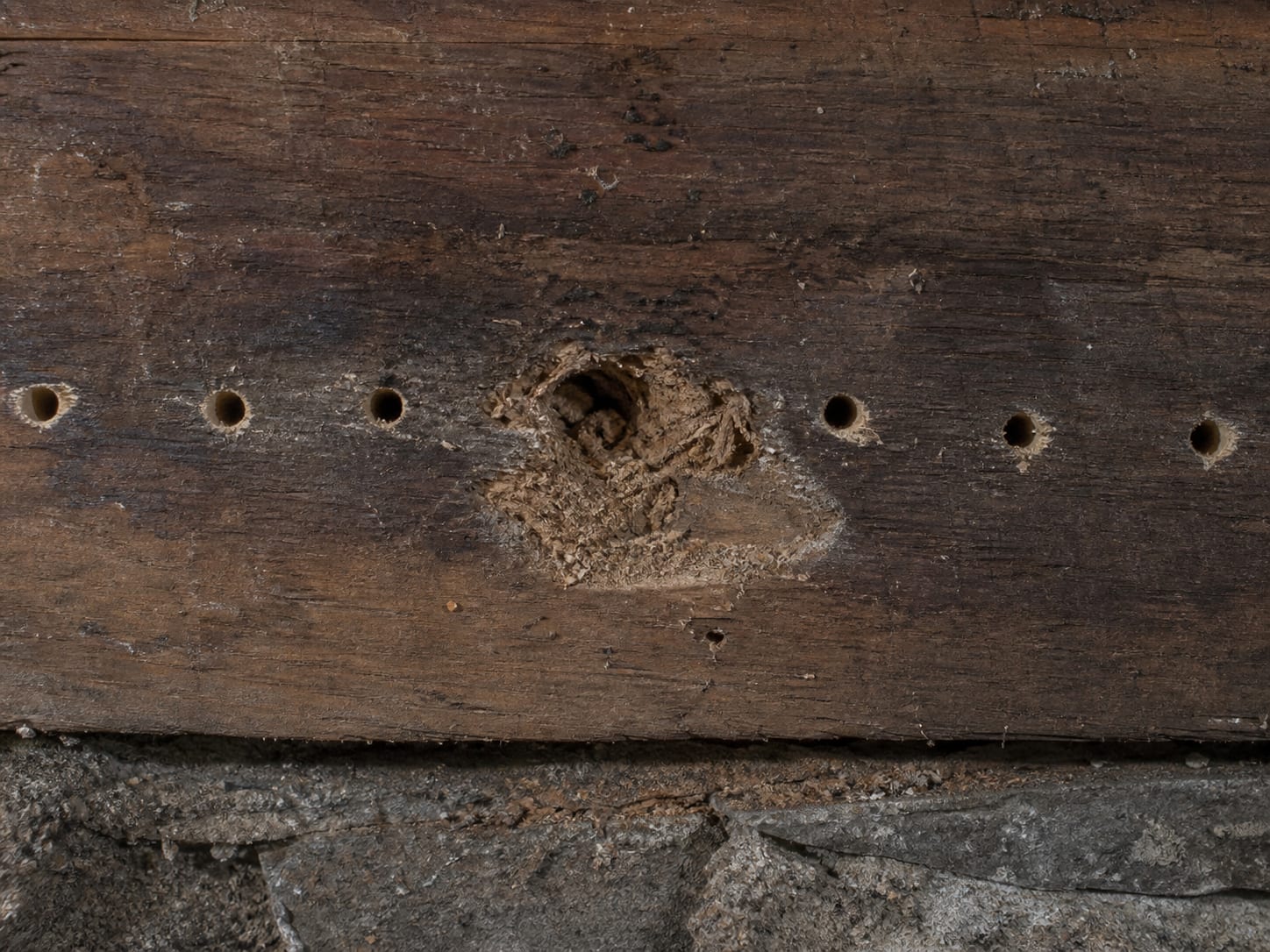
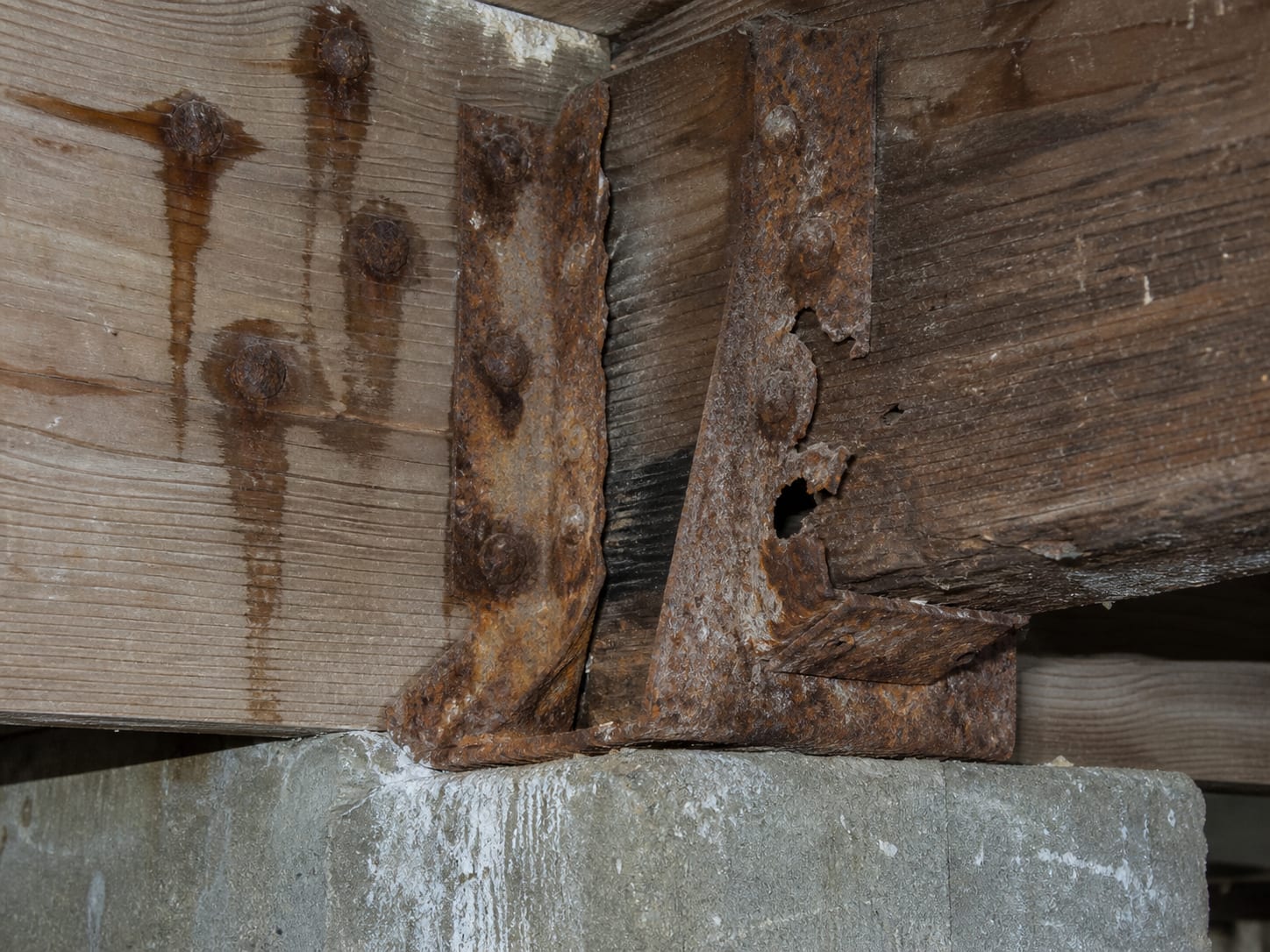
Mold digests what it grows on, and over a long enough wet period that matters structurally. Over a short one it usually does not. What separates the two is not color, extent of staining or smell, it is condition: whether the wood is sound when probed, whether there is section loss, whether fasteners and connections are corroded, whether the member has deflected, and whether the moisture that caused all of it is still arriving.
That is why the first tool on a framing question is a probe rather than a camera. A sound member with surface growth is cleaned and stays. A member that gives under a probe, has visible section loss, or shows decay beyond the surface is a different conversation, and where capacity is genuinely in question the answer belongs to a structural engineer rather than to a remediation crew. Saying so early is cheaper than discovering it after the finish is back on.
The Word That Changes the Job
New Jersey's rehabilitation subcode draws a line that surprises people: the permanent partial or complete removal of a primary structural component is not classified as repair. It is renovation, alteration or reconstruction, which carries a permit and a review path with it. So the moment a joist, a stud in a bearing wall, a rim member or a section of roof framing is taken out rather than cleaned, the paperwork changes even if the visible work looks similar.
Two published intervals shape the calendar around that. A complete permit application is to be approved or denied within 20 business days, and requested inspections should be performed within three business days. There is also a specific inspection that matters here more than any other: for one and two family structures, structural framing and connections are inspected before they are covered. Insulation and board going up over a repaired member without that inspection is the mistake that gets opened again later, at the owner's cost.
The state also distinguishes what you receive at the end. Work that does not require a certificate of occupancy closes out with a certificate of approval, while renovated, altered or reconstructed buildings sit among the projects that require the certificate. Knowing which one applies to your scope is worth asking at the start, because it determines what the file looks like when the job is finished.
What Alpine Exempts, and What It Does Not
Alpine's site plan ordinance is unusually clear about the easy cases. It exempts detached single family dwellings, and it exempts ordinary and minor repairs that involve no structural change, from site plan review. That covers a great deal of remediation work and it should be said plainly, because the fear of a long municipal process stops people from doing repairs they should be doing.
What the exemption does not do is convert a structural alteration into ordinary maintenance. Replace a primary component and you are in the permitted lane regardless of how modest the room looks. There is also a referral trigger worth knowing: the construction code official may send a permit to the Planning Board where the construction affects drainage, water supply, sewage disposal, circulation, landscaping or other listed factors. That is unlikely on an interior framing repair and quite likely if the same project also regrades a slope or changes a drainage path.
Costs on the municipal side have a published mechanism rather than a mystery. The borough's fee schedule sets a residential building subcode fee of 40 dollars per 1,000 dollars of estimated work with a 100 dollar minimum, plan review at 20 percent of the construction permit fee with a 100 dollar residential minimum, and a 100 dollar residential minimum for miscellaneous permits not otherwise addressed, with the construction official deciding the estimated cost. Historic designation is a separate parcel by parcel question rather than a blanket rule, and it is checked rather than presumed either way.
How a Framing Repair Should Run
- 1
Stop the water
Establish and correct the source, because a repaired member under an active leak is a scheduled repeat.
- 2
Open enough to see
Expose the affected assembly properly, since the extent of structural involvement cannot be judged through a finish.
- 3
Probe and record
Test the members, note section loss, deflection and connection condition, and photograph what is found.
- 4
Sort into the four outcomes
Decide per member what is cleaned, retained, reinforced or replaced, and get engineering input where capacity is in doubt.
- 5
Classify the work
Determine whether the scope stays repair or becomes renovation, alteration or reconstruction, and file accordingly.
- 6
Remediate, then dry
Complete the cleaning and removal, then bring the assembly to a measured dry standard.
- 7
Inspect before covering
Have framing and connections inspected while they are still visible, then close up.
Where drying is the long pole rather than the carpentry, structural drying sets the pace, and the mold work itself follows the sequence in our Alpine mold remediation guide. The repair service itself is covered on our structural mold repair page.
Alpine's Framing Is Not All One Vintage
The borough's housing plan, working from the 2023 five year estimate, counts 594 housing units with 190 of them, about 32 percent, built before 1970, and its largest single cohort at 167 units built during the 1980s. Its earlier plan put detached single family homes at 96 percent of the stock.
That spread matters for a framing repair in a practical way. A 1950s house, a 1968 house and a 1986 house differ in lumber dimensions, span practice, connection hardware, sheathing material and how the lower level was finished, and a repair detail that is routine in one is wrong in another. It is also why age alone establishes nothing about a particular property. What it justifies is asking the right questions about the actual assembly rather than assuming a standard detail. Broader local context sits on the Alpine service area page.
Not Repeating It
The repair is only half the outcome. The conditions that wet the framing in the first place are the other half, and the prevention guidance is unglamorous: keep the grade draining away from the foundation, and hold indoor relative humidity below 60 percent, ideally between 30 and 50 percent. Where a leak or spill happens, dry the wet material within 24 to 48 hours, which in most cases prevents growth from starting at all.
Alpine's property maintenance rules also expect exterior structures to be kept in good repair, with a correction period following an inspection notice, so deferred exterior work has a way of becoming a formal matter rather than a private one. On the interior side, the record of what was found, what was replaced and what was verified is what turns a repair into an asset rather than a rumor at the next sale. That record continues into post mold remediation rebuild, which is where the finishes go back.
Frequently Asked Questions About Structural Mold Repair in Alpine NJ
There is black staining on my floor joists. Is the structure damaged?
Not necessarily, and appearance will not settle it. What settles it is condition: whether the wood is sound when probed, whether there is section loss or decay below the surface, whether connections are corroded and whether the member has moved. Plenty of stained framing is structurally fine and gets cleaned and kept. The finding has to be made on the member rather than on the photograph.
When does a mold repair need a permit?
When it stops being repair. New Jersey's rehabilitation rules treat the permanent removal of a primary structural component as renovation, alteration or reconstruction rather than repair, so replacing framing generally requires a permit while cleaning it generally does not. Alpine's construction office classifies the actual scope, and a complete application is to be approved or denied within 20 business days.
Do I need a structural engineer?
Where capacity, a bearing element or a load path is genuinely in question, yes, and it is worth the fee rather than the argument. Where the finding is surface growth on sound members with the source corrected, no. A contractor who cannot tell you which category you are in, or who wants to replace framing without an assessment behind it, is guessing in an expensive direction.
Can we close the wall once the mold is gone?
Not before the framing inspection. For one and two family structures the structural framing and connections are inspected before they are covered, and skipping that step means opening the work again to satisfy it. The other prerequisite is measurement: the assembly needs readings showing it reached dry, not just an appearance of being finished.
What will the permit cost?
The borough publishes a mechanism rather than a flat figure. Residential building subcode fees run at 40 dollars per 1,000 dollars of estimated work with a 100 dollar minimum, plan review is 20 percent of the construction permit fee with a 100 dollar residential minimum, and the construction official determines the estimated cost. That is the municipal side only and it is separate from the contractor's scope.
Is my house going to need historic review?
Only if the parcel is actually designated and the work is the kind that gets reviewed. Alpine has a historic preservation commission whose functions are performed by the Planning Board, which can hear advisory applications, but designation is checked property by property. An interior framing repair on an undesignated house is not a historic matter, and nobody should tell you it is without checking the record.
Final Thoughts
The structural half of a mold job is narrower than people fear and stricter than they expect. Narrower, because most stained framing is sound and stays. Stricter, because the moment a member comes out, the work is reclassified, a permit applies, and the framing gets inspected before anything covers it.
The pattern that goes wrong is always the same: a wall closed early, over a member nobody probed, above a source nobody repaired, without the inspection that would have caught it. The pattern that works is slower by about a week and settles the question permanently, with a file that shows what was found, what was replaced and what was verified.
If the growth in your building has reached framing and you want to know which of the four answers applies before anyone quotes a demolition, ExecPro Restoration & Cleaning will open enough to see and tell you what the evidence supports. Call (888) 300-3772 or reach us through the contact page, and we will separate the cosmetic question from the structural one.
Structural Terms
Tap a term to see what it means.
Primary structural component. A load carrying element such as a joist, beam, bearing stud or rafter, whose permanent removal reclassifies the work.
Serving Alpine
ExecPro Restoration & Cleaning provides mold remediation services in Alpine, NJ, from inspection and testing through removal, drying, and post-remediation verification. Call (888) 300-3772 for 24/7 emergency response.
Related Articles
Structural Mold Repair in Warren, NJ: Where the Line Sits
Surface growth on a joist and loss of section are different jobs. Where that line sits in a Warren, NJ home, who decides it, and what the repair involves.
When the Framing Is Involved: Structural Mold Repair in Plainsboro, NJ
Stained framing is not always damaged framing. How structural mold repair is assessed in Plainsboro, NJ, when it becomes permitted work, and what it involves.
When the Township Has to Sign Off: Structural Mold Repair in East Windsor, NJ
A point arrives in an East Windsor mold job where cleanup becomes construction, and past that point the Township, not the contractor, answers the question.