When the Township Has to Sign Off: Structural Mold Repair in East Windsor, NJ
Cal HewittPublished
- structural mold repair
- construction permits
- uniform construction code
- east windsor nj
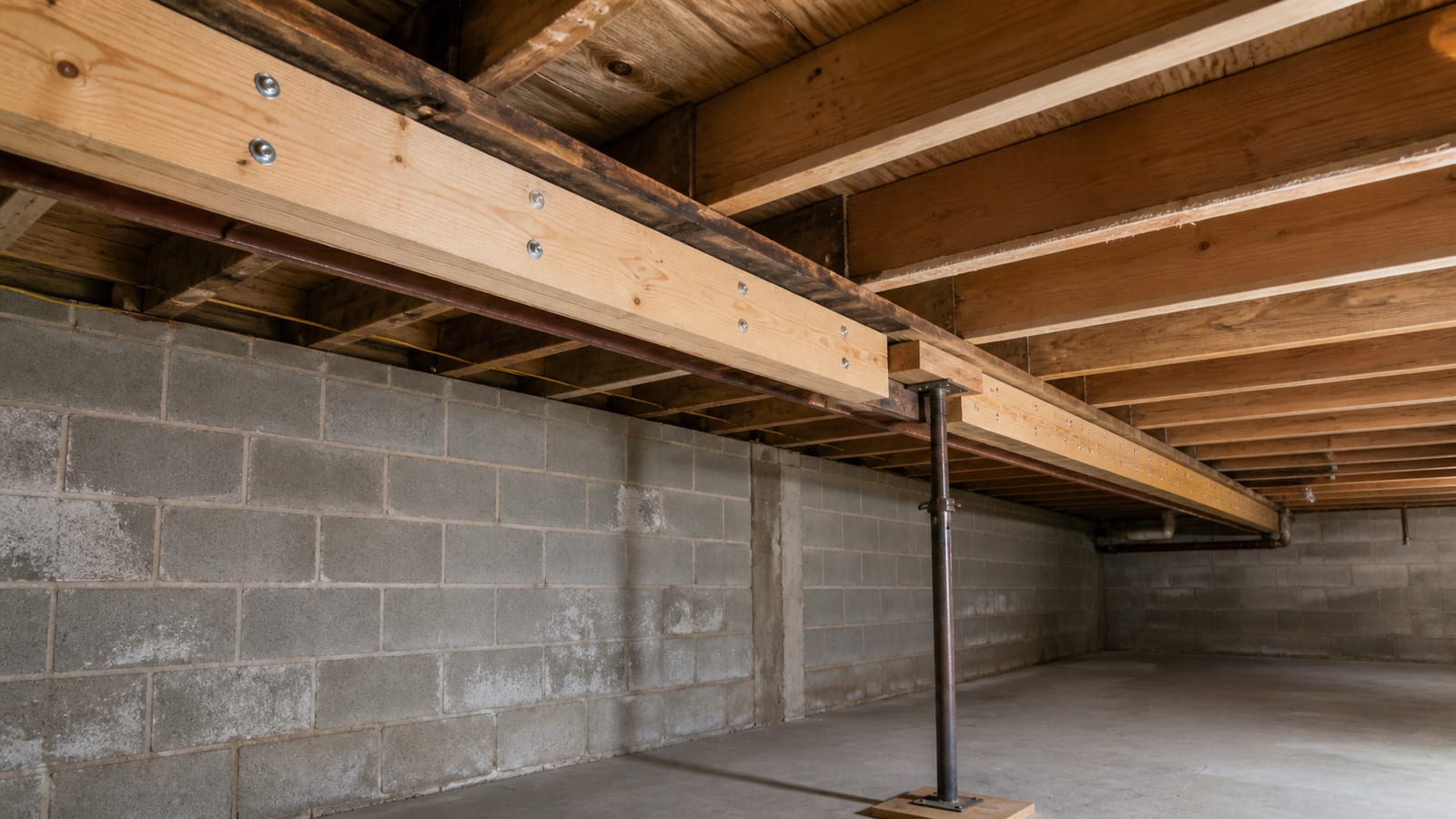
At some point in a mold project the decision stops belonging to the people doing the work. Up to that moment, the questions are environmental: where did the water come from, what materials got wet, what has to come out, and how does the space get dry. Past it, the questions are code questions, and the party who answers them is East Windsor Township. The moment itself is not dramatic. It usually arrives when someone says that a joist, a stud, a section of subfloor, or a run of sheathing has to be repaired or replaced.
New Jersey's Uniform Construction Code provides that construction, enlargement, repair, renovation, alteration, reconstruction, demolition, or regulated equipment work requires an application and the required permit unless an exception applies. East Windsor's own resident guidance names repair or replacement of structural members among the activities that require a permit. That is the threshold in plain terms. Knowing where it sits, before the crew is standing in an open wall, is what keeps a mold project from stalling at exactly the wrong time.
Key Takeaways
The threshold is the component, not the mold
Cleanup of affected finishes is remediation. Repair or replacement of a structural member is construction, and East Windsor's guidance treats it that way.
The Township answers, not the contractor
East Windsor's Construction Department administers the Uniform Construction Code locally and determines what a specific scope requires.
Structural adequacy is not a remediation call
Where the soundness of a supporting assembly is in question, EPA guidance points toward the relevant professional expertise rather than a surface observation.
Discarding a porous material proves nothing about framing
EPA notes that moldy porous materials may need to be discarded, which is a materials decision, not evidence of structural damage.
A flood hazard area adds a second threshold
Where local flood standards apply, substantial damage and substantial improvement provisions bring their own review.
Source correction still comes first
Closing an assembly over an active water route repeats the damage, so the moisture question is settled before the repair is designed.
Where the Line Actually Sits
The word structural gets used loosely in restoration conversations, and the looseness causes real problems in both directions. Used too freely, it inflates a cleanup into a reconstruction. Used too cautiously, it lets someone replace a load carrying member quietly and skip a process that exists for a reason.
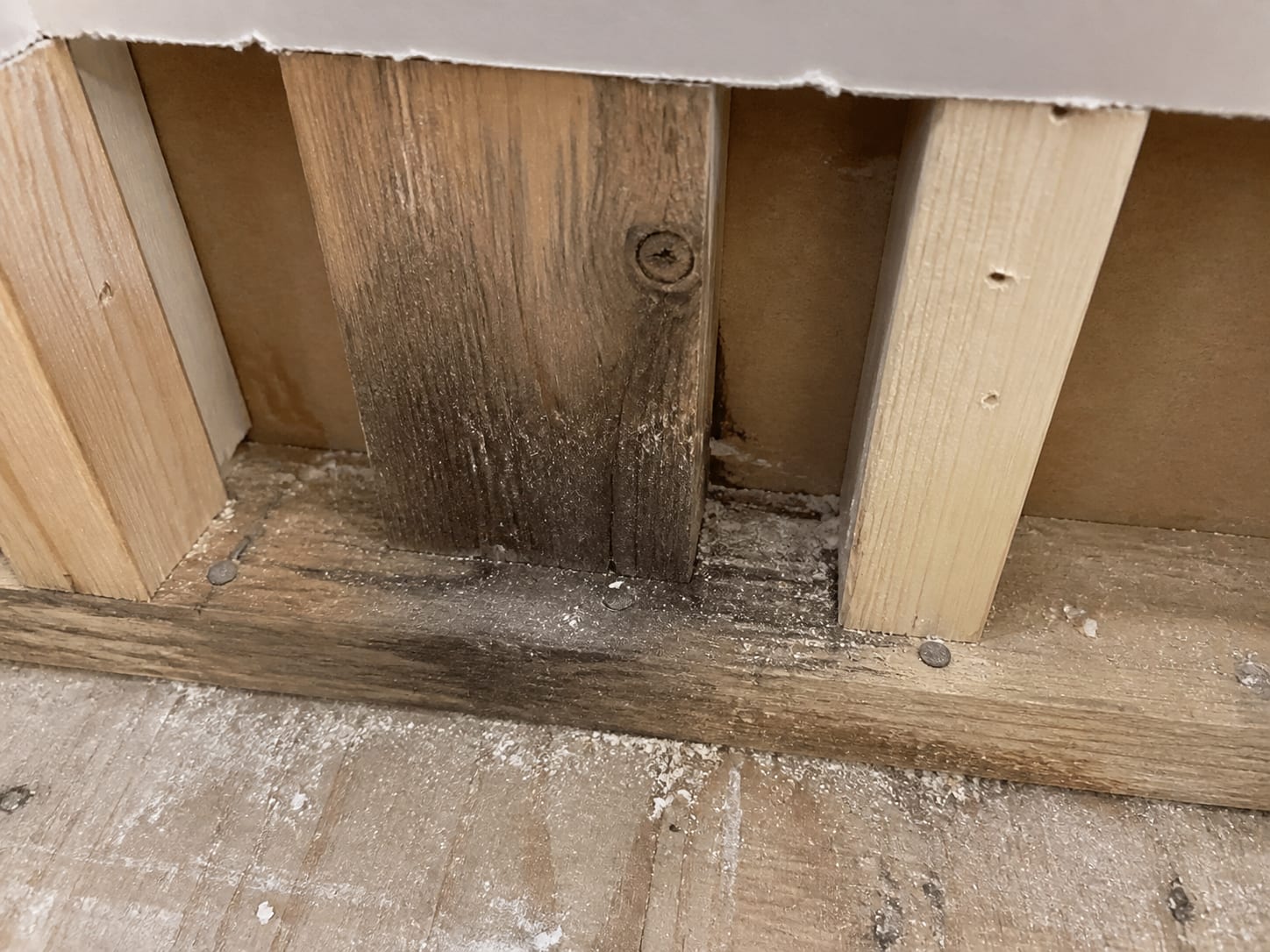
The useful definition is narrow. Structural components are the parts that carry load or support the assemblies around them: studs in a bearing wall, floor joists, rafters and roof sheathing, girders and posts, subflooring, stair stringers, and the supporting framing in a commercial buildout. Drywall, trim, paint, insulation, carpet, and cabinetry are not those components, even when they are soaked through and have to be carried out to a dumpster.
That distinction is what moves a project across the threshold. It is also why a scope document that says "structural repair as needed" is close to useless. A scope that names the member, the location, and the work proposed on it can be evaluated by an owner, priced by a contractor, and reviewed by the Township. A general label cannot.
What Raises the Question, and Who Answers It
No contractor gets to declare a project permit free, and no contractor should. Whether a specific activity requires an application is determined by the actual scope against the code and its exceptions, and in East Windsor that determination comes from the Construction Department, which processes permit applications and performs plan review and inspections across building, electrical, fire, mechanical, and plumbing work. New Jersey consumer guidance likewise states that a construction permit is required for structural construction or repair.
Hover or tap a row to highlight it.
| The work in front of you | Which side of the line it tends to sit on | Who settles it |
|---|---|---|
| Removing wet drywall, insulation, carpet, and trim | Remediation and material handling | The remediation scope and the documented boundary |
| Drying the assembly and verifying it reached dry | Remediation | Moisture readings and the project record |
| Repairing or replacing a joist, stud, rafter, or subfloor section | Construction, and East Windsor guidance lists structural member repair among permit requiring work | East Windsor's Construction Department |
| Installing temporary support while a member is repaired | Part of a construction scope, dependent on the design | The Construction Department, with design input where required |
| Roofing repair after a documented leak | Regulated construction work in most forms | The Construction Department |
| Plumbing, electrical, or mechanical repair tied to the source | Regulated subcode work | The Construction Department, by subcode |
| Reconstruction in a mapped flood hazard area | Development under the local flood standards | The Floodplain Administrator, in addition to the usual review |
The table is a prompt, not a ruling. Every row means the same thing in practice: define the scope precisely, then ask the Township. Asking early costs a phone call. Asking late costs a schedule.
Removing Material Is Not the Same as Judging a Member
This is the distinction that protects an owner most, and it is worth being blunt about. EPA guidance notes that porous materials such as carpet or ceiling tiles may need to be discarded when they are moldy. That is a materials decision based on what the material is and how wet it got. It says nothing about whether the framing behind it is sound.
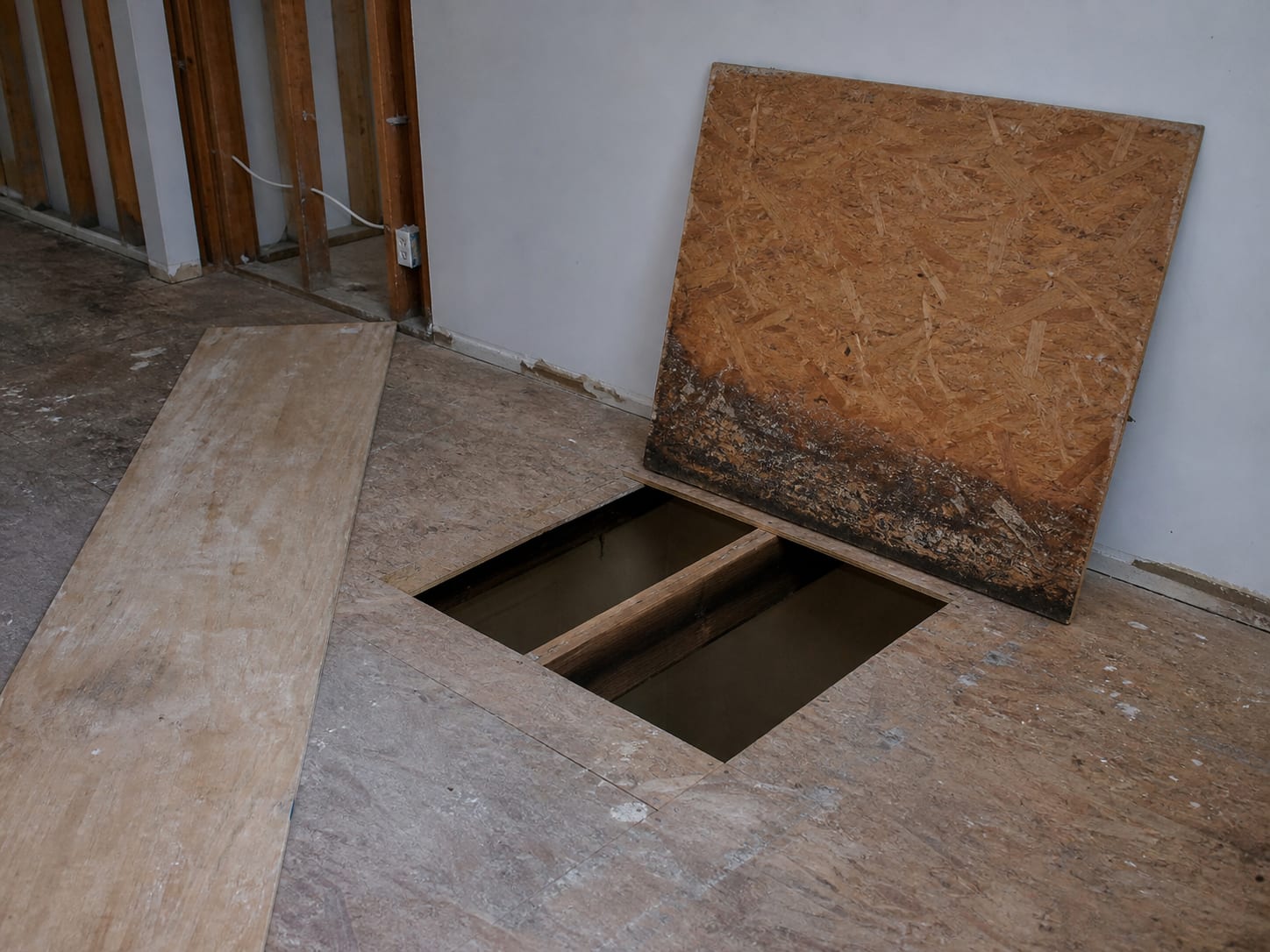
A remediation contractor is well placed to document what was found, what was wet, what was removed, and what is now exposed and visible. That is genuine, useful evidence, and it belongs in the file. Drawing a conclusion about whether a supporting assembly is still adequate is a different exercise with different qualifications behind it, and where the integrity of a component is genuinely in question, EPA guidance points toward involving the relevant professional expertise. In practice that can mean a structural evaluation, a design professional, or a code review depending on what the opening reveals.
We do not rule on structural adequacy, and neither should any remediation firm. What we can do is get the assembly open, document the condition accurately, and hand a clear record to the people whose call it is. An owner who ends up in a claim review or a sale disclosure years later is far better served by that division than by a confident sentence from the wrong party.
The Second Threshold: Flood Hazard Areas
There is a separate local layer that applies only in specific circumstances, and it is easy to either ignore or overstate. East Windsor administers a flood damage prevention ordinance, and its standards require anyone proposing development in a flood hazard area to apply to the Floodplain Administrator and obtain the required permits. Those standards also contain substantial damage and substantial improvement provisions, which can require that some damaged or altered structures meet applicable standards even when the work is framed as a repair.
None of that establishes that a particular property sits in a mapped flood hazard area, and no one should conclude it from a neighborhood impression or a memory of a wet spring. The Township maintains the maps and studies, and that is where the answer comes from. It also means the answer comes from East Windsor. Hightstown is a separate borough that the Township surrounds, and West Windsor is a different adjacent township, and neither one administers East Windsor's construction or flood processes.
Who Owns the Component You Are About to Repair
The threshold has an ownership dimension as well as a code dimension. East Windsor has an estimated 12,422 housing units, and roughly 54 percent are single unit structures. The remainder includes attached and multifamily housing, where a damaged framing line, a floor and ceiling assembly shared between units, a common roof, or an exterior enclosure may be a common element rather than individual property. Census figures place owner occupancy near 61.1 percent, so owners, tenants, landlords, associations, and managers can all hold a piece of the decision. Twin Rivers, which the Township identifies as a planned unit development, is a local example of that structure.
The practical consequence is that a repair plan has to name who controls the component before it names a schedule. A plan that reaches an association owned assembly without approval does not proceed, and a plan that stops at a unit boundary while the water route continues on the other side of it does not resolve anything.
The Order That Holds Up
From Wet Material to an Approved Repair
- 1
Settle the moisture source first
Identify and correct the water route, because EPA guidance makes moisture control the basis of mold control and a closed assembly over a live source repeats the damage.
- 2
Complete or define the remediation boundary
Establish where material removal ends, so the repair scope begins from a known edge rather than an assumption.
- 3
Document the exposed components
Photograph and describe the actual members involved, their locations, and their condition, along with anything that remains concealed.
- 4
Get the structural question to the right party
Where the adequacy of a supporting assembly is in question, route it to qualified professional evaluation rather than a field opinion.
- 5
Define the repair scope precisely
Name the member, the work, any temporary support, and any design requirement, because that is what can be reviewed and priced.
- 6
Confirm the local requirements
Bring the defined scope to East Windsor's Construction Department to determine which permits and inspections apply, and address the flood standards if the property and project fall under them.
- 7
Repair, inspect, and record
Complete the work, keep the permits and inspection records, and keep them separate from the environmental file.
Finishes come back afterward as their own stage, which is the ground covered by post-remediation rebuild work. The upstream cleanup that produces the open assembly is mold remediation, and what the repair phase itself involves is described on our structural mold repair service page.
What Moves the Cost, and What the Township Charges
There is no published East Windsor price for structural mold repair, and any number offered before the component has been seen is an estimate of an unknown. The actual drivers are scope facts: which component is involved, how much has to be opened to reach it, whether the member is a finish element or a supporting one, the extent of demolition, access, the number of spaces or units affected, temporary protection and support, whether professional design or evaluation is needed, and what the source correction itself requires.
Municipal fees are a separate line and are not a contractor's charge. East Windsor calculates construction permit fees as the sum of the applicable subcode fees, so there is no single flat local amount for a repair permit. An estimate that blends municipal fees into a lump sum, or that never separates mitigation, remediation, source repair, structural repair, and finish rebuild, is difficult to evaluate and harder to audit later.
Frequently Asked Questions About Structural Mold Repair in East Windsor NJ
How do I know whether my project has crossed into permit territory?
By naming the work rather than the condition. If what is being removed is drywall, insulation, trim, or flooring, that is remediation and finish work. If a joist, stud, rafter, subfloor section, or run of sheathing is being repaired or replaced, East Windsor's guidance lists structural member repair among permit requiring activities, and the Construction Department is the office that confirms what applies to your specific scope.
Can my remediation contractor tell me whether the framing is still sound?
They can tell you what was wet, what was removed, and what the exposed member looks like, which is real evidence. They should not be telling you whether a supporting assembly is adequate. Where that is genuinely in question, EPA guidance points toward relevant professional expertise, which usually means a structural evaluation or a code review depending on what is exposed.
Does mold on a wall mean my house has structural damage?
Not by itself. EPA notes that moldy porous materials may need to be discarded, and that decision concerns the material, not the frame behind it. A structural conclusion requires identifying the actual component, getting adequate access to it, and assessing its condition. Growth on a finish surface is a reason to look, not a finding.
Is my property in a flood hazard area?
That comes from the Township's maps and records, not from a neighborhood reputation. It matters because East Windsor's flood standards require application to the Floodplain Administrator for development in a flood hazard area and include substantial damage and substantial improvement provisions. If the answer is yes, it adds a review layer. If it is no, that layer simply does not apply.
Can the repair start while the leak is still being sorted out?
That is the specific mistake this whole sequence is built to prevent. EPA guidance places moisture correction first, because closing an assembly over an active route means paying to rebuild something that is going to get wet again. Source repair and structural repair often involve different trades and different schedules, but the order between them does not change.
Who signs off at the end?
The inspections tied to the permits do, and those records come from the Township. An environmental report does not substitute for them, and a permit record does not substitute for an environmental report. They answer different questions, and a file that keeps them as separate documents is more useful to a future owner, insurer, or buyer than one that blends them together.
Final Thoughts
Most of the confusion in this part of a mold project comes from treating it as one continuous job. It is two, and they are governed differently. The first is environmental work that ends at a documented boundary. The second is construction work on identified building components, and in East Windsor that second part runs through the Township's own process, with a further layer where flood standards apply.
Locating the threshold early is what makes the rest manageable. Name the component, define the work, ask the Construction Department what applies, and keep the environmental findings, the structural assessment, and the construction approvals as three separate records. That is a file that still makes sense years later, which is more than most repairs can claim.
If you have an assembly open and you are trying to work out whether what you are looking at is a cleanup, a repair, or a permit, ExecPro Restoration & Cleaning can document the condition honestly and help you take a defined scope to the right desk. Call (888) 300-3772 or reach our team through the contact page, and we will keep the environmental side and the construction side clearly apart.
Structural Repair and Permit Terms
Tap a term to see what it means.
Structural member. A building component that carries load or supports the assemblies around it, such as a stud, joist, rafter, girder, post, or stringer.
Serving East Windsor
ExecPro Restoration & Cleaning provides mold remediation services in East Windsor, NJ, from inspection and testing through removal, drying, and post-remediation verification. Call (888) 300-3772 for 24/7 emergency response.
Related Articles
Clean, Retain, Reinforce, Replace: Structural Mold Repair in Alpine, NJ
Once growth is on a joist rather than on drywall, an Alpine job has four possible answers, and the one you pick changes how the state classifies the work.
Structural Mold Repair in Warren, NJ: Where the Line Sits
Surface growth on a joist and loss of section are different jobs. Where that line sits in a Warren, NJ home, who decides it, and what the repair involves.
When the Framing Is Involved: Structural Mold Repair in Plainsboro, NJ
Stained framing is not always damaged framing. How structural mold repair is assessed in Plainsboro, NJ, when it becomes permitted work, and what it involves.