
Basement Mold Remediation in Warren, NJ: Where the Water Starts
Cal HewittPublished
- basement mold remediation
- lower level
- water table
- warren nj
The smell arrives first. Usually in July, usually in a lower level that is comfortable the rest of the year, and usually for a while before anyone does anything about it. By the time there is something to look at on a wall, the moisture has been present for months. In Warren that is rarely a mystery once you know what is under the house, because the Township's own soil records explain most of it, and they explain why your basement and one three streets away can behave completely differently.
Key Takeaways
The smell precedes the stain
growth is well established before it is visible, so a musty lower level is a finding rather than a nuisance.
Warren's water table is the local answer
the Township records a seasonal high water table at zero to one foot in Bowmansville, Watchung and Whippany soils, against more than five feet in some Neshaminy and Penn soils.
Ten square feet is the EPA's rough line
between something an owner can generally handle and something that warrants a different level of assessment.
Fix the water before the growth
the New Jersey Department of Health recommends inspection to identify an excess water source where it cannot readily be traced to a leak.
Porous material generally goes
carpet and ceiling tile that are moldy come out. Hard surfaces are cleaned and dried after the water problem is corrected.
Where the table is shallow, management is the honest goal
, not elimination.
Why a Warren Basement Smells Before It Shows
Growth begins on the back of materials and inside assemblies, where it is dark, still and damp. The paper facing on the cavity side of drywall, the underside of carpet padding, the back of a finished wall against masonry. By the time anything appears on the room side, the condition has been running for a long time.
That is why a musty lower level in June is worth acting on rather than ventilating and forgetting. The smell is the earliest reliable signal you get, and it is telling you about moisture rather than about cleanliness.
The second thing it tells you is that the cause is probably not in the room. Basement growth is almost always a consequence of water arriving from somewhere else: the ground outside, the water table below, a failure above, or humid air meeting a cold surface. Cleaning the room without answering which of those it is buys a season.
The Soil Table That Explains Most Warren Basements
This is the single most useful local fact for a Warren homeowner, and the Township published it itself.
Warren's background study gives depth to seasonal high water table by soil association. For Bowmansville, Watchung and Whippany soils it is zero to one foot. For Amwell and Mount Lucas, one to four feet. For Rowland, one to three feet. For some Neshaminy and Penn soils, more than five feet. Alongside that, the study describes stoniness and steep slopes as constraints, and reports that soils across the Township generally have low percolation and high runoff.
Read practically, that means two basements at the same elevation, in the same weather, built the same year, are not the same building. One sits above a table that comes within a foot of the surface for part of the year. The other sits well clear of it. The first will behave seasonally no matter what is done inside the room, and the honest goal there is management: keeping the space dry enough, consistently, rather than promising it will never be damp again.
It also means a general answer about basements is worth very little here. The question worth asking about your own property is which soil it is on and where it sits between the ridge and the low ground.
What Is Actually Causing It
Four candidates, and they need different corrections.
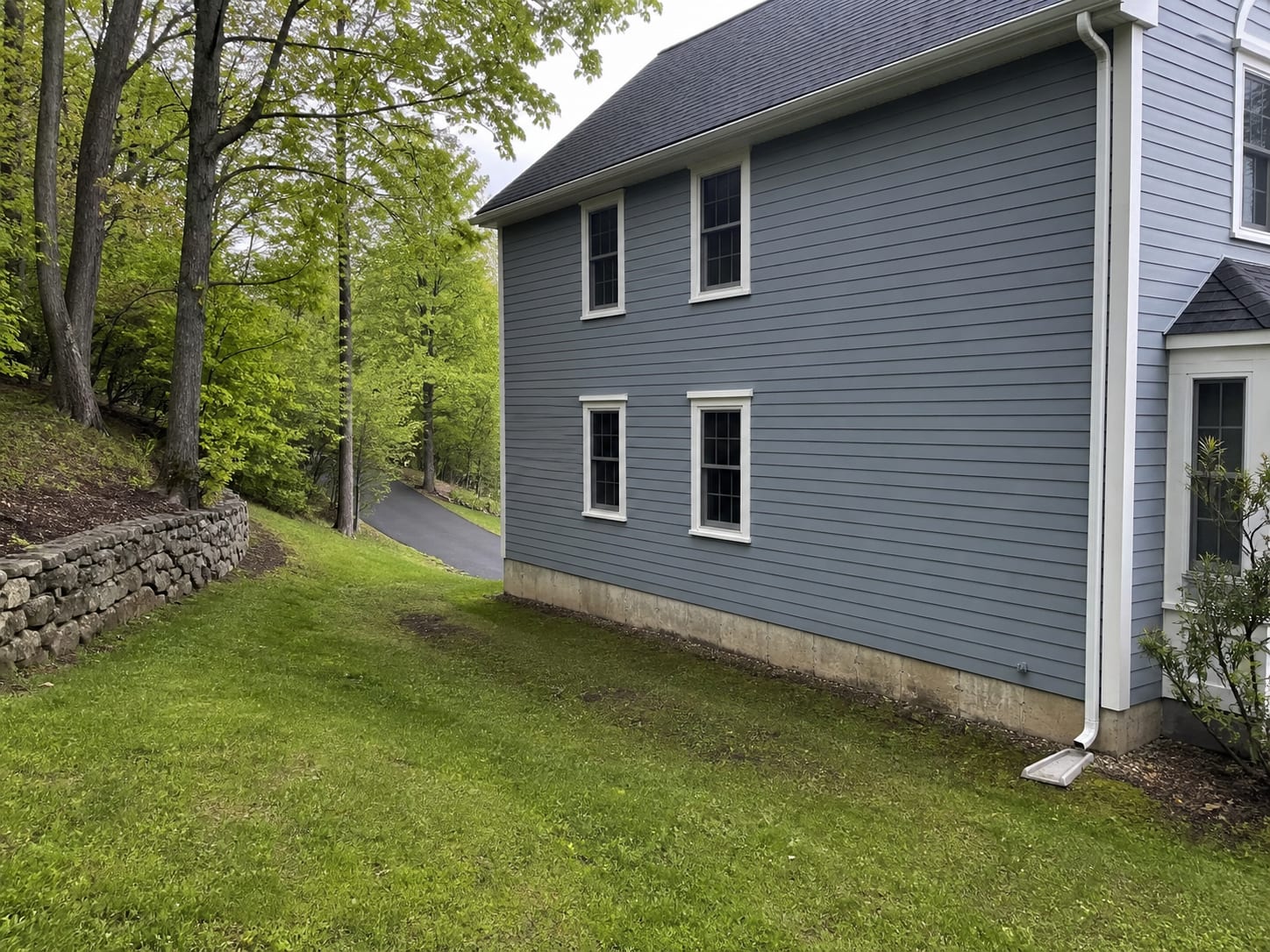
Runoff arriving against the foundation. Warren's slopes send water downhill onto ground that does not absorb it quickly. Gutters discharging close to the wall, grading that falls toward the house, and a driveway that pitches the wrong way are the usual contributors, and all three are fixable outside.
The seasonal water table. Where it rises close to a slab or footing, moisture moves through concrete rather than around it. This is a management problem.
A failure above. A leak in a wall cavity, a supply line, an appliance, or an envelope failure that has been feeding water down inside a wall.
Condensation. Humid summer air meeting cold masonry or a cold line. This one is unique in that nothing is leaking, and the correction is dehumidification and air movement rather than excavation.
They produce similar looking damage on the same drywall. They are distinguished with moisture readings, by looking at what the lot does during heavy rain, and by elevation, which is why a first visit spends time outside.
What the Work Involves
A Warren Lower Level Remediation
- 1
Answer the water first
The Department of Health advises inspection where an excess water source cannot readily be traced to a leak.
- 2
Establish the real extent
The visible area is a starting point. In a finished space that means opening enough to see the cavity.
- 3
Set the scope
The EPA treats under roughly 10 square feet as generally manageable by an occupant, with a different level of assessment above that.
- 4
Remove what is porous
Affected wallboard, carpet, padding and insulation come out. Hard surfaces are cleaned after the water is corrected.
- 5
Dry the assembly
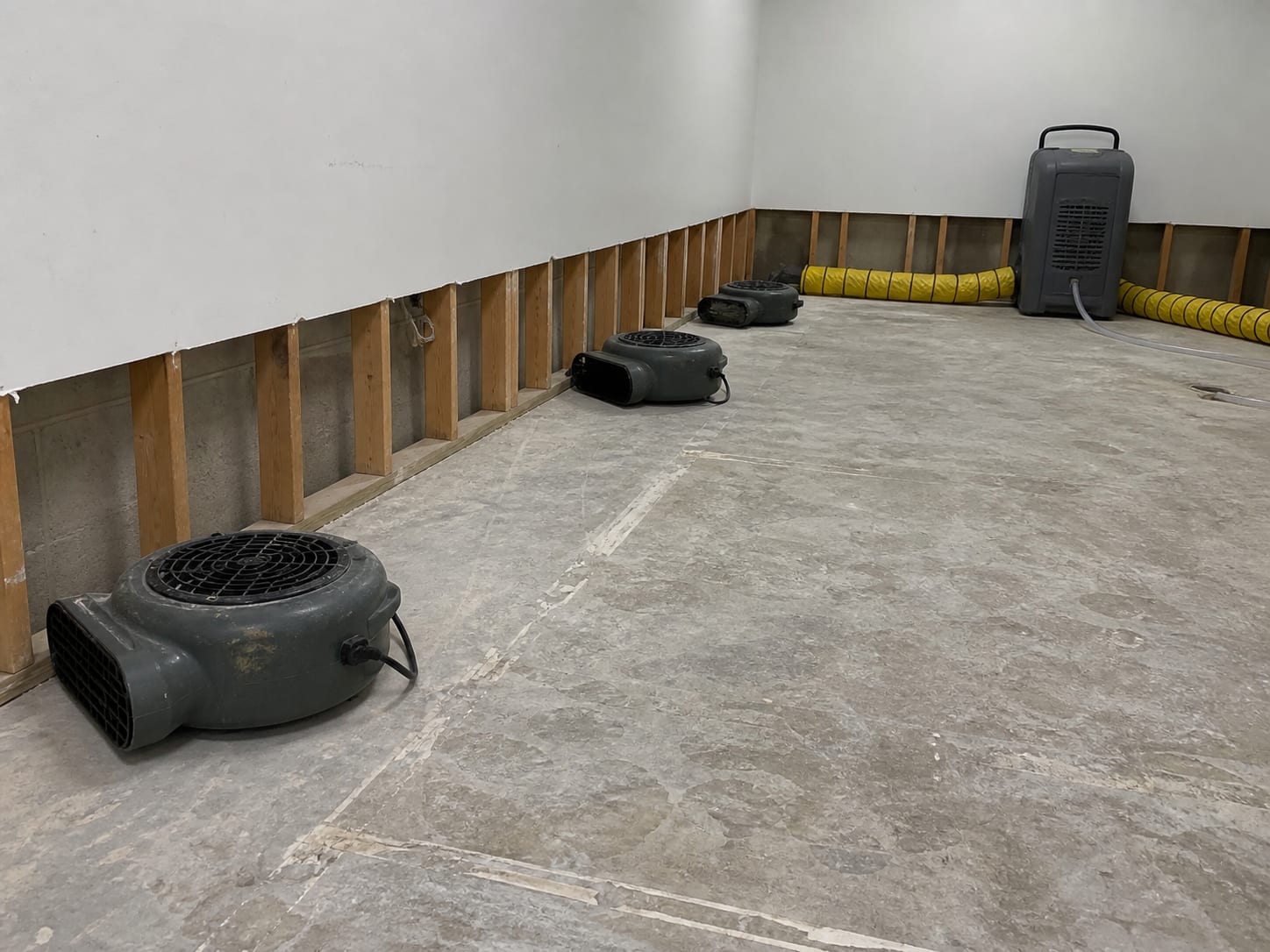
Air movers on the opened wall base and the slab, with dehumidification, verified by meter.
- 6
Correct the source
On a sloping Warren lot this is frequently outside: grading, a downspout, a drainage path.
- 7
Rebuild only then
A separate stage, and worth designing for the conditions rather than putting back the same thing.
Source first. Nothing else is worth doing until the water is answered. The Department of Health recommends inspection where an excess water source cannot readily be traced to a leak.
Then extent. The visible area is a starting point, not a boundary. In a finished lower level that means opening enough to see what the cavity is doing.
Then scope. The EPA treats a visible area under roughly 10 square feet as something a homeowner can generally handle, and says heavy water damage, growth above that size, contaminated water, suspected contamination of the HVAC, or health concerns call for a different level of assessment. It also notes that judgment matters, because dense growth in a small area can be a greater exposure concern than sparse growth over a larger one.
Then removal and cleaning. Porous materials that are moldy come out. Hard surfaces are cleaned and dried, after the water problem is corrected rather than before.
Then drying, verified. With meters, on the concealed material as well as the visible.
Then repair. Only once the space is demonstrably dry.
Where a water event is behind it rather than slow moisture, the immediate sequence is different: make entry safe electrically and structurally, photograph and contact the insurer before cleanup, remove water and unsalvageable contents, and dry promptly, with the EPA advising cleanup and drying within 24 to 48 hours where possible and assuming growth where that did not happen.
What This Means for a Finished Lower Level
A finished basement complicates the diagnosis, because the finishes hide the assembly that is actually wet.
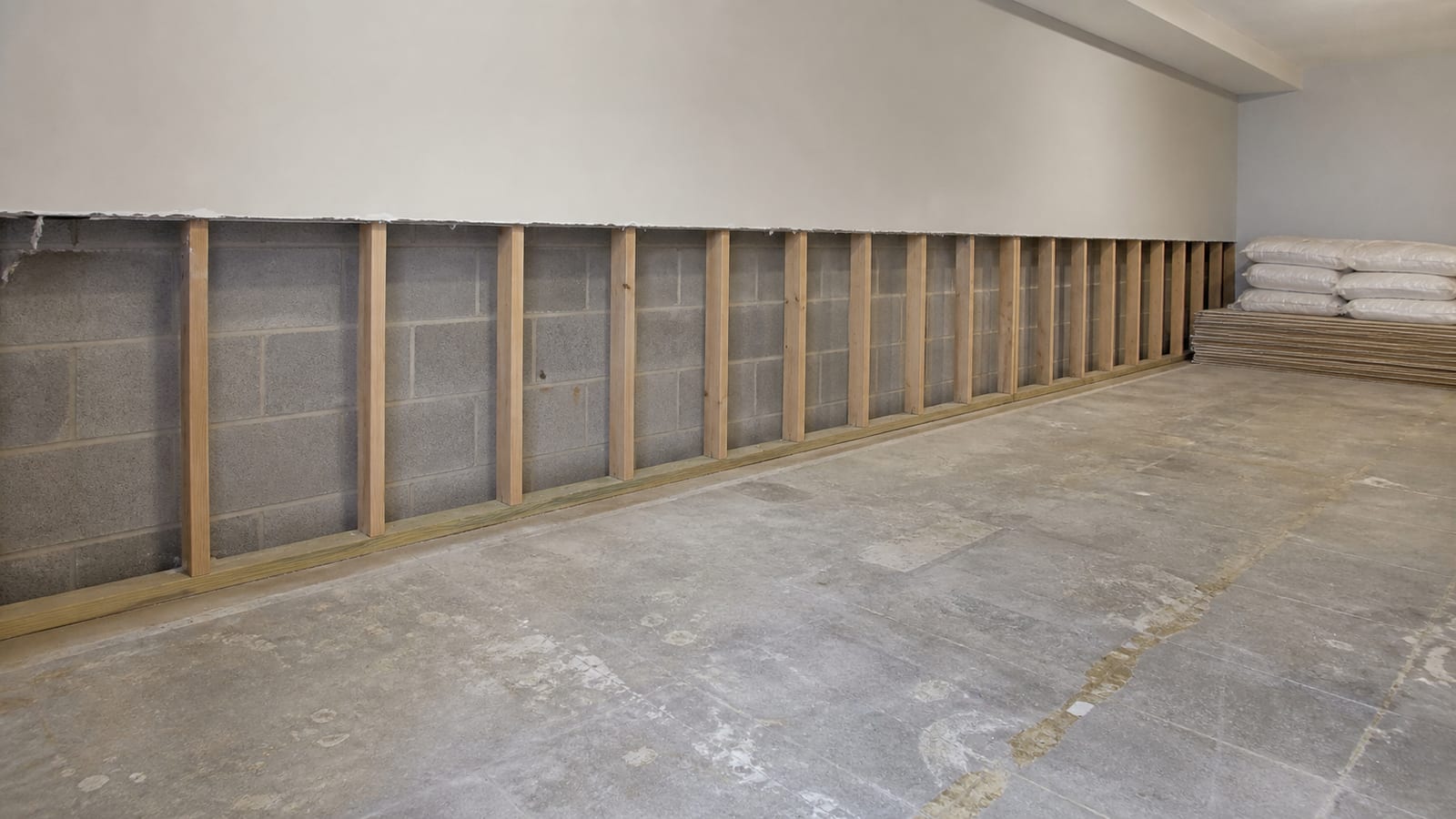
Where a finished space has taken water, the carpet and padding come out and the drywall is usually flood cut at the base, so the slab and framing can dry. Air movers on an intact finished floor dry the surface while the material underneath stays wet. That is the most common reason a room is dried twice.
Where the problem is slow seasonal moisture rather than an event, the question is whether the finish assembly is compatible with a wall that will be damp sometimes. Sometimes the honest answer is that it is not, and rebuilding differently is cheaper than remediating repeatedly.
Keeping It From Coming Back
For runoff, the fixes are outside: downspouts discharging well away from the foundation, grading that moves water away, and attention to how uphill water crosses the lot in heavy rain.
For the seasonal table, it is dehumidification, keeping absorbent storage off the floor, and being realistic about finishes.
For condensation, it is humidity control through the humid months, which matters more here than anything applied to a surface.
Finished, Half Finished, or Bare: Three Different Jobs
The same moisture problem in three differently finished lower levels produces three different scopes, and knowing which one you have explains most of the difference between quotes.
A bare basement is the simplest case and the cheapest to resolve. The block or poured wall is visible, the floor is exposed concrete, and the joists are open overhead. Nothing is hiding anything. The affected area can be seen directly, cleaning is straightforward on hard surfaces, and the drying is fast because there is no assembly holding water. If your lower level is bare and you have a moisture problem, you are in the best position of anyone reading this.
A half finished lower level, with a framed and boarded wall on one side and bare block on another, or a dropped ceiling over an otherwise open space, is the case that surprises people. The finished portion hides the condition and the unfinished portion does not, so the visible evidence is frequently in the wrong place. Growth found on bare block is often the smaller half of the problem.
A fully finished lower level is the largest scope, and the reason is that finishes have to come off before anyone can establish anything. Carpet and padding, the bottom two feet of drywall, insulation in the affected bays. That is not a contractor being aggressive: it is that a finished wall is an enclosed assembly, and an enclosed assembly that has been wet cannot be assessed or dried from the outside.
The Warren specific angle is that whether a lower level should be finished at all is a real question here, and one worth asking before rebuilding rather than after. On a soil where the seasonal high water table sits within a foot of the surface, an assembly that traps moisture against a cold wall will keep producing the same condition. The answer is not always to leave it bare. It is sometimes to build the wall differently: leaving a gap, using materials that tolerate wetting, or keeping the bottom of the assembly demountable so the next event costs a day rather than a fortnight.
Frequently Asked Questions About basement mold remediation Warren NJ
My basement only smells in summer. Is that still a problem?
Usually yes, and usually it is condensation rather than a leak. Humid air meeting cold masonry or cold lines produces moisture without anything failing. It responds to humidity control rather than to excavation, but it does need addressing, because seasonal damp is still damp.
How much does basement mold remediation cost?
It is driven by the affected area, how much material has to come out rather than be cleaned, whether the space is finished, and above all by what stopping the water requires. That last one has the widest range, from a downspout extension to a drainage correction. A figure quoted before anyone has seen the property is a marketing number.
Is mold considered uninhabitable?
There is no single threshold that makes a dwelling uninhabitable for mold, and it is not a call a remediation company makes. Where a rental is involved, New Jersey guidance notes that authorities often address the underlying structural deficiency, such as a leak or a plumbing failure, rather than the growth itself.
Can I clean it myself?
The EPA treats a visible area under about 10 square feet as generally manageable by an occupant. Above that, or with substantial water damage, contaminated water, suspected HVAC involvement or health concerns, it advises a different level of assessment. The thing to avoid either way is cleaning without finding the water.
Will waterproofing fix it?
It depends what is causing it. Against runoff arriving at the foundation, exterior corrections usually do more. Against a shallow seasonal water table, interior management helps and elimination is not a realistic promise. Waterproofing sold without a diagnosis is being sold before the question was asked.
Does the finished basement have to come out?
Not necessarily all of it. Where it has taken water, the carpet, padding and the base of the drywall generally do, so the assembly behind can dry. Where the problem is seasonal humidity, often nothing structural comes out at all.
Final Thoughts
If your Warren lower level has been musty for a season or two, the useful next step is finding out which of the four causes it is, because they need different work. ExecPro Restoration & Cleaning can moisture map the space, look at what the lot is doing outside, and tell you what the scope is before anything comes out. Call ExecPro Restoration & Cleaning at (888) 300-3772 or get in touch. Emergency mold and water damage services are available 24/7, Monday through Sunday. Related: mold inspection for what is behind a finished wall, and water damage restoration where an event rather than a season is behind it.
Lower Level Terms
Tap a term to see what it means.
Seasonal high water table. The depth groundwater rises to at its wettest, within a foot of the surface in several Warren soils.
Serving Warren
ExecPro Restoration & Cleaning provides mold remediation services in Warren, NJ, from inspection and testing through removal, drying, and post-remediation verification. Call (888) 300-3772 for 24/7 emergency response.
Related Articles
The Smell Downstairs: Basement Mold Remediation in Plainsboro, NJ
A musty lower level in Plainsboro: what causes it, what the work involves, what it costs, what you can clean yourself, and why finishing a basement needs a permit here.
Basement Mold Removal: What Comes Out, What Can Stay, and Why
Basement mold removal in NJ: see which materials usually come out, which can be cleaned and kept, when DIY stops and how to keep mold from coming back.
Basement Mold Remediation in Bridgewater, NJ: Seepage, Sumps and a Musty Lower Level
A musty lower level after rain often means water is still getting in. How to read seepage, a struggling sump or a leak, and what removal in a basement involves.