Attic Mold Remediation in Warren, NJ: It Starts at the Vents
Cal HewittPublished
- attic mold remediation
- ventilation
- roof sheathing
- warren nj
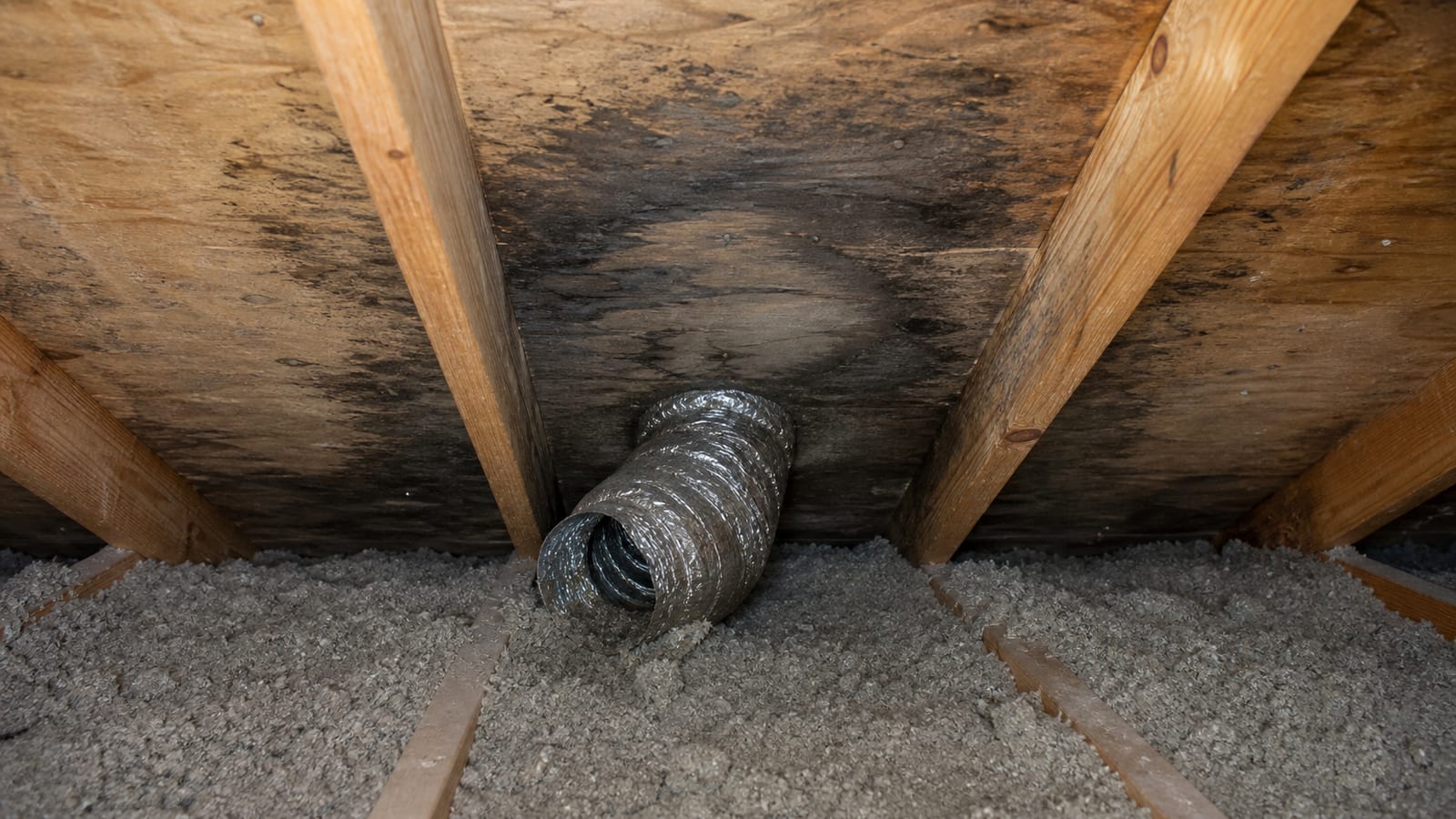
Somebody else found this one. A roofer mentioned dark staining on the underside of the sheathing, or an inspector put a photograph in a report, and now you have a problem you have never seen and cannot easily go and look at. The reassuring part is that attic staining is one of the more predictable conditions in a house, and in most cases it is not really about mold at all. It is about where warm, damp air from inside the house is going, and what it meets when it gets there.
Key Takeaways
Attics are a ventilation problem first
growth on sheathing is the symptom, and the usual causes are air and moisture arriving from the living space below.
Check where the fans terminate
a bath or dryer fan discharging into the attic instead of outside puts warm, wet air straight onto cold sheathing.
Ten square feet is the EPA's rough line
for what an occupant can generally handle versus what warrants consulting its remediation guidance.
Cleaning without fixing the cause guarantees a return visit
the moisture source has to be corrected and materials dried.
Much of Warren's stock is post 1980
, an era of tighter houses and more mechanical ventilation, which makes fan termination a live question here.
Health first for some people
the CDC advises that people with asthma, COPD or immune compromise should not be in a moldy home while it is being cleaned.
Can Mold Be Removed From an Attic?
Yes, and in most attics it is a comparatively contained job. Affected sheathing and framing surfaces are cleaned or treated, anything porous and affected is removed, the space is dried, and the record is documented.
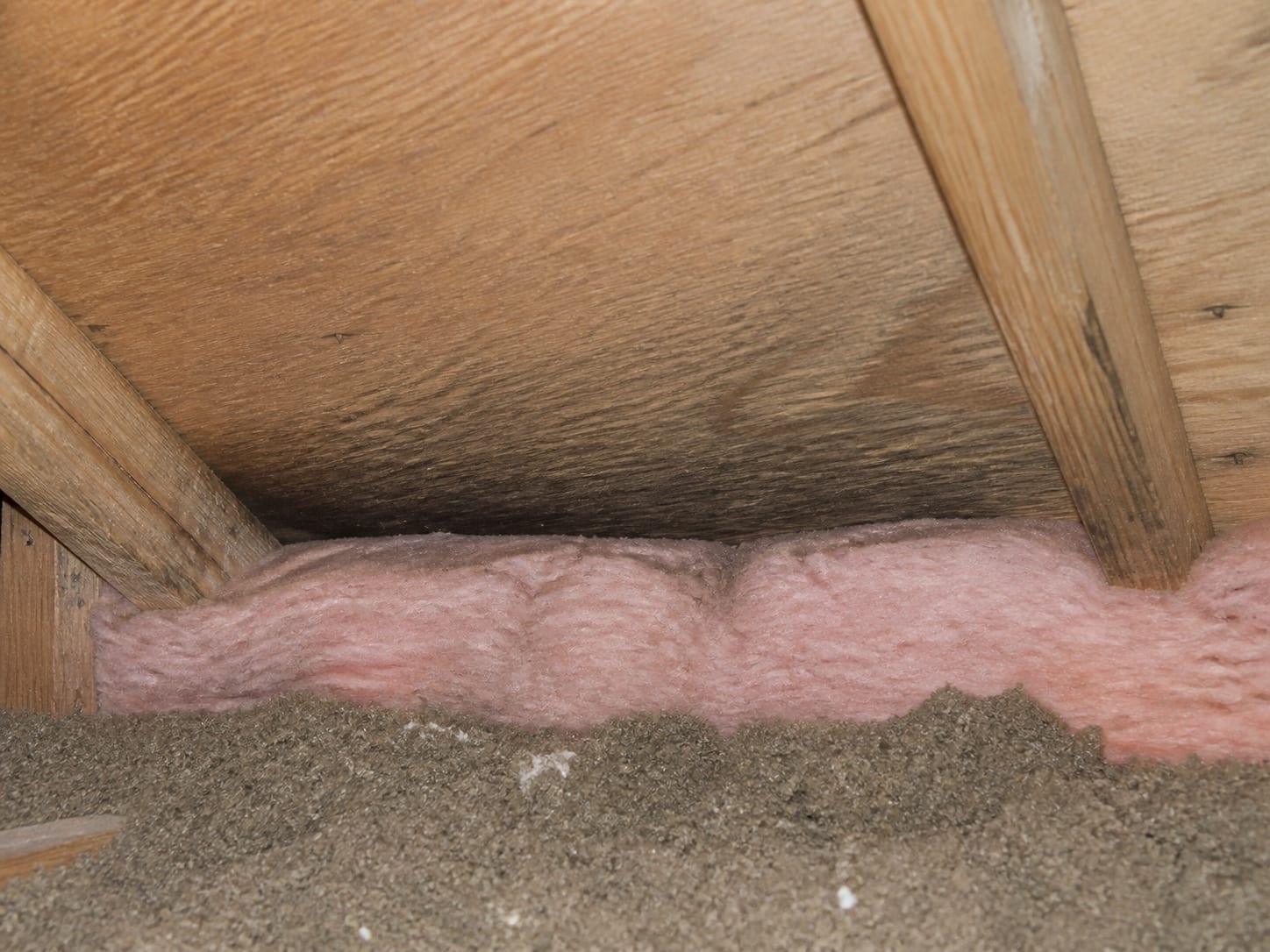
The part that decides whether it stays gone is not the cleaning. It is what happens to the air. Attic growth is almost always fed by moisture arriving from the house below, condensing on the coldest surface it can find, which in winter is the underside of the roof deck. Clean the deck and leave the moisture arriving and you will be looking at the same photograph in two years.
So the honest sequence is condition and source assessment, a scope decision based on the affected area, controlled cleanup or removal, drying and source correction, and a documented closeout. Not a species identification, and not a treatment applied to a surface in isolation.
Where the Moisture Is Coming From
Four usual suspects, and they are all fixable.
Fans terminating inside the attic. A bathroom exhaust or a dryer duct that ends under the roof rather than outside it. This is the single most common finding and the most direct: it delivers warm, saturated air exactly where it will condense.
Air leaking up through the ceiling plane. Recessed lights, top plates, the attic hatch, plumbing and wiring penetrations. Individually small, collectively a chimney for humid indoor air.
Blocked or insufficient soffit ventilation. Often insulation pushed into the eaves during an upgrade, which stops the intake that the ridge vent depends on. A roof can have plenty of exhaust and no intake, and it will not work.
A roof or flashing leak. Less common as a cause of general staining, and usually more localised when it is the cause.
The pattern of the staining is informative. General discolouration across the north facing slope points to ventilation and condensation. A concentrated patch near a penetration points to a leak or a specific fan.
Why This Comes Up in Warren
The Township's housing report states that a majority of Warren's housing was built after 1980, and its own history records the completion of Interstate 78 in 1986 and approval of nearly 1,000 new homes in 1992.
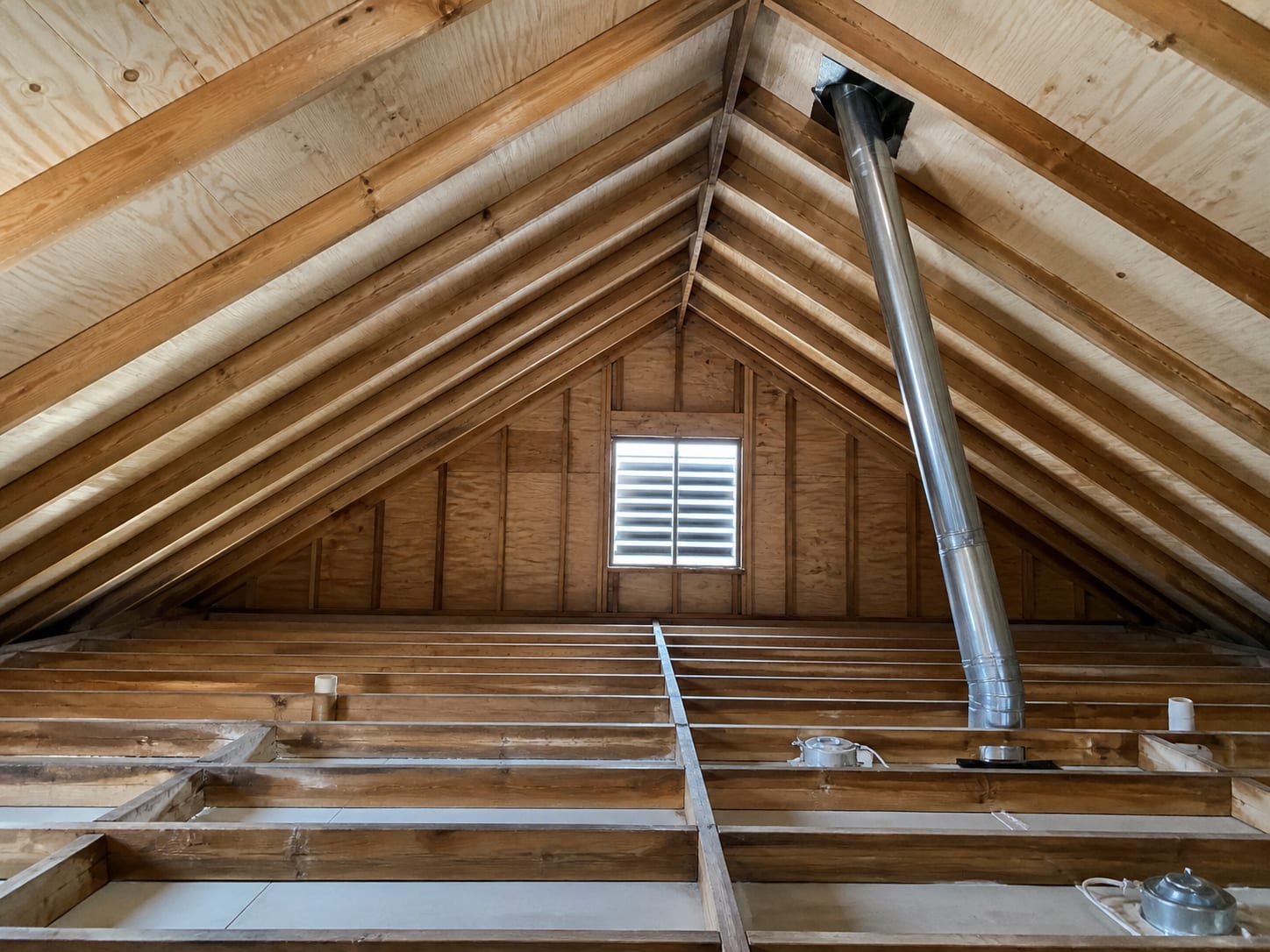
That matters here because a post 1980 house is generally a tighter house. Better air sealing and more insulation are good for energy and they change how moisture behaves: the building relies more on mechanical ventilation working correctly, and less on being leaky enough to dry itself out. A bath fan ducted into the attic in a draughty 1950s house is a smaller problem than the same mistake in a well sealed 1995 house, because in the second one the moisture has nowhere else to go.
Layer in the older stock, from the postwar boom between 1946 and 1948 and again in the 1960s, and Warren has attics from several eras with several ventilation strategies, some of them modified during later insulation upgrades. It is worth looking rather than assuming.
What the Work Involves
An Attic Job, Start to Finish
- 1
Assess the condition and the source
Including where every fan in the house actually terminates, which is the check most often skipped.
- 2
Decide the scope by area
The EPA treats a small area below roughly 10 square feet as generally occupant manageable, with larger areas warranting its remediation guidance.
- 3
Clean or remove by material
Sheathing and framing are usually cleaned. Affected insulation generally comes out.
- 4
Re-terminate the fans
To the outside, through the roof or a gable, confirmed by looking at the exterior termination.
- 5
Restore the intake
Clearing blocked soffits and fitting baffles so the ridge exhaust has something to draw from.
- 6
Seal the ceiling plane
Hatch, recessed fittings, top plates and service penetrations, which is where the humid air was arriving.
- 7
Close out with a record
What was found, what was done, and what was corrected.
Assess the condition and the source. Including where every fan in the house actually terminates, which is the check most often skipped.
Decide the scope by affected area. The EPA treats a small area below roughly 10 square feet as something an occupant can in most cases handle, and says a larger area or substantial water damage warrants consulting its remediation guidance.
Clean or remove as appropriate. Sheathing and framing are usually cleaned. Porous material that is affected, which in an attic mostly means insulation, generally comes out.
Correct the source and dry. Re-terminating fans to the outside, opening blocked soffits, air sealing the ceiling plane, restoring the intake and exhaust balance.
Close out with a record of what was found, what was done, and what was corrected.
On safety, the CDC advises that people with asthma, COPD or immune compromise should not be in a home while mold is being cleaned. An attic job is contained but it is still part of the house's air.
What It Means Mid Transaction
A lot of attic staining is found during a sale, which adds time pressure that the condition itself does not have.
Two things help. The first is that a documented remediation with the source corrected is a stronger position than an untouched attic and a discount, because the buyer's real question is whether it comes back. The second is that the correction is often modest: re-terminating a fan and clearing soffits is not a structural intervention.
Where regulated work follows, Warren's Construction Department administers the New Jersey Uniform Construction Code, permits are required for most work, and inspection requests must be made at least 24 hours ahead with no same day inspections. Straightforward attic cleaning and fan re-termination often does not reach that threshold, but the scope should be checked rather than assumed.
Keeping It From Coming Back
Every fan in the house discharging to the outside, confirmed by looking at the exterior termination rather than at the duct.
Soffit intake clear and matched to the exhaust at the ridge.
The ceiling plane sealed at the obvious leaks: hatch, recessed fittings, top plates.
Insulation at depth but not blocking the eaves.
None of that is exotic and all of it is cheaper than doing the cleanup twice.
What This Means When You Are Buying or Selling
A great deal of attic staining is found by somebody else's inspector, in the middle of a transaction, with a clock running. That changes the practical question from what it is to what to do about it in three weeks.
For a seller. The instinct is to negotiate a credit and let the buyer deal with it. Frequently the better position is to have it corrected and documented, for a specific reason: the buyer's real question is not what it costs to clean, it is whether it comes back. A cleaning with no ventilation correction answers neither, and a credit invites the buyer to imagine the worst. A documented job that names the source, corrects it, and shows the finished condition removes the uncertainty that was actually driving the negotiation.
For a buyer. Attic staining on its own is rarely a reason to walk away. It is very often a modest correction: re-terminating a fan, clearing blocked soffits, fitting baffles, sealing a few penetrations at the ceiling plane. What is worth establishing before you commit is whether the sheathing has been affected structurally, which is a different and much less common finding, and whether the moisture has been reaching insulation and ceiling below.
The question both parties should ask is the same one: where is the moisture coming from, and has it been corrected. Not what species it is, not how much of the deck is stained.
What documentation is worth having. A record of what was found, photographs before and after, a statement of the source and what was done about it, and confirmation of where fans now terminate. That file answers the question at the next sale too, which on a house that changes hands every seven or eight years is worth more than the job cost.
On timing. The correction itself is usually short. What can stretch a schedule is discovering that the affected area is larger than the hatch suggested, or that insulation has to come up across the whole flat to reach the air sealing work. It is worth having somebody look properly rather than pricing from a photograph in a report.
Attic Moisture, Quick Check
1. What is staining on attic sheathing usually caused by?
2. Where does a bathroom fan need to discharge?
3. What does blocked soffit ventilation stop?
Pick an answer to begin.
Frequently Asked Questions About attic mold remediation Warren NJ
Can mold be removed from an attic?
Yes. Sheathing and framing are cleaned, affected porous material such as insulation is removed, the space is dried and the moisture source is corrected. The correction is the part that determines whether it returns.
How much does it cost to remediate mold in an attic?
It is driven by the affected area, how much insulation has to come out, access, and what correcting the source requires. Re-terminating a bath fan and clearing soffits is a different job from an air sealing programme across the whole ceiling plane.
My roof does not leak. How did this happen?
Most attic staining is condensation rather than leakage. Warm, humid air from the house reaches the attic, meets a cold roof deck in winter, and condenses. The most common single cause is a bath or dryer fan discharging into the attic rather than outside.
Is mold considered uninhabitable?
There is no single threshold that makes a home uninhabitable, and it is not a determination a remediation company makes. An attic condition in particular is usually addressed as a repair rather than as a habitability question.
Do I have to replace the insulation?
Where it is affected, generally yes, because it is porous and cannot be cleaned through. It also has to come up in places to reach the air sealing work, so it is often replaced as part of correcting the cause rather than only because of the growth.
The inspector's report says black mold. Does that change the work?
No. The removal approach is the same regardless of appearance, and colour is not what determines the scope. What determines it is the affected area, the material, and where the moisture is coming from.
Final Thoughts
If an inspector or a roofer has flagged staining in your Warren attic, the useful next step is finding out where the moisture is arriving from, because that decides the whole scope. ExecPro Restoration & Cleaning will check the terminations, the intake, and the ceiling plane, and give you the correction alongside the cleanup. Call ExecPro Restoration & Cleaning at (888) 300-3772 or get in touch. Emergency mold and water damage services are available 24/7, Monday through Sunday. Related: mold inspection for establishing extent, and attic mold remediation for the service in general.
Attic Terms
Tap a term to see what it means.
Roof sheathing. The plywood or plank deck under the shingles, and the coldest surface in the attic in winter.
Serving Warren
ExecPro Restoration & Cleaning provides mold remediation services in Warren, NJ, from inspection and testing through removal, drying, and post-remediation verification. Call (888) 300-3772 for 24/7 emergency response.
Related Articles
Attic Mold Remediation in Robbinsville, NJ: Bath Fans, Dryer Ducts and 1980s to 2000s Roofs
Is the bathroom fan venting into the attic? Trace dark roof boards to a leak, condensation or exhaust before attic mold remediation in Robbinsville begins.
Attic Mold Remediation in Bridgewater, NJ: Roof Boards, Vents and Homes of Every Age
Before anyone disturbs the insulation, check whether dark roof boards mean a leak, condensation or a vent fan. Attic mold remediation in Bridgewater, NJ.
Attic Mold Remediation in Trenton, NJ: Old Roofs, Old Insulation and Houses That Sat Empty
Dark roof boards in an older house usually mean a leak, condensation or a fan venting into the attic. See how attic mold remediation in Trenton is scoped.