Attic Mold Remediation in Trenton, NJ: Old Roofs, Old Insulation and Houses That Sat Empty
Cal HewittPublished Updated
- attic mold remediation
- moisture source
- ventilation
- trenton nj
- new jersey
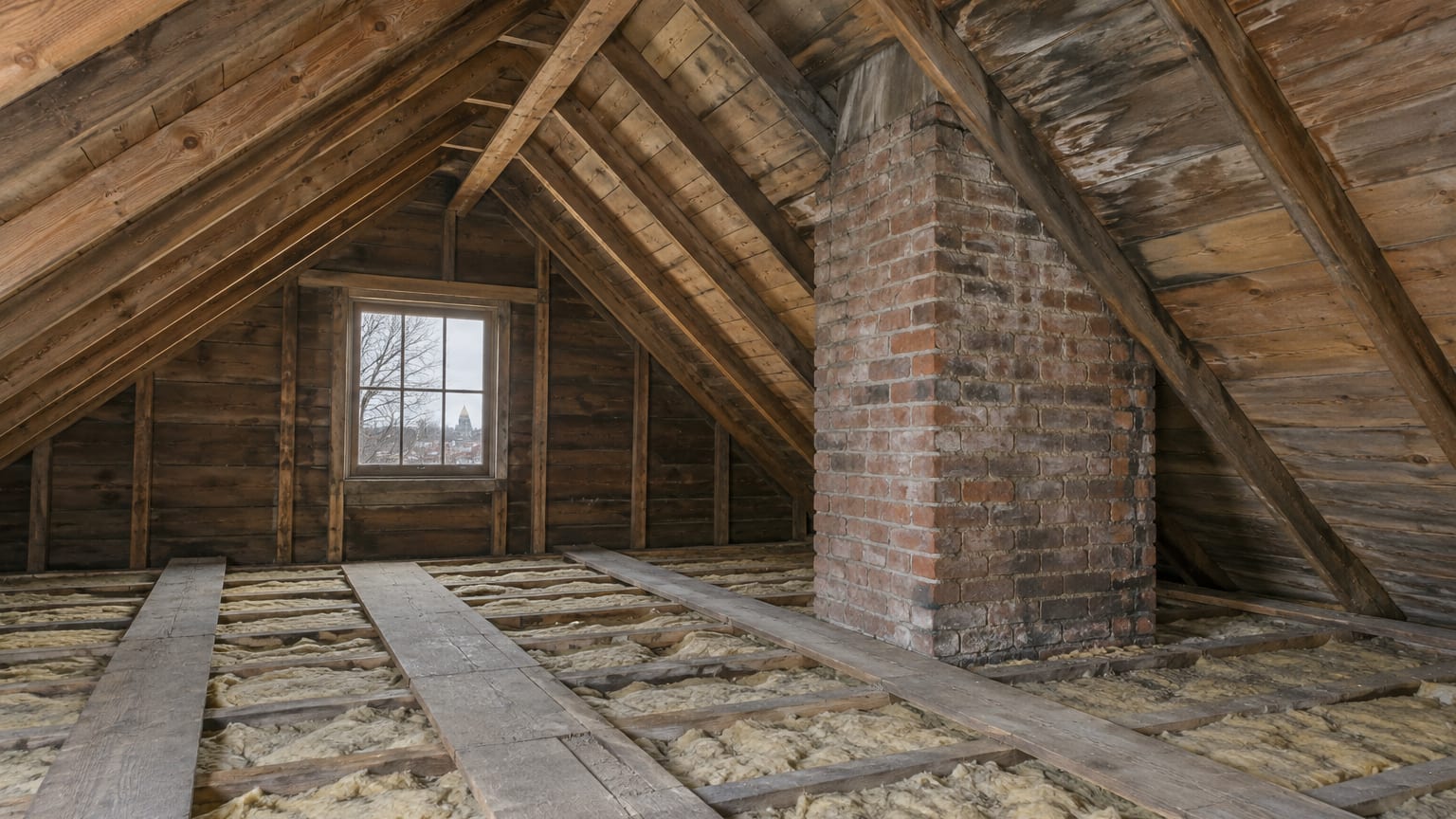
You looked up into the attic with a flashlight and saw dark staining on the roof boards or rafters, or a buyer's inspector wrote it into a report on an older house. Now you need to know whether the cause is an old roof leak, condensation on cold boards or a bathroom fan blowing into the attic, and that answer decides almost everything else. It decides what has to come out, whether the insulation can be touched, who fixes the cause and what the job will cost. Attic mold remediation in Trenton, NJ often involves houses from the colonial and industrial eras, with roof framing and insulation that nobody can vouch for. The good news is that the roof deck itself usually tells you where to start. Read on for how to read it, what a sound cleanup involves and which questions to put to any contractor.
Key Takeaways
Read the stain pattern first
Staining around penetrations, flashing and chimneys points to a leak, staining across the cold upper boards points to condensation, and staining near an exhaust discharge points to a fan.
The cause gets fixed or the mold returns
EPA says remediation is not complete until the moisture problem is fixed, so ask for an itemized estimate that separates cleanup from roof, vent and rebuild work.
Do not pull old insulation out on your own
If suspect asbestos material might be disturbed, New Jersey asbestos licensing and worker permits apply.
What the Stain Pattern on the Roof Boards Tells You
Mold in an attic follows moisture, and the way the staining is arranged shows where the moisture came from. Before anyone talks about removal, walk the roof deck with a good light, or ask the person doing the inspection to walk you through what they see. The common patterns are these:
- Around penetrations, flashing and chimneys: Staining that clusters around a vent pipe, a chimney or a valley usually means water is entering from the roof.
- Across the cold upper or north-facing boards: Staining spread over the upper boards suggests condensation, which is warm indoor air reaching cold sheathing (the roof boards under the shingles) and turning to water.
- Near an exhaust discharge: Staining concentrated around where a bathroom or kitchen fan ends points to that exhaust blowing moist air into the attic instead of outdoors.
- Wet or compressed insulation: Insulation that is damp, flattened or stained suggests air leaking up from the rooms below or a leak that has run for a long time.
Hover or tap a row to highlight it.
| Where the staining is | What it usually means |
|---|---|
| Around penetrations, flashing and chimneys | Water is entering from the roof |
| Across the cold upper or north-facing boards | Condensation, where warm indoor air reaches cold sheathing and turns to water |
| Near an exhaust discharge | A bathroom or kitchen fan is blowing moist air into the attic instead of outdoors |
| Wet, flattened or stained insulation | Air is leaking up from the rooms below, or a leak has run for a long time |
Two or more of these can be true at once, which is why a single stain should never be treated without an inspection. EPA's guidance notes that hidden mold can sit in roof materials above ceilings where there are roof leaks or too little insulation. A clean-looking attic can still have growth behind insulation or above the ceiling below.
Other moisture sources are worth checking too: inadequate intake or exhaust ventilation, a storm that damaged shingles or flashing and was followed by slow drying, and air leaking from the living space into the attic. The right question for a contractor is not "can you clean this?" but "what is making the boards wet, and how will you prove it is fixed?"
What Should You Do in the First Hour?
If you have found growth or a musty smell, the next hour is about not making it worse. Do not touch mold with bare hands, and do not disturb the insulation more than you have to. Avoid climbing into an attic that is wet or unstable underfoot. Keep people with asthma, serious allergies or other breathing concerns out of the attic.
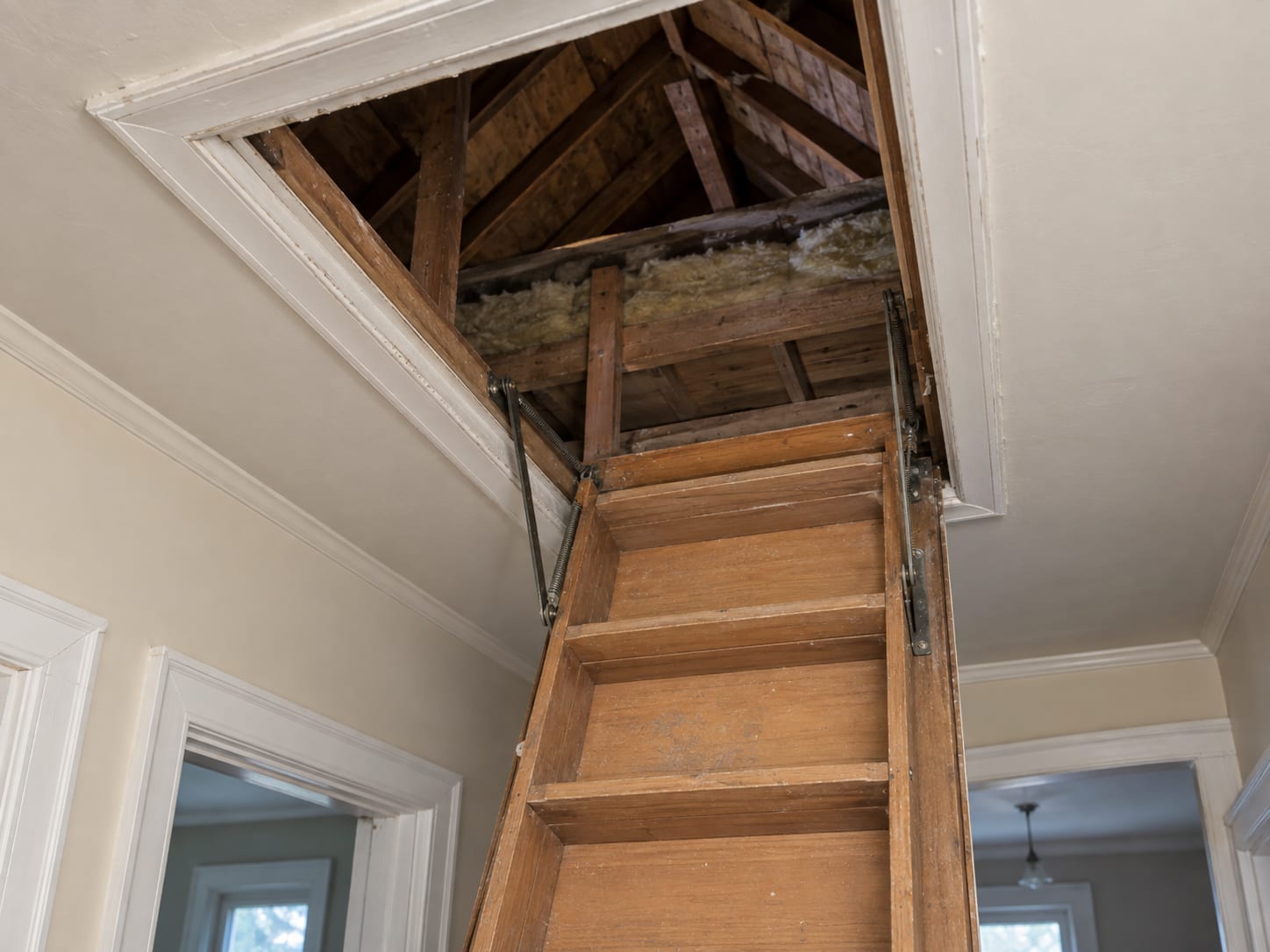
Do not run fans over active growth, because moving air can spread spores. Do not run an HVAC system you suspect is contaminated. Photograph the roof, the ceiling stains, the insulation and any visible growth. If water is coming in through the roof right now, arrange safe temporary roof protection and a roof evaluation, and call your insurer promptly if the event may be a covered sudden loss.
The First Hour in an Attic With Growth
Keep your hands off
Do not touch mold with bare hands, and do not disturb the insulation more than you have to.
Stay out of a wet or unstable attic
Avoid climbing into an attic that is wet or unstable underfoot.
Protect people with breathing concerns
Keep anyone with asthma or serious allergies out of the attic.
No fans, no suspect HVAC
Moving air can spread spores, and a system you suspect is contaminated should not run.
Photograph everything
The roof, the ceiling stains, the insulation and any visible growth.
Deal with active water
If water is coming in through the roof now, arrange safe temporary protection and a roof evaluation, and call your insurer promptly.
EPA's guidance treats an area larger than about 10 square feet, substantial water damage, sewage or contaminated water, or a possibly contaminated HVAC system as a job for professionals. For a small, easy-to-reach spot with no electrical, structural or contaminated-water hazards, gloves, eye protection and a properly fitted N95 respirator are the minimum protection. By tomorrow, book an inspection that identifies the moisture source and maps the affected materials.
Why Does an Older Trenton House Need a Careful Look Before Anything Is Pulled Out?
Trenton's housing runs from colonial-era homes and industrial-era buildings to contemporary construction, according to the city's 2017 housing report. That same report names vacancy, abandonment, rental-condition and maintenance challenges in parts of the city. It is a dated planning document, and it does not say that empty houses grow attic mold. What it does tell a buyer or an owner is that an attic in an older Trenton house may have a roof frame, insulation and repair history that nobody can vouch for.
Older wood framing, plaster ceilings, historic roof details and old insulation all call for a careful inspection before removal. Some of the water paths in those houses are hidden inside ceilings and eaves, so the person doing the work should look at the adjoining ceilings, the ductwork and the electrical components as well as the boards. If a buyer's inspector flagged the attic on a house that sat empty, ask for the moisture source to be identified before the closing timeline drives the decision. A stain on the boards does not tell you whether the roof is leaking today, and a fresh coat of primer on the ceiling below does not tell you it stopped.
In dense blocks of attached or closely spaced homes, access can also shape the work. Narrow lots can complicate dumpster placement, roof access and any change to exterior venting. Ask any contractor how they will get materials out of the attic and off the property.
How Is the Roof Deck Cleaned, Dried and Checked Again?
A sound attic job follows a sequence, and each step protects the next one:
- Find the source: Identify roof leaks, condensation, ventilation failures, plumbing or exhaust pathways and storm entry points.
- Inspect the attic and the rooms below: Look at the sheathing, rafters, insulation, ductwork, electrical components and adjoining ceilings.
- Map the growth and the moisture: Record where growth is visible and where materials are wet.
- Decide what can be cleaned and what must go: Porous materials such as moldy insulation and damaged ceiling material are usually removed. Solid framing can often be cleaned and dried.
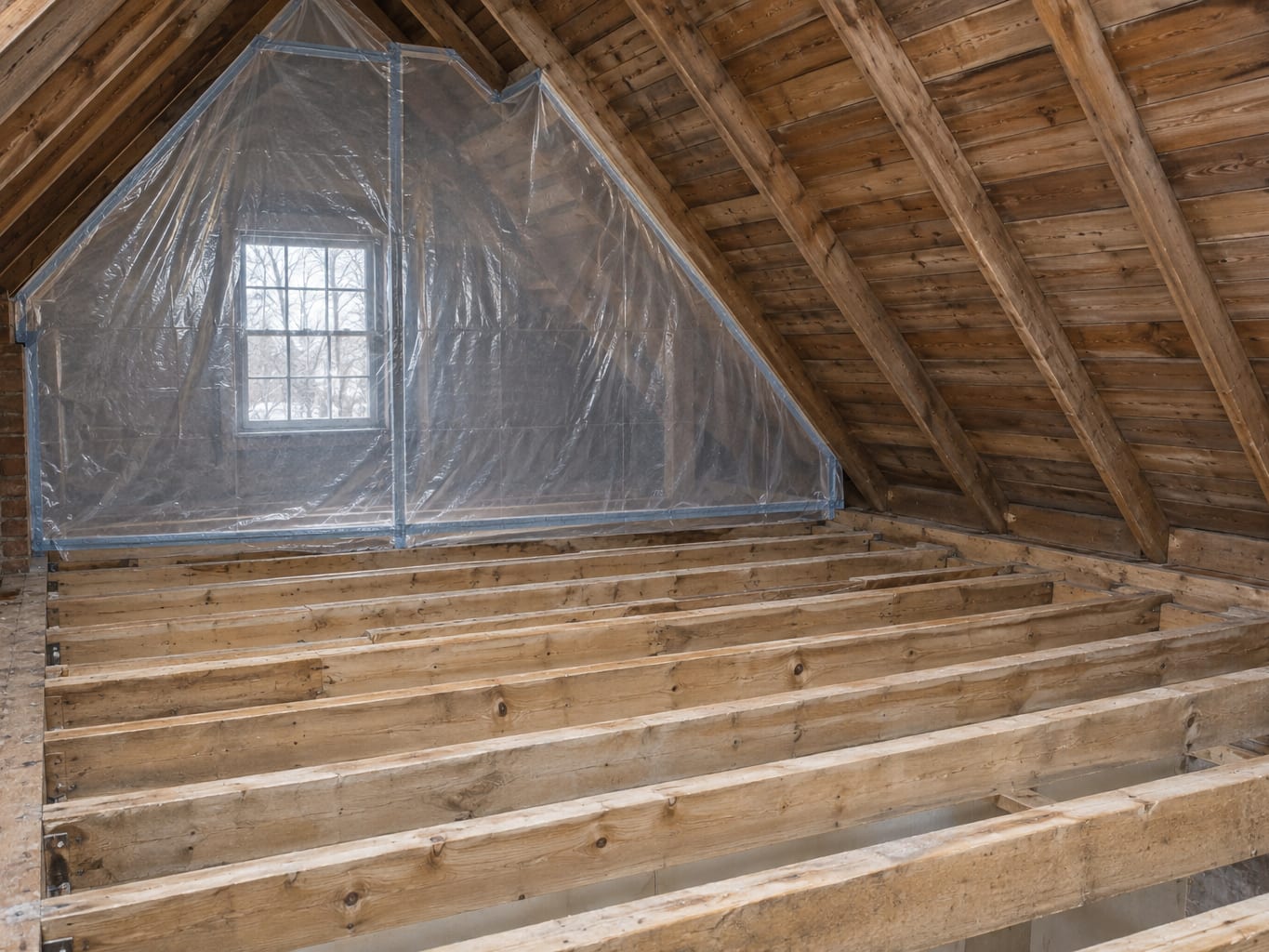
- Set up containment: Plastic barriers and filtered air protect the living space from dust and spores while work is under way.
- Protect the workers: Respiratory, eye and skin protection is part of the job.
- Remove and clean: Unsalvageable materials are removed, and salvageable framing is cleaned and dried.
- Correct the source: The roof, flashing, vent, exhaust or air leak is repaired.
- Reinspect: The attic is checked for remaining moisture, odor, visible growth and concealed contamination.
- Restore: Removed insulation, drywall, roof components or finishes are replaced.
- Verify when someone needs it: A buyer, lender, insurer or property manager may want post-remediation verification testing.
How an Attic Mold Job Runs
- 1
Find the source
Identify roof leaks, condensation, ventilation failures, plumbing or exhaust pathways and storm entry points.
- 2
Inspect the attic and the rooms below
Look at the sheathing, rafters, insulation, ductwork, electrical components and adjoining ceilings.
- 3
Map the growth and the moisture
Record where growth is visible and where materials are wet.
- 4
Decide what can be cleaned and what must go
Moldy insulation and damaged ceiling material are usually removed; solid framing can often be cleaned and dried.
- 5
Set up containment
Plastic barriers and filtered air protect the living space from dust and spores.
- 6
Protect the workers
Respiratory, eye and skin protection is part of the job.
- 7
Remove and clean
Unsalvageable materials are removed, and salvageable framing is cleaned and dried.
- 8
Correct the source
The roof, flashing, vent, exhaust or air leak is repaired.
- 9
Reinspect
The attic is checked for remaining moisture, odor, visible growth and concealed contamination.
- 10
Restore
Removed insulation, drywall, roof components or finishes are replaced.
- 11
Verify when someone needs it
A buyer, lender, insurer or property manager may want post-remediation verification testing.
EPA says remediation is not complete until the moisture problem is fixed, the mold is removed, visible growth and moldy odors are gone and the area can be reoccupied without health complaints, as described in its guide for buildings. Ask any contractor to show you where in the estimate the source repair sits.
One detail about timing matters. The 24 to 48 hour drying window that EPA describes applies to newly wet materials. Mold that is already growing on the boards needs cleaning and removal, not just drying. Existing growth, hidden growth, contaminated water, structural repairs or reconstruction can stretch a project from several days to multiple weeks, so ask for a written schedule that separates inspection, drying, remediation, source repair, verification and reconstruction.
Is the Old Insulation Safe to Disturb?
Treat old insulation as something to inspect before you move it. Walking through insulation, brushing roof sheathing and cutting materials can all disturb spores, which is one reason we use containment and protective equipment. Wet, moldy insulation is normally removed and replaced, and that decision belongs to the person who has looked at it.
There is a second reason to hold off on a do-it-yourself pull. In older houses, some insulation and other attic materials may contain asbestos. If suspect asbestos-containing material may be disturbed, New Jersey asbestos licensing and worker permits apply, and the state's asbestos program is the place to confirm what the work requires. Say so at the start of any estimate call, and ask how the contractor handles suspect material.
What Sets the Price of Attic Mold Remediation?
Nobody can quote a fair Trenton attic price without seeing the attic, so start with what moves the number:
- Size and contamination: The attic's square footage and the surface area actually affected.
- Insulation: How much has to be removed and replaced, and what type it is.
- Structure: Whether sheathing, rafters, trusses or ceiling materials are affected.
- Access: How easily workers and materials can move through the attic entry and out of the property.
- Containment and equipment: Filtered air, negative air and other specialized equipment when the job needs them.
- Hidden growth: Mold behind ceilings or insulation that only shows up once work starts.
- Source repair: Roof or flashing repair, gutter work, ventilation changes and exhaust rerouting.
- Other trades: Electrical, HVAC or ductwork involvement, and any structural damage.
- Verification and rebuild: Post-remediation testing, then replacement insulation, drywall and finishes.
Hover or tap a row to highlight it.
| Cost driver | What it covers |
|---|---|
| Size and contamination | The attic's square footage and the surface area actually affected |
| Insulation | How much has to be removed and replaced, and what type it is |
| Structure | Whether sheathing, rafters, trusses or ceiling materials are affected |
| Access | How easily workers and materials can move through the attic entry and out of the property |
| Containment and equipment | Filtered air, negative air and other specialized equipment when the job needs them |
| Hidden growth | Mold behind ceilings or insulation that only shows up once work starts |
| Source repair | Roof or flashing repair, gutter work, ventilation changes and exhaust rerouting |
| Other trades | Electrical, HVAC or ductwork involvement, and any structural damage |
| Verification and rebuild | Post-remediation testing, then replacement insulation, drywall and finishes |
A small surface cleaning and a full attic job with insulation removal, roof repair, framing treatment and rebuild are different projects, so do not compare their totals. Ask for an itemized estimate that separates inspection, containment, removal, disposal, source correction, replacement materials, testing and reconstruction. That separation also makes it easy to see which lines belong to remediation and which belong to a roofer or a rebuild. We can coordinate remediation, testing and build-back services under one plan when you want a single point of contact.
What to Ask Before You Hire
What is making the boards wet
And how will the contractor prove it is fixed.
Where the source repair sits
Ask to see it as its own line in the estimate.
How suspect insulation is handled
Say at the start if asbestos-containing material may be disturbed.
How materials leave the property
Narrow lots can complicate dumpster placement and roof access.
An itemized estimate
Inspection, containment, removal, disposal, source correction, replacement materials, testing and reconstruction on separate lines.
A written schedule
Separating inspection, drying, remediation, source repair, verification and reconstruction.
Who Fixes the Cause, and What Does the City Need to Know?
Someone has to own the fix for the roof, the vent or the exhaust, and it helps to know who that is before the remediation starts. A roofer, an HVAC contractor or a general contractor may handle that piece, and the remediation team should coordinate with them so the boards are not re-wetted after cleaning.
New Jersey does not run a state certification program for companies that inspect, test or remediate mold. The Department of Health keeps lists of consultants, laboratories and remediation firms, but it does not endorse or qualify them, so the written scope and the documentation you receive are your best measures of a contractor.
The permit question depends on the work, not on the presence of mold. Roof reconstruction, structural repair, electrical changes, HVAC changes and new exterior vent openings may need approval, so confirm the plan with the City of Trenton Construction Code Office, using the state's construction permit information as a guide. If the house is a designated landmark or in a historic district, ask the Landmarks Commission before any exterior vent or roof change, because Trenton's historic ordinance can require a Certificate of Appropriateness for exterior work. A house can be historic without every attic repair needing that review; the address and the proposed change decide.
How Do You Get the Insurance Question Answered Early?
Coverage depends on your policy and on the cause of the loss. New Jersey's Department of Banking and Insurance says homeowners policies generally cover sudden and accidental water damage but exclude flood damage. A sudden covered leak is treated differently from long-term seepage or condensation, so what the inspection says about the cause matters to the claim.
Call your insurer early, describe what you have seen and ask about the cause-of-loss requirement, any mold sublimit, the deductible and whether tear-out, testing and rebuild are covered. Keep photographs, moisture readings, descriptions of the affected materials, invoices, drying records, disposal records and any verification documents together in one folder. Keep inspection, remediation and reconstruction as separate lines so a reviewer can see each one on its own.
Venting, Air Sealing and Roof Repairs That Keep the Boards Dry
There is no chemical shortcut that permanently kills mold. EPA says mold control depends on moisture control, and dead mold can still cause allergic reactions, so killing it without removing it falls short. In an attic, lasting control usually means repairing the roof or flashing that leaked, sending bathroom and kitchen exhaust outdoors, correcting the ventilation and fixing the insulation.
Air sealing matters as much as venting. Warm, moist air that leaks up from the rooms below meets cold roof boards and condenses, so sealing the gaps around ceiling penetrations and attic hatches, and keeping insulation fluffed and dry, works together with intake and exhaust vents. After the work, ask the contractor to reinspect the deck and confirm that visible mold, moldy odors and active moisture have been addressed, and keep those records with your others.
Attic Mold, Quick Check
1. What does staining spread across the cold upper boards usually suggest?
2. When does EPA say remediation is complete?
3. Does the 24 to 48 hour drying window cover mold that is already growing on the boards?
4. What applies if suspect asbestos material may be disturbed?
5. Does New Jersey run a state certification program for mold remediation companies?
Pick an answer to begin.
Frequently Asked Questions About Attic Mold Remediation Trenton NJ
What should I do first if I find dark growth on my attic boards?
Do not touch it with bare hands or disturb the insulation. Stop any water source if you can do it safely, photograph what you see and keep people with breathing concerns away. Then arrange an inspection that identifies the moisture source.
Will insurance pay for attic mold remediation?
It depends on the policy and the cause. Sudden, accidental water damage is generally treated differently from long-term seepage, condensation or flood. Report the loss promptly and ask your insurer about the mold sublimit, the deductible and rebuild coverage.
Is attic mold remediation worth the cost?
It is worth it when the moisture source is corrected and affected materials are properly cleaned, removed, dried and restored. EPA states that cleaning without fixing the moisture problem will likely allow the mold to return.
Attic Mold Terms
Tap a term to see what it means.
Sheathing. The roof boards under the shingles.
Final Thoughts
Dark staining in an older Trenton attic is a moisture question first and a cleanup question second. Read the stain pattern, identify the source, ask what comes out and what can be cleaned, and hold any suspect insulation for a licensed asbestos check. Get the estimate itemized so cleanup, roof and vent repair and rebuild each have a line of their own.
Handled in that order, the attic ends up dry, documented and easier to explain to a buyer, a lender or an insurer. The same records help you show that the cause was fixed and not just covered over.
If you own or are buying an older home in Trenton, NJ, ExecPro Restoration & Cleaning can inspect the attic, identify the moisture source and give you an itemized plan. We handle mold remediation, water damage restoration and rebuild work, so the roof deck, the insulation and the ceiling below can be handled together. Call us at (888) 300-3772 or contact us to schedule an inspection.
Serving Trenton
ExecPro Restoration & Cleaning provides mold remediation services in Trenton, NJ, from inspection and testing through removal, drying, and post-remediation verification. Call (888) 300-3772 for 24/7 emergency response.
Related Articles
Attic Mold Remediation in Robbinsville, NJ: Bath Fans, Dryer Ducts and 1980s to 2000s Roofs
Is the bathroom fan venting into the attic? Trace dark roof boards to a leak, condensation or exhaust before attic mold remediation in Robbinsville begins.
Basement Mold Remediation in Trenton, NJ: Old Masonry Cellars and Summer Rain
Finding growth on a masonry cellar wall starts with the water path. How old Trenton cellars are cleaned and dried, and what to fix so it does not return.
Attic Mold Remediation in Bridgewater, NJ: Roof Boards, Vents and Homes of Every Age
Before anyone disturbs the insulation, check whether dark roof boards mean a leak, condensation or a vent fan. Attic mold remediation in Bridgewater, NJ.