
Flood Damage Cleanup in Warren, NJ: When the Water Came From Outside
Cal HewittPublished
- flood damage cleanup
- contaminated water
- floodplain
- warren nj
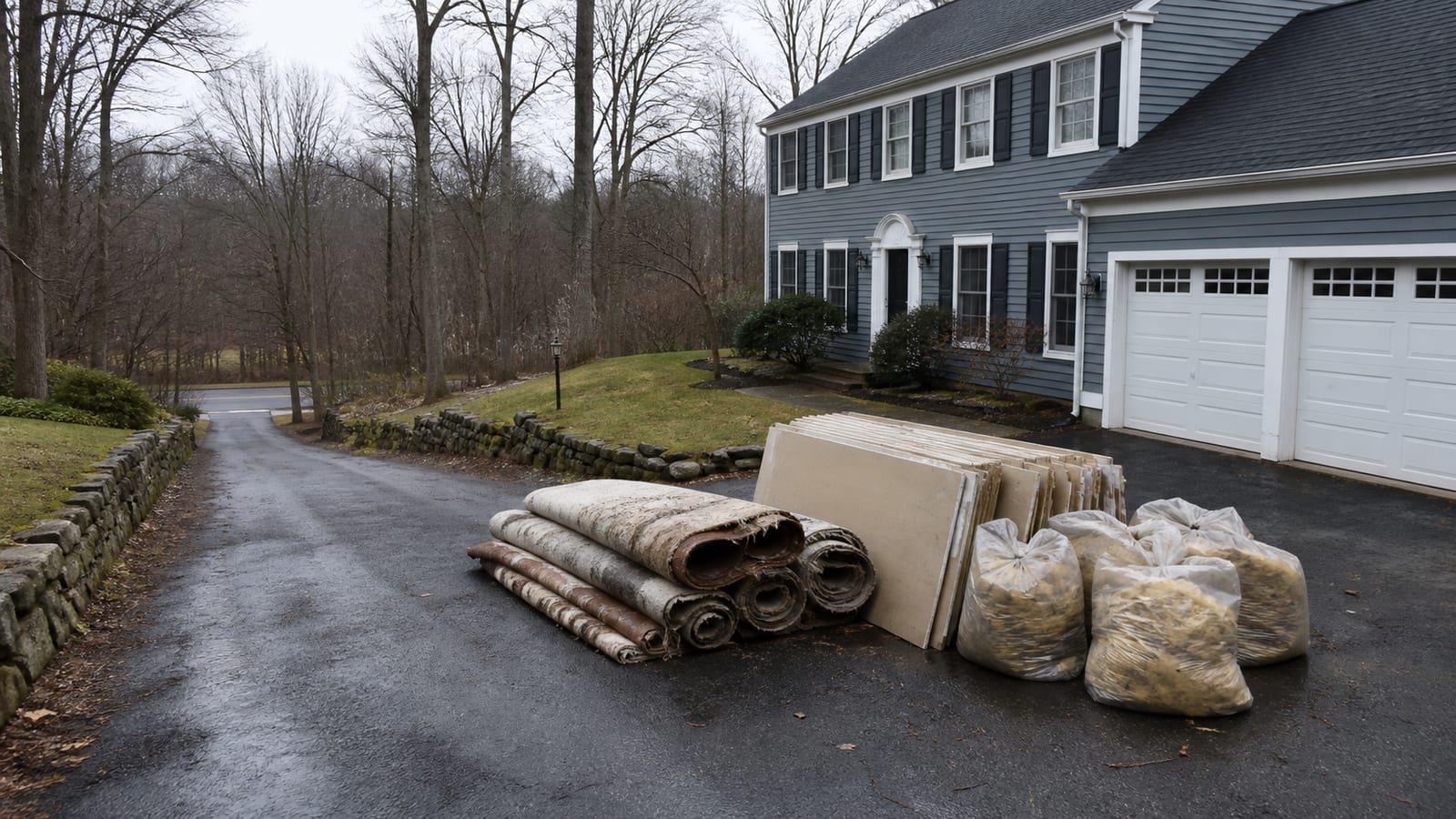
Water that has crossed ground before it reached your building is a different job from a pipe that let go upstairs, and the difference is not about volume. It is about what came in with it. That single distinction decides what leaves the house, what can be cleaned, whether the HVAC can run, and how long before anything closes up again. If water arrived from outside your Warren property, this is what changes and why.
Key Takeaways
The source, not the depth, sets the job
the EPA states floodwater can bring biological and chemical contaminants indoors, so this is not treated as a clean water dry-out.
Porous material that took outside water generally goes
carpet, padding, upholstered furniture, mattresses, paper and wall coverings are discard candidates regardless of how they look.
Assume growth past roughly 24 to 48 hours
the EPA's flooded home guidance says to assume mold if the building and contents were not dried inside that window.
Clean surfaces before disinfecting
, follow the product label, and never mix bleach with other chemicals.
The HVAC stays off
until cleaning, drying and any needed repairs are finished.
Being outside a mapped flood zone is not the same as being safe from this
, and in Warren that is a lot ratio question rather than a townwide one.
What Came In With the Water
After Outside Water Reaches a Building
- 1
Do not enter until it is safe
No electrical equipment in standing water, and the electrical system checked before it is re-energised.
- 2
Document the water line first
The height the water reached becomes impossible to establish once the room is cleared.
- 3
Remove standing water and debris
Along with material that cannot be cleaned and dried.
- 4
Clean, then disinfect
In that order. Disinfectant applied over soil does very little, and bleach is never mixed with other chemicals.
- 5
Open the trapped spaces
Doors, windows where safe, cabinets and interior doors, so enclosed volumes can dry.
- 6
Dry with attention to growth
Fans and dehumidifiers used so that air movement does not spread what is already there.
- 7
Leave the HVAC off
Until cleaning, drying and any needed repairs are complete.
Water from a supply line is clean when it starts. Water that has run across a driveway, through a yard, over a road or up from a low spot has picked things up on the way. The EPA is explicit that floodwater can carry biological and chemical contaminants indoors, and that is the reason a flood response is not a faster version of a burst pipe response.
The practical consequence sits in your rooms. Material that can be cleaned and dried can often stay. Material that is absorbent and has taken contaminated water is a discard candidate even where it looks recoverable: carpet and its padding, upholstered furniture, mattresses, paper products, wall coverings, and drywall and insulation that were wetted. That is not a contractor being cautious with your money. It is that those materials cannot be cleaned through, only cleaned on the surface.
The other consequence is sequence. Surfaces are cleaned before a disinfectant is applied, because disinfectant on top of soil does very little. Product labels are followed, and bleach is never mixed with other chemicals.
Where This Happens in Warren
Warren's exposure is specific rather than general, and the Township documents it itself.
Township material identifies riverine and palustrine wetlands along the Middle Brook and Passaic floodplains. At Glenhurst Meadows on Mountain Avenue, the Township records floodplain meadows, riparian zones, wetlands, five ponds and Passaic River access, and states plainly that the red and green trails there are no longer maintained because of frequent flooding. Its acquisition preserved more than 100 acres of Passaic floodplain and uplands.
That is a municipality describing its own low ground in its own words, and it is more useful than any general statement about flood risk. It says the water has somewhere it reliably goes.
The ridges add the other half. The Township describes soils with low percolation and high runoff, and the landform drops roughly 370 feet from the Second Watchung down to where the Passaic and Middle Brook leave the Township. Water moves fast off the high ground and gathers in the low, and a property's exposure is about where it sits along that path.
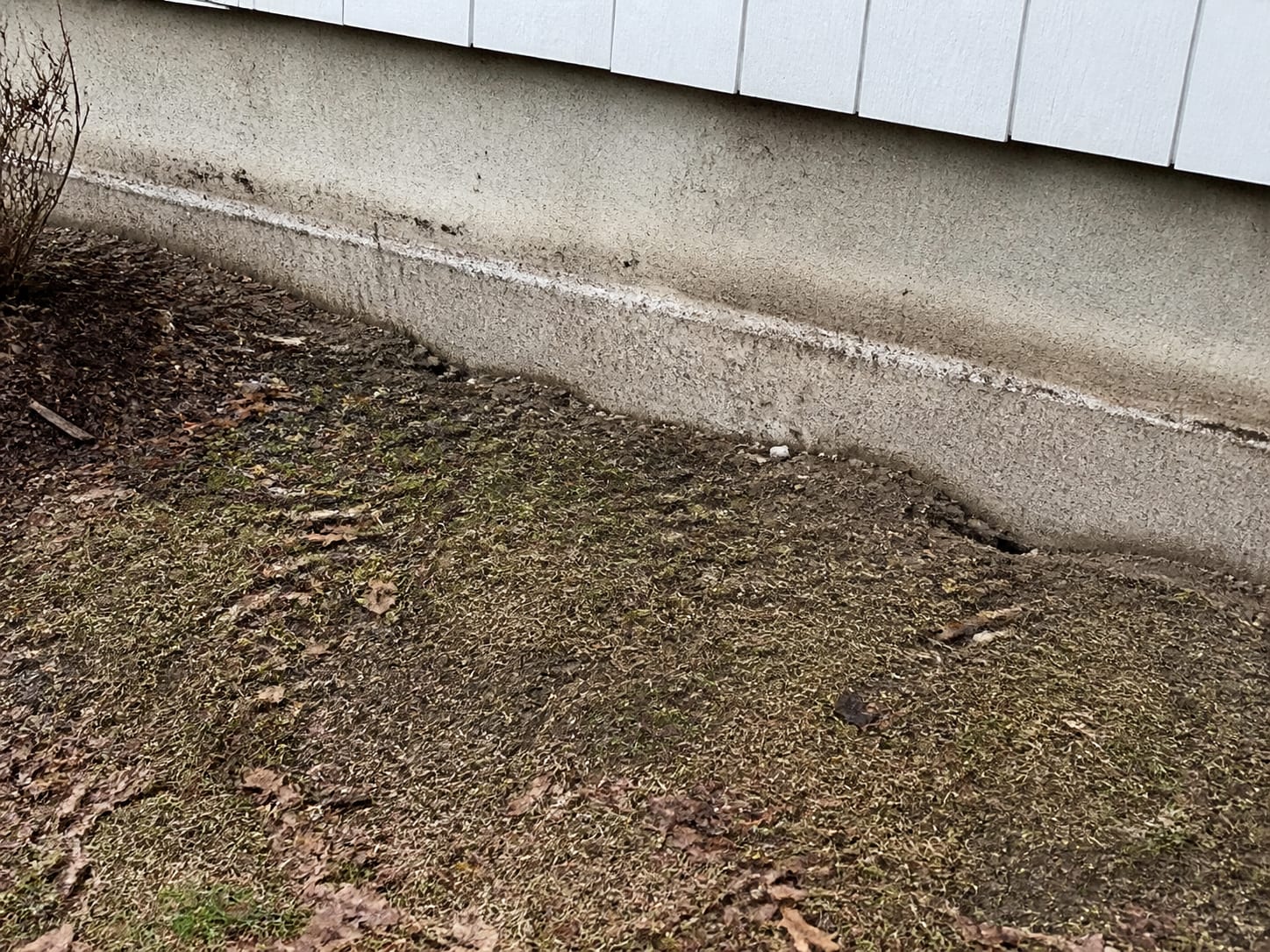
Which is why a mapped flood zone is a starting point rather than an answer. The Township's own flood information directs owners to FEMA mapping and USGS water data for parcel specific review. Plenty of water that gets into buildings here is runoff finding a low spot or a foundation in its way, and that does not require a designated zone to happen.
The Sequence After an Outside Water Event
Do not enter until it is safe. Do not operate electrical equipment in standing water, and have the electrical system checked before it is re-energized.
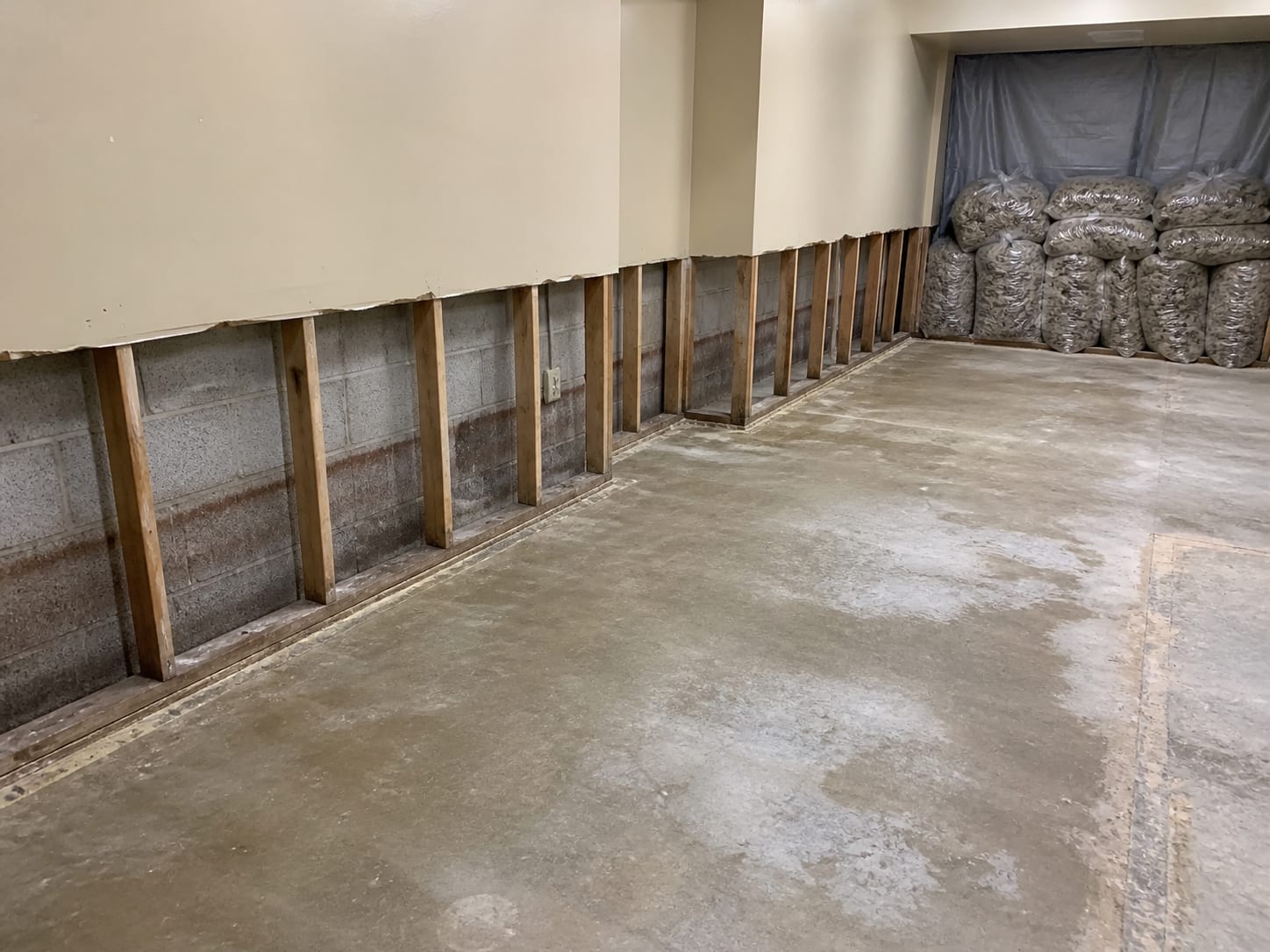
Document the water line and the damaged contents before anything is disposed of. The height the water reached is a fact that becomes impossible to establish once the room is cleared, and it is the fact everything else is measured against.
Remove standing water, debris, and material that cannot be cleaned and dried.
Clean, then disinfect the surfaces that remain, in that order.
Dry and verify. Open doors and windows where it is safe to do so, open cabinets and interior doors so trapped spaces can dry, and use fans and dehumidifiers with attention to any visible growth so that air movement does not spread it.
Leave the HVAC off until cleaning, drying and repairs are complete.
Close nothing until it is demonstrably dry, measured rather than judged.
Cleanup, Repair, and the Line Between Them
Removal and drying can be urgent and are not permitted work. Reconstruction, alteration, fill, or other development in a regulated area is a separate question and it does go through the Township.
Warren requires its Floodplain Administrator to review development permits for location in a flood hazard area and to coordinate with the Construction Official. The Township's own FAQ says permits are required for most construction activity and that inspections are not same day, asking for appointments at least 24 hours ahead. A flood hazard area application requires site and construction documents.
None of that slows down getting water out of a building tonight. It shapes what happens in week three, and knowing it early is the difference between a schedule and a surprise.
What to Keep, for the Claim and for Later
Photographs before cleanup, including the water line on the wall. An itemized list of what was removed. Moisture readings over time. Records of what equipment ran and for how long. The source of the water, as far as it can be established.
Whether or not a claim is involved, that set is what answers questions from a buyer, an inspector or an adjuster a year from now, and none of it can be reconstructed after the fact.
Preventing the Next One
For runoff driven events, which is most of what happens here, the measures that hold are outside the building: gutters and downspouts discharging well away from the foundation, grading that moves water away rather than holding it, and attention to how water from uphill crosses the property in heavy rain. Where a low spot on the lot is doing the collecting, that is a drainage question rather than a basement question.
For properties near the floodplain edges, the realistic goal is limiting what a water event reaches: keeping absorbent storage off the floor of a lower level, and thinking about finishes in terms of what happens if they get wet.
What to Do With the Contents
The building gets most of the attention and the contents cause most of the grief, because they are where the decisions feel personal rather than technical.
The straightforward losses. Upholstered furniture, mattresses, and anything with a fabric or foam core that took floodwater is a discard candidate. They cannot be cleaned through, and the fact that they look recoverable when dry is exactly the problem. Particle board and MDF furniture that has wicked water swells and does not come back.
The recoverable. Hard goods, sealed ceramics, glass, metal and solid timber can generally be cleaned. Sealed plastic containers that stayed closed usually protected what was inside them, which is a strong argument for how you store things in a lower level in the first place.
The difficult middle. Photographs, documents and textiles with personal value. These are frequently salvageable if they are addressed quickly, and the enemy is time rather than the water. Getting them out of the humid room and somewhere dry and cool, spread out rather than stacked, buys days. Specialist document and photograph recovery exists and is worth asking about before anything is thrown away.
Electronics and appliances that were touched should not be switched on to test them. Have them checked before they are powered, because that is a safety question rather than a functionality one.
Photograph everything before it moves, including what is underneath and behind. The contents list is the part of a claim most often reconstructed from memory, which is to say badly.
A note on storage. After a flood event, the most useful change most Warren owners make in a lower level is not structural. It is getting absorbent storage off the floor and into sealed containers on shelving, so that the next event, if there is one, costs a cleanup rather than a contents loss.
Frequently Asked Questions About flood damage cleanup Warren NJ
How is this different from a burst pipe?
The source. Water that has crossed ground can carry biological and chemical contaminants indoors, so absorbent material that took it is generally removed rather than cleaned, and surfaces are cleaned before being disinfected. A clean supply line failure does not carry that constraint.
My property is not in a flood zone. How did this happen?
Mapped zones describe one kind of risk. In Warren a great deal of water arrives as runoff off the slopes onto soils the Township describes as low percolation and high runoff, and it collects wherever the ground lets it. The Township directs owners to FEMA mapping and USGS data for parcel specific review, which is the right level to ask the question at.
What does a restoration company do after a flood?
Makes the property safe, documents the water line and contents, removes standing water and unsalvageable material, cleans and disinfects what remains, isolates unaffected areas, then dries the structure and verifies it before anything is closed.
Can I save the carpet?
Where the water came from outside, usually not. Carpet and padding are on the standard discard list because they cannot be cleaned through. Hard, nonporous surfaces are a different matter and can often be cleaned and kept.
How long does drying take?
Longer than removal, and it depends on what is concealed. The 24 to 48 hour figure people quote is about when to assume growth, not about when a building is dry. Dryness is confirmed with a meter.
Do I need a permit to clean up?
No. If reconstruction, alteration or fill follows in a regulated flood hazard area, that is development and the Floodplain Administrator reviews it with the Construction Official, with inspection appointments made at least 24 hours ahead.
Final Thoughts
If water has come into your Warren property from outside, the first questions are whether it is safe to be in there and what the water was. ExecPro Restoration & Cleaning can answer both on site, document the water line before anything moves, and tell you what is coming out before it does. Call ExecPro Restoration & Cleaning at (888) 300-3772 or get in touch. Emergency mold and water damage services are available 24/7, Monday through Sunday. If there is standing water right now, start with emergency water extraction; for the drying and repair that follow, see water damage restoration.
Flood Terms
Tap a term to see what it means.
Floodwater. Water that has crossed ground, which the EPA notes can bring biological and chemical contaminants indoors.
Serving Warren
ExecPro Restoration & Cleaning provides mold remediation services in Warren, NJ, from inspection and testing through removal, drying, and post-remediation verification. Call (888) 300-3772 for 24/7 emergency response.
Related Articles
The Address Answers It, Not the Town: Flood Damage Cleanup in Alpine, NJ
Flood cleanup in Alpine turns on three separate findings: what the parcel actually shows, what the water actually was, and what the rebuild will actually need.
Flooded Basement Cleanup in New Jersey: The Order of Operations
Flooded basement cleanup in NJ goes in a set order: safety, source, photos, water, wet materials, drying, proof of dry. Here is each step and who to call.
Tidal Flooding at the Jersey Shore: What Saltwater Does to a Home
Tidal water from the September nor'easter came into a Jersey Shore home? What saltwater does to wiring, HVAC and framing, and what to do first.