The Address Answers It, Not the Town: Flood Damage Cleanup in Alpine, NJ
Cal HewittPublished
- flood damage cleanup
- contaminated water
- palisades
- alpine nj
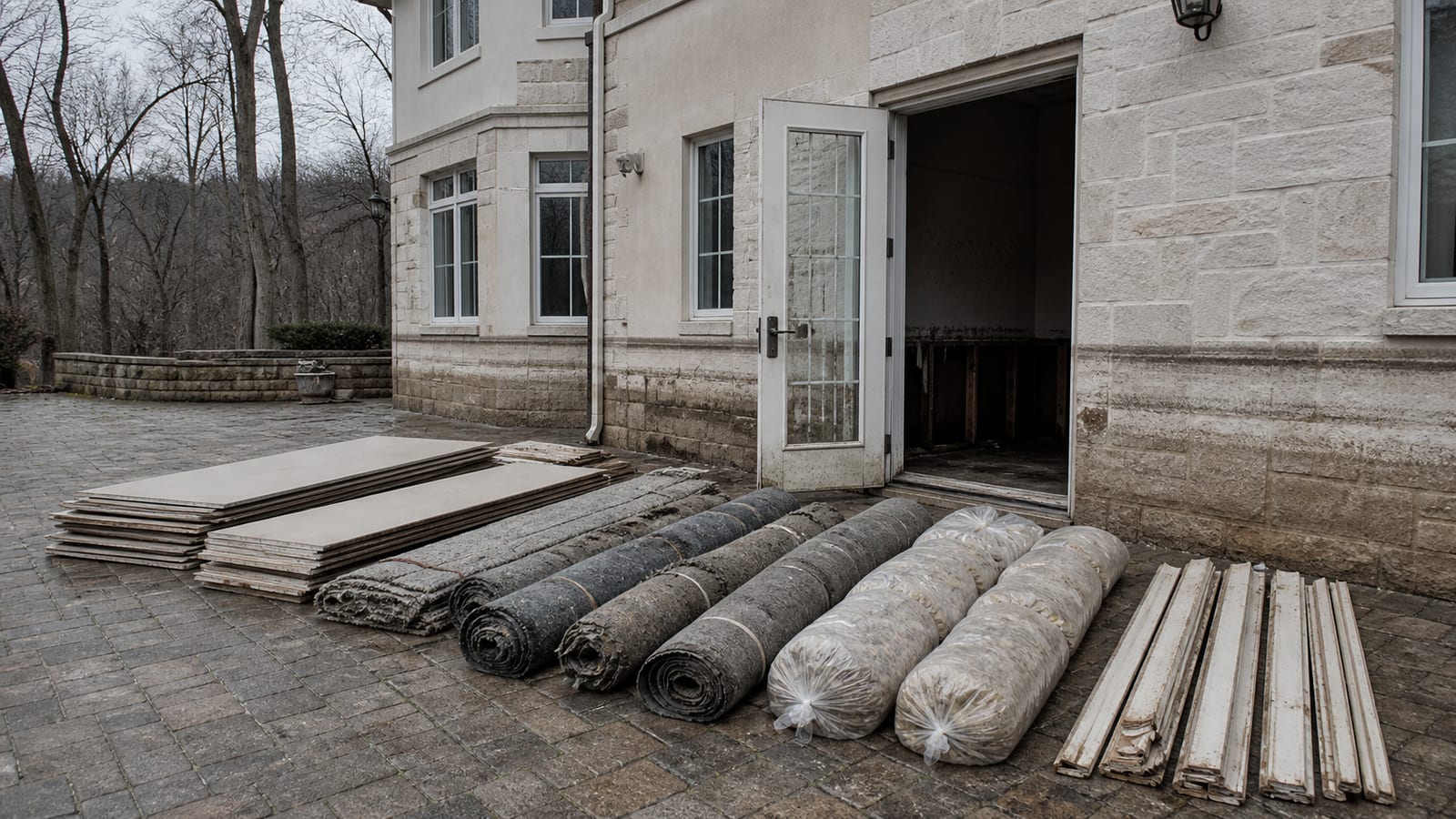
Alpine covers a stretch of the Palisades where the state's park description puts roughly 2,500 acres of Hudson River shorefront, uplands and cliffs inside the borough, with Henry Hudson Drive running between the cliffs and the river and the parkway along the top. In a borough shaped like that, no single sentence about flooding is true for every property. The house on the upland and the structure near the river corridor are answering different questions, and a townwide statement about either one is useless to the person standing in a wet room.
So a flood cleanup here starts with three findings rather than a script. What does this specific parcel actually show. What was the water, in the sense that decides whether it can be handled as clean. And what will the repair need once the drying is finished. Collapse those into one job called flood cleanup and something important gets skipped, usually the second one.
Key Takeaways
The parcel is the unit of analysis
New Jersey's flood indicator tool is a screening aid that does not calculate actual risk, and it says no indicator does not mean no risk.
Floodwater is a contamination finding
EPA says it can carry sewage and other harmful substances, and CDC says drywall and insulation contaminated by sewage or floodwater is discarded.
Photographs come before cleanup
EPA directs owners to photograph the home and contents and contact the insurer before anything is removed.
Fans are not automatically the answer
EPA cautions that fans can spread mold where growth has already started, and says flooded HVAC should not be run until a professional clears it.
Debris can carry a reporting obligation
Alpine's published material requires tonnage reporting for work tied to construction, demolition, tree removal or septic permits.
Reoccupation has conditions
EPA describes it in terms of material removed, equipment replaced, the building and contents dried, and remaining surfaces cleaned.
Safe Entry, Then Everything Else
Nothing on the rest of this page matters until the building is safe to be in. CDC's guidance is to stay away from a damaged building until an inspector or authority has said it is safe, never to turn power on or off or use an electrical tool while standing in water, and to call an electrician if standing water is between you and the main switch. EPA adds that re-entry should wait until professionals say so and that the electricity should be off before cleanup begins.
Keep children and pets out of the affected area until the cleanup is finished, and treat the people helping as part of the safety question. EPA says children, pregnant people and anyone with a weakened immune system or a chronic breathing condition should not take part in flood cleanup at all. The first hours have their own order, set out in our Alpine emergency water extraction guide, and the short version is that safety and the source come before the equipment.
Floodwater Is a Different Material From Water
This is the distinction that changes a cleanup, and it is invisible. EPA says floodwater can carry sewage and other harmful substances, and that standing water and wet materials can become a breeding ground for viruses, bacteria and mold. CDC's guidance is more concrete about the consequence: drywall and insulation contaminated with sewage or floodwater is removed and discarded, not dried in place.
Clear water is not evidence of clean water. What settles the question is the source and the path, which is why a cleanup should record where the water came from before anyone decides what can be saved. Where the source involves wastewater, sewage cleanup is a separate scope with its own protection, cleaning and disposal requirements. Two other cautions ride along with this one: EPA notes fans can spread mold where growth has already started, so a visible mold condition is addressed before air is moved across it, and flood affected HVAC and ductwork stays off until a professional says it is safe to run.
What Actually Answers the Question for Your Address
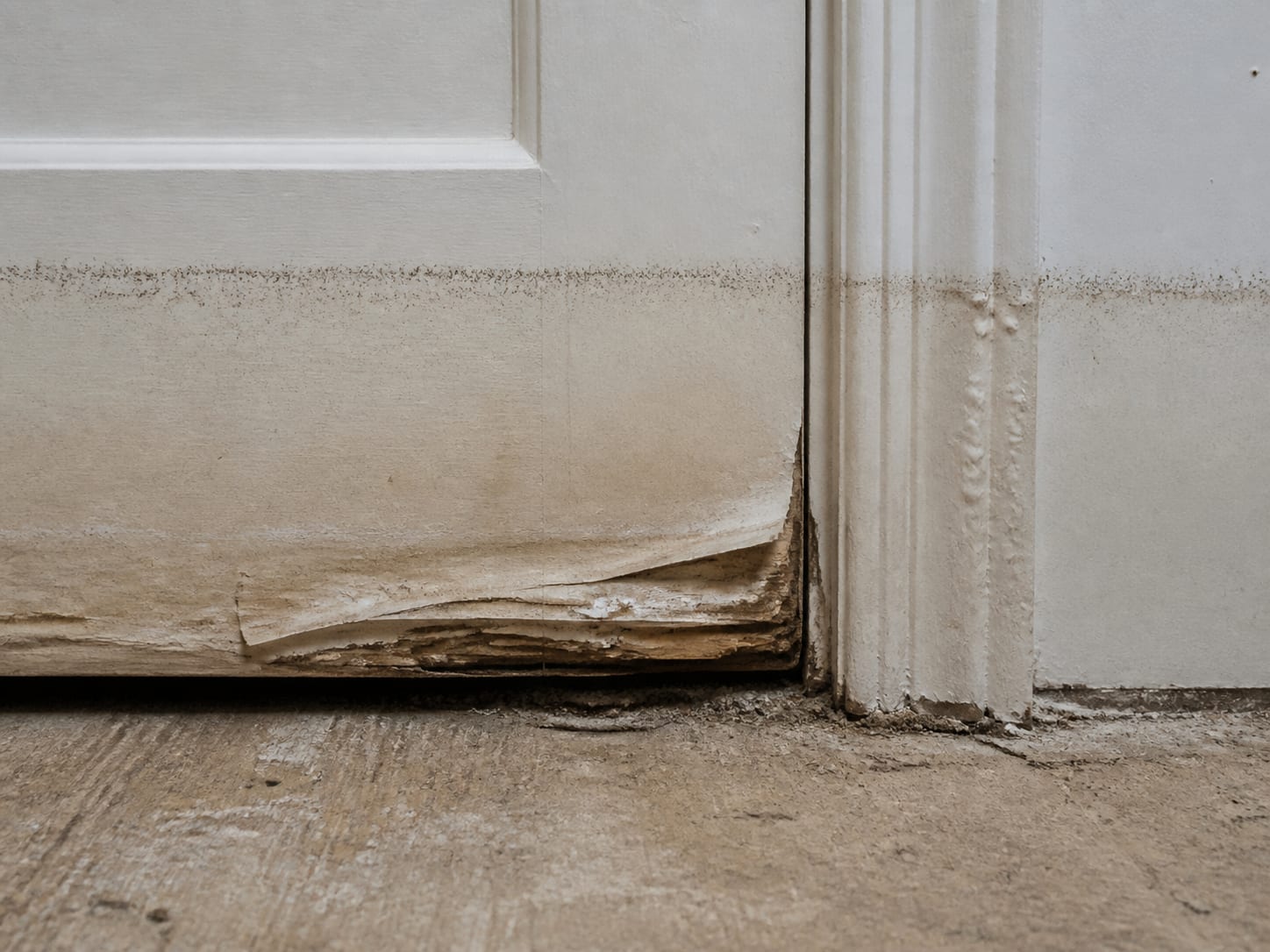
New Jersey's Department of Environmental Protection publishes a flood indicator tool, and its own description of it is the useful part: it screens for indicators on or near a property, it does not calculate actual risk, and the absence of an indicator does not mean the property is free of flood risk. For an actual determination it points people to a licensed engineer, the municipality, or the department itself, and notes that a flood hazard area applicability determination is what establishes whether a flood hazard permit is required.
Municipal level numbers work the same way. The state health department's Alpine community report records 0.5 percent of urban land use area as flooded in its 2021 indicator, and that figure describes the borough, not a house. It cannot tell you that your address flooded, and it equally cannot tell you that it will not. The same report puts 11 percent of Alpine housing at pre 1950 construction for its 2016 to 2020 period, which is a reason to expect original materials and concealed cavities in some buildings rather than a statement about any one of them.
The practical version is short. Run the actual address through the official tools, ask the borough, and where the answer will drive a rebuild decision, get an engineer's determination. Then let the water itself, and what it touched, set the cleanup scope. Broader service area context is on our Alpine service area page, which is geography rather than a finding about a parcel.
How a Flood Cleanup Sequences
- 1
Confirm it is safe to enter
Electrical hazards controlled, structure assessed, and no work starting in a building nobody has cleared.
- 2
Document before disturbing
Photograph the water, the rooms, the contents and the damage, and contact the insurer.
- 3
Establish the source
Decide what the water was, because everything about handling and salvage follows that finding.
- 4
Remove water, debris and silt
Take out standing water and material that is beyond repair, keeping the record as it goes.
- 5
Remove what cannot be cleaned and dried
Porous material touched by contaminated water comes out rather than being dried in place.
- 6
Clean and disinfect what remains
Treat the surfaces that stay, before anything is closed back up.
- 7
Dry and verify
Run the drying to a measured standard, with readings recorded per location rather than an impression of dryness.
- 8
Then rebuild
Restore finishes only once the space is documented clean and dry, with any permitted work run through the borough.
Timing at the front of this is real. EPA's guidance is to clean and dry within 24 to 48 hours where possible, which is a prevention window for the material that is still salvageable. Timing at the back of it is not a promise, because drying takes as long as the assemblies take, and a rebuild waits on that rather than on a calendar.
Debris, Permits, and the Borough's Actual Cadence
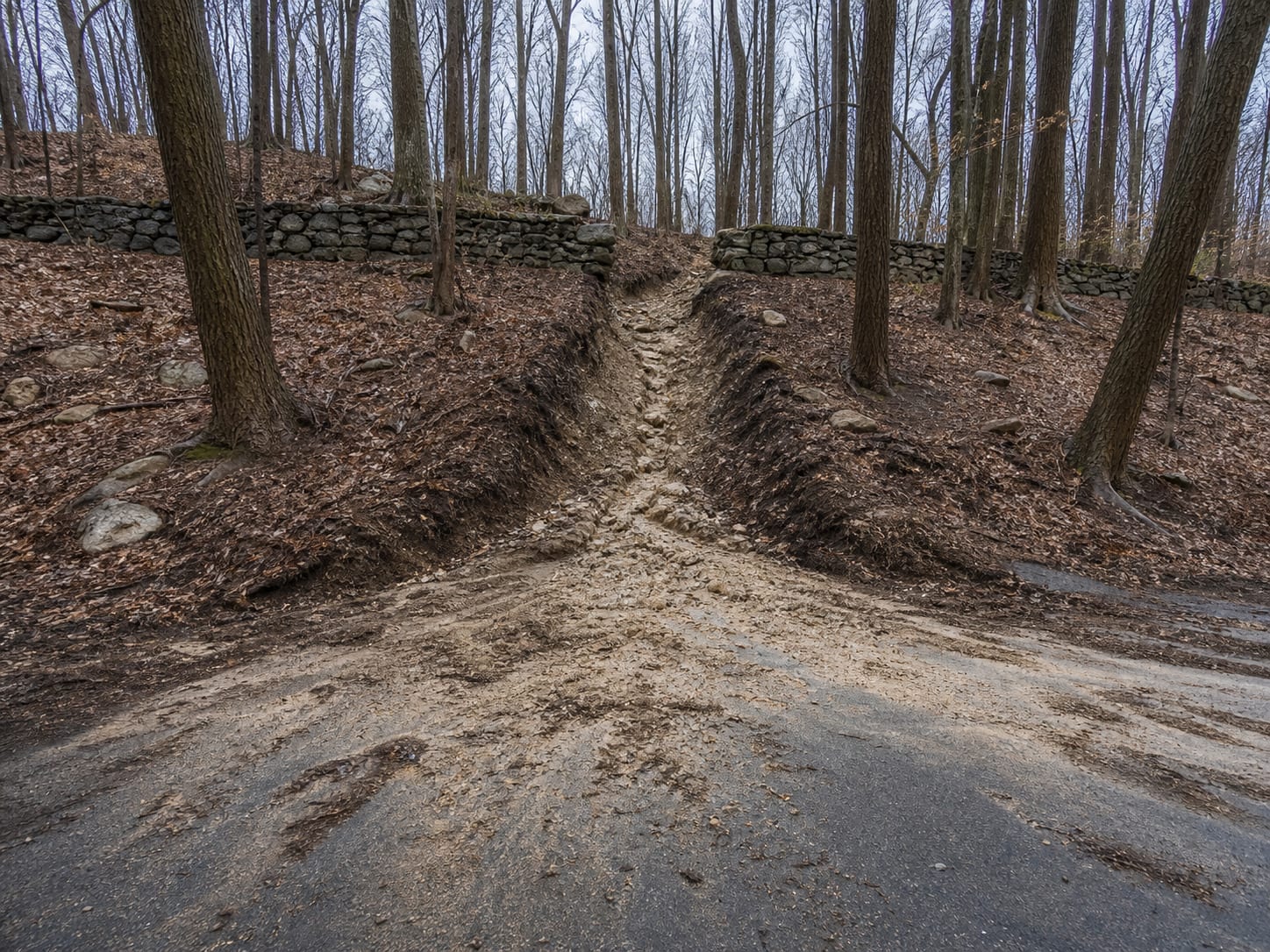
Two local details save real time. The first is disposal: Alpine's published material requires tonnage reporting for work associated with construction, demolition, tree removal or septic permits, so a flood job that grows into any of those brings a paperwork obligation with it. Keep the receipts and end market information as the borough instructs rather than reconstructing it after the containers are gone.
The second is scheduling. New Jersey's construction code requires permits for structural, plumbing, mechanical and electrical work on an existing building, with an exception for ordinary maintenance and routine repair, and the state's guidance gives a local office 20 business days to release or deny a complete application and provides for requested inspections within three days. Alpine's building department publishes its own cadence: the technical assistant is available Monday through Friday from 9:00 a.m. to 3:30 p.m., the construction and zoning officials are by appointment, inspections run Tuesdays and Thursdays with electrical in a stated window, drainage and seepage pit inspections go through the Borough Engineer, and septic questions go to the Alpine Health Department.
None of that delays making a wet building safe. It decides the shape of the week once the cleanup turns into repair, and knowing it in advance is the difference between a rebuild that moves and one that waits for a call back. Where an insurer is involved in the rebuild, insurance restoration services is where the documentation and the scope meet.
What Moves the Cost
No published Alpine flood cleanup price exists, and there is no honest way to quote one before someone sees the water line. What sets the scope is the contamination status of the water, how many rooms and levels it reached, how much porous material and how many contents cannot be salvaged, whether systems such as HVAC or electrical were involved, how much has to be opened to be assessed, the drying required, and how far the repair extends into regulated work.
A scope worth signing separates those into lines you can read: stabilization, removal and disposal, cleaning and disinfection, drying and monitoring, trade repairs, and reconstruction. Our flood damage cleanup page sets out what the cleanup portion covers, and where drying was delayed long enough for growth to start, mold remediation becomes part of the conversation rather than an upsell attached to it.
Frequently Asked Questions About Flood Damage Cleanup in Alpine NJ
How do I find out whether my address is actually in a flood hazard area?
Run the specific address rather than relying on any borough level statement. The state's indicator tool is explicitly a screening aid that does not calculate actual risk, and it says the absence of an indicator does not mean a property is free of risk. For a determination that will drive a rebuild or an insurance decision, the department points people to a licensed engineer, the municipality, or itself.
The water looked clean. Do I really have to treat it as contaminated?
Appearance is not the test, the source is. EPA's position is that floodwater can carry sewage and other harmful substances, and CDC's guidance is that drywall and insulation contaminated with sewage or floodwater is removed rather than dried. If the water arrived from the ground, a storm event or a wastewater system, the safe assumption is contamination until the source says otherwise.
Can I keep the drywall and insulation if I dry it fast enough?
For a clean water loss caught quickly, sometimes. For floodwater, CDC's guidance is to discard contaminated drywall and insulation, and drying it in place leaves the contamination inside the assembly with a dry moisture reading over the top of it. Which specific materials come out is a scope decision based on the water and how far it went, and it should be documented as it happens.
Should I start fans right away?
Not automatically. EPA notes that fans can spread mold where growth has already started, so a visible mold condition is dealt with before air is pushed across it. Flood affected HVAC and ductwork also stays off until someone qualified says it is safe, since running it turns a contained problem into a whole house one.
Do I need a permit to clean up after a flood?
Cleanup by itself generally is not permitted work. Repairs are, once they reach structural, plumbing, mechanical or electrical systems. Alpine's construction office makes the determination for the actual scope, and the state's guidance gives 20 business days on a complete application, with requested inspections within three days.
When is it reasonable to move back in?
EPA frames reoccupation in terms of conditions rather than a date: material that could not be cleaned and dried has been removed, essential equipment has been replaced, the building and its contents are dry, and the remaining surfaces have been cleaned. There should be no signs of water damage or mold growth left behind. Those are checks anyone can ask to see evidence for.
Final Thoughts
The reason a flood cleanup in Alpine is not a template job has nothing to do with the borough being unusual and everything to do with the borough being varied. Uplands, cliffs, a river corridor and a small, mixed age housing stock mean the useful facts are all at the address, and the state's own tools say as much when they describe screening rather than determination.
What holds up afterward is the file. The photographs taken before anything moved, the source finding, the list of what came out and why, the readings that show the drying happened, and the permits for whatever repair followed. A property that has been through water and can prove what was done to it is in a materially better position than one where the work was thorough and undocumented, particularly since New Jersey's flood disclosure requirements took effect in March 2024 and a future sale will ask.
If water has been in your building and you want the source, the contamination question and the rebuild path settled properly rather than assumed, ExecPro Restoration & Cleaning will work it in that order. Call (888) 300-3772 or reach us through the contact page, and photograph everything before you move a thing.
Flood Cleanup Terms
Tap a term to see what it means.
Floodwater. Water arriving from the ground, a storm event or an overflowing system, treated as potentially carrying sewage and other harmful substances.
Serving Alpine
ExecPro Restoration & Cleaning provides mold remediation services in Alpine, NJ, from inspection and testing through removal, drying, and post-remediation verification. Call (888) 300-3772 for 24/7 emergency response.
Related Articles
Flood Damage Cleanup in Warren, NJ: When the Water Came From Outside
Water that arrives from outside is not the same job as a burst pipe. What that changes about a Warren, NJ cleanup, what has to go, and what can be saved.
Where the Water Went: Air Quality Testing in Alpine, NJ
A sample is read against that day's outdoor air, and on a sloped Alpine lot the more useful question is usually where the water got in.
Above the Hudson, Below the Roof: Attic Mold Remediation in Alpine, NJ
An Alpine attic problem is a moisture source question and an access question. The Palisades setting changes how you get to the roof, not what wet the wood.