
Tidal Flooding at the Jersey Shore: What Saltwater Does to a Home
Cal HewittPublished
- flood damage cleanup
- saltwater flooding
- storm damage
- new jersey
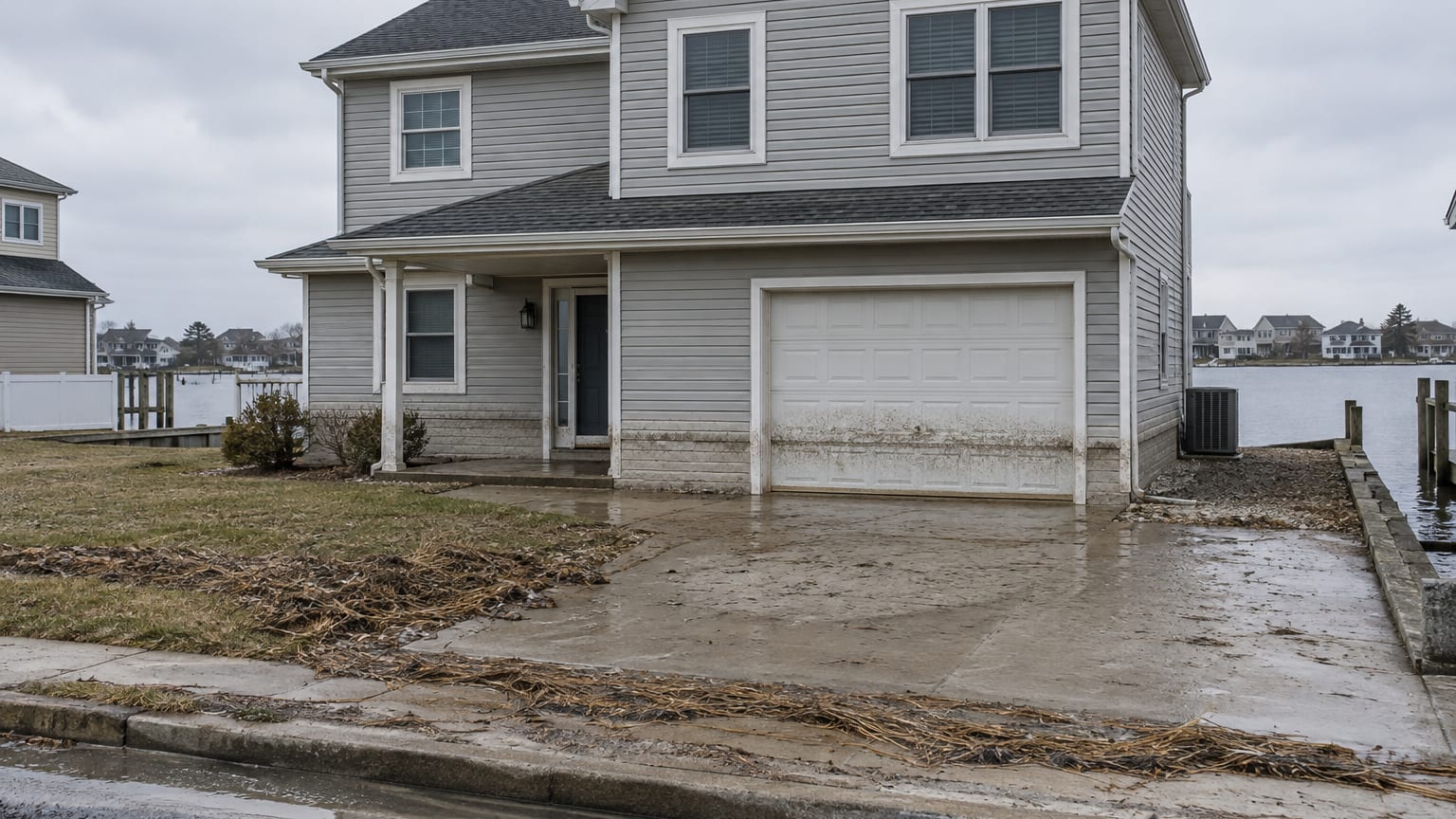
If tidal or bayside water got into your building during the nor'easter, saltwater flooding home damage at the Jersey Shore is probably the only thing on your mind right now. You may be looking at a waterline, or you may be a long drive from a closed-up seasonal house. Either way, the next hour matters most, and the first move is about safety. Stay out of standing water, keep the power off, and take photographs before anything gets thrown away. Salt in the water also changes what happens to wiring, framing and equipment over the following days. Below, we go through the first hour, day and week, then each part of the building, so you know what usually comes out, what can be dried, and who to call.
Key Takeaways
First hour
Stay out of standing water, keep power off until an electrician has inspected anything the water reached, and photograph waterlines and salt residue before disposal.
Salt changes the wiring decision
FEMA describes saltwater as corrosive and especially damaging to electrical conductors, so submerged wiring generally gets replaced, not dried.
Before you rebuild
Ask the construction official or floodplain administrator about permits and a substantial-damage determination, and keep walls open and floors up until the structure is dry.
Why Does Saltwater Flooding Change the Restoration Decision?
Governor Mikie Sherrill's September 25, 2026 emergency declaration covered Atlantic, Burlington, Cape May, Cumberland, Middlesex, Monmouth, Ocean and Salem Counties. It named tidal flooding, coastal flooding, heavy rainfall and beach erosion as hazards, with the greatest impacts expected in coastal and bayside areas. Executive Order No. 25 also records National Weather Service coastal-flood warnings for Atlantic, Burlington, Cape May, Middlesex, Monmouth and Ocean Counties. The storm ran from Friday, September 25 through Sunday, September 27.
Flooding happens parcel by parcel, so the condition of your own building is what counts. Confirm it through your municipality, county emergency management, utility, owner or property manager.
Salt is the reason this event gets its own guidance. FEMA's P-348 manual on protecting building utility systems states that saltwater is corrosive, can damage and weaken building-system components and connectors, and is especially damaging to electrical conductors. Some materials can be cleaned and dried. Others have to go, depending on water depth, how long it stayed, contamination and hidden moisture.
What Should You Do in the First Hour, First Day, and First Week?
Start with the next hour. Do not walk through standing water, over unstable floors, or near electrical equipment. Keep power off until an electrician has inspected the building if water reached any circuit or equipment, and do not touch outlets, switches, panels, appliances, furnaces or water heaters while standing on a wet surface. Confirm that gas, electric, water and sewer service are operating safely. Photograph the water lines, sediment, salt residue, damaged materials, equipment and the exterior spots where water came in. Then call your flood insurer and your property insurer with your policy number and a reachable phone number. This sequence follows guidance from New Jersey OEM and OSHA.
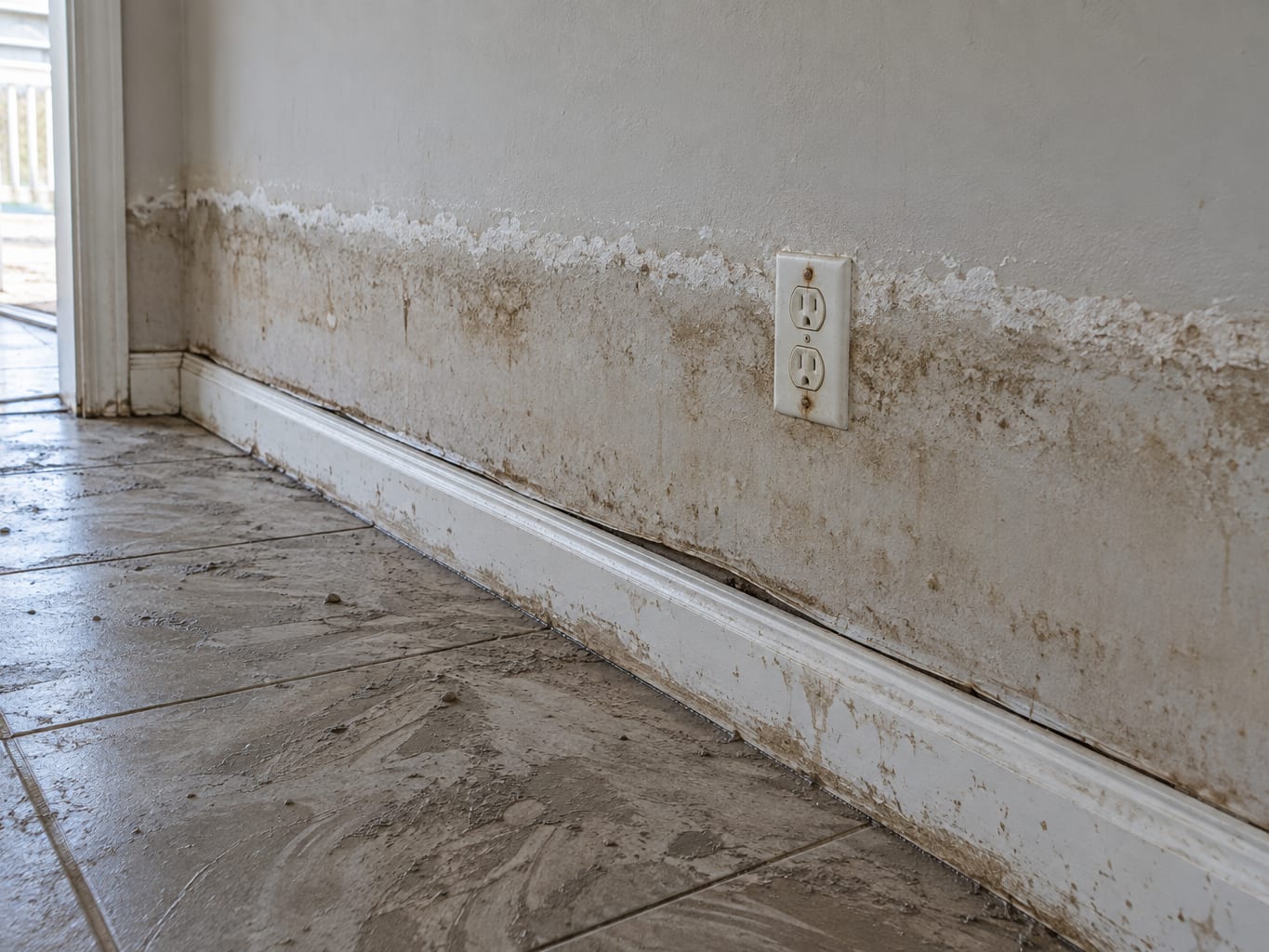
The next day is for professionals. Arrange a qualified assessment covering water extraction, structural drying, removal of contaminated materials and moisture mapping, which means measuring how wet each wall, floor and cavity actually is so drying can be verified rather than guessed. Have an electrician inspect submerged wiring, outlets, panels and disconnects. Keep damaged contents for the adjuster when practical, and stop more rain or tide from getting in. Ask your municipality's construction official or floodplain administrator whether permits, floodplain review or a substantial-damage determination apply before repairs start.
The first week is for finishing the drying and the paperwork before anyone rebuilds. Separate materials that can be cleaned and dried from porous ones that must come out. Get written scopes and estimates for electrical, HVAC, plumbing, demolition, drying and reconstruction, and keep invoices, moisture readings, photographs, inspection reports and messages with insurers and officials together. Leave walls open and flooring off until the structure is dry and required inspections are done.
The First Hour, Day and Week
- 1
First hour
Stay out of standing water and away from electrical equipment. Keep power off until an electrician has inspected the building if water reached any circuit or equipment, and confirm that gas, electric, water and sewer service are operating safely.
- 2
First hour, records
Photograph the water lines, sediment, salt residue, damaged materials, equipment and the exterior spots where water came in, then call your flood insurer and your property insurer.
- 3
First day
Arrange a qualified assessment covering water extraction, structural drying, removal of contaminated materials and moisture mapping, and have an electrician inspect submerged wiring, outlets, panels and disconnects.
- 4
First day, before repairs
Keep damaged contents for the adjuster when practical, stop more rain or tide from getting in, and ask your municipality's construction official or floodplain administrator whether permits, floodplain review or a substantial-damage determination apply.
- 5
First week
Finish the drying and the paperwork before anyone rebuilds. Separate materials that can be cleaned and dried from porous ones that must come out, get written scopes and estimates from each trade, and leave walls open and flooring off until the structure is dry and required inspections are done.
What Can Saltwater Do Inside Walls, Floors, and Framing?
Floodwater rarely stays where you can see it. It soaks into drywall, settles into insulation, and travels under finished flooring into the underlayment and subfloor. The EPA's flooded-home guidance and flood cleanup guidance for indoor air both give the same rule: what cannot be thoroughly cleaned and dried comes out.
- Drywall and wall finishes: Drywall absorbs water, and sections that stay wet or were contaminated can support microbial growth. We remove what cannot be thoroughly cleaned and dried, and we dry the wall cavity before anyone closes it back up.
- Insulation: It holds moisture and contaminants inside the cavity. Wet insulation generally has to be removed and replaced when it cannot be cleaned and dried completely.
- Wood framing: Studs and plates take on moisture and can lose strength if drying is incomplete. Framing gets evaluated, cleaned where that is appropriate, and dried to verified readings before the rebuild.
- Flooring and subfloors: Water can migrate beneath the visible surface. Flooring or underlayment that cannot be cleaned and dried comes out, and new flooring should never go over a damp slab or subfloor.
Moisture readings and inspection findings decide each material, one at a time.
Which Electrical, HVAC, and Water-Heater Parts Need Replacing After Floodwater Contact?
Electrical equipment that saltwater touched should stay out of service until it has been inspected. FEMA's guidance lists service panels, subpanels, breaker panels and disconnects, branch-circuit wiring, receptacles, switches, junction boxes, fixtures, permanently connected appliances, and motors, pumps and controls. Wiring that contacted saltwater will generally need to be removed and replaced, because corrosion and contaminants can remain after drying or washing. Water in outlets and panels can also cause shock, short circuits and fire, so nobody should reset a breaker to see what happens.
HVAC equipment is next. FEMA states that most HVAC components are not flood-resistant and may be damaged or destroyed by floodwater. A qualified HVAC technician should inspect furnaces, boilers, air handlers, heat pumps and condensers. Wet or contaminated ductwork can spread contamination through the building. If it turns up in the air handler or ducts, our HVAC mold remediation work covers coils, drain pans, air handlers and ductwork.
Water heaters and other mechanical equipment can have damaged controls, burners, electrical parts, insulation and tanks. Do not relight or energize one until the right trade professional has inspected it. A restoration contractor can document damage and dry or remove materials, but the electrical, gas, HVAC and plumbing inspections belong to the licensed trades and the local subcode officials, who control code compliance and required inspections for permitted repairs in New Jersey.
Hover or tap a row to highlight it.
| System | What the water can do | What happens next |
|---|---|---|
| Wiring and electrical equipment | Saltwater is corrosive and especially damaging to electrical conductors | Wiring that contacted saltwater will generally need to be removed and replaced, and equipment stays out of service until it has been inspected |
| Outlets, panels and breakers | Water can cause shock, short circuits and fire | Nobody should reset a breaker to see what happens; an electrician inspects first |
| HVAC equipment and ductwork | FEMA states that most HVAC components are not flood-resistant and may be damaged or destroyed by floodwater | A qualified HVAC technician inspects furnaces, boilers, air handlers, heat pumps and condensers; wet or contaminated ductwork can spread contamination through the building |
| Water heaters and mechanical equipment | Controls, burners, electrical parts, insulation and tanks can be damaged | Do not relight or energize one until the right trade professional has inspected it |
How Long Does Restoration Take From Assessment to Rebuild?
Restoration follows an order, and skipping a step usually costs more later. It starts with extracting standing water, opening the affected areas and taking moisture readings. Our water damage restoration work runs from extraction through structural drying, antimicrobial treatment, moisture mapping and reconstruction, with 24-hour emergency response for the first-day steps.
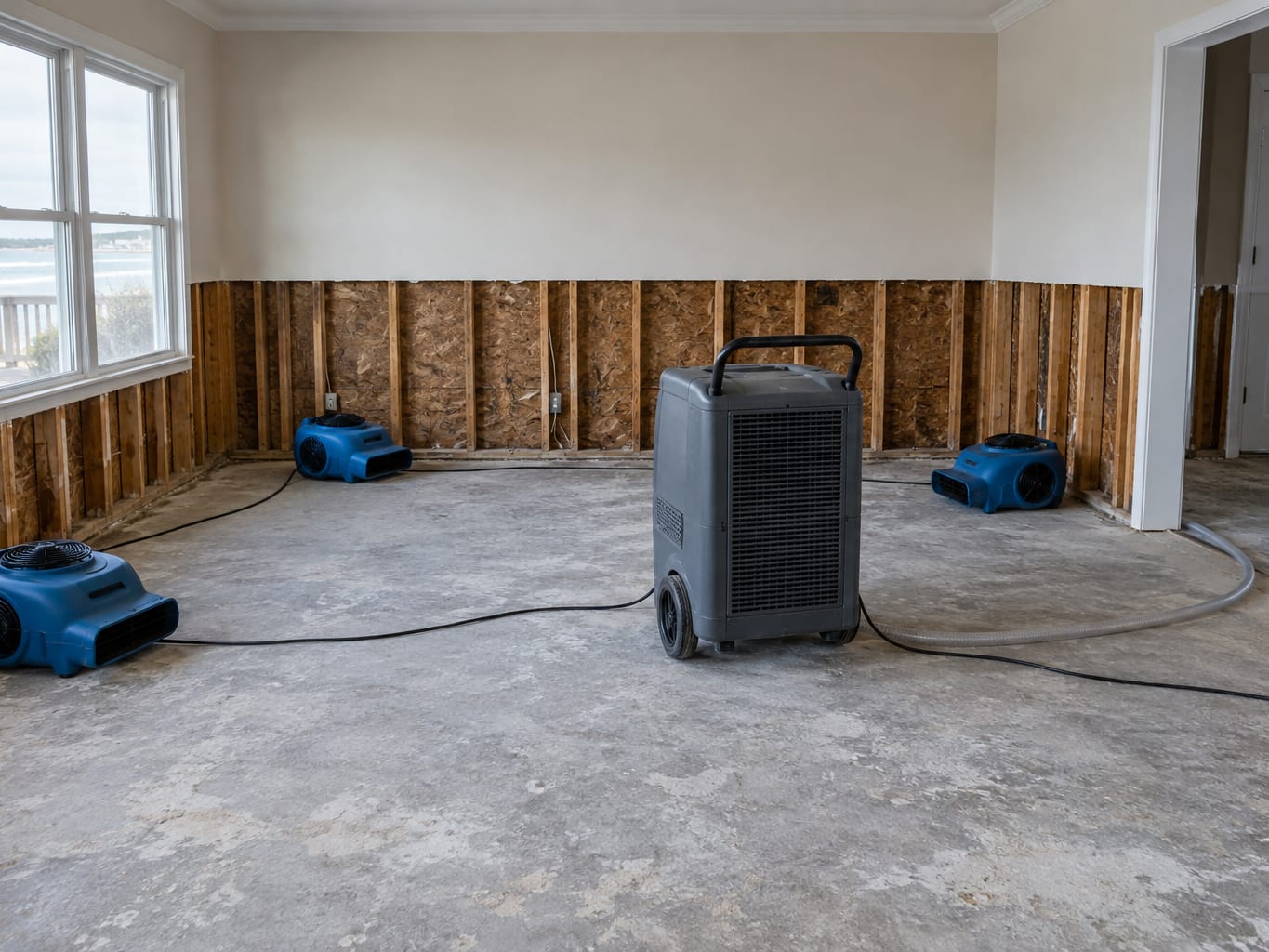
Next comes controlled removal of what cannot be dried, then drying equipment until the readings show the structure is dry. Electrical, HVAC and plumbing inspections have to be finished before walls close. If flood-related mold shows up in a cavity, mold remediation adds containment, removal, treatment and verification, and post-remediation verification confirms the work after drying and remediation.
Only then does the build-back start, with insulation, drywall, framing repairs and flooring, coordinated through general contracting. Water depth, contamination, hidden moisture and inspection waits all change the schedule, so ask for written scopes at each stage.
Restoration Order, From Assessment to Rebuild
- 1
Extract and open up
Standing water comes out, affected areas are opened and moisture readings are taken.
- 2
Remove what cannot be dried
Controlled removal of the materials that cannot be dried.
- 3
Dry to the readings
Drying equipment runs until the readings show the structure is dry.
- 4
Finish the inspections
Electrical, HVAC and plumbing inspections have to be finished before walls close.
- 5
Treat mold if it shows up
If flood-related mold appears in a cavity, mold remediation adds containment, removal, treatment and verification, and post-remediation verification confirms the work after drying and remediation.
- 6
Build back
Insulation, drywall, framing repairs and flooring go in only then, coordinated through general contracting.
How Should You Protect Your Insurance Claim and Records?
New Jersey's required flood-damage notice states that standard homeowners insurance does not cover property damage from floods, including overflow of tidal waters. Flood insurance generally provides separate building and contents coverage through the NFIP or a private flood insurer. So, report a tidal-water event to your flood insurer even if a separate homeowners claim may also apply to wind, fallen trees, roof damage or other covered causes. Coverage still depends on your policy, the cause of loss, exclusions and deductibles.
Report the loss as soon as you can, record the claim number and adjuster, and ask what documentation the insurer requires. The New Jersey Department of Banking and Insurance and the state's flood claim fact sheet cover the filing steps.
Photograph and video every affected room, waterline, exterior water entry point, damaged finish and piece of equipment, with serial numbers. Keep damaged property for inspection when practical, unless it is a health hazard or the insurer authorizes disposal, and ask how long to keep it. Document temporary repairs and keep the receipts. Your insurance claim and the town's permit process run separately, so you will need both.
What to Record for Your Claim
Photos and video
Every affected room, waterline, exterior water entry point, damaged finish and piece of equipment, with serial numbers.
Damaged property
Keep it for inspection when practical, unless it is a health hazard or the insurer authorizes disposal, and ask how long to keep it.
Temporary repairs
Document them and keep the receipts.
Claim details
Report the loss as soon as you can, record the claim number and adjuster, and ask what documentation the insurer requires.
Two separate processes
Your insurance claim and the town's permit process run separately, so you will need both.
What Do Monmouth County Shore Permits and Substantial-Damage Rules Require?
In Monmouth County shore municipalities, repairs generally involve the local construction-code process and, where it applies, New Jersey flood-hazard review. Whether your building is in Sea Bright or any other shore town, the local floodplain administrator decides whether a building in a designated flood hazard area has sustained substantial damage, or whether planned work counts as a substantial improvement. Under New Jersey's Uniform Construction Code, both thresholds are 50 percent of the building's market value before the damage or the improvement. The determination is about the structure, and it is made before reconstruction proceeds. If the threshold applies, flood-resistant construction requirements apply under N.J.A.C. 5:23-6.3A.
Call the construction official and floodplain administrator before you remove or rebuild anything beyond emergency stabilization. The New Jersey DEP guidance says general repairs such as replacing windows, siding or a roof may not need a DEP land-use permit by themselves. Substantial damage or substantial improvement in a flood hazard area can trigger elevation and flood-resistant requirements. Reconstruction, relocation or elevation may qualify for a permit-by-rule, and otherwise a formal flood hazard area permit may be required. Coordinate debris removal and emergency stabilization with the municipality before work begins. Your parcel's flood zone, the scope of work and local ordinance set the exact path, and the state's storm recovery page is a good place to start.
How Do You Prepare a Seasonal Shore Home for the Next Coastal Flood?
A seasonal or closed shore home needs a local person who can legally get inside, and it is easiest to name that person before the water rises. That contact should be able to confirm whether roads and the property are safely accessible, take dated photographs inside and out, meet the adjuster, electrician, plumber, restoration contractor and municipal inspector, secure doors and windows, and check whether power, gas, water, sewer, alarm and sump-pump services are running.
Give that person copies of the keys, alarm codes, insurance information and your written authorization. Contact the utilities yourself before anyone enters a flooded structure, and do not ask an unqualified person to reset breakers or relight appliances. The state's flood preparedness page covers more on preparing.
Frequently Asked Questions About Saltwater Flood Damage at the Jersey Shore
Q: Is it safe to go back in right after the water drops?
Not until it has been inspected. Do not enter through standing water, unstable floors or areas near electrical equipment, and keep the power off until an electrician has inspected anything the water reached. Confirm with the utility that gas, electric, water and sewer service are operating safely.
Q: Which materials usually come out after saltwater flood damage to a house?
Porous materials that cannot be cleaned and dried, such as wet insulation, contaminated drywall and flooring or underlayment, usually come out. Submerged wiring generally gets replaced. Other materials may be cleaned and dried to verified conditions.
Q: How do I know whether my street flooded in the storm?
The state's records confirm the storm period and county-level risk, and flooding varies from one property to the next. Check your own building, and confirm conditions through your municipality, county emergency management, utility, owner or property manager.
Q: Should I call my insurer before I clean up?
Yes. Call your flood insurer and your property insurer right away, photograph everything first, and ask how long they want damaged property kept.
Test Your Saltwater Flood Knowledge
1. What does FEMA say saltwater does to electrical conductors?
2. What generally happens to wiring that contacted saltwater?
3. Who decides whether a building in a designated flood hazard area has sustained substantial damage?
4. What share of the building's market value is the substantial-damage threshold under New Jersey's Uniform Construction Code?
5. Does standard homeowners insurance cover overflow of tidal waters?
Pick an answer to begin.
Final Thoughts
The order of the first steps protects you: safety and utilities first, photographs and insurer calls next, a qualified assessment and an electrician's inspection the next day, and drying and paperwork before anything is rebuilt. Keep your records together and ask the town before you rebuild. Working in this order usually saves you from tearing out the same wall twice.
If your New Jersey property took tidal or bayside water, we at ExecPro Restoration & Cleaning can come out for an assessment, starting with extraction, structural drying and moisture mapping. From there we handle removal of what cannot be dried, mold containment when it is needed, and the build-back once inspections are complete. Contact us and tell us what the water reached, and we will tell you what happens next.
Saltwater Flood Terms
Tap a term to see what it means.
Moisture mapping. Measuring how wet each wall, floor and cavity actually is so drying can be verified rather than guessed.
Related Articles
Commercial Storm Damage in New Jersey: The First 72 Hours for a Business
Commercial storm damage restoration in New Jersey: what to do in the first hour, day and 72 hours, from safe entry to drying and insurance records.
Flooded Basement Cleanup in New Jersey: The Order of Operations
Flooded basement cleanup in NJ goes in a set order: safety, source, photos, water, wet materials, drying, proof of dry. Here is each step and who to call.
New Jersey's Nor'easter State of Emergency: What It Means for Your Insurance Claim
New Jersey's nor'easter state of emergency does not decide your claim. What each policy covers, the records insurers ask for, and the 60-day flood deadline.