Crawl Space Mold Remediation in Warren, NJ: Cleanup or Encapsulation?
Cal HewittPublished
- crawl space mold remediation
- encapsulation
- vapor barrier
- warren nj
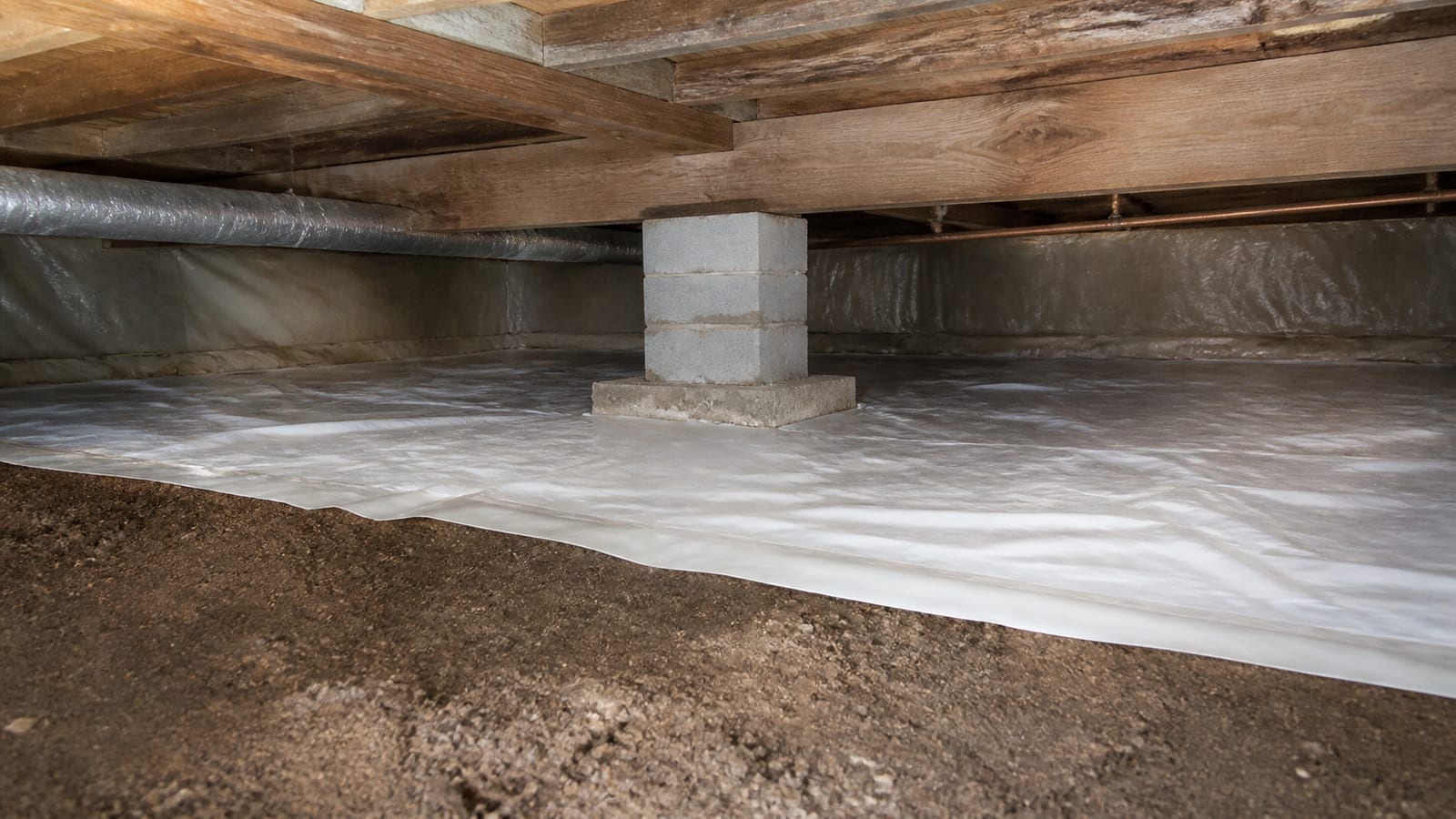
You have a quote in your hand with two things on it, and they are being described as one job. There is a cleanup, and there is an encapsulation, and it is not obvious from the paperwork whether the second is the fix, an upgrade, or something you are paying for twice. It is a fair question, and the answer is about order rather than about which is better. Both are real. They do different work, and doing them in the wrong sequence is how people end up with a sealed crawl space that still has a moisture problem underneath the liner.
Key Takeaways
They are two purchases, not one
remediation removes what is there; encapsulation changes the environment so it is less likely to return.
Order decides value
a liner installed over an uncorrected source seals the problem in rather than solving it.
The source comes first, always
EPA guidance starts with assessing the affected area, identifying water damaged materials, and drying wet, non-moldy material within 48 hours.
Warren's ground is why crawl spaces are wet here
the Township records low percolation and high runoff across its soils.
Containment scales with area
10 to 100 square feet generally calls for limited containment and over 100 square feet for full containment, with judgment applied because dense growth in a small area can matter more.
Nobody can give you a duration up front
it depends on the source, the extent and the drying, and it is checked with a meter rather than a calendar.
How Long Does Crawl Space Work Actually Take?
Longer than the cleanup and shorter than you fear, and it splits into parts that behave differently.
Getting in, assessing and moisture mapping is usually a single visit. Removal and cleaning depends almost entirely on how much material is affected and how difficult the access is. Drying is the part that cannot be rushed, because it is governed by materials rather than by effort, and it is verified with a moisture meter on wood, wallboard, brick and concrete rather than by how the space looks. Any encapsulation follows all of that.
What lengthens it: an intrusion source that is still active, which means nothing can be signed off; access that will only take small equipment; discovering that the affected area is larger than the opening suggested; and material that has to be removed rather than cleaned.
What nobody can honestly do is give you a number before seeing it, because every variable that decides the answer is on your property rather than in a table.
What Each of the Two Things Actually Does
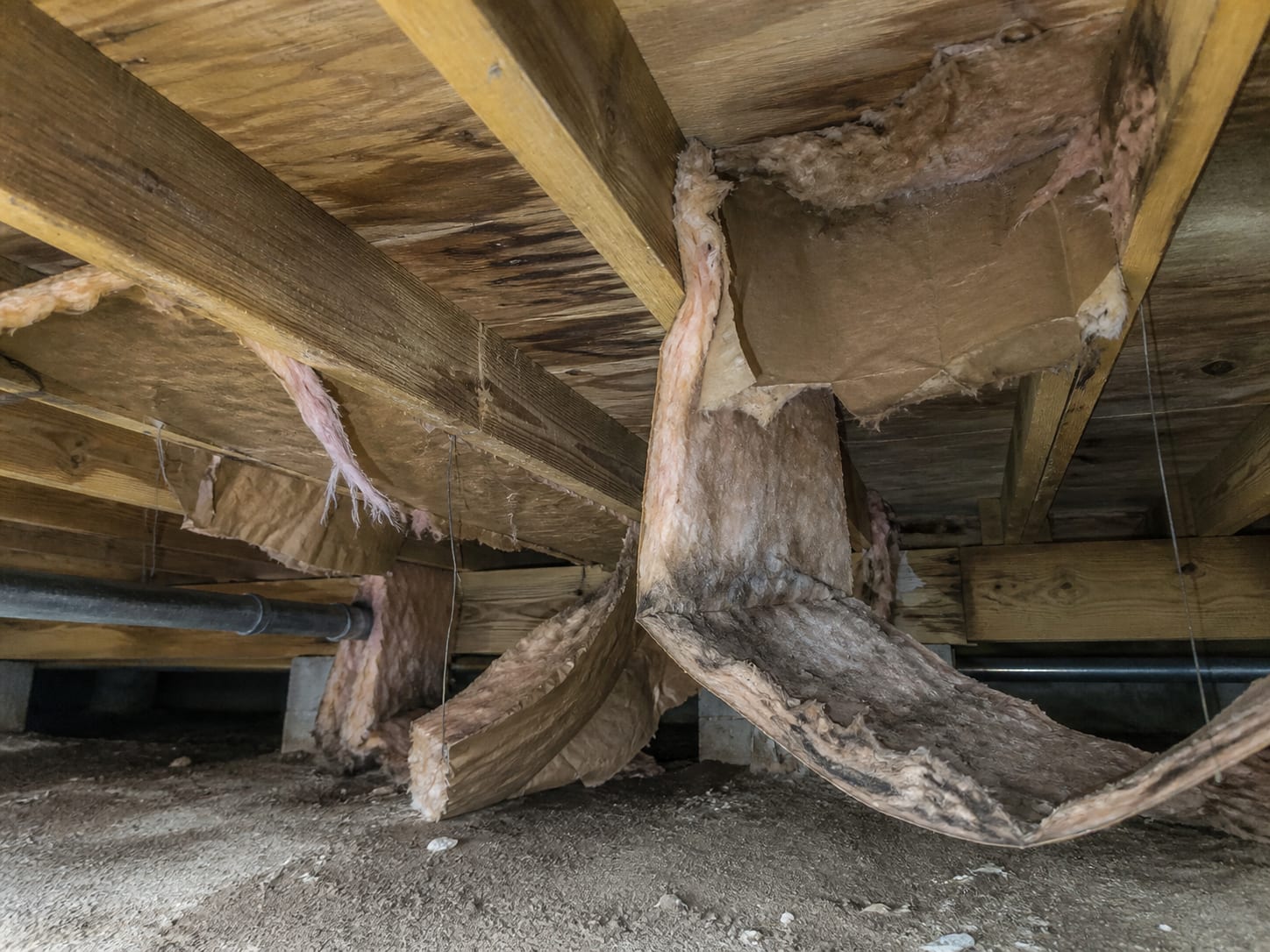
Remediation deals with what is there now. Locate and correct the moisture source, assess the size and the materials affected, consider hidden growth, plan containment and protection, remove or clean as appropriate, then dry and verify. That is the EPA sequence and it is the part that addresses the existing condition.
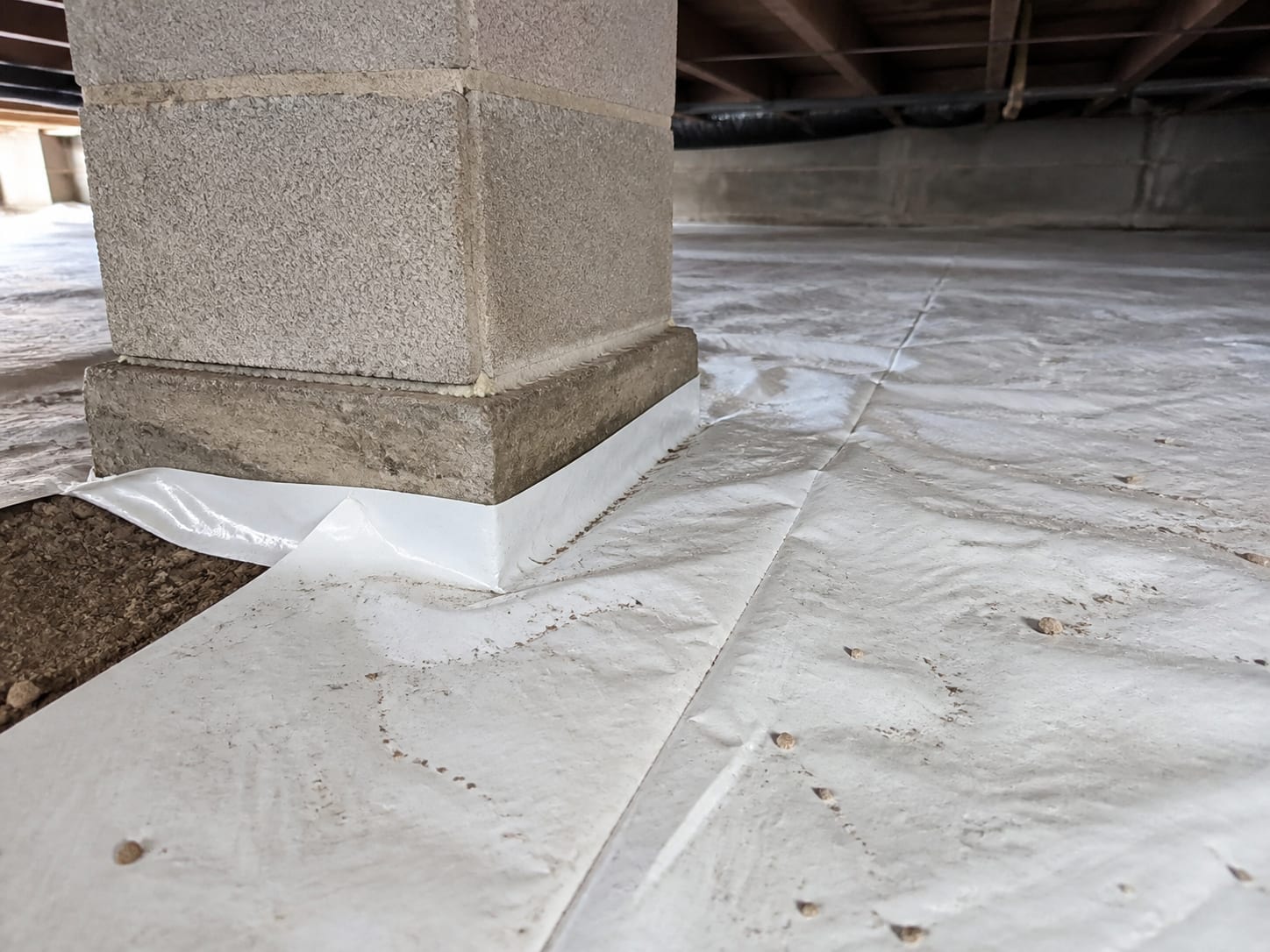
Encapsulation is a change to the space itself: a sealed liner over the ground and often up the walls, sometimes with conditioning or dehumidification. It exists because a vented crawl space over bare soil in a humid climate is a moisture source by design. Done after the water is controlled, it is a genuine improvement and it reduces the chance of a repeat.
Done before, it is a liner over a problem. The moisture is still arriving. It is now less visible, harder to inspect, and doing its work behind plastic.
That is the whole answer to the question in your quote. Encapsulation is not a scam and it is not a substitute. It belongs after.
Why Warren Crawl Spaces Get Wet
The Township describes soils across Warren as generally low percolation with high runoff, and names stoniness, steep slopes and a seasonal high water table as constraints on development. The landform drops roughly 370 feet from the Second Watchung down to where the Passaic and Middle Brook leave the Township.
Put those together and the mechanism is straightforward. Water moves quickly off the high ground, does not soak away easily where it lands, and ends up moving across and through the ground rather than into it. A crawl space is a hole in that ground with a building on top.
The consequences on a given property are specific rather than general: where the lot sits on the slope, where the roof and site drainage discharge, whether the grade around the crawl space walls falls toward or away, and how deep the seasonal water table runs in that particular soil.
The Sequence, in Order
Cleanup Then Encapsulation, in That Order
- 1
Inspect and moisture map
Including what cannot be seen from the access hatch.
- 2
Stop the intrusion or the condensation
Different problems with different fixes, and a crawl space can have both.
- 3
Protect the route
From the access opening to the work area, so what comes out does not travel through the house.
- 4
Contain to the scale
The EPA treats 10 to 100 square feet as generally calling for limited containment and above that for full.
- 5
Remove or clean by material
Affected porous material comes out. Framing and hard surfaces are cleaned.
- 6
Dry and verify
With meters on wood, block and concrete rather than on the air.
- 7
Repair, then encapsulate
The barrier goes down last, once the source is corrected, or it seals the problem in.
Inspect and moisture map. Including what is not visible from the access hatch.
Stop the intrusion or the condensation. Whichever it is. These are different problems with different fixes, and a crawl space can have both.
Protect the route from the access opening into the work area, so what comes out does not travel through the house.
Contain to match the scale. EPA containment guidance treats 10 to 100 square feet as generally calling for limited containment and over 100 square feet as generally calling for full containment, while noting that judgment matters because dense growth in a smaller area can create a greater exposure concern. Those are guidance categories for running the work, not a price bracket.
Remove or clean according to the material. Porous material that is affected generally comes out.
Dry and verify. With meters, on the materials rather than on the air.
Repair what was removed, and only then consider encapsulation.
What to Ask About the Quote in Your Hand
Does it name the moisture source, specifically, or does it describe the growth?
Does it say what happens if the source turns out to be different once the space is opened?
Is the encapsulation priced separately from the remediation, so you can see what each costs?
Does it say how dryness will be verified, and by what?
Is there a scope for what gets removed rather than cleaned?
A quote that answers those is a scope. A quote that leads with the liner is a product.
What Drives the Cost
Access, first and most, because a crawl space that takes only small equipment and hand carrying is slower at every stage.
The affected area and the containment it calls for.
How much material comes out rather than being cleaned, which turns on porosity and how wet it got.
What correcting the source involves, which is the widest variable and often the largest: regrading, a drainage correction, a vapor strategy, or a repair to something above.
Whether encapsulation follows, which is a separate line and should look like one.
Vented, Sealed, or Somewhere in Between
Crawl spaces in Warren were built to at least two different theories, and which one your house follows changes what the correct fix looks like.
The vented crawl space is the older approach and the more common in the pre-1980 stock. Vents in the perimeter wall let outside air move through, on the theory that moving air dries the space. It works in a dry climate. In a humid New Jersey summer it can do the opposite: warm humid outside air entering a cool crawl space cools below its dew point and gives up moisture onto the joists and the ground. The space is being ventilated with the very thing making it damp.
The sealed and conditioned crawl space is the newer approach. Vents closed, a barrier over the ground and up the walls, the space brought inside the building's thermal envelope, and humidity managed mechanically. It works, and it is what most encapsulation packages are selling.
The in-between case, which is where a lot of Warren houses actually sit, is a vented crawl space with a partial ground cover, some insulation between the joists that may or may not still be up, and a duct run passing through. This is neither theory executed properly, and it is usually the one producing complaints.
Why this matters for a quote. A remediation that cleans the space and leaves the ventilation strategy unchanged has not addressed the mechanism. Equally, sealing a crawl space that has an active water intrusion traps the water inside a sealed box. The order is: stop the water, remediate what is there, then decide the strategy and execute one properly.
What to ask. Which theory is this crawl space built to, which one are you proposing to leave it on, and if you are changing it, what happens to the vents, the insulation and the humidity control. A contractor who can answer that is scoping the space. One who quotes a liner without reference to it is quoting a product.
On the Warren ground specifically: the Township describes soils with low percolation and high runoff, which means water arriving at a crawl space wall has nowhere quick to go. Whatever strategy the space ends up on, the exterior water still has to be dealt with, and that is outside work.
Frequently Asked Questions About crawl space mold remediation Warren NJ
How long does mold remediation take in a crawl space?
The assessment is usually one visit, the removal depends on the affected area and the access, and the drying is governed by the materials and confirmed with a meter. An active source that has not been corrected stops the clock entirely, because nothing can be verified until the water stops arriving.
Do I need encapsulation, or is it an upsell?
It is a real product that does real work, in the right order. It changes the environment so moisture is less likely to return. It does not remove existing growth and it does not correct an active source. If it is quoted instead of those things, that is the question to ask.
Can you remove mold from a crawl space?
Yes. Affected porous material is removed, cleanable surfaces are cleaned, and the moisture source is corrected. It is finished when the space is verified dry, not when it looks better.
The crawl space has always been damp. Is that normal here?
Common, given Warren's soils and slopes, but common is not the same as acceptable. A crawl space that is reliably damp is supplying moisture to the building above it, and that is worth correcting whether or not there is visible growth today.
How much does it cost?
Access, affected area, how much comes out, and what correcting the source requires. Encapsulation is separate. There is no local published range, and a per square foot figure offered before anyone has been under the house is not an estimate.
Should I just add vents?
Sometimes, and sometimes the opposite. Venting a crawl space in a humid summer can bring in more moisture than it removes. Which way it goes depends on the specific space, which is a reason to have it assessed rather than to apply a rule.
Final Thoughts
If you have a quote with cleanup and encapsulation on it and cannot tell what you are buying, ExecPro Restoration & Cleaning will go under the house, find where the water is coming from, and give you the two things priced and sequenced separately. Call ExecPro Restoration & Cleaning at (888) 300-3772 or get in touch. Emergency mold and water damage services are available 24/7, Monday through Sunday. Related: mold inspection for establishing extent, and basement mold remediation where the below grade space is a basement rather than a crawl.
Crawl Space Terms
Tap a term to see what it means.
Encapsulation. A sealed liner over the ground and often the walls. A real improvement, and not a substitute for remediation.
Serving Warren
ExecPro Restoration & Cleaning provides mold remediation services in Warren, NJ, from inspection and testing through removal, drying, and post-remediation verification. Call (888) 300-3772 for 24/7 emergency response.
Related Articles
The Inspector Found It: Crawl Space Mold Remediation in Plainsboro, NJ
A Plainsboro crawl space flagged for mold: what it means, what the work involves, what it costs, and whether you really need encapsulation or are being upsold.
Mold Remediation in Warren, NJ: What the Work Involves
Mold remediation cost is driven by area, material and the source repair. How the work runs in a Warren, NJ home, and what makes one job bigger than another.
Structural Mold Repair in Warren, NJ: Where the Line Sits
Surface growth on a joist and loss of section are different jobs. Where that line sits in a Warren, NJ home, who decides it, and what the repair involves.