The Inspector Found It: Crawl Space Mold Remediation in Plainsboro, NJ
Cal HewittPublished
- crawl space mold remediation
- vapor barrier
- moisture control
- plainsboro nj
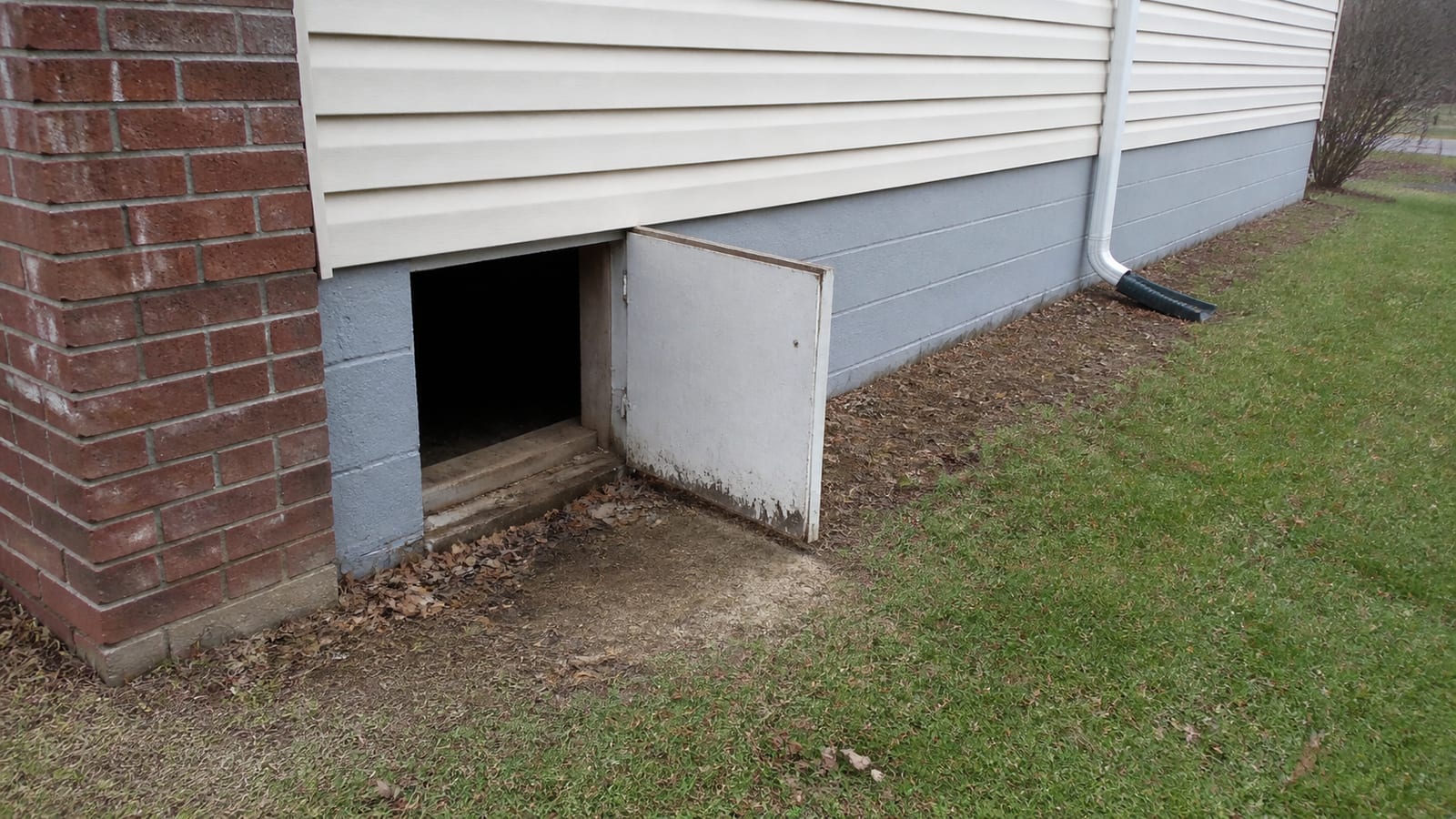
The report says there is mold in the crawl space, and now you need to know what that actually means. Most people never learn about their crawl space from their own nose. They learn during a sale, from a home inspector who went under the house with a torch and came back with photographs nobody enjoys looking at.
So this is written for that moment. What a crawl space finding usually means, how serious it is, what the work involves, what drives the price, and the honest answer on encapsulation, which is the thing you will be quoted for most often and the thing you may or may not need.
Key Takeaways
A crawl space is a moisture source, not just a void
The ground under it gives off water continuously, which is why the space behaves differently from a basement.
Air moves upward from it into the house
That is why a crawl space problem is noticed as a smell on the floor above rather than down there.
Under 10 square feet is small work, 10 to 100 calls for limited containment, over 100 for full
EPA sets those bands by area and material, with professional judgment on top.
Wet material gets dried within 48 hours or removed
NIOSH pairs that with repairing whatever let the water in and monitoring afterward.
Fibreglass insulation between the joists is usually the first casualty
Once it has absorbed moisture it sags, holds it, and stops working.
Encapsulation is a moisture control, not a remediation
It belongs after the water source is fixed, never instead of fixing it.
Why Crawl Spaces Go Wrong More Than Basements
Three things stack up, and none of them requires a leak.
The ground is the source. Bare or poorly covered soil under a house releases moisture continuously. That is not a defect, it is what soil does, and it is the reason a crawl space can be damp in a building with perfect plumbing and a sound roof.
Nobody goes in. A basement gets visited. A crawl space gets entered when something is already wrong, so problems that would be caught in a week upstairs run for years down there.
The air goes up, not out. Air moves from the crawl space into the living space through floor penetrations, which is why the first sign is usually a smell in the room above rather than anything visible below. If your ground floor smells musty and the walls are clean, look down before you look around.
In Plainsboro there is a fourth factor worth knowing about, and it is in the township's own planning record. The Conservation Plan describes a relatively flat municipality, roughly 60 to 120 feet of elevation west of the Amtrak line and about 60 to 90 feet east of it, with the lowest ground along the Millstone River and the Delaware and Raritan Canal. It identifies alluvial soils as poorly drained and frequently flooded, Manahawkin muck as wet and flood prone, and several other soil series as constrained by seasonal wetness. Flat ground drains slowly, and soils that hold water keep a crawl space damp long after the weather has moved on.
That is context for asking better questions about a specific property, not a statement about any address. Whether your lot sits on one of those soils, and whether it is in a mapped floodplain, is a parcel level answer.
What a Finding Usually Means
An inspector's photograph almost always shows one of four things, and they are not equally serious.
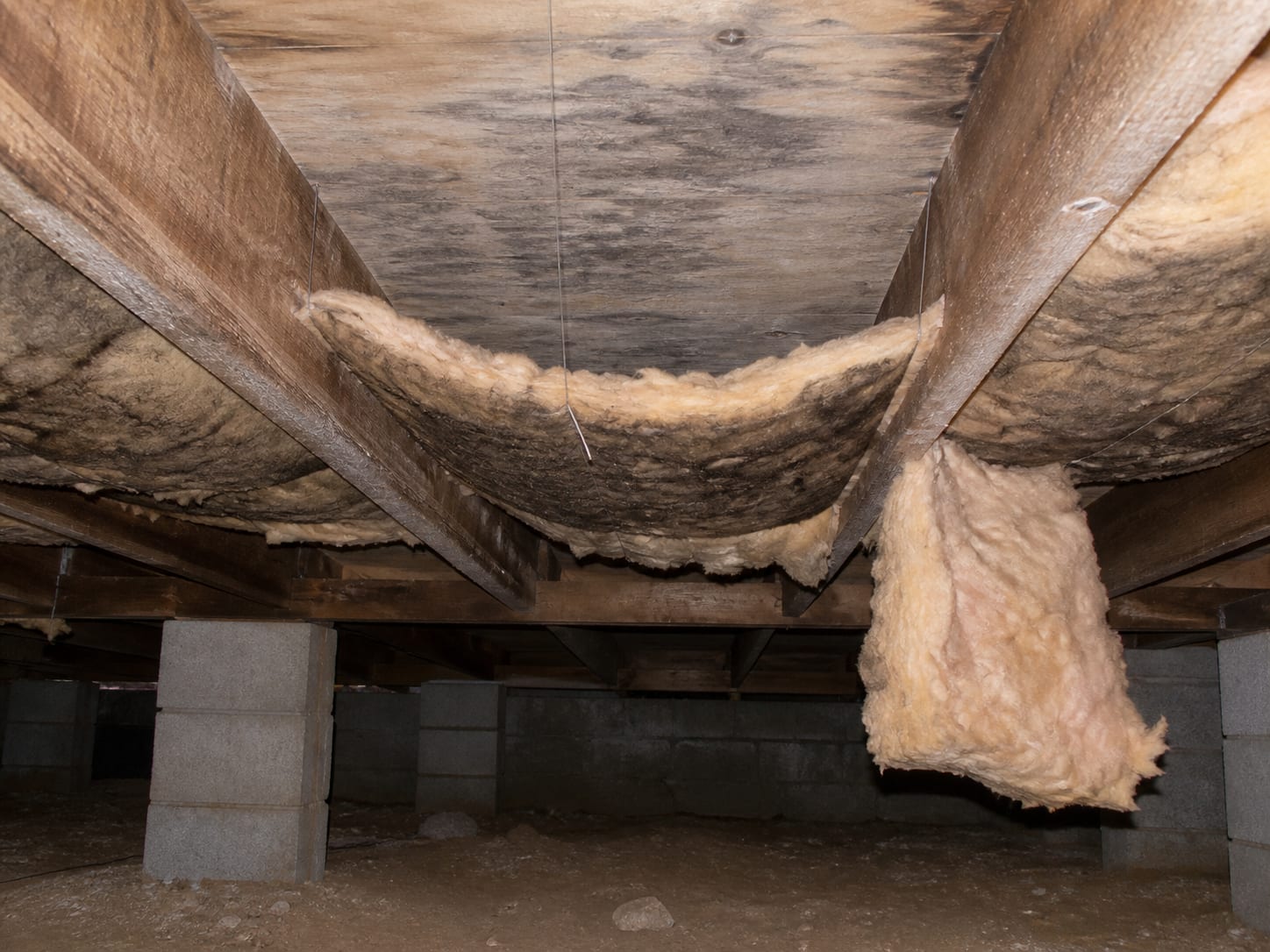
Surface growth on the joists or subfloor. Common, usually driven by humidity rather than a leak, and usually cleanable on those hard surfaces.
Wet or sagging insulation between the joists. Fibreglass that has absorbed moisture stops insulating, holds water against the wood, and hangs down. This is the item that most often has to come out rather than be cleaned.
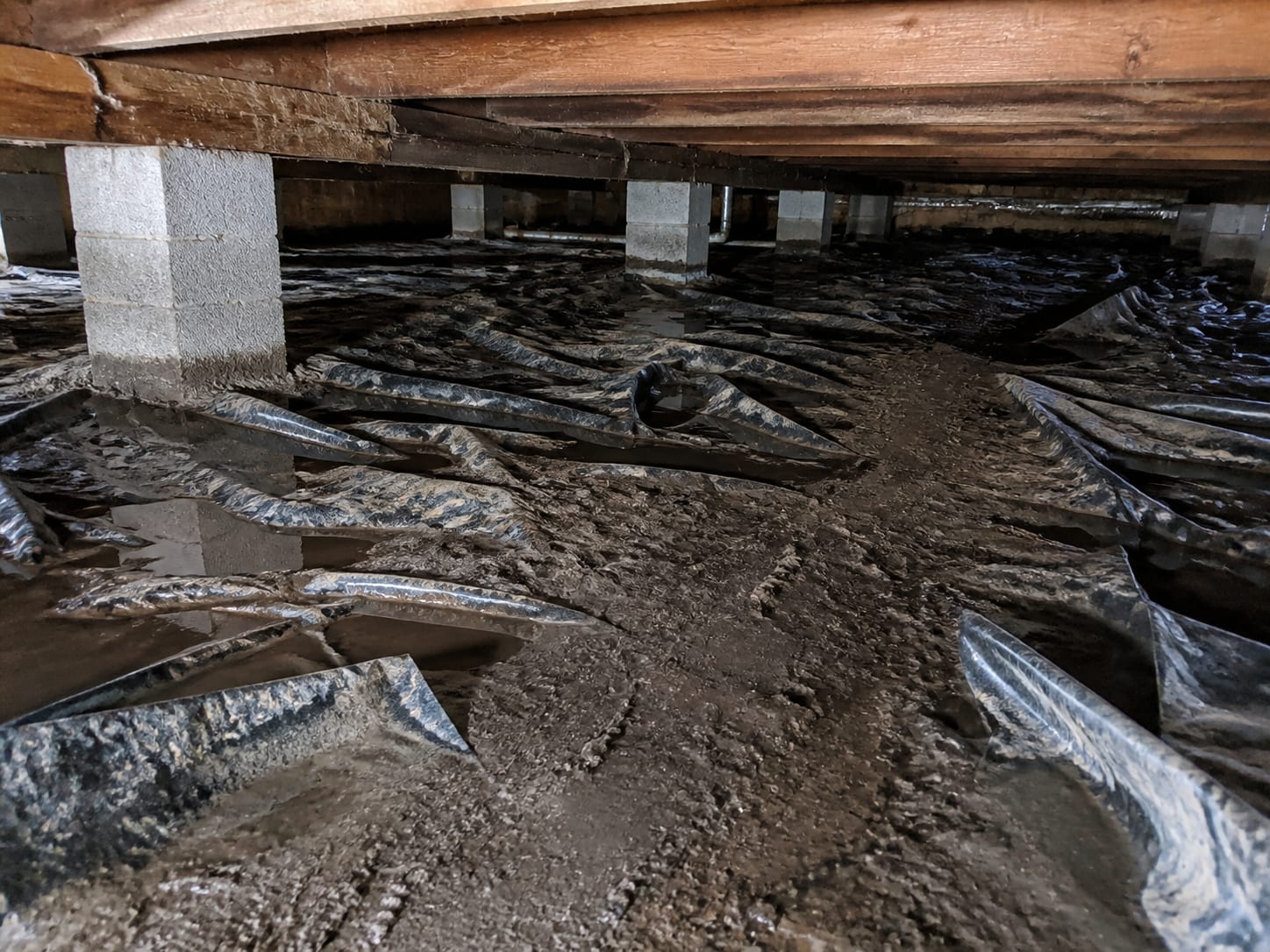
A missing, torn or displaced ground cover. The sheet over the soil is the single most important moisture control in the space, and it is frequently found rolled back, gapped or absent entirely.
Standing water or a defined wet area. That is a drainage or plumbing problem rather than a humidity problem, and the fix is upstream of anything done in the crawl space itself.
What the Work Involves
A Crawl Space Remediation
- 1
Find the moisture source
Standing water, a plumbing failure, grading and downspout discharge outside, a missing ground cover, or humidity alone. Everything after this depends on getting it right.
- 2
Assess and measure
Extent by measurement, moisture readings on framing and subfloor, photographs, and an honest note of anything unreachable in a low clearance space.
- 3
Set the containment
EPA generally calls for limited containment at 10 to 100 square feet and full containment above 100, or wherever occupied space could otherwise be contaminated.
- 4
Remove what cannot be cleaned and dried
Wet insulation and other porous material comes out. NIOSH's standard is drying wetted material within 48 hours or removing it.
- 5
Clean the structure
Hard, non porous surfaces such as joists and subfloor are usually cleaned and kept rather than replaced.
- 6
Dry and verify
Moisture meters used to monitor the drying rather than a judgment that it looks better.
- 7
Repair the source
Frequently exterior work. Grading, downspout discharge, a drainage path, or a plumbing repair.
- 8
Then moisture control
A properly installed ground cover, and where it is justified, encapsulation and a dehumidifier sized for the space.
The order there matters more than in most jobs. A crawl space that is cleaned and sealed with the water still arriving becomes a sealed container with water in it, which is worse than what you started with.
How Long, and What It Costs
Duration depends on access more than anything else. A crawl space with 18 inches of clearance and one small hatch is slow work regardless of how much material is involved, and that is a physical constraint no contractor can quote around.
On price, there is no published Plainsboro range and any local average quoted at you is invented. The real drivers are the affected area, whether the material is porous insulation or cleanable structural surface, how much hidden contamination turns up once work starts, the containment level, access, the moisture source and what repairing it requires, removal and disposal, any electrical or mechanical implications, and whether documentation or third party verification is wanted at the end.
A Plainsboro job can also expand if the site investigation finds that drainage, groundwater, soil wetness or floodplain status is part of the picture. That is a reason to have the exterior looked at during the assessment rather than after the quote.
Ask any proposal to itemise: the moisture investigation, the containment, removal by material, the cleaning, the drying and how it will be verified, the source repair, and the moisture control. If encapsulation appears as a line, ask what moisture source it is controlling and what is being done about that source separately.
What You Can Do Yourself
Honestly, less here than anywhere else in the house, and the limit is safety rather than skill. A low clearance crawl space is a confined working position with poor ventilation, uncertain footing, exposed wiring in places, and sometimes standing water. Anyone with asthma, a mold allergy, immune suppression or a chronic lung condition should not be in there at all.
What you can usefully do is everything outside it. Walk the perimeter during rain and see where water goes. Extend downspouts so they discharge well clear of the foundation. Check that grade falls away from the wall rather than back toward it. Clear the vents if the space has them. Look at where the ground cover is and whether it is still in place. Those observations cost nothing and they frequently identify the source before anybody goes under the house.
The Encapsulation Question
This is the one to be careful about, because it is the highest ticket item and it is genuinely useful in the right situation and genuinely wasted in the wrong one.
Encapsulation means lining the space, usually floor and walls, with a heavy sealed membrane and controlling the humidity inside it, often with a dedicated dehumidifier. When the problem is ground moisture and humidity, and the structure is sound and dry, it works, because it addresses the actual source.
It is the wrong purchase when water is still entering from outside, when there is a plumbing leak, when the drainage has not been corrected, or when it is being sold as a substitute for removing material that should come out. Sealing a space does not dry it, and a membrane over an unresolved water problem hides the evidence while the framing stays wet.
The order is always the same: find the water, remove what is ruined, clean and dry the structure, fix the source, then decide what moisture control the space needs. If a quote reverses that order, ask why.
Keeping It From Coming Back
Get the water away from the building outside, because that is where most crawl space moisture originates and it is the cheapest thing on this list. Keep a continuous ground cover over the soil and repair it when it gets displaced by anyone working down there. Deal with humidity in the summer, since a crawl space is the coolest surface set in the house and condensation finds it first. Keep the space clear enough that somebody can actually inspect it, because storage in a crawl space is both a moisture trap and the reason nobody looks.
And put a date in the calendar. A crawl space checked once a year with a torch and a phone camera catches problems while they are still small, which is the entire difference between a cleaning and a remediation.
Frequently Asked Questions About Crawl Space Mold Remediation in Plainsboro NJ
The inspector's report is holding up my sale. How fast can this be dealt with?
Faster than most people fear, provided the source is straightforward and access is reasonable. What extends a job is discovering standing water or a plumbing failure once work starts, poor clearance, or a source correction that has to happen outside in bad weather. Get the assessment done early rather than negotiating from a photograph, because the report tells you there is a problem and not how big it is.
Does my house even have a crawl space?
Worth confirming before you buy anything, because Plainsboro has crawl spaces, slabs, full basements and some older properties with more than one of them under different parts of the house. A remediation quote written for the wrong foundation type is a quote for a different building. If nobody has been under there, that is the first job.
Is the mold in the crawl space getting into the house?
Air does move upward from a crawl space into the living space through gaps around plumbing, ducts and framing, which is why the smell is usually noticed on the floor above. That is a real reason to deal with it rather than ignore it. Whether it is affecting anybody's health is a question for a clinician who knows the household, not something an inspection or a sample can answer.
Can the insulation be saved?
Usually not, once it has been wet. Fibreglass batt that has absorbed moisture sags, holds water against the joists and no longer insulates, so it comes out. The framing above it is normally cleanable and stays. Replacing insulation after the space is dry is a straightforward job; doing it before the space is dry wastes the material.
Do I need a permit?
Not for the cleaning and removal. Possibly for what follows, since Plainsboro requires permits generally for construction and for renovations affecting use, structure or egress, and plans for most projects. Permanent electrical work for a dehumidifier, structural repair to framing, or exterior drainage work can all change the answer. The Building Division on Plainsboro Road makes that determination, and it asks for at least 24 hours to schedule an inspection.
Will a dehumidifier down there fix it on its own?
It fixes a humidity problem and nothing else. If the ground cover is missing, if water is entering from outside, or if there is a leak, a dehumidifier runs continuously against a source it cannot beat and your electricity bill absorbs the difference. Fix the water first, then size the equipment to what is left.
Final Thoughts
A crawl space finding sounds worse than it usually is, because the photographs are unpleasant and the space is unfamiliar. Most of what we find is humidity driven surface growth on framing plus insulation that has given up, and most of it is resolved by removing the insulation, cleaning and drying the structure, getting the water away from the building outside, and putting a proper ground cover down.
What turns it into a large job is water nobody has traced, clearance too low to work in, or a sealed and encapsulated space installed over a problem that was never fixed. All three are avoidable by doing the assessment before the quote and insisting the source is named. The wider local picture is on our Plainsboro service area page, and the service itself is on our crawl space mold remediation page.
If an inspection has flagged your crawl space and you want to know what is actually down there, ExecPro Restoration & Cleaning will assess it before recommending anything. Call (888) 300-3772 or reach us through the contact page.
Crawl Space Terms
Tap a term to see what it means.
Ground cover. The sheet laid over the soil to stop ground moisture entering the space, the single most important moisture control in most crawl spaces.
Serving Plainsboro
ExecPro Restoration & Cleaning provides mold remediation services in Plainsboro, NJ, from inspection and testing through removal, drying, and post-remediation verification. Call (888) 300-3772 for 24/7 emergency response.
Related Articles
Crawl Space Mold Remediation in Warren, NJ: Cleanup or Encapsulation?
Encapsulation and remediation are two purchases, not one. What each does in a Warren, NJ crawl space, in what order, and how long the work really runs.
The Smell Downstairs: Basement Mold Remediation in Plainsboro, NJ
A musty lower level in Plainsboro: what causes it, what the work involves, what it costs, what you can clean yourself, and why finishing a basement needs a permit here.
What a Home Indoor Air Quality Test in New Jersey Actually Checks
Indoor air quality testing in NJ: what a professional test measures, what a home monitor misses, what sets the cost and which steps to take first today.