Air Quality Testing in Warren, NJ: Is It Worth Running?
Cal HewittPublished
- air quality testing
- outdoor control
- indoor humidity
- warren nj
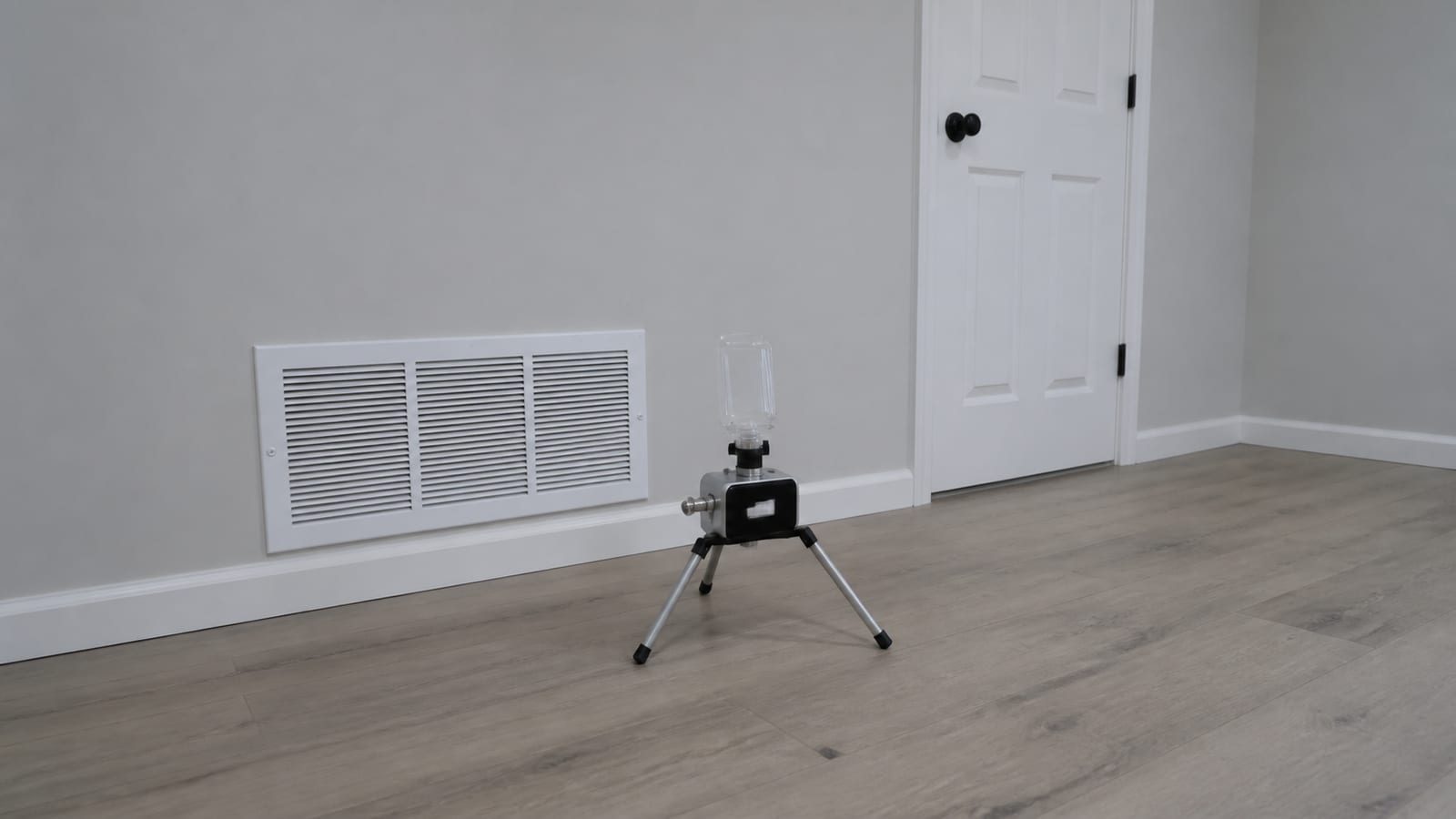
Usually there is a person behind this search rather than a building. Somebody is coughing at home and better at work, a child's asthma is worse this month than last, or a room smells wrong and nobody can say why. The question underneath is whether a test will tell you something you can act on. Sometimes it genuinely will. Often the more useful answer comes from looking at the building first, and knowing which situation you are in before you spend money is the whole point of this page.
Key Takeaways
A test is worth running when it will change a decision.
If you already know what you will do either way, it probably will not.
A result is read against the outdoor air from the same day
, alongside moisture readings and what is visible. On its own a number means little.
Health questions go to a clinician.
A test describes an environment; it does not diagnose a person.
There is no pass mark
, because no federal standard exists for indoor spore counts to be measured against.
Look before you sample
where there is visible growth or a known damp problem, the money usually belongs in fixing it.
Warren's lower levels run humid in summer
, which is a common and correctable cause of a room that smells wrong.
Is Indoor Air Quality Testing Worth It?
Before You Pay for a Sample
- 1
Ask what the result would change
If you would act the same either way, the test is a delay with an invoice.
- 2
Rule out humidity first
A hygrometer costs very little and explains a great many complaints in a Warren lower level.
- 3
Check the ventilation
Fans terminating in the wrong place, blocked intake, a system serving a space unevenly.
- 4
Look for a source
The Department of Health advises inspection where an excess water source cannot readily be traced.
- 5
If sampling, take the outdoor control
Same day, or the indoor figure has nothing to be read against.
- 6
Read it with the building
Moisture readings and what is visible, alongside the number.
- 7
Send health questions to a clinician
The test describes an environment; it does not diagnose a person.
It is worth it when the result changes what you do next. That happens in a few identifiable situations.
A clinician has asked what the environment contains. The most clear cut case. Somebody's care is being guided by it.
You have symptoms tied to a place and no visible cause. Better at work, worse at home, and a survey of the building has not found an obvious source. Sampling can support the search.
A third party wants documentation. A landlord, an employer, an association or a buyer.
Work has been completed and you want verification that the space is now in the condition it should be.
And the situations where it usually is not worth it:
You can see growth. The EPA's position is that where growth is visible, routine sampling is generally unnecessary. You already have your answer, and the money is better spent on removal and on correcting the water.
You want reassurance. Understandable, and a test is a poor instrument for it, because there is no threshold that means safe and a number without context will not settle anything.
Nothing about the result would change your plan. If you would remediate either way, the test is a delay with an invoice attached.
What a Sample Is Actually Read Against
A sample records what one method captured, in one location, over a short period, on one day. Three things make it interpretable.
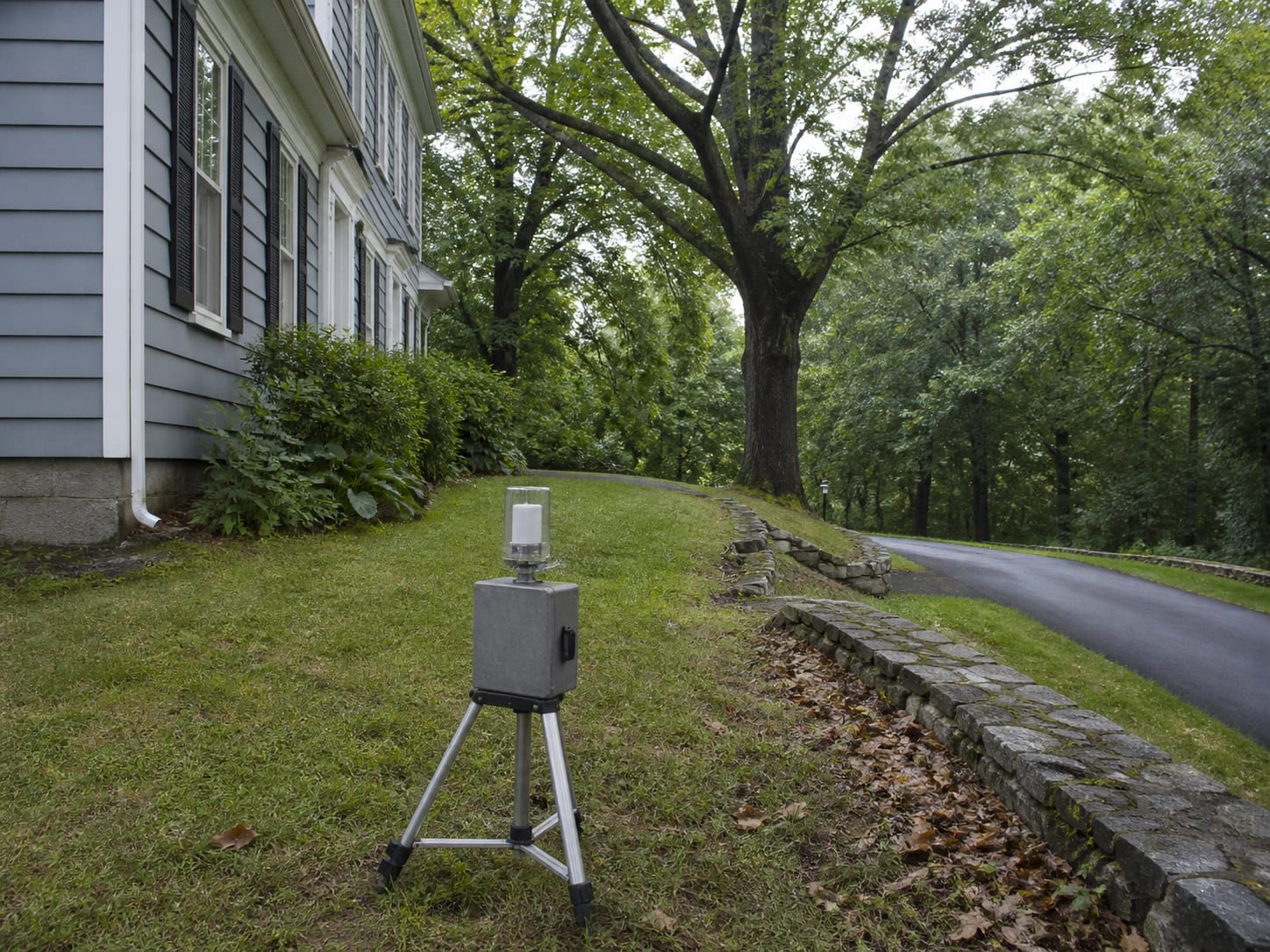
The outdoor control from the same day. Spores exist outdoors constantly and come inside on air, shoes and clothing. Without a same day outdoor comparison there is nothing for an indoor figure to be elevated relative to. This is the single most important element of a defensible result, and it is the one most often missing from a cheap one.
The moisture condition of the building. Readings on materials, not just on the room. A number from a building nobody surveyed is a number without a story.
What is visible. Growth, staining, water marks, the condition of the affected surfaces.
The absence of a pass mark follows from this. There is no federal mold or mold-spore limit for compliance, so nobody can tell you a result passed. A good report says what was found, what the outdoor comparison was, and what that supports. Anyone quoting a threshold has invented one.
The Building Question, Which Often Answers It
Before sampling, a few things are worth ruling out because they explain a great many complaints and are cheaper to fix than to investigate.
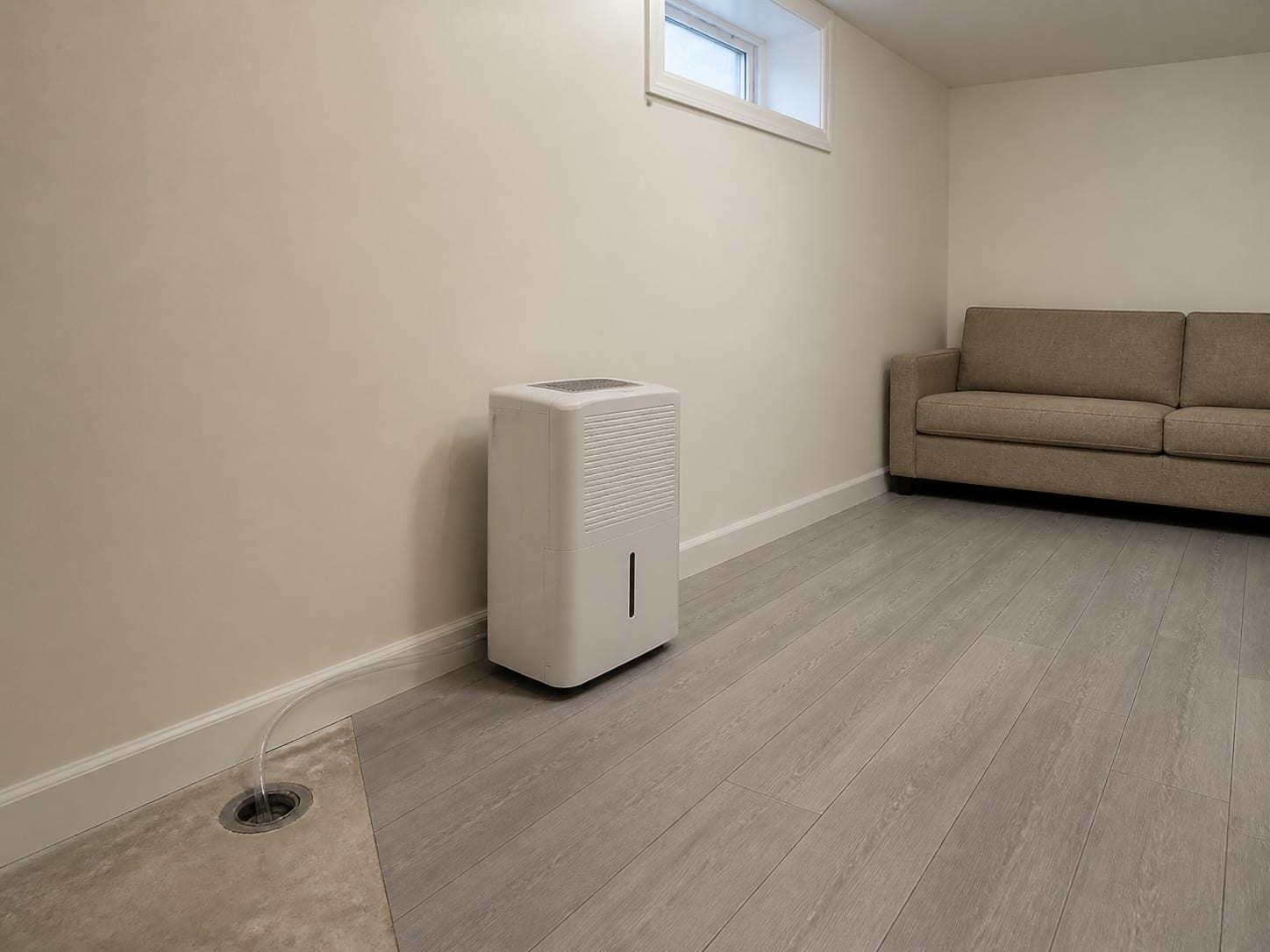
Humidity in a lower level. Warren rises to roughly 570 feet at the Second Watchung and drops about 370 feet to where the Passaic and Middle Brook leave the Township, and its soils are described as low percolation with high runoff, with a seasonal high water table within a foot of the surface in several associations. A finished lower level here can be entirely comfortable in February and run humid through July. That is condensation rather than intrusion, it produces a smell before it produces anything visible, and it responds to dehumidification and air movement.
Ventilation that is not doing what it should. Bath and dryer fans terminating in the wrong place, blocked soffit intake, an HVAC system serving a space unevenly.
A source nobody has looked for. The Department of Health advises inspection where an excess water source cannot readily be traced to a leak.
If one of those is the answer, the test would have told you a number and left you with the same problem.
What Testing Cannot Do
It cannot diagnose a person. New Jersey's Department of Health notes it is not known how much mold is needed to cause health problems, and that individual sensitivity, the extent and conditions of growth, and certain pre-existing conditions all play a part. Where somebody is unwell, the clinician leads and the environmental information supports.
It cannot identify a source. It describes air, not where water is arriving.
It cannot prove absence anywhere it did not sample.
Saying so is not a hedge. It is what stops a test being asked to carry weight it cannot hold, which is how people end up with a report and no decision.
What Nobody Else Is Doing Here
Worth saying plainly: search for this locally and most of what comes back covers the whole state or a different county. There is very little written for Warren specifically. That is not a claim about quality, it is an observation about coverage, and it is the reason the building specifics above are on this page rather than a general explanation of sampling methods.
The Cheap Checks Worth Doing First
Before sampling, there are three things that cost very little, explain a large share of complaints, and are worth ruling out. None of them requires a contractor.
Measure the humidity. A hygrometer is inexpensive and it answers more questions in a Warren lower level than anything else on this page. Sustained high relative humidity through the summer months is a condition in its own right: it produces a smell, it makes a room feel wrong, and it is corrected with dehumidification rather than remediation. If the reading is high, you have found something actionable without sampling anything.
Check where every fan discharges. Bathroom extracts and the dryer. Go outside and look for the terminations. A fan that discharges into an attic or a wall cavity rather than outdoors is putting the house's own moisture into the building fabric, and it is a common and cheap fault.
Look at the return air path. Whether the system serves the space in question at all, whether returns are blocked by furniture or storage, and whether a lower level is on the system or effectively sealed off from it. A room with no air movement behaves differently from the rest of the house.
Then, if those come back unremarkable, sampling is answering a question you cannot answer another way, which is exactly when it is worth its cost.
Two further observations specific to here. Warren rises to roughly 570 feet at the Second Watchung and falls about 370 feet to where the Passaic and Middle Brook leave the Township, so a lower level cut into a slope has cold surfaces against earth on more than one side. Humid summer air meeting those surfaces is the mechanism behind a great many complaints in this town, and it is seasonal rather than progressive.
And on the market: almost nothing published about indoor air quality is specific to Warren. Search it and you get statewide pages and other counties. That is not a claim that local testing is unavailable; it is a reason to insist that whoever samples your property talks about your building rather than reciting general information.
Frequently Asked Questions About air quality testing Warren NJ
Is indoor air quality testing worth it?
When it will change a decision, yes. That means a clinician has asked for it, symptoms are tied to a place with no visible cause, a third party wants documentation, or work has been done and you want verification. Where growth is visible, the money usually belongs in removal instead.
How much does it cost to get an air quality test?
It depends on the number of locations sampled, the method, and the laboratory. The variable that matters most is whether an outdoor control from the same day is included, because without it the indoor figures are difficult to interpret.
Is there a way to test air quality in my house?
Consumer devices measure things like humidity, particulates and carbon dioxide, and a humidity reading in particular is genuinely useful and cheap. They do not produce a laboratory result and should not be treated as one. For a documented result, sampling is collected and analysed by a laboratory.
Is there a safe level of mold?
There is no federal standard for indoor spore counts, so no result can be described as passing. Interpretation comes from the outdoor comparison and the condition of the building.
Someone in the house is unwell. Should I test first?
Speak to a clinician first. They can say whether environmental information would help and what would be useful. Testing before that often produces a report nobody can act on.
The basement smells but I cannot see anything. Is that a test?
It may be a humidity problem rather than a growth problem, particularly in summer, and that is measurable with a hygrometer for very little money. If humidity is high, the correction is dehumidification and air movement, and no sampling is needed to reach that conclusion.
Final Thoughts
If somebody in your Warren home is unwell, or a room smells wrong and you cannot find why, the useful first step is usually looking at the building rather than sampling the air. ExecPro Restoration & Cleaning will survey the moisture and the ventilation, tell you whether testing would add anything, and run it properly with an outdoor control if it will. Call ExecPro Restoration & Cleaning at (888) 300-3772 or get in touch. Emergency mold and water damage services are available 24/7, Monday through Sunday. Related: air quality testing for the service in general, and mold inspection in Warren for finding a source.
Air Quality Terms
Tap a term to see what it means.
Outdoor control. The same day outdoor reference, without which an indoor count cannot be interpreted.
Serving Warren
ExecPro Restoration & Cleaning provides mold remediation services in Warren, NJ, from inspection and testing through removal, drying, and post-remediation verification. Call (888) 300-3772 for 24/7 emergency response.
Related Articles
Air Quality Testing in West Windsor, NJ: When There Is Nothing to See
Symptoms with nothing visible: how an indoor air assessment is actually done, why the outdoor control decides whether a result means anything, and what a workplace owes.
What the Sample Can Tell You: Air Quality Testing in Plainsboro, NJ
When an air sample earns its cost in Plainsboro, NJ, what the outdoor control is for, how to read the report, and when your money is better spent elsewhere.
Air Quality Testing in Robbinsville, NJ: A Musty Smell After a Thunderstorm
A musty smell that shows up after heavy rain often means hidden moisture. See what air quality testing in Robbinsville, NJ can tell you and what to check.