What the Sample Can Tell You: Air Quality Testing in Plainsboro, NJ
Cal HewittPublished
- air quality testing
- outdoor control
- sampling
- plainsboro nj
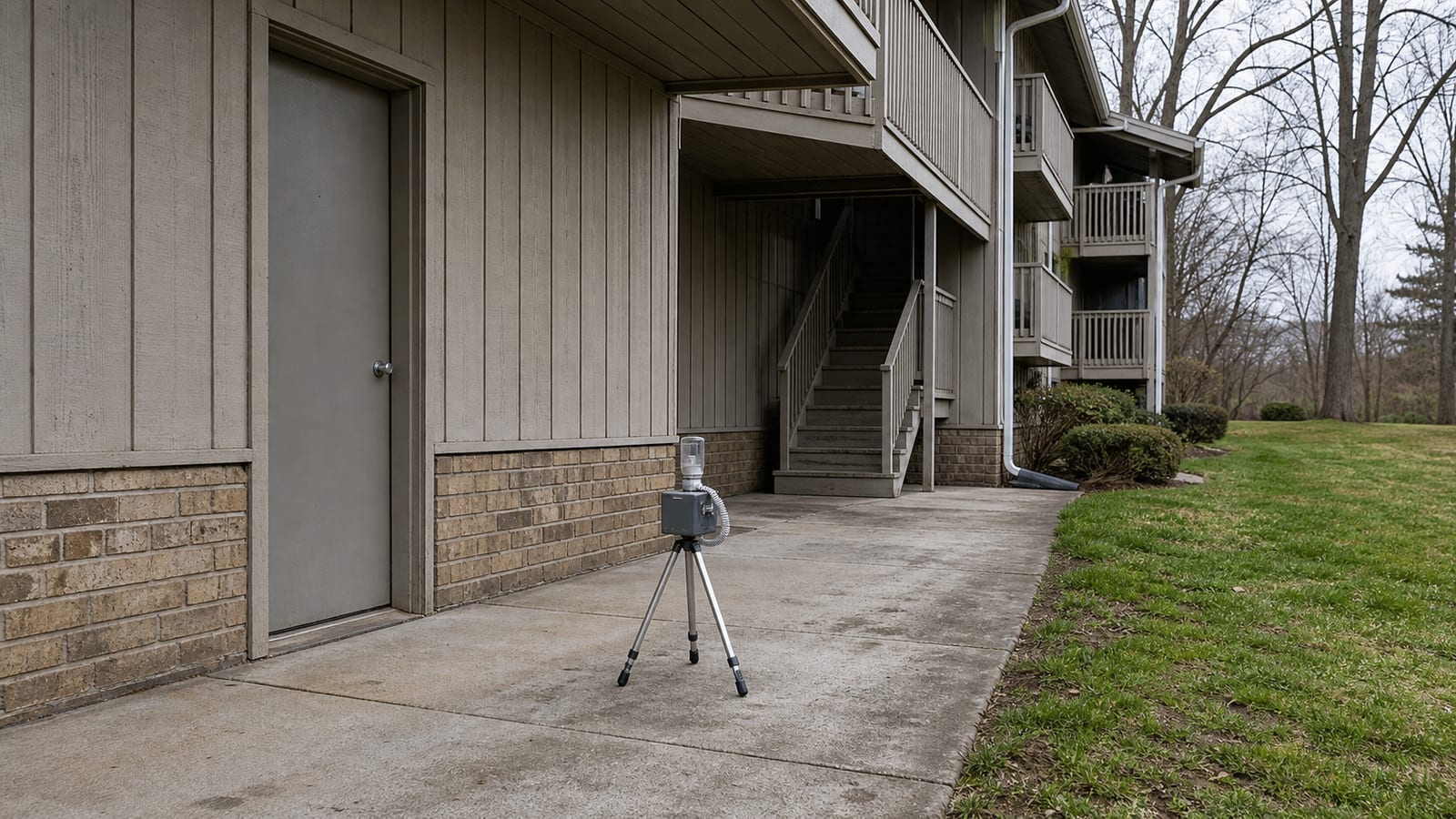
You are deciding whether to spend money on a test, and the useful thing to know first is that you are buying a comparison rather than a verdict. An air sample on its own is a count from one room at one moment. What makes it mean anything is what it is measured against.
So this covers what a sample can actually establish, the situations where it changes what happens next, how to read the report you get back, what drives the price, and when the money does more work somewhere else.
Key Takeaways
A sample is a comparison, not a verdict
An indoor count only becomes legible next to an outdoor control taken at the same time by the same method.
Look before you sample
Federal guidance puts visual and moisture assessment first, with sampling scoped to a question that remains.
One sample is not enough for a level determination
EPA is explicit, and interpretation needs indoor to outdoor plus indoor to indoor comparisons.
Visible growth usually makes sampling unnecessary
The growth is already the finding, and the remediation does not change with a species name.
A short negative sample does not clear a building
NIOSH notes short-term samples may not represent actual exposures.
In a shared building the neighbour is a variable
Corridors and shared systems mean the source may be outside the space you sampled.
What You Are Actually Buying
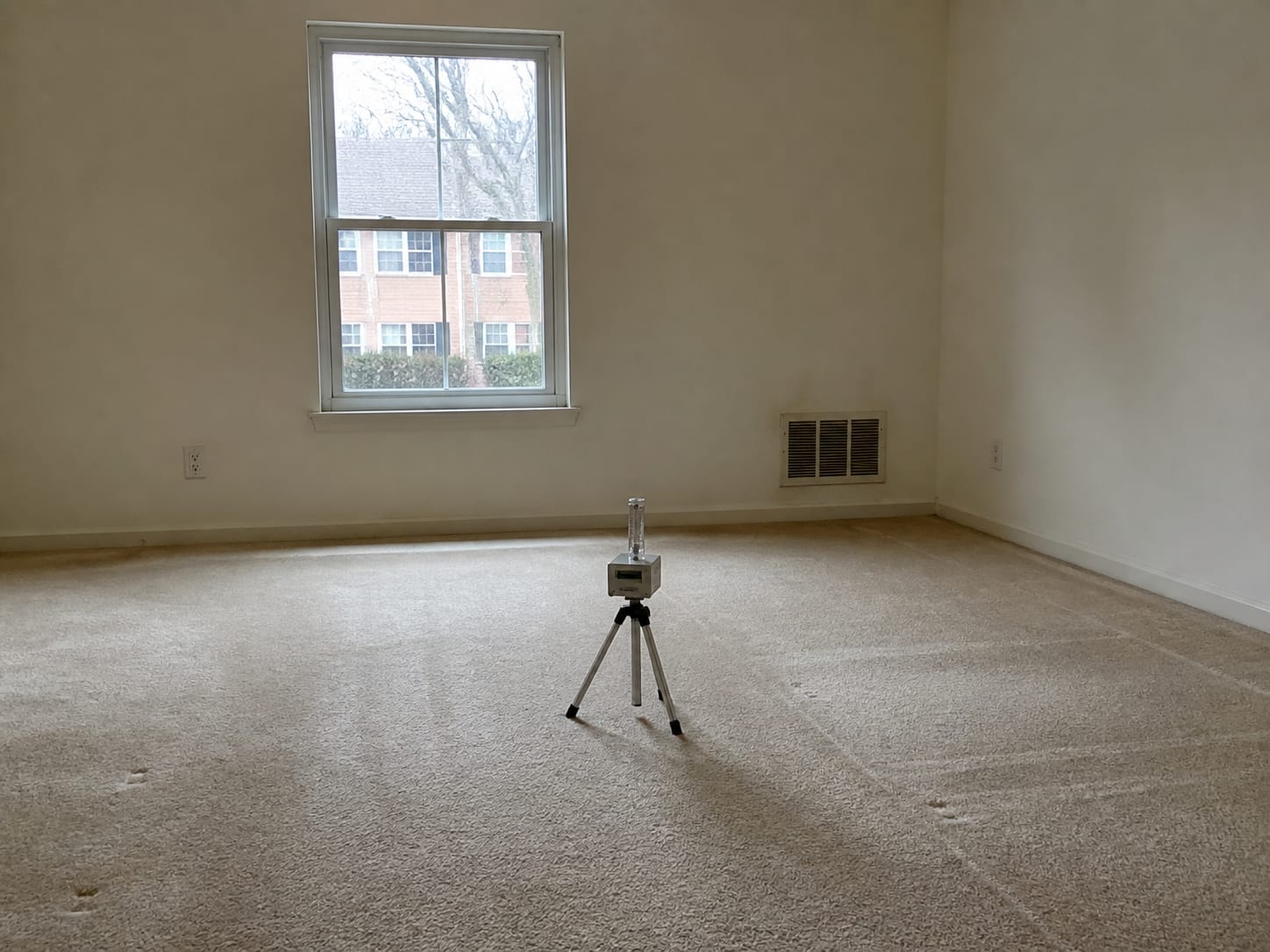
An air sample captures a volume of air over a defined period and a laboratory reports what was in it. That is a real measurement and a narrow one. It describes that room, during those minutes, under whatever conditions existed at the time: windows open or shut, the system running or off, someone having just vacuumed or not.
The outdoor control is what turns that into information. Mold spores are outdoors in every season, so an indoor count with nothing to compare against tells you very little. Public health guidance is direct on this: concurrent outdoor samples establish the ambient baseline, and an indoor distribution of species or concentrations that differs substantially from outdoors is what can indicate an indoor source. EPA makes the same point from the other side, saying interpretation has to include indoor and outdoor levels and species, and comparisons among indoor sites.
That is why a single indoor sample is not a level determination, and why a quote for "one air test" is not comparable to a scoped assessment. They are different products.
When a Sample Earns Its Cost
There are specific situations where a result changes what happens next, and those are the ones worth paying for.
The source is concealed. There is an odor or a symptom pattern and a careful visual and moisture assessment has not found it. Sampling can help test a hypothesis about where it is coming from.
Somebody needs a record. A sale, a claim, a landlord dispute, a dispute between neighbouring units. Here the value is documentary: a dated result from a named laboratory with stated methods and limitations.
A comparison across locations is the question. Does this room differ from that one, or from outdoors, in a way that points at a source.
Post remediation documentation is wanted. A record of the finished condition after a cleanup, which is a defined purpose with a defined method.
And the situations where it usually does not earn its cost: you can see the growth, or you already know where the water is coming from. Federal guidance is that visual evaluation and moisture assessment come first, that visible growth often makes air sampling unnecessary, and that where growth is already visible the remediation does not change based on what species a laboratory names. In those cases the money buys a confirmation of something you already know, and the same money spent on finding and fixing the water actually changes the building.
NIOSH adds a point worth carrying: thorough visual assessment and detecting a musty odor are more reliable for identifying a dampness and mold problem than air sampling is. That is not an argument against testing. It is an argument for testing to answer a question rather than testing instead of looking.
How to Read the Report
A good report is legible to somebody who is not a scientist, and there are four things to look for.
The conditions. Which rooms, on what date, with the system running or off, windows shut, what the occupancy and recent cleaning were. Without those, the numbers cannot be interpreted later by anybody else.
The control. An outdoor sample collected concurrently, using a comparable method. If it is missing, ask why before you accept the interpretation.
The comparison, stated as a comparison. The useful sentence is about how the indoor distribution relates to outdoors and to other indoor locations, not a bare number.
The limitations, in writing. What the sampling could not establish. A report that names its own limits is a better report, not a weaker one.
What no report can honestly contain is a governmental pass mark, because there is no federal airborne mold limit to be under. Any result that reads as compliance with a standard is describing something that does not exist. Interpretation belongs to the assessor and the laboratory, and it should say so.
The Shared Building Complication
In a detached house the outdoor control is the main comparison you need. In an apartment or a condominium there is a second variable, and it is not yours.
Air moves between units and through common corridors, and shared mechanical systems can move it further. So a sample taken inside your unit may reflect a condition that originates on the other side of a wall, in a corridor, or in a mechanical space you have no access to. That does not make the result useless; it makes the interpretation more careful, and it means the sampling plan should say what was and was not accessible.
Practically, if you are in a managed building and the assessment points outside your unit, the next step is a written request to the manager or association rather than more sampling inside your own space. Testing the same room twice does not reach the source.
What Drives the Cost
There is no published Plainsboro price range for this work and no municipal fee for private sampling, so any local average quoted at you is invented. The honest drivers are all about scope.
Whether the job is a walkthrough or a moisture focused investigation. How many rooms or zones are involved. Whether an outdoor control and additional unaffected indoor comparison areas are included, which they should be. Whether accessible surface or bulk samples are taken alongside the air samples. Whether attic, crawl space or mechanical access is needed. The laboratory method and the reporting depth. And whether pre or post remediation documentation is required.
This is why a very cheap test is often not a cheaper version of the same thing but a different and smaller scope. Ask what is included, specifically whether an outdoor control is collected concurrently and how many indoor locations are sampled. Two quotes that differ by a large multiple usually differ by those answers.
In a unit within a larger building, one more line matters: separate the cost of assessing your unit from the cost of any common area or adjacent unit investigation, because those are different permissions as well as different money.
What to Do Before You Book
Some of this is free and it will make any subsequent test better, or save you the cost of one.
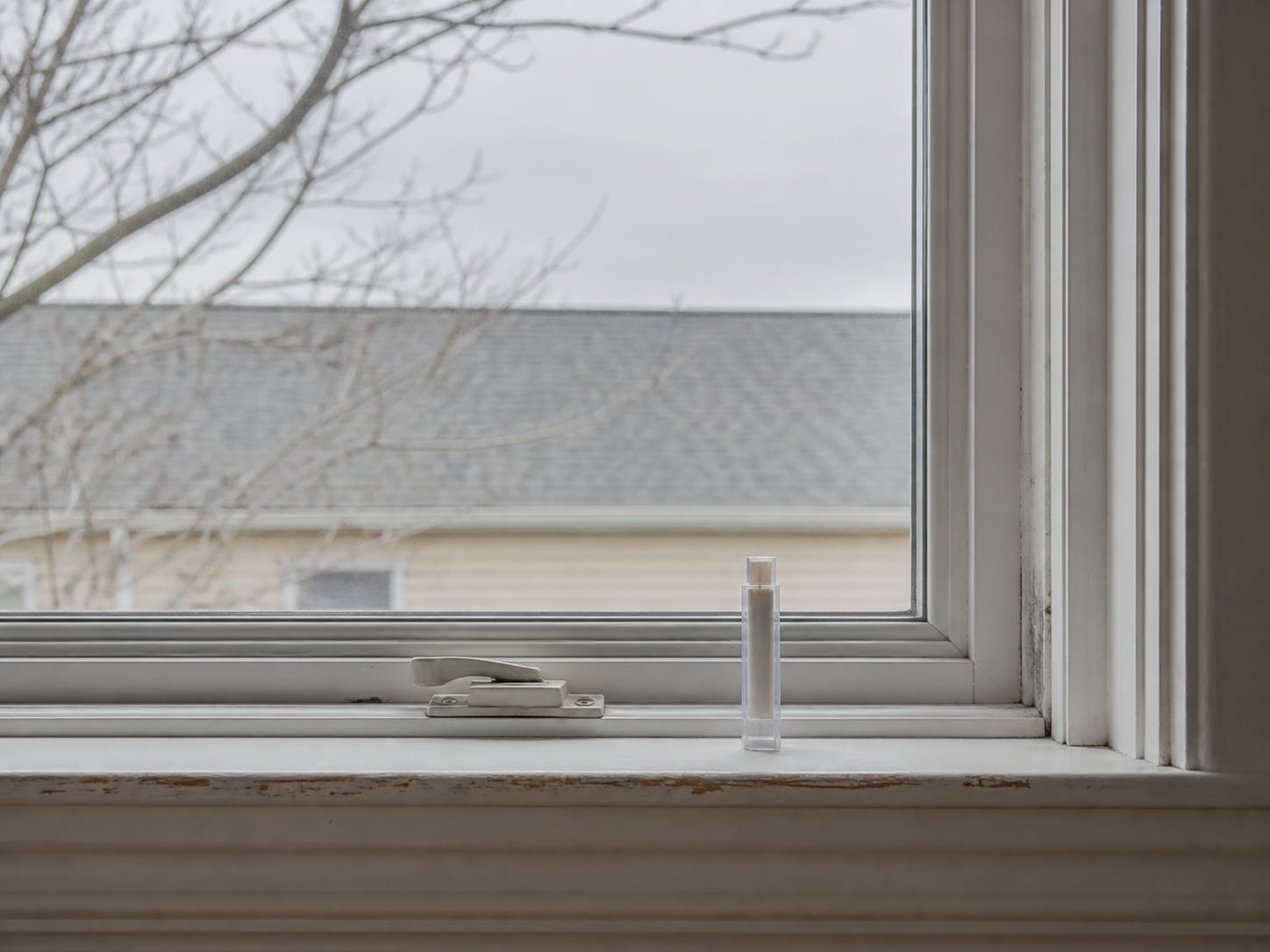
Walk the building and write down what you find: staining, odor and where it is strongest, anything damp to the touch, any history of leaks or floods with dates. Check under sinks, around the water heater and air handler, at ceilings below bathrooms, and along the base of exterior walls. Note whether the smell tracks with rain, with the season, or with the system running.
If you find visible growth and you can identify the water source, you probably do not need a test to decide what to do next. If you find nothing and the smell persists, that is exactly the concealed source case where sampling can help, and it is worth booking with a clear question written down. A mold inspection with moisture readings is usually the right first purchase either way, because it either finds the source or narrows where sampling should happen.
One local note on process. Plainsboro's Building Division administers construction permits and inspections, and there is no standalone permit category for private air sampling. If testing leads to repairs, alterations or an occupancy question, confirm that scope with the Building Division rather than assuming a test result authorises work.
Frequently Asked Questions About Air Quality Testing in Plainsboro, NJ
Will a test tell me if my house is safe?
No, and it is worth knowing that before you buy one. There is no federal airborne mold limit for a result to be measured against, so no number can amount to a clearance. What a well designed sampling plan can do is compare your indoor air against an outdoor control and against other rooms, which supports a judgement about whether there is an indoor source. Health questions belong with a clinician who knows the household.
I can see mold. Should I test it first?
Usually not for the purpose of deciding what to do. Federal guidance is that visible growth often makes sampling unnecessary, because the growth is already the finding and the remediation does not change with a species name. Where a test still makes sense with visible growth is when somebody needs documentation for a sale, a claim or a dispute.
The first test came back clean but the smell is still there. What now?
That is a known limitation rather than a contradiction. NIOSH notes that short term samples may not represent actual exposures, and a sample cannot reach inside a wall cavity, into a neighbouring unit or into a mechanical space. The next step is usually a moisture led investigation of the places the sample could not see, not a second sample in the same room.
Do I need testing after remediation?
You may want it, and it is a defined and legitimate purpose: documentation of the finished condition. It is a separate service from the remediation with its own method, and it is worth deciding up front whether you need it, because it is easier to plan for than to add afterward. Post remediation verification covers what that involves.
How many samples should be taken?
More than one, and the number is a professional scope decision rather than a formula. What is not optional is an outdoor control collected concurrently by a comparable method, plus enough indoor locations to make a comparison possible. EPA states that a single air sample is not sufficient for determining airborne levels.
Is there a permit for this in Plainsboro?
No. The Building Division administers construction permits and inspections, and no standalone permit category exists for private air sampling. What can require a permit is the work that follows if it becomes an alteration, so confirm the actual repair scope with them rather than assuming the test authorises anything.
Final Thoughts
The way to get value out of air testing is to arrive with a question rather than with a hope. If your question is where is the water coming from, a moisture investigation answers it and a sample does not. If your question is whether this house is safe, nothing answers it, because there is no threshold to be under. If your question is whether there is an indoor source that a careful look has not found, or whether you can document a condition for somebody else, then a properly scoped sampling plan with an outdoor control is exactly the right purchase.
Booked that way, the report tells you something you can act on, and it stays readable in two years because the conditions and the limitations were written down at the time. The wider local picture is on our Plainsboro service area page, and the service itself is on our indoor air quality testing page.
If something smells wrong and you want help deciding whether a test is the right spend, ExecPro Restoration & Cleaning will look first and tell you honestly. Call (888) 300-3772 or reach us through the contact page.
Sampling Terms
Tap a term to see what it means.
Outdoor control. A sample collected outdoors at the same time by a comparable method, which establishes the baseline the indoor result is read against.
Serving Plainsboro
ExecPro Restoration & Cleaning provides mold remediation services in Plainsboro, NJ, from inspection and testing through removal, drying, and post-remediation verification. Call (888) 300-3772 for 24/7 emergency response.
Related Articles
Air Quality Testing in Trenton, NJ: Is the Smell Yours or Next Door's?
Rowhomes and twins share a party wall, so a musty smell or symptoms can start next door. See which air quality testing in Trenton fits and what it costs.
Air Quality Testing in Bridgewater, NJ: Odors, Symptoms and Which Test Fits
If the house smells musty after rain or symptoms ease when you leave, see which air quality testing in Bridgewater fits and what a result can change for you.
Air Quality Testing in West Windsor, NJ: When There Is Nothing to See
Symptoms with nothing visible: how an indoor air assessment is actually done, why the outdoor control decides whether a result means anything, and what a workplace owes.