Air Quality Testing in Trenton, NJ: Is the Smell Yours or Next Door's?
Cal HewittPublished Updated
- air quality testing
- indoor air quality
- sampling
- trenton nj
- new jersey
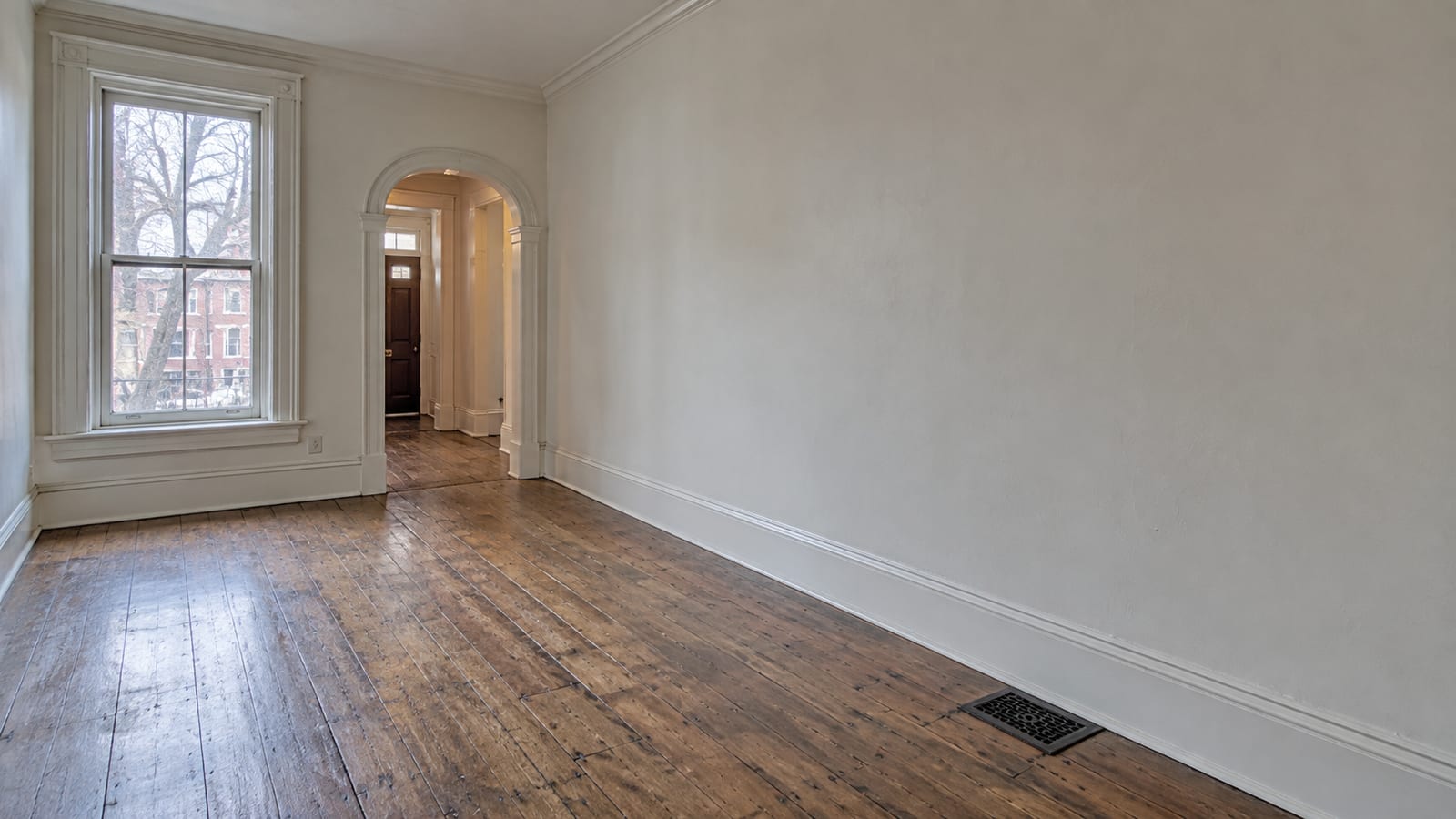
The musty smell greets you when you walk in, or someone in the house keeps getting headaches, a cough or stuffy eyes that ease once they leave for a few hours. You have looked for a stain, a leak or a patch of growth, and there is nothing to point at. Air quality testing in Trenton, NJ can help, but only when the test is aimed at the right place and paired with a look at the building. Many Trenton homes are rowhomes or twins that share a wall with the house next door, so the cause may sit on the other side of that wall, in a shared basement or in a heating and cooling system that serves more than one unit. Before you pay for a number, you need to know where to look, which kind of sample fits and what the quote should list. The sections below follow the order most readers face those questions.
Key Takeaways
Find the source first
In an attached building, a smell or symptom can start in a neighboring unit, a shared basement or shared mechanical equipment, so the visit should trace where the condition stops before anyone samples the air.
A sample is one place, one moment
An air result describes the spot and conditions where it was taken and is read against an outdoor sample. There is no federal airborne mold limit, so it is not a pass or fail.
Cost comes from scope
National 2026 data lists indoor air testing at $303 to $616, but a written local quote should list sample locations, lab work, an outdoor control, the report and any follow-up testing.
Visible mold with a known leak needs repair, not a test
EPA and New Jersey guidance point you to fixing the water and removing the material first.
Your Unit, Next Door or the Shared Basement: Finding the Source
A party wall is a wall that two homes share, and in Trenton it is the ordinary way homes are built. The city's 2005 consolidated plan describes most of its available housing units as attached, rowhomes or twins sharing a party wall. A damp wall, a leaking pipe or a wet cellar on one side can put a smell into the rooms on the other side, and the same goes for a furnace, air handler or duct run that feeds more than one unit.
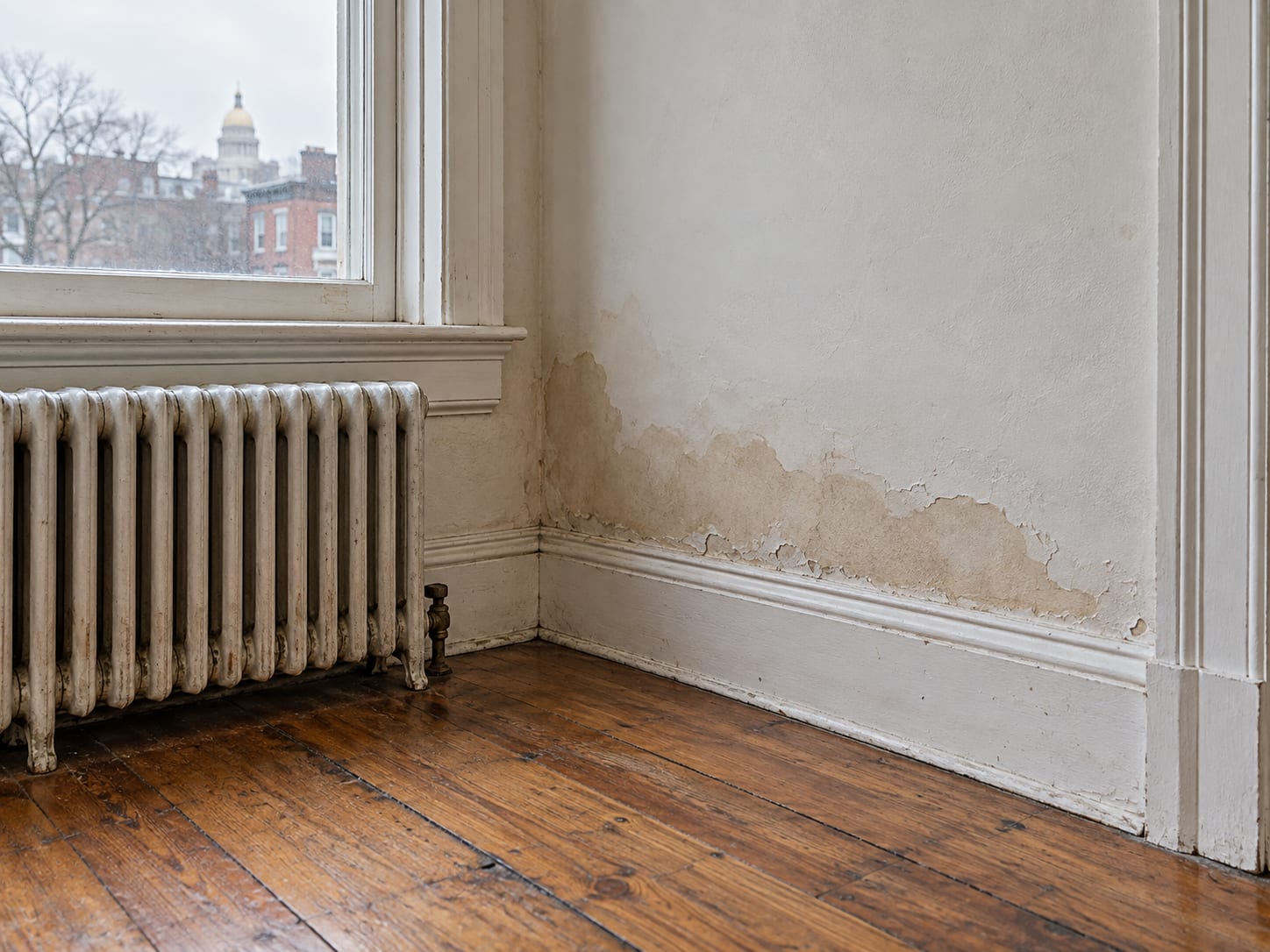
That is why a good assessor starts with questions about the building instead of a sampling pump. The visit should record whether the condition stops at one room or runs into an adjoining unit, the basement, the attic or the HVAC system. In older Trenton buildings, the answer can be hidden. Plaster walls, older insulation, masonry, aging plumbing, older roof assemblies and waterproofing that was repaired or altered over the years can all create concealed moisture paths inside a wall cavity you cannot see or reach.
The history you bring to the visit shapes what the assessor looks at:
- Water events: A recent flood, leak, sewage backup or firefighting water in your unit or a neighboring one.
- Symptoms with a pattern: Headaches, cough or allergy symptoms that change from room to room or ease when you are away.
- A decision with a deadline: A purchase, a sale, an insurance claim, a tenant complaint or a check after earlier cleanup.
Basements, crawl spaces and attics differ from one building to the next, so none of them should be assumed. The assessor should note whether your building has a basement, a crawl space, an attic, a shared mechanical system, a finished lower level or a wall cavity that cannot be reached.
What Does an Air Quality Visit Include Before Anyone Takes a Sample?
A useful visit is an investigation first and a sampling appointment second. New Jersey's mold guidelines say sampling should be paired with an investigation, and that a sampling plan should explain why each area is sampled. The guidance lists bulk, surface, dust and air samples, along with relative humidity and building-material moisture readings.
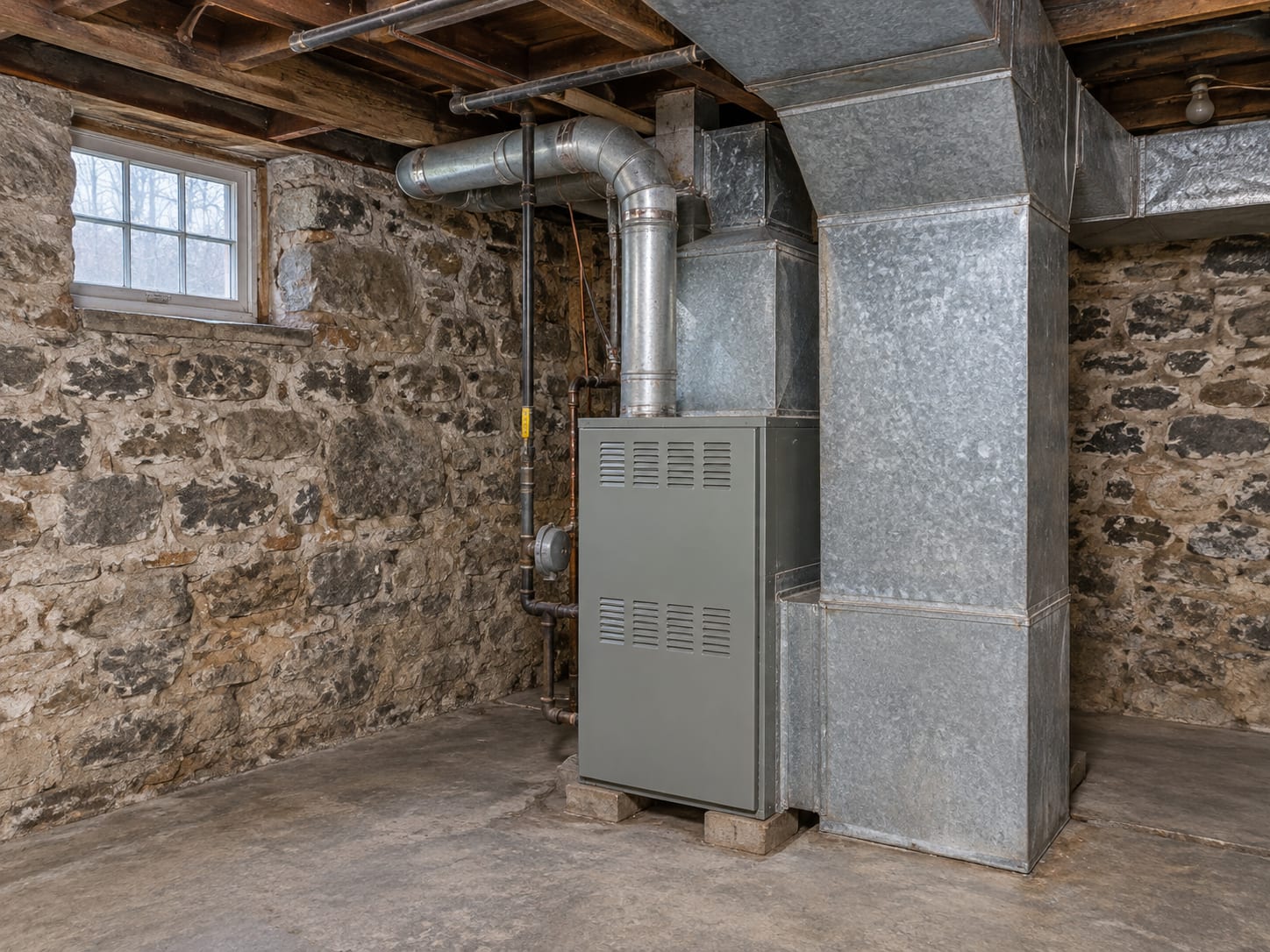
In practice, the assessor walks the suspected areas, looks for the moisture source and measures humidity in the air and moisture in materials such as plaster, wood and masonry. The assessor also checks ventilation and the HVAC system, including where return air is drawn from and where it goes. Only then does the assessor decide whether air, surface, bulk, dust or other samples are justified, and where to take them. If nothing in the building points to a question a sample can answer, the right result may be no sample at all and a repair plan instead. Our air quality testing service follows this order.
An attached building adds logistics. The assessor may need access to rooms you do not control, such as a neighbor's unit, a shared basement or a boiler room. In a multi-unit or commercial building, the visit may call for tenant coordination, after-hours access, HVAC-zone planning and a written chain of custody, which is a record of who collected and handled each sample on its way to the lab.
Which Kind of Test Should You Ask For?
Ask for the test that answers the decision in front of you, not the one with the most sample locations. Each type of sample does a different job:
- Air sample: Collects a measured volume of air at one place and time, which a lab then analyzes.
- Surface sample: Checks what is on a specific surface, such as a wall, a sill or a duct opening.
- Bulk sample: Takes a small piece of material, such as drywall paper or insulation.
- Dust sample: Looks at what has settled in a room or a vent over time.
An air sample is the one people usually mean by air quality testing, and it is also the one most often misread. It gives a result for the sampled location and conditions at the time of sampling, and it is commonly read alongside an outdoor sample collected under comparable conditions. New Jersey guidance says that after remediation, sampling should show indoor levels and types similar to those found outdoors. EPA states that there are no federal airborne mold standards, so the comparison supports a judgment about that space and is not a pass or fail line. A lab report needs the inspection findings beside it.
Hover or tap a row to highlight it.
| Sample type | What it does |
|---|---|
| Air sample | Collects a measured volume of air at one place and time, which a lab then analyzes |
| Surface sample | Checks what is on a specific surface, such as a wall, a sill or a duct opening |
| Bulk sample | Takes a small piece of material, such as drywall paper or insulation |
| Dust sample | Looks at what has settled in a room or a vent over time |
If you can already see mold and you know where the water is coming from, testing is usually not the next step. EPA's sampling guidance says visible mold generally does not need to be sampled, and New Jersey guidance puts the emphasis on fixing the moisture problem and removing the affected material.
At home, you can watch temperature and humidity with an inexpensive monitor, and you can use household carbon monoxide and radon devices for those specific hazards. A mold petri dish left on a shelf is a different matter. It does not give you a building investigation, an outdoor comparison or a lab interpretation.
One more distinction, since it comes up in searches: the daily outdoor air quality index measures pollutants in the air outside, which is a different thing from what is happening in your apartment. If you work in a building occupied by public employees, New Jersey has a separate indoor air rule, N.J.A.C. 12:100-13, and it is not a residential standard.
How Long Does Testing Take, From the First Call to the Report?
The steps run in a fixed order, and each has its own wait:
- First call: You describe the event, the type of property, which areas are occupied, any access limits and your deadline.
- Site visit: The assessor inspects, records moisture and building conditions and chooses sample locations if sampling is warranted.
- Laboratory stage: The lab analyzes the samples using the selected method.
- Report: The report should explain the inspection, conditions, sample locations, results, limits of those results and corrective actions.
- Follow-up: The moisture source is repaired, affected materials are removed or cleaned and verification testing is used only when it answers a defined closeout question.
Lab timing varies, so ask both the assessor and the lab for the expected report date before you schedule, and get it in writing with the quote. Follow-up is where the schedule often grows. If the assessor finds a leak or a wet wall, the repair and the drying come before any second round of testing.
From First Call to the Report
- 1
First call
You describe the event, the type of property, which areas are occupied, any access limits and your deadline.
- 2
Site visit
The assessor inspects, records moisture and building conditions and chooses sample locations if sampling is warranted.
- 3
Laboratory stage
The lab analyzes the samples using the selected method.
- 4
Report
The report should explain the inspection, conditions, sample locations, results, limits of those results and corrective actions.
- 5
Follow-up
The moisture source is repaired, affected materials are removed or cleaned and verification testing is used only when it answers a defined closeout question.
What Does Air Quality Testing Cost, and What Changes the Quote?
Start with the national number, and read it as a budgeting range only. Angi's 2026 cost data reports professional indoor air quality testing at $303 to $616, with a national average of $443 based on 1,477 verified Angi Pro projects. Those figures describe national practice, and they are not a Trenton price or an ExecPro quote.
Hover or tap a row to highlight it.
| Measure | Figure |
|---|---|
| Professional indoor air quality testing range | $303 to $616 |
| National average | $443 |
| Basis | 1,477 verified Angi Pro projects |
These factors move a quote up or down:
- What you are investigating: Mold, moisture, combustion gases and other contaminants call for different methods.
- Samples and building size: More locations, more sample types, more floors, rooms and HVAC zones all add scope.
- Access: Basements, crawl spaces, attics, wall cavities and mechanical rooms take longer when they are hard to reach.
- Reporting needs: A report written for a lender, buyer, employer, tenant dispute or insurer takes more documentation.
- Tenant coordination and timing: Multi-unit work needs scheduling and notice, and rush or after-hours visits can change the price.
Ask for a written quote that names the number of sample locations, says whether laboratory analysis is included, says whether an outdoor control is included, lists what the report will contain and states whether follow-up testing is billed separately. With those lines, you can compare two quotes on the same terms.
What a Written Quote Should Name
Sample locations
The number of places to be sampled.
Laboratory analysis
Whether lab work is included.
Outdoor control
Whether an outdoor sample is included.
Report contents
What the report will contain.
Follow-up testing
Whether it is billed separately.
Then ask the question that matters more than the number of samples: what decision will the result change? Sampling earns its cost when you need documentation after remediation, a targeted comparison for a hidden condition, or evidence for a transaction or a claim. When the source is obvious, the money usually does more good in the repair.
What Should You Write Down Before You Call?
A short set of notes makes the first call shorter and the visit better aimed:
- When it started: The date you first noticed the smell or symptoms, and anything that changed around then, such as a leak, a storm or new work in the building.
- Where it is strongest: The rooms and floors, and whether it is stronger near a shared wall, a basement door or a vent.
- Your deadline: A closing, a lease renewal, a claim date or a move-out.
While you wait for the visit, stop disturbing anything you suspect is mold, photograph the area, and keep people away from sewage-contaminated or visibly damaged materials. If there is an active leak, shut it off where you can do so safely and call a plumbing or emergency professional.
Who Do You Talk To If the Source Is Not Yours?
If your notes point to a neighbor's unit, a shared basement or common equipment, the next call may not be to a lab. It may be to the person who controls that space.
If you rent, describe the smell and the dates in writing to your landlord or property manager, and attach your photos. If you own a rowhome or twin, a conversation with the neighbor on the other side of the wall is a reasonable first step, and an assessor's notes give it something concrete to stand on. If you live in a building with an association or a managing agent, ask about access to shared walls and common mechanical systems, and about any approval needed before an assessor or contractor enters those areas.
You may also wonder whether the city needs to be involved. A routine inspection or sample collection is not itself established as needing a construction permit. Work that follows, such as opening walls, plumbing, electrical or structural repair, may need one, so confirm with Trenton's Technical Services Division before anything is torn out, and allow time for plan review. If the building is a designated landmark or sits in a historic district, check with the Landmarks Commission before any exterior work.
When you choose whom to hire, know that the New Jersey Department of Health has no state certification program for companies doing mold or general indoor air services. The department keeps lists of consultants, laboratories and remediation firms, but a listing does not endorse or qualify anyone.
When Should Symptoms Send You to a Clinician?
A test does not diagnose illness, and a person who feels unwell should not wait on a lab report. CDC says damp and moldy places may cause no symptoms in some people and a stuffy nose, sore throat, cough, wheezing, eye irritation or skin rash in others, with stronger reactions for people with asthma, mold allergies, chronic lung disease or weakened immune systems.
See a clinician for significant breathing symptoms, an asthma flare-up, fever or any reaction that worries you, and tell the doctor where the symptoms ease. Use testing to answer questions about the building and the clinician to answer questions about the person.
What Happens After the Report?
A good report explains what was inspected, where samples were taken, what the lab reported, what the results cannot tell you and what should be corrected. Read the corrective actions first. They tell you whether the next step is a repair, a cleanup, a second look at a concealed area or nothing at all.
If the report points to a moisture source, fix it before anything else, then remove or clean the affected materials. Verification testing has a place at the end of that work when you need documented closeout, such as for a lender, a buyer, a landlord or a claim. If the work grows, our mold remediation page for Trenton describes how we handle it in this area, and our build-back services cover the rebuild after affected materials come out.
Keep every document. For an insurance claim, that means photographs, moisture readings, affected locations, sampling locations, lab reports, chain-of-custody records where they apply, drying records and invoices, with inspection, remediation, reconstruction and verification kept as separate line items. Ask your carrier whether the water loss that started the problem, the testing, the remediation and the reconstruction are covered, and what documentation the carrier needs.
Frequently Asked Questions About Air Quality Testing Trenton NJ
How much does it cost to get the air quality tested in a home?
National 2026 data from Angi shows $303 to $616, with a $443 average, for professional indoor air quality testing. That range is not a Trenton quote. Ask for a written quote that lists sample locations, lab work, an outdoor control, the report and follow-up testing.
Is indoor air quality testing worth it?
It is worth it when the result will change a decision, such as a purchase, a claim, a tenant dispute or a check after remediation, or when the source is concealed. It adds less when visible mold and the water source are already clear, and it does not replace moisture repair or medical care.
Test Your Air Quality Testing Knowledge
1. What should an air quality visit do before anyone takes a sample?
2. Is there a federal airborne mold limit that makes an air result a pass or fail?
3. What does an air sample describe?
4. Is testing usually the next step when you can see mold and know where the water comes from?
Pick an answer to begin.
Wrapping Up
A musty smell in an attached Trenton home deserves a source before it deserves a number. Start with your notes, ask the assessor to record whether the condition stops at one room or runs into a neighboring unit, the basement, the attic or the HVAC, and choose the sample that answers your decision. An air result is a snapshot read against an outdoor sample, and visible mold with a known leak usually calls for repair first.
Sorting out the source early can save you from paying twice, once for testing that pointed the wrong way and again for repairs that came late.
If you live or manage property in Trenton, NJ and want help tracing a smell before you spend money on samples, ExecPro Restoration & Cleaning can inspect the building, explain which test fits and give you a written quote. We handle testing, mold remediation, water damage restoration and rebuild work, so the next step is one call. Call us at (888) 300-3772 or contact us to schedule a visit.
Air Quality Testing Terms
Tap a term to see what it means.
Party wall. A wall that two homes share, which is the ordinary way many Trenton homes are built.
Serving Trenton
ExecPro Restoration & Cleaning provides mold remediation services in Trenton, NJ, from inspection and testing through removal, drying, and post-remediation verification. Call (888) 300-3772 for 24/7 emergency response.
Related Articles
Air Quality Testing in Bridgewater, NJ: Odors, Symptoms and Which Test Fits
If the house smells musty after rain or symptoms ease when you leave, see which air quality testing in Bridgewater fits and what a result can change for you.
Air Quality Testing in Robbinsville, NJ: A Musty Smell After a Thunderstorm
A musty smell that shows up after heavy rain often means hidden moisture. See what air quality testing in Robbinsville, NJ can tell you and what to check.
Mold Testing in Robbinsville, NJ: Air Samples, Swabs and the Moisture Behind Them
What a mold sample shows is one moment in one room, not the source. See when mold testing in Robbinsville, NJ is worth paying for and who needs the result.